Source: When Shift Happens
Compiled by: Felix, PANews
Multicoin Capital Managing Partner Tushar Jain recently shared his views on the current crypto market in the When Shift Happens podcast. He pointed out that the crypto market has bottomed out and is entering a new turning point, and elaborated in detail on the investment logic for Solana, Hyperliquid, and Zcash.
PANews has compiled the highlights of the interview.
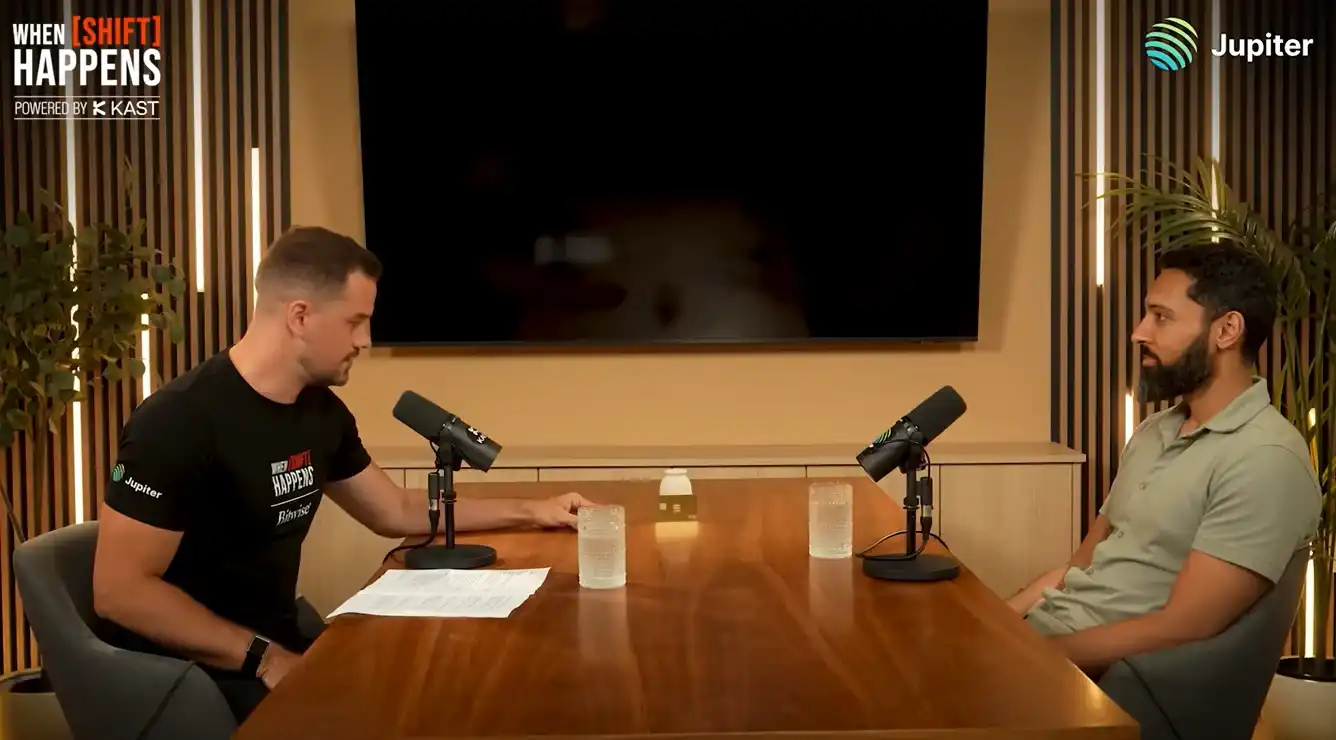
Host: Do you think now is the time for a turning point?
Tushar: Yes, life is good, the market is starting to move in our favor again, this is the most exciting part of the cycle. I think we are at a turning point right now. There are several signs that prove this: First, you have to see market sentiment truly hit bottom before it reverses, just like in a bull market sentiment must reach frenzy before it peaks. Second, when bad news no longer causes the market to fall, that's a signal of a turning point; when good news no longer makes the market rise, that's also a turning point. Last month we experienced some significant hacks and other bad news, but this didn't trigger large-scale selling, that's a huge signal. Plus, application adoption has been increasing, and a disconnect has emerged between price and fundamentals. So I think this is a perfect storm.
Host: Everyone knows you and Multicoin are super bulls on Solana, have you changed your view on Solana? When you say you're bullish on both Solana and Hyperliquid, how do you allocate your positions?
Tushar: This is a question of time horizon. I still believe Solana is the right technological architecture for an internet capital market; you need a permissionless, open-source chain to integrate everything onto one platform. I'm still bullish on its performance and architecture. But at the same time, we also see derivative trading volume shifting towards Hyperliquid. I currently have large positions in both assets and am bullish on both. Solana is the leader in spot trading; I think it will host tokenized security spot trading, but Hyperliquid clearly leads in derivatives. Rather than being an extremist, it's better to think in terms of probabilities and hold both. I am not a 'maximalist' for any asset; I won't stubbornly cling to a position or viewpoint.
Host: How will traditional finance issuers choose? Can this help us judge who the biggest winner is?
Tushar: Traditional finance issuers won't go to Hyperliquid to issue assets. We see institutions like Galaxy issuing stocks on Solana. The core difference here is 'credible neutrality'. Solana has credible neutrality that Hyperliquid lacks. This is a trade-off: Hyperliquid lacks credible neutrality and has opaque validator nodes, but in exchange offers better performance; users accept this because they can verify the chain and see the exchange's real-time solvency. Solana not only has open-source clients but also an extremely powerful validator community, though of course this comes at a cost. Traditional financial institutions value credible neutrality highly; Goldman Sachs wouldn't settle on a chain owned by competitor Stripe, and J.P. Morgan wouldn't settle on a chain owned by DRW; they absolutely would not hand that much power to a competitor.
Host: Since you're bullish on both SOL and Hyperliquid, how do you decide position sizing? Is it 50/50?
Tushar: Position management is an art, not a science. For long-term investors, trying to precisely allocate positions with quantitative models is a trap. You should concentrate capital in the assets you are most bullish on. What's the point of putting money into your tenth most favored asset? When deciding positions, you need to consider external investor demands, tax costs (e.g., we held SOL long before we got HYPE), and a 'regret minimization framework'. Imagine one or two years from now, if you were wrong about one of these assets, which one would make you feel more foolish?
Host: Looking ahead to 2026, which asset is the most obvious opportunity for you?
Tushar: One very clear choice for me is Zcash (ZEC). Although its position is relatively small due to liquidity and market cap limitations, Multicoin has accumulated a significant percentage of the total supply. I like its momentum, use case, and community; it reminds me of early Bitcoin. When I saw it rise last year and talked to many early believers, I found that even when the price retreated, they still held their conviction; this isn't a short-term hot money game. Furthermore, Zcash has no fundamentals (no cash flow or revenue), meaning its value depends entirely on consensus, which paradoxically gives it greater upside potential; as a store of value, bigger is better.
Host: What does Zcash represent to you?
Tushar: It represents the return of the 'cypherpunk' values upon which this industry was built. I support stablecoins and on-chain RWAs, but they are inherently centralized and can be frozen. This industry was built on 'self-sovereignty', and now the mainstream is catering to regulators. Current Bitcoin, in my view, has been captured by institutions (like BlackRock, MicroStrategy). With debates about Bitcoin facing quantum risks, early cypherpunk Bitcoin supporters might go the other way in a fork, so I think Zcash represents the industry's original intent, and more OGs will join.
Host: How do you value an asset like Zcash that has no revenue?
Tushar: For assets with business revenue, I look at their cash flow and assign a price-to-earnings ratio for a target price. But for an asset like Zcash, I look at its market cap ranking. Is it 20th, 15th, or 10th? I think it can make it to the top five. This method also adjusts with the overall market (e.g., Bitcoin at $80K or $200K).
Host: For such assets, do you hold until they enter the top five, or do you swing trade?
Tushar: We absolutely do not actively swing trade; it's too difficult, humans cannot control emotions. Many fund managers try to buy high and sell low, ending up slapped on both sides. I am extremely averse to technical indicators. You draw a few lines, then some real-world news happens (like a geopolitical conflict), and the chart becomes useless. We are 'actively managed', not 'actively trading'.
Host: So what is your valuation framework for assets with revenue like SOL or HYPE?
Tushar: For them, you must forecast forward. You need to think about what the key drivers of the business are, what claims token holders have on revenue, and then see what option choices exist in the market. Additionally, you must consider execution risk and factor it into the discount rate (e.g., Ethereum's risk is lower than Solana's because it has been around longer and is more decentralized). These numbers are just reference metrics; ultimately, you still need to make qualitative judgments.
Host: How do you choose the timing to buy? How did you manage to precisely bottom-fish HYPE?
Tushar: Trying to precisely bottom-fish is not a repeatable skill. My framework is the 'rule of thirds': If I were to invest $100, I would immediately buy one-third; then dollar-cost average the second third over a set period (like one or two months); and leave the final third as flexible capital. During the DCA period, if there's a sharp drop (like a 10% single-day decline), I would buy the dip. This greatly reduces the regret of missing out.
Host: Two major events happened in recent weeks. The first was the Zcash code vulnerability incident, causing the price to crash, but you guys actually added to your position. What happened?
Tushar: Simply put, the Zcash core team, while checking code with AI tools, discovered a vulnerability in the Orchard privacy pool that could lead to double-spending and patched it. The market panicked, thinking someone was minting tokens infinitely. But actually, transparent addresses were unaffected, and the 'revolving door' mechanism of the privacy pool (recording the total funds in and out) showed no large-scale withdrawal of funds by hackers. I didn't trade on the day of the incident (I don't like trading during extreme emotional volatility and poor liquidity). After observing for a few days and confirming no hacker exploited the vulnerability, I believed this was irrational market panic, triggering cascading stop-losses, so we significantly increased our Zcash position. The team will launch the new 'formally verified' pool, Ironwood, in July, which in my view was just a false alarm.
Host: The second event is that Multicoin recently published a report predicting HYPE will reach $319 within two years. You hold a lot of HYPE; won't others think you're just 'talking your book'? Aren't the conservative assumptions inside too aggressive?
Tushar: We do hold positions, but people should look at our derivation logic and draw their own conclusions. The assumptions we set are not aggressive:
First, 35% CAGR for crypto derivatives: It was 45% over the past 5 years, we've already cut that growth rate by a quarter.
Second, DEX capturing 32% derivative market share: From almost zero in 2022 to 16% now, doubling to 32% in two years is in line with the trend.
Third, Hyperliquid maintaining 30% of decentralized derivative share: This is also conservative because trading volume data is easily wash-traded (many other exchanges have fake volume), but currently Hyperliquid accounts for 59% of the entire network's real Open Interest (OI), data which is hard to fake. As other platforms stop subsidies, Hyperliquid's actual share should increase.
Fourth, USDC collateral growing linearly with trading volume: As long as traders' leverage preferences remain unchanged, stablecoin collateral naturally grows in proportion to trading volume and open interest.
Host: Has the market bottomed out?
Tushar: It's extremely difficult to predict the precise bottom, but I think the price low point might be in the past. Excluding macro black swans (like an escalated US-Iran war), we have already seen the stage of 'extreme apathy'. Bad news no longer makes the market fall, the non-believers have left, and those remaining are absolute believers. However, this doesn't mean there will be a 'V'-shaped reversal taking off directly; the market might go through a period of sideways movement and apathy, needing time to build new narratives.
Host: Could you elaborate on the advantages in investing?
Tushar: If you have no advantage, you should buy index funds and go to the beach. There are four sources of advantage in investing. First is access/informational advantage (people call to tell you inside information). Second is analytical advantage (you understand an asset better than others). Third is behavioral/psychological advantage (you deeply understand and can control your own emotions, this is the hardest). Fourth is structural advantage (like long-cycle fund structures). We invested in Zcash primarily due to a very strong behavioral/psychological advantage (seeing extreme market pessimism but holders having firm conviction), coupled with some access/informational advantage.
Host: What does Ethena represent to you? You built a large position last year.
Tushar: Ethena is in the same lane as Aave and Morpho: matching lenders who want yield with borrowers who want leverage. We hold multiple projects in this space (including Kamino on Solana) because lending markets have obvious network effects; liquidity concentrates toward the top.
Host: To what extent do you vet founders?
Tushar: We place great importance on founders. Our evaluation framework has three multipliers. First is the total market size in a few years. Second is the long-term profit margin (whether there are network effects to avoid profits being competed away). Third is execution risk. Ethena's founder, Guy Young, is one of the most capable founders in the DeFi space; he greatly reduces execution risk, increasing valuation potential.
Host: If you are long-term investors, when do you take profits?
Tushar: For our fund, realizing gains essentially means swapping assets for Bitcoin. When the market is extremely euphoric, we sell high-risk assets for Bitcoin to reduce Beta risk; when the market crashes, we use Bitcoin to buy dips on projects we like. We only sell in three situations: first, when we find a better asset; second, when the investment thesis is disproven; third, when market valuation becomes excessively euphoric, pricing in many years of future expectations. Since we are committed to investors to be fully deployed, our 'cash' is Bitcoin.
Host: What's your view on Ethereum?
Tushar: It's hard to evaluate. For the past 6 or 7 years, they've been telling everyone to use L2s for scaling; now suddenly they want to raise the gas limit and scale on L1 again. No one knows what their plan really is. The Foundation and Vitalik don't want to hold too much power, wanting the market to figure things out, but the market is a good follower, not a good leader. Despite losing spot trading to Solana and derivatives to Hyperliquid, Ethereum's market cap resilience still surprises me. The only reasonable explanation is that people treat it as a 'store of value asset' or a better Bitcoin.
Host: Your partner Kyle left Multicoin, and many people became pessimistic because of it. Why do you stay?
Tushar: I was also surprised he left, but I respect his decision. It prompted me to rethink my own motivations. I don't use a 'live each day as if it were your last' framework, but instead ask myself: 'If I had 10 years left to live, what would I want to do?' The answer is I want to win; I love the satisfaction of being right when others are wrong. I believe blockchain is the underlying architecture for the future capital market, replacing the current antiquated systems. When Mark Zuckerberg rejected Yahoo's $1 billion acquisition offer, he said: 'If I took the $1 billion, I would just go start another social media company, so why would I leave this one?' This reinforces my conviction.
Related Reading: Detailed Look at Multicoin Report: Hyperliquid (HYPE) Has Fivefold Upside Potential