Author:Delphi Digital
Compiled by:Hu Tao, ChianCatcher
The highest-valued internet companies rarely produce any products. The success of Amazon, Meta, and WeChat lies in controlling the channels for discovering and distributing information. The cryptocurrency industry will be the same.
Differentiation today is at the application layer. Super apps connect existing lending protocols, trading venues, yield sources, and payment channels into a unified interface.
Expanding a fintech product line typically requires licensing, expensive acquisitions, or years of R&D. Cryptocurrency operates differently because adding a feature can mean connecting to a protocol that has already bootstrapped itself.
Account abstraction, low-cost rollup execution, and reliable bridges solve long-standing user experience problems. Tokenized assets, yield products, lending, and prediction markets are emerging with real use cases beyond speculation. Here are the main competitors.
Coinbase
Wall Street knows Coinbase as a trusted custodian for ETF assets. Cryptocurrency users know Coinbase as the force behind Base and an expanding suite of on-chain products.
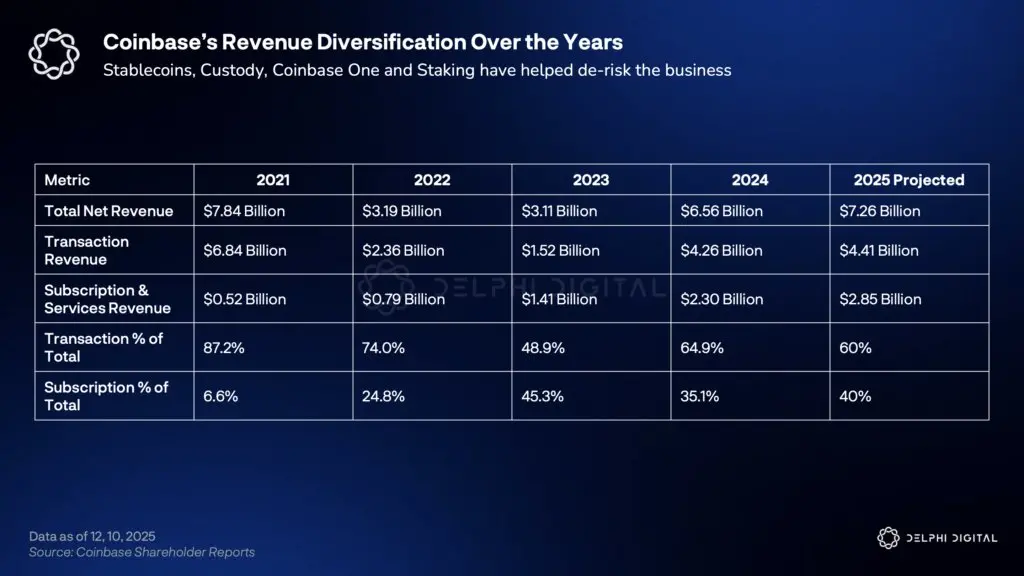
Coinbase initially relied heavily on trading activity for its business model but has since diversified. In Q3 2025, stablecoin revenue reached $354.7 million. Revenue related to the USD reserves in the Circle account is received quarterly, independent of market activity.
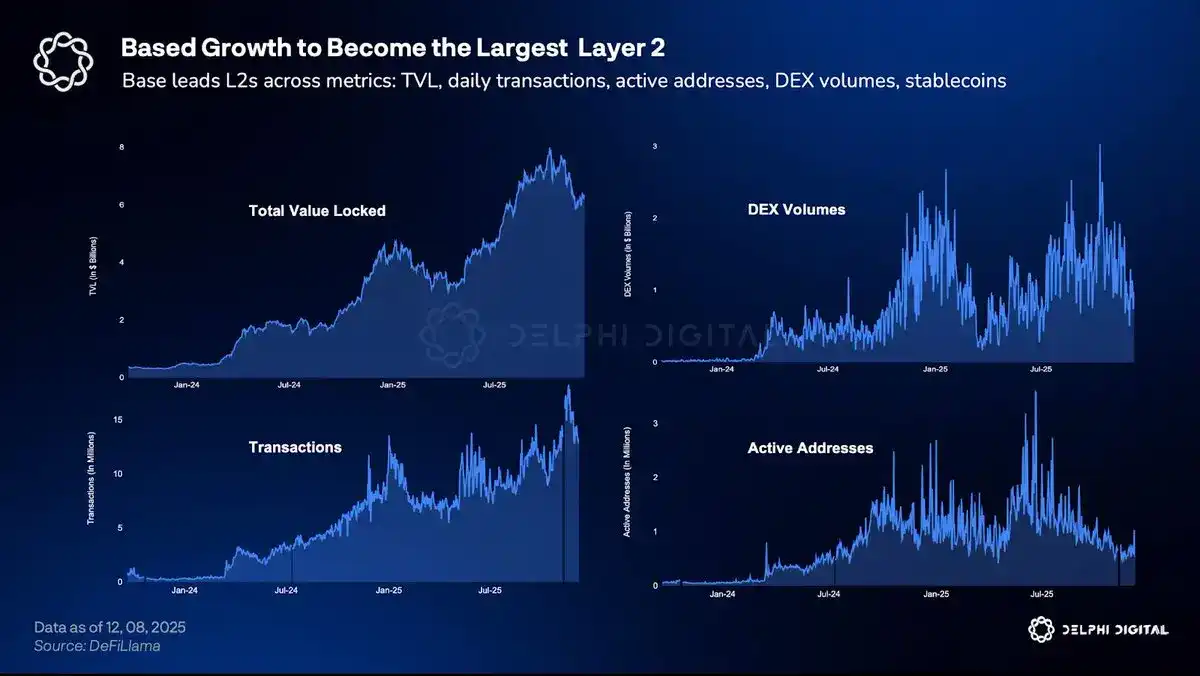
Building on this, Coinbase is constructing the interface layer. The Base App feels more like a content feed platform than a trading terminal. The underlying Rollup platform hosts independent projects, which Coinbase promotes using its own influence. Morpho's total outstanding loans on Base have exceeded $905 million, demonstrating the power of compounding. For payments, the x402 platform will provide them with agent payment channels as AI-driven transactions grow.
Coinbase also fills strategic gaps through acquisitions. The $2.9 billion acquisition of Deribit gave it a dominant position in Bitcoin options trading. The $375 million acquisition of Echo marked Robinhood's formal entry into the token issuance (IPO) space.
This move is based on the assumption that combining the convenience of custody with permissionless access yields better results than focusing exclusively on either model.
Robinhood
In the past, users needed separate accounts for stocks, banking, and digital assets. Funds would be stranded across different platforms and settlement windows. Robinhood consolidates this into one platform. After closing a position, funds are immediately available for other uses, such as spending or earning yield.

The subscription model creates a strong user retention mechanism. Gold membership grew 77% year-over-year.
Maintaining access requires keeping assets on the platform. The linked debit card also reveals patterns in user behavior regarding income, saving, investing, and spending, which aid in risk assessment as lending services mature.
International growth comes primarily from blockchain-based securities. Over 400 U.S. publicly listed companies are now available to European users. Although these rely on synthetic structures rather than direct ownership, their investment in pre-IPO companies has garnered significant attention. Plans describe eventual settlement via a dedicated rollup mechanism, which would eliminate overnight waiting periods and remove trading time restrictions.
These plans strike a balance between regulatory credibility and a willingness to move quickly in emerging areas.
Binance
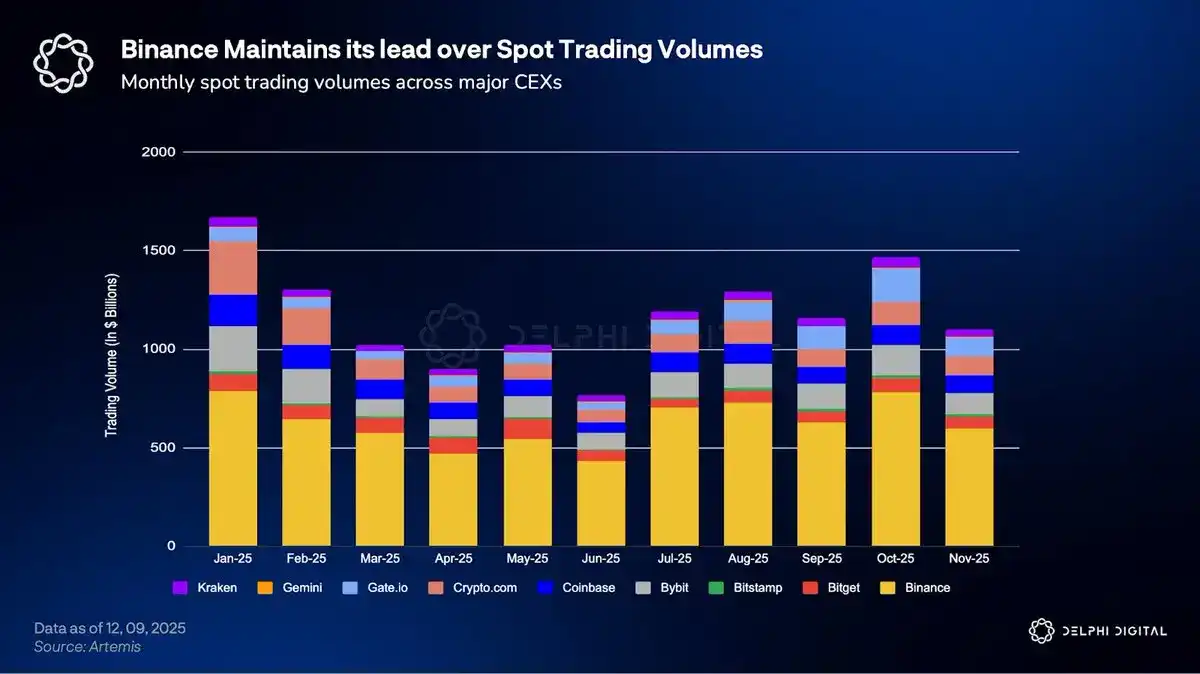
Binance has become the default platform for spot and perpetual合约 trading. Everything else followed as the team identified user needs and addressed them. Registered users exceed 270 million. Trading volume reached $7.3 trillion in 2024. Payment processing exceeded $250 billion with over 45 million active users.
Currently, the product encompasses trading from the Foundation, merchant and consumer payments, passive yield through staking and savings products, self-custody tools for broader ecosystem access, and premium services for large asset allocators.
Their token discovery program demonstrates distribution leverage. Wallet users get priority access to new token launches and receive token rewards. Of the tokens launched through the Alpha test, 18 eventually listed on the exchange. Participants typically buy in at prices lower than the official token opening price. User acquisition costs through these programs have proven lower than traditional advertising.
Each product supports the next. Traders discover yield options, yield earners find payment channels, and wallet users get balances to use. These services feed into each other rather than operating independently.
Kraken
Kraken noticed that too many features often confuse users rather than drive conversion. Complexity that represents powerful functionality in some regions can be a barrier in others. While other platforms seek to unify products, Kraken is doing the opposite, segmenting the user experience while unifying the underlying technology.
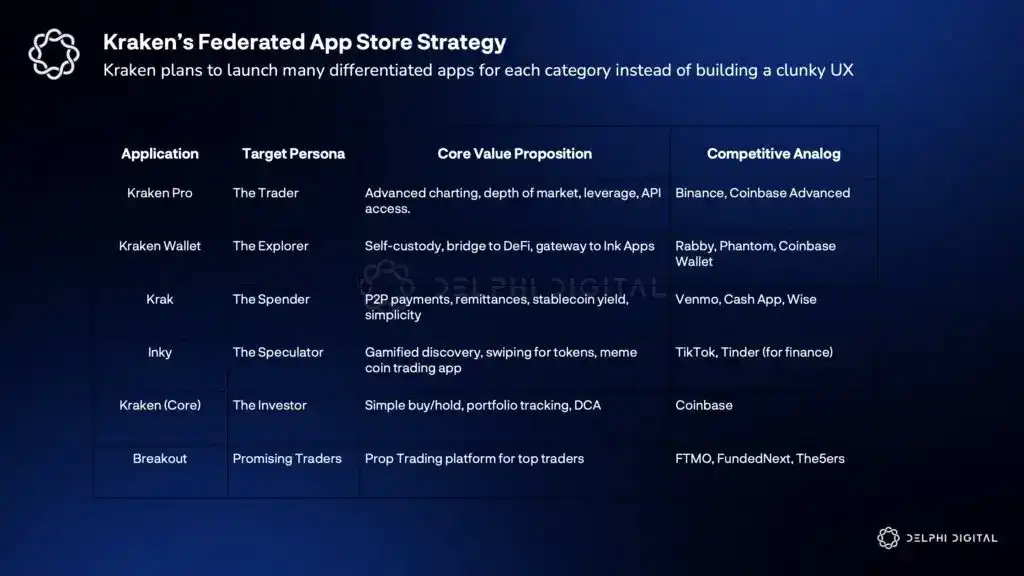
Inky caters to impulse trading with a click-based navigation design aimed at speed. Krak offers cross-border transfers, balances earning ~4% APY, and card payments globally without conversion fees. Universal rollup capabilities allow external developers to build products for the existing customer base without starting from scratch.
Backed added tokenized equity functionality, with issuance exceeding $180 million and support for external wallets. The $1.5 billion NinjaTrader acquisition brought a domestic derivatives license. A well-funded trading desk allows aspiring professionals to trade with company capital after demonstrating skill.
X
X remains the wild card. The platform hosts critical conversations shaping cryptocurrency's development but currently lacks native fund transfer capabilities. Its regulatory approvals cover 38 US jurisdictions, and it has established partnerships with major card networks. If X delivers on promises of payments and trading services, given its current level of attention, it introduces an unpredictable variable.
The battle for the interface has just begun. Whoever becomes the default interface for cryptocurrency users will capture the value flowing into the protocols.