Author | Delphi Digital
Compiled | Odaily Planet Daily (@OdailyChina)
Translator | DingDang (@XiaMiPP)
Editor's Note: Bitcoin has strongly broken through the $96,000 mark, and market sentiment is rapidly heating up again. But compared to short-term price fluctuations, what is more worthy of discussion might be the directions truly worth paying attention to in the next phase of the crypto market. Delphi Digital provides 10 core judgments in its latest "2026 Outlook Report".

1. AI Agents Begin Autonomous Trading
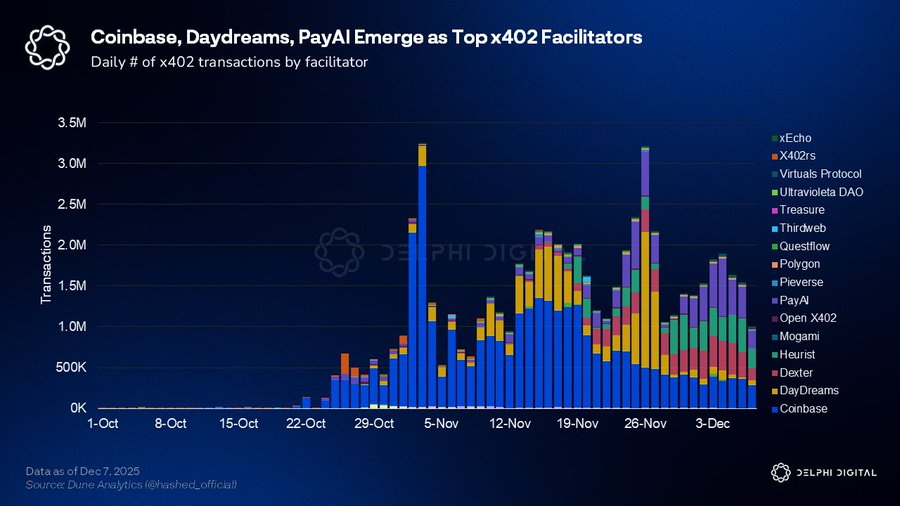
The x402 protocol allows any API to control access via crypto payments. When an Agent needs a service, it can directly use stablecoins for instant payment—no shopping cart or subscription system needed. ERC-8004 introduces a trust mechanism by establishing a reputation registry for Agents: recording their historical performance and requiring them to provide staking guarantees.
When combined, a true "Autonomous Agent Economy" begins to take shape. Users can completely delegate travel planning to an Agent: it will subcontract the task to a flight search Agent, pay for data via x402, complete the booking process on-chain, all without any human intervention.
2. Perp DEX Devours Traditional Finance
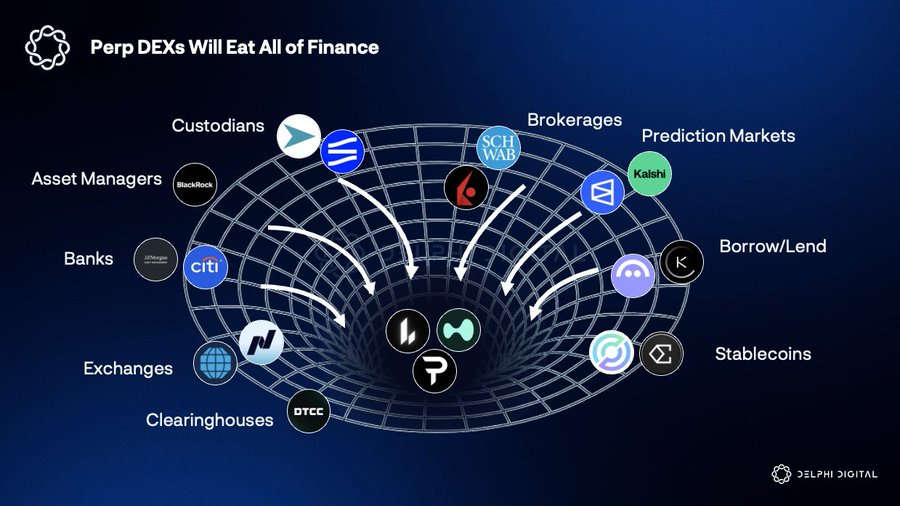
Traditional finance is costly, essentially due to high fragmentation: trading happens on exchanges, settlement relies on clearinghouses, and asset custody is handled by banks. Blockchain is compressing these steps into a single, unified smart contract.
Now, Hyperliquid is building native lending functionality. Perpetual contract DEXs have the potential to simultaneously act as brokers, exchanges, custodians, banks, and even clearinghouses. Competitors like @Aster_DEX, @Lighter_xyz, and @paradex are accelerating their pursuit.
3. Prediction Markets Evolve into Financial Infrastructure
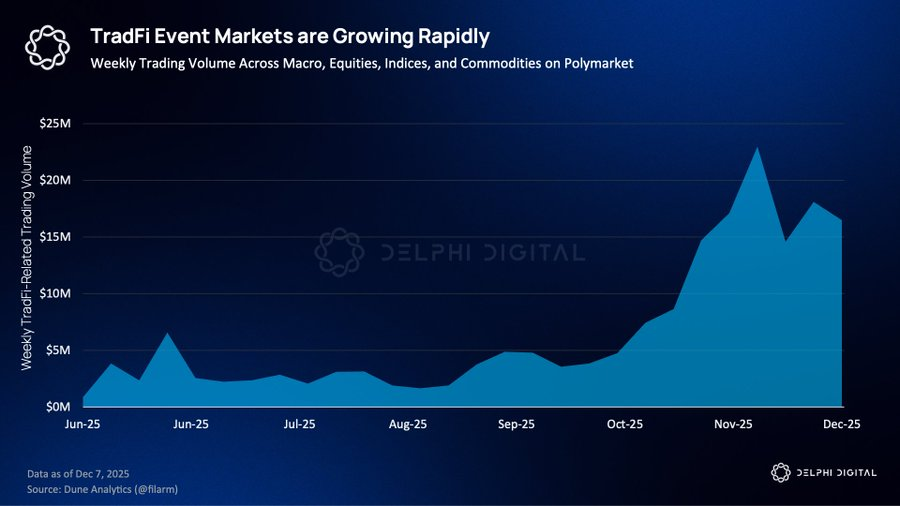
Interactive Brokers Chairman Thomas Peterffy described prediction markets as a "real-time information layer for portfolios." Currently, early demand on IBKR is mainly focused on weather contracts for energy, logistics, and insurance risk management.
Entering 2026, prediction markets will expand into more categories: equity event markets around corporate earnings surprises and guidance ranges, macro data markets for CPI and Fed decisions, and cross-asset relative value markets. A trader holding tokenized AAPL can hedge earnings risk with a simple binary contract, without resorting to complex option structures. Prediction markets will officially become a first-class derivative tool.
4. Ecosystems "Reclaim" Yield from Stablecoin Issuers
From distribution rights alone, Coinbase earned over $900 million from USDC reserves last year. Meanwhile, public chains like Solana, BSC, Arbitrum, Aptos, and Avalanche generate a combined annual fee income of about $800 million, but they host over $30 billion in USDC and USDT. The platforms driving stablecoin usage were "losing" more value to issuers than they were capturing.
This situation is being disrupted. Hyperliquid initiated a competitive bidding process for USDH, channeling half of the reserve yield into its Assistance Fund. Ethena's "Stablecoin-as-a-Service" model has been adopted by Sui, MegaETH, and Jupiter. Yield that previously flowed passively to established issuers is now returning to the platforms that actually create use cases.
5. DeFi Breaks the Under-Collateralized Lending Dilemma
DeFi lending protocols have locked in billions in TVL, but almost entirely rely on over-collateralization. The real breakthrough lies in Zero-Knowledge Transport Layer Security (zkTLS): users can prove their bank balance exceeds a certain threshold without revealing account numbers, transaction history, or identity.
@3janexyz already offers instant, under-collateralized USDC credit lines based on verified Web2 financial data; its algorithm monitors borrower status in real-time and dynamically adjusts interest rates. The same framework can introduce "historical performance" as a credit score to provide credit support for AI Agents. @maplefinance, @centrifuge, and @USDai_Official are entering adjacent fields. In 2026, unsecured/under-collateralized lending will move from proof-of-concept to infrastructure stage.
6. On-Chain Forex Finds Product-Market Fit
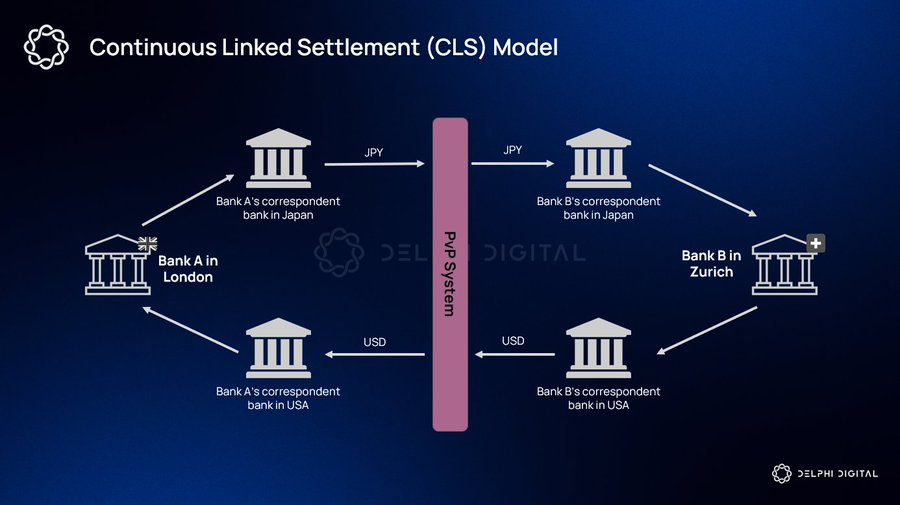
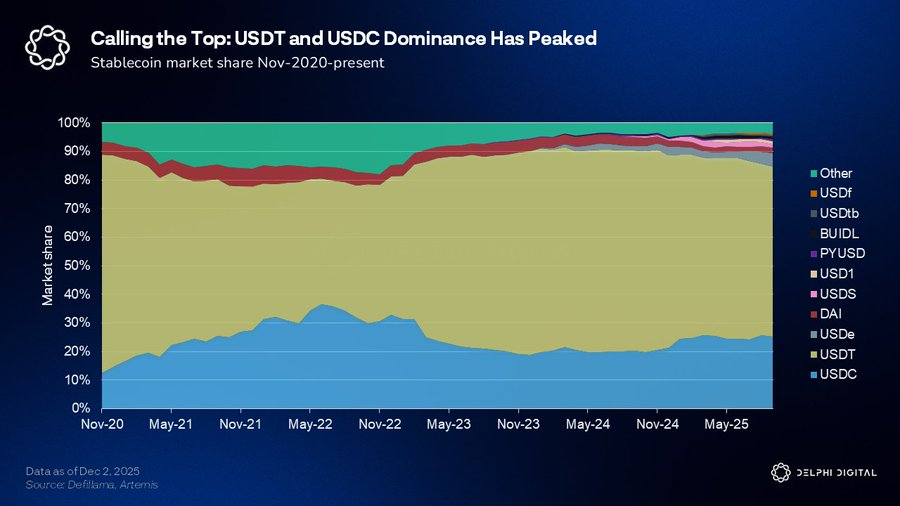
Currently, USD stablecoins account for 99.7% of total supply, but this dominance may be nearing a阶段性高点 (stage high). The traditional forex market is worth trillions of dollars but is filled with intermediaries, fragmented settlement systems, and high fees. On-chain forex compresses the entire intermediary chain by allowing various currencies to coexist as tokenized assets on the same execution layer.
True product-market fit might first appear in emerging market currency pairs—where traditional forex channels are the most expensive and inefficient, making the crypto value proposition clearest.
7. Gold and Bitcoin Lead the "Devaluation Trade"
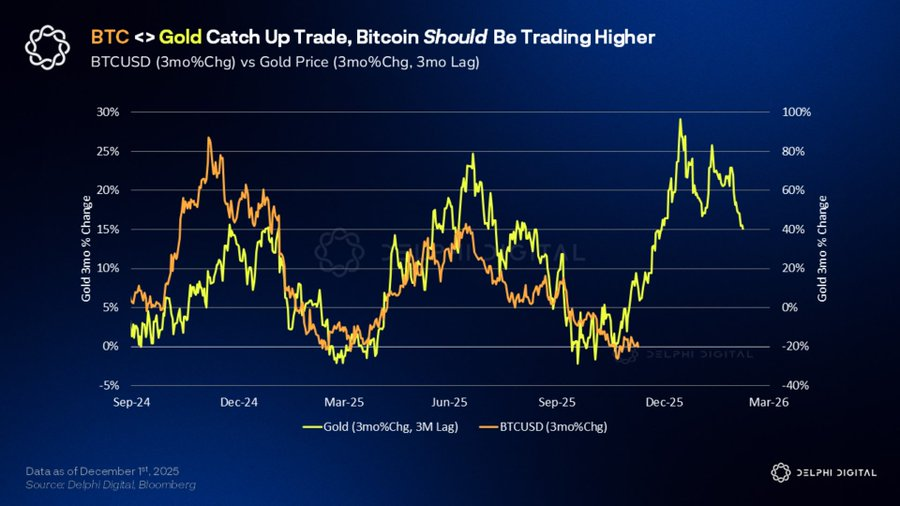
Since we listed gold as the "chart most worth watching," its price has risen about 60%. Even at historical highs, central banks have cumulatively purchased over 600 tons of gold, with China being one of the most active buyers.
The macro environment continues to support its strong performance: global central banks continue to cut interest rates, fiscal deficits persist at least until 2027, global M2 hits new highs, and the Fed is ending quantitative tightening. Historical experience shows gold typically leads Bitcoin by 3 to 4 months. When "currency devaluation" becomes a mainstream topic ahead of the 2026 midterm elections, both assets will see significant safe-haven inflows.
8. Exchanges Are Becoming "Everything Apps"
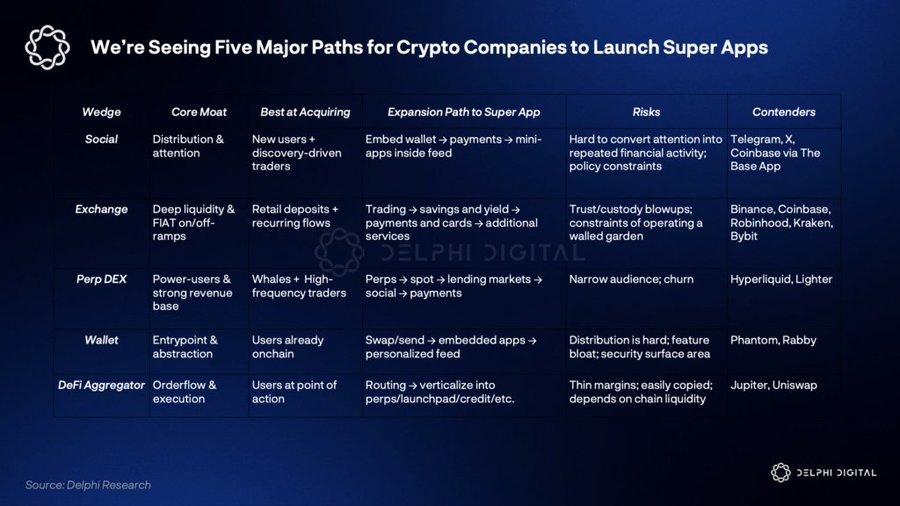
Coinbase, Robinhood, Binance, and Kraken are no longer just exchanges; they are building true super apps.
Coinbase has Base as its operating system, Base App as its user interface, USDC income forming the underlying cash flow, and a derivatives布局 through Deribit. Robinhood's Gold membership grew 77% year-over-year, gradually becoming its core retention engine. Binance has long reached super app scale, with over 270 million users and $250 billion in payment volume. When distribution costs approach zero, value concentrates on platforms that "own the user." In 2026, the leading effects will become significantly pronounced.
9. Privacy Infrastructure Catches Up with Demand
Privacy is under systemic pressure: the EU passed the "Chat Control Act," cash transaction limits are set at €10,000, and the ECB plans to introduce a digital euro with a holding limit of €3,000.
Meanwhile, privacy infrastructure is accelerating. @payy_link launched a private crypto card, @SeismicSys offers protocol-level encryption solutions, @KeetaNetwork enables on-chain KYC without exposing personal data, and @CantonNetwork provides privacy infrastructure for large financial institutions. Without private轨道 (tracks/channels), stablecoin adoption will hit a bottleneck.
10. Altcoin Returns Will Continue to Diverge
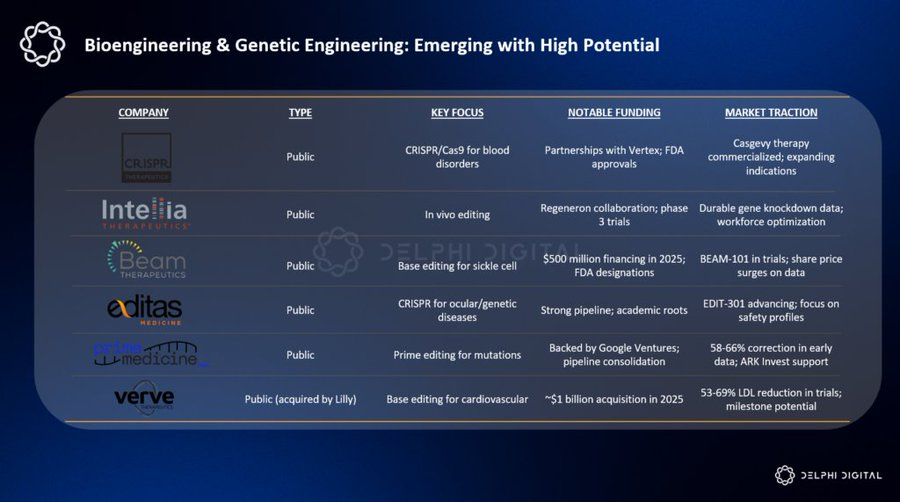
The past cycles of "across-the-board rallies" are unlikely to repeat. There is still over $3 billion in token unlock pressure, competition from fields like AI, robotics, and biotech is significantly intensifying, and ETF flows will concentrate more on Bitcoin and a few large assets.
Capital will be reallocated around "structural demand": tokens with ETF inflows, protocols with real revenue and buyback mechanisms, and applications that have truly found product-market fit. The ultimate winners will be concentrated among teams building defensive moats in real economic activity.
Conclusion
The crypto industry is entering its next phase; institutionalization is no longer the future but the ongoing reality. Prediction markets, on-chain credit, the Agent economy, and stablecoins as infrastructure are driving a true paradigm shift.
Crypto is becoming the infrastructure layer of global finance. The teams that truly understand this trend will define the next decade.






