DeFi vs. SEC: Should ‘non-custodial platforms’ be treated like exchanges?

ambcryptoPubblicato 2026-04-02Pubblicato ultima volta 2026-04-02

Introduzione

DeFi Education Fund (DEF) argues that non-custodial DeFi protocols, AMMs, and their developers should not be regulated as exchanges or intermediaries, as they don’t perform exchange functions or control user assets. They oppose SIFMA’s push for SEC regulation based on function rather than decentralization. SIFMA and Citadel Securities advocate for regulating DeFi platforms handling tokenized securities to ensure investor protection, citing risks and scams. DEF suggests Wall Street’s stance may be motivated by business interests, as DeFi disrupts traditional intermediaries. The SEC faces the challenge of balancing innovation and regulation in its upcoming framework.

DeFi regulation is back in the headlines as the crypto industry and Wall Street disagree on the proposed ‘innovation exemption’ for tokenized assets.

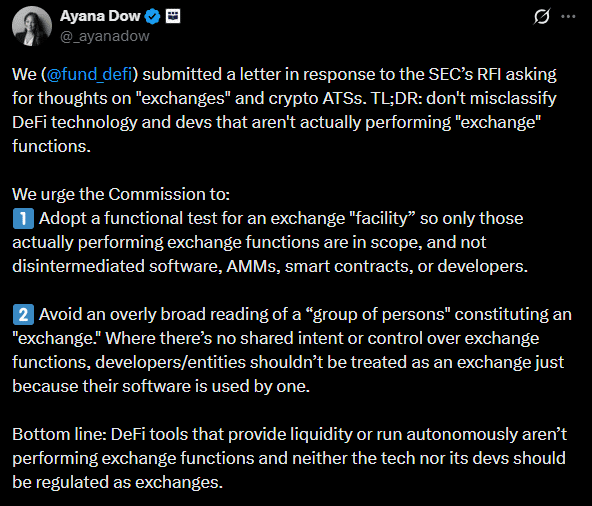
On the 1st of April, a DeFi advocacy group, the DeFi Education Fund (DEF), wrote to the SEC arguing that decentralized protocols should not be ‘misclassified as intermediaries’ like centralized traditional exchanges.

Ayan Dow, legal officer at DEF, added,

DeFi tools that provide liquidity or run autonomously aren’t performing exchange functions, and neither the tech nor its devs should be regulated as exchanges.
Source: X

According to the advocacy group, any non-custodial application does not fall within the legal definition of an intermediary or exchange. Additionally, classifying developers as intermediaries, yet they don’t control the ‘non-custodial platforms’ they’ve built, would place an overwhelming regulatory burden on them.

As such, the advocacy group pressed that any suggested DeFi regulation scope should exclude disintermediated software, automated market makers (AMMs), smart contracts, and non-controlling developers.

Wall Street opposes DeFi legal exemption

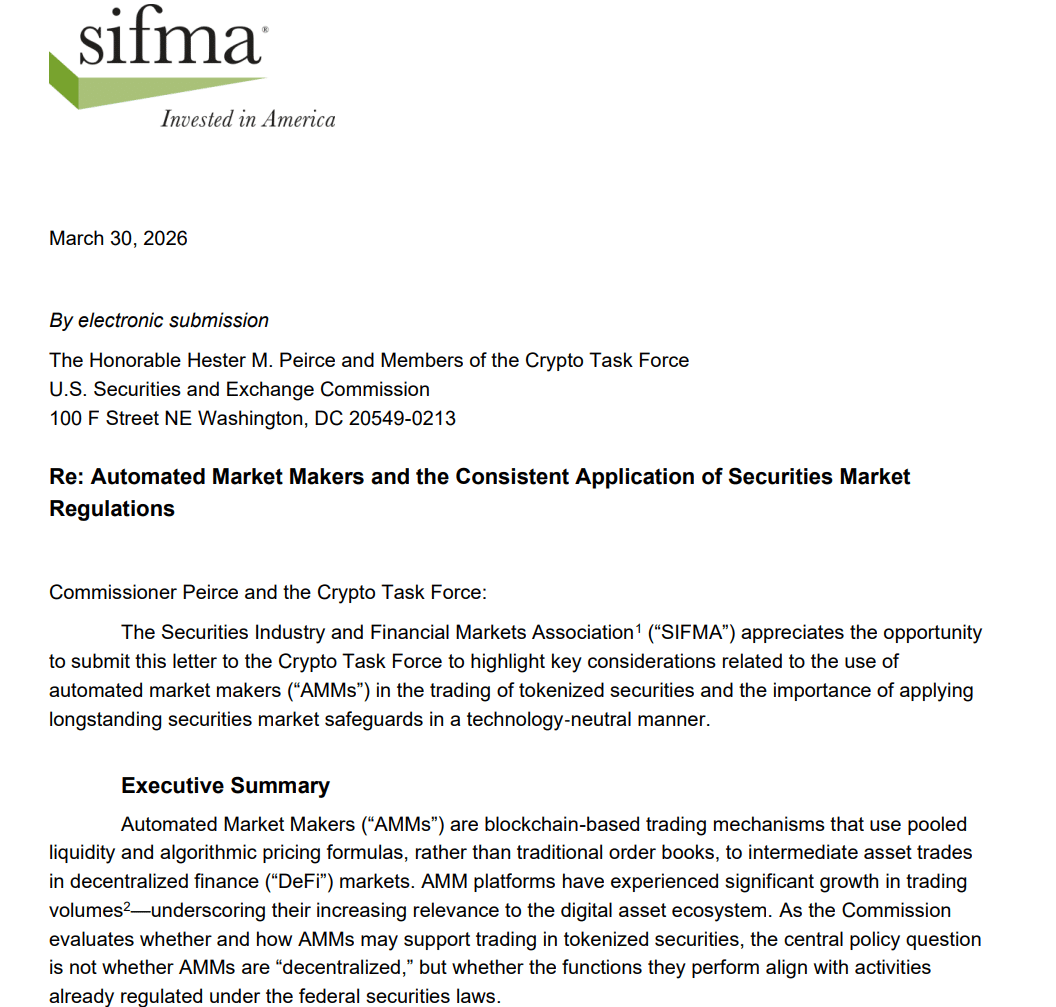
The DEF letter was also a response to SIFMA (Securities Industry and Financial Markets Association). The TradFi umbrella group recently argued that the SEC should regulate AMMs, citing risk to investor protections.

According to SIFMA, the SEC should regulate AMMs and DeFi platforms based on their functions in supporting tokenized securities trading. And not based on whether they’re decentralized, as DeFi supporters propose.

SIFMA believes the Commission should maintain technology neutrality by regulating AMMs based on their market function rather than protocol architecture.
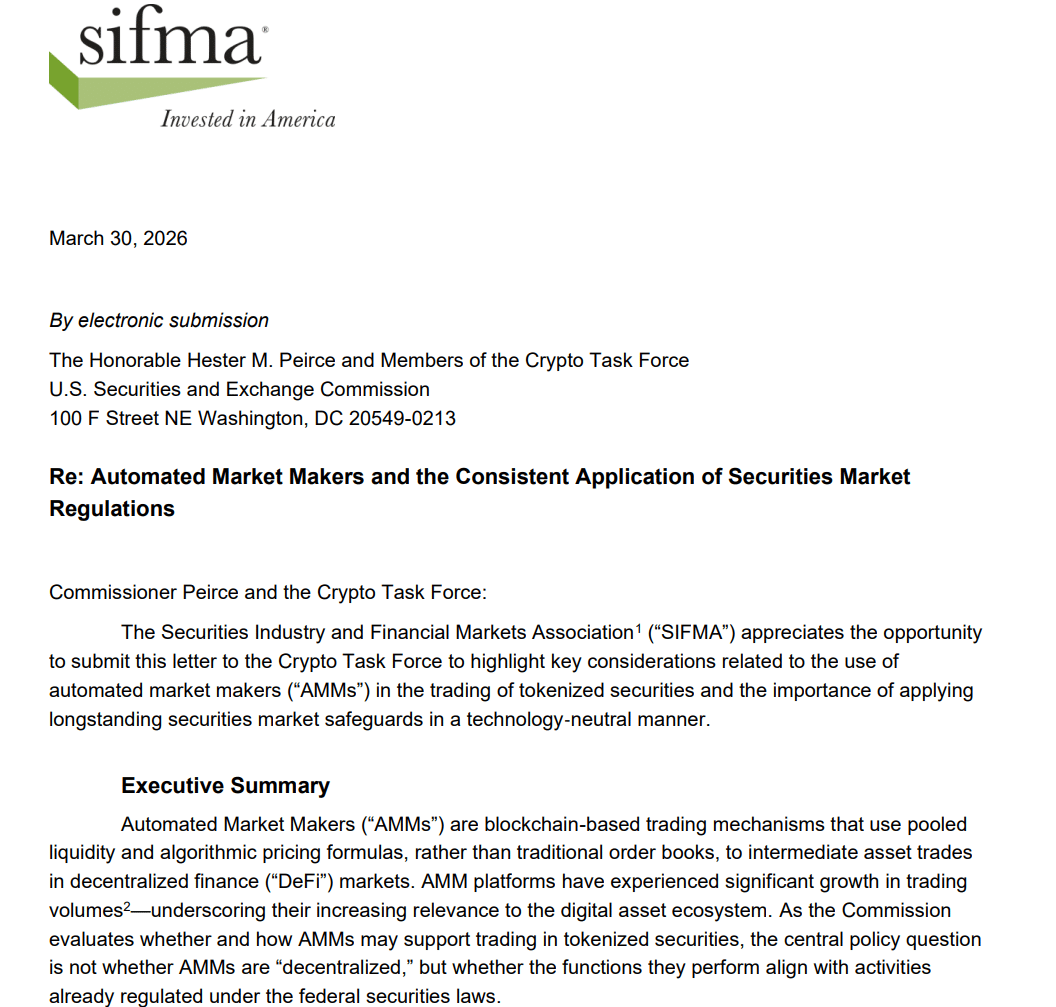
Source: SEC

SIFMA’s stance echoed Citadel Securities’ position. Last year, Citadel called for a strict regulation of DeFi platforms that handle tokenized securities.

SIFMA and Citadel’s opposition to unregulated DeFi could be genuine concerns, given the scams and blowouts seen in the past across the sector. For Wall Street, compliance should apply to everyone handling tokenized securities.

However, Citadel gets most of its revenue from being a centralized intermediary, especially for retail platforms like Robinhood. As a result, DEF views the Wall Street opposition as motivated by the potential disruption of DeFi tech (removing intermediaries) to its business interests.

It remains to be seen how the SEC will address these competing interests while still supporting innovation in the upcoming ‘exemption’ framework for tokenized securities.


Final Summary

  • Advocacy group DeFi Education Fund (DEF) has opposed SIFMA’s push to regulate AMMs and other non-custodial DeFi platforms
  • However, SIFMA claims most ‘decentralized’ platforms pose investor protection risks.

Domande pertinenti

QWhat is the main argument made by the DeFi Education Fund (DEF) in their letter to the SEC?

AThe DEF argues that decentralized protocols should not be misclassified as intermediaries like centralized exchanges. They state that DeFi tools providing liquidity or running autonomously are not performing exchange functions, and neither the technology nor its developers should be regulated as exchanges.

QWhy does the DEF believe that regulating developers as intermediaries would be problematic?

AThe DEF believes that classifying developers as intermediaries when they do not control the 'non-custodial platforms' they built would place an overwhelming and inappropriate regulatory burden on them.

QWhat is SIFMA's position on the regulation of Automated Market Makers (AMMs) and DeFi platforms?

ASIFMA argues that the SEC should regulate AMMs and DeFi platforms based on their function in supporting tokenized securities trading, not on whether they are decentralized. They believe regulation should be technology-neutral and based on market function.

QWhat potential conflict of interest does the DEF suggest motivates Wall Street's opposition to DeFi exemptions?

AThe DEF suggests that Wall Street firms, like Citadel Securities which earns most of its revenue as a centralized intermediary, are motivated by the potential disruption that DeFi technology (which removes intermediaries) poses to their business interests.

QWhat is the core issue that the SEC must address regarding the proposed 'innovation exemption' for tokenized assets?

AThe SEC must address the competing interests between the crypto industry, which seeks exemptions for non-custodial DeFi platforms, and traditional finance (Wall Street), which argues for function-based regulation, all while still trying to support innovation.

Letture associate

The Cost of an 11.5% Annualized Return: Will MicroStrategy's STRC Face a Moment of Reckoning?

This article analyzes the potential risks associated with MicroStrategy's (MSTR) use of structured financial products like STRC to leverage its BTC exposure. While these tools have enabled impressive returns (e.g., 11.5% annualized) and fueled significant capital inflows ($13.5B outstanding), they also create substantial annual dividend obligations (~$400M). The author argues that this structure, while effective in a bull market, could become a liability if BTC price stagnates or declines. The core risk is a potential negative feedback loop: the growing dividend burden from continued STRC issuance may eventually outweigh the benefits of increased BTC holdings. To meet these obligations, MicroStrategy might need to use new issuance proceeds for dividends instead of buying more BTC, which could disappoint equity investors. If the market capitalization (mNAV) falls below the value of its BTC holdings, the company could be forced to sell BTC instead of issuing new shares, potentially triggering a panic. The author estimates a potential inflection point in 6 months, where annual dividend costs reach $3-4B. At that stage, CEO Michael Saylor might face a difficult choice: sell BTC to meet obligations or sacrifice the credibility of the preferred shares by halting dividends. The article concludes that this financial engineering, while powerful, could ultimately "backfire" on MicroStrategy if market conditions turn.

marsbit48 min fa

The Cost of an 11.5% Annualized Return: Will MicroStrategy's STRC Face a Moment of Reckoning?

marsbit48 min fa

Trading

Spot
Futures
活动图片