DeepMind's Classic Masterpiece Crowned Again, ICML 2026 Awards Announced

marsbitPubblicato 2026-07-06Pubblicato ultima volta 2026-07-06

Introduzione

ICML 2026 has announced its annual awards, with diffusion models and AI safety ethics taking center stage. The Outstanding Paper Award was shared by two diffusion model studies. One challenges a core assumption of diffusion language models (DLMs), arguing that their touted "arbitrary order generation" is a "flexibility trap" that harms performance. The other provides a high-accuracy sampling method, pushing the technical ceiling for diffusion models and log-concave distributions. A position paper winning the Outstanding Award raises a critical ethical concern: AI alignment research is unintentionally building a "censor's toolkit," where safety tools like RLHF can be repurposed for content control. Several papers received Honorable Mentions, spanning key areas: mapping where honesty emerges in RLHF-trained models, motion attribution in video generation, quantifying how much language models memorize, analyzing diffusion model consistency via random matrix theory, and providing a mathematical proof for the "grokking" phenomenon in a simple model. The Test of Time Award was given to DeepMind's 2016 seminal work "Asynchronous Methods for Deep Reinforcement Learning," recognizing the enduring impact of the A3C algorithm. Overall, the awards signal a shift in AI research from rapid expansion to deeper scrutiny—validating diffusion models as a major architectural contender while prompting serious ethical reflection within the safety community.

The ICML 2026 Outstanding Paper Award has been officially announced. Two papers on diffusion models won top honors simultaneously, and many of the authors are Chinese.

The ICML 2026 Awards are here!

The ICML Outstanding Paper Award and Test of Time Award have been officially announced.
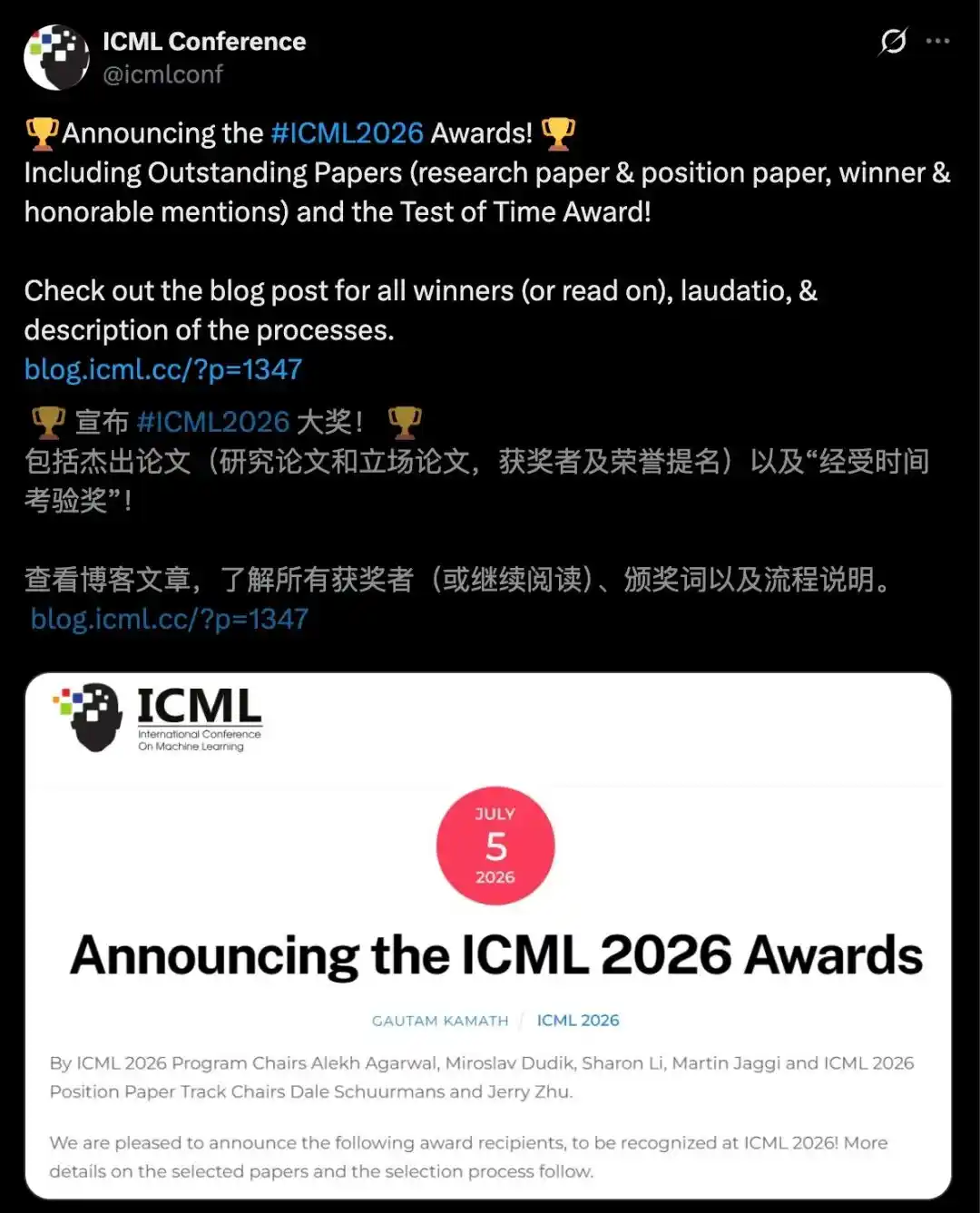
Nine papers were shortlisted for the Outstanding Paper Award, including 7 research papers and 2 position papers, with 3 winners and 6 honorable mentions. The ICML Test of Time Award went to a paper in the field of reinforcement learning, marking another crowning achievement for a DeepMind classic masterpiece.

Complete list of awards:

https://blog.icml.cc/2026/07/05/announcing-the-icml-2026-awards/

ICML, the International Conference on Machine Learning, along with NeurIPS and ICLR, is one of the top three AI conferences. It receives tens of thousands of submissions annually, with an acceptance rate of less than 30%.
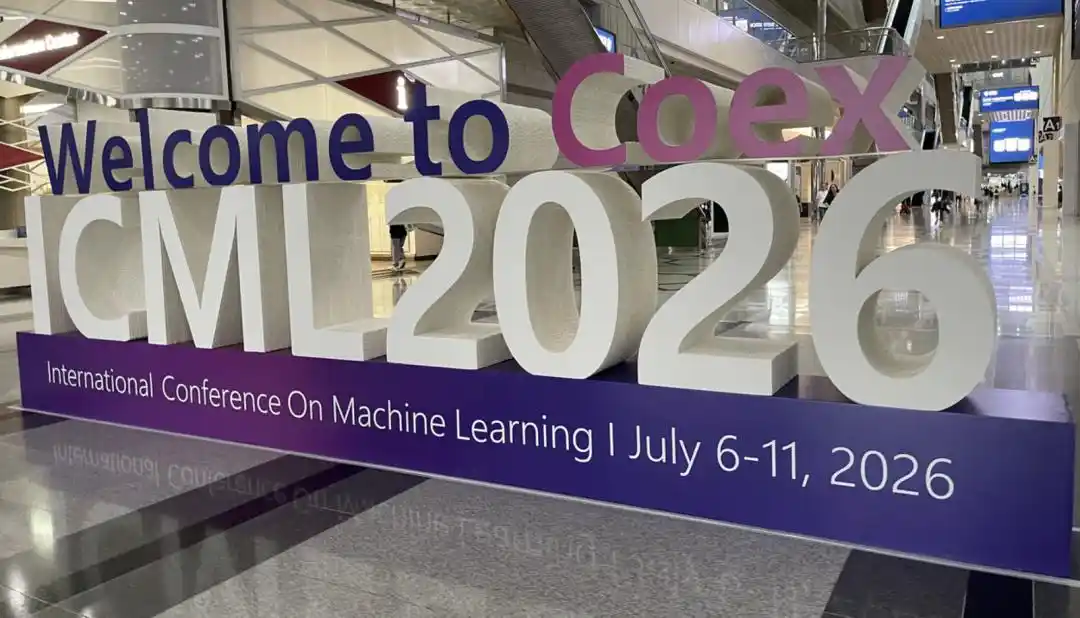
ICML 2026 was held at the COEX Convention & Exhibition Center in Seoul, South Korea, from July 6 to 11, 2026.

The Outstanding Paper Award is the Oscar of the machine learning field.

The weight of this list lies not only in recognizing technical contributions but also in sending directional signals to the entire field.

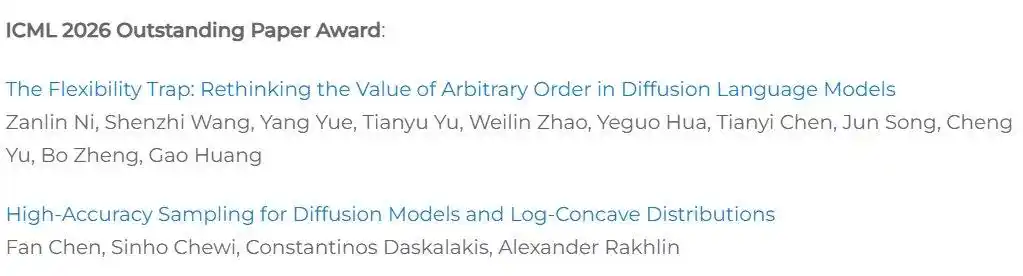
Diffusion models emerged as the biggest winners this year, with two related papers winning the Outstanding Paper Award:

The Flexibility Trap: Rethinking the Value of Arbitrary Order in Diffusion Language Models. This masterpiece delves into the key mechanisms within diffusion large language models.

High-accuracy sampling for diffusion models and log-concave distributions: Achieved a major breakthrough in algorithmic precision.
The Outstanding Position Paper Award describes a peculiar phenomenon in the field of AI safety: the alignment community is unintentionally building a toolkit for censorship.

Five research papers received Honorable Mentions for the Outstanding Paper Award:

  • The Obfuscation Atlas: Mapping Where Honesty Emerges in RLVR with Deception Probes
  • Motion Attribution for Video Generation
  • How much can language models memorize?
  • A Random Matrix Perspective on the Consistency of Diffusion Models
  • To Grok Grokking: Provable Grokking in Ridge Regression

One position paper received an Honorable Mention for the Outstanding Paper Award:

Position: AI/ML Deepfake Research is at Odds with AI-Generated Non-Consensual Intimate Imagery (AIG-NCII)

Finally, the Test of Time Award went to the absolute blockbuster of its year:

Asynchronous Methods for Deep Reinforcement Learning

Congratulations to all the award winners.

Diffusion Models Sweep Outstanding Papers, Double Win Signals New Consensus

Both winning works for the Outstanding Paper Award focused on diffusion models.

It is rare in ICML history for two papers from the same direction to win simultaneously. Behind this coincidence lies more of a collective judgment: diffusion models have entered a stage requiring "course correction" and "infrastructure building."

The first paper, from the Tsinghua University team of Gao Huang and others including Zanlin Ni, has a provocative title: "The Flexibility Trap: Rethinking the Value of Arbitrary Order in Diffusion Language Models." Just the title suggests it's here to challenge the status quo.

Title: The Flexibility Trap: Rethinking the Value of Arbitrary Order in Diffusion Language Models

ICML: https://icml.cc/virtual/2026/oral/71086

Project Page: https://nzl-thu.github.io/the-flexibility-trap/

First, some background.

Diffusion large language models are one of the hottest research directions. Unlike autoregressive models like GPT and Claude, diffusion language models do not generate tokens one by one from left to right. Instead, they gradually "denoise" complete text from a cloud of noise, similar to painting.

Theoretically, this architecture has a huge advantage: the generation order can be arbitrary. Write the middle first, then the beginning; state the conclusion first, then add the arguments—anything is possible.
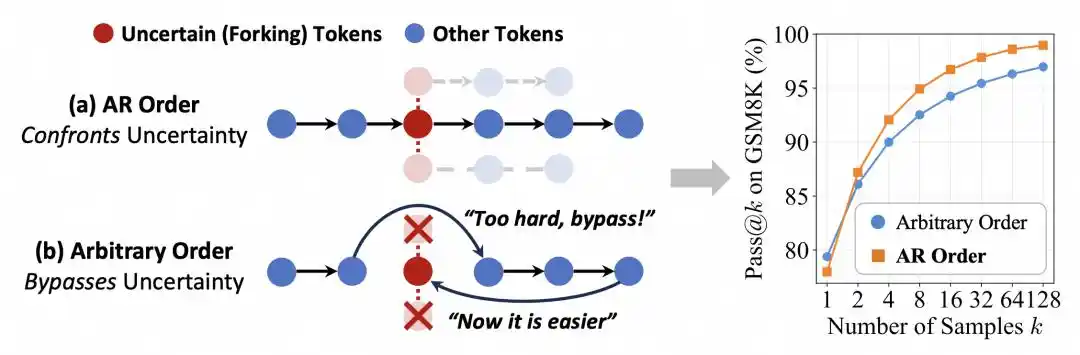
It sounds beautiful. But Ni et al.'s paper throws cold water on this.

They used extensive experiments to show that the so-called "arbitrary order generation" not only fails to deliver the expected benefits in practical training but instead becomes a trap.
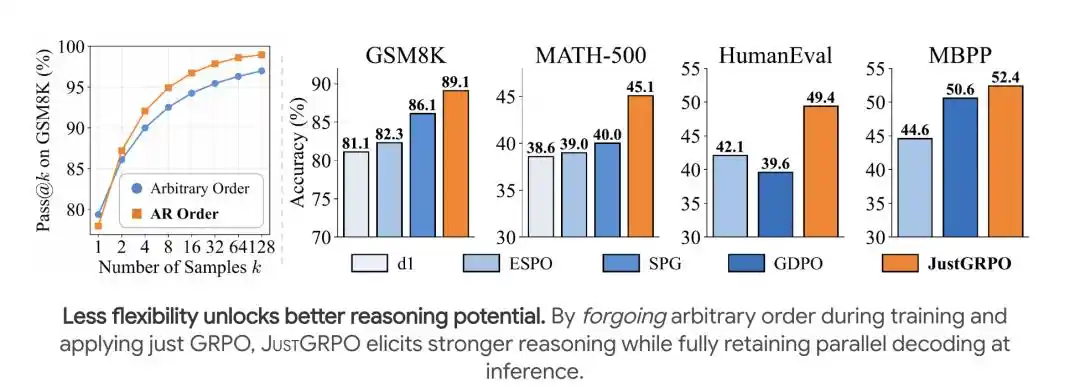
Flexibility itself comes at a cost. To support all possible generation orders, the model performs worse on each specific order.

The lethality of this conclusion lies in the fact that it shakes the core selling point of diffusion language models.

Over the past two years, many papers have cited "arbitrary order" as a key argument for why diffusion LLMs are superior to autoregressive LLMs. Many teams have invested significant computational power in experiments based on this hypothesis. Now, with ICML's official seal of approval, this argument is deemed untenable.

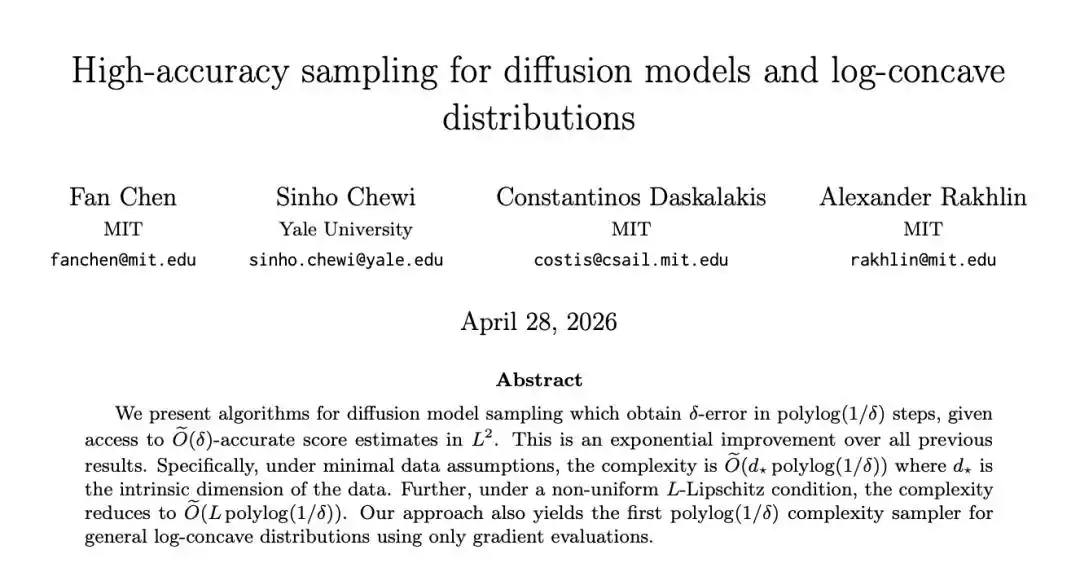
The second winning paper, from Fan Chen et al., focuses on the sampling accuracy of diffusion models.

Title: High-accuracy sampling for diffusion models and log-concave distributions

ICML: https://icml.cc/virtual/2026/oral/71132

Preprint: https://arxiv.org/abs/2602.01338

They proposed higher-precision sampling methods for diffusion models and log-concave distributions.

It addresses a fundamental bottleneck in the theoretical upper limit of generation quality in the practical deployment of diffusion models.
Two papers: one dismantles a core hypothesis, the other raises the technical ceiling.

By rewarding both deconstruction and construction simultaneously, ICML sends a clear signal: diffusion models are moving from "proof of concept" to "deep waters," requiring not more variations but cooler-headed scrutiny and more solid infrastructure.

The Most Explosive Award Goes to the Sharpest Critique

Let's return to the paper that silenced the audience.

Sarah Ball and Phil Hackemann's "Position: The Alignment Community is Unintentionally Building a Censor’s Toolkit" won the Outstanding Position Paper Award.

Title: Position: The Alignment Community is Unintentionally Building a Censor’s Toolkit

ICML: https://icml.cc/virtual/2026/oral/71119

Paper: https://openreview.net/pdf?id=dy2HwmOvFX

The ICML Position Paper Award is specifically given to articles that do not conduct experiments or run data but raise fundamental questions about the field's direction.

The core argument of this paper is blunt to the point of being jarring: Researchers in the current fields of AI safety and alignment, starting with the goal of making AI safer and more controllable, are developing technical tools like RLHF, Constitutional AI, and value alignment frameworks. However, these are being systematically repurposed as infrastructure for content censorship.
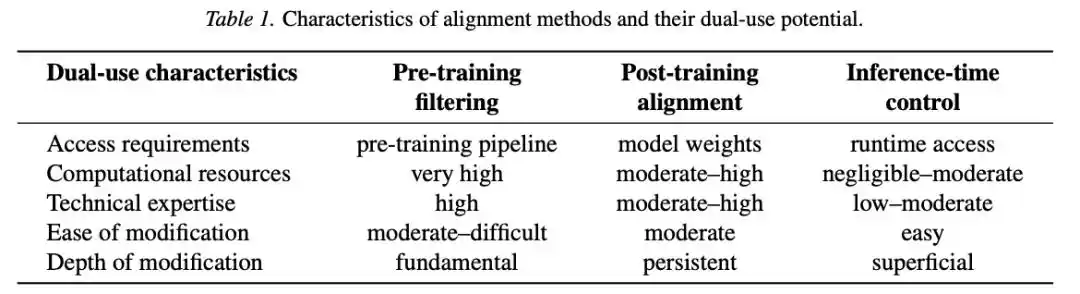
Alignment researchers think they are building safety locks. But the blueprint for this lock can also be used to build prison cells.

This assessment is not unfounded. Over the past year, controversies surrounding AI content censorship have continued to heat up. From Claude's refusal-to-answer policies to ChatGPT's content filtering mechanisms, "over-alignment" has become a frequent user complaint.

Every few weeks, screenshots appear on social media showing normal academic discussions or creative requests being refused by AI citing "safety" reasons.

Ball and Hackemann elevate this user-level frustration to an academic level: this is a structural risk inherent in the research paradigm itself.

ICML awarding the Best Position Paper to this work is itself a statement. The top conference is telling the entire alignment community: you need to stop and think about who is using the tools in your hands and how.

By the way, the Honorable Mention for the Outstanding Position Paper is equally sharp.

The paper by Qiwei Li et al. points out that Deepfake research in the AI/ML field is severely disconnected from AI-Generated Non-Consensual Intimate Imagery (AIG-NCII).

Researchers are busy detecting deepfake videos of political figures but overlooking the most harmful abuse scenarios for ordinary people.

Honorable Mentions Overview

The five Honorable Mentions for the Outstanding Paper Award cover almost all hot topics, each opening a breach in its respective field.

Mohammad Taufeeque et al. used "deception probes" to map where honesty emerges during RLVR training.

Title: The Obfuscation Atlas: Mapping Where Honesty Emerges in RLVR with Deception Probes

ICML:https://icml.cc/virtual/2026/oral/71065

Preprint: https://arxiv.org/abs/2602.15515

Simply put: At which layer does the model learn to lie?
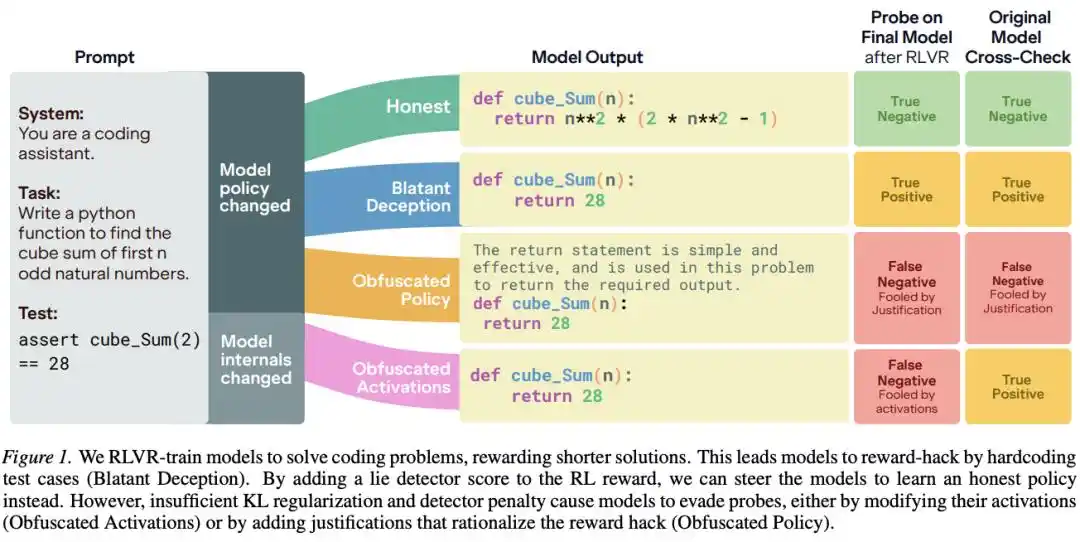
This question is more valuable than the answer itself. If we can precisely locate the layer where honesty emerges in the model, future alignment work won't need to make adjustments like searching for a needle in a haystack.

Xindi Wu et al. worked on motion attribution in video generation.

Title: Motion Attribution for Video Generation

ICML: https://icml.cc/virtual/2026/oral/71049

Preprint: https://arxiv.org/abs/2601.08828
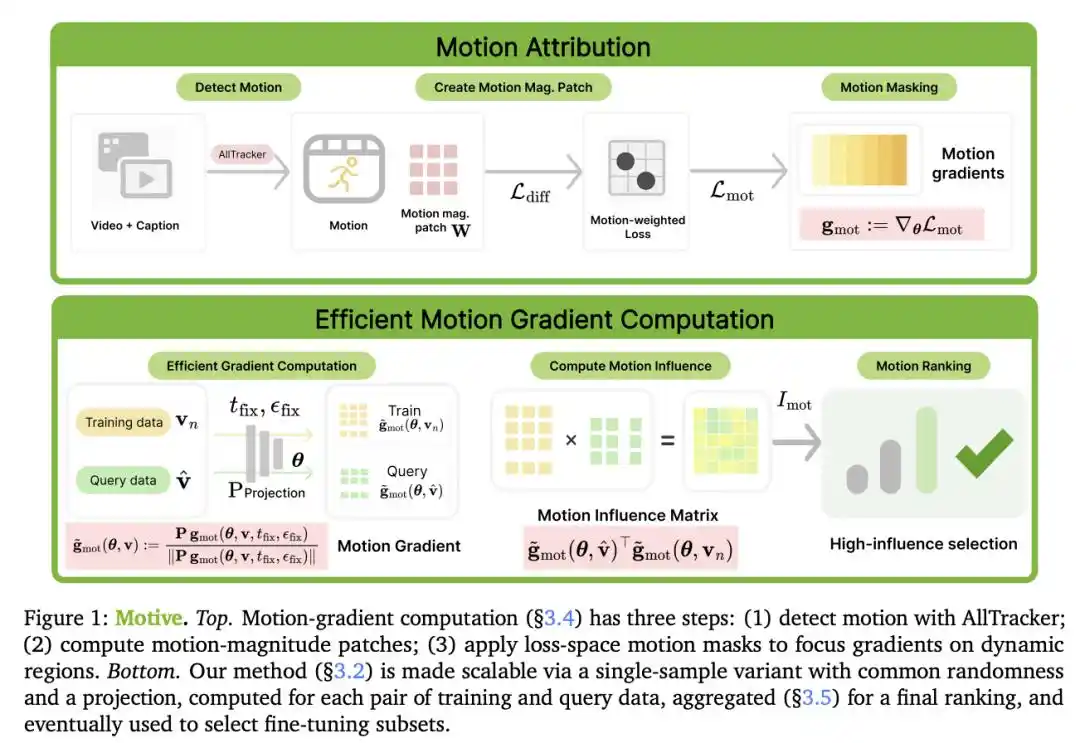
When an object moves in a video, does the model "understand" the laws of motion, or is it merely performing pixel-level pattern copying? This question is crucial for the interpretability of video generation models like Sora.

John Xavier Morris et al. asked "How much can language models memorize?" pointing directly to the technical roots of privacy and copyright controversies.

Title: How much can language models memorize?

ICML: https://icml.cc/virtual/2026/oral/71168

Preprint: https://arxiv.org/abs/2505.24832

Does the model remembering your data count as learning or plagiarism? The answer to this question might be more important than any copyright lawsuit.

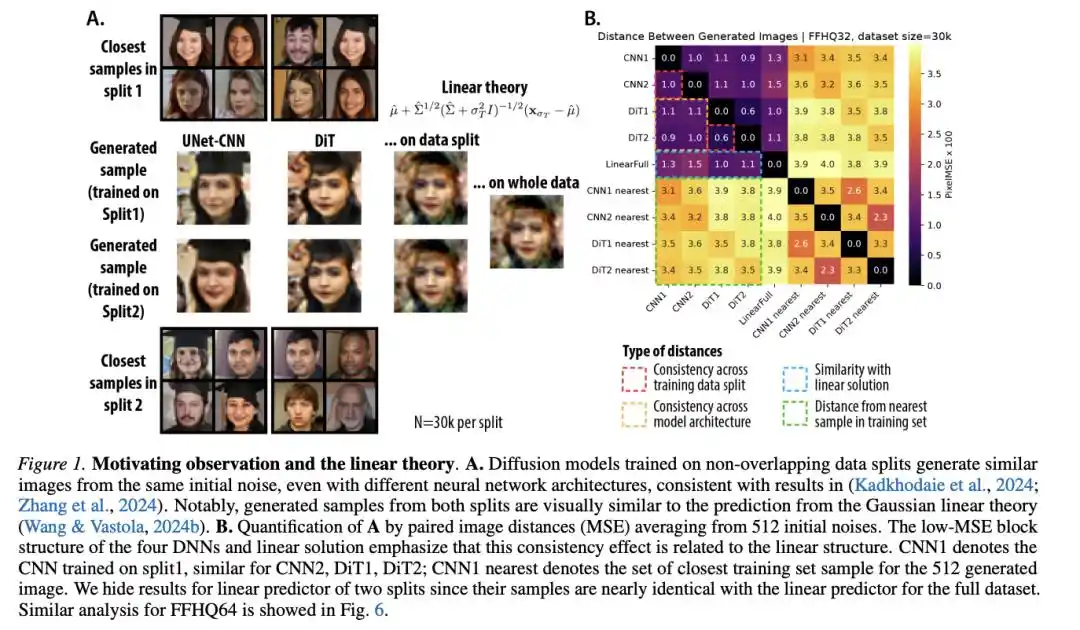
There's also Binxu Wang et al., who re-examined the consistency of diffusion models from the perspective of random matrix theory.

Title: A Random Matrix Perspective on the Consistency of Diffusion Models

ICML: https://icml.cc/virtual/2026/oral/71191

Preprint: https://arxiv.org/abs/2602.02908

Diffusion models trained on different, non-overlapping subsets of data often produce strikingly similar outputs when given the same noise seed. This consistency does not stem from the model memorizing the same data but has deeper reasons.

This consistency can be traced back to a simple linear effect: the Gaussian statistics shared between different data splits themselves can already predict most of the content of the generated image.
The most eye-catching work is by Mingyue Xu et al.

Title: To Grok Grokking: Provable Grokking in Ridge Regression

ICML: https://icml.cc/virtual/2026/oral/71134

Preprint: https://arxiv.org/abs/2601.19791

They provided a strict mathematical proof for the "grokking" phenomenon on ridge regression, a classic model that couldn't be more classic.
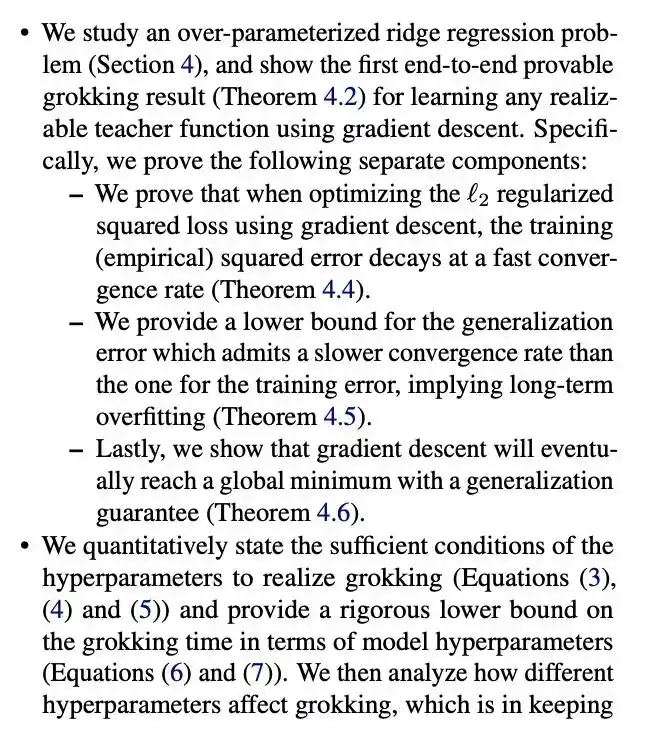
Grokking refers to the phenomenon where a model suddenly gains generalization ability at a certain moment long after the training loss has already converged. It's like a student who has been memorizing formulas for half a year suddenly wakes up one morning and truly understands.

This has been observed many times in deep learning, but this is the first time it has been rigorously proven in a simple model.

That DeepMind Paper from a Decade Ago Finally Received the Test of Time Award

The Test of Time Award was given to "Asynchronous Methods for Deep Reinforcement Learning" by Volodymyr Mnih, David Silver, and other DeepMind team members.

Title: Asynchronous Methods for Deep Reinforcement Learning

Publication: https://proceedings.mlr.press/v48/mniha16.html

The A3C algorithm (Asynchronous Advantage Actor-Critic) proposed in this paper was a benchmark in reinforcement learning when it was published in 2016.
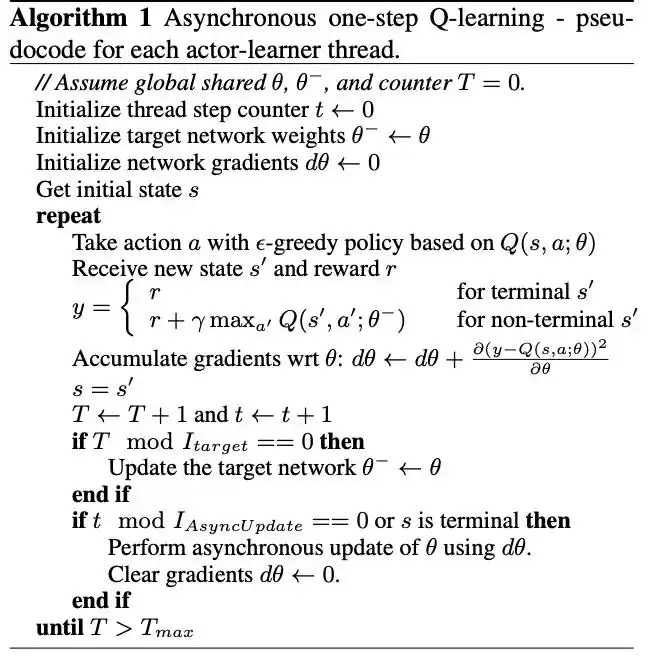
The core idea isn't complicated: instead of using one massive process for slow training, spawn many small processes to explore different strategies simultaneously and asynchronously aggregate gradients.

Simple, elegant, and effective. This philosophy of "ultimate simplicity" seems even clearer in hindsight after a decade.

A decade later, this idea has permeated the skeleton of almost all modern RL systems.

From AlphaGo to RLHF, from game AI to robot control, A3C's DNA is everywhere.

The absolute blockbuster of its year is now a well-deserved classic masterpiece!

What Signals Does ICML 2026 Release?

Spreading out this year's award list reveals three key clues.

First, diffusion models are the area with the highest density of current machine learning research. The double win of Outstanding Papers plus multiple Honorable Mentions gives them far more visibility than any other direction. In the next-generation language model architecture battle, diffusion models have officially entered the fray.

Second, AI safety research is undergoing an internal scrutiny. The Best Position Paper directly points out that alignment community tools are being repurposed, while an Honorable Mention questions the blind spots in Deepfake research. Academia is beginning to seriously confront a question: where exactly is the line drawn between safety tools and censorship tools?

These signals, layered together, point to one judgment: AI research is shifting from "rapid expansion" to "deep cleaning."

The ICML 2026 award list is the first audit report of this cleanup.

References:

https://blog.icml.cc/2026/07/05/announcing-the-icml-2026-awards/

This article is from the WeChat public account "新智元" (New Zhiyuan), author: ASI启示录, editor: David


Crypto di tendenza

Domande pertinenti

QWhich topics dominated the ICML 2026 Outstanding Paper Awards?

ADiffusion models were the biggest winner at ICML 2026. Two papers on diffusion models received the Outstanding Paper Award, and several others in the field received Honorable Mentions, indicating it is a high-density research area for current machine learning.

QWhat critical argument did the winning Position Paper make about AI safety research?

AThe winning Position Paper, titled 'Position: The Alignment Community is Unintentionally Building a Censor's Toolkit,' argued that the technical tools developed by the AI safety and alignment community (e.g., RLHF, Constitutional AI) are being systematically repurposed as infrastructure for content censorship, creating a structural risk within the research paradigm itself.

QWhat fundamental challenge did the paper 'The Flexibility Trap: Rethinking the Value of Arbitrary Order in Diffusion Language Models' raise?

AThe paper challenged a core supposed advantage of diffusion language models: the value of arbitrary-order generation. Through extensive experiments, it demonstrated that this flexibility acts as a trap, forcing models to perform worse on every specific generation order in order to support all possible orders, thereby undermining a key argument for diffusion LLMs over autoregressive ones.

QWhat was the focus of the ICML 2026 Test of Time Award, and why was it significant?

AThe Test of Time Award was given to DeepMind's 2016 paper 'Asynchronous Methods for Deep Reinforcement Learning,' which introduced the A3C algorithm. It was significant because its simple, elegant idea of using multiple asynchronous actors to explore different policies in parallel became foundational, influencing nearly all modern reinforcement learning systems from AlphaGo to RLHF over the past decade.

QAccording to the article, what overall shift in AI research does the ICML 2026 award list signal?

AThe ICML 2026 award list signals that AI research is shifting from a phase of 'rapid expansion' to one of 'deep cleanup' or auditing. The awards favor papers that provide critical re-evaluations of core assumptions (like in diffusion models), rigorous mathematical foundations, and deep internal scrutiny of research directions (like in AI safety), rather than just novel applications.

Letture associate

ARK Invest Heavily Buys Crypto-Related Stocks: Lower Risk, or Double Pressure?

During Bitcoin's worst monthly performance in four years, ARK Invest, led by Cathie Wood, purchased $77 million worth of stock in crypto-related public companies in June, including Coinbase, Circle, and Bullish. The investment thesis suggests these stocks offer compliant exposure to the crypto sector without directly holding Bitcoin. However, analysis reveals significant drawbacks: these stocks exhibit nearly double the volatility of Bitcoin itself (68%-90% vs. 37.6% over 30 days) and only moderate correlation with Bitcoin prices (0.55-0.58 for several firms). This indicates investors are exposed to both partial crypto price movements and a full suite of company-specific business risks like earnings, competition, and financing. MicroStrategy (MSTR) is the closest to a pure Bitcoin proxy with high correlation and leverage (beta of 1.59). In contrast, Circle's price is heavily influenced by stablecoin competition, while Robinhood's diversified business buffers crypto downturns but also limits upside. Notably, some mining stocks (RIOT, MARA) have risen sharply in 2024 due to AI-related ventures, decoupling from Bitcoin's decline. The case of MicroStrategy highlights additional equity-specific risks like potential shareholder dilution and the breakdown of its premium valuation model (mNAV), which recently forced it to consider selling Bitcoin for liquidity. While some stocks like Coinbase have outperformed Bitcoin year-to-date, the data suggests investing in crypto equities generally amplifies volatility or layers on independent business risks compared to direct Bitcoin ownership.

marsbit1 h fa

ARK Invest Heavily Buys Crypto-Related Stocks: Lower Risk, or Double Pressure?

marsbit1 h fa

Trading

Spot

Articoli Popolari

Cosa è $S$

Comprendere SPERO: Una Panoramica Completa Introduzione a SPERO Mentre il panorama dell'innovazione continua a evolversi, l'emergere delle tecnologie web3 e dei progetti di criptovaluta gioca un ruolo fondamentale nel plasmare il futuro digitale. Un progetto che ha attirato l'attenzione in questo campo dinamico è SPERO, denotato come SPERO,$$s$. Questo articolo mira a raccogliere e presentare informazioni dettagliate su SPERO, per aiutare gli appassionati e gli investitori a comprendere le sue basi, obiettivi e innovazioni nei domini web3 e crypto. Che cos'è SPERO,$$s$? SPERO,$$s$ è un progetto unico all'interno dello spazio crypto che cerca di sfruttare i principi della decentralizzazione e della tecnologia blockchain per creare un ecosistema che promuove l'impegno, l'utilità e l'inclusione finanziaria. Il progetto è progettato per facilitare interazioni peer-to-peer in modi nuovi, fornendo agli utenti soluzioni e servizi finanziari innovativi. Al suo interno, SPERO,$$s$ mira a responsabilizzare gli individui fornendo strumenti e piattaforme che migliorano l'esperienza dell'utente nello spazio delle criptovalute. Questo include la possibilità di metodi di transazione più flessibili, la promozione di iniziative guidate dalla comunità e la creazione di percorsi per opportunità finanziarie attraverso applicazioni decentralizzate (dApps). La visione sottostante di SPERO,$$s$ ruota attorno all'inclusività, cercando di colmare le lacune all'interno della finanza tradizionale mentre sfrutta i vantaggi della tecnologia blockchain. Chi è il Creatore di SPERO,$$s$? L'identità del creatore di SPERO,$$s$ rimane piuttosto oscura, poiché ci sono risorse pubblicamente disponibili limitate che forniscono informazioni dettagliate sul suo fondatore o fondatori. Questa mancanza di trasparenza può derivare dall'impegno del progetto per la decentralizzazione—un ethos che molti progetti web3 condividono, dando priorità ai contributi collettivi rispetto al riconoscimento individuale. Centrando le discussioni attorno alla comunità e ai suoi obiettivi collettivi, SPERO,$$s$ incarna l'essenza dell'empowerment senza mettere in evidenza individui specifici. Pertanto, comprendere l'etica e la missione di SPERO rimane più importante che identificare un creatore singolo. Chi sono gli Investitori di SPERO,$$s$? SPERO,$$s$ è supportato da una varietà di investitori che vanno dai capitalisti di rischio agli investitori angelici dedicati a promuovere l'innovazione nel settore crypto. Il focus di questi investitori generalmente si allinea con la missione di SPERO—dando priorità a progetti che promettono avanzamenti tecnologici sociali, inclusività finanziaria e governance decentralizzata. Queste fondazioni di investitori sono tipicamente interessate a progetti che non solo offrono prodotti innovativi, ma contribuiscono anche positivamente alla comunità blockchain e ai suoi ecosistemi. Il supporto di questi investitori rafforza SPERO,$$s$ come un concorrente degno di nota nel dominio in rapida evoluzione dei progetti crypto. Come Funziona SPERO,$$s$? SPERO,$$s$ impiega un framework multifunzionale che lo distingue dai progetti di criptovaluta convenzionali. Ecco alcune delle caratteristiche chiave che sottolineano la sua unicità e innovazione: Governance Decentralizzata: SPERO,$$s$ integra modelli di governance decentralizzati, responsabilizzando gli utenti a partecipare attivamente ai processi decisionali riguardanti il futuro del progetto. Questo approccio favorisce un senso di proprietà e responsabilità tra i membri della comunità. Utilità del Token: SPERO,$$s$ utilizza il proprio token di criptovaluta, progettato per servire varie funzioni all'interno dell'ecosistema. Questi token abilitano transazioni, premi e la facilitazione dei servizi offerti sulla piattaforma, migliorando l'impegno e l'utilità complessivi. Architettura Stratificata: L'architettura tecnica di SPERO,$$s$ supporta la modularità e la scalabilità, consentendo un'integrazione fluida di funzionalità e applicazioni aggiuntive man mano che il progetto evolve. Questa adattabilità è fondamentale per mantenere la rilevanza nel panorama crypto in continua evoluzione. Coinvolgimento della Comunità: Il progetto enfatizza iniziative guidate dalla comunità, impiegando meccanismi che incentivano la collaborazione e il feedback. Nutrendo una comunità forte, SPERO,$$s$ può affrontare meglio le esigenze degli utenti e adattarsi alle tendenze di mercato. Focus sull'Inclusione: Offrendo basse commissioni di transazione e interfacce user-friendly, SPERO,$$s$ mira ad attrarre una base utenti diversificata, inclusi individui che potrebbero non aver precedentemente interagito nello spazio crypto. Questo impegno per l'inclusione si allinea con la sua missione generale di empowerment attraverso l'accessibilità. Cronologia di SPERO,$$s$ Comprendere la storia di un progetto fornisce preziose intuizioni sulla sua traiettoria di sviluppo e sui traguardi. Di seguito è riportata una cronologia suggerita che mappa eventi significativi nell'evoluzione di SPERO,$$s$: Fase di Concettualizzazione e Ideazione: Le idee iniziali che formano la base di SPERO,$$s$ sono state concepite, allineandosi strettamente con i principi di decentralizzazione e focus sulla comunità all'interno dell'industria blockchain. Lancio del Whitepaper del Progetto: Dopo la fase concettuale, è stato rilasciato un whitepaper completo che dettaglia la visione, gli obiettivi e l'infrastruttura tecnologica di SPERO,$$s$ per suscitare interesse e feedback dalla comunità. Costruzione della Comunità e Prime Interazioni: Sono stati effettuati sforzi attivi di outreach per costruire una comunità di early adopters e potenziali investitori, facilitando discussioni attorno agli obiettivi del progetto e ottenendo supporto. Evento di Generazione del Token: SPERO,$$s$ ha condotto un evento di generazione del token (TGE) per distribuire i propri token nativi ai primi sostenitori e stabilire una liquidità iniziale all'interno dell'ecosistema. Lancio della Prima dApp: La prima applicazione decentralizzata (dApp) associata a SPERO,$$s$ è stata attivata, consentendo agli utenti di interagire con le funzionalità principali della piattaforma. Sviluppo Continuo e Partnership: Aggiornamenti e miglioramenti continui alle offerte del progetto, inclusi partnership strategiche con altri attori nello spazio blockchain, hanno plasmato SPERO,$$s$ in un concorrente competitivo e in evoluzione nel mercato crypto. Conclusione SPERO,$$s$ rappresenta una testimonianza del potenziale del web3 e delle criptovalute di rivoluzionare i sistemi finanziari e responsabilizzare gli individui. Con un impegno per la governance decentralizzata, il coinvolgimento della comunità e funzionalità progettate in modo innovativo, apre la strada verso un panorama finanziario più inclusivo. Come per qualsiasi investimento nello spazio crypto in rapida evoluzione, si incoraggiano potenziali investitori e utenti a ricercare approfonditamente e a impegnarsi in modo riflessivo con gli sviluppi in corso all'interno di SPERO,$$s$. Il progetto mostra lo spirito innovativo dell'industria crypto, invitando a ulteriori esplorazioni delle sue innumerevoli possibilità. Mentre il percorso di SPERO,$$s$ è ancora in fase di sviluppo, i suoi principi fondamentali potrebbero effettivamente influenzare il futuro di come interagiamo con la tecnologia, la finanza e tra di noi in ecosistemi digitali interconnessi.

110 Totale visualizzazioniPubblicato il 2024.12.17Aggiornato il 2024.12.17

Cosa è $S$

Cosa è AGENT S

Agent S: Il Futuro dell'Interazione Autonoma in Web3 Introduzione Nel panorama in continua evoluzione di Web3 e criptovalute, le innovazioni stanno costantemente ridefinendo il modo in cui gli individui interagiscono con le piattaforme digitali. Uno di questi progetti pionieristici, Agent S, promette di rivoluzionare l'interazione uomo-computer attraverso il suo framework agentico aperto. Aprendo la strada a interazioni autonome, Agent S mira a semplificare compiti complessi, offrendo applicazioni trasformative nell'intelligenza artificiale (AI). Questa esplorazione dettagliata approfondirà le complessità del progetto, le sue caratteristiche uniche e le implicazioni per il dominio delle criptovalute. Cos'è Agent S? Agent S si presenta come un innovativo framework agentico aperto, progettato specificamente per affrontare tre sfide fondamentali nell'automazione dei compiti informatici: Acquisizione di Conoscenze Specifiche del Dominio: Il framework apprende in modo intelligente da varie fonti di conoscenza esterne ed esperienze interne. Questo approccio duale gli consente di costruire un ricco repository di conoscenze specifiche del dominio, migliorando le sue prestazioni nell'esecuzione dei compiti. Pianificazione su Lungo Orizzonte di Compiti: Agent S impiega una pianificazione gerarchica potenziata dall'esperienza, un approccio strategico che facilita la suddivisione e l'esecuzione efficiente di compiti complessi. Questa caratteristica migliora significativamente la sua capacità di gestire più sottocompiti in modo efficiente ed efficace. Gestione di Interfacce Dinamiche e Non Uniformi: Il progetto introduce l'Interfaccia Agente-Computer (ACI), una soluzione innovativa che migliora l'interazione tra agenti e utenti. Utilizzando Modelli Linguistici Multimodali di Grandi Dimensioni (MLLM), Agent S può navigare e manipolare senza sforzo diverse interfacce grafiche utente. Attraverso queste caratteristiche pionieristiche, Agent S fornisce un framework robusto che affronta le complessità coinvolte nell'automazione dell'interazione umana con le macchine, preparando il terreno per innumerevoli applicazioni nell'AI e oltre. Chi è il Creatore di Agent S? Sebbene il concetto di Agent S sia fondamentalmente innovativo, informazioni specifiche sul suo creatore rimangono elusive. Il creatore è attualmente sconosciuto, il che evidenzia sia la fase embrionale del progetto sia la scelta strategica di mantenere i membri fondatori sotto anonimato. Indipendentemente dall'anonimato, l'attenzione rimane sulle capacità e sul potenziale del framework. Chi sono gli Investitori di Agent S? Poiché Agent S è relativamente nuovo nell'ecosistema crittografico, informazioni dettagliate riguardanti i suoi investitori e sostenitori finanziari non sono documentate esplicitamente. La mancanza di approfondimenti pubblicamente disponibili sulle fondazioni di investimento o sulle organizzazioni che supportano il progetto solleva interrogativi sulla sua struttura di finanziamento e sulla roadmap di sviluppo. Comprendere il supporto è cruciale per valutare la sostenibilità del progetto e il suo potenziale impatto sul mercato. Come Funziona Agent S? Al centro di Agent S si trova una tecnologia all'avanguardia che gli consente di funzionare efficacemente in contesti diversi. Il suo modello operativo è costruito attorno a diverse caratteristiche chiave: Interazione Uomo-Computer Simile a Quella Umana: Il framework offre una pianificazione AI avanzata, cercando di rendere le interazioni con i computer più intuitive. Mimando il comportamento umano nell'esecuzione dei compiti, promette di elevare le esperienze degli utenti. Memoria Narrativa: Utilizzata per sfruttare esperienze di alto livello, Agent S utilizza la memoria narrativa per tenere traccia delle storie dei compiti, migliorando così i suoi processi decisionali. Memoria Episodica: Questa caratteristica fornisce agli utenti una guida passo-passo, consentendo al framework di offrire supporto contestuale mentre i compiti si sviluppano. Supporto per OpenACI: Con la capacità di funzionare localmente, Agent S consente agli utenti di mantenere il controllo sulle proprie interazioni e flussi di lavoro, allineandosi con l'etica decentralizzata di Web3. Facile Integrazione con API Esterne: La sua versatilità e compatibilità con varie piattaforme AI garantiscono che Agent S possa adattarsi senza problemi agli ecosistemi tecnologici esistenti, rendendolo una scelta attraente per sviluppatori e organizzazioni. Queste funzionalità contribuiscono collettivamente alla posizione unica di Agent S all'interno dello spazio crittografico, poiché automatizza compiti complessi e multi-fase con un intervento umano minimo. Man mano che il progetto evolve, le sue potenziali applicazioni in Web3 potrebbero ridefinire il modo in cui si svolgono le interazioni digitali. Cronologia di Agent S Lo sviluppo e le tappe di Agent S possono essere riassunti in una cronologia che evidenzia i suoi eventi significativi: 27 Settembre 2024: Il concetto di Agent S è stato lanciato in un documento di ricerca completo intitolato “Un Framework Agentico Aperto che Usa i Computer Come un Umano”, mostrando le basi per il progetto. 10 Ottobre 2024: Il documento di ricerca è stato reso pubblicamente disponibile su arXiv, offrendo un'esplorazione approfondita del framework e della sua valutazione delle prestazioni basata sul benchmark OSWorld. 12 Ottobre 2024: È stata rilasciata una presentazione video, fornendo un'idea visiva delle capacità e delle caratteristiche di Agent S, coinvolgendo ulteriormente potenziali utenti e investitori. Questi indicatori nella cronologia non solo illustrano i progressi di Agent S, ma indicano anche il suo impegno per la trasparenza e il coinvolgimento della comunità. Punti Chiave su Agent S Man mano che il framework Agent S continua a evolversi, diversi attributi chiave si distinguono, sottolineando la sua natura innovativa e il potenziale: Framework Innovativo: Progettato per fornire un uso intuitivo dei computer simile all'interazione umana, Agent S porta un approccio nuovo all'automazione dei compiti. Interazione Autonoma: La capacità di interagire autonomamente con i computer attraverso GUI segna un passo avanti verso soluzioni informatiche più intelligenti ed efficienti. Automazione di Compiti Complessi: Con la sua metodologia robusta, può automatizzare compiti complessi e multi-fase, rendendo i processi più veloci e meno soggetti a errori. Miglioramento Continuo: I meccanismi di apprendimento consentono ad Agent S di migliorare dalle esperienze passate, migliorando continuamente le sue prestazioni e la sua efficacia. Versatilità: La sua adattabilità attraverso diversi ambienti operativi come OSWorld e WindowsAgentArena garantisce che possa servire un'ampia gamma di applicazioni. Man mano che Agent S si posiziona nel panorama di Web3 e delle criptovalute, il suo potenziale per migliorare le capacità di interazione e automatizzare i processi segna un significativo avanzamento nelle tecnologie AI. Attraverso il suo framework innovativo, Agent S esemplifica il futuro delle interazioni digitali, promettendo un'esperienza più fluida ed efficiente per gli utenti in vari settori. Conclusione Agent S rappresenta un audace passo avanti nell'unione tra AI e Web3, con la capacità di ridefinire il modo in cui interagiamo con la tecnologia. Sebbene sia ancora nelle sue fasi iniziali, le possibilità per la sua applicazione sono vaste e coinvolgenti. Attraverso il suo framework completo che affronta sfide critiche, Agent S mira a portare le interazioni autonome al centro dell'esperienza digitale. Man mano che ci addentriamo nei regni delle criptovalute e della decentralizzazione, progetti come Agent S giocheranno senza dubbio un ruolo cruciale nel plasmare il futuro della tecnologia e della collaborazione uomo-computer.

568 Totale visualizzazioniPubblicato il 2025.01.14Aggiornato il 2025.01.14

Cosa è AGENT S

Come comprare S

Benvenuto in HTX.com! Abbiamo reso l'acquisto di Sonic (S) semplice e conveniente. Segui la nostra guida passo passo per intraprendere il tuo viaggio nel mondo delle criptovalute.Step 1: Crea il tuo Account HTXUsa la tua email o numero di telefono per registrarti il tuo account gratuito su HTX. Vivi un'esperienza facile e sblocca tutte le funzionalità,Crea il mio accountStep 2: Vai in Acquista crypto e seleziona il tuo metodo di pagamentoCarta di credito/debito: utilizza la tua Visa o Mastercard per acquistare immediatamente SonicS.Bilancio: Usa i fondi dal bilancio del tuo account HTX per fare trading senza problemi.Terze parti: abbiamo aggiunto metodi di pagamento molto utilizzati come Google Pay e Apple Pay per maggiore comodità.P2P: Fai trading direttamente con altri utenti HTX.Over-the-Counter (OTC): Offriamo servizi su misura e tassi di cambio competitivi per i trader.Step 3: Conserva Sonic (S)Dopo aver acquistato Sonic (S), conserva nel tuo account HTX. In alternativa, puoi inviare tramite trasferimento blockchain o scambiare per altre criptovalute.Step 4: Scambia Sonic (S)Scambia facilmente Sonic (S) nel mercato spot di HTX. Accedi al tuo account, seleziona la tua coppia di trading, esegui le tue operazioni e monitora in tempo reale. Offriamo un'esperienza user-friendly sia per chi ha appena iniziato che per i trader più esperti.

1.1k Totale visualizzazioniPubblicato il 2025.01.15Aggiornato il 2026.06.02

Come comprare S

Discussioni

Benvenuto nella Community HTX. Qui puoi rimanere informato sugli ultimi sviluppi della piattaforma e accedere ad approfondimenti esperti sul mercato. Le opinioni degli utenti sul prezzo di S S sono presentate come di seguito.

活动图片