Crypto's First Reverse Equity Stake in Hong Kong Stock: The New Capital Model Experiment Behind Pharos' $1 Billion Valuation

marsbitPubblicato 2026-03-19Pubblicato ultima volta 2026-03-19

Introduzione

Crypto Project Pharos Pioneers Reverse Equity Deal with Hong Kong-Listed Company GCLNE at $1 Billion Valuation In a landmark move, the crypto project Pharos has entered a novel capital partnership with Hong Kong-listed GCL New Energy (0451.HK), valuing Pharos at nearly $1 billion. The deal represents a significant innovation in crypto financing, structured as a conditional, performance-based agreement rather than a simple investment. The core of the deal is a two-way, conditional capital injection. GCLNE will invest in Pharos tokens, but the investment is contingent on the performance of the Pharos token post-listing. Simultaneously, Pharos will acquire a stake in GCLNE at a discount. The capital exchanges occur in tranches, with each tranche for both the equity and token portions unlocking only when specific performance milestones for the Pharos token are met. This creates a tightly coupled model where both sides win or lose together based on the token's market success. This structure provides GCLNE, a major Asian solar energy operator, with a risk-controlled entry into the crypto and RWA (Real World Assets) space, offering potential new avenues for capitalizing its physical assets. For Pharos, an institutional-focused Layer 1 blockchain, it delivers a major trust endorsement, a public confidence signal, and a pioneering status as the first crypto project to strategically hold equity in a traditional listed company. The partnership is seen as a natural alignment. GCLNE s...

Author: Deep Tide TechFlow

The long-sluggish Crypto market has welcomed another $1 billion valuation project, but this time the biggest highlight isn't the valuation itself.

On March 14, 2026, Pharos, an institutional-grade high-performance parallel Layer 1 public chain built for real finance, announced a comprehensive upgrade in capital cooperation with the Hong Kong Stock Exchange-listed company GCL New Energy (0451.HK), quickly becoming a market focus.

The market was initially drawn by the valuation: According to the latest agreement signed by both parties, GCL New Energy will complete the investment subscription in Pharos at a valuation of nearly $1 billion. The figure $1 billion was enough to ignite community discussion.

But soon, everyone discovered something even more interesting than the valuation:

According to the disclosure documents, this investment subscription is not a simple "sign and it's effective" one-time investment but is attached with multiple preconditions and tranched closing clauses. If any key condition fails, the cooperation instantly becomes a worthless piece of paper.

Simply put, signing the cooperation ≠ money actually received; everything depends on the listing price performance of the Pharos Token.

All this makes this investment subscription look less like a typical Crypto deal and more like a capital game with distinct gamble characteristics between the traditional market and Crypto: both parties aim for win-win cooperation, but with safeguards in the form of前置条件 (preconditions).

As Crypto financing, accustomed to "unconditional funding," is pulled onto the negotiating table by traditional capital, what should we expect for the subsequent market?
New Crypto Financing Play: Token-Equity Binding, Tranched Unlocking

Many compare this investment subscription to a Crypto version of a "gamble agreement" (对赌 - duì dǔ, valuation adjustment mechanism - VAM) because it captures the risk control logic of such plays well.

In traditional capital markets, VAMs are investors' favorite risk control tool: investors offer a high valuation, and entrepreneurs make a pledge (军令状 - jūn lìng zhuàng). If future KPIs are met, everyone is happy; but if things go wrong, the founder needs to buy back the shares out of their own pocket.

Traditional investment banks often focus on future revenue and profit, while Crypto focuses on a highly Web3-specific metric: token listing performance.

But if you only focus on the VAM concept, you might easily overlook the model innovation led by this transaction.

How can equity, representing traditional capital, and tokens, symbolizing Crypto capital, better integrate? Pharos and GCL New Energy have jointly provided a demonstration first: a sophisticated new capital model of mutual investment, simultaneous effectiveness, and tranched unlocking through isomorphic binding.

The first step in this structural innovation is Pharos's upfront subscription to GCL New Energy shares.

Pharos will act as a pre-investor, subscribing to new shares of GCL New Energy at HK$1.05 per share, with a maximum subscription quota of 183,480,000 shares (equivalent to about 10% of GCL New Energy's shares). Compared to GCL New Energy's stock price of about HK$1.23, this subscription gives Pharos a discount of about 15%.

But at the capital table, there are no free chips.

To truly pocket these discounted shares, Pharos must, within an 18-month validity period, meet the "five-step" closing conditions proposed by GCL New Energy, each step closely watching the future market performance of the Pharos Token.
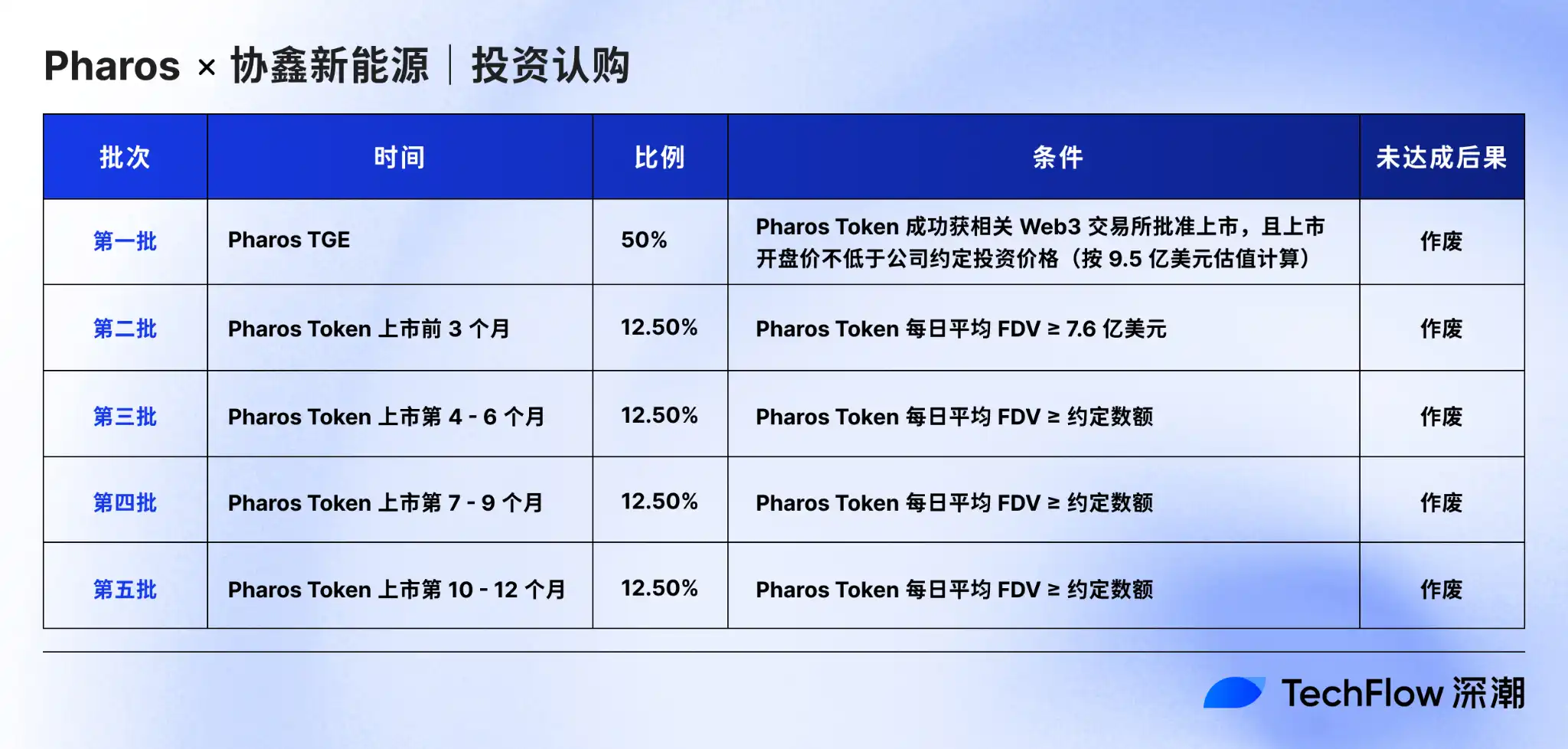
And once the Pharos Token meets the closing conditions, Pharos's share subscription in GCL New Energy will take effect accordingly, and simultaneously, GCL New Energy's subscription for Pharos Token will also take effect, with the same unlocking ratio.

Under this two-way binding:

  • If the Pharos Token performance meets the standard, both equity and tokens are delivered together;
  • If the Pharos Token performance falls short of expectations, both equity and tokens stall together.

Taking the most critical first tranche as an example, after the successful listing of the Pharos Token and its opening price meeting the target, Pharos will immediately deliver 50% of the share subscription to GCL New Energy, while GCL New Energy will acquire Pharos Tokens worth approximately HK$96.73 million at a valuation of $950 million.

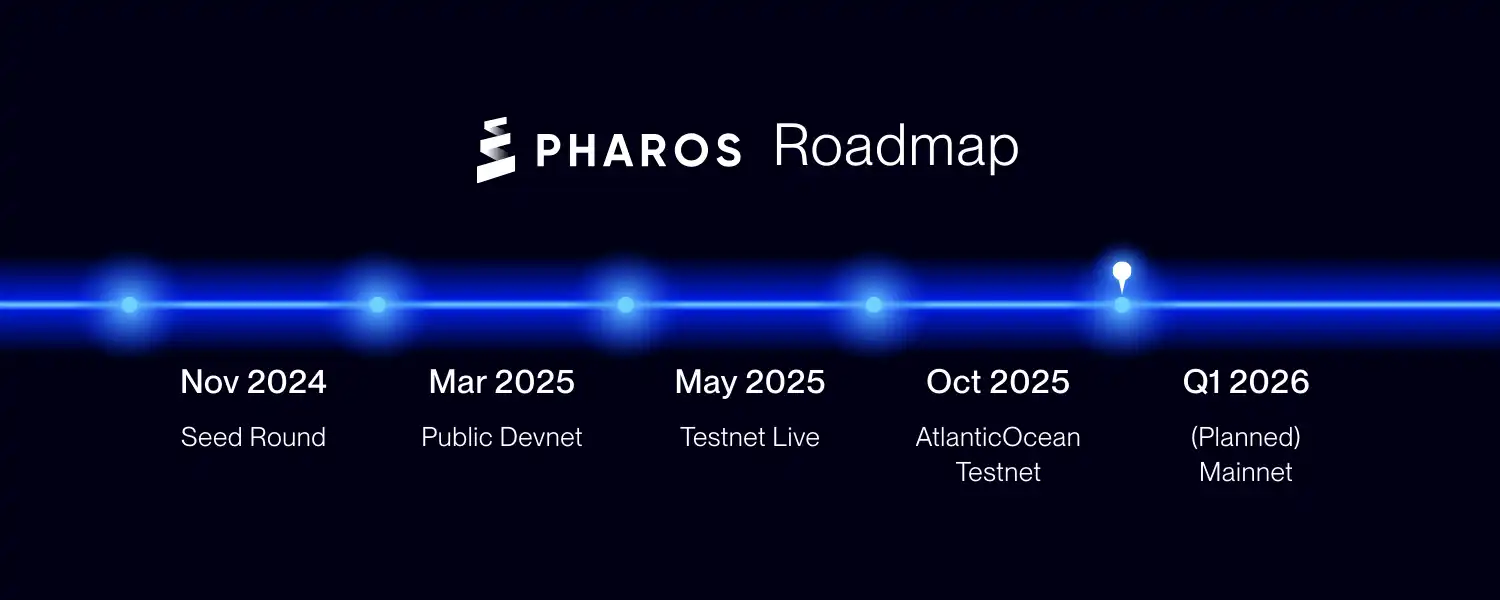
Under such an investment subscription agreement, coupled with Pharos's previous announcement that Anchorage Digital will provide regulated minting, distribution, and custody services for the Pharos TGE, Pharos may now be in the countdown phase, infinitely close to its TGE.
Mutual Benefit: One Agreement, Two Ways to Win

This special investment subscription transaction happens at a微妙 (subtle/delicate) point in time.

Past experience has taught us that the old financing logic of Crypto using whitepapers to tell stories and liquidity imagination to support valuations has失效 (become ineffective). The market has seen too many bubbles and too many crashes. What we need now is a vivid demonstration that simultaneously possesses real assets, a compliance framework, and on-chain imagination.

And the deal between Pharos and GCL New Energy is恰好 (exactly) that demonstration.

Behind the complex terms lies the interest game where both parties try to lock what they care about most into the contract:

For GCL New Energy, this is an excellent model that allows them to attack and defend effectively (进可攻、退可守).

Investing in Pharos is an active bet on the on-chain narrative, while introducing the VAM form effectively controls risk. If Pharos underperforms, GCL can withdraw in time. But if Pharos performs excellently, GCL can not only receive real capital injection but also acquire tokens with high appreciation potential at the initial valuation.

For Pharos, the value of this transaction is far more than just adding a partner.

The first gain is trust endorsement. A Hong Kong-listed company is willing to bind its shares with Tokens, which in itself is the most significant public recognition for Pharos.

The second gain is a confidence proof. Pharos's agreement to this series of strict closing conditions largely signals to the market the project's confidence in its future development. This posture is more convincing than any technical whitepaper.

The third gain is the historical position as an "industry first." Over the past year, we have seen too many DAT model cases where traditional listed companies purchase crypto assets. This time, the direction is reversed: Through this subscription, Pharos directly enters the shareholder ranks of GCL New Energy, becoming the first Crypto project to strategically hold shares in a traditional Hong Kong-listed company in reverse.

In a significant sense, this represents the first time a quality Crypto project from the加密世界 (crypto world) has obtained a real negotiating seat and pricing power in the traditional capital market. Meanwhile, this transaction has also received support through an HKEX announcement, demonstrating Hong Kong's foresight in embracing compliant Crypto innovation and injecting a strong compliance background into this deal.
One contract, two ways to win.

In striving for a win-win and avoiding a lose-lose situation, it also makes more people curious about the two leading protagonists behind this model innovation.

After all, Hong Kong-listed companies are known for strict risk control and conservative作风 (style). Why did Pharos dare to write future price performance into the contract, and why did GCL New Energy dare to bind the listed company's shares with a token that hasn't yet completed market validation?

A closer look reveals that behind this seemingly bold attempt at a cross-border联姻 (alliance/marriage), lies the inevitability of a双向奔赴 (two-way rush / mutual attraction).

Mirror Complementarity: The Inevitable Rendezvous of Pharos and GCL

On one end of the table in this model innovation is GCL New Energy.

As a leading Asian photovoltaic company, its core business focuses on the development, construction, operation, and management of solar power stations (photovoltaic power stations),同时涉及 (also involving) electricity sales and solar-related services. Although it holds the highest quality green assets, it also suffers from the common problems of traditional assets: long construction cycles, slow return realization, and increasingly fierce financing competition.

What GCL needs more is not another power station, but a financial tool that can reorganize, recirculate, and revalue these off-chain assets.

On the other end of the table is Pharos.

As a parallel L1 focused on institutional-grade scenarios, Pharos was clear from its birth: not to build another higher-performance public chain, but to致力于 (dedicate itself to)承接 (undertaking/ hosting) more real things, including stablecoin settlement, institutional-grade DeFi, regulation-friendly payment networks, and the on-chain circulation of RWA, especially energy, commodity, and infrastructure assets. Simply put, Pharos aims to become the infrastructure that can truly support the real finance narrative.

Performance is the premise supporting the "RealFi infrastructure" vision. Pharos, based on a modular + deep parallel execution engine design, boasts advantages like sub-second finality, high throughput, and low fees,能够更好的支撑 (can better support) the on-chaining, circulation, and real-time settlement of assets.

Facing the compliance issues that institutions care deeply about when going on-chain, the Pharos protocol layer has built-in ZK-KYC/AML, digital identity, supports regulation-friendly features, while remaining open.

Even before the cooperation with GCL New Energy, Pharos had already won the favor of capital and institutions:

According to public information, Pharos completed two rounds of financing in November 2024 and September 2025, receiving support from知名 VC (well-known VCs) like Hack VC and Lightspeed Faction.

Regarding institutional cooperation, Pharos previously announced a partnership with the decentralized financial platform Centrifuge. By combining Centrifuge's institutional-grade tokenization infrastructure and asset standards with Pharos's "inclusive and execution-first" Layer 1, they aim to further achieve the规模化分发与运营 (large-scale distribution and operation) of a series of institutional-grade assets on-chain, including tokenized U.S. Treasury bonds (JTRSY) and AAA-rated structured credit products (JAAA).
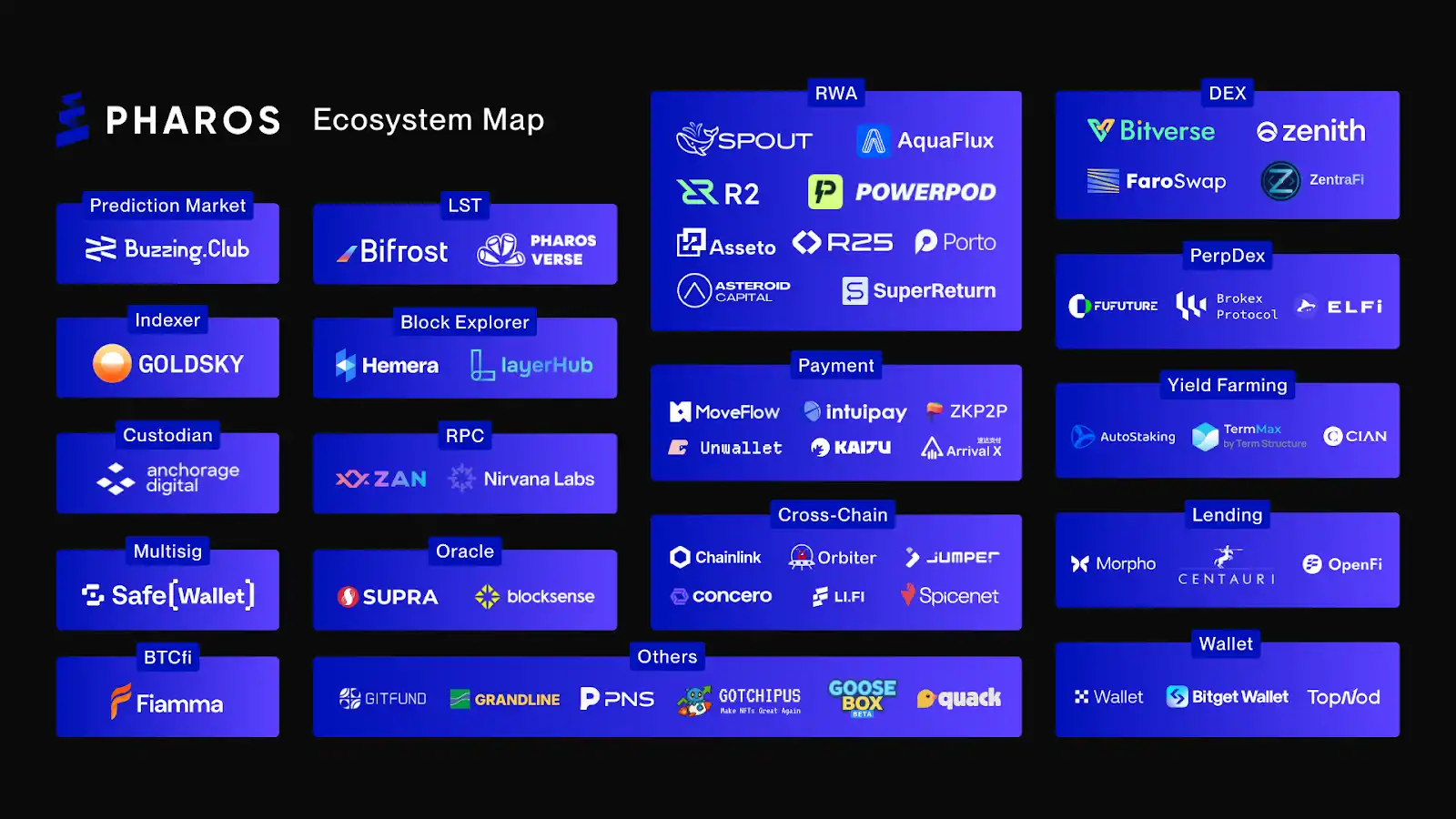
Putting the two counterparties together, one finds an镜像般的互补 (almost mirror-like complementarity) between GCL New Energy and Pharos.

For GCL New Energy, it wants to find a Crypto vehicle that can open up Web3, RWA, and market revaluation space, transforming offline heavy assets into new capital forms on-chain;

For Pharos, it needs a traditional capital entry point that can承接 (accommodate) high valuation, compliance narrative, and real asset imagination, grounding the on-chain story in real assets.

Therefore, from this perspective, this investment subscription is less of a cooperation and more of an inevitable rendezvous.有趣的是, (Interestingly,) Ant Group, with whom both parties have交集 (intersections/connections), is jokingly called by many netizens the隐形桥梁 (invisible bridge) for this rendezvous.

As early as December 2024, GCL Energy Technology (affiliate) cooperated with Ant Digital Technologies to complete China's first RWA cooperation for photovoltaic green assets exceeding RMB 200 million. In June 2025, the two even established a joint venture, "Ant Xin Neng," to further explore scenarios like Energy AI + RWA.

Meanwhile, we know that Pharos's co-founder and several members come from Ant Group. Ant Group's AntChain has extensive ToB landing experience in the enterprise blockchain field. This might further bring Pharos more solid technical implementation capabilities and richer institutional resource integration capabilities when solving institutional RWA needs, also indirectly foreshadowing the cooperation between Pharos and GCL.

But if this transaction is only understood as a capital binding, its potential might be underestimated. As the cooperation is signed, the subsequent cooperation structure, asset on-chain path, and more innovative cooperation directions are the bigger story.

According to the types of on-chain locked assets announced by Pharos, we can see that currently, among all Pharos's locked assets: 51% come from new energy assets of distributed photovoltaic operators and centralized power station operators; 49% come from financial assets of fund management companies and credit asset issuers.
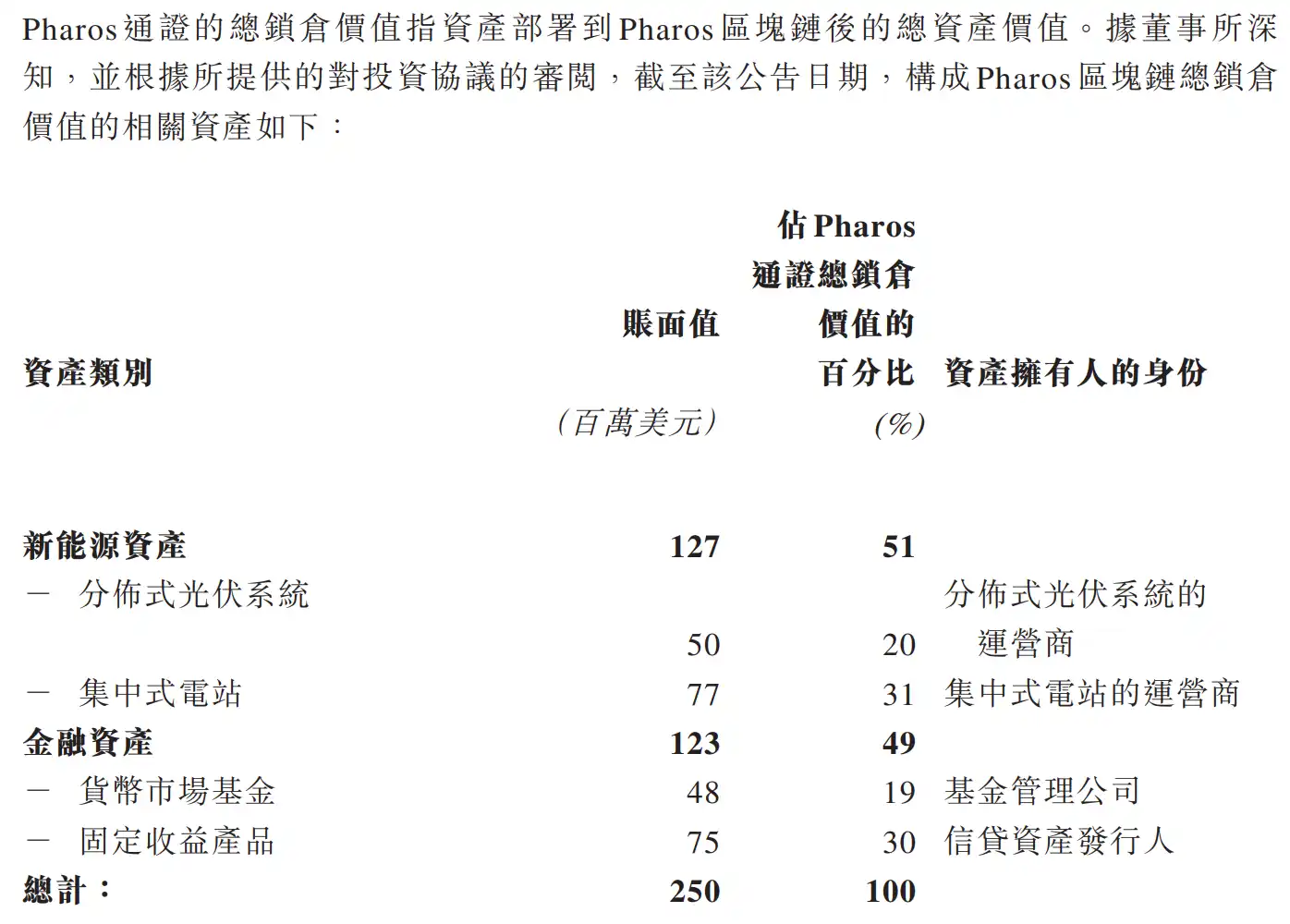
This largely indicates that the assets owned by GCL, such as photovoltaics and new energy power stations, will almost certainly be put on-chain through Pharos in the future.

This means that in the future, high-quality green energy assets in Asia, represented by GCL New Energy, will be able to break through geographical restrictions and connect with the global market more efficiently on-chain. Simultaneously, Pharos will also strive to introduce high-quality RWA assets from Europe and America to Asia, enhancing the global asset allocation capabilities of Asian investors.

Whether pushing out or bringing in, this binding model built on equity, Token, and asset synergy may release growth momentum far exceeding that of a mere subscription itself.

Conclusion

Of course, everything is at a very early stage.

In the present,高度不确定 (highly uncertain) about the future, it is perfectly normal to have voices of concern and doubt.

Some community members believe that, according to the document disclosure, Pharos's nearly $1 billion valuation is calculated based on the current total value of locked assets of $250 million disclosed unilaterally by the project party, lacking real market endorsement.

Others worry that the conditional tranched delivery model will create excessive pressure on the secondary market for the Pharos Token. While the mainnet is not yet launched and the token is not released, we can regard this as a confidence bet, but it is also uncertain whether this will become a提前透支 (pre-overdraft) of confidence in the future.

But different voices恰好证明 (precisely prove) the community's attention to the subsequent development of the event itself. At the same time, none of this prevents us from seeing the model innovation through this token-equity cooperation:

In the past, Crypto financing was more accustomed to first getting money with a good story, then using that money to prove itself;

Now, the cooperation between Pharos and GCL New Energy, by leading innovation, sends a strong signal: the next phase of Crypto might compete on who dares to write the story into a contract, hand the narrative to the market, and turn promises into reality that must be fulfilled.

In the bubble era, the most expensive thing was imagination; in the revaluation era, the most expensive thing is the ability to deliver (兑现力 - duì xiàn lì).

And this, perhaps, is the real value this investment subscription leaves for the industry.

Domande pertinenti

QWhat is the key innovation in the capital model between Pharos and GCL New Energy as described in the article?

AThe key innovation is a novel capital model featuring a two-way, conditional, and batch-unlock binding between a cryptocurrency (Pharos Token) and traditional equity (GCL New Energy's stock). The investment and share purchases are contingent on the performance of the Pharos Token, creating a mutually dependent and risk-managed structure.

QWhat is the primary condition that must be met for the capital cooperation between Pharos and GCL New Energy to proceed?

AThe primary condition is the successful listing and market performance of the Pharos Token. The investment and share purchases are executed in batches only if the token's price meets specific targets upon its public listing.

QWhat are the main strategic benefits for GCL New Energy in this deal with Pharos?

AFor GCL New Energy, the deal offers a strategic entry into Web3 and RWA narratives with built-in risk control. It provides potential capital injection, access to appreciating crypto assets at an initial valuation, and a pathway to tokenize its real-world green energy assets for greater liquidity and global market access.

QHow does the article describe the complementary nature of the two companies, Pharos and GCL New Energy?

AThe relationship is described as mirror-like and complementary. GCL New Energy possesses substantial real-world green energy assets but needs financial tools for liquidity and revaluation. Pharos provides the blockchain infrastructure designed for institutional RealFi, aiming to tokenize and facilitate the circulation of such real-world assets.

QWhat broader significance does the article attribute to this deal for the crypto industry?

AThe article posits that the deal signifies a shift in crypto financing from a model based on promises and narratives to one emphasizing verifiable execution and兑现力 (ability to deliver). It represents Crypto projects gaining negotiation power in traditional capital markets and establishes a new precedent for conditional, performance-based capital models.

Letture associate

Google and Amazon Simultaneously Invest Heavily in a Competitor: The Most Absurd Business Logic of the AI Era Is Becoming Reality

In a span of four days, Amazon announced an additional $25 billion investment, and Google pledged up to $40 billion—both direct competitors pouring over $65 billion into the same AI startup, Anthropic. Rather than a typical venture capital move, this signals the latest escalation in the cloud wars. The core of the deal is not equity but compute pre-orders: Anthropic must spend the majority of these funds on AWS and Google Cloud services and chips, effectively locking in massive future compute consumption. This reflects a shift in cloud market dynamics—enterprises now choose cloud providers based on which hosts the best AI models, not just price or stability. With OpenAI deeply tied to Microsoft, Anthropic’s Claude has become the only viable strategic asset for Google and Amazon to remain competitive. Anthropic’s annualized revenue has surged to $30 billion, and it is expanding into verticals like biotech, positioning itself as a cross-industry AI infrastructure layer. However, this funding comes with constraints: Anthropic’s independence is challenged as it balances two rival investors, its safety-first narrative faces pressure from regulatory scrutiny, and its path to IPO introduces new financial pressures. Globally, this accelerates a "tri-polar" closed-loop structure in AI infrastructure, with Microsoft-OpenAI, Google-Anthropic, and Amazon-Anthropic forming exclusive model-cloud alliances. In contrast, China’s landscape differs—investments like Alibaba and Tencent backing open-source model firm DeepSeek reflect a more decoupled approach, though closed-source models from major cloud providers still dominate. The $65 billion bet is ultimately about securing a seat at the table in an AI-defined future—where missing the model layer means losing the cloud war.

marsbit1 h fa

Google and Amazon Simultaneously Invest Heavily in a Competitor: The Most Absurd Business Logic of the AI Era Is Becoming Reality

marsbit1 h fa

Computing Power Constrained, Why Did DeepSeek-V4 Open Source?

DeepSeek-V4 has been released as a preview open-source model, featuring 1 million tokens of context length as a baseline capability—previously a premium feature locked behind enterprise paywalls by major overseas AI firms. The official announcement, however, openly acknowledges computational constraints, particularly limited service throughput for the high-end DeepSeek-V4-Pro version due to restricted high-end computing power. Rather than competing on pure scale, DeepSeek adopts a pragmatic approach that balances algorithmic innovation with hardware realities in China’s AI ecosystem. The V4-Pro model uses a highly sparse architecture with 1.6T total parameters but only activates 49B during inference. It performs strongly in agentic coding, knowledge-intensive tasks, and STEM reasoning, competing closely with top-tier closed models like Gemini Pro 3.1 and Claude Opus 4.6 in certain scenarios. A key strategic product is the Flash edition, with 284B total parameters but only 13B activated—making it cost-effective and accessible for mid- and low-tier hardware, including domestic AI chips from Huawei (Ascend), Cambricon, and Hygon. This design supports broader adoption across developers and SMEs while stimulating China's domestic semiconductor ecosystem. Despite facing talent outflow and intense competition in user traffic—with rivals like Doubao and Qianwen leading in monthly active users—DeepSeek has maintained technical momentum. The release also comes amid reports of a new funding round targeting a valuation exceeding $10 billion, potentially setting a new record in China’s LLM sector. Ultimately, DeepSeek-V4 represents a shift toward open yet realistic infrastructure development in the constrained compute landscape of Chinese AI, emphasizing engineering efficiency and domestic hardware compatibility over pure model scale.

marsbit1 h fa

Computing Power Constrained, Why Did DeepSeek-V4 Open Source?

marsbit1 h fa

Trading

Spot
Futures

Articoli Popolari

Cosa è $S$

Comprendere SPERO: Una Panoramica Completa Introduzione a SPERO Mentre il panorama dell'innovazione continua a evolversi, l'emergere delle tecnologie web3 e dei progetti di criptovaluta gioca un ruolo fondamentale nel plasmare il futuro digitale. Un progetto che ha attirato l'attenzione in questo campo dinamico è SPERO, denotato come SPERO,$$s$. Questo articolo mira a raccogliere e presentare informazioni dettagliate su SPERO, per aiutare gli appassionati e gli investitori a comprendere le sue basi, obiettivi e innovazioni nei domini web3 e crypto. Che cos'è SPERO,$$s$? SPERO,$$s$ è un progetto unico all'interno dello spazio crypto che cerca di sfruttare i principi della decentralizzazione e della tecnologia blockchain per creare un ecosistema che promuove l'impegno, l'utilità e l'inclusione finanziaria. Il progetto è progettato per facilitare interazioni peer-to-peer in modi nuovi, fornendo agli utenti soluzioni e servizi finanziari innovativi. Al suo interno, SPERO,$$s$ mira a responsabilizzare gli individui fornendo strumenti e piattaforme che migliorano l'esperienza dell'utente nello spazio delle criptovalute. Questo include la possibilità di metodi di transazione più flessibili, la promozione di iniziative guidate dalla comunità e la creazione di percorsi per opportunità finanziarie attraverso applicazioni decentralizzate (dApps). La visione sottostante di SPERO,$$s$ ruota attorno all'inclusività, cercando di colmare le lacune all'interno della finanza tradizionale mentre sfrutta i vantaggi della tecnologia blockchain. Chi è il Creatore di SPERO,$$s$? L'identità del creatore di SPERO,$$s$ rimane piuttosto oscura, poiché ci sono risorse pubblicamente disponibili limitate che forniscono informazioni dettagliate sul suo fondatore o fondatori. Questa mancanza di trasparenza può derivare dall'impegno del progetto per la decentralizzazione—un ethos che molti progetti web3 condividono, dando priorità ai contributi collettivi rispetto al riconoscimento individuale. Centrando le discussioni attorno alla comunità e ai suoi obiettivi collettivi, SPERO,$$s$ incarna l'essenza dell'empowerment senza mettere in evidenza individui specifici. Pertanto, comprendere l'etica e la missione di SPERO rimane più importante che identificare un creatore singolo. Chi sono gli Investitori di SPERO,$$s$? SPERO,$$s$ è supportato da una varietà di investitori che vanno dai capitalisti di rischio agli investitori angelici dedicati a promuovere l'innovazione nel settore crypto. Il focus di questi investitori generalmente si allinea con la missione di SPERO—dando priorità a progetti che promettono avanzamenti tecnologici sociali, inclusività finanziaria e governance decentralizzata. Queste fondazioni di investitori sono tipicamente interessate a progetti che non solo offrono prodotti innovativi, ma contribuiscono anche positivamente alla comunità blockchain e ai suoi ecosistemi. Il supporto di questi investitori rafforza SPERO,$$s$ come un concorrente degno di nota nel dominio in rapida evoluzione dei progetti crypto. Come Funziona SPERO,$$s$? SPERO,$$s$ impiega un framework multifunzionale che lo distingue dai progetti di criptovaluta convenzionali. Ecco alcune delle caratteristiche chiave che sottolineano la sua unicità e innovazione: Governance Decentralizzata: SPERO,$$s$ integra modelli di governance decentralizzati, responsabilizzando gli utenti a partecipare attivamente ai processi decisionali riguardanti il futuro del progetto. Questo approccio favorisce un senso di proprietà e responsabilità tra i membri della comunità. Utilità del Token: SPERO,$$s$ utilizza il proprio token di criptovaluta, progettato per servire varie funzioni all'interno dell'ecosistema. Questi token abilitano transazioni, premi e la facilitazione dei servizi offerti sulla piattaforma, migliorando l'impegno e l'utilità complessivi. Architettura Stratificata: L'architettura tecnica di SPERO,$$s$ supporta la modularità e la scalabilità, consentendo un'integrazione fluida di funzionalità e applicazioni aggiuntive man mano che il progetto evolve. Questa adattabilità è fondamentale per mantenere la rilevanza nel panorama crypto in continua evoluzione. Coinvolgimento della Comunità: Il progetto enfatizza iniziative guidate dalla comunità, impiegando meccanismi che incentivano la collaborazione e il feedback. Nutrendo una comunità forte, SPERO,$$s$ può affrontare meglio le esigenze degli utenti e adattarsi alle tendenze di mercato. Focus sull'Inclusione: Offrendo basse commissioni di transazione e interfacce user-friendly, SPERO,$$s$ mira ad attrarre una base utenti diversificata, inclusi individui che potrebbero non aver precedentemente interagito nello spazio crypto. Questo impegno per l'inclusione si allinea con la sua missione generale di empowerment attraverso l'accessibilità. Cronologia di SPERO,$$s$ Comprendere la storia di un progetto fornisce preziose intuizioni sulla sua traiettoria di sviluppo e sui traguardi. Di seguito è riportata una cronologia suggerita che mappa eventi significativi nell'evoluzione di SPERO,$$s$: Fase di Concettualizzazione e Ideazione: Le idee iniziali che formano la base di SPERO,$$s$ sono state concepite, allineandosi strettamente con i principi di decentralizzazione e focus sulla comunità all'interno dell'industria blockchain. Lancio del Whitepaper del Progetto: Dopo la fase concettuale, è stato rilasciato un whitepaper completo che dettaglia la visione, gli obiettivi e l'infrastruttura tecnologica di SPERO,$$s$ per suscitare interesse e feedback dalla comunità. Costruzione della Comunità e Prime Interazioni: Sono stati effettuati sforzi attivi di outreach per costruire una comunità di early adopters e potenziali investitori, facilitando discussioni attorno agli obiettivi del progetto e ottenendo supporto. Evento di Generazione del Token: SPERO,$$s$ ha condotto un evento di generazione del token (TGE) per distribuire i propri token nativi ai primi sostenitori e stabilire una liquidità iniziale all'interno dell'ecosistema. Lancio della Prima dApp: La prima applicazione decentralizzata (dApp) associata a SPERO,$$s$ è stata attivata, consentendo agli utenti di interagire con le funzionalità principali della piattaforma. Sviluppo Continuo e Partnership: Aggiornamenti e miglioramenti continui alle offerte del progetto, inclusi partnership strategiche con altri attori nello spazio blockchain, hanno plasmato SPERO,$$s$ in un concorrente competitivo e in evoluzione nel mercato crypto. Conclusione SPERO,$$s$ rappresenta una testimonianza del potenziale del web3 e delle criptovalute di rivoluzionare i sistemi finanziari e responsabilizzare gli individui. Con un impegno per la governance decentralizzata, il coinvolgimento della comunità e funzionalità progettate in modo innovativo, apre la strada verso un panorama finanziario più inclusivo. Come per qualsiasi investimento nello spazio crypto in rapida evoluzione, si incoraggiano potenziali investitori e utenti a ricercare approfonditamente e a impegnarsi in modo riflessivo con gli sviluppi in corso all'interno di SPERO,$$s$. Il progetto mostra lo spirito innovativo dell'industria crypto, invitando a ulteriori esplorazioni delle sue innumerevoli possibilità. Mentre il percorso di SPERO,$$s$ è ancora in fase di sviluppo, i suoi principi fondamentali potrebbero effettivamente influenzare il futuro di come interagiamo con la tecnologia, la finanza e tra di noi in ecosistemi digitali interconnessi.

75 Totale visualizzazioniPubblicato il 2024.12.17Aggiornato il 2024.12.17

Cosa è $S$

Cosa è AGENT S

Agent S: Il Futuro dell'Interazione Autonoma in Web3 Introduzione Nel panorama in continua evoluzione di Web3 e criptovalute, le innovazioni stanno costantemente ridefinendo il modo in cui gli individui interagiscono con le piattaforme digitali. Uno di questi progetti pionieristici, Agent S, promette di rivoluzionare l'interazione uomo-computer attraverso il suo framework agentico aperto. Aprendo la strada a interazioni autonome, Agent S mira a semplificare compiti complessi, offrendo applicazioni trasformative nell'intelligenza artificiale (AI). Questa esplorazione dettagliata approfondirà le complessità del progetto, le sue caratteristiche uniche e le implicazioni per il dominio delle criptovalute. Cos'è Agent S? Agent S si presenta come un innovativo framework agentico aperto, progettato specificamente per affrontare tre sfide fondamentali nell'automazione dei compiti informatici: Acquisizione di Conoscenze Specifiche del Dominio: Il framework apprende in modo intelligente da varie fonti di conoscenza esterne ed esperienze interne. Questo approccio duale gli consente di costruire un ricco repository di conoscenze specifiche del dominio, migliorando le sue prestazioni nell'esecuzione dei compiti. Pianificazione su Lungo Orizzonte di Compiti: Agent S impiega una pianificazione gerarchica potenziata dall'esperienza, un approccio strategico che facilita la suddivisione e l'esecuzione efficiente di compiti complessi. Questa caratteristica migliora significativamente la sua capacità di gestire più sottocompiti in modo efficiente ed efficace. Gestione di Interfacce Dinamiche e Non Uniformi: Il progetto introduce l'Interfaccia Agente-Computer (ACI), una soluzione innovativa che migliora l'interazione tra agenti e utenti. Utilizzando Modelli Linguistici Multimodali di Grandi Dimensioni (MLLM), Agent S può navigare e manipolare senza sforzo diverse interfacce grafiche utente. Attraverso queste caratteristiche pionieristiche, Agent S fornisce un framework robusto che affronta le complessità coinvolte nell'automazione dell'interazione umana con le macchine, preparando il terreno per innumerevoli applicazioni nell'AI e oltre. Chi è il Creatore di Agent S? Sebbene il concetto di Agent S sia fondamentalmente innovativo, informazioni specifiche sul suo creatore rimangono elusive. Il creatore è attualmente sconosciuto, il che evidenzia sia la fase embrionale del progetto sia la scelta strategica di mantenere i membri fondatori sotto anonimato. Indipendentemente dall'anonimato, l'attenzione rimane sulle capacità e sul potenziale del framework. Chi sono gli Investitori di Agent S? Poiché Agent S è relativamente nuovo nell'ecosistema crittografico, informazioni dettagliate riguardanti i suoi investitori e sostenitori finanziari non sono documentate esplicitamente. La mancanza di approfondimenti pubblicamente disponibili sulle fondazioni di investimento o sulle organizzazioni che supportano il progetto solleva interrogativi sulla sua struttura di finanziamento e sulla roadmap di sviluppo. Comprendere il supporto è cruciale per valutare la sostenibilità del progetto e il suo potenziale impatto sul mercato. Come Funziona Agent S? Al centro di Agent S si trova una tecnologia all'avanguardia che gli consente di funzionare efficacemente in contesti diversi. Il suo modello operativo è costruito attorno a diverse caratteristiche chiave: Interazione Uomo-Computer Simile a Quella Umana: Il framework offre una pianificazione AI avanzata, cercando di rendere le interazioni con i computer più intuitive. Mimando il comportamento umano nell'esecuzione dei compiti, promette di elevare le esperienze degli utenti. Memoria Narrativa: Utilizzata per sfruttare esperienze di alto livello, Agent S utilizza la memoria narrativa per tenere traccia delle storie dei compiti, migliorando così i suoi processi decisionali. Memoria Episodica: Questa caratteristica fornisce agli utenti una guida passo-passo, consentendo al framework di offrire supporto contestuale mentre i compiti si sviluppano. Supporto per OpenACI: Con la capacità di funzionare localmente, Agent S consente agli utenti di mantenere il controllo sulle proprie interazioni e flussi di lavoro, allineandosi con l'etica decentralizzata di Web3. Facile Integrazione con API Esterne: La sua versatilità e compatibilità con varie piattaforme AI garantiscono che Agent S possa adattarsi senza problemi agli ecosistemi tecnologici esistenti, rendendolo una scelta attraente per sviluppatori e organizzazioni. Queste funzionalità contribuiscono collettivamente alla posizione unica di Agent S all'interno dello spazio crittografico, poiché automatizza compiti complessi e multi-fase con un intervento umano minimo. Man mano che il progetto evolve, le sue potenziali applicazioni in Web3 potrebbero ridefinire il modo in cui si svolgono le interazioni digitali. Cronologia di Agent S Lo sviluppo e le tappe di Agent S possono essere riassunti in una cronologia che evidenzia i suoi eventi significativi: 27 Settembre 2024: Il concetto di Agent S è stato lanciato in un documento di ricerca completo intitolato “Un Framework Agentico Aperto che Usa i Computer Come un Umano”, mostrando le basi per il progetto. 10 Ottobre 2024: Il documento di ricerca è stato reso pubblicamente disponibile su arXiv, offrendo un'esplorazione approfondita del framework e della sua valutazione delle prestazioni basata sul benchmark OSWorld. 12 Ottobre 2024: È stata rilasciata una presentazione video, fornendo un'idea visiva delle capacità e delle caratteristiche di Agent S, coinvolgendo ulteriormente potenziali utenti e investitori. Questi indicatori nella cronologia non solo illustrano i progressi di Agent S, ma indicano anche il suo impegno per la trasparenza e il coinvolgimento della comunità. Punti Chiave su Agent S Man mano che il framework Agent S continua a evolversi, diversi attributi chiave si distinguono, sottolineando la sua natura innovativa e il potenziale: Framework Innovativo: Progettato per fornire un uso intuitivo dei computer simile all'interazione umana, Agent S porta un approccio nuovo all'automazione dei compiti. Interazione Autonoma: La capacità di interagire autonomamente con i computer attraverso GUI segna un passo avanti verso soluzioni informatiche più intelligenti ed efficienti. Automazione di Compiti Complessi: Con la sua metodologia robusta, può automatizzare compiti complessi e multi-fase, rendendo i processi più veloci e meno soggetti a errori. Miglioramento Continuo: I meccanismi di apprendimento consentono ad Agent S di migliorare dalle esperienze passate, migliorando continuamente le sue prestazioni e la sua efficacia. Versatilità: La sua adattabilità attraverso diversi ambienti operativi come OSWorld e WindowsAgentArena garantisce che possa servire un'ampia gamma di applicazioni. Man mano che Agent S si posiziona nel panorama di Web3 e delle criptovalute, il suo potenziale per migliorare le capacità di interazione e automatizzare i processi segna un significativo avanzamento nelle tecnologie AI. Attraverso il suo framework innovativo, Agent S esemplifica il futuro delle interazioni digitali, promettendo un'esperienza più fluida ed efficiente per gli utenti in vari settori. Conclusione Agent S rappresenta un audace passo avanti nell'unione tra AI e Web3, con la capacità di ridefinire il modo in cui interagiamo con la tecnologia. Sebbene sia ancora nelle sue fasi iniziali, le possibilità per la sua applicazione sono vaste e coinvolgenti. Attraverso il suo framework completo che affronta sfide critiche, Agent S mira a portare le interazioni autonome al centro dell'esperienza digitale. Man mano che ci addentriamo nei regni delle criptovalute e della decentralizzazione, progetti come Agent S giocheranno senza dubbio un ruolo cruciale nel plasmare il futuro della tecnologia e della collaborazione uomo-computer.

421 Totale visualizzazioniPubblicato il 2025.01.14Aggiornato il 2025.01.14

Cosa è AGENT S

Come comprare S

Benvenuto in HTX.com! Abbiamo reso l'acquisto di Sonic (S) semplice e conveniente. Segui la nostra guida passo passo per intraprendere il tuo viaggio nel mondo delle criptovalute.Step 1: Crea il tuo Account HTXUsa la tua email o numero di telefono per registrarti il tuo account gratuito su HTX. Vivi un'esperienza facile e sblocca tutte le funzionalità,Crea il mio accountStep 2: Vai in Acquista crypto e seleziona il tuo metodo di pagamentoCarta di credito/debito: utilizza la tua Visa o Mastercard per acquistare immediatamente SonicS.Bilancio: Usa i fondi dal bilancio del tuo account HTX per fare trading senza problemi.Terze parti: abbiamo aggiunto metodi di pagamento molto utilizzati come Google Pay e Apple Pay per maggiore comodità.P2P: Fai trading direttamente con altri utenti HTX.Over-the-Counter (OTC): Offriamo servizi su misura e tassi di cambio competitivi per i trader.Step 3: Conserva Sonic (S)Dopo aver acquistato Sonic (S), conserva nel tuo account HTX. In alternativa, puoi inviare tramite trasferimento blockchain o scambiare per altre criptovalute.Step 4: Scambia Sonic (S)Scambia facilmente Sonic (S) nel mercato spot di HTX. Accedi al tuo account, seleziona la tua coppia di trading, esegui le tue operazioni e monitora in tempo reale. Offriamo un'esperienza user-friendly sia per chi ha appena iniziato che per i trader più esperti.

836 Totale visualizzazioniPubblicato il 2025.01.15Aggiornato il 2025.03.21

Come comprare S

Discussioni

Benvenuto nella Community HTX. Qui puoi rimanere informato sugli ultimi sviluppi della piattaforma e accedere ad approfondimenti esperti sul mercato. Le opinioni degli utenti sul prezzo di S S sono presentate come di seguito.

活动图片