Cryptolink ATMs in Australia to be Disabled by AUSTRAC Order

cryptonews.ruPubblicato 2026-08-10Pubblicato ultima volta 2026-08-10

Introduzione

Cryptocurrency ATM operator Cryptolink has had its 96 terminals temporarily disabled across Australia. The Australian Transaction Reports and Analysis Centre (AUSTRAC) suspended the company's registration for three months due to repeated failures to comply with anti-money laundering and counter-terrorism financing (AML/CTF) rules. Despite a previous fine and an agreement to hire independent auditors, Cryptolink allegedly stopped reporting large transactions (over ~USD 7,000) and failed to respond to regulatory requests. The company's terminals, primarily located in Sydney, Melbourne, and Brisbane, allowed users to buy and (where enabled) sell cryptocurrency for cash, with transaction limits up to ~USD 3,530. This action is part of AUSTRAC's heightened scrutiny of the crypto sector, which it considers high-risk for financial crime. The regulator has signaled it will enforce strict compliance on all crypto service providers, including physical terminal operators.

Cryptolink ATMs are being temporarily taken offline in Australia: AUSTRAC has suspended the registration of operator Cryptolink Pty for three months and demanded the deactivation of 96 cryptocurrency terminals across the country.
Why the Regulator Halted the Cryptolink Network

The Australian Transaction Reports and Analysis Centre explained its decision by citing repeated violations of anti-money laundering and counter-terrorism financing rules. Prior to the suspension, Cryptolink Pty was an AUSTRAC-registered operator of cryptocurrency terminals in Australia. These requirements in Australia also apply to companies dealing with digital assets, including services for cryptocurrency and Bitcoin ATMs.

Back in October 2025, Cryptolink was fined 56,340 Australian dollars, or approximately 39,500 US dollars. The reasons were delays in submitting transaction reports and weak risk controls. At that time, the operator agreed with AUSTRAC to engage independent auditors, review its operations, and prepare a final report by March 2026 on how the violations would be rectified.

However, after submitting initial materials, the company stopped sending reports on transactions exceeding 10,000 Australian dollars, roughly equivalent to 7,000 US dollars. According to officials, Cryptolink also failed to respond to the regulator's requests for additional information.

How Cryptolink Terminals Operated

The Cryptolink network consists of 96 crypto ATMs. The majority of the terminals are located in Sydney, Melbourne, and Brisbane. While registration is suspended, these devices must remain switched off.

Through such terminals, users could:

  • buy cryptocurrency with cash;
  • exchange cryptocurrency for cash, if that function was enabled on a specific device;
  • conduct transactions without visiting a bank or a traditional crypto exchange.

The primary payment method was cash. Support for bank cards or other payment instruments depended on the settings of the specific service.

Key parameters of Cryptolink terminals:

  • Transaction limit: up to 5,000 Australian dollars, or about 3,530 US dollars.
  • Additional limits: daily, weekly, and monthly restrictions could depend on the operator's rules and the customer's verification level.
  • Available assets: ten cryptocurrencies.

Among the available assets were:

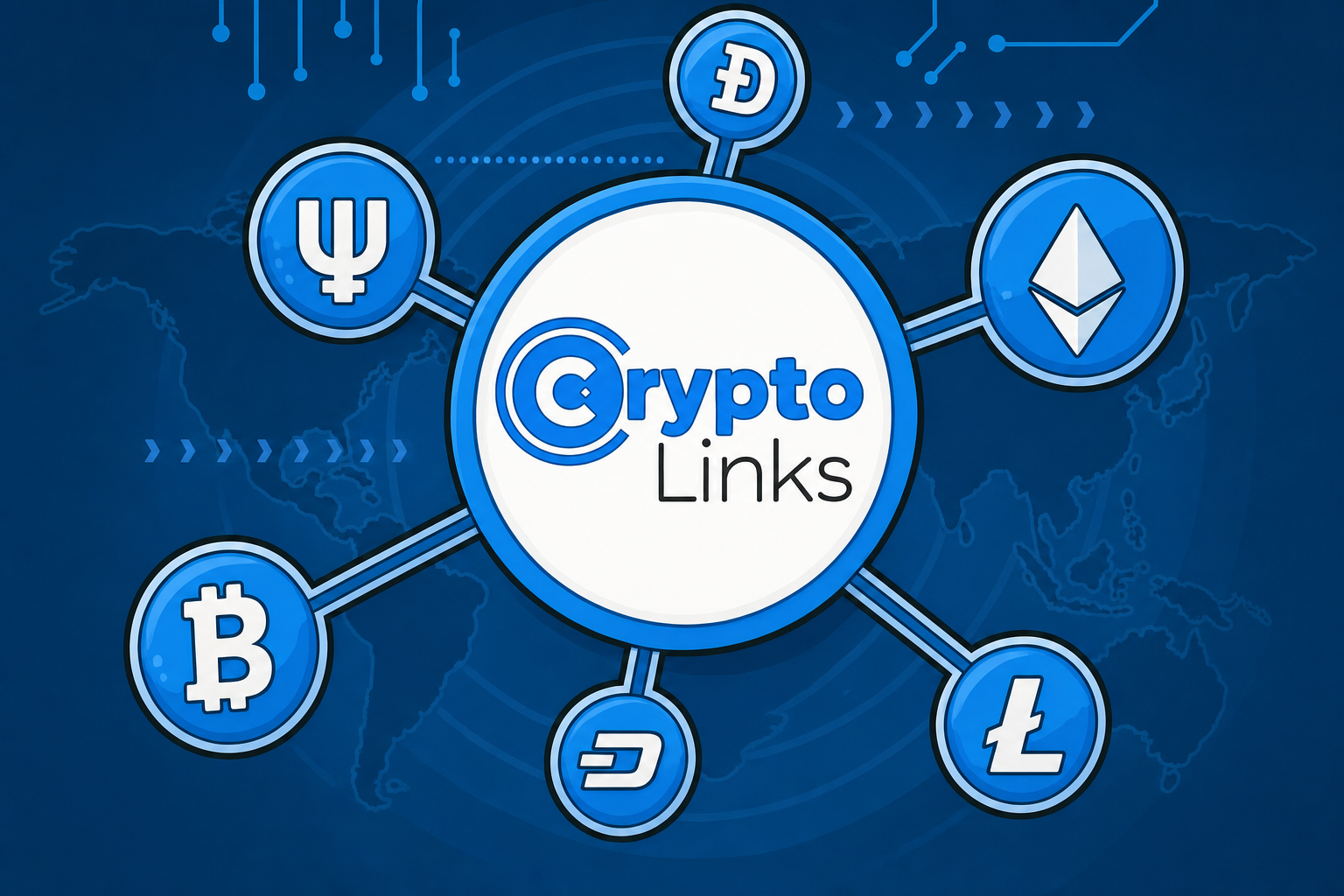
  • Bitcoin;
  • Ethereum;
  • Dogecoin;
  • seven other supported cryptocurrencies.

In industry terminology, such devices are called ATMs, Cryptocurrency ATMs, or Bitcoin ATMs. Their operation relies on Blockchain and Public-key cryptography mechanisms, and access to transactions may be linked to a Mobile app, a crypto wallet, and other payment instruments, including a Debit card, if such a function is provided by the specific service.

What to Consider When Searching For and Using a Crypto ATM

Since the Cryptolink network is temporarily offline, it's better to check the nearest working crypto ATM before your trip: via the operator's website, a terminal map, or a mobile app, if available.

Before a transaction, check the exchange rate, fees, and any possible currency conversion charges. Terms differ among operators and may change depending on the amount and direction of the exchange.

A purchase typically involves several steps:

  • select the cryptocurrency and amount;
  • specify the wallet address or scan a QR code;
  • deposit cash or choose another available payment method;
  • check the rate and fees, and confirm the transaction.

A sale is only possible in terminals that support cash withdrawal:

  • select the option to sell cryptocurrency;
  • send the coins to the address displayed by the terminal;
  • wait for transaction confirmation;
  • receive cash within applicable limits.

For identity verification, the operator may request a phone number and a document, such as a passport or driver's license. Higher amounts more frequently trigger additional checks and limits.

The main risks for users are an incorrect wallet address, non-transparent fees, fraudulent instructions from third parties, and operating in an unsafe location. It is safer to check the terminal's address in advance, not accept prompts from strangers, verify the amount and fees before confirmation, and use only your own wallet.

AUSTRAC Increases Pressure on the Crypto Sector

Earlier, AUSTRAC assessed risks in the Australian crypto industry and stated that over 400 crypto exchanges registered in the country, as well as more than 5,000 money transfer services, are in a high-risk zone. The regulator links these risks to the potential use of digital assets for money laundering, fraud, and terrorism financing.

The situation with Cryptolink shows that Australian authorities are prepared to apply strict measures not only to large exchanges but also to operators of physical cryptocurrency terminals if they fail to comply with reporting and transaction control requirements.

end-content

Crypto di tendenza

Domande pertinenti

QWhy did AUSTRAC order the temporary shutdown of Cryptolink's ATM network in Australia?

AAUSTRAC suspended the registration of the operator, Cryptolink Pty, for three months due to repeated violations of Anti-Money Laundering and Counter-Terrorism Financing (AML/CTF) rules. This included failing to submit reports on transactions above AUD 10,000 and not responding to the regulator's requests for additional information.

QWhat were the key services and operational limits of Cryptolink's cryptocurrency ATMs?

ACryptolink's ATMs allowed users to buy cryptocurrency with cash and, on some devices, exchange cryptocurrency for cash. Key operational limits included a single transaction limit of AUD 5,000 (approx. USD 3,530), with additional daily, weekly, and monthly limits depending on customer verification. The terminals supported ten cryptocurrencies, including Bitcoin and Ethereum.

QWhat specific actions and failures by Cryptolink led to the regulatory action by AUSTRAC?

AIn October 2025, Cryptolink was fined AUD 56,340 for delays in submitting transaction reports and weak risk controls. It agreed to an independent audit. However, after submitting initial materials, it subsequently stopped sending reports for transactions above AUD 10,000 and failed to respond to AUSTRAC's requests for further information, leading to the suspension.

QAccording to the article, what are the main risks for users when utilizing cryptocurrency ATMs, and how can they be mitigated?

AMain risks include sending crypto to the wrong wallet address, non-transparent fees, fraudulent instructions from third parties, and operating in unsafe locations. To mitigate these, users should verify the ATM's location in advance, never accept help from strangers, double-check the amount and fee before confirming, and only use their own wallet.

QWhat does the action against Cryptolink indicate about AUSTRAC's current stance towards the cryptocurrency sector in Australia?

AThe action indicates that AUSTRAC is intensifying pressure on the cryptocurrency sector and is willing to apply strict measures not only to large exchanges but also to operators of physical crypto ATMs. This is part of a broader effort to combat money laundering and terrorism financing risks it associates with over 400 registered crypto exchanges and 5,000 money transfer services in the country.

Letture associate

RIP: Atlas, Which Lived Only 292 Days

On August 9, 2026, OpenAI discontinued its standalone AI browser, Atlas, just 292 days after its launch on October 21, 2025. Initially positioned as a challenger to Chrome and the broader AI browser ecosystem, Atlas aimed to fundamentally redesign how users interact with browsers by deeply integrating ChatGPT. Its features included an AI-powered address bar, a sidebar for webpage analysis, Browser Memories for context retention, and an Agent Mode to automate multi-step tasks like shopping and research. Despite building on Chromium with a custom OWL (OpenAI Web Layer) framework, OpenAI struggled with the immense complexity of maintaining a full-fledged browser. The team spent significant time addressing basic functionalities—password managers, extensions, input methods—that mainstream browsers already handled seamlessly. Atlas's core AI agent capabilities also faced issues with reliability, speed, and security vulnerabilities like prompt injection. Furthermore, Atlas was limited to Apple Silicon Macs, failing to release promised Windows, iOS, and Android versions. This, coupled with the high switching cost for users entrenched in Chrome or Edge's ecosystems, hindered its adoption. By mid-2026, updates slowed, and OpenAI announced its shutdown, opting to integrate Atlas's AI explorations into the ChatGPT desktop app and browser extensions instead. The article contrasts two AI browser development paths: standalone products like Atlas, Perplexity's Comet, and Dia, which redesign the browser around AI but face user migration barriers; and the approach of incumbents like Chrome and Edge, which add AI features atop existing, widely-used platforms. The key question remains whether users need a completely new "AI browser" or simply AI capabilities within their current browser. While Atlas's experiment ended, the broader trend of AI integration into browsing continues.

marsbit19 min fa

RIP: Atlas, Which Lived Only 292 Days

marsbit19 min fa

Bitcoin's "Anti-Spam" Update Failed, Lasting Less Than a Day

A Bitcoin update proposal aimed at curbing spam by temporarily banning non-financial data from being stored on the network, BIP-110, has failed decisively. After months of debate, developers attempted to launch a separate blockchain, which collapsed within a day. The failure stemmed from a critical lack of miner support, with less than 1% signaling approval for the update. The vast majority of miners chose to continue mining the main Bitcoin blockchain without providing explanations. Despite this, the initiative's developers proceeded to launch an alternative blockchain—a hard fork of Bitcoin—on August 8. This meant a small subset of miners stopped mining Bitcoin to support the new chain with BIP-110 changes. However, the new network inherited Bitcoin's mining difficulty. With only a tiny fraction of the total computational power, block times stretched to roughly 7 hours instead of the standard 10 minutes, rendering the network practically non-functional. Michael Saylor, founder of major corporate Bitcoin holder MicroStrategy and a vocal opponent of BIP-110, commented: "Bitcoin worked exactly as designed. The BIP-110 fork occurred, and network participants were free to choose which chain to follow. As a result, about 99.85% of the network's hash power remained with Bitcoin." The event had no significant impact on Bitcoin's price, which traded in a narrow range between approximately $64.5k and $65.5k from August 7 through August 10.

cryptonews.ru25 min fa

Bitcoin's "Anti-Spam" Update Failed, Lasting Less Than a Day

cryptonews.ru25 min fa

Trading

Spot

Articoli Popolari

Come comprare ORDER

Benvenuto in HTX.com! Abbiamo reso l'acquisto di Orderly (ORDER) semplice e conveniente. Segui la nostra guida passo passo per intraprendere il tuo viaggio nel mondo delle criptovalute.Step 1: Crea il tuo Account HTXUsa la tua email o numero di telefono per registrarti il tuo account gratuito su HTX. Vivi un'esperienza facile e sblocca tutte le funzionalità,Crea il mio accountStep 2: Vai in Acquista crypto e seleziona il tuo metodo di pagamentoCarta di credito/debito: utilizza la tua Visa o Mastercard per acquistare immediatamente OrderlyORDER.Bilancio: Usa i fondi dal bilancio del tuo account HTX per fare trading senza problemi.Terze parti: abbiamo aggiunto metodi di pagamento molto utilizzati come Google Pay e Apple Pay per maggiore comodità.P2P: Fai trading direttamente con altri utenti HTX.Over-the-Counter (OTC): Offriamo servizi su misura e tassi di cambio competitivi per i trader.Step 3: Conserva Orderly (ORDER)Dopo aver acquistato Orderly (ORDER), conserva nel tuo account HTX. In alternativa, puoi inviare tramite trasferimento blockchain o scambiare per altre criptovalute.Step 4: Scambia Orderly (ORDER)Scambia facilmente Orderly (ORDER) nel mercato spot di HTX. Accedi al tuo account, seleziona la tua coppia di trading, esegui le tue operazioni e monitora in tempo reale. Offriamo un'esperienza user-friendly sia per chi ha appena iniziato che per i trader più esperti.

291 Totale visualizzazioniPubblicato il 2024.12.10Aggiornato il 2026.06.02

Come comprare ORDER

Discussioni

Benvenuto nella Community HTX. Qui puoi rimanere informato sugli ultimi sviluppi della piattaforma e accedere ad approfondimenti esperti sul mercato. Le opinioni degli utenti sul prezzo di ORDER ORDER sono presentate come di seguito.

活动图片