Crypto Warning: Bonk.fun Domain Hack Exposes Solana Traders To Wallet Drain

bitcoinistPubblicato 2026-03-14Pubblicato ultima volta 2026-03-14

Introduzione

Crypto platform Bonk.fun suffered a domain hijacking attack on March 12, 2026, exposing users to a wallet-draining exploit. Hackers injected a malicious script on the website, prompting users to sign a fake "Terms of Service" agreement, which, when approved, allowed the attackers to steal funds. The team confirmed that only users who interacted with the fraudulent prompt after the hack were affected, and losses were reported as minimal. The breach was attributed to a Web2 infrastructure failure rather than a smart contract exploit. This incident highlights the growing threat of approval-phishing and domain hijacking attacks in the crypto space, underscoring the need for heightened user caution and improved security practices.

A Crypto platform confirmed that their main domain website had been hacked, which exposed its users to a wallet draining exploit.

A No-Fun Crypto Hijack

It is a truth universally acknowledge that, no matter the size of a global geopolitical crisis, hackers will continue to ravage through the crypto market. This time, the victim was memecoin issuance platform Bonk.fun. In a March 12 post on the social network X, Tom (@SolportTom), one of its operators, warned the users not to interact with the domain “until further notice”, as hackers had injected a crypto wallet drainer on it:

The official X account of the Solana token launchpad, backed by Raydium and the BONK community, also announced the hack and echoed Tom’s striking warning:

Who Is Affected And How

Tom explained that the phishing scam set up a fake “Terms of Services” (TOS) signature prompt which, when signed, allowed the drainer to move the unaware user’s funds. According to Tom, the only users compromised were the ones who interacted with the fake TOS. He clarified that neither previously connected users nor traders of bonk fun tokens on third-party terminals were affected. He also assured that the security breach was spotted early so “the losses are minimal to date”:

This is not a Raydium or BONK smart contract exploit, but the case of a Web2 infrastructure failure that bled directly into Web3. This type of domain hijacking and phishing drainer scripts work by the attackers taking over the frontend and presenting normal-looking prompts that abuse wallet approvals.

A Pattern Of Exploited Vulnerabilities

In recent years, approval-phishing and “fake UI” attacks have stolen billions of dollars: one Chainalysis investigation reported the amount of $14 billion in on-chain scam inflows in 2025, with projections pointing above the $17 billion as more wallets continued to be identified.

As scam revenues grow and AI‐driven impersonation scales, crypto security in 2026 is less about the perfect code and more about defending everything around it: from domains to social accounts, employees and users decision-making. In February last year, attackers hijacked Pump.fun’s X account to push a fake PUMP token, as covered by our sister website NewsBTC. Not too long ago, OG trader Sillytuna was drove out of the crypto market after a multimillion-dollar theft that combined online address poisoning and offline violent actions.

The times are testing traders online and offline, both inside and outside the bloc. As the crypto landscape grows more complex, traders would do well to heighten their caution: prefer direct contract interaction or trusted aggregators, and use tools to monitor and regularly revoke token approvals.
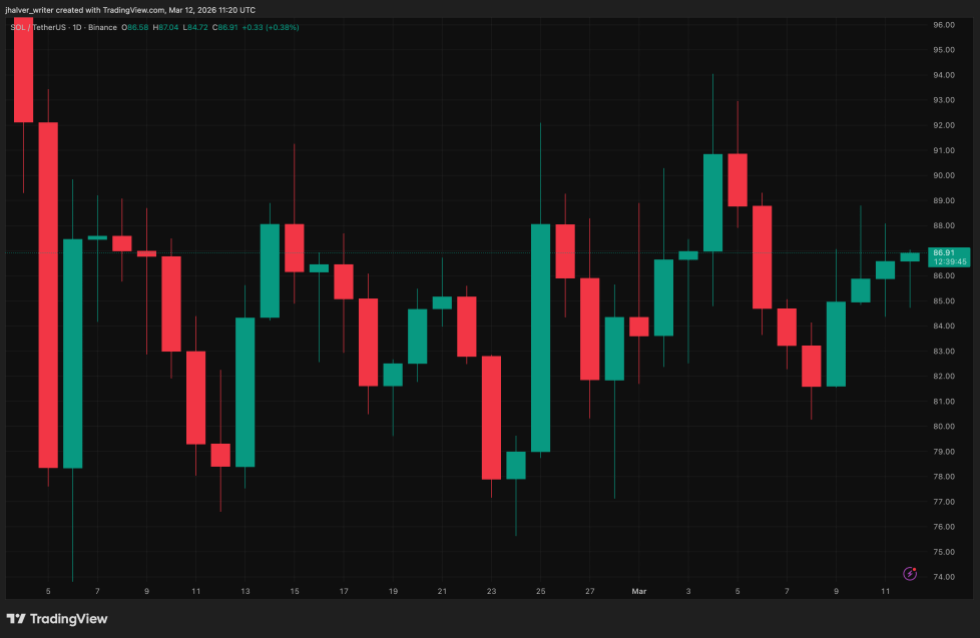
SOL’s price trends to the upside on the daily chart. Source: SOLUSDT on Tradingview

Cover image from Perplexity, SOLUSDT chart from Tradingview

Domande pertinenti

QWhat was the main security incident that occurred with Bonk.fun?

AThe main domain of Bonk.fun was hacked, and a wallet drainer was injected into the website, exposing users to a phishing scam.

QHow did the wallet drainer on Bonk.fun's compromised domain work?

AThe drainer set up a fake 'Terms of Services' (TOS) signature prompt. When users signed this prompt, it allowed the attacker to move their funds.

QAccording to the article, which users were affected by this security breach?

AOnly users who interacted with the fake TOS message on the compromised Bonk.fun domain after the hack were affected. Previously connected users and those trading on third-party terminals were not compromised.

QWhat type of exploit was this incident classified as, and what was its root cause?

AThis was not a smart contract exploit. It was a Web2 infrastructure failure (domain hijacking) that led to a Web3 phishing attack, where the frontend was compromised to present malicious prompts.

QWhat broader trend in crypto scams does the article mention, and what was a key statistic provided?

AThe article mentions that approval-phishing and 'fake UI' attacks have become a major trend. A Chainalysis investigation reported $14 billion in on-chain scam inflows in 2025, with projections exceeding $17 billion.

Letture associate

In Jinjiang, Fujian, a Storage Super Unicorn Lies Quiet

In Fujian's Jinjiang, a city known for sportswear, lies a quiet semiconductor giant: Fujian Jinhua Integrated Circuit Co. (JHICC). Once a promising domestic DRAM manufacturer alongside Yangtze Memory and ChangXin Memory Technologies (CXMT), its journey was derailed in 2018 when the U.S. placed it on an Entity List and filed criminal charges for alleged trade secret theft. This halted production for years. A turning point came in February 2024 when a U.S. federal court found JHICC not guilty. However, it had lost crucial time. While CXMT soared to become a top-valued A-share company in 2024, JHICC, with an estimated valuation of 80 billion RMB, was just restarting. Its current output is primarily customized DDR4 chips, not the advanced DDR5/HBM demanded for AI, but it still benefits from the broader memory chip upcycle. JHICC's story is tied to Chen Zhengkun, a veteran engineer who left Micron to lead the venture. Founded in 2016 with state-backed funding, JHICC partnered with Taiwan's UMC to develop DRAM technology. Rapid progress was cut short by the U.S. actions, which Micron initiated, partly due to its heavy reliance on the Chinese market. Post-sanctions, Chen's team worked to rebuild the production line with reduced reliance on U.S. technology. According to its records, JHICC achieved small-scale production and revenue growth under immense pressure. It now focuses on the stable "niche" DRAM market (e.g., TVs, routers) with a monthly capacity of ~40,000 wafers, aiming for 60,000 by 2026. It holds over 1,000 patents but remains on the Entity List. For Jinjiang, investing in JHICC was a bold industrial leap. The local government provided unwavering financial and logistical support during the crisis, helping the company survive. JHICC has become the anchor for a growing local semiconductor cluster. Though its scale lags behind domestic peers, JHICC's persistence symbolizes a hard-won foothold in a global market long dominated by Samsung, SK Hynix, and Micron. Having missed one boom, it seeks a place in the new AI-driven memory supercycle.

marsbit36 min fa

In Jinjiang, Fujian, a Storage Super Unicorn Lies Quiet

marsbit36 min fa

Must-Watch Events Next Week|CLARITY Act Could Face Senate Vote; SpaceX, Circle to Report Earnings (8.3-8.9)

**Summary: Key Events and Developments to Watch (August 3-9)** The upcoming week is marked by significant financial disclosures, key legislative deadlines, and notable product updates. **Major Financial Events:** Several companies are scheduled to release their Q2 2026 earnings. American Bitcoin (ABTC) will report on August 3, followed by SpaceX and Hut 8 Mining Corp. on August 4, and Circle on August 5. Notably, a significant portion of SpaceX shares (up to 12% of total shares) will be unlocked on August 6 following their earnings release. **Key Legislative Deadline:** The U.S. Senate faces an August 7 deadline to secure 60 votes for the CLARITY Act, a bipartisan bill aiming to establish a federal regulatory framework for cryptocurrencies. The Senate may hold a full vote on the bill during the week. **Economic Data:** The U.S. July Non-Farm Payrolls report will be released on August 7, providing crucial labor market data. **Technology & Product Updates:** * **Shutdowns:** DeFi portfolio tracker Zapper and wallet app Ctrl Wallet will cease operations on August 3. * **Upgrades:** LayerZero will deprecate its v1 relayers on August 3. XRP Ledger's new version 3.3.0, featuring five new functions, is expected next week. * **AI:** Elon Musk announced that the advanced Grok 4.6 AI model is set for release around August 7. * **Bitcoin:** The BIP-110 forced signaling for a potential Bitcoin network change is scheduled to begin around August 8. **Other Notable Events:** Chinese robotics firm Unitree Tech has set its preliminary price inquiry for its IPO for August 5. South Korean exchange Upbit will delist AQT and AERGO tokens on August 3.

marsbit2 h fa

Must-Watch Events Next Week|CLARITY Act Could Face Senate Vote; SpaceX, Circle to Report Earnings (8.3-8.9)

marsbit2 h fa

Trading

Spot
活动图片





