Crypto Tycoons Grace the Cover of 'Vanity Fair', Only to Face Widespread Ridicule Online

比推Pubblicato 2026-03-18Pubblicato ultima volta 2026-03-18

Introduzione

Crypto industry leaders, including Cathie Wood (ARK Invest), Olaf Carlson-Wee (Polychain), and Michael Novogratz (Galaxy Digital), were featured in a *Vanity Fair* cover story titled “Crypto’s True Believers Want to Be Taken Seriously.” However, the article and its accompanying photos were widely mocked across social media. Rather than portraying the figures as serious innovators, the publication depicted them as eccentric and out-of-touch billionaires—highlighting their interests in extraterrestrial life, extreme survivalism, and going barefoot in public. Critics within the crypto community accused *Vanity Fair* of intentional ridicule, pointing to unflattering photo compositions and dismissive writing that reinforced negative stereotypes. The piece has sparked debate about the crypto industry’s relationship with mainstream media. Some, like Noelle Acheson, acknowledged the awkward portrayal but suggested it reflects how the industry is perceived externally. Others, including Jinelle D’Lima of Nozomi, argued that seeking validation from traditional gateways like *Vanity Fair* contradicts crypto’s original anti-establishment ethos. The incident underscores a cultural disconnect: despite the industry’s financial influence and political lobbying, it remains marginalized in mainstream cultural narratives. The backlash serves as a reminder that crypto’s real strength lies in its technology and decentralized values—not in mainstream approval.

Author: Gu Yu, ChainCatcher

Original Title: Overnight, Crypto Tycoons Were Severely Played by 'Vanity Fair'


Overnight, a group photo of crypto tycoons flooded the X timelines of all crypto practitioners, accompanied by overwhelming ridicule and criticism.

The main subjects in the picture include industry heavyweights such as ARK Invest CEO Cathie Wood, Polychain founder Olaf Carlson-Wee, and Galaxy Digital founder Michael Novogratz, but this still couldn't stop the storm from escalating even further.
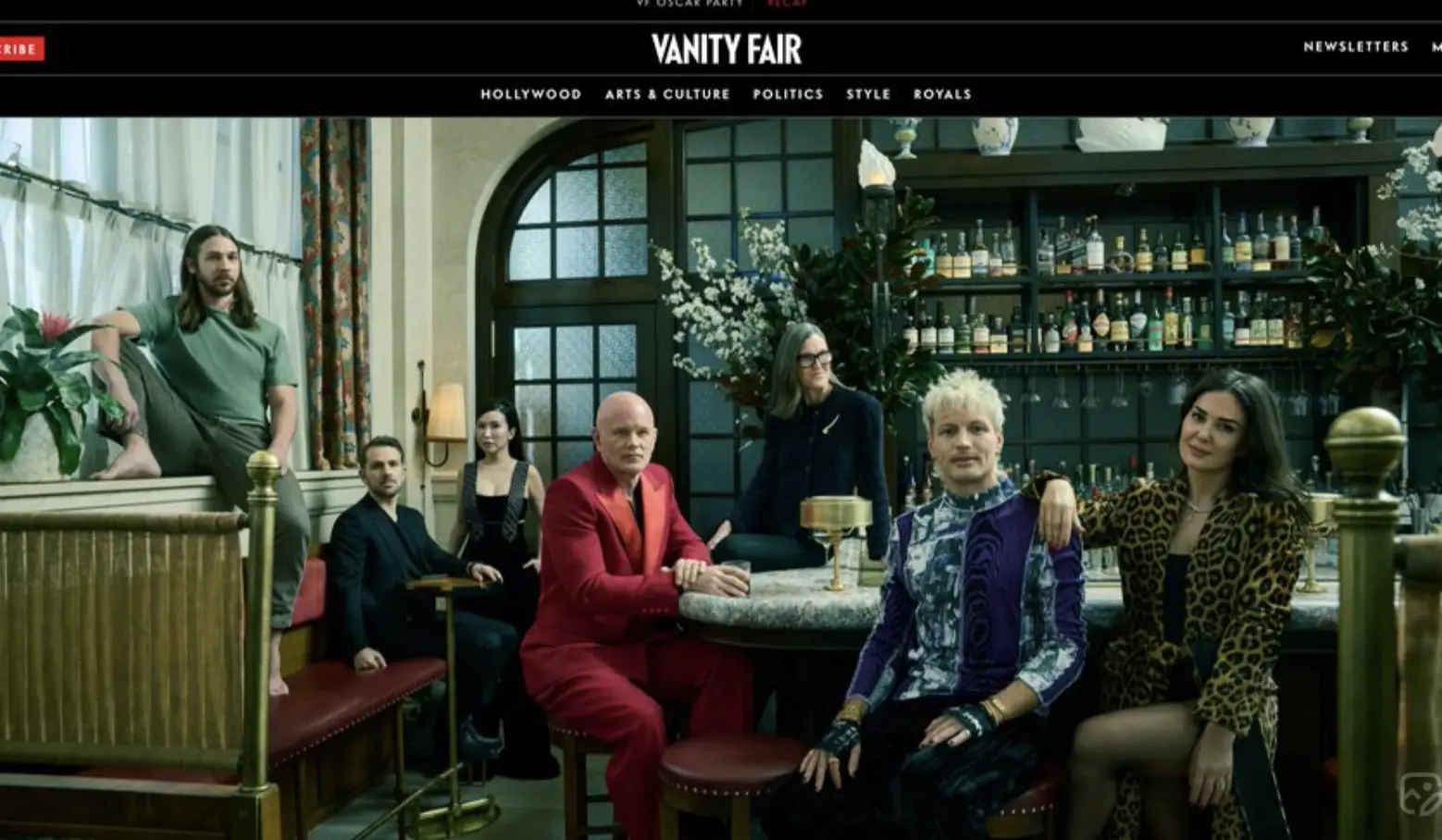
Upon closer examination of this group photo, it becomes clear that it is a work from the venerable celebrity magazine 'Vanity Fair,' featured on the cover of its latest issue's report titled 'Cryptocurrency's True Believers Demand to Be Taken Seriously.'

This article, through close observation of the industry's core circle, delves into how the crypto industry, after enduring multiple rounds of regulatory storms and market crashes, is attempting to redefine the global power landscape in 2026 with massive political donations and a 'savior-like' grand narrative.

Although the stories of crypto industry tycoons have already appeared in a series of traditional magazines such as 'Fortune' and 'The New York Times,' 'Vanity Fair,' as a media outlet deeply versed in celebrity culture, clearly has a more 'sinister' reporting perspective. The article doesn't dwell too much on complex industry trends but instead spends a significant amount of ink on the starkly contrasting private life details of these 'power redefiners.'

In the author's portrayal, these billionaires are depicted as a group of eccentrics who are both detached from reality and eager to dominate it: on one hand, they discuss the future of human civilization in mansions in Puerto Rico, while on the other, they are obsessed with searching for extraterrestrial life, practicing extreme survivalism, and even often going barefoot in public.

Triple Crown Digital partner Noelle Acheson commented on this, saying, 'We can laugh all we want (and we really do want to laugh) at these 'Vanity Fair' photos, at the awkward poses and perplexing character portrayals... but the deeper question is: Is this how the mainstream media views the cryptocurrency industry? If so, we have a lot of work to do.'

In the eyes of most industry insiders, this article not only fails to positively portray the image of cryptocurrency practitioners but also highlights stereotypes about the crypto industry.

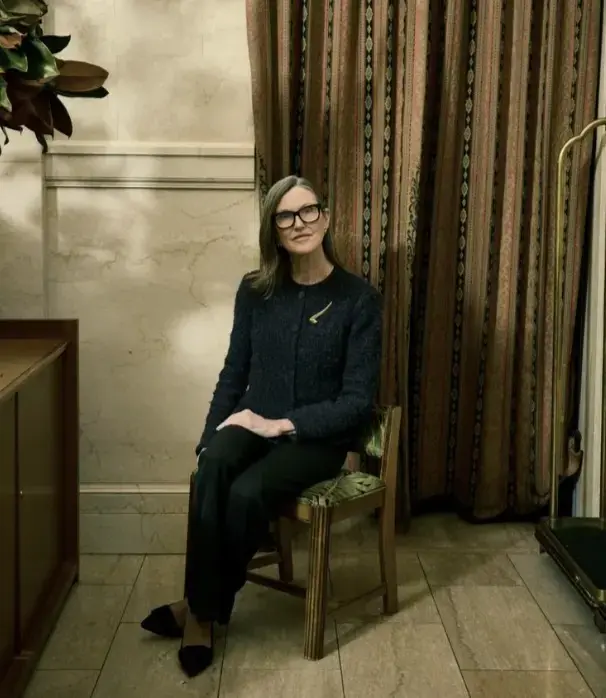
Tally co-founder Dennison Bertram further revealed that this article is 'Vanity Fair' magazine deliberately mocking cryptocurrency and its related figures, with both the text and photos filled with deep disdain and sarcasm. Before getting involved in cryptocurrency, he had worked as a fashion photographer for over a decade.

Analyzing Cathie Wood's close-up photo as an example, he said, 'Here, Cathie Wood is deliberately made to appear small. The camera shoots down on her, and the composition deliberately downplays her stature. The messy curtains, her crossed ankles, and the intentionally placed luggage cart all contribute to the deliberately created冷酷无情 (cold and ruthless) atmosphere in the picture. Could there be a more mean-spirited visual effect than this?'
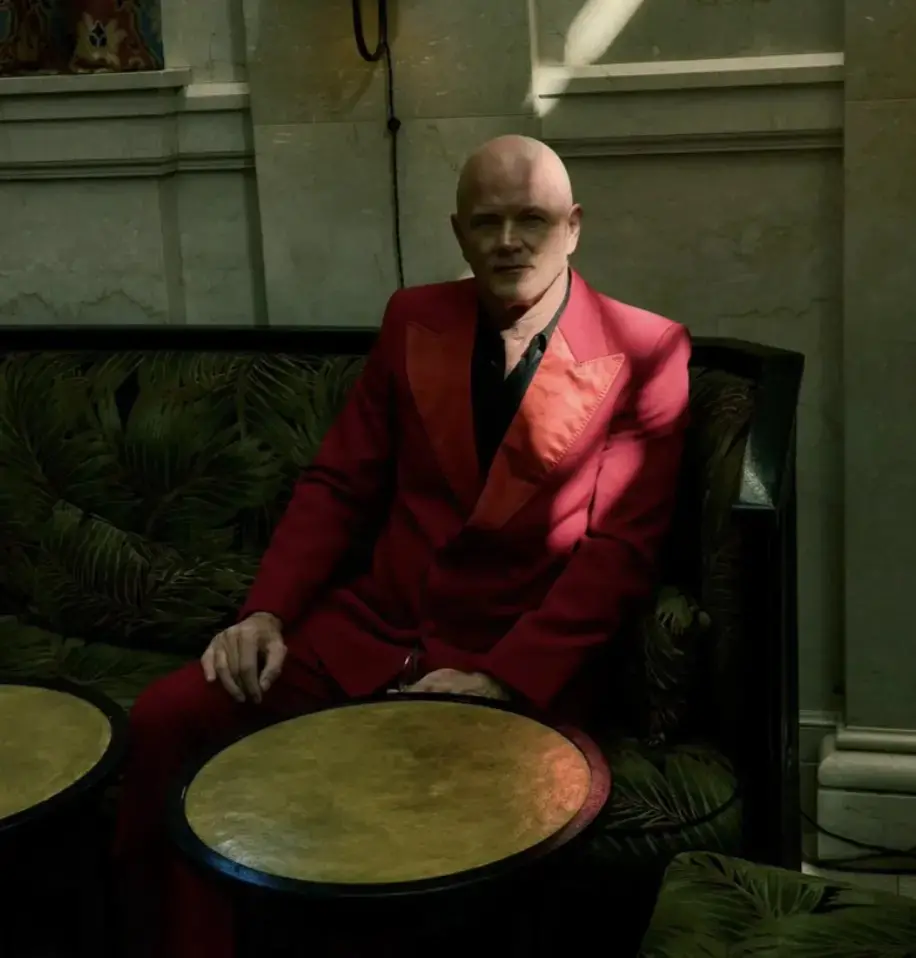
Looking at Michael Novogratz's photo, 'His eyes are squinted, looking fierce. Why? Because he's wearing glasses. He's holding them, almost invisible. His face is deliberately cast in shadow, appearing very menacing. It's another mess, everything is crooked, nothing is整齐划一 (neat and uniform). Is this a positive image? I don't think so at all.'
A group of tycoons who rose to the top through the crypto industry originally attempted to seek more recognition and support from the outside world through 'Vanity Fair' magazine, but they didn't realize it was a huge 'trap,' instead appearing as clown-like figures in the public eye. This is undoubtedly a painful lesson.

At this point, the act of seeking recognition in mainstream magazines itself has become a target of criticism. Nozomi founder Jinelle D'Lima believes that Satoshi Nakamoto and the cypherpunks never sought approval. 'The key point is, you don't need their approval: capital flows don't need it, network operation doesn't need it, the functioning of everything doesn't need it. We weren't built to cater to 'Vanity Fair' or 'Forbes.' We were built to resist everything they represent: gatekeepers, the system, and those who decide what is legitimate and what is illegal.'

'Now we're on the cover. Could it be any more ironic? This isn't like us. We were never supposed to be these people,' Jinelle D'Lima said.

The reason 'Vanity Fair's' report has become a vortex of controversy is that it reveals an awkward predicament for the crypto industry: even if the industry tries to exchange astronomical political donations and 'capitulation' to the mainstream financial system for 'serious treatment' from mainstream circles, within the aesthetic and value systems of mainstream culture, these nouveau riche are still viewed as a subcultural group with cult-like overtones.

This PR disaster might be telling everyone: the true power of the crypto industry has never been in the glossy reports of mainstream media, but in the code that can operate just fine without needing to be 'taken seriously.'


Twitter:https://twitter.com/BitpushNewsCN

Bitpush TG Discussion Group:https://t.me/BitPushCommunity

Bitpush TG Subscription: https://t.me/bitpush

Original link:https://www.bitpush.news/articles/7620917

Domande pertinenti

QWhy did the group photo of crypto leaders on the cover of Vanity Fair spark widespread ridicule online?

AThe photo and accompanying article portrayed crypto leaders as eccentric and out-of-touch billionaires, highlighting their unconventional lifestyles and using unflattering visual compositions, which many in the industry felt reinforced negative perceptions and stereotypes.

QWhat was the main criticism from industry experts like Dennison Bertram regarding Vanity Fair's portrayal of crypto leaders?

ADennison Bertram, a former fashion photographer, criticized the magazine for intentionally mocking the figures through deliberate visual choices, such as unflattering angles, messy backgrounds, and shadowy lighting, which made them appear awkward or sinister.

QHow did the Vanity Fair article describe the private lives of crypto billionaires?

AThe article depicted them as 'weirdos' who are disconnected from reality yet aspire to dominate it, mentioning their interests in topics like alien life, extreme survivalism, and often going barefoot in public, while discussing humanity's future from luxury homes in Puerto Rico.

QWhat deeper issue did Noelle Acheson highlight about the Vanity Fair coverage?

ANoelle Acheson pointed out that the deeper issue is whether this portrayal reflects how mainstream media views the cryptocurrency industry, suggesting that if so, the industry still has significant work to do to improve its image and understanding.

QAccording to Jinelle D'Lima, why is seeking validation from mainstream publications like Vanity Fair contrary to crypto's original ethos?

AJinelle D'Lima argued that figures like Satoshi Nakamoto and cypherpunks never sought approval, as crypto was built to resist gatekeepers, institutions, and those who decide legitimacy—not to conform to mainstream validation through publications like Vanity Fair or Forbes.

Letture associate

In Conversation with Ray Dalio: We Are Currently in an AI Bubble, with 1% of My Portfolio in Bitcoin

Ray Dalio, founder of Bridgewater Associates, warns in an interview that the current AI boom shows classic bubble characteristics, which could lead to significant economic downturns as seen in past cycles like 1929 or 2000. He explains that speculative enthusiasm, fueled by debt and overvaluation, often precedes a crash when rising rates or taxation force asset sales, causing widespread losses and recession. Dalio also outlines his "Big Cycle" theory, describing an approximate 80-year pattern where widening wealth gaps, massive government deficits, and shifting geopolitical power (like China's rise) create internal conflict and global instability. He emphasizes that we are in a late-cycle, transitional phase where traditional powers like the US and UK face decline. For personal wealth protection, Dalio advises diversification beyond cash into assets like stocks, bonds, real estate, and particularly gold, which he prefers over Bitcoin. While he holds about 1% of his portfolio in Bitcoin as a non-printable hard asset, he views gold as more secure from technological or governmental threats. Regarding AI's impact, Dalio believes it will disproportionately benefit capital owners, worsening inequality by replacing both physical and cognitive labor. He suggests that human intuition and emotional intelligence, combined with AI, will be key for future workers. On taxation, Dalio argues that wealth taxes are impractical and risk triggering asset sell-offs, reducing productive investment. He points to the UK as a cautionary example of debt, low productivity, and political strife. Geopolitically, Dalio foresees a more regionalized world, with the US showing weakness in prolonged conflicts like with Iran, akin to past imperial declines. The ideal outcome, he suggests, is coexisting powerful blocs (e.g., Americas, China-Asia Pacific) without major war.

marsbit3 h fa

In Conversation with Ray Dalio: We Are Currently in an AI Bubble, with 1% of My Portfolio in Bitcoin

marsbit3 h fa

Daily 7.2 Trillion KRW: Foreign Capital's Record Net Buying on Friday! Wall Street Says Headwinds for Korean Stock Fund Flows Have Subsided

South Korean stock market sees a dramatic shift in fund flows. On July 31, foreign investors made a record net purchase of approximately KRW 7.2 trillion in KOSPI stocks, marking a fundamental reversal from the persistent large-scale net outflows seen in previous months. This contributed to a significant narrowing of foreign net selling in July to KRW 9.8 trillion, down sharply from KRW 48.4 trillion in June and KRW 44.5 trillion in May. Simultaneously, domestic institutional pressure eased. South Korean pension funds and asset managers turned to a net buying position in July, purchasing KRW 1.0 trillion worth of KOSPI shares, contrasting with net sales in May and June. Market volatility is expected to be dampened by new financial regulations. Effective July 31, the Financial Services Commission tightened access for retail investors to single-stock leveraged ETFs by raising the minimum cash deposit requirement. Trading volumes for these products subsequently dropped to about 50% of their monthly average. Citigroup Research maintains its year-end KOSPI target of 10,000 points. The firm cites several supportive factors: the substantial easing of headwinds from capital outflows, a robust fundamental outlook for the semiconductor sector, historically low market valuations, strong economic fundamentals, and the potential for policy support from financial authorities if needed.

marsbit3 h fa

Daily 7.2 Trillion KRW: Foreign Capital's Record Net Buying on Friday! Wall Street Says Headwinds for Korean Stock Fund Flows Have Subsided

marsbit3 h fa

Thanks to Dice Rolls, Bitcoin Keys Are Stored Offline, But Not Everyone Will Do It

The article discusses using dice rolls to generate secure Bitcoin wallet seeds, providing entropy independent of potentially flawed hardware random number generators. It explains that each fair dice roll offers about 2.585 bits of entropy, with around 50 rolls needed for a standard 12-word seed phrase and 99+ recommended for higher security. This method gained attention after a vulnerability was revealed in some Coldcard hardware wallets, where a faulty firmware RNG (dating back to 2021) compromised generated keys. The analysis notes that while a dice-generated main seed was safe from this specific flaw, other Coldcard functions (like creating paper wallets, backup keys, or passwords) could still be vulnerable if they used the defective RNG. The piece argues that while dice-based entropy is technically robust, the manual process is error-prone, tedious, and unrealistic for most new users, who might make mistakes in recording or inputting rolls. It concludes that while manual entropy generation should remain an option for advanced users, the long-term goal is to develop reliable, user-friendly hardware and software that securely generates randomness without requiring specialized knowledge. Coldcard users are advised to check their firmware version and replace any secondary secrets (like paper wallet keys) created with vulnerable devices, while also considering multi-signature setups with devices from different manufacturers for added security.

cryptonews.ru9 h fa

Thanks to Dice Rolls, Bitcoin Keys Are Stored Offline, But Not Everyone Will Do It

cryptonews.ru9 h fa

Trading

Spot
活动图片





