Crypto Superapp Legend Announces Shutdown As Industry Shakeout Continues

bitcoinistPubblicato 2026-05-14Pubblicato ultima volta 2026-05-14

Introduzione

Legend, a DeFi mobile app aggregator founded by former Compound executives, is shutting down on July 12 after roughly two years. Despite a $15 million funding round led by Andreessen Horowitz and Coinbase Ventures in 2025, CEO Jayson Hobby stated the product failed to achieve the necessary scale for financial viability. The non-custodial app allowed users to earn, trade, borrow, and swap assets via integrations with major protocols like Aave and Uniswap from a single interface. Hobby noted mainstream crypto users care about benefits like better yield and control, not whether a product uses blockchain. Legend's closure is part of a broader sector shakeout, with over 20 DeFi, NFT, and crypto protocols announcing shutdowns this year amid a bear market and declining total value locked.

Mainstream crypto users don’t care whether a product runs on a blockchain or not. That blunt observation came from Legend CEO Jayson Hobby as he announced the closure of the DeFi mobile app he helped build — and it may be the most honest thing said about crypto consumer products in years.

A Costly Lesson in Crypto User Behavior

Legend, a mobile-first DeFi aggregator founded by former Compound Finance executives, will go offline on July 12 after roughly two years in operation. The app will continue running normally for 60 days before the shutdown takes effect.

Hobby said the product found an audience but failed to grow to the scale needed to keep the company financially viable. Closing, he said, was the right call for the team and its investors.

The app let users earn, trade, borrow, and swap assets like stablecoins and Ether through integrations with major DeFi protocols including Aave, Compound, and Uniswap — all from a single interface.

The idea was to spare users from juggling multiple wallets and applications. Legend operated as a non-custodial aggregator, meaning it never held user funds directly.

Backed By Big Names, Still Not Enough

In February 2025, Legend closed a $15 million funding round led by Andreessen Horowitz and Coinbase Ventures. The backing gave it credibility. It wasn’t enough to overcome the growth gap.

No active user counts or total value locked figures were disclosed, partly because the aggregator model makes those numbers harder to pin down.

Bitcoin is now trading at $80,237. Chart: TradingView

What users want, according to Hobby, is simple: better yield, faster payments, more control over their money. Whether those outcomes come from a blockchain or a traditional bank account is beside the point.

“The product that wins,” he said, “is the one that hides it completely. The benefits are felt, not explained.”

The broader DeFi market has not made things easier. Total value locked across the DeFi ecosystem has fallen 50% since October, weighed down by a prolonged crypto bear market.

A Wave Of Closures Sweeps The Sector

Legend is far from alone. More than 20 DeFi, NFT, crypto, GameFi protocols have announced shutdowns so far this year.

ZeroLend closed in February after three years, calling its model unsustainable. Solana aggregator Step Finance wound down the same month following a $40 million treasury wallet breach.

DeFi derivatives platform Polynomial also ceased operations in February. Balancer Labs shut down in March after mounting pressure following a $116 million hack late last year.

And in April, Base-based lending protocol Seamless Protocol cited volatile market conditions as the reason for its closure.

Featured image from Unsplash, chart from TradingView

Domande pertinenti

QWhat was the main reason behind Legend CEO Jayson Hobby's blunt observation about crypto users?

AThe main reason was his conclusion based on Legend's shutdown, stating that mainstream crypto users don't care if a product runs on blockchain or not; they just want better yield, faster payments, and more control over their money.

QWhat key functionality did the Legend app provide to its users?

AThe Legend app was a non-custodial DeFi aggregator that let users earn, trade, borrow, and swap assets like stablecoins and Ether through integrations with major protocols like Aave, Compound, and Uniswap from a single interface.

QWhich major venture capital firms led Legend's $15 million funding round in February 2025?

ALegend's $15 million funding round in February 2025 was led by Andreessen Horowitz and Coinbase Ventures.

QAccording to the article, what has happened to the total value locked (TVL) in the broader DeFi market since October?

AAccording to the article, the total value locked (TVL) across the DeFi ecosystem has fallen by 50% since October, weighed down by a prolonged crypto bear market.

QName two other crypto protocols mentioned in the article that shut down in February of the same year.

ATwo other crypto protocols that shut down in February mentioned in the article are ZeroLend and the Solana aggregator Step Finance (following a treasury wallet breach).

Letture associate

Apple Also Has to Pay Rent Now

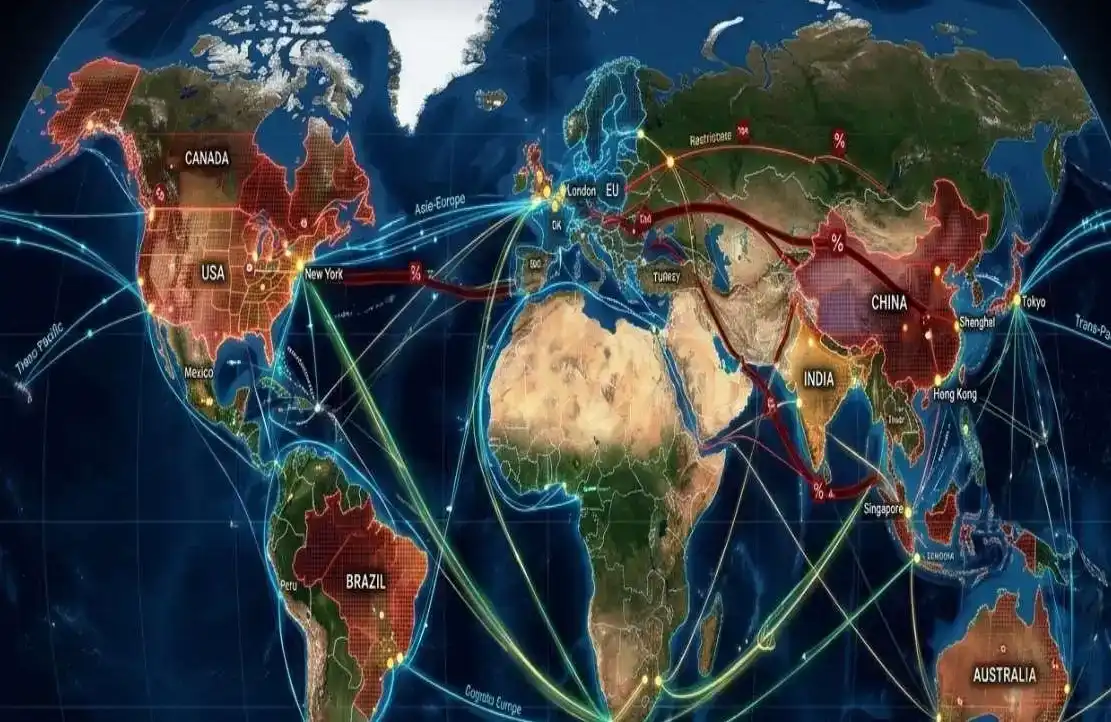
Apple Pays Rent Too: The Two-Way Flow of "Traffic Tax" and "AI Capability Rent" Between Tech Giants For over two decades, Google has paid Apple an estimated $20 billion annually to remain the default search engine on Safari, a "traffic tax" for a critical user entry point. However, in 2026, the direction of this cash flow partially reversed. Apple agreed to pay Google roughly $1 billion per year to license its Gemini AI models, as Apple's own models reportedly struggled with complex tasks. This creates a unique dynamic: Apple acts as the "landlord" in the established search ecosystem, collecting rent from Google for access. Simultaneously, in the emerging AI arena, Apple becomes the "tenant," paying Google for access to cutting-edge AI capabilities it cannot currently match internally. While Apple claims its new models are "distilled" from Gemini outputs and contain "not a drop" of Google's original code, core dependencies remain. Its knowledge base is refined using Gemini's outputs, and its most powerful cloud model runs on Google's infrastructure. Apple has structured the deal as non-exclusive, allowing it to theoretically switch AI suppliers—a hedge against over-reliance. The future hinges on whether advanced AI models become a commodity (cheap and abundant) or remain a concentrated, scarce resource (expensive and controlled by few). Apple is betting on the former, leveraging its massive device ecosystem to be a powerful, choosy customer. If the latter proves true, its bargaining power could erode. This power dynamic is extending to developers. Apple, Google, and WeChat are all pushing for apps to expose their core functions as standardized "actions" or "intents" that their respective AI assistants (Siri, Gemini, WeChat AI) can directly call. The new scarce resource is no longer just app store visibility, but "being selected by the AI." The currency of "rent" has changed from a 30% revenue share to ceding control over how users interact with an app's functions.

marsbit1 h fa

Apple Also Has to Pay Rent Now

marsbit1 h fa

Missed the SpaceX IPO? WEEX's "First Trade Protection" Lets You Experience US Stock Trading Risk-Free.

With the excitement around SpaceX's recent public listing reigniting interest in the US stock market, Chinese investors face significant challenges accessing compliant and convenient trading channels following regulatory actions against major online brokers. This article explores the available options, highlighting their risks and limitations. Traditional paths for US stock investments remain problematic. Qualified Domestic Institutional Investor (QDII) and Listed Open-Ended Fund (LOF) products, while compliant, suffer from high fees, significant purchase premiums, and a very limited selection of assets. Small, unregulated offshore brokers pose substantial risks, including potential insolvency. While secure, VIP accounts at banks in Hong Kong or Singapore require high minimum deposits (often 1-2 million RMB) and in-person visits, placing them out of reach for most retail investors. The article positions cryptocurrency exchanges, specifically their TradFi (traditional finance on-chain) offerings, as a compelling alternative. Platforms like WEEX are noted for providing access to a wide range of US stocks and ETFs, including SpaceX (SPCXON), through tokenized assets. This method offers advantages such as a single account for both crypto and traditional assets, USDT-based settlement avoiding fiat complexities, flexible leverage, and robust risk management. To attract users, WEEX is promoting a "First Trade Guarantee" campaign. Running from June 15 to July 8 (UTC+8), it features a $30,000 prize pool. Users who trade $500 worth of US stock contracts can qualify for a guarantee on their first eligible trade: 100% loss coverage up to $30 or a 20% bonus on profits up to $30. The campaign is presented as a low-risk opportunity for both crypto natives and traditional investors to experience US stock trading.

marsbit1 h fa

Missed the SpaceX IPO? WEEX's "First Trade Protection" Lets You Experience US Stock Trading Risk-Free.

marsbit1 h fa

How Difficult is Chip Making? A Division Error Costs 475 Million Dollars

How Hard Is It to Make a Chip? A Division Error Cost $475 Million Chip expert Shi Kan, a researcher at the Chinese Academy of Sciences and a popular tech creator, explains the immense challenges of chip development. Chips are foundational to modern technology, but their creation is extraordinarily difficult. The journey from sand to a functional chip involves complex design and manufacturing, but a critical bottleneck is verification—ensuring the design works flawlessly before costly production. A single, undetected bug can have catastrophic consequences, as illustrated by the infamous 1994 Intel Pentium FDIV bug. A flaw in the floating-point division unit forced a recall costing $475 million. Unlike software, chips cannot be easily patched after manufacture, making "first-time success" paramount. However, industry surveys show only 24% of chip projects achieve this; over three-quarters require at least one costly re-spin due to design flaws. Verification has thus become the dominant phase, consuming up to 70% of the design cycle. The core challenge is a "verification impossible triangle" between high performance, good debuggability, and low cost. Exhaustively verifying a modern CPU core could take 15,000 years with software simulation, or 30 years with advanced hardware emulation—timeframes utterly impractical for development. Despite being essential, verification is often seen as unglamorous "dirty work," receiving less academic attention than fields like AI. Shi and his team are tackling this by developing an agile verification research framework called ENCORE, based on FPGA technology, to improve verification efficiency and debug capability. Beyond research, Shi engages in public science communication through long-form video content, aiming to demystify chip technology, AI, and computer science. He argues for the value of pursuing "hard and long-term" endeavors, whether in the meticulous world of chip verification or in creating substantive educational content, believing such sustained effort is likely the right path forward.

marsbit1 h fa

How Difficult is Chip Making? A Division Error Costs 475 Million Dollars

marsbit1 h fa

Trading

Spot
Futures

Articoli Popolari

Come comprare T

Benvenuto in HTX.com! Abbiamo reso l'acquisto di Threshold Network Token (T) semplice e conveniente. Segui la nostra guida passo passo per intraprendere il tuo viaggio nel mondo delle criptovalute.Step 1: Crea il tuo Account HTXUsa la tua email o numero di telefono per registrarti il tuo account gratuito su HTX. Vivi un'esperienza facile e sblocca tutte le funzionalità,Crea il mio accountStep 2: Vai in Acquista crypto e seleziona il tuo metodo di pagamentoCarta di credito/debito: utilizza la tua Visa o Mastercard per acquistare immediatamente Threshold Network TokenT.Bilancio: Usa i fondi dal bilancio del tuo account HTX per fare trading senza problemi.Terze parti: abbiamo aggiunto metodi di pagamento molto utilizzati come Google Pay e Apple Pay per maggiore comodità.P2P: Fai trading direttamente con altri utenti HTX.Over-the-Counter (OTC): Offriamo servizi su misura e tassi di cambio competitivi per i trader.Step 3: Conserva Threshold Network Token (T)Dopo aver acquistato Threshold Network Token (T), conserva nel tuo account HTX. In alternativa, puoi inviare tramite trasferimento blockchain o scambiare per altre criptovalute.Step 4: Scambia Threshold Network Token (T)Scambia facilmente Threshold Network Token (T) nel mercato spot di HTX. Accedi al tuo account, seleziona la tua coppia di trading, esegui le tue operazioni e monitora in tempo reale. Offriamo un'esperienza user-friendly sia per chi ha appena iniziato che per i trader più esperti.

414 Totale visualizzazioniPubblicato il 2024.12.10Aggiornato il 2026.06.02

Come comprare T

Discussioni

Benvenuto nella Community HTX. Qui puoi rimanere informato sugli ultimi sviluppi della piattaforma e accedere ad approfondimenti esperti sul mercato. Le opinioni degli utenti sul prezzo di T T sono presentate come di seguito.

活动图片