Crypto may enter insurers’ portfolios as Hong Kong reviews capital rules

cointelegraphPubblicato 2025-12-22Pubblicato ultima volta 2025-12-22

Introduzione

The Hong Kong Insurance Authority is proposing to allow insurance companies to allocate capital to cryptocurrencies and infrastructure projects. Under the proposal, crypto investments would be subject to a 100% risk charge, requiring insurers to hold regulatory capital equal to the full value of their crypto holdings. The move is part of a broader review of the risk-based capital regime to support the industry and economic development. This follows a global trend, as the EU has proposed similar capital rules, and insurers like MassMutual and Allianz have already made crypto investments. Hong Kong has been actively developing its crypto regulatory framework, including stablecoin rules and a fintech strategy focused on tokenization, despite mainland China's continued restrictions on crypto activities.

The Hong Kong Insurance Authority is reportedly proposing to allow insurance capital allocation to cryptocurrencies and infrastructure projects.

Bloomberg reported on Monday that the city’s regulator started reviewing the risk-based capital regime to support the insurance industry and economic development.

Crypto allocations would be subject to a 100% risk charge, meaning that the insurer would need regulatory capital roughly equal to the full value of its crypto position.

The proposal would also allow infrastructure investment at a time when Hong Kong faces a budget deficit. Some companies that submitted feedback reportedly urged that coverage be extended broadly, noting that the current proposal has significant limitations.

A spokesperson reportedly explained that the institution is now gauging industry feedback and will initiate public consultation later.

The Hong Kong Insurance Authority did not respond to Cointelegraph’s media inquiry.
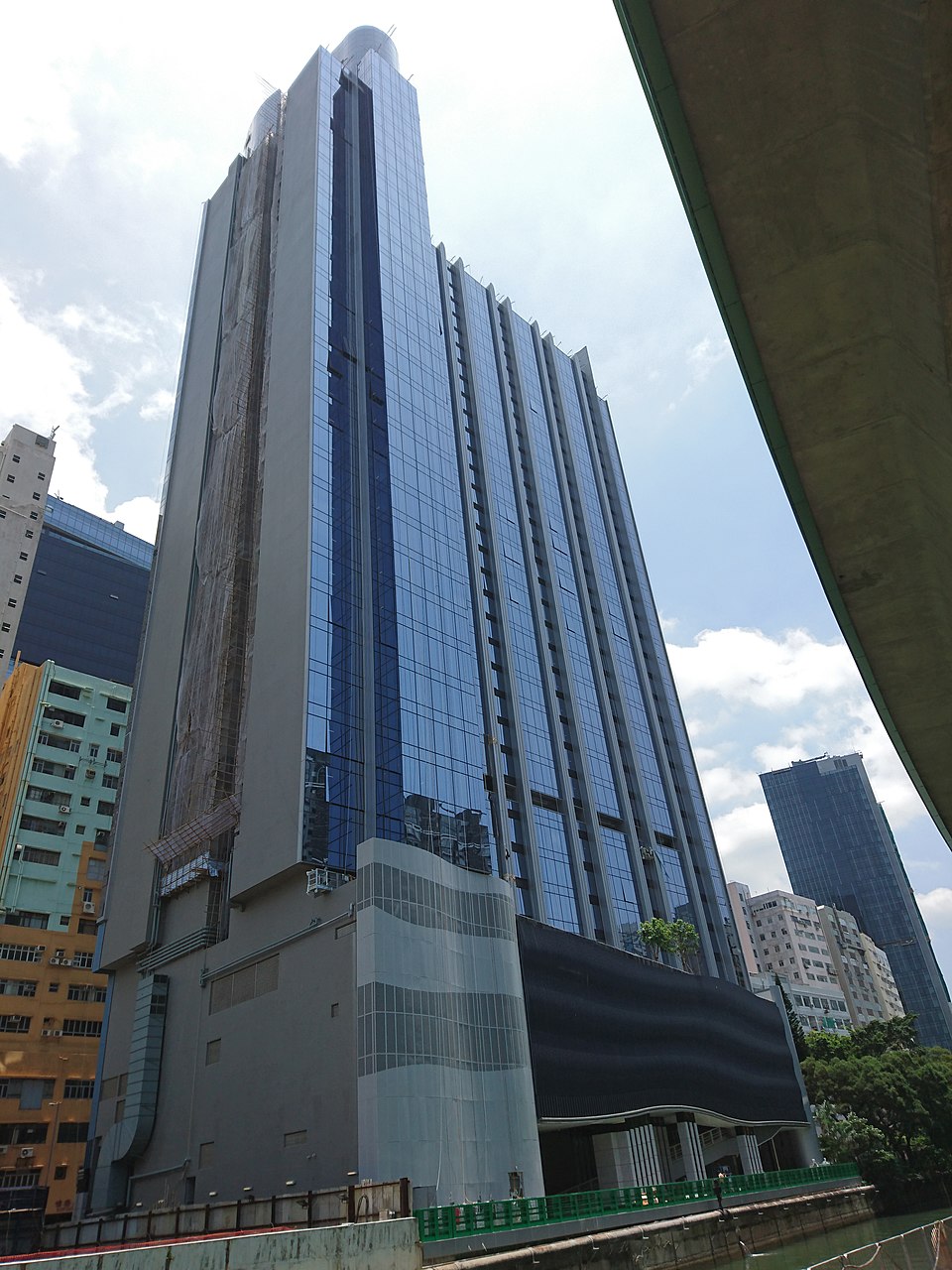
Hong Kong Insurance Authority headquarters. Source: Ceeseven, CC BY-SA 4.0

Related: China Merchants Bank tokenizes $3.8B fund on BNB Chain in Hong Kong

Insurance investment in crypto moves out of the fringe

Insurance companies investing in cryptocurrencies is increasingly becoming more popular. In March, the European Union’s insurance authority proposed a blanket rule that would require insurance companies to maintain capital equal to the value of their crypto holdings, similar to the reported Hong Kong rule.

Some insurance companies are also using cryptocurrency to achieve their goals.

In March, Barbados-based insurer Tabit raised $40 million in Bitcoin (BTC) to bolster its balance sheet and back traditional insurance policies.

Germany’s largest insurance company Allianz invested in a convertible note offering by leading Bitcoin treasury company Strategy in November last year.

Still, the earliest players moved much sooner.

At the end of 2020, Massachusetts-based insurance firm MassMutual purchased $100 million in Bitcoin for its general investment account. At the time, this was about 5,470 BTC for $18,279 per coin.

At the current price of over $89,000, that would be worth over $488 million.

Related: Hong Kong rules limit stablecoin derivatives trading: DBS CEO

Hong Kong takes crypto seriously

Hong Kong has been paying particular attention to the cryptocurrency industry recently. In November, the Hong Kong Monetary Authority (HKMA) unveiled its Fintech 2030 strategy. It includes real-world assets and tokenization, a rising crypto trend that is drawing global institutional interest.

Hong Kong started enforcing its stablecoin rules in August, reportedly drawing applicants from mainland China banks.

However, Beijing has not warmed up to crypto-related initiatives. Key activities related to crypto, such as mining and trading, are prohibited on the mainland.

In August, Chinese regulators reportedly told local firms to stop publishing research or holding seminars related to stablecoins. In September, a since-removed report by finance outlet Caixin claimed mainland Chinese firms operating in Hong Kong may be forced to withdraw from cryptocurrency-related activities.

Magazine: Sei wallets in Xiaomi, Bhutan’s gold on Solana: Asia Express

Domande pertinenti

QWhat is the Hong Kong Insurance Authority proposing regarding insurance capital allocation?

AThe Hong Kong Insurance Authority is proposing to allow insurance capital allocation to cryptocurrencies and infrastructure projects.

QWhat risk charge would crypto allocations be subject to under the proposed rules?

ACrypto allocations would be subject to a 100% risk charge, meaning insurers would need regulatory capital roughly equal to the full value of their crypto position.

QWhich other region has proposed a similar capital requirement for insurance companies' crypto holdings?

AThe European Union's insurance authority proposed a similar blanket rule in March that would require insurance companies to maintain capital equal to the value of their crypto holdings.

QWhat significant Bitcoin investment did MassMutual make in 2020 and what would it be worth today?

AIn 2020, MassMutual purchased $100 million in Bitcoin (about 5,470 BTC at $18,279 per coin). At current prices over $89,000, that would be worth over $488 million.

QHow does Beijing's stance on cryptocurrency differ from Hong Kong's approach?

ABeijing has not warmed up to crypto-related initiatives and prohibits key activities like mining and trading on the mainland, while Hong Kong has been paying particular attention to the cryptocurrency industry with various regulatory developments.

Letture associate

In Jinjiang, Fujian, a Storage Super Unicorn Lies Quiet

In Fujian's Jinjiang, a city known for sportswear, lies a quiet semiconductor giant: Fujian Jinhua Integrated Circuit Co. (JHICC). Once a promising domestic DRAM manufacturer alongside Yangtze Memory and ChangXin Memory Technologies (CXMT), its journey was derailed in 2018 when the U.S. placed it on an Entity List and filed criminal charges for alleged trade secret theft. This halted production for years. A turning point came in February 2024 when a U.S. federal court found JHICC not guilty. However, it had lost crucial time. While CXMT soared to become a top-valued A-share company in 2024, JHICC, with an estimated valuation of 80 billion RMB, was just restarting. Its current output is primarily customized DDR4 chips, not the advanced DDR5/HBM demanded for AI, but it still benefits from the broader memory chip upcycle. JHICC's story is tied to Chen Zhengkun, a veteran engineer who left Micron to lead the venture. Founded in 2016 with state-backed funding, JHICC partnered with Taiwan's UMC to develop DRAM technology. Rapid progress was cut short by the U.S. actions, which Micron initiated, partly due to its heavy reliance on the Chinese market. Post-sanctions, Chen's team worked to rebuild the production line with reduced reliance on U.S. technology. According to its records, JHICC achieved small-scale production and revenue growth under immense pressure. It now focuses on the stable "niche" DRAM market (e.g., TVs, routers) with a monthly capacity of ~40,000 wafers, aiming for 60,000 by 2026. It holds over 1,000 patents but remains on the Entity List. For Jinjiang, investing in JHICC was a bold industrial leap. The local government provided unwavering financial and logistical support during the crisis, helping the company survive. JHICC has become the anchor for a growing local semiconductor cluster. Though its scale lags behind domestic peers, JHICC's persistence symbolizes a hard-won foothold in a global market long dominated by Samsung, SK Hynix, and Micron. Having missed one boom, it seeks a place in the new AI-driven memory supercycle.

marsbit21 min fa

In Jinjiang, Fujian, a Storage Super Unicorn Lies Quiet

marsbit21 min fa

Must-Watch Events Next Week|CLARITY Act Could Face Senate Vote; SpaceX, Circle to Report Earnings (8.3-8.9)

**Summary: Key Events and Developments to Watch (August 3-9)** The upcoming week is marked by significant financial disclosures, key legislative deadlines, and notable product updates. **Major Financial Events:** Several companies are scheduled to release their Q2 2026 earnings. American Bitcoin (ABTC) will report on August 3, followed by SpaceX and Hut 8 Mining Corp. on August 4, and Circle on August 5. Notably, a significant portion of SpaceX shares (up to 12% of total shares) will be unlocked on August 6 following their earnings release. **Key Legislative Deadline:** The U.S. Senate faces an August 7 deadline to secure 60 votes for the CLARITY Act, a bipartisan bill aiming to establish a federal regulatory framework for cryptocurrencies. The Senate may hold a full vote on the bill during the week. **Economic Data:** The U.S. July Non-Farm Payrolls report will be released on August 7, providing crucial labor market data. **Technology & Product Updates:** * **Shutdowns:** DeFi portfolio tracker Zapper and wallet app Ctrl Wallet will cease operations on August 3. * **Upgrades:** LayerZero will deprecate its v1 relayers on August 3. XRP Ledger's new version 3.3.0, featuring five new functions, is expected next week. * **AI:** Elon Musk announced that the advanced Grok 4.6 AI model is set for release around August 7. * **Bitcoin:** The BIP-110 forced signaling for a potential Bitcoin network change is scheduled to begin around August 8. **Other Notable Events:** Chinese robotics firm Unitree Tech has set its preliminary price inquiry for its IPO for August 5. South Korean exchange Upbit will delist AQT and AERGO tokens on August 3.

marsbit2 h fa

Must-Watch Events Next Week|CLARITY Act Could Face Senate Vote; SpaceX, Circle to Report Earnings (8.3-8.9)

marsbit2 h fa

Trading

Spot
活动图片





