Crypto Market Structure Legislation Clears Senate Agriculture Committee: Here’s What’s Next

bitcoinistPubblicato 2026-01-29Pubblicato ultima volta 2026-01-29

Introduzione

The CLARITY Act, a major crypto market structure bill, has advanced through the Senate Agriculture Committee by a narrow 12-11 vote along party lines, with no Democratic support. The legislation aims to grant the Commodity Futures Trading Commission (CFTC) new authority over the spot trading of digital commodities. However, the bill must still be merged with a separate section from the Senate Banking Committee addressing the SEC's role before it can proceed further. The committee rejected several Democratic amendments during the process. The vote followed failed bipartisan negotiations, with the Republican sponsor citing "fundamental policy disagreements." The bill's path forward remains complex as lawmakers work to reconcile the two sections and determine if bipartisan support can be achieved.

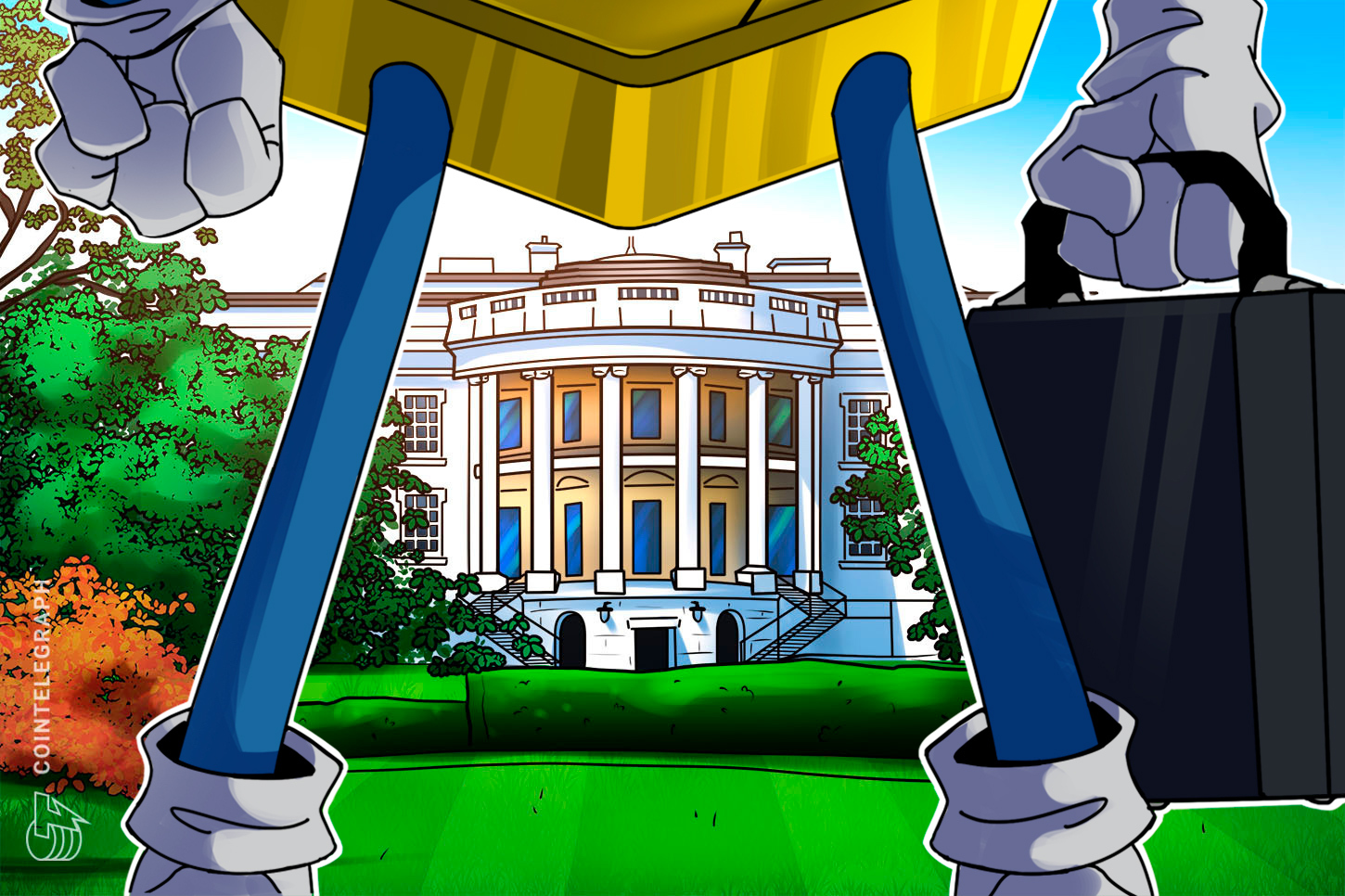
The long‐anticipated crypto market structure legislation known as the CLARITY Act cleared a significant procedural step on Thursday, after the Senate Agriculture Committee approved its portion of the bill during a scheduled markup earlier in the day.

According to crypto journalist Eleanor Terrett, the committee voted to advance the measure by a narrow 12–11 margin along party lines. No Democratic senators supported the bill, marking a clear partisan divide as the legislation moves forward.

CFTC Authority Over Crypto Advances

The version approved by the Agriculture Committee would expand the Commodity Futures Trading Commission’s (CFTC) authority over the crypto sector, granting it oversight of spot trading in digital commodities. However, the bill’s path is far from complete.

The agriculture panel’s proposal must eventually be combined with a separate section addressing the Securities and Exchange Commission’s (SEC) role, which falls under the jurisdiction of the Senate Banking Committee. Only after the two pieces are merged can the broader legislation move ahead in the Senate.

Thursday’s vote followed months of negotiations between Senate Agriculture Committee Chair John Boozman, a Republican from Arkansas, and Senator Cory Booker, a Democrat from New Jersey.

Those talks failed to produce a bipartisan agreement, prompting Boozman to move forward with a Republican‐only version of the bill. He said the discussions stalled due to what he described as “fundamental policy disagreements.”

Boozman argued that the CFTC is best positioned to oversee the spot trading of digital commodities. He said the bill offers a clear definition of what constitutes a digital commodity, supports innovation and technological development, establishes consumer protection measures, and provides the agency with the resources needed to carry out its expanded responsibilities.

Senate Panel Rejects Democratic Amendments

During the markup, the committee also rejected several Democratic‐backed amendments, all along party lines. Among them was a proposal from Senator Michael Bennet of Colorado that would have barred federal officials and their immediate family members from issuing or endorsing digital assets.

Republicans also voted down two amendments introduced by Senator Dick Durbin of Illinois. One sought to strengthen enforcement against fraud involving cryptocurrency ATMs, while the other aimed to prevent certain crypto firms from being eligible for federal bailouts.

With the Agriculture Committee’s approval secured, the CLARITY Act now advances to its next, more complex phase. Lawmakers must reconcile the CFTC‐focused provisions with parallel legislation under the Banking Committee’s oversight, while also determining whether bipartisan support can still be salvaged for a bill that could fundamentally reshape crypto regulation in the United States.

The 1-D chart shows the total crypto market cap at $2.85 trillion. Source: TOTAL on TradingView.com

Featured image from OpenArt, chart from TradingView.com

Domande pertinenti

QWhat is the name of the crypto market structure legislation that cleared the Senate Agriculture Committee?

AThe CLARITY Act.

QBy what margin and along what lines did the Senate Agriculture Committee vote to advance the bill?

AThe committee voted to advance the measure by a narrow 12–11 margin along party lines.

QWhich regulatory agency's authority over the crypto sector would be expanded by the version of the bill approved by the Agriculture Committee?

AThe Commodity Futures Trading Commission's (CFTC) authority would be expanded.

QWhy did the bipartisan negotiations between Senators Boozman and Booker fail to produce an agreement?

AThe discussions stalled due to what Senator Boozman described as 'fundamental policy disagreements'.

QWhat is the next step for the CLARITY Act after passing the Agriculture Committee?

AThe CFTC-focused provisions must be reconciled with parallel legislation under the Senate Banking Committee's oversight to create a broader bill.

Letture associate

20 Billion Valuation, Alibaba and Tencent Competing to Invest, Whose Money Will Liang Wenfeng Take?

DeepSeek, an AI startup founded by Liang Wenfeng, is reportedly in talks with Alibaba and Tencent for an external funding round that could value the company at over $20 billion. This marks a significant shift, as DeepSeek had previously relied solely on funding from its parent company,幻方量化 (Huanfang Quantitative), and had resisted external investment. The potential valuation would place DeepSeek among the top-tier AI model companies in China, comparable to competitors like MoonDark (valued at ~$18 billion) and ahead of recently listed firms like MiniMax and Zhipu. The funding—which could range from $600 million (for a 3% stake) to $2 billion (for 10%)—is seen as a move to secure resources for model development, retain talent, and support infrastructure needs, particularly as competition in inference models and AI agents intensifies. Both Alibaba and Tencent are eager to invest, not only for financial returns but also to integrate DeepSeek into their broader AI ecosystems. However, DeepSeek’s leadership is cautious about maintaining independence and may prefer financial investors over strategic ones to avoid being locked into a specific tech ecosystem. Alternative options, such as state-backed funds, offer longer-term capital and policy support but may come with slower decision-making and potential constraints on global expansion. With competing AI firms accelerating their IPO plans, DeepSeek’s window for securing optimal terms may be narrowing. The final decision will reflect a trade-off between capital, resources, and strategic independence.

marsbit1 h fa

20 Billion Valuation, Alibaba and Tencent Competing to Invest, Whose Money Will Liang Wenfeng Take?

marsbit1 h fa

After Losing 97% of Its Market Value, iQiyi Attempts to Use AI to Forcefully Extend Its Lifespan

After losing 97% of its market value since its 2018 peak, iQiyi is aggressively pivoting to AI in a desperate attempt to survive. At its 2026 World Conference, CEO Gong Yu announced an "AI Artist Library" with over 100 virtual performers and a new AIGC platform, "NaDou Pro," promising faster production and lower costs. This shift comes as the company faces severe financial distress: its market cap sits near delisting thresholds at $1.36 billion, with significant losses, declining membership revenue, and depleted cash flow. The AI strategy has sparked controversy. Top actors have issued legal threats against unauthorized digital replicas, while in Hengdian, over 134,000 background actors are seeing their already scarce job opportunities vanish as AI replaces them for background roles. iQiyi's move represents a fundamental shift from being a high-cost content buyer to a landlord" to becoming a "platform capitalist" that transfers production risk to creators. This contrasts with competitors like Douyin (TikTok's Chinese counterpart), which is investing heavily in *real* actor-led short dramas, betting that authentic human connection retains users better than AI-generated content. The article draws a parallel to the 1920s transition to "talkies," which made cinema musicians obsolete but ultimately enriched the art form. In contrast, iQiyi's AI drive is framed not as an artistic evolution but as a cost-cutting measure that could degrade storytelling, replacing genuine human emotion with algorithmically calculated stimulation and potentially numbing audiences' capacity for empathy. The core question remains: can a company focused solely on financial survival preserve the art of storytelling?

marsbit1 h fa

After Losing 97% of Its Market Value, iQiyi Attempts to Use AI to Forcefully Extend Its Lifespan

marsbit1 h fa

Trading

Spot
Futures
活动图片