Crypto Firms To Receive Cybersecurity Support Under US Treasury’s New Initiative

bitcoinistPubblicato 2026-04-10Pubblicato ultima volta 2026-04-10

Introduzione

The US Department of the Treasury has launched a new initiative to provide cybersecurity support to eligible digital asset firms, aiming to reduce growing cyber risks. Led by the Office of Cybersecurity and Critical Infrastructure Protection (OCCIP), the program offers practical threat intelligence to help companies strengthen defenses and respond effectively to incidents. Officials emphasized the increasing role of crypto in the financial system and the need to integrate cybersecurity as a foundational element. The initiative aligns with the GENIUS Act and builds on recommendations from the President’s Working Group on Digital Assets. Additionally, Treasury released a proposed rule to clarify anti-money laundering and sanctions compliance for stablecoin issuers, signaling a broader push toward regulatory clarity and stronger safeguards.

The US Department of the Treasury announced Thursday a new initiative designed to reduce the growing cybersecurity risks facing the crypto industry.

The program, led through the Department’s Office of Cybersecurity and Critical Infrastructure Protection (OCCIP), is intended to give eligible US digital asset firms practical cybersecurity information. The goal is straightforward: help companies spot threats, strengthen prevention efforts, and respond effectively when incidents occur.

Treasury’s Crypto Cybersecurity Push

In remarks accompanying the announcement, Luke Pettit, Assistant Secretary for Financial Institutions, emphasized that digital asset firms now play an increasingly important role in the US financial system.

By extending access to the same quality cybersecurity information used by traditional financial institutions, Pettit said Treasury is working to support a more secure and responsible digital asset ecosystem.

Treasury also framed the announcement as part of a broader push to ensure that cybersecurity is treated as a foundation for the next stage of digital finance, rather than an afterthought.

Tyler Williams, Counselor to the Secretary for Digital Assets, said the initiative reflects the principles behind the country’s stablecoin bill, the GENIUS Act, by encouraging innovation supported by cybersecurity and operational resilience.

Williams added that as digital assets become more integrated into the financial system, providing timely and actionable threat information becomes essential to protecting consumers and safeguarding US financial markets.

Additionally, Treasury officials said the initiative builds on recommendations from the President’s Working Group on Digital Asset Markets report, Strengthening American Leadership in Digital Financial Technology.

Stablecoin Compliance Gets Clearer

Officials involved in cybersecurity oversight also highlighted that the threat environment is changing quickly. Cory Wilson, Deputy Assistant Secretary for Cybersecurity, noted that cyber threats targeting crypto platforms are rising in both frequency and sophistication.

According to Wilson, the new initiative expands access to actionable threat intelligence intended to help firms strengthen defenses, reduce risk exposure, and handle incidents more effectively when they happen.

The announcement arrives alongside other regulatory steps Treasury and related agencies have been pursuing. On Wednesday, the Department also released a joint proposed rule from the Financial Crimes Enforcement Network (FinCEN) and the Office of Foreign Assets Control (OFAC).

That proposal is intended to provide a more detailed framework for the GENIUS Act, translating statutory requirements into clearer anti-money-laundering (AML) and sanctions-compliance obligations for permitted payment stablecoin issuers (PPSIs).

Treasury said the draft rule outlines how stablecoin issuers would be expected to detect, report, and block unlawful activity while still maintaining the tools required to comply with lawful orders.

In combination with the new OCCIP cybersecurity initiative, the actions signal a broader direction: tighter operational standards, greater regulatory clarity, and continued cooperation with digital asset firms to help the crypto industry operate with stronger safeguards.

The 1D chart shows the total crypto market cap at $2.4 trillion. Source: TOTAL on TradingView.com

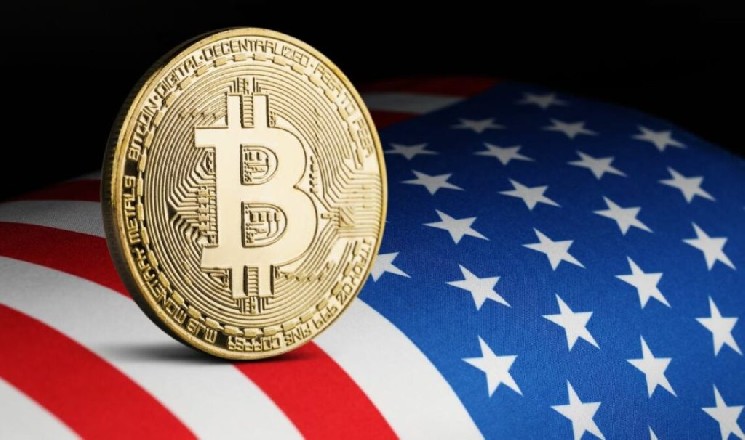
Featured image from OpenArt, chart from TradingView.com

Crypto di tendenza

Domande pertinenti

QWhat is the main goal of the US Treasury's new cybersecurity initiative for the crypto industry?

AThe main goal is to help eligible US digital asset firms spot threats, strengthen prevention efforts, and respond effectively when cybersecurity incidents occur.

QWhich office is leading the new cybersecurity program announced by the US Treasury?

AThe program is led by the Treasury's Office of Cybersecurity and Critical Infrastructure Protection (OCCIP).

QAccording to Treasury officials, how does this initiative relate to the country's stablecoin bill, the GENIUS Act?

AThe initiative reflects the principles behind the GENIUS Act by encouraging innovation that is supported by cybersecurity and operational resilience.

QWhat other regulatory action did the Treasury Department announce alongside this cybersecurity initiative?

AThe Treasury also released a joint proposed rule from FinCEN and OFAC to provide a more detailed framework for the GENIUS Act, outlining clearer AML and sanctions-compliance obligations for payment stablecoin issuers.

QWhy did officials state that providing actionable threat information to crypto firms is becoming essential?

AAs digital assets become more integrated into the financial system, providing timely and actionable threat information is essential to protecting consumers and safeguarding US financial markets.

Letture associate

Bank of Japan Signals Interest Rate Hike Despite Keeping Them at 1%

The Bank of Japan (BOJ) kept its benchmark interest rate at 1% on July 31, as widely expected, following a June hike to a 31-year high. The decision passed with an 8-1 vote, with board member Hajime Takata again dissenting in favor of a hike to 1.25%. Despite holding rates steady, the BOJ signaled a hawkish tilt, warning that underlying inflation is likely to accelerate and exceed 2% from the latter half of the fiscal year. While it slightly lowered its core inflation forecast for FY2026, officials expressed stronger confidence that an overshoot will occur later, driven by yen weakness, corporate pricing behavior, and lingering energy shock effects. Markets were focused on the BOJ's forward guidance. Analysts noted the central bank appeared to balance short-term caution with a long-term warning of tighter policy. Governor Kazuo Ueda faces the challenge of reconciling a government reluctant to tighten further with bond markets already pricing in additional hikes, with the timing of the next move debated. Adding complexity, the BOJ reportedly intervened in currency markets hours before the rate decision, buying yen to support the currency which had fallen to 40-year lows against the dollar. Yen weakness stems from the wide U.S.-Japan interest rate gap, high fuel prices, and market skepticism about the pace of BOJ policy normalization. The yield on Japan's 10-year government bonds fell to 2.8%, indicating investor expectations for future monetary tightening.

cryptonews.ru6 min fa

Bank of Japan Signals Interest Rate Hike Despite Keeping Them at 1%

cryptonews.ru6 min fa

Why Are Leveraged ETFs like 7709 Inherently Negative EV Products?

This article argues that the SK H力士 2x Leveraged ETF (7709) is fundamentally a negative expected value (EV) product, rather than simply a "double SK H力士" investment. Its core issue stems from its daily rebalancing mechanism to maintain a 2x leverage target. After a price move, the fund must buy more after a rise or sell after a fall to readjust its leverage, creating a systematic pattern of buying high and selling low. This introduces a "delay loss": it always reacts to past price changes, missing potential gains from adjusting earlier during an uptrend and suffering greater losses from adjusting later during a downtrend. While more frequent intraday rebalancing would improve returns in strong, smooth trending markets by reinvesting profits or cutting losses sooner, it also dramatically increases volatility drag (frictional losses) during choppy, oscillating markets due to more frequent high-buy/low-sell trades. The author draws a parallel to an option seller who delta hedges (short gamma), which involves similar "buy high, sell low" dynamic hedging. However, unlike an option seller who receives upfront premium (IV and theta) as compensation for this risk, the leveraged ETF investor receives no such compensation. Instead, they bear all the path-dependent volatility decay, plus additional costs like swap/derivatives financing, management fees, and trading slippage. Thus, the product's return profile can be framed as: 2x directional return minus realized variance drag minus financing costs minus derivatives costs minus management fees minus transaction costs. For the investor to profit, SK H力士's price must not only rise significantly but do so in a strong, sustained, and smooth trend to overcome these inherent structural costs. High volatility and frequent price reversals are particularly damaging. The article also notes that while the ETF has no explicit liquidation line like perpetual futures, avoiding a sudden "blow-up," its net asset value can still decay towards zero over time through this combination of volatility drag and fees. For experienced traders, directly managing leverage via perpetual contracts may offer more control and potentially lower costs than this packaged, mechanistic product.

marsbit13 min fa

Why Are Leveraged ETFs like 7709 Inherently Negative EV Products?

marsbit13 min fa

'Backstabbing' or 'Win-Win'? How Likely Is TradeXYZ to Break Away from Hyperliquid and Go Solo?

The article discusses the growing debate over whether TradeXYZ, which dominates Hyperliquid's HIP-3 market with over 90% of its volume, might break away to build its own independent trading platform. This possibility is fueled by TradeXYZ's immense market influence and the common industry trend of successful projects seeking more control and profit capture. Key arguments for a potential split include TradeXYZ's overwhelming contribution to Hyperliquid's metrics and the financial incentive to retain all transaction fees, as it currently splits them 50/50 with Hyperliquid. The piece draws parallels to other cases, like Anthropic's "Claude Code" competing with its former partner Cursor, suggesting "betrayal" can occur when business leverage shifts. However, strong counterarguments suggest a split is unlikely or would be detrimental. TradeXYZ relies on Hyperliquid's high-performance infrastructure and its platform as a primary user acquisition channel. Building a comparable system would be challenging. Furthermore, the founders of both projects share a history of trust and mutual admiration. The analysis concludes that a separation would likely be a lose-lose scenario: Hyperliquid would lose a major growth narrative and trading volume, while TradeXYZ would face technical hurdles, user migration issues, and reputational damage, potentially allowing competitors to seize market share. The most rational path is seen as continued collaboration, with TradeXYZ potentially negotiating better terms while leveraging Hyperliquid's established strengths.

marsbit23 min fa

'Backstabbing' or 'Win-Win'? How Likely Is TradeXYZ to Break Away from Hyperliquid and Go Solo?

marsbit23 min fa

Trading

Spot

Articoli Popolari

Come comprare T

Benvenuto in HTX.com! Abbiamo reso l'acquisto di Threshold Network Token (T) semplice e conveniente. Segui la nostra guida passo passo per intraprendere il tuo viaggio nel mondo delle criptovalute.Step 1: Crea il tuo Account HTXUsa la tua email o numero di telefono per registrarti il tuo account gratuito su HTX. Vivi un'esperienza facile e sblocca tutte le funzionalità,Crea il mio accountStep 2: Vai in Acquista crypto e seleziona il tuo metodo di pagamentoCarta di credito/debito: utilizza la tua Visa o Mastercard per acquistare immediatamente Threshold Network TokenT.Bilancio: Usa i fondi dal bilancio del tuo account HTX per fare trading senza problemi.Terze parti: abbiamo aggiunto metodi di pagamento molto utilizzati come Google Pay e Apple Pay per maggiore comodità.P2P: Fai trading direttamente con altri utenti HTX.Over-the-Counter (OTC): Offriamo servizi su misura e tassi di cambio competitivi per i trader.Step 3: Conserva Threshold Network Token (T)Dopo aver acquistato Threshold Network Token (T), conserva nel tuo account HTX. In alternativa, puoi inviare tramite trasferimento blockchain o scambiare per altre criptovalute.Step 4: Scambia Threshold Network Token (T)Scambia facilmente Threshold Network Token (T) nel mercato spot di HTX. Accedi al tuo account, seleziona la tua coppia di trading, esegui le tue operazioni e monitora in tempo reale. Offriamo un'esperienza user-friendly sia per chi ha appena iniziato che per i trader più esperti.

457 Totale visualizzazioniPubblicato il 2024.12.10Aggiornato il 2026.06.02

Come comprare T

Discussioni

Benvenuto nella Community HTX. Qui puoi rimanere informato sugli ultimi sviluppi della piattaforma e accedere ad approfondimenti esperti sul mercato. Le opinioni degli utenti sul prezzo di T T sono presentate come di seguito.

活动图片