Crypto Extortion Hits Strait Of Hormuz As Scammers Exploit Shipping Crisis

bitcoinistPubblicato 2026-04-21Pubblicato ultima volta 2026-04-21

Introduzione

An emerging crypto extortion scam is targeting shipping companies with vessels stranded near the Strait of Hormuz, according to maritime risk firm Marisks. Criminals posing as Iranian security officials are sending fraudulent messages offering safe passage in exchange for transit fees paid in Bitcoin or Tether. The scam exploits desperation amid the ongoing regional conflict, which has severely restricted movement through the critical waterway. Victims are instructed to submit documents and pay a cryptocurrency fee to secure transit. However, the messages are not from Iranian authorities. Paying could not only result in financial loss but also potentially violate international sanctions, as any crypto transfer linked to Iranian entities may be considered material support. Legal risks remain even if companies are defrauded. The scheme appears to capitalize on earlier reports that Iran was considering a real crypto-based toll system.

At least one vessel that came under fire while trying to leave the Strait of Hormuz may have been acting on fraudulent instructions — directions that came not from Iranian officials, but from criminals posing as them.

Maritime risk firm Marisks flagged the possibility in a warning issued Monday, though it stopped short of confirming the link.

The warning describes a scam targeting ship owners whose vessels are stuck west of the strait. Unknown groups have been sending messages to these companies, claiming to represent Iranian security services and offering safe passage in exchange for transit fees paid in Bitcoin or Tether (USDT).

Image: Pension Awareness

Fake Officials, Real Consequences

Marisks was direct: the messages are fraudulent. They do not come from Iranian authorities, the firm said.

Tehran has not publicly addressed the situation.

The scam follows a pattern designed to look credible. Recipients are told to submit documents for review. Once verified, they are assigned a fee in cryptocurrency. Pay it, the messages say, and safe transit will be arranged at an agreed time.

It is a structured process — one built to look official enough that desperate ship owners might believe it.

Bitcoin is currently trading at $76,278. Chart: TradingView

The timing is no accident. The Strait of Hormuz has been largely closed since conflict escalated in the Middle East. Before hostilities, the waterway carried roughly 20% of the world’s oil and liquefied natural gas.

Ships have been stranded for days, some under threat of armed intervention. That pressure creates exactly the kind of desperation scammers rely on.

Reports earlier this month indicated that Iran itself had been weighing a real Bitcoin-denominated toll on vessels passing through the strait — charging around $1 per barrel for loaded tankers while letting empty ships through free.

The scam appears to have grown directly out of that reporting, borrowing its credibility from a policy that was already in the news.
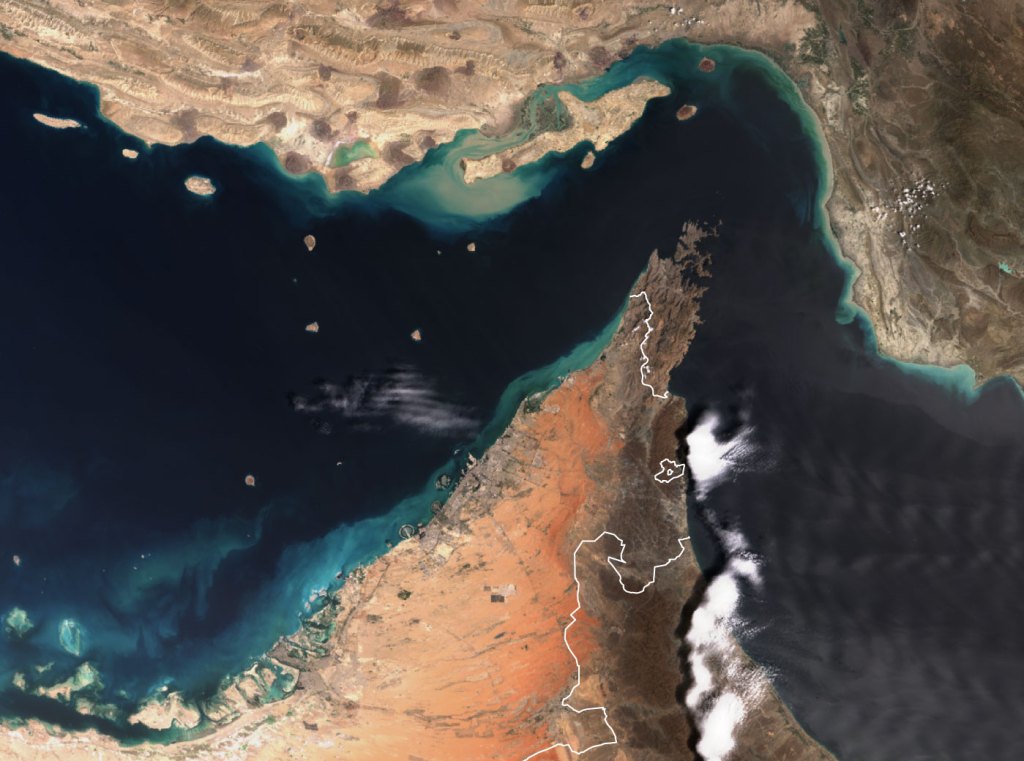
Satellite image of Strait of Hormuz. Source: WSJ

Sanctions Risk Adds To The Danger

For shipping companies tempted to pay, the financial and legal exposure goes beyond losing money to criminals.

According to Chainalysis senior intelligence analyst Kaitlin Martin, any cryptocurrency transfer tied to Iranian-controlled waterways could be classified as material support — a designation that puts companies in potential violation of US and international sanctions.

Entities linked to the Islamic Revolutionary Guard Corps fall under some of the strictest sanctions in force.

That means victims of the scam could face legal scrutiny even after being defrauded. Paying what appears to be a ransom to free a stranded vessel could trigger the same sanctions mechanisms designed to punish deliberate violators.

Featured image from Unsplash, chart from TradingView

Crypto di tendenza

Domande pertinenti

QWhat is the main subject of the scam described in the article targeting ships in the Strait of Hormuz?

AThe scam involves criminals posing as Iranian security officials, sending fraudulent messages to ship owners offering safe passage in exchange for transit fees paid in Bitcoin or Tether (USDT).

QWhich maritime risk firm issued a warning about the possibility of fraudulent instructions to vessels?

AMarisks, a maritime risk firm, issued the warning about the fraudulent messages.

QWhat significant risk do shipping companies face beyond financial loss if they pay the cryptocurrency ransom?

AThey risk violating US and international sanctions, as any cryptocurrency transfer tied to Iranian-controlled waterways could be classified as material support, potentially leading to legal scrutiny.

QWhy is the timing of this scam particularly effective, according to the article?

AThe timing is effective because the Strait of Hormuz has been largely closed due to escalated conflict, leaving ships stranded and under threat, which creates the desperation that scammers rely on.

QWhat real policy proposal by Iran may have lent credibility to this cryptocurrency extortion scam?

AReports indicated that Iran itself had been considering a real Bitcoin-denominated toll on vessels passing through the strait, charging around $1 per barrel for loaded tankers, which the scam appears to have exploited for credibility.

Letture associate

In Jinjiang, Fujian, a Storage Super Unicorn Lies Quiet

In Fujian's Jinjiang, a city known for sportswear, lies a quiet semiconductor giant: Fujian Jinhua Integrated Circuit Co. (JHICC). Once a promising domestic DRAM manufacturer alongside Yangtze Memory and ChangXin Memory Technologies (CXMT), its journey was derailed in 2018 when the U.S. placed it on an Entity List and filed criminal charges for alleged trade secret theft. This halted production for years. A turning point came in February 2024 when a U.S. federal court found JHICC not guilty. However, it had lost crucial time. While CXMT soared to become a top-valued A-share company in 2024, JHICC, with an estimated valuation of 80 billion RMB, was just restarting. Its current output is primarily customized DDR4 chips, not the advanced DDR5/HBM demanded for AI, but it still benefits from the broader memory chip upcycle. JHICC's story is tied to Chen Zhengkun, a veteran engineer who left Micron to lead the venture. Founded in 2016 with state-backed funding, JHICC partnered with Taiwan's UMC to develop DRAM technology. Rapid progress was cut short by the U.S. actions, which Micron initiated, partly due to its heavy reliance on the Chinese market. Post-sanctions, Chen's team worked to rebuild the production line with reduced reliance on U.S. technology. According to its records, JHICC achieved small-scale production and revenue growth under immense pressure. It now focuses on the stable "niche" DRAM market (e.g., TVs, routers) with a monthly capacity of ~40,000 wafers, aiming for 60,000 by 2026. It holds over 1,000 patents but remains on the Entity List. For Jinjiang, investing in JHICC was a bold industrial leap. The local government provided unwavering financial and logistical support during the crisis, helping the company survive. JHICC has become the anchor for a growing local semiconductor cluster. Though its scale lags behind domestic peers, JHICC's persistence symbolizes a hard-won foothold in a global market long dominated by Samsung, SK Hynix, and Micron. Having missed one boom, it seeks a place in the new AI-driven memory supercycle.

marsbit1 h fa

In Jinjiang, Fujian, a Storage Super Unicorn Lies Quiet

marsbit1 h fa

Trading

Spot

Articoli Popolari

Come comprare ONE

Benvenuto in HTX.com! Abbiamo reso l'acquisto di Harmony (ONE) semplice e conveniente. Segui la nostra guida passo passo per intraprendere il tuo viaggio nel mondo delle criptovalute.Step 1: Crea il tuo Account HTXUsa la tua email o numero di telefono per registrarti il tuo account gratuito su HTX. Vivi un'esperienza facile e sblocca tutte le funzionalità,Crea il mio accountStep 2: Vai in Acquista crypto e seleziona il tuo metodo di pagamentoCarta di credito/debito: utilizza la tua Visa o Mastercard per acquistare immediatamente HarmonyONE.Bilancio: Usa i fondi dal bilancio del tuo account HTX per fare trading senza problemi.Terze parti: abbiamo aggiunto metodi di pagamento molto utilizzati come Google Pay e Apple Pay per maggiore comodità.P2P: Fai trading direttamente con altri utenti HTX.Over-the-Counter (OTC): Offriamo servizi su misura e tassi di cambio competitivi per i trader.Step 3: Conserva Harmony (ONE)Dopo aver acquistato Harmony (ONE), conserva nel tuo account HTX. In alternativa, puoi inviare tramite trasferimento blockchain o scambiare per altre criptovalute.Step 4: Scambia Harmony (ONE)Scambia facilmente Harmony (ONE) nel mercato spot di HTX. Accedi al tuo account, seleziona la tua coppia di trading, esegui le tue operazioni e monitora in tempo reale. Offriamo un'esperienza user-friendly sia per chi ha appena iniziato che per i trader più esperti.

401 Totale visualizzazioniPubblicato il 2024.12.12Aggiornato il 2026.06.02

Come comprare ONE

Discussioni

Benvenuto nella Community HTX. Qui puoi rimanere informato sugli ultimi sviluppi della piattaforma e accedere ad approfondimenti esperti sul mercato. Le opinioni degli utenti sul prezzo di ONE ONE sono presentate come di seguito.

活动图片













