Crypto Exec Warns Tokenization Is Moving Faster Than Expected

bitcoinistPubblicato 2025-12-22Pubblicato ultima volta 2025-12-22

According to a post shared on X by Keith Grossman, president of crypto payments firm MoonPay, finance is heading toward an onchain future that could unfold over several years.

The view comes as large banks and asset managers begin product tokenization, a move that once seemed extreme but is now being treated as a practical step by major institutions.

Regulatory Signals Push Institutions Forward

Based on reports cited by Grossman, progress has accelerated because rules are becoming clearer. Legislative efforts, regulatory guidance, bank involvement and accounting standards are starting to line up.

That combination reduces uncertainty, which is often what slows large pools of capital. BlackRock has already launched tokenized funds, while Franklin Templeton is running tokenized money market funds on public blockchains.

Those actions suggest that tokenization is no longer confined to pilot labs or internal trials. It is being used with real assets and real clients.

Tokenization: Big Players Making Their Presence Felt

Banks are also taking part. Citi, Bank of America and JPMorgan Chase have all been linked to onchain settlement tests, tokenized deposits and near real-time asset transfers.

These projects focus on reducing friction in back-end processes that have existed for decades. Settlement that once took days could be shortened to minutes if shared ledgers are used. That change alone alters how risk, liquidity and cost are managed across markets.

Grossman framed the moment as similar to earlier shifts in other industries. He pointed to how legacy media struggled when distribution moved online more than 20 years ago.

At the time, many firms tried to protect old revenue streams instead of adapting. Some survived by changing early. Others lost influence as new platforms took control.

BTCUSD now trading at $89,363. Chart: TradingView

Tokenization: Old Revenue Lines Face Pressure

In finance, the pressure point sits in areas such as reconciliation, clearing, settlement and custody. These roles have long supported steady margins, partly because they depend on complex and slow systems.

Reports have disclosed that software and shared protocols can now handle much of that work. As a result, some services may become cheaper and less profitable over time.
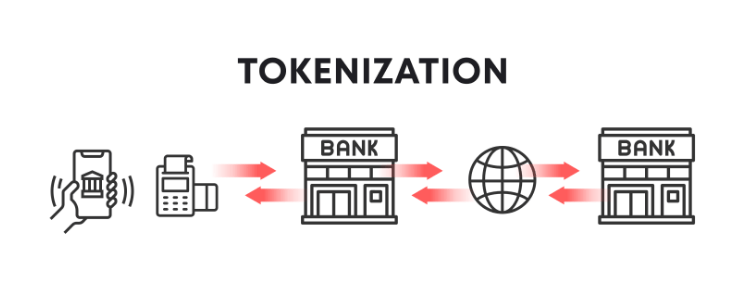
Image: Blaize Tech

That does not mean banks disappear. According to Grossman’s view, they remain central players, much like they did after ATMs reduced teller roles or when voice-over-internet systems cut long-distance call costs for telecom firms.

The institutions stayed, but their shape changed. The same pattern is expected here. Banks may rely more on software, fewer manual steps and new forms of infrastructure control.

Tokenization is moving faster than expected, according to MoonPay president Keith Grossman. Banks and asset managers are testing tokenized funds and onchain settlement, signaling that what was once experimental is now becoming practical.

The lenders and other big players are among the firms pushing the shift, showing the trend is already under way.

Featured image from Unsplash, chart from TradingView

Domande pertinenti

QAccording to Keith Grossman, why is the progress in tokenization accelerating?

AProgress has accelerated because rules are becoming clearer, with legislative efforts, regulatory guidance, bank involvement, and accounting standards starting to line up, which reduces uncertainty.

QWhich major financial institutions are mentioned as actively participating in tokenization efforts?

ABlackRock, Franklin Templeton, Citi, Bank of America, and JPMorgan Chase are mentioned as major institutions participating in tokenization.

QWhat key benefit of using shared ledgers for settlement is highlighted in the article?

AThe key benefit is that settlement, which once took days, could be shortened to minutes, altering how risk, liquidity, and cost are managed across markets.

QHow does Keith Grossman frame the current shift in finance, comparing it to another industry?

AHe frames it as similar to the shift in legacy media over 20 years ago, where distribution moved online and firms that adapted early survived while others lost influence to new platforms.

QWhat specific areas in finance are identified as facing pressure from tokenization and new technology?

AThe pressure points are in areas such as reconciliation, clearing, settlement, and custody, which have long supported steady margins due to complex and slow systems.

Letture associate

Over 80% of New Tokens Peak at TGE, The Root Cause and Cure for Web3's False Prosperity Lies Here

More than 80% of new tokens in 2025 have seen their Fully Diluted Valuation (FDV) fall below their initial TGE valuation, with a median decline of 71%. Only 15% of tokens performed better post-TGE. This trend indicates that for most projects, the token generation event (TGE) represents their peak valuation. Statistical analysis of 113 token launches reveals that common success metrics—such as high fundraising amounts, large social media followings, and listings on major exchanges—have little to no statistical correlation with token performance. Projects raising more capital (e.g., over $10 million) did not perform better than those raising less (e.g., $300k–$500k). In fact, lower-funded projects often delivered higher returns per dollar raised. Social community size proved irrelevant; most "communities" are speculative and disappear when token prices fall. Token pricing also matters: tokens priced between $0.01–$0.05 at launch had the highest survival rate, while those priced outside this range generally failed. AI-related tokens outperformed others in both peak and current returns, while Gaming and DeFi sectors struggled significantly. Launch platforms (IDOs/IEOs) did not ensure success—most tokens on these platforms fell 70–93% post-launch. The root issue is a market that prioritizes hype over substance, narrative over data, and promises over products. To survive in 2026, projects should focus on lean fundraising, realistic token pricing, product-market fit, and tangible metrics like user retention and revenue—rather than vanity metrics. The old playbook is broken; a new, pragmatic approach is essential.

Odaily星球日报12 min fa

Over 80% of New Tokens Peak at TGE, The Root Cause and Cure for Web3's False Prosperity Lies Here

Odaily星球日报12 min fa

A New Perspective on the Four-Year Crypto Cycle: I Asked Seven Industry Veterans What Stage We're In Now

The article "A New Perspective on Crypto's Four-Year Cycle: Insights from Seven Industry Veterans" explores whether the traditional four-year market cycle, historically driven by Bitcoin halving events, still holds true in today's crypto market. Key points from seven experts include: - The four-year cycle, once driven by Bitcoin's supply reduction from halving, is now increasingly influenced by macro liquidity, institutional adoption, and global financial policies (e.g., U.S. elections, Fed policies). - ETF inflows and institutional capital have altered price action, flattening post-halving rallies and reducing volatility as Bitcoin matures into a trillion-dollar asset. - Experts disagree on the current market phase: some see a bearish transition due to declining miner profitability and capital outflow to AI stocks, while others view it as a mid-to-late bull cycle correction with potential for slow, structural growth driven by macro liquidity. - The "altcoin season" may not return in its traditional form; future outperformance will likely be selective, focused on utility-driven projects rather than broad speculative rallies. - Most experts have reduced altcoin exposure, favoring BTC, ETH, and stablecoins, with cash reserves above 50% in some cases. - Advice for investors: avoid leverage, consider gradual accumulation (e.g., below $60K for BTC), and prioritize discipline over timing. Consensus: The four-year cycle is evolving from a rigid halving-driven model to a more complex, macro-dependent framework, with reduced returns and slower, institution-led growth defining the future.

Odaily星球日报34 min fa

A New Perspective on the Four-Year Crypto Cycle: I Asked Seven Industry Veterans What Stage We're In Now

Odaily星球日报34 min fa

Trading

Spot
Futures

Discussioni

Benvenuto nella Community HTX. Qui puoi rimanere informato sugli ultimi sviluppi della piattaforma e accedere ad approfondimenti esperti sul mercato. Le opinioni degli utenti sul prezzo di A A sono presentate come di seguito.

活动图片