Crypto drops alongside equities as risk-off sentiment spreads across markets

ambcryptoPubblicato 2026-03-26Pubblicato ultima volta 2026-03-26

Introduzione

Cryptocurrencies experienced a broad sell-off alongside U.S. equities, signaling a market-wide shift toward risk-off sentiment rather than crypto-specific weakness. Major digital assets declined, with Ethereum falling 4.1% and Solana dropping over 5%, while Bitcoin saw a more modest 2.1% decrease. Losses extended across altcoins and large-cap tokens like BNB and XRP, with stablecoins remaining stable as investors sought safety. Similarly, tech stocks such as Meta and Nvidia fell sharply, highlighting a retreat from high-risk assets. The synchronized decline underscores continued correlation between crypto and equities during periods of market stress, reflecting their increased sensitivity to macro sentiment and institutional flows.

A broad sell-off across digital assets mirrored declines in U.S. equities, signaling a coordinated pullback in risk assets rather than an isolated crypto move.

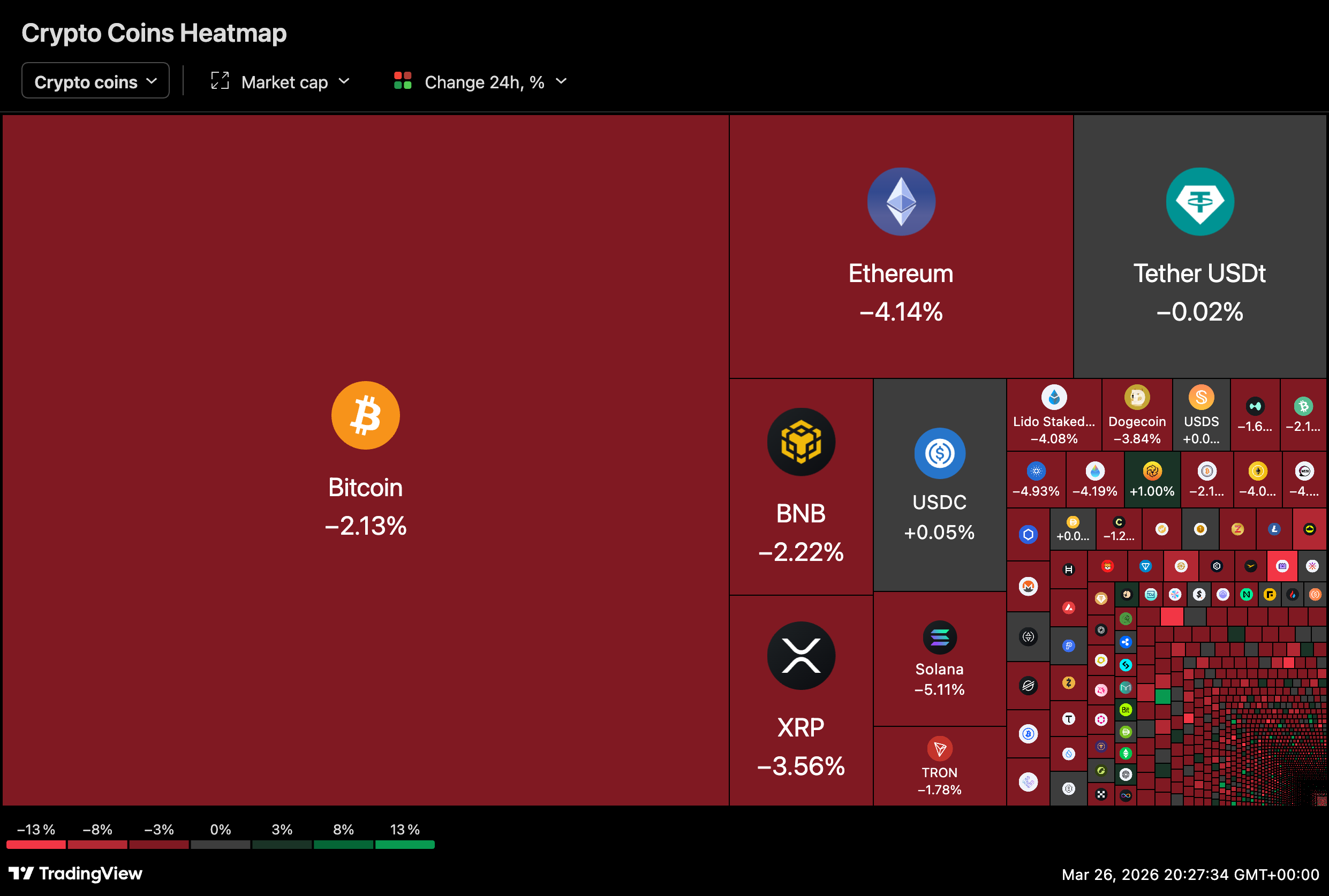
Market heatmaps showed widespread losses across major cryptocurrencies, with Ethereum down 4.1% and Solana falling over 5%. Bitcoin, the largest asset by market cap, posted a more modest 2.1% decline but remained firmly in negative territory.

The weakness extended across altcoins, with few sectors showing resilience, pointing to a broad-based shift in sentiment rather than token-specific developments.

Crypto market sees broad sell-off led by ETH and SOL

The decline was led by higher-beta assets, a common pattern during periods of market stress. Ethereum and Solana both underperformed Bitcoin, suggesting reduced risk appetite among traders.

Large-cap tokens, including BNB and XRP, also moved lower, reinforcing the market-wide nature of the sell-off. Stablecoins such as USDC and Tether remained largely unchanged, reflecting a shift toward capital preservation.
Source: TradingView

The absence of a clear catalyst suggests the move may be tied to broader macro positioning rather than crypto-specific developments.

Equities mirror the move with tech stocks under pressure

A similar pattern was visible in equity markets, particularly within the technology sector.

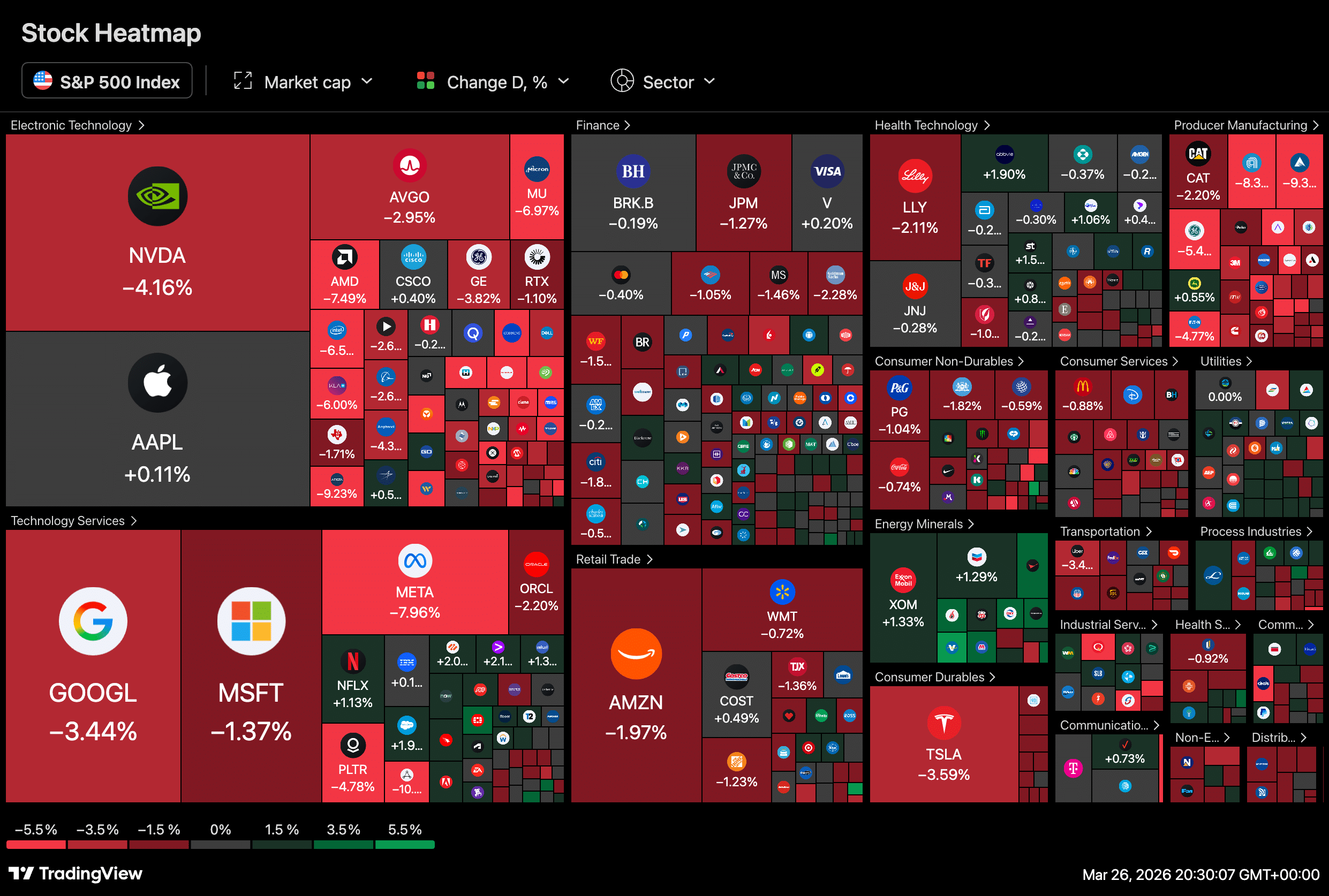
Major stocks such as NVIDIA and Meta Platforms fell sharply, with Meta dropping nearly 8% and Nvidia declining over 4%. Alphabet Inc. and Amazon also posted losses, contributing to a broader decline across the S&P 500.
Source: TradingView

The concentration of losses in growth and tech names highlights a retreat from higher-risk segments of the market.

Correlation highlights risk-off sentiment across markets

The synchronized decline across crypto and equities points to a continued correlation between the two asset classes, particularly during periods of uncertainty.

Rather than acting as a hedge, crypto is trading in line with broader risk sentiment, moving alongside equities when investors reduce exposure to volatile assets.

This alignment has become more pronounced in recent years as institutional participation in digital assets has increased, linking crypto performance more closely to macro-driven market flows.


Final Summary

  • Crypto and equities declined simultaneously, reflecting a broader risk-off move rather than isolated weakness.
  • Continued correlation suggests digital assets remain tied to macro sentiment, especially during periods of market stress.


Domande pertinenti

QWhat was the main reason for the simultaneous decline in both cryptocurrency and equity markets according to the article?

AThe decline was due to a broad risk-off sentiment spreading across markets, rather than isolated crypto-specific factors, indicating a coordinated pullback in risk assets.

QWhich two major cryptocurrencies led the sell-off in the crypto market and by how much did they decline?

AEthereum led with a 4.1% decline, and Solana fell over 5%.

QHow did Bitcoin's performance compare to other major cryptocurrencies during this market downturn?

ABitcoin posted a more modest decline of 2.1%, underperforming compared to Ethereum and Solana but still in negative territory.

QWhich technology stocks were mentioned as declining sharply in the equity market, and what were their approximate losses?

AMeta Platforms dropped nearly 8%, and Nvidia declined over 4%. Alphabet and Amazon also posted losses.

QWhat does the synchronized decline between crypto and equities suggest about their correlation according to the article?

AIt suggests that crypto is trading in line with broader risk sentiment and moving alongside equities during periods of uncertainty, rather than acting as a hedge, due to increased institutional participation linking crypto to macro-driven market flows.

Letture associate

An Open-Source AI Tool That No One Saw Predicted Kelp DAO's $292 Million Vulnerability 12 Days Ago

An open-source AI security tool flagged critical risks in Kelp DAO’s cross-chain architecture 12 days before a $292 million exploit on April 18, 2026—the largest DeFi incident of the year. The vulnerability was not in the smart contracts but in the configuration of LayerZero’s cross-chain bridge: a 1-of-1 Decentralized Verifier Network (DVN) setup allowed an attacker to forge cross-chain messages with a single compromised node. The tool, which performs AI-assisted architectural risk assessments using public data, identified several unremediated risks, including opaque DVN configuration, single-point-of-failure across 16 chains, unverified cross-chain governance controls, and similarities to historical bridge attacks like Ronin and Harmony. It also noted the absence of an insurance pool, which amplified losses as Aave and other protocols absorbed nearly $300M in bad debt. The attack unfolded over 46 minutes: the attacker minted 116,500 rsETH on Ethereum via a fraudulent message, used it as collateral to borrow WETH on lending platforms, and laundered funds through Tornado Cash. While an emergency pause prevented two subsequent attacks worth ~$200M, the damage was severe. The tool’s report, committed to GitHub on April 6, scored Kelp DAO a medium-risk 72/100—later acknowledged as too lenient. It failed to query on-chain DVN configurations or initiate private disclosure, highlighting gaps in current DeFi security approaches that focus on code audits but miss config-level and governance risks. The incident underscores the need for independent, AI-powered risk assessment tools that evaluate protocol architecture, not just code.

marsbit49 min fa

An Open-Source AI Tool That No One Saw Predicted Kelp DAO's $292 Million Vulnerability 12 Days Ago

marsbit49 min fa

Trading

Spot
Futures
活动图片




