Crypto Developers Could Get Long-Term Shield Under New Senate Bill

bitcoinistPubblicato 2026-01-14Pubblicato ultima volta 2026-01-14

Introduzione

US Senators Cynthia Lummis and Ron Wyden introduced the Blockchain Regulatory Certainty Act, a standalone bill to protect blockchain developers and non-custodial infrastructure providers from being classified as money transmitters. The legislation creates a safe harbor for those who write code or maintain networks without controlling user funds, meaning liability depends on custody of assets rather than software development. This aims to reduce legal risks for node operators and open-source developers. The move follows industry lobbying and delays in broader crypto market-structure legislation. While welcomed by many, some caution that clear definitions are needed to prevent loopholes and ensure the protection applies only to builders, not asset handlers.

US Senators Cynthia Lummis and Ron Wyden introduced a standalone measure that would protect blockchain developers and other non-custodial infrastructure providers from being treated as money transmitters solely for writing code or maintaining networks. The bill is being filed as the Blockchain Regulatory Certainty Act, a name that also appears in earlier House paperwork filed last year.

Crypto: Bill Aims To Protect Non-Custodial Developers

The draft would create a safe harbor for developers who do not control user funds, making liability turn on actual custody or control of assets rather than on the act of creating software. That change would mean node operators, protocol maintainers, and many open-source coders could avoid money-transmitter rules so long as they do not hold or direct users’ tokens.

Industry Pressure And A History Of Concern

Reports have disclosed months of lobbying from exchanges, developer groups, and advocacy coalitions that urged lawmakers to clarify this point. Those groups warned that without clear language, developers could face licensing and enforcement risks that would chill US-based development. The House version of the measure first appeared in May last year and set out similar safe-harbor text.

Total crypto market cap currently at $3.1 trillion. Chart: TradingView

Senate Markup Delayed As Negotiations Continue

Lawmakers have paused a larger Senate market-structure push while they work through a range of open issues, including stablecoin policy and yield rules. With that broader package pushed later into the month, sponsors moved the developer protections into a standalone bill to give that issue its own spotlight. Reports suggests the pause means Congress may act on the developer language sooner than the full market bill.
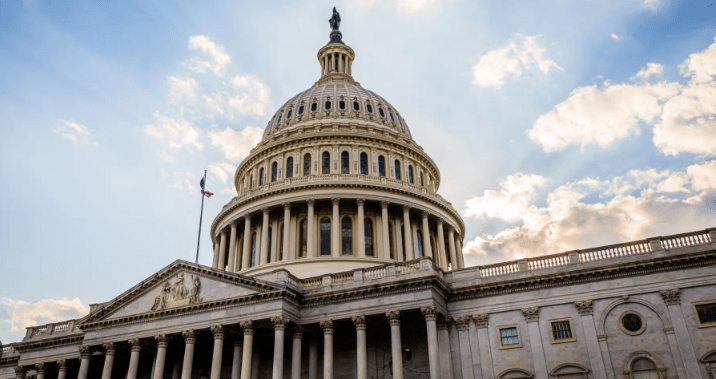
The US Senate. Image: Omar Chatriwala/Getty Images

What Developers And Advocates Are Saying

Some protocol teams and industry lawyers welcomed the step as a much-needed clarification, saying it would reduce legal uncertainty for projects that do not custody funds.

Others urged care, noting that clear definitions will be crucial to prevent loopholes and to make sure bad actors cannot hide behind the safe harbor. Coverage indicates sponsors emphasized the bill’s goal is narrow: protect those who build and maintain, not those who handle other people’s assets.

The proposal for a separate law is being introduced while there are still many uncertainties surrounding how cryptocurrencies will be regulated in the US. In the latter part of 2025 and into 2026, the crypto sector has demonstrated that it has a great deal of clout within political circles in Washington D.C.

There has been a significant increase in lobbying by large crypto-related businesses as legislators review various options for regulating this industry. Several reports have linked the current political environment to the legislative actions taken to regulate crypto in Congress, as well as how interest in legislative action has increased due to Trump’s administration.

Featured image from Unsplash, chart from TradingView

Domande pertinenti

QWhat is the main purpose of the Blockchain Regulatory Certainty Act introduced by Senators Lummis and Wyden?

AThe main purpose is to protect blockchain developers and non-custodial infrastructure providers from being treated as money transmitters solely for writing code or maintaining networks, by creating a safe harbor for those who do not control user funds.

QAccording to the bill, what determines liability for developers under the proposed safe harbor?

ALiability turns on actual custody or control of assets rather than on the act of creating software, meaning developers are protected as long as they do not hold or direct users' tokens.

QWhy did the developer protection measure become a standalone bill instead of part of a larger package?

AThe larger Senate market-structure push was paused to work on open issues like stablecoin policy, so sponsors moved the developer protections into a standalone bill to give it separate attention and potentially faster action.

QWhat concern do some industry lawyers have about the safe harbor provision?

ASome lawyers urge care, noting that clear definitions are crucial to prevent loopholes and ensure bad actors cannot hide behind the safe harbor to evade regulation.

QHow has the crypto industry demonstrated political influence in Washington D.C. according to the article?

AThe crypto sector has shown significant clout through increased lobbying by large crypto-related businesses and heightened legislative activity, with reports linking this to the current political environment and Trump's administration.

Letture associate

Within Strategy's Framework, STRC's Dividend Yield Remains at 12% as Share Price Stays Below Par Value

Michael Saylor, Executive Chairman of Strategy (MSTR), confirmed that the dividend rate for its STRC perpetual preferred shares will remain at 12.00% through August 2026. The rate has increased from 9% at its July 2025 launch to the current high via a "ratchet" mechanism, which permanently raises the rate by 0.5% whenever the share price falls below $95. This mechanism is intended to push the price back toward its $100 par value and support Strategy's "at-the-market" (ATM) program for issuing new shares to fund Bitcoin purchases. However, the mechanism has not worked as intended. STRC shares closed at $89.46 on July 31, remaining about 10-11% below par value despite the record-high dividend. Competition from rival Strive's higher-yielding SATA securities has pressured demand. The persistent discount has forced Strategy to suspend new STRC issuances via its ATM program, limiting this funding channel for Bitcoin acquisitions. STRC's struggles reflect Bitcoin's own volatility, as the preferred shares historically move in tandem. Analysts have warned the ratchet structure carries long-term, one-way risk. A law firm is investigating Strategy's ability to maintain dividend payments if Bitcoin's price stays low. Retail investors own roughly 83% of outstanding STRC shares, a group seen as prone to panic selling during downturns. In response, Strategy has established financial reserves, including a liquidity cushion covering about 26 months of dividend/interest obligations, and a $2 billion share buyback program alongside a Bitcoin monetization framework, though the company emphasized it is not obligated to sell any Bitcoin.

cryptonews.ru34 min fa

Within Strategy's Framework, STRC's Dividend Yield Remains at 12% as Share Price Stays Below Par Value

cryptonews.ru34 min fa

Analyst: Bitcoin's Price Will Drop to $60k in August, Then Rebound to $70k

Financial analyst Andrey Poroshin has provided a new forecast for Bitcoin's price dynamics in August. Poroshin, an analyst at the Bitbanker exchange, expects the cryptocurrency market to experience a downturn this month, with prices retesting the $60,000 level due to a lack of supportive macroeconomic catalysts. He noted that the recent US Federal Reserve decision to hold interest rates did not significantly impact the market, while inflation remains above the 2% target. Poroshin stated that Bitcoin is ending July under pressure from moderate volatility and a lack of new macroeconomic stimuli, leading to continued market caution. According to his base scenario, Bitcoin will drop to a range of $60,000 to $62,000 before recovering to $70,000. He pointed out that even $70,000 remains below the cost of mining in the US, which has prompted some miners to shift towards AI data center operations. Poroshin cited the winding down of BitMEX's operations as a potential catalyst for a price rebound, suggesting the exit of weaker players often coincides with market reversals and reduced short-term selling pressure. He believes Bitcoin is currently less susceptible to geopolitical shocks, such as the Iran-US conflict, and does not expect significant market changes in August related to the pending CLARITY Act. Looking ahead, Poroshin forecasts that September will bring more active price fluctuations driven by potential Fed rate decisions and possible discussions or approval of the CLARITY Act.

cryptonews.ru34 min fa

Analyst: Bitcoin's Price Will Drop to $60k in August, Then Rebound to $70k

cryptonews.ru34 min fa

Trading

Spot
活动图片





