"Crypto Czar" Steps Down: 130-Day Political Performance Concludes, How Much of Trump's Crypto Promises Remain?

Odaily星球日报Pubblicato 2026-03-27Pubblicato ultima volta 2026-03-27

Introduzione

"Crypto Czar" David Sacks has stepped down after reaching the 130-day term limit for his special government role. Appointed by former President Trump in December 2024 to lead AI and crypto initiatives, Sacks was tasked with creating a clear regulatory framework for the cryptocurrency industry in the U.S. During his tenure, Sacks achieved several symbolic victories, including organizing the first-ever White House Crypto Summit, establishing a strategic Bitcoin reserve (using seized assets rather than new purchases), and facilitating the passage of the GENIUS Act, which provides a federal framework for stablecoins. However, the article argues that these accomplishments were largely performative. The crypto summit was criticized as a publicity event with little substantive policy discussion. The Bitcoin reserve did not involve new government purchases, failing to inject liquidity or strong endorsement into the market. Moreover, the more impactful CLARITY Act—intended to provide regulatory clarity for crypto markets—remains stalled in Congress, with recent drafts favoring traditional banks over crypto interests, causing concern in the industry. Sacks will continue as co-chair of the Presidential Council on Technology, focusing on AI policy, signaling a shift away from crypto advocacy. The piece concludes that Trump’s pro-crypto promises have resulted in political theater rather than meaningful, lasting regulatory progress.

Original | Odaily Planet Daily (@OdailyChina)

Author | Golem (@web3_golem)
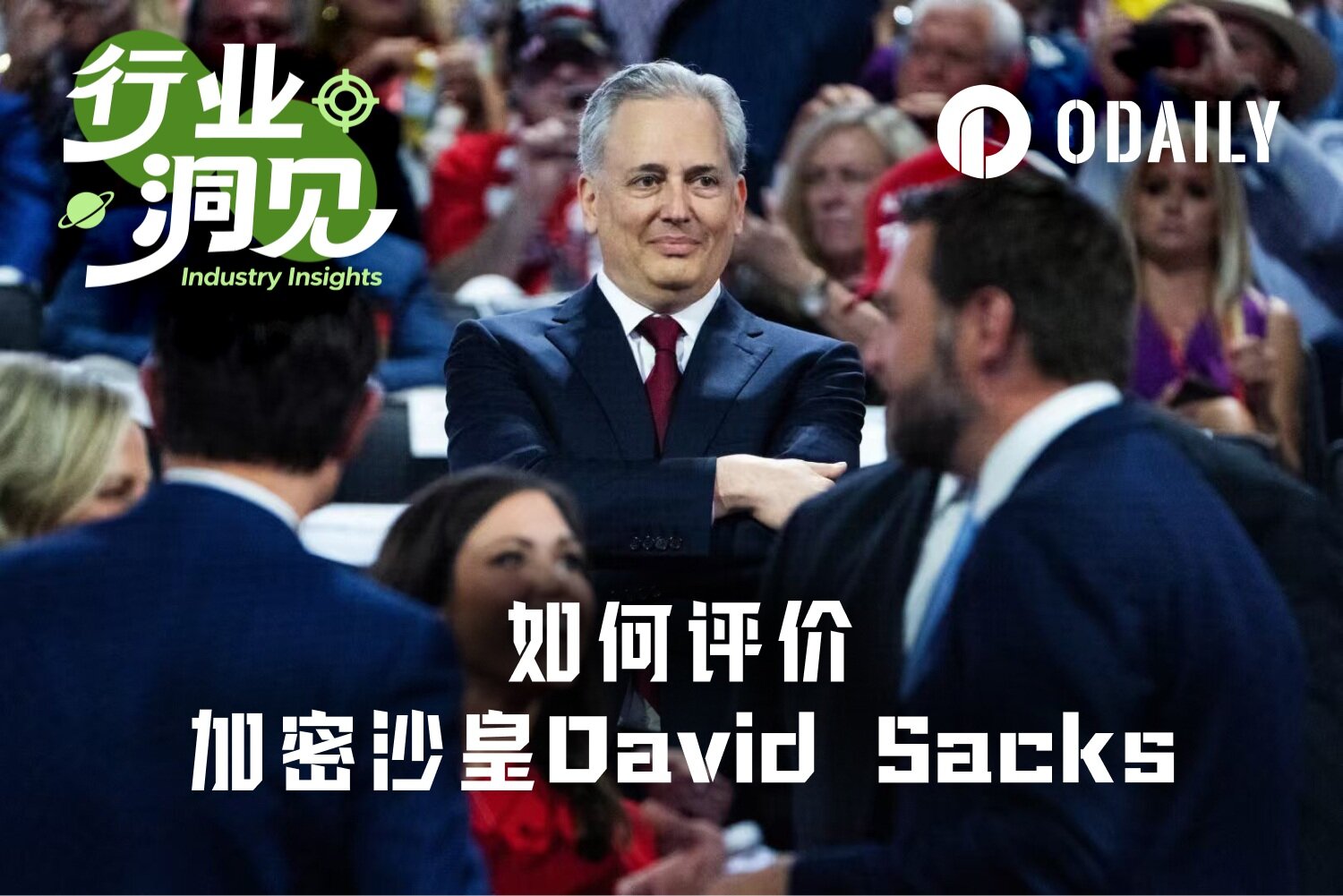
"Crypto Czar" David Sacks is leaving. David Sacks explained that he is stepping down from his relevant positions because he has reached the 130-day limit for special government employees. In the future, he will continue to participate in related government affairs as the co-chair of the President's Council of Advisors on Science and Technology.

On December 6, 2024, Trump announced the appointment of David Sacks as the White House lead for Artificial Intelligence and Cryptocurrency affairs. Because Trump directly referred to him as the "White House A.I. & Crypto Czar," David Sacks earned the title "Crypto Czar." This is not a formal official title, but rather a role to facilitate the formalization of David Sacks's influence. In his appointment letter, Trump specifically expressed his expectations for David Sacks in the crypto field: "to promote the establishment of a clear legal framework, providing the long-needed clarity for the cryptocurrency industry to thrive in the United States."

From a motivational perspective, in 2024, to gain the support of the U.S. crypto community, Trump made numerous crypto promises. Therefore, after successfully assuming the presidency, he needed a capable person to help him fulfill these promises. David Sacks was the policy executor chosen by Trump.

David Sacks indeed lived up to Trump's expectations, achieving some political successes during his 130-day tenure: banning CBDC, convening the first White House Crypto Summit, establishing the U.S. Strategic Bitcoin Reserve Act, and facilitating the passage of the CLARITY Act, among others.

Trump's several promises to the crypto industry during his campaign were largely fulfilled by David Sacks, leading many to write his tenure as a victory narrative. Superficially, this seems true, but upon reviewing what David Sacks actually did for the crypto industry, there is a common characteristic—the political posturing was full, but the crypto industry's sense of gain was sparse.

During these 130 days, David Sacks was not reshaping the crypto industry; he was merely performing a crypto political show for Trump.

I. White House Crypto Summit = Trump Praise Fest

The highlight of this performance was the superficially sincere but actually full of flattery and empty slogans White House Crypto Summit.(Related reading:White House Cryptocurrency Summit: A Political Performance of Flattery and Sloganeering)

On March 7, 2025, David Sacks, representing Trump, invited a group of crypto companies and industry figures to the White House, including a16z partner Chris Dixon, Ripple CEO, Robinhood CEO, Strategy founder Michael Saylor, Coinbase CEO, among others. Several key U.S. government officials also spoke, including Trump and the Secretary of the Treasury.

Crypto figures going to Washington was not unheard of before, but previously, it was mostly for hearings, to be scolded, to explain whether they were scams or not. This time was different: the setting changed from the hearing room to the White House, the atmosphere shifted from tense confrontations to dignified photo ops. Crypto figures were treated as "honored guests" by the U.S. government for the first time. David Sacks sat next to Trump, like a general director responsible for cueing lines.
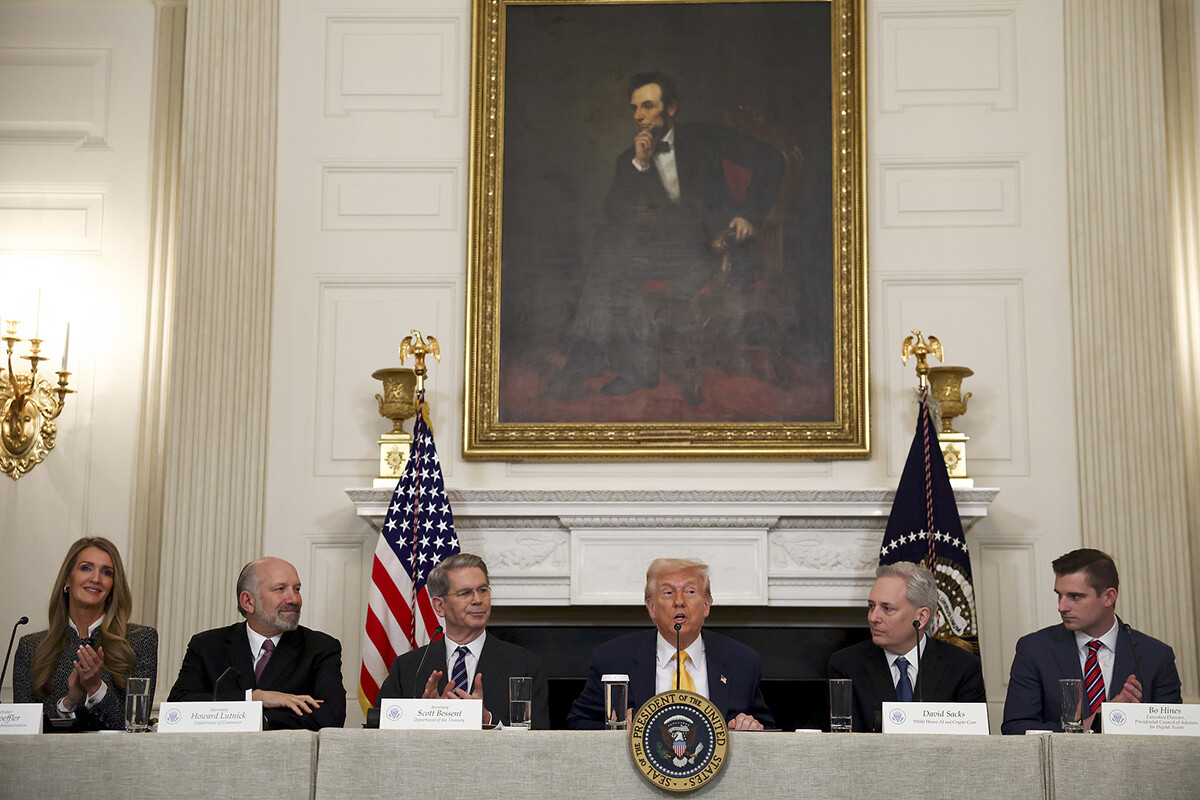
David Sacks sits to Trump's left at the White House Crypto Summit

What was said at such a high-level and highly anticipated government crypto meeting?

According to the records of an Odaily Planet Daily reporter who monitored the live broadcast that night, everyone spent the entire time praising Trump. The closed-door meeting, which was supposed to define the direction of crypto regulation for the next four years, did not release any substantive policy documents. Because the meeting content was too far from market expectations, the crypto market immediately fell after the summit concluded, according to OKX market data from that day.

This summit certainly had symbolic significance, but the problem was precisely that it had only symbolic significance. It performed Trump's alignment with crypto once again, but the things the industry most wanted—such as unified, stable, predictable regulatory boundaries, long-term rules that institutions could rely on to enter the market安心ly, and project teams not having to guess what new stance the SEC and CFTC would take tomorrow—still weren't truly delivered. The meeting was lively, emotions were high, but what ultimately landed on the industry was still just news-driven speculation.

Why was this meeting so empty? Because it wasn't part of the original plan. Trump's campaign promise was originally to establish a cryptocurrency committee, expecting crypto industry leaders to have direct, ongoing dialogue with the White House and the president. However, this failed to materialize for various reasons. So, a crypto summit was hastily arranged as compensation, with promises that it would be held continuously in the future. But so far, the White House has not held a second crypto meeting of the same level.

II. Bitcoin Strategic Reserve = Moving Bitcoin to a Different Drawer

The second major thing David Sacks pushed to implement, the U.S. Strategic Bitcoin Reserve, if taken seriously, was not a performance but a magic trick.

A few hours before the White House Crypto Summit convened, Trump signed an executive order to establish a strategic bitcoin reserve. However, after the news came out, the price of bitcoin fell. The core reason was that David Sacks explained that this strategic bitcoin reserve came from bitcoins previously confiscated by the U.S. government in criminal or civil asset forfeiture proceedings, not from newly purchased bitcoins—not a single taxpayer dollar was spent.

Although the order authorized the Treasury and Commerce Departments to study "budget-neutral" strategies for additional coin purchases, it did not provide any clear timeline or scale for purchases. Therefore, the stance this Bitcoin Strategic Reserve showed the market was: I will not sell bitcoin anymore, but I will not buy bitcoin anymore either.
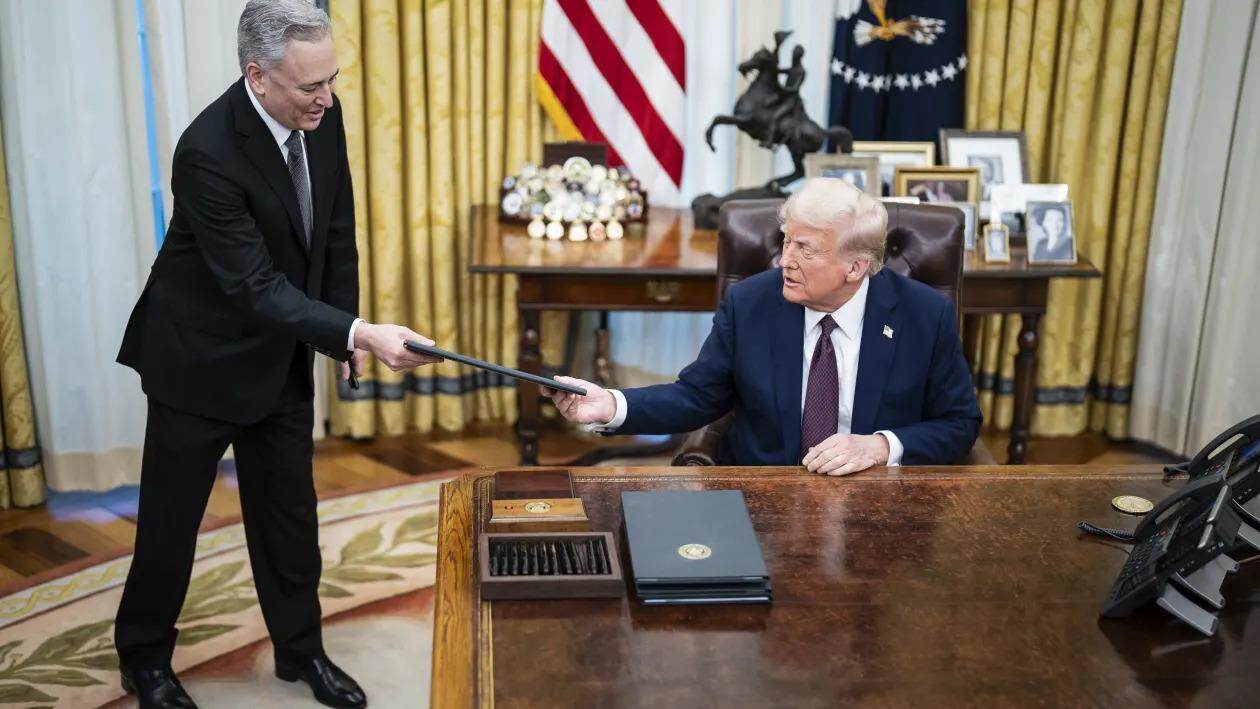
Trump signs the Bitcoin Strategic Reserve executive order

Did David Sacks handle this beautifully? For Trump, of course, it was beautiful—fulfilling a promise without spending a penny. But for the crypto industry, it again had only symbolic meaning. The market originally expected the U.S. government to step in and increase its bitcoin holdings, injecting liquidity and endorsement into the market. What they got was "moving the previously seized bitcoin to a different drawer."

III. The GENIUS Act is the Real Achievement

The GENIUS Act might be the real achievement of David Sacks as Crypto Czar.

On July 18, 2025, Trump formally signed the GENIUS Act into law in the White House East Room. It has not only symbolic significance but also practical significance. From an industry impact perspective, the GENIUS Act establishes a federal framework for USD stablecoins, meaning stablecoins have moved out of the wild growth phase and into the compliance realm, becoming a new financial tool backed by the force of federal law.

This was not accomplished by David Sacks alone, but he certainly deserves credit. However, there is another bill, the twin of the GENIUS Act, the CLARITY Act, which is still struggling. The CLARITY Act was passed by the U.S. House of Representatives alongside the GENIUS Act on July 18, 2025, but until now, it has failed to complete the Senate process, remaining stuck in a negotiation deadlock between the banking industry and the crypto industry.
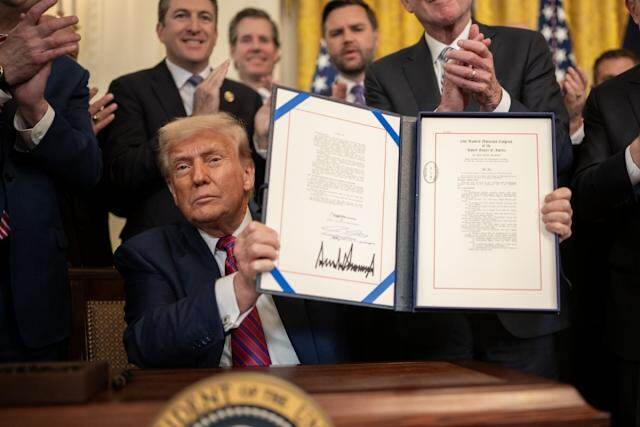
Trump signs the GENIUS Act

David Sacks once confidently stated that both the CLARITY Act and the GENIUS Act would be passed within the first 100 days of this administration. Currently, it seems he has been severely proven wrong.

The blockage of the CLARITY Act isn't solely David Sacks's fault, but he certainly bears some responsibility, just as he could claim some credit for the passage of the GENIUS Act. David Sacks's White House Digital Assets Working Group explicitly called the CLARITY Act an "excellent foundation." Since the White House has already regarded it as the core draft for market structure legislation, can David Sacks be a completely unrelated bystander when it gets stuck later?

The core deadlock of the bill centers on the conflict between the banking industry and the crypto industry over stablecoin interest-bearing. Judging from the latest revised text, the banks have won. Upon this news, on March 25, Circle (CRCL) stock price fell 18% at one point, and Coinbase (COIN) fell about 8%. Moreover, if such a CLARITY Act were truly passed, it would be a blow to the entire DeFi. (Related reading:CLARITY Act Rewrites DeFi's Life and Death Ledger: Circle Eats the Meat, DeFi Tokens Lose Blood)

This is quite different from the script Trump and David Sacks originally touted as beneficial to the crypto industry. It's truly ironic that a bill purportedly promoting the development of the crypto industry ultimately benefits banks, not the crypto industry.

On March 4, Trump, amidst his busy schedule, still found time to mention the crypto industry, posting on Truth Social that the U.S. must pass the CLARITY Act as soon as possible, and Americans should get higher returns on their funds. It seemed like Trump was still concerned about the crypto industry, but only after the latest revised text of the bill was revealed on March 24 did we see clearly that it was again a statement of "symbolic significance."

Now, the "Crypto President" Trump has completely gone silent. As for David Sacks, the White House had already written the script for him: as the Crypto Czar, stand in the spotlight and translate Trump's campaign slogan of "making America the global crypto capital" into a few decent political actions. Once the show was mostly over, it was time to retreat. Now, David Sacks, as co-chair of the President's Council of Advisors on Science and Technology, stated that he will continue to work on AI policy and technology strategy in the future, not even mentioning crypto.

The former Crypto Czar is gone, and Trump's ambiguous relationship with cryptocurrency has ended.


Crypto di tendenza

Domande pertinenti

QWho was David Sacks' role in the Trump administration and why did he step down?

ADavid Sacks was appointed by former President Trump as the White House A.I. & Crypto Czar, a role that earned him the nickname 'Crypto Czar'. He stepped down because he reached the 130-day term limit for a special government employee.

QWhat were the main achievements attributed to David Sacks during his 130-day tenure?

AHis main achievements included helping to ban CBDC, organizing the first White House Crypto Summit, establishing the U.S. Strategic Bitcoin Reserve Act, and facilitating the passage of the GENIUS Act.

QAccording to the article, what was the primary criticism of the White House Crypto Summit?

AThe primary criticism was that the summit was largely a political performance filled with praise for Trump and empty slogans, with no substantive policy documents released, leaving the crypto industry with little tangible benefit.

QWhat is the key point of contention causing the delay in passing the CLARITY Act?

AThe key point of contention is a conflict between the banking industry and the crypto industry over the issue of interest earned on stablecoin reserves, with the latest revised text favoring the banks.

QWhat does the article suggest about the nature of Trump's and Sacks' relationship with the crypto industry after Sacks' departure?

AThe article suggests that their relationship with the crypto industry was largely performative and has effectively ended, noting that Sacks' new role focuses on AI and doesn't mention crypto, and Trump has gone quiet on the issue.

Letture associate

Must-Watch Events Next Week|CLARITY Act Could Face Senate Vote; SpaceX, Circle to Report Earnings (8.3-8.9)

**Summary: Key Events and Developments to Watch (August 3-9)** The upcoming week is marked by significant financial disclosures, key legislative deadlines, and notable product updates. **Major Financial Events:** Several companies are scheduled to release their Q2 2026 earnings. American Bitcoin (ABTC) will report on August 3, followed by SpaceX and Hut 8 Mining Corp. on August 4, and Circle on August 5. Notably, a significant portion of SpaceX shares (up to 12% of total shares) will be unlocked on August 6 following their earnings release. **Key Legislative Deadline:** The U.S. Senate faces an August 7 deadline to secure 60 votes for the CLARITY Act, a bipartisan bill aiming to establish a federal regulatory framework for cryptocurrencies. The Senate may hold a full vote on the bill during the week. **Economic Data:** The U.S. July Non-Farm Payrolls report will be released on August 7, providing crucial labor market data. **Technology & Product Updates:** * **Shutdowns:** DeFi portfolio tracker Zapper and wallet app Ctrl Wallet will cease operations on August 3. * **Upgrades:** LayerZero will deprecate its v1 relayers on August 3. XRP Ledger's new version 3.3.0, featuring five new functions, is expected next week. * **AI:** Elon Musk announced that the advanced Grok 4.6 AI model is set for release around August 7. * **Bitcoin:** The BIP-110 forced signaling for a potential Bitcoin network change is scheduled to begin around August 8. **Other Notable Events:** Chinese robotics firm Unitree Tech has set its preliminary price inquiry for its IPO for August 5. South Korean exchange Upbit will delist AQT and AERGO tokens on August 3.

marsbit10 min fa

Must-Watch Events Next Week|CLARITY Act Could Face Senate Vote; SpaceX, Circle to Report Earnings (8.3-8.9)

marsbit10 min fa

Stocks Are Plummeting More Sharply Than Cryptocurrencies. Where Has the Money Gone?

Stock Markets Plunge Deeper Than Cryptocurrencies: Where Did the Money Go? In late July, Seoul's Kospi index triggered circuit breakers for two consecutive days, plummeting over 40% from its June high. The collapse was led by heavyweight stocks like SK Hynix, whose record profits still disappointed investors, and devastating leveraged ETFs, with one major product losing over 83% of its value. This signaled a global, forced deleveraging targeting the most crowded trades. Interestingly, while stocks exhibited extreme volatility akin to crypto markets, Bitcoin rose nearly 15% in July after a prior steep drop. Analysis shows the money fleeing equities did not flow into Bitcoin. Instead, Bitcoin had already absorbed its sell-off in May-June, when U.S. spot Bitcoin ETFs saw historic outflows. The true safe-haven beneficiary was gold, whose price rose over 20% year-on-year, highlighting a decoupling between Bitcoin and gold as "digital gold." The sell-off was a targeted unwinding of leveraged positions in tech and semiconductors, accelerated by broker-dealer risk management and shifts in the AI narrative, including new competition from Chinese memory chipmakers. The retreat path was clear: from high-valuation tech stocks to cash and U.S. Treasuries, then to gold. For Bitcoin to attract sustained institutional inflows, conditions like eased global liquidity pressure, a "soft-landing" Fed rate cut, and U.S. regulatory clarity via legislation like the stalled CLARITY Act are needed. Currently, Bitcoin is not a safe haven but an already-cleared asset. Its low correlation with tech stocks, however, makes it a potential diversification play for institutional portfolios once the storm passes. The money isn't here yet, but the positioning is underway.

marsbit10 min fa

Stocks Are Plummeting More Sharply Than Cryptocurrencies. Where Has the Money Gone?

marsbit10 min fa

In Conversation with Ray Dalio: We Are Currently in an AI Bubble, with 1% of My Portfolio in Bitcoin

Ray Dalio, founder of Bridgewater Associates, warns in an interview that the current AI boom shows classic bubble characteristics, which could lead to significant economic downturns as seen in past cycles like 1929 or 2000. He explains that speculative enthusiasm, fueled by debt and overvaluation, often precedes a crash when rising rates or taxation force asset sales, causing widespread losses and recession. Dalio also outlines his "Big Cycle" theory, describing an approximate 80-year pattern where widening wealth gaps, massive government deficits, and shifting geopolitical power (like China's rise) create internal conflict and global instability. He emphasizes that we are in a late-cycle, transitional phase where traditional powers like the US and UK face decline. For personal wealth protection, Dalio advises diversification beyond cash into assets like stocks, bonds, real estate, and particularly gold, which he prefers over Bitcoin. While he holds about 1% of his portfolio in Bitcoin as a non-printable hard asset, he views gold as more secure from technological or governmental threats. Regarding AI's impact, Dalio believes it will disproportionately benefit capital owners, worsening inequality by replacing both physical and cognitive labor. He suggests that human intuition and emotional intelligence, combined with AI, will be key for future workers. On taxation, Dalio argues that wealth taxes are impractical and risk triggering asset sell-offs, reducing productive investment. He points to the UK as a cautionary example of debt, low productivity, and political strife. Geopolitically, Dalio foresees a more regionalized world, with the US showing weakness in prolonged conflicts like with Iran, akin to past imperial declines. The ideal outcome, he suggests, is coexisting powerful blocs (e.g., Americas, China-Asia Pacific) without major war.

marsbit4 h fa

In Conversation with Ray Dalio: We Are Currently in an AI Bubble, with 1% of My Portfolio in Bitcoin

marsbit4 h fa

Daily 7.2 Trillion KRW: Foreign Capital's Record Net Buying on Friday! Wall Street Says Headwinds for Korean Stock Fund Flows Have Subsided

South Korean stock market sees a dramatic shift in fund flows. On July 31, foreign investors made a record net purchase of approximately KRW 7.2 trillion in KOSPI stocks, marking a fundamental reversal from the persistent large-scale net outflows seen in previous months. This contributed to a significant narrowing of foreign net selling in July to KRW 9.8 trillion, down sharply from KRW 48.4 trillion in June and KRW 44.5 trillion in May. Simultaneously, domestic institutional pressure eased. South Korean pension funds and asset managers turned to a net buying position in July, purchasing KRW 1.0 trillion worth of KOSPI shares, contrasting with net sales in May and June. Market volatility is expected to be dampened by new financial regulations. Effective July 31, the Financial Services Commission tightened access for retail investors to single-stock leveraged ETFs by raising the minimum cash deposit requirement. Trading volumes for these products subsequently dropped to about 50% of their monthly average. Citigroup Research maintains its year-end KOSPI target of 10,000 points. The firm cites several supportive factors: the substantial easing of headwinds from capital outflows, a robust fundamental outlook for the semiconductor sector, historically low market valuations, strong economic fundamentals, and the potential for policy support from financial authorities if needed.

marsbit4 h fa

Daily 7.2 Trillion KRW: Foreign Capital's Record Net Buying on Friday! Wall Street Says Headwinds for Korean Stock Fund Flows Have Subsided

marsbit4 h fa

Trading

Spot

Articoli Popolari

Cosa è $S$

Comprendere SPERO: Una Panoramica Completa Introduzione a SPERO Mentre il panorama dell'innovazione continua a evolversi, l'emergere delle tecnologie web3 e dei progetti di criptovaluta gioca un ruolo fondamentale nel plasmare il futuro digitale. Un progetto che ha attirato l'attenzione in questo campo dinamico è SPERO, denotato come SPERO,$$s$. Questo articolo mira a raccogliere e presentare informazioni dettagliate su SPERO, per aiutare gli appassionati e gli investitori a comprendere le sue basi, obiettivi e innovazioni nei domini web3 e crypto. Che cos'è SPERO,$$s$? SPERO,$$s$ è un progetto unico all'interno dello spazio crypto che cerca di sfruttare i principi della decentralizzazione e della tecnologia blockchain per creare un ecosistema che promuove l'impegno, l'utilità e l'inclusione finanziaria. Il progetto è progettato per facilitare interazioni peer-to-peer in modi nuovi, fornendo agli utenti soluzioni e servizi finanziari innovativi. Al suo interno, SPERO,$$s$ mira a responsabilizzare gli individui fornendo strumenti e piattaforme che migliorano l'esperienza dell'utente nello spazio delle criptovalute. Questo include la possibilità di metodi di transazione più flessibili, la promozione di iniziative guidate dalla comunità e la creazione di percorsi per opportunità finanziarie attraverso applicazioni decentralizzate (dApps). La visione sottostante di SPERO,$$s$ ruota attorno all'inclusività, cercando di colmare le lacune all'interno della finanza tradizionale mentre sfrutta i vantaggi della tecnologia blockchain. Chi è il Creatore di SPERO,$$s$? L'identità del creatore di SPERO,$$s$ rimane piuttosto oscura, poiché ci sono risorse pubblicamente disponibili limitate che forniscono informazioni dettagliate sul suo fondatore o fondatori. Questa mancanza di trasparenza può derivare dall'impegno del progetto per la decentralizzazione—un ethos che molti progetti web3 condividono, dando priorità ai contributi collettivi rispetto al riconoscimento individuale. Centrando le discussioni attorno alla comunità e ai suoi obiettivi collettivi, SPERO,$$s$ incarna l'essenza dell'empowerment senza mettere in evidenza individui specifici. Pertanto, comprendere l'etica e la missione di SPERO rimane più importante che identificare un creatore singolo. Chi sono gli Investitori di SPERO,$$s$? SPERO,$$s$ è supportato da una varietà di investitori che vanno dai capitalisti di rischio agli investitori angelici dedicati a promuovere l'innovazione nel settore crypto. Il focus di questi investitori generalmente si allinea con la missione di SPERO—dando priorità a progetti che promettono avanzamenti tecnologici sociali, inclusività finanziaria e governance decentralizzata. Queste fondazioni di investitori sono tipicamente interessate a progetti che non solo offrono prodotti innovativi, ma contribuiscono anche positivamente alla comunità blockchain e ai suoi ecosistemi. Il supporto di questi investitori rafforza SPERO,$$s$ come un concorrente degno di nota nel dominio in rapida evoluzione dei progetti crypto. Come Funziona SPERO,$$s$? SPERO,$$s$ impiega un framework multifunzionale che lo distingue dai progetti di criptovaluta convenzionali. Ecco alcune delle caratteristiche chiave che sottolineano la sua unicità e innovazione: Governance Decentralizzata: SPERO,$$s$ integra modelli di governance decentralizzati, responsabilizzando gli utenti a partecipare attivamente ai processi decisionali riguardanti il futuro del progetto. Questo approccio favorisce un senso di proprietà e responsabilità tra i membri della comunità. Utilità del Token: SPERO,$$s$ utilizza il proprio token di criptovaluta, progettato per servire varie funzioni all'interno dell'ecosistema. Questi token abilitano transazioni, premi e la facilitazione dei servizi offerti sulla piattaforma, migliorando l'impegno e l'utilità complessivi. Architettura Stratificata: L'architettura tecnica di SPERO,$$s$ supporta la modularità e la scalabilità, consentendo un'integrazione fluida di funzionalità e applicazioni aggiuntive man mano che il progetto evolve. Questa adattabilità è fondamentale per mantenere la rilevanza nel panorama crypto in continua evoluzione. Coinvolgimento della Comunità: Il progetto enfatizza iniziative guidate dalla comunità, impiegando meccanismi che incentivano la collaborazione e il feedback. Nutrendo una comunità forte, SPERO,$$s$ può affrontare meglio le esigenze degli utenti e adattarsi alle tendenze di mercato. Focus sull'Inclusione: Offrendo basse commissioni di transazione e interfacce user-friendly, SPERO,$$s$ mira ad attrarre una base utenti diversificata, inclusi individui che potrebbero non aver precedentemente interagito nello spazio crypto. Questo impegno per l'inclusione si allinea con la sua missione generale di empowerment attraverso l'accessibilità. Cronologia di SPERO,$$s$ Comprendere la storia di un progetto fornisce preziose intuizioni sulla sua traiettoria di sviluppo e sui traguardi. Di seguito è riportata una cronologia suggerita che mappa eventi significativi nell'evoluzione di SPERO,$$s$: Fase di Concettualizzazione e Ideazione: Le idee iniziali che formano la base di SPERO,$$s$ sono state concepite, allineandosi strettamente con i principi di decentralizzazione e focus sulla comunità all'interno dell'industria blockchain. Lancio del Whitepaper del Progetto: Dopo la fase concettuale, è stato rilasciato un whitepaper completo che dettaglia la visione, gli obiettivi e l'infrastruttura tecnologica di SPERO,$$s$ per suscitare interesse e feedback dalla comunità. Costruzione della Comunità e Prime Interazioni: Sono stati effettuati sforzi attivi di outreach per costruire una comunità di early adopters e potenziali investitori, facilitando discussioni attorno agli obiettivi del progetto e ottenendo supporto. Evento di Generazione del Token: SPERO,$$s$ ha condotto un evento di generazione del token (TGE) per distribuire i propri token nativi ai primi sostenitori e stabilire una liquidità iniziale all'interno dell'ecosistema. Lancio della Prima dApp: La prima applicazione decentralizzata (dApp) associata a SPERO,$$s$ è stata attivata, consentendo agli utenti di interagire con le funzionalità principali della piattaforma. Sviluppo Continuo e Partnership: Aggiornamenti e miglioramenti continui alle offerte del progetto, inclusi partnership strategiche con altri attori nello spazio blockchain, hanno plasmato SPERO,$$s$ in un concorrente competitivo e in evoluzione nel mercato crypto. Conclusione SPERO,$$s$ rappresenta una testimonianza del potenziale del web3 e delle criptovalute di rivoluzionare i sistemi finanziari e responsabilizzare gli individui. Con un impegno per la governance decentralizzata, il coinvolgimento della comunità e funzionalità progettate in modo innovativo, apre la strada verso un panorama finanziario più inclusivo. Come per qualsiasi investimento nello spazio crypto in rapida evoluzione, si incoraggiano potenziali investitori e utenti a ricercare approfonditamente e a impegnarsi in modo riflessivo con gli sviluppi in corso all'interno di SPERO,$$s$. Il progetto mostra lo spirito innovativo dell'industria crypto, invitando a ulteriori esplorazioni delle sue innumerevoli possibilità. Mentre il percorso di SPERO,$$s$ è ancora in fase di sviluppo, i suoi principi fondamentali potrebbero effettivamente influenzare il futuro di come interagiamo con la tecnologia, la finanza e tra di noi in ecosistemi digitali interconnessi.

185 Totale visualizzazioniPubblicato il 2024.12.17Aggiornato il 2024.12.17

Cosa è $S$

Cosa è AGENT S

Agent S: Il Futuro dell'Interazione Autonoma in Web3 Introduzione Nel panorama in continua evoluzione di Web3 e criptovalute, le innovazioni stanno costantemente ridefinendo il modo in cui gli individui interagiscono con le piattaforme digitali. Uno di questi progetti pionieristici, Agent S, promette di rivoluzionare l'interazione uomo-computer attraverso il suo framework agentico aperto. Aprendo la strada a interazioni autonome, Agent S mira a semplificare compiti complessi, offrendo applicazioni trasformative nell'intelligenza artificiale (AI). Questa esplorazione dettagliata approfondirà le complessità del progetto, le sue caratteristiche uniche e le implicazioni per il dominio delle criptovalute. Cos'è Agent S? Agent S si presenta come un innovativo framework agentico aperto, progettato specificamente per affrontare tre sfide fondamentali nell'automazione dei compiti informatici: Acquisizione di Conoscenze Specifiche del Dominio: Il framework apprende in modo intelligente da varie fonti di conoscenza esterne ed esperienze interne. Questo approccio duale gli consente di costruire un ricco repository di conoscenze specifiche del dominio, migliorando le sue prestazioni nell'esecuzione dei compiti. Pianificazione su Lungo Orizzonte di Compiti: Agent S impiega una pianificazione gerarchica potenziata dall'esperienza, un approccio strategico che facilita la suddivisione e l'esecuzione efficiente di compiti complessi. Questa caratteristica migliora significativamente la sua capacità di gestire più sottocompiti in modo efficiente ed efficace. Gestione di Interfacce Dinamiche e Non Uniformi: Il progetto introduce l'Interfaccia Agente-Computer (ACI), una soluzione innovativa che migliora l'interazione tra agenti e utenti. Utilizzando Modelli Linguistici Multimodali di Grandi Dimensioni (MLLM), Agent S può navigare e manipolare senza sforzo diverse interfacce grafiche utente. Attraverso queste caratteristiche pionieristiche, Agent S fornisce un framework robusto che affronta le complessità coinvolte nell'automazione dell'interazione umana con le macchine, preparando il terreno per innumerevoli applicazioni nell'AI e oltre. Chi è il Creatore di Agent S? Sebbene il concetto di Agent S sia fondamentalmente innovativo, informazioni specifiche sul suo creatore rimangono elusive. Il creatore è attualmente sconosciuto, il che evidenzia sia la fase embrionale del progetto sia la scelta strategica di mantenere i membri fondatori sotto anonimato. Indipendentemente dall'anonimato, l'attenzione rimane sulle capacità e sul potenziale del framework. Chi sono gli Investitori di Agent S? Poiché Agent S è relativamente nuovo nell'ecosistema crittografico, informazioni dettagliate riguardanti i suoi investitori e sostenitori finanziari non sono documentate esplicitamente. La mancanza di approfondimenti pubblicamente disponibili sulle fondazioni di investimento o sulle organizzazioni che supportano il progetto solleva interrogativi sulla sua struttura di finanziamento e sulla roadmap di sviluppo. Comprendere il supporto è cruciale per valutare la sostenibilità del progetto e il suo potenziale impatto sul mercato. Come Funziona Agent S? Al centro di Agent S si trova una tecnologia all'avanguardia che gli consente di funzionare efficacemente in contesti diversi. Il suo modello operativo è costruito attorno a diverse caratteristiche chiave: Interazione Uomo-Computer Simile a Quella Umana: Il framework offre una pianificazione AI avanzata, cercando di rendere le interazioni con i computer più intuitive. Mimando il comportamento umano nell'esecuzione dei compiti, promette di elevare le esperienze degli utenti. Memoria Narrativa: Utilizzata per sfruttare esperienze di alto livello, Agent S utilizza la memoria narrativa per tenere traccia delle storie dei compiti, migliorando così i suoi processi decisionali. Memoria Episodica: Questa caratteristica fornisce agli utenti una guida passo-passo, consentendo al framework di offrire supporto contestuale mentre i compiti si sviluppano. Supporto per OpenACI: Con la capacità di funzionare localmente, Agent S consente agli utenti di mantenere il controllo sulle proprie interazioni e flussi di lavoro, allineandosi con l'etica decentralizzata di Web3. Facile Integrazione con API Esterne: La sua versatilità e compatibilità con varie piattaforme AI garantiscono che Agent S possa adattarsi senza problemi agli ecosistemi tecnologici esistenti, rendendolo una scelta attraente per sviluppatori e organizzazioni. Queste funzionalità contribuiscono collettivamente alla posizione unica di Agent S all'interno dello spazio crittografico, poiché automatizza compiti complessi e multi-fase con un intervento umano minimo. Man mano che il progetto evolve, le sue potenziali applicazioni in Web3 potrebbero ridefinire il modo in cui si svolgono le interazioni digitali. Cronologia di Agent S Lo sviluppo e le tappe di Agent S possono essere riassunti in una cronologia che evidenzia i suoi eventi significativi: 27 Settembre 2024: Il concetto di Agent S è stato lanciato in un documento di ricerca completo intitolato “Un Framework Agentico Aperto che Usa i Computer Come un Umano”, mostrando le basi per il progetto. 10 Ottobre 2024: Il documento di ricerca è stato reso pubblicamente disponibile su arXiv, offrendo un'esplorazione approfondita del framework e della sua valutazione delle prestazioni basata sul benchmark OSWorld. 12 Ottobre 2024: È stata rilasciata una presentazione video, fornendo un'idea visiva delle capacità e delle caratteristiche di Agent S, coinvolgendo ulteriormente potenziali utenti e investitori. Questi indicatori nella cronologia non solo illustrano i progressi di Agent S, ma indicano anche il suo impegno per la trasparenza e il coinvolgimento della comunità. Punti Chiave su Agent S Man mano che il framework Agent S continua a evolversi, diversi attributi chiave si distinguono, sottolineando la sua natura innovativa e il potenziale: Framework Innovativo: Progettato per fornire un uso intuitivo dei computer simile all'interazione umana, Agent S porta un approccio nuovo all'automazione dei compiti. Interazione Autonoma: La capacità di interagire autonomamente con i computer attraverso GUI segna un passo avanti verso soluzioni informatiche più intelligenti ed efficienti. Automazione di Compiti Complessi: Con la sua metodologia robusta, può automatizzare compiti complessi e multi-fase, rendendo i processi più veloci e meno soggetti a errori. Miglioramento Continuo: I meccanismi di apprendimento consentono ad Agent S di migliorare dalle esperienze passate, migliorando continuamente le sue prestazioni e la sua efficacia. Versatilità: La sua adattabilità attraverso diversi ambienti operativi come OSWorld e WindowsAgentArena garantisce che possa servire un'ampia gamma di applicazioni. Man mano che Agent S si posiziona nel panorama di Web3 e delle criptovalute, il suo potenziale per migliorare le capacità di interazione e automatizzare i processi segna un significativo avanzamento nelle tecnologie AI. Attraverso il suo framework innovativo, Agent S esemplifica il futuro delle interazioni digitali, promettendo un'esperienza più fluida ed efficiente per gli utenti in vari settori. Conclusione Agent S rappresenta un audace passo avanti nell'unione tra AI e Web3, con la capacità di ridefinire il modo in cui interagiamo con la tecnologia. Sebbene sia ancora nelle sue fasi iniziali, le possibilità per la sua applicazione sono vaste e coinvolgenti. Attraverso il suo framework completo che affronta sfide critiche, Agent S mira a portare le interazioni autonome al centro dell'esperienza digitale. Man mano che ci addentriamo nei regni delle criptovalute e della decentralizzazione, progetti come Agent S giocheranno senza dubbio un ruolo cruciale nel plasmare il futuro della tecnologia e della collaborazione uomo-computer.

644 Totale visualizzazioniPubblicato il 2025.01.14Aggiornato il 2025.01.14

Cosa è AGENT S

Come comprare S

Benvenuto in HTX.com! Abbiamo reso l'acquisto di Sonic (S) semplice e conveniente. Segui la nostra guida passo passo per intraprendere il tuo viaggio nel mondo delle criptovalute.Step 1: Crea il tuo Account HTXUsa la tua email o numero di telefono per registrarti il tuo account gratuito su HTX. Vivi un'esperienza facile e sblocca tutte le funzionalità,Crea il mio accountStep 2: Vai in Acquista crypto e seleziona il tuo metodo di pagamentoCarta di credito/debito: utilizza la tua Visa o Mastercard per acquistare immediatamente SonicS.Bilancio: Usa i fondi dal bilancio del tuo account HTX per fare trading senza problemi.Terze parti: abbiamo aggiunto metodi di pagamento molto utilizzati come Google Pay e Apple Pay per maggiore comodità.P2P: Fai trading direttamente con altri utenti HTX.Over-the-Counter (OTC): Offriamo servizi su misura e tassi di cambio competitivi per i trader.Step 3: Conserva Sonic (S)Dopo aver acquistato Sonic (S), conserva nel tuo account HTX. In alternativa, puoi inviare tramite trasferimento blockchain o scambiare per altre criptovalute.Step 4: Scambia Sonic (S)Scambia facilmente Sonic (S) nel mercato spot di HTX. Accedi al tuo account, seleziona la tua coppia di trading, esegui le tue operazioni e monitora in tempo reale. Offriamo un'esperienza user-friendly sia per chi ha appena iniziato che per i trader più esperti.

1.3k Totale visualizzazioniPubblicato il 2025.01.15Aggiornato il 2026.06.02

Come comprare S

Discussioni

Benvenuto nella Community HTX. Qui puoi rimanere informato sugli ultimi sviluppi della piattaforma e accedere ad approfondimenti esperti sul mercato. Le opinioni degli utenti sul prezzo di S S sono presentate come di seguito.

活动图片













