Crypto Crime Hit Hard: $700 Million Frozen By DOJ Strike Force

bitcoinistPubblicato 2026-04-25Pubblicato ultima volta 2026-04-25

Introduzione

A US law enforcement task force has frozen over $700 million in cryptocurrency linked to investment scams targeting Americans. The operation, which involved cooperation from crypto exchanges and legal processes, also took down more than 500 fraudulent websites and a Telegram channel used to recruit victims. Two Chinese nationals were named in arrest warrants for operating a scam compound in Burma. In a related move, the US State Department announced a $10 million reward for information disrupting scam centers in Burma. Singaporean authorities, alongside major crypto exchanges and analytics firms, also prevented nearly $3 million in losses through a parallel operation. The scale of cybercrime remains vast, with the FBI reporting over $20 billion in losses in 2025.

A US law enforcement task force seized hundreds of fake investment websites and unsealed warrants against two suspects tied to a Burmese crypto scam compound.

US Reward For Scam Center Tips

The US State Department is offering $10 million to anyone who helps disrupt the Tai Chang scam centers in Burma — a bounty that signals just how seriously Washington is taking the problem of industrialized fraud in Southeast Asia.

That announcement came alongside a sweeping action Thursday by the US Scam Center Strike Force, which said it had frozen more than $700 million in crypto connected to investment scams targeting American victims.

The funds were restrained through a combination of voluntary cooperation from crypto exchanges and formal legal processes.

Fake Sites, A Seized Telegram Channel, And Two Arrest Warrants

The operation’s reach went beyond asset freezes. Authorities pulled down over 500 fraudulent investment websites that had been used to lure victims into depositing cryptocurrency. Visitors who try to access those domains now see a government seizure notice.

A Telegram channel was also seized. Reports say it had been used to recruit unsuspecting job seekers into a crypto scam center operating in Cambodia — a common tactic in Southeast Asia, where traffickers pose as employers to lure workers into forced labor at fraud compounds.
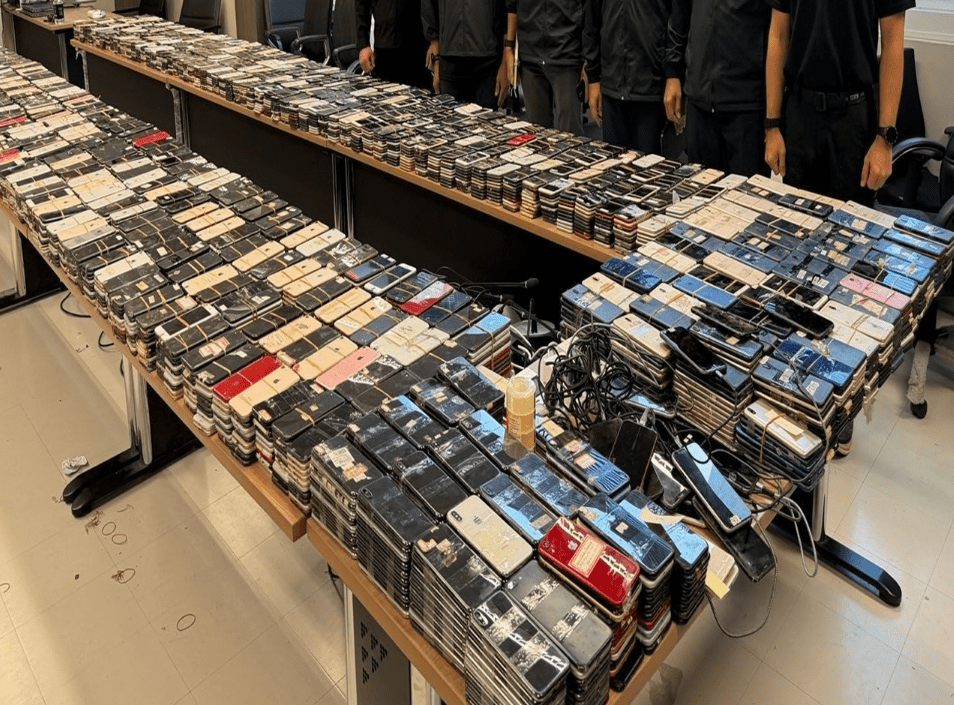
Source: US DOJ

Two Chinese nationals, Huang Xingshan and Jiang Wen Jie, were named in criminal complaints and arrest warrants unsealed as part of the operation. The pair is accused of running a crypto investment fraud scheme at the Shunda compound in Burma. That facility was seized by the Karen National Liberation Army in November 2025.

Exchanges And Blockchain Firms Join The Fight

The US was not alone in acting Thursday. Singapore’s police force ran a parallel month-long operation from mid-March through mid-April, working alongside Coinbase, Gemini, Coinhako, Independent Reserve, and blockchain analytics companies TRM Labs and Chainalysis.

BTCUSD currently trading at $78,076. Chart: TradingView

That effort stopped more than $2.86 million in potential losses and included over 90 direct interventions with scam victims — some by phone, others in person.

The willingness of major crypto platforms to cooperate with law enforcement marks a shift in how these cases are being handled. Blockchain transactions are traceable, and that transparency is increasingly being used against the very criminals who rely on crypto for speed and anonymity.

Losses Running Into The Billions

The scale of the problem is hard to overstate. The FBI received more than a million cybercrime complaints in 2025 alone, with total reported losses hitting more than $20 billion.

The $701 million frozen Thursday, while a significant number, represents a fraction of what has already been lost.

Featured image from Meta, chart from TradingView

Domande pertinenti

QWhat was the total amount of cryptocurrency frozen by the US Scam Center Strike Force?

AThe US Scam Center Strike Force froze more than $700 million in cryptocurrency connected to investment scams.

QWhat reward is the US State Department offering for information on the Tai Chang scam centers in Burma?

AThe US State Department is offering a $10 million reward for information that helps disrupt the Tai Chang scam centers in Burma.

QHow many fraudulent investment websites were taken down as part of the operation?

AAuthorities pulled down over 500 fraudulent investment websites used to lure victims.

QWho were the two individuals named in the criminal complaints and arrest warrants?

AThe two individuals named were Chinese nationals Huang Xingshan and Jiang Wen Jie, accused of running a crypto investment fraud scheme.

QWhich organizations did Singapore's police force collaborate with in their parallel operation?

ASingapore's police force worked with Coinbase, Gemini, Coinhako, Independent Reserve, and blockchain analytics companies TRM Labs and Chainalysis.

Letture associate

UBS: The Crowdedness of A-Share Tech Stocks Is Far From Reaching Historical Peaks

UBS: A-share tech stocks still far from peak crowding levels A-shares' technology sector has seen a strong rebound, with trading activity hitting record highs, raising concerns about market crowding. However, UBS Securities argues that a key indicator of institutional positioning suggests the current crowding level remains well below historical peaks. While the large-cap tech sector's share of total A-share trading volume and market capitalization have reached historical highs, the overweight ratio of domestic mutual funds in this sector stood at 9.9% in Q1 2026. This is down from 11.6% in Q3 2025 and significantly lower than the historical peak of 14.1% in Q4 2015. It also pales in comparison to the historical peak overweight of 18.7% for the consumer sector. UBS notes that typical cycles from a low to a peak in fund overweighting last about three years, and the current outperformance of the tech/growth style has lasted less than two years since the policy pivot in September 2024. UBS expects A-share earnings recovery to accelerate, providing fundamental support. It forecasts 2026 A-share profit growth to rise to 11% from 3.9% in 2025. Non-financial A-share profits grew 11.8% YoY in Q1 2026, with gross and net profit margins at their highest since 2023. Persistent fund inflows, the expansion of thematic ETFs, and a recovery in private fund issuance are supporting market liquidity. In tactical allocation, UBS favors growth and cyclical styles under its "slow bull" base case, with overweight ratings on six sectors: Electronics (benefiting from semiconductor inventory recovery and AI innovation), Communications (driven by AI computing demand), Machinery (aided by domestic capex recovery), Non-ferrous Metals (due to rising copper/aluminum prices), Chemicals (supported by anti-involution policies), and Electrical Equipment (driven by policy support and AI data center power demand).

marsbit1 h fa

UBS: The Crowdedness of A-Share Tech Stocks Is Far From Reaching Historical Peaks

marsbit1 h fa

Trading

Spot
Futures
活动图片





