Cross River to enable P2P payments, banking services for X Money

cointelegraphPubblicato 2026-07-27Pubblicato ultima volta 2026-07-27

Introduzione

Cross River Bank announced it will provide the banking infrastructure for X Money, the financial services platform being integrated into X (formerly Twitter). This partnership will enable peer-to-peer payments, FDIC-insured interest-bearing accounts, and Visa debit cards. Cross River's regulated platform and payment rails will power the service, supporting X's ambition to become an "everything app" with potential for future financial products. The announcement did not mention cryptocurrencies. Elon Musk first teased X Money in 2022, and the service entered limited beta testing in May 2025, emphasizing caution with user funds. It expanded to a limited external beta in March 2026. X has obtained necessary money transmitter licenses in over 40 U.S. states and registered with FinCEN to facilitate payments.

Cross River said Monday it will provide the banking infrastructure for X Money, the financial services platform being integrated into X, enabling peer-to-peer payments, FDIC-insured interest-bearing accounts and Visa debit cards.

The company said its banking platform and payment rails will power the service as X continues its push to become an “everything app,” with infrastructure designed to support additional financial products and services over time.

Cross River provides embedded financial infrastructure for payments, cards, lending and cryptocurrency services to fintech and technology companies through its regulated banking platform and payment rails. The announcement did not mention support for cryptocurrencies or stablecoins.

Elon Musk confirmed in May 2025 that X Money had entered limited beta testing, saying the initial rollout would be limited because “extreme care” was needed when handling users’ savings. The service expanded to a limited external beta in March 2026 ahead of a wider launch.

Musk has been teasing X Money since at least 2022, when he described his acquisition of Twitter as “an accelerant to creating X, the everything app.” Since then, X has obtained money transmitter licenses in more than 40 US states and registered with the Financial Crimes Enforcement Network to enable peer-to-peer payments on the platform.

Magazine: Peter Brandt predicts the exact day Bitcoin’s bear market will be over

Crypto di tendenza

Domande pertinenti

QWhat banking infrastructure services will Cross River provide for X Money?

ACross River will provide its banking platform and payment rails to enable peer-to-peer payments, FDIC-insured interest-bearing accounts, and Visa debit cards for X Money.

QWhat is the stated goal for X as mentioned in relation to the X Money integration?

AThe stated goal for X is to become an 'everything app,' and the Cross River infrastructure is designed to support this by enabling additional financial products and services over time.

QAccording to the article, when did Elon Musk confirm that X Money entered limited beta testing?

AElon Musk confirmed in May 2025 that X Money had entered limited beta testing.

QWhat regulatory steps has X taken to enable peer-to-peer payments on its platform?

AX has obtained money transmitter licenses in more than 40 US states and registered with the Financial Crimes Enforcement Network (FinCEN) to enable peer-to-peer payments on the platform.

QDoes the announcement from Cross River mention support for cryptocurrencies or stablecoins for X Money?

ANo, the announcement did not mention support for cryptocurrencies or stablecoins.

Letture associate

A Brief History of the Lithography Machine: How a Beam of Light Walked Sixty-Nine Years

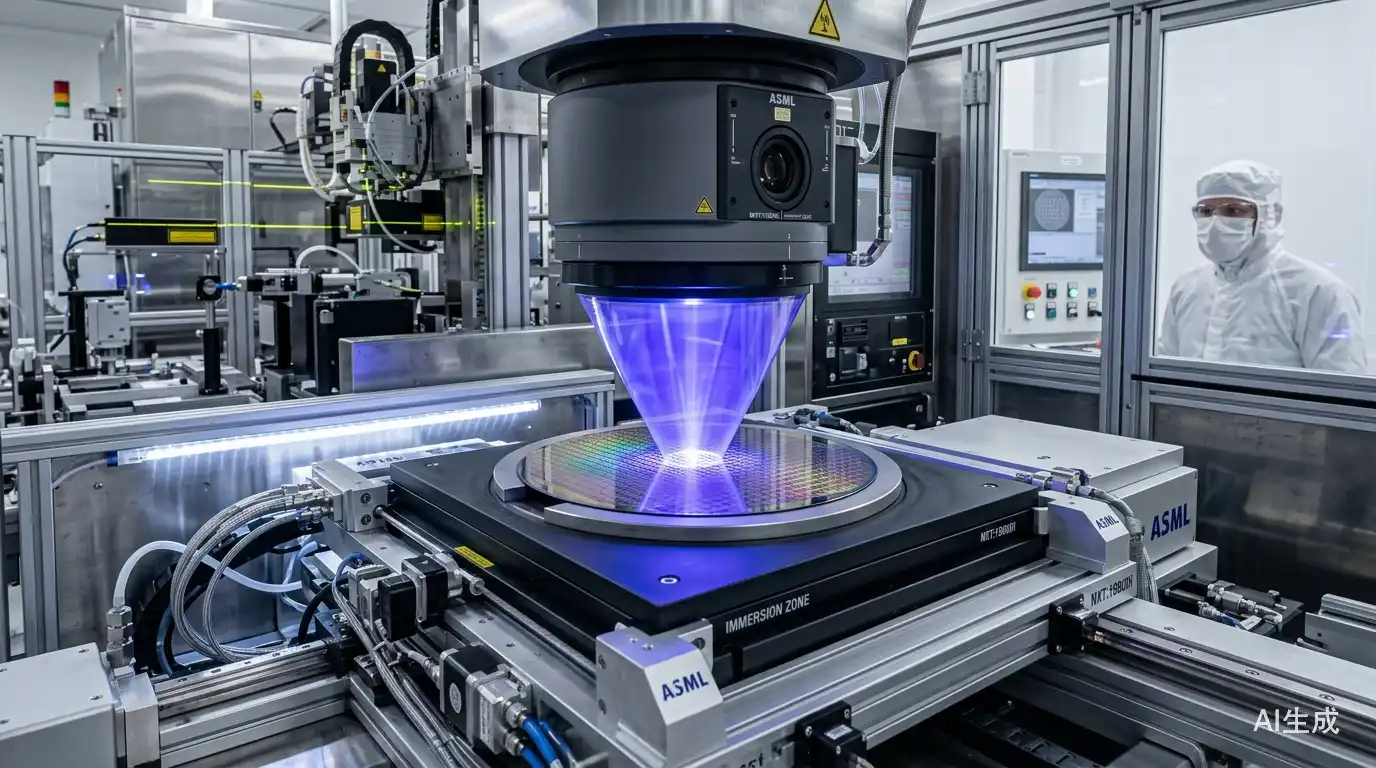
A Brief History of Lithography: 69 Years of Light In July 2026, reports of a Chinese state-backed company producing five immersion DUV lithography machines sent shockwaves through Wall Street, wiping roughly $44 billion from ASML's market cap in a single day. This event signaled a crack in the long-held assumption of Western monopoly over advanced chipmaking equipment. The journey began in 1957 when Jay Lathrop coined the term "photolithography." Early contact aligners (1960s) gave way to PerkinElmer's revolutionary projection aligners in 1973, boosting yields dramatically. GCA's step-and-repeat system (1978) established the modern stepper blueprint. However, within a decade, Japanese firms like Nikon and Canon, supported by a strong domestic market, captured nearly 90% of the global market from American pioneers, who ultimately exited the business. ASML, founded in a leaky shed in 1984, rose to dominance through key strategic moves: the TWINSCAN dual-stage platform (2001) and the acquisition of SVG, gaining access to Intel. A pivotal moment came in the early 2000s with the industry at a 193nm wavelength impasse. While most invested in the costly 157nm path, TSMC's Burn Lin proposed immersion lithography—using water between the lens and wafer. ASML bet on this simpler idea and, with Zeiss, delivered the first commercial immersion tool in 2004, effectively ending the 157nm roadmap and leaving competitors behind. The subsequent push for Extreme Ultraviolet (EUV) lithography was an even greater marathon. Deemed the least promising option in 1997, EUV's development, led by ASML, required vacuum chambers, reflective optics, and a complex tin-droplet laser plasma source. Critical to its eventual success (first high-volume manufacturing in 2018) was the 2012 "Customer Co-Investment Program," where Intel, TSMC, and Samsung provided upfront funding and equity, sharing the immense risk and cost. Today, ASML holds a near-total monopoly in EUV and immersion DUV. The core lesson of this 69-year history is not merely one of technological invention but of sustained partnership. Successive leaders—PerkinElmer, GCA, Nikon—were not ultimately defeated by superior technology but by losing the vital connection to customers willing to tolerate years of iteration, fund long-term R&D, and integrate early, imperfect tools into their production lines. The "light" that completed the journey was always carried by those patient, invested partners.

marsbit45 min fa

A Brief History of the Lithography Machine: How a Beam of Light Walked Sixty-Nine Years

marsbit45 min fa

Trading

Spot

Articoli Popolari

Come comprare RIVER

Benvenuto in HTX.com! Abbiamo reso l'acquisto di River (RIVER) semplice e conveniente. Segui la nostra guida passo passo per intraprendere il tuo viaggio nel mondo delle criptovalute.Step 1: Crea il tuo Account HTXUsa la tua email o numero di telefono per registrarti il tuo account gratuito su HTX. Vivi un'esperienza facile e sblocca tutte le funzionalità,Crea il mio accountStep 2: Vai in Acquista crypto e seleziona il tuo metodo di pagamentoCarta di credito/debito: utilizza la tua Visa o Mastercard per acquistare immediatamente RiverRIVER.Bilancio: Usa i fondi dal bilancio del tuo account HTX per fare trading senza problemi.Terze parti: abbiamo aggiunto metodi di pagamento molto utilizzati come Google Pay e Apple Pay per maggiore comodità.P2P: Fai trading direttamente con altri utenti HTX.Over-the-Counter (OTC): Offriamo servizi su misura e tassi di cambio competitivi per i trader.Step 3: Conserva River (RIVER)Dopo aver acquistato River (RIVER), conserva nel tuo account HTX. In alternativa, puoi inviare tramite trasferimento blockchain o scambiare per altre criptovalute.Step 4: Scambia River (RIVER)Scambia facilmente River (RIVER) nel mercato spot di HTX. Accedi al tuo account, seleziona la tua coppia di trading, esegui le tue operazioni e monitora in tempo reale. Offriamo un'esperienza user-friendly sia per chi ha appena iniziato che per i trader più esperti.

583 Totale visualizzazioniPubblicato il 2026.01.16Aggiornato il 2026.06.02

Come comprare RIVER

Discussioni

Benvenuto nella Community HTX. Qui puoi rimanere informato sugli ultimi sviluppi della piattaforma e accedere ad approfondimenti esperti sul mercato. Le opinioni degli utenti sul prezzo di RIVER RIVER sono presentate come di seguito.

活动图片