Compliance Guide for Utility Token Issuance

marsbitPubblicato 2025-12-17Pubblicato ultima volta 2025-12-17

Introduzione

"Functional Token Issuance Compliance Guide" This guide outlines the legal framework for issuing utility tokens, emphasizing that regulatory risk depends not on the token's description, but on its economic reality. A token's classification as a security is determined by market behavior and investor expectations, not technical promises, as seen in cases like Telegram's TON. Projects fall into two main categories with different compliance paths: Infrastructure projects (e.g., Bitcoin, Celestia) often use fair launches for lower risk, while Application-layer projects (e.g., DeFi, GameFi) require careful legal structuring due to higher regulatory scrutiny. Key stages and actions are detailed: * **Testnet Phase:** Separate development (DevCo) and token/ecosystem (Foundation) entities. Use equity + token warrants for fundraising, not direct token sales, to avoid triggering securities laws prematurely. * **Mainnet Launch (TGE):** This is a high-risk phase. Ensure clear disclosure of token utility, allocation, lock-ups, and conduct KYC/AML. Avoid marketing that promises profit. Public airdrops and sales are closely watched. * **DAO Stage:** Achieve true decentralization by relinquishing team control to community governance (e.g., Uniswap DAO). This "verifiable exit" is crucial for reducing securities risk. The core compliance challenge is proactively demonstrating the token is *not* a security by emphasizing its functional use, avoiding profit promises, and progressively de...

Original Author: Shao Jiadian

Introduction

In recent years, "issuing tokens" has become the most sensitive term in the Web3 world. Some have become famous overnight because of it, while others have faced investigations, refunds, or account bans. The issue isn't with "issuing" itself, but with "how to issue." While some projects list on major exchanges, build communities, and establish DAOs, others are deemed illegal securities offerings. The difference lies in whether it's done within a legal framework.

In 2025, utility tokens are no longer a gray area. Regulators are scrutinizing every TGE, every SAFT, and every "airdrop" with a magnifying glass.

This article is for every Web3 project founder: On the journey from Testnet to DAO, the legal structure is the skeleton of your project. Before issuing tokens, learn to build that skeleton.

Note: This article is based on an international legal perspective and does not target or apply to the legal environment of mainland China.

Token "Identity" Isn't Determined by Your Whitepaper

Many teams claim, "Our token is just a utility token with no profit distribution, so it should be fine, right?"

But reality is different. In the eyes of regulators, a token's "identity" depends on market behavior, not how you describe it.

A classic case is Telegram's TON project.
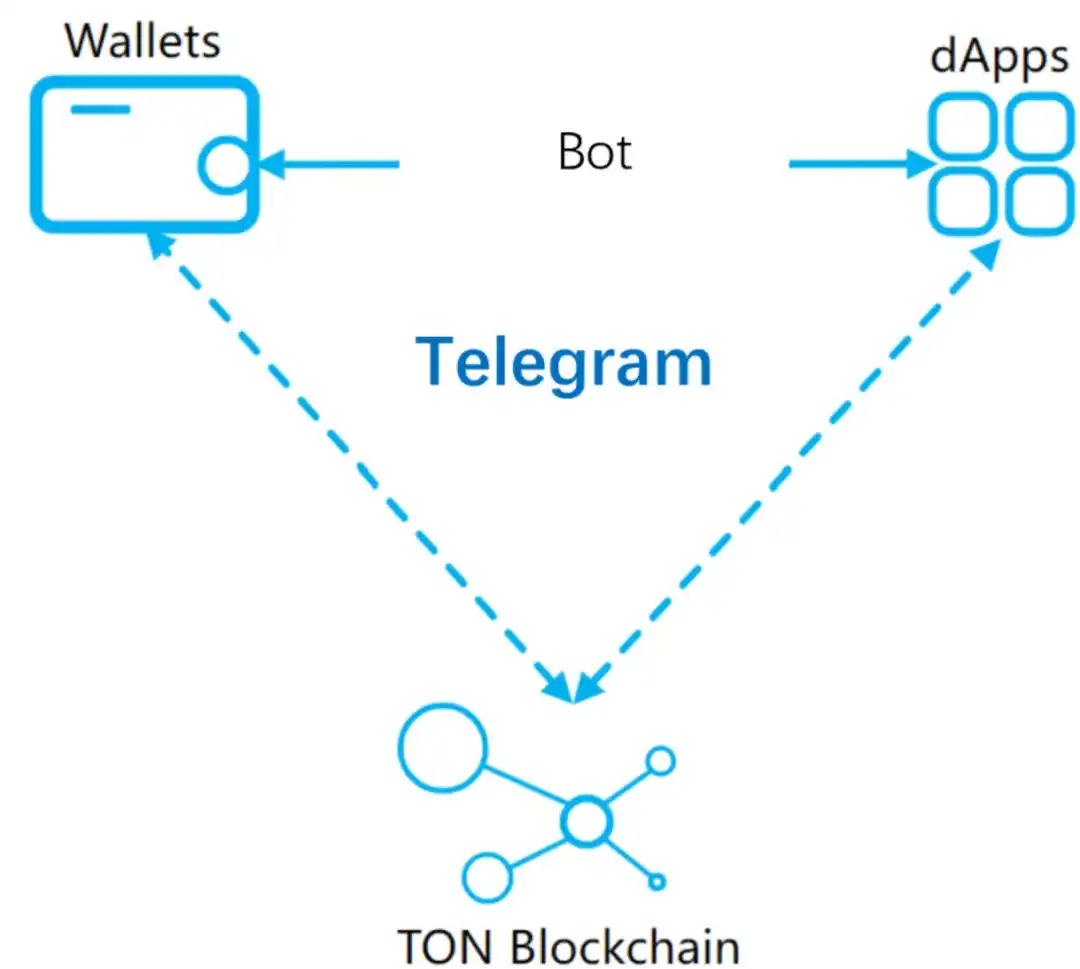
Telegram raised $1.7 billion from private investors, claiming the tokens were merely "fuel" for a future communication network;

However, the U.S. SEC deemed this financing an unregistered securities offering—because investors' intent was clearly "future appreciation," not "immediate use."

The result: Telegram refunded investors and paid fines, and the TON network was forced to operate independently from Telegram.

Lesson: Regulators focus on "investment expectations," not "technical vision." As long as you use investors' money to build an ecosystem, it carries securities attributes.

So, don't幻想 use the "utility" label to eliminate risks. Token nature evolves dynamically—early stages may constitute investment contracts, and only after mainnet launch can they become genuine usage credentials.

First, Identify Your Project Type

What determines your compliance path is not the token's name or total supply, but the project type.

  • Infrastructure (Infra):

Such as Layer1, Layer2, public chains, ZK, storage protocols.

Typically adopt "Fair Launch," with no pre-mining or SAFTs; tokens are generated by node consensus.

Examples include Bitcoin, Celestia, EigenLayer.

Advantages: Naturally decentralized, low regulatory risk; Disadvantages: Difficult to fundraise, long development cycles.

  • Application Layer Projects (App Layer):

Such as DeFi, GameFi, SocialFi.

The team pre-mints tokens (TGE) and manages the ecosystem treasury. Typical examples include Uniswap, Axie Infinity, Friend.tech.

Clear business models but high compliance risks: Sales, airdrops, and circulation all require regulatory disclosure and KYC handling.

Conclusion: Infrastructure survives on consensus; application projects rely on structure for survival. Without proper structure, all "Tokenomics" are empty talk.

Testnet Phase: Don't Rush to Issue Tokens; Build the "Legal Skeleton" First

Many teams start seeking investors, signing SAFTs, and pre-mining tokens during the Testnet phase.

But the most common mistake at this stage is:

Taking investors' money while still claiming "this is just a utility token."

The U.S. Filecoin is a cautionary tale. It raised about $200 million via SAFT before mainnet launch. Although it received an SEC exemption, delays in launch and temporary unusability led investors to question its "securities attributes," resulting in massive compliance costs to rectify.

The correct approach:

  • Separate two entities:
  • DevCo (Development Company) handles technical development and intellectual property;
  • Foundation / TokenCo manages ecosystem building and future governance.
  • Fundraising method: Use equity + Token Warrant structures instead of direct token sales.

Investors obtain rights to future tokens, not immediate token assets.

This method was first adopted by projects like Solana and Avalanche, allowing early investors to participate in ecosystem building without directly triggering securities sales.

Principle: The legal structure in the early stages is like the genesis block. One logical error, and compliance costs may multiply tenfold.

Mainnet Issuance (TGE): The Moment Most Likely to Attract Regulatory Attention

Once tokens can be traded and have a price, they enter regulatory radar—especially during public distributions like airdrops, LBPs (Liquidity Bootstrapping Pools), or Launchpad events.

  • Public Chain Projects:

Such as Celestia, Aptos, Sui, etc., typically generate tokens automatically via validator networks at TGE.

The team doesn't directly participate in sales; the distribution is decentralized, posing the lowest regulatory risk.

  • Application Layer Projects:

Such as Arbitrum and Optimism airdrops, or Blur and Friend.tech community distributions,

have drawn attention from regulators in some jurisdictions regarding whether "distribution and voting incentives constitute securities sales."

The safety line at TGE lies in disclosure and usability:

1. Clearly define token use cases and functionality;

2. Disclose token allocation ratios, lock-up periods, and vesting mechanisms;

3. Implement KYC/AML for investors and users;

4. Avoid "expected returns" promotions.

For example, during TGE, Arbitrum Foundation explicitly stated: its airdrop was solely for governance purposes, not representing investment or profit rights; and it gradually reduced foundation control in community governance—key to "de-securitizing" the token.
DAO Phase: Learn to "Let Go" and Truly Decentralize the Project

Many projects end after "issuing tokens," but the real challenge is—how to relinquish control and let tokens become public goods.

Take Uniswap DAO as an example:

  • Early development and governance were led by Uniswap Labs;
  • Later, Uniswap Foundation managed the treasury and funded ecosystem projects;
  • The community votes with UNI to decide protocol upgrades and parameter adjustments.

This structure makes it harder for regulators to identify a "centralized issuer" and boosts community trust.

In contrast, projects that fail to handle the DAO transition well, such as some GameFi or NFT ecosystems, where teams still control most tokens and voting rights, are seen as "pseudo-decentralized" and retain securities risks.

Decentralization isn't about "neglect," but "verifiable exit." A safe DAO architecture balances code, foundation, and community.

What Regulators Look For: Can You Prove "This Is Not a Security"?

Regulators aren't afraid of token issuance; they're concerned when you say "it's not a security" but act like it is.

In 2023, the SEC's lawsuits against Coinbase, Kraken, and Binance.US listed dozens of "utility tokens," asserting that during sales and marketing, they exhibited "investment contract" characteristics. This means that if a project promotes "expected returns" during token sales, even if the token has utility, it may be deemed a security.

Thus, compliance key is dynamic response:

  • Testnet → Focus on technology and development compliance;
  • TGE → Emphasize use cases and functional attributes;
  • DAO → Reduce team control, strengthen governance mechanisms.

Risks vary at each stage; every upgrade requires re-evaluating token positioning. Compliance isn't a stamp but continuous iteration.

Conclusion: Projects That Endure Cycles Rely on "Stability," Not "Speed"

Many projects fail not due to poor technology but flawed structure. While others talk about "gains," "airdrops," and "exchange listings," truly smart founders are already building legal frameworks, writing compliance logic, and planning DAO transitions.

Utility token issuance isn't about bypassing regulation but using law to prove you don't need it. When code takes over rules, law becomes your firewall.

Domande pertinenti

QWhat is the legal identity of a utility token determined by, according to the article?

AThe legal identity of a utility token is determined by market behavior and investment expectations, not by how the project describes it in its whitepaper. Regulators focus on whether the token sale constitutes an investment contract, based on the expectation of profit, rather than its technical vision or intended use.

QWhat are the two main types of projects mentioned, and how do their compliance paths differ?

AThe two main types are Infrastructure projects (e.g., Layer1, Layer2, public chains) and Application Layer projects (e.g., DeFi, GameFi). Infrastructure projects often use a 'Fair Launch' with no pre-mining or SAFTs, leading to lower regulatory risk but greater difficulty in fundraising. Application Layer projects typically pre-mint tokens, have clearer business models, but face higher compliance risks requiring careful handling of sales, airdrops, and regulatory disclosures.

QWhat is the recommended legal structure during the Testnet phase to avoid regulatory issues?

AThe recommended structure is to separate the project into two entities: a DevCo for technical development and IP, and a Foundation/TokenCo for ecosystem building and future governance. Funding should be raised using 'equity + Token Warrant' structures instead of direct token sales, granting investors rights to future tokens rather than immediate assets to avoid triggering securities regulations prematurely.

QWhat are key steps to enhance compliance during a Token Generation Event (TGE)?

AKey steps during TGE include: 1) Clearly defining the token's use cases and functionality, 2) Disclosing token allocation, lock-up periods, and release mechanisms, 3) Implementing KYC/AML procedures for investors and users, and 4) Avoiding promotional language that suggests an expectation of profit or investment return.

QHow does the article define the transition to a DAO for achieving true decentralization and reducing regulatory risk?

AThe transition to a DAO involves the project team gradually relinquishing control to the community. This is achieved by establishing a verifiable exit strategy where code, a foundation, and the community form a balanced governance structure. This reduces the perception of a centralised issuer and demonstrates that the token is a public good rather than a security, as seen in successful models like Uniswap DAO.

Letture associate

Should You Buy SpaceX Stock at $1.7 Trillion? Here's What the Market Is Worried About

SpaceX is preparing for a massive IPO aiming to raise around $75 billion at a valuation of approximately $1.75 trillion. While its achievements in reusable rockets and the profitable Starlink satellite internet service are clear, the market is concerned about the aggressive valuation. Key issues include: the current $1.75 trillion valuation, which is about 94 times 2025 revenue, seems to price in not just existing businesses but also unproven future ventures like AI infrastructure and orbital data centers. Financially, while Starlink is profitable, the AI division, bolstered by the acquisition of xAI, is incurring massive losses and consuming the majority of capital expenditures. This acquisition also introduced complex related-party financing arrangements and debt onto SpaceX's balance sheet. Furthermore, corporate governance poses a challenge. SpaceX's dual-class share structure ensures founder Elon Musk retains absolute control, limiting ordinary shareholders' influence over high-risk, long-term strategic decisions. The future success of ambitious projects like the Starship rocket—critical for lowering costs and enabling new services—remains a significant variable for the valuation. In summary, the market's apprehension (FUD) centers not on doubting SpaceX's past technological triumphs but on questioning how much premium public investors should pay for a future that combines proven profits with highly speculative and capital-intensive new ventures, all under a governance structure that offers limited shareholder oversight.

marsbit39 min fa

Should You Buy SpaceX Stock at $1.7 Trillion? Here's What the Market Is Worried About

marsbit39 min fa

Breaking the DeFi Cascading Liquidation Curse: Vitalik Proposes a New Solution

Vitalik Buterin has proposed a new DeFi design to eliminate the automatic liquidation mechanism that causes market instability during sharp downturns. The current system, used by protocols like Aave, triggers forced sales when collateral value falls below a threshold, often exacerbating price drops and creating systemic selling pressure. Buterin's alternative model is based on splitting an asset like ETH into two synthetic option-like tokens, P and N, pegged to a price index. Their combined value always equals one ETH. Instead of sudden liquidation, a position's value gradually drifts from its target peg if the market moves. Users must proactively rebalance their holdings to maintain their desired exposure, transferring the management burden from the protocol to the user or automated tools. A key advantage is the reduced reliance on real-time oracles. Pricing decisions are deferred until contract expiry, allowing for more robust, fault-tolerant oracle designs. This removes a clear liquidation threshold that speculators can target for manipulation or MEV extraction. However, significant challenges remain. Frequent rebalancing could incur high slippage and transaction costs, necessitating new liquidity provider models. The design is better suited for hedging instruments than for stablecoins requiring a rigid 1:1 peg. While not an immediate replacement for existing systems, the proposal challenges the foundational assumption that instantaneous forced liquidation is an unavoidable necessity in DeFi, opening the door for fundamentally different risk management architectures.

marsbit44 min fa

Breaking the DeFi Cascading Liquidation Curse: Vitalik Proposes a New Solution

marsbit44 min fa

The End of Single-Factor Cryptography

The article "The End of Single-Factor Crypto" posits a fundamental shift in the cryptocurrency ecosystem. It argues the era where crypto asset valuations were predominantly driven by, and correlated with, Bitcoin's price is ending. The space is bifurcating into two distinct economies: endogenous and exogenous. The endogenous economy represents traditional crypto, where token and project values are directly tied to crypto market prices. The emerging exogenous economy comprises projects and businesses that may utilize blockchain technology or tokens but derive their fundamental value from external, non-crypto factors like consumer demand, subscription revenue, or real-world utility. Examples include AI inference platforms like Venice, fintech lenders using blockchain for efficiency, and stablecoin/payment infrastructure companies acquired by giants like Mastercard and Stripe. This shift means investment analysis must change. For exogenous assets, evaluating traditional business fundamentals—such as revenue streams, unit economics, and competitive moats—becomes more critical than tracking Bitcoin charts. While endogenous assets like Bitcoin remain relevant, the growth of the exogenous category is driven by measurable demand independent of crypto price cycles, paving the way for a new, more diversified market phase. Consequently, crypto is evolving from a single-factor, reflexive asset class into a multifaceted ecosystem with varied drivers and investment theses.

marsbit44 min fa

The End of Single-Factor Cryptography

marsbit44 min fa

Morning Post | Bitmine Plans to Raise $300 Million Through Preferred Stock Issuance; Polymarket Accuses Kalshi of Commercial Espionage

ChainCatcher's Daily Crypto Brief: Key developments from the past 24 hours include significant funding moves, regulatory actions, and market predictions. Bitmine announced a $300 million preferred stock fundraising. Polymarket accused rival prediction platform Kalshi of corporate espionage, citing numerous suspicious coincidences in product launches, a claim Kalshi strongly denied. The U.S. Department of Justice, in a joint "Disruption Week" anti-fraud operation with companies like Coinbase and Meta, froze over $3.8 million in cryptocurrency linked to scams. In infrastructure news, Macau completed its integration with the multi-central bank digital currency bridge, mBridge, aiming to build efficient cross-border payment channels. Cosmos Labs acquired the block explorer Mintscan. Market-wise, Geoffrey Kendrick, Standard Chartered's Head of Digital Assets Research, stated Bitcoin is nearing a bottom around $63,000, maintaining a year-end target of $100,000. He noted stability in U.S. spot Bitcoin ETF holdings. Ahead of SpaceX's anticipated IPO, internal insiders at Rocket Lab (RKLB) sold over $18.41 million in stock. In tokenization, Goldman Sachs partnered with Apex and Archax to launch a tokenized real estate fund. The meme token tracker GMGN reported the top trending tokens: on Ethereum, HEX, SHIB, LINK, PEPE, mUSD; on Solana, TROLL, swarms, WORLDCUP, neet, Buttcoin; and on Base, PEPE, toby, ODDS, ELSA, SKI.

链捕手58 min fa

Morning Post | Bitmine Plans to Raise $300 Million Through Preferred Stock Issuance; Polymarket Accuses Kalshi of Commercial Espionage

链捕手58 min fa

Trading

Spot
Futures
活动图片