Coinbase to Launch Stock Futures, Why This Is Big For Crypto

bitcoinistPubblicato 2026-03-21Pubblicato ultima volta 2026-03-21

Introduzione

Coinbase, a major US cryptocurrency exchange, has announced the launch of stock perpetual futures for non-US traders. This expansion is a significant step in its "Everything Exchange" strategy, moving beyond crypto into traditional assets like stocks and ETFs. The new derivatives allow eligible traders to speculate on the price of major tech stocks (Apple, Microsoft, etc.) and index ETFs (SPY, QQQ) with up to 10x and 20x leverage, respectively, all settled in USDC. These contracts never expire, enabling 24/7 trading. This launch integrates traditional assets with crypto on a single platform, offering new trading and hedging opportunities but also introducing higher risks of volatility and liquidations.

Coinbase, one of the largest cryptocurrency centralized exchanges (CEX) in the United States, has just announced the launching of stock perpetual futures for non-US traders.

Coinbase Expands Beyond All Borders

The CEX’s expansion, announced today in a blog post on its official website, isn’t just about stepping beyond U.S. borders to give global traders ongoing leveraged exposure via perpetual futures. It also marks Coinbase’s push beyond crypto into traditional assets, turning this rollout into a fresh bet on the growing trend toward tokenized stocks and 24/7 markets, driven by both TradFi and DeFi players. Recently, Europe’s largest asset manager Amundi announced the launching of a tokenized fund on Ethereum and Stellar, as covered by Bitcoinist just today.

Coinbase frames this launch as part of its broader “Everything Exchange” strategy, aiming to bring crypto, traditional assets, and new tokenized products into one venue.

Today, Coinbase expands its global derivatives offering with the launch of stock perpetual futures, becoming one of the first major centralized venues to offer this product. This launch strengthens Coinbase’s position in international derivatives and advances our long-term strategy of building the Everything Exchange where traders can access crypto, traditional, and emerging assets side by side.

Over the past year, Coinbase has laid the regulatory and product runway for this leap. It first rolled out crypto perpetual futures to U.S. retail traders under CFTC oversight in mid‐2025, then pushed derivatives into Europe via a MiFID II license obtained through its Bux acquisition, reaching 26 countries in an earlier March 2026 expansion that landed alongside its stock index futures debut.

A 24/7 US stock market

The CEX itself describes perpetual futures as “a type of derivative contract that enables traders to speculate on the price of an asset (...) without needing to buy or own the underlying asset itself.” Unlike standard futures, never expire, so traders can keep positions open indefinitely as long as they meet the margin requirements.

At launch, contracts cover the “Magnificent Seven” tech stocks: Apple, Microsoft, Alphabet, Amazon, NVIDIA, Meta Platforms, and Tesla. In certain permitted jurisdictions, perpetual futures on benchmark ETFs tracking, the S&P 500 (SPY) and the tech‐heavy Nasdaq‐100 (QQQ), are also available.

Leverage goes up to 10x on individual stock perpetuals and up to 20x on ETF perpetuals. All contracts are settled in USDC, Coinbase’s preferred stablecoin. The platform uses unified margin across perpetual and spot positions, allowing more capital-efficient portfolio management and risk offsets.

What This Means For Traders

Coinbase is methodically weaving spot, futures, and now stock‐linked perpetuals into a single, always‐on risk platform that changes how both retail and institutions express views across markets. For traders, that unlocks new basis trades between spot stocks and perpetuals, tighter cross‐asset plays between crypto and U.S. equities, and more complex hedging around macro events and earnings.

The flip side is obvious: deeper leverage stacks mean a higher risk of cascading liquidations and sharper, event‐driven volatility when the Fed speaks, data prints hit, or Big Tech reports.
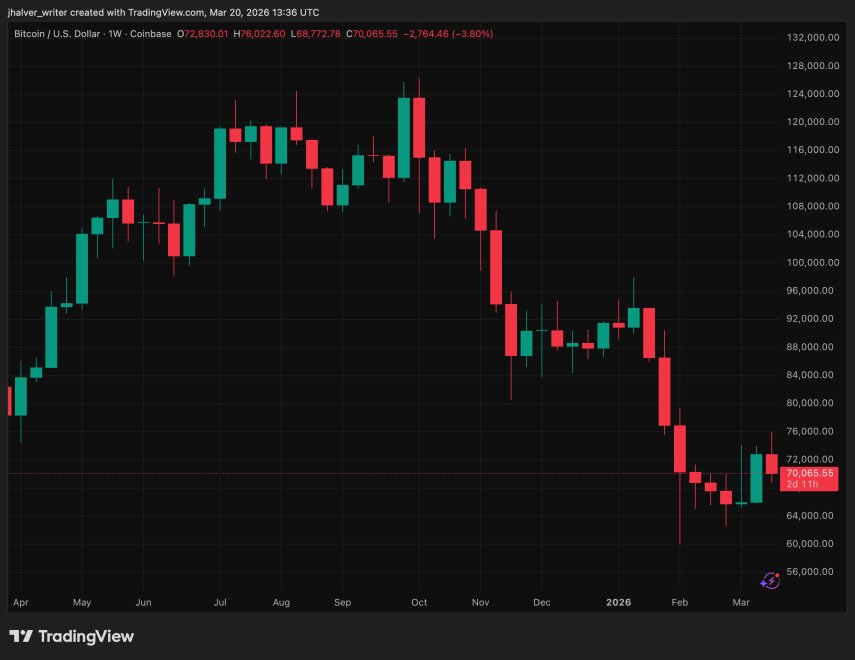
At the moment of writing, BTC trades barely above the $70k level on the daily chart, marking a downside trend. Source: BTCUSD on Tradingview

Cover image from Perplexity, BTCUSD chart from Tradingview

Crypto di tendenza

Domande pertinenti

QWhat new product has Coinbase announced for non-US traders?

ACoinbase has announced the launch of stock perpetual futures for non-US traders.

QWhich major tech stocks are covered by the new perpetual futures contracts?

AThe contracts cover the 'Magnificent Seven' tech stocks: Apple, Microsoft, Alphabet, Amazon, NVIDIA, Meta Platforms, and Tesla.

QWhat is the maximum leverage offered on individual stock perpetual futures?

ALeverage goes up to 10x on individual stock perpetual futures.

QIn what currency are all the new perpetual futures contracts settled?

AAll contracts are settled in USDC, which is Coinbase's preferred stablecoin.

QHow does Coinbase describe the broader strategy that this launch is a part of?

ACoinbase frames this launch as part of its broader 'Everything Exchange' strategy, aiming to bring crypto, traditional assets, and new tokenized products into one venue.

Letture associate

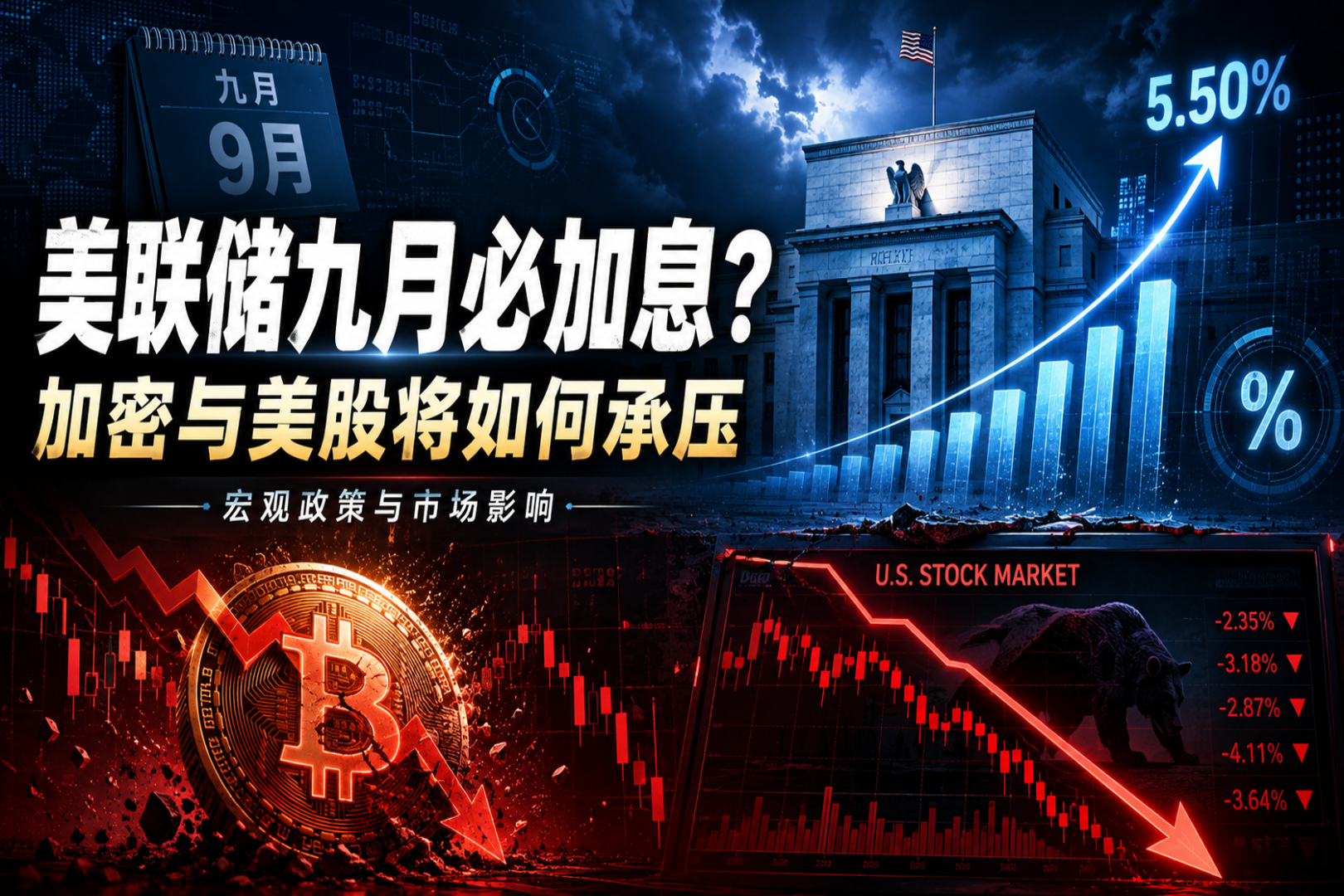
Will the Fed Definitely Raise Interest Rates in September? How Will Crypto and U.S. Stocks Withstand the Pressure?

The market's expectation for a September Fed rate hike surged dramatically in early August, jumping from under 50% to over 80% within a week. This shift followed a contentious July FOMC meeting, where a 9-3 vote to hold rates revealed growing dissent from hawkish members advocating for an immediate hike to combat persistent inflation. The primary catalyst for this repricing is rising oil prices, driven by renewed geopolitical tensions around the Strait of Hormuz, which threaten global supply. Energy costs directly influence inflation metrics, making the upcoming July CPI report (due August 12th) a critical data point. If it shows inflation reaccelerating, the probability of a September hike will solidify. For Bitcoin and crypto assets, this is typically bearish news. Bitcoin continues to behave as a high-beta, liquidity-sensitive risk asset. A rate hike raises the opportunity cost of holding non-yielding assets and could drive capital toward money markets, pressuring crypto prices in the short term. However, historical patterns suggest that if a hike is perceived as the end of a tightening cycle rather than the start, any negative price impact may be brief. U.S. stocks, particularly crypto-linked equities like Coinbase and growth-oriented tech stocks, are also vulnerable. Higher rates increase discount rates in valuation models, putting pressure on high-multiple companies. This coincides with a pivotal tech earnings season where investor focus has shifted from massive AI capital expenditure to tangible revenue and cash flow generation. Companies with negative cash flow and weak growth narratives could face heightened volatility if borrowing costs rise in September. In summary, a September Fed hike has evolved into a mainstream market scenario. Key factors to watch are oil prices, the July CPI report, and Fed communications, which will determine the final decision and its impact on volatile crypto and equity markets.

marsbit3 min fa

Will the Fed Definitely Raise Interest Rates in September? How Will Crypto and U.S. Stocks Withstand the Pressure?

marsbit3 min fa

A 'Overlooked' Market Event: Joint US-Japan-South Korea Intervention, Rare US Treasury Involvement, and Bessent's Quiet 'Market Rescue'?

Summary: The United States, Japan, and South Korea executed their largest coordinated foreign exchange intervention in nearly 30 years. The action targeted depreciation pressure on the Japanese yen and South Korean won. This move is seen as a significant effort by the US to stabilize the financial markets of its key allies and prevent the spillover of risks. Key details: * Japan reportedly intervened on July 30 using approximately 8.45 trillion yen (about $52.8 billion). South Korean authorities also intervened that day, selling dollars to support the won. * Notably, the US Treasury Department intervened directly in yen markets for the first time in roughly 30 years. The New York Fed, reportedly acting on behalf of the Treasury, sold euros to buy yen via Goldman Sachs and Morgan Stanley on July 31. Analysts view the use of the euro-yen pair as a way to alleviate yen pressure without adding selling pressure to the US dollar. * Prior to the action, the New York Fed conducted "rate checks" on both USD/JPY and EUR/JPY, a newer signaling tool that falls between verbal and physical intervention. The intervention is interpreted as going beyond traditional currency stabilization. Analysts, such as Michael Hartnett of Bank of America, suggest it resembles a "Price Keeping Operation" for the AI era. The core US objectives are perceived to be: 1. Preventing rapid yen depreciation from triggering a sharp rise in Japanese government bond yields. 2. Containing financial stress from spreading across Asian markets like South Korea and Japan. 3. Reducing the risk of disorderly capital flows impacting the US bond market. This coordinated action underscores the importance of Japan and South Korea as critical partners in the US semiconductor and AI supply chain. Stabilizing their financial markets is seen as vital to mitigating risks to the broader tech industry and the US market itself. The intervention coincides with market pressures, including the KOSDAQ index hitting a low since October 2022. While seen as a move to control volatility, some analysts caution it may not fundamentally reverse existing market trends.

marsbit7 min fa

A 'Overlooked' Market Event: Joint US-Japan-South Korea Intervention, Rare US Treasury Involvement, and Bessent's Quiet 'Market Rescue'?

marsbit7 min fa

Will the Federal Reserve Definitely Raise Interest Rates in September? How Will Cryptocurrencies and US Stocks Bear the Pressure?

In early August 2024, market expectations for a September Federal Reserve rate hike surged dramatically, from below 50% to over 80%, driven by renewed inflation concerns. This shift followed a contentious July FOMC meeting where a 9-3 vote to hold rates revealed a growing hawkish faction advocating for an immediate hike, citing prolonged above-target inflation. The key catalyst is escalating conflict near the Strait of Hormuz, which has pushed oil prices up approximately 20% in July, threatening to reignite inflation. The next critical data point is the July CPI report on August 12th; a hot reading could solidify hike expectations. For crypto assets, particularly Bitcoin, this represents near-term pressure. Bitcoin continues to exhibit high-beta, risk-on characteristics, making it sensitive to tightening liquidity and higher opportunity costs. However, historical precedent suggests that if a hike is perceived as the cycle's end rather than its start, the negative impact may be brief, with markets quickly pivoting to anticipate future rate cuts. U.S. stocks, especially crypto-linked equities like Coinbase and high-valuation tech stocks, face amplified volatility. Higher rates increase discount rates in valuation models, pressuring growth stocks. This coincides with a pivotal tech earnings season where investor focus has shifted from massive AI capital expenditures to demonstrable revenue and cash flow generation. Companies with negative cash flows and weak growth narratives could see severe pressure if a September hike materializes, as financing costs would rise. Key indicators to watch include oil prices, upcoming inflation data, and Fed commentary at events like the Jackson Hole symposium.

Odaily星球日报7 min fa

Will the Federal Reserve Definitely Raise Interest Rates in September? How Will Cryptocurrencies and US Stocks Bear the Pressure?

Odaily星球日报7 min fa

Trading

Spot

Articoli Popolari

Come comprare ONE

Benvenuto in HTX.com! Abbiamo reso l'acquisto di Harmony (ONE) semplice e conveniente. Segui la nostra guida passo passo per intraprendere il tuo viaggio nel mondo delle criptovalute.Step 1: Crea il tuo Account HTXUsa la tua email o numero di telefono per registrarti il tuo account gratuito su HTX. Vivi un'esperienza facile e sblocca tutte le funzionalità,Crea il mio accountStep 2: Vai in Acquista crypto e seleziona il tuo metodo di pagamentoCarta di credito/debito: utilizza la tua Visa o Mastercard per acquistare immediatamente HarmonyONE.Bilancio: Usa i fondi dal bilancio del tuo account HTX per fare trading senza problemi.Terze parti: abbiamo aggiunto metodi di pagamento molto utilizzati come Google Pay e Apple Pay per maggiore comodità.P2P: Fai trading direttamente con altri utenti HTX.Over-the-Counter (OTC): Offriamo servizi su misura e tassi di cambio competitivi per i trader.Step 3: Conserva Harmony (ONE)Dopo aver acquistato Harmony (ONE), conserva nel tuo account HTX. In alternativa, puoi inviare tramite trasferimento blockchain o scambiare per altre criptovalute.Step 4: Scambia Harmony (ONE)Scambia facilmente Harmony (ONE) nel mercato spot di HTX. Accedi al tuo account, seleziona la tua coppia di trading, esegui le tue operazioni e monitora in tempo reale. Offriamo un'esperienza user-friendly sia per chi ha appena iniziato che per i trader più esperti.

429 Totale visualizzazioniPubblicato il 2024.12.12Aggiornato il 2026.06.02

Come comprare ONE

Discussioni

Benvenuto nella Community HTX. Qui puoi rimanere informato sugli ultimi sviluppi della piattaforma e accedere ad approfondimenti esperti sul mercato. Le opinioni degli utenti sul prezzo di ONE ONE sono presentate come di seguito.

活动图片