Coinbase Stock Slides 4.3% as Nevada Gaming Regulator Targets Unlicensed Sports Betting Contracts

bitcoinistPubblicato 2026-02-05Pubblicato ultima volta 2026-02-05

Introduzione

Coinbase shares declined 4.3% as Nevada gaming regulators filed a civil complaint against the company, alleging its prediction market products constitute unlicensed sports betting. The state seeks to halt these markets, arguing they fall under Nevada's gambling laws rather than federal derivatives regulation. Coinbase, which partners with CFTC-regulated Kalshi, maintains the products are legal derivatives. The action adds to regulatory pressures on Coinbase, which has seen an 11-session stock decline amid legal uncertainties and a recent data breach. The company is challenging similar state-level actions in other jurisdictions, claiming exclusive CFTC oversight.

Coinbase shares continued their recent decline after Nevada regulators moved to block the crypto exchange’s prediction market products, adding another layer of legal uncertainty for the company.

The enforcement action highlights a growing conflict between state gaming authorities and platforms offering event-based contracts that resemble sports betting, even when those products operate under federal oversight.

On Monday, the Nevada Gaming Control Board filed a civil enforcement complaint against Coinbase Financial Markets in Carson City. Regulators are seeking a temporary restraining order and a permanent injunction to stop Coinbase from offering prediction markets tied to sports and elections within the state.

The board argues that these contracts amount to unlicensed gambling under Nevada law and should fall under state gaming authority rather than federal derivatives regulation.
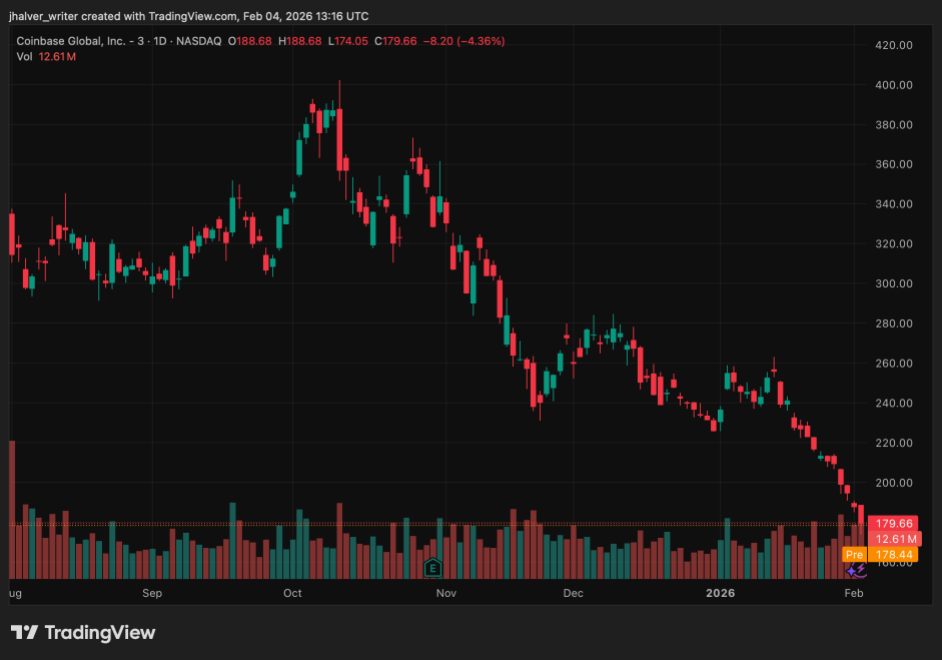
COIN's price trends to the downside on the daily chart. Source: COINUSD on Tradingview

Nevada Challenges Coinbase’s Prediction Markets

Coinbase launched its US prediction markets last month through a partnership with Kalshi, a Commodity Futures Trading Commission-regulated designated contract market.

The exchange maintains that these event-based contracts are federally regulated derivatives, not gambling products. Nevada officials disagree, saying contracts linked to sporting outcomes and elections constitute wagering activity and therefore require state gaming licenses.

In its filings, the board also raised concerns about age restrictions, noting that Coinbase allows users aged 18 and older to trade event contracts, below Nevada’s legal gambling age of 21.

Regulators said the platform’s continued operation creates ongoing harm and gives Coinbase an unfair advantage over licensed sportsbooks that must meet strict compliance, tax, and location requirements.

The action against Coinbase follows similar moves by Nevada against other prediction market platforms. A state court recently granted a temporary restraining order blocking Polymarket from offering event-based contracts to Nevada residents.

Legal Pressure Weighs on Coinbase Stock

The Nevada lawsuit has added to broader pressure on Coinbase shares. The stock fell 4.36% on Wednesday, extending its losing streak to eleven consecutive sessions and pushing it to its lowest level since April.

Investor sentiment has been weighed down by regulatory risks and a recent disclosure of an insider-related data breach affecting roughly 30 clients.

Coinbase has pushed back against state-level actions elsewhere, filing federal lawsuits against gaming regulators in Connecticut, Michigan, and Illinois. The company argues that prediction markets fall exclusively within the CFTC’s jurisdiction and that state enforcement efforts unlawfully restrict federally regulated products.

Cover image from ChatGPT, COINUSD chart on Tradingview

Domande pertinenti

QWhy did the Nevada Gaming Control Board file a complaint against Coinbase?

AThe Nevada Gaming Control Board filed a complaint because it argues that Coinbase's prediction market products tied to sports and elections constitute unlicensed gambling under Nevada law and should be regulated by the state gaming authority, not as federal derivatives.

QWhat is the impact of the Nevada enforcement action on Coinbase's stock?

AThe Nevada lawsuit contributed to a 4.36% decline in Coinbase's stock on Wednesday, extending its losing streak to eleven consecutive sessions and pushing it to its lowest level since April.

QHow does Coinbase defend its prediction market products against state regulators?

ACoinbase maintains that its event-based contracts are federally regulated derivatives overseen by the CFTC, not gambling products, and it has filed federal lawsuits arguing that state enforcement efforts unlawfully restrict these federally regulated products.

QWhat specific concerns did Nevada regulators raise about Coinbase's platform besides licensing?

ANevada regulators raised concerns about age restrictions, noting that Coinbase allows users aged 18 and older to trade, which is under Nevada's legal gambling age of 21, and that it gives Coinbase an unfair advantage over licensed sportsbooks that must meet strict compliance requirements.

QHas Nevada taken similar actions against other prediction market platforms besides Coinbase?

AYes, the Nevada Gaming Control Board has taken similar action against other platforms. A state court recently granted a temporary restraining order blocking Polymarket from offering event-based contracts to Nevada residents.

Letture associate

Why Is the World Nervous About Japan Raising Interest Rates?

In June 2026, the Bank of Japan raised its policy rate to 1%, marking its first hike to this level since 1995. While this rate remains low compared to global peers like the US and Europe, the move signals a profound shift for a nation that has been a global source of ultra-cheap funding for decades. Japan's long-standing near-zero or negative interest rates had facilitated massive "yen carry trades," where international investors borrowed low-cost yen to invest in higher-yielding assets worldwide, such as US tech stocks and emerging market bonds. This made Japan a critical, often overlooked, source of global liquidity. Japan's ultra-loose policy stemmed from structural challenges post-1990s asset bubble: aging demographics, chronic low inflation/deflation, and high public debt. Recent shifts, including sustained wage growth (exceeding 5% in recent years) and inflation consistently above the 2% target, have created a "wage-price spiral" possibility, prompting the policy normalization. The global market's concern lies not in the absolute rate but in the potential unwinding of the yen carry trade. As Japanese borrowing costs rise, the economics of these leveraged global investments change, potentially triggering deleveraging and capital outflows from risk assets. Market anxiety focuses on the end of a thirty-year consensus that Japan would perpetually provide cheap funding. Ultimately, the global impact will depend on the interplay with US monetary policy. While Japan is tightening, the significant interest rate differential with the US remains. The key future dynamic is whether simultaneous Japanese hikes and eventual US rate cuts will narrow this gap, forcing a major recalibration of global capital flows and asset pricing built on an era of abundant, cheap yen liquidity.

marsbit4 h fa

Why Is the World Nervous About Japan Raising Interest Rates?

marsbit4 h fa

Trading

Spot
Futures
活动图片