Coinbase secures U.K MiFID license to take next step in multi-asset investing

ambcryptoPubblicato 2026-07-07Pubblicato ultima volta 2026-07-07

Introduzione

Coinbase has obtained a MiFID license in the UK, marking a significant step in its expansion beyond cryptocurrency into a multi-asset investment platform. This approval allows the exchange to offer UK investors derivative contracts, equities, and other traditional investments alongside digital assets. The move strengthens Coinbase's regulatory standing and institutional appeal, positioning it to capture a greater share of regulated investment activity. The license reflects a broader market shift where regulatory clarity is reshaping institutional participation in digital assets. Surveys indicate a strong intent among UK and European institutions to increase crypto allocations. As more regulated entities enter, market liquidity is expected to deepen, investment products to diversify, and competition to intensify, further integrating digital assets into mainstream finance. Coinbase's expansion is evidence of the growing convergence between traditional finance and digital assets, with regulated platforms increasingly uniting them within a single investment ecosystem.

Coinbase’s latest regulatory approval reflects a broader shift as crypto exchanges compete to become full-service financial platforms. Instead of just developing their crypto trading capabilities, Coinbase has positioned itself to capture a greater portion of regulated investment activity.

Coinbase will now be able to provide investors in the U.K with derivative contracts, equities, and other investments alongside its digital asset offerings. This expands Coinbase’s target market while further increasing its appeal to institutions.


SOurce: Coinbase on X

Coinbase’s new license also supports its existing crypto exchange registration in the U.K and money transmission approval. Simply put, this update improves Coinbase’s regulatory presence.

Ultimately, the success of Coinbase’s expansion will depend on greater trading volume, strong institutional participation, and a higher level of client engagement across multiple asset classes to result in long-term growth in revenue.

Regulatory clarity reshapes institutional participation

Coinbase’s U.K approval comes on the back of regulations beginning to reshape how institutional capital approaches digital assets. This, although the U.K Financial Conduct Authority (FCA) has indicated that its approved framework is an attempt to provide clarity.

Here, it is also worth looking at the regulatory requirements for exchanges, custodian entities, and investment firms through which exchanges operate until it fully goes into effect in October 2027.
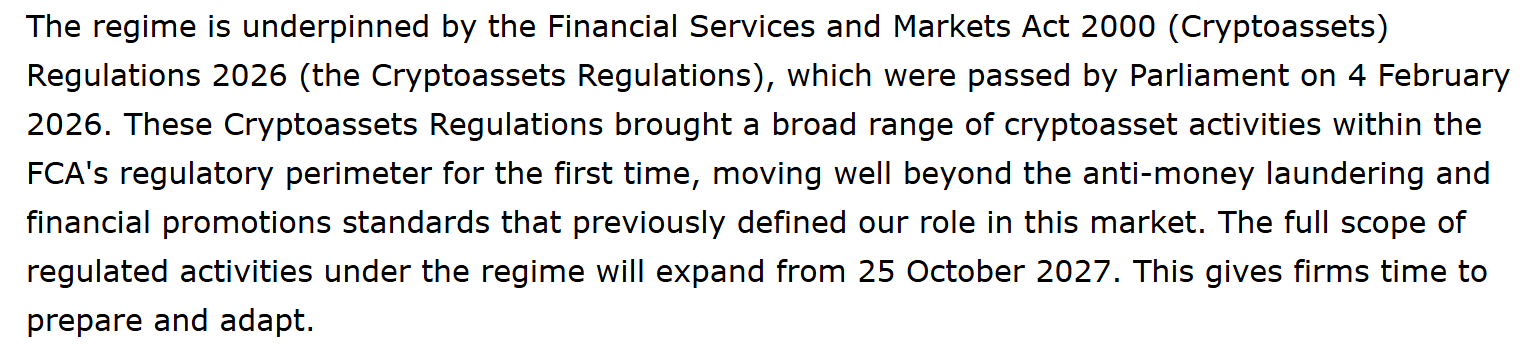
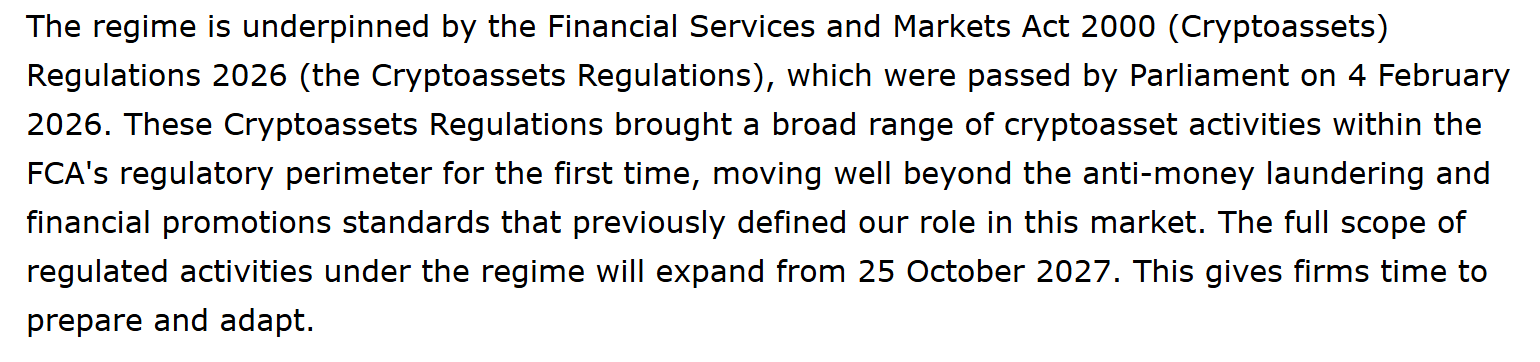
Source: FCA.org

The implications of this are much broader than simply providing clarity on regulatory issues. The establishment of such regulations will create lower entry points for regulated institutional investors and encourage existing financial service companies to begin offering additional services related to digital assets.

In fact, surveys already show 73-77% of UK and European institutions plan to increase crypto allocations this year, with those allocating more than 5% of assets expected to rise from 11% to 28%.
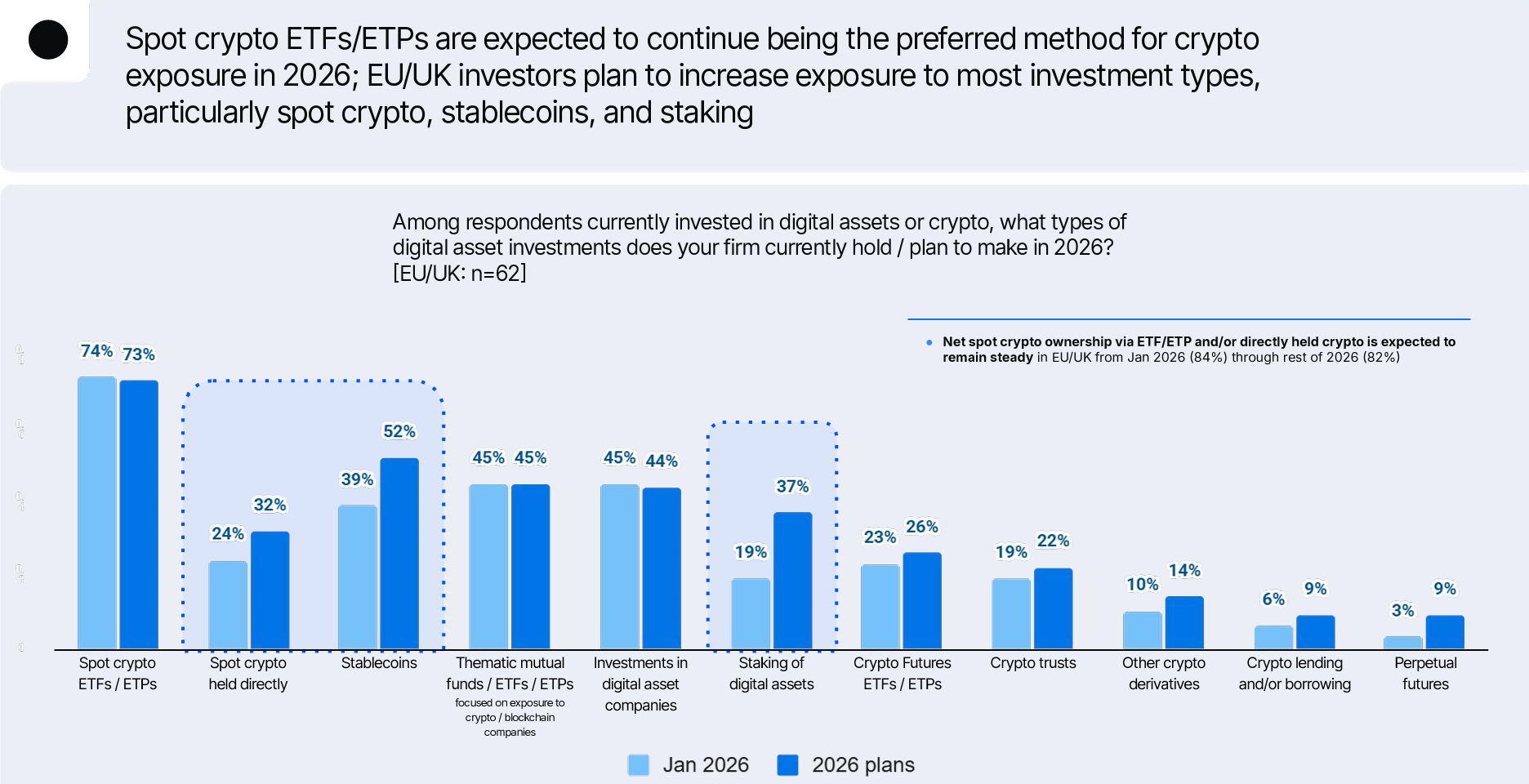
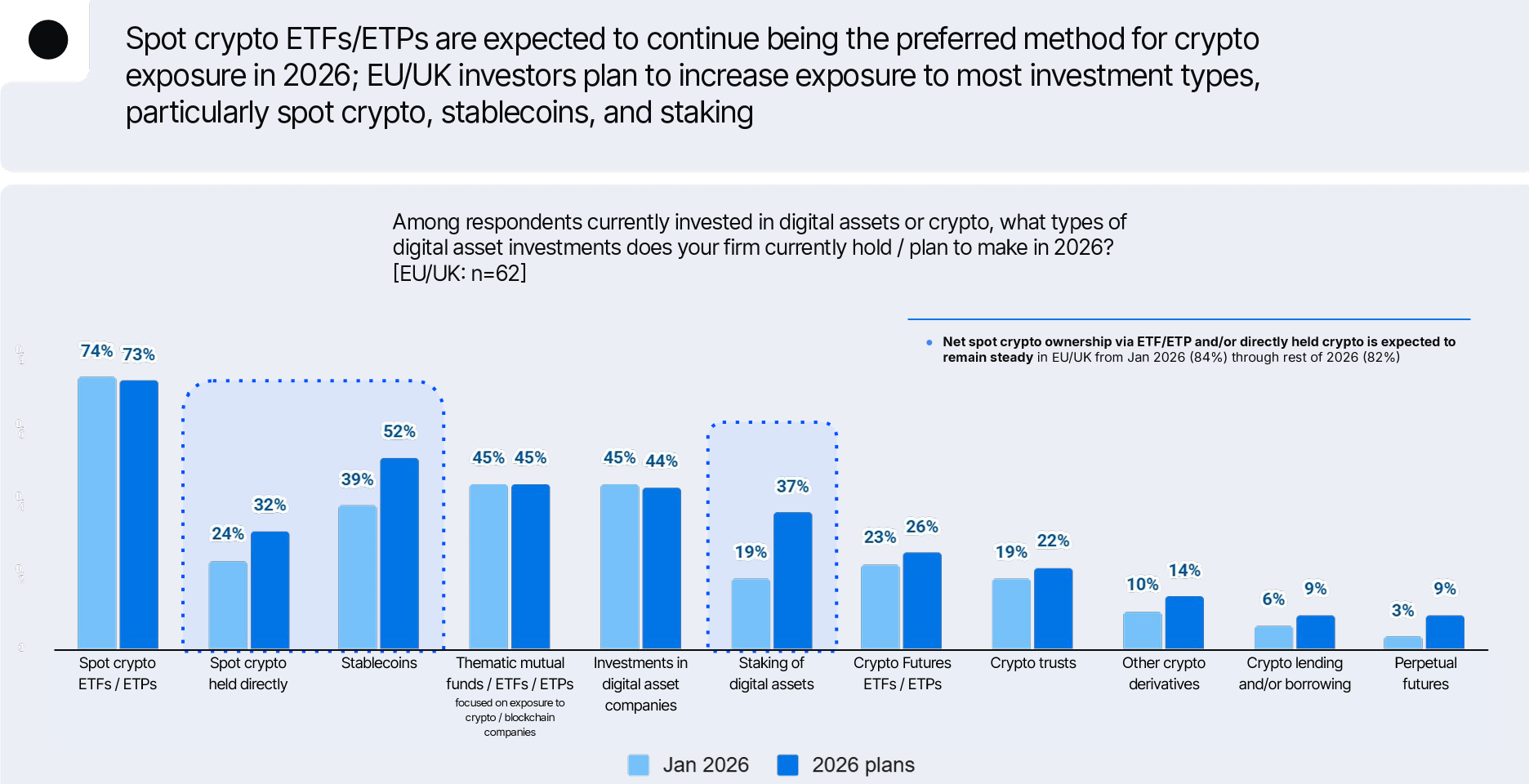
Source: EY Parthenon

As more regulated participants enter the market, liquidity should deepen, investment products should diversify, and competition among service providers could accelerate. These developments would gradually make digital assets a more integrated component of mainstream financial markets.

Traditional finance and crypto are increasingly operating within the same investment ecosystem rather than separate markets. Hence, multi-asset platforms are expanding while institutional infrastructure strengthens itself.

Cumulatively, Coinbase’s U.K expansion is evidence of a broader market shift. Regulated platforms are now increasingly uniting traditional finance and digital assets within one investment ecosystem.


Final Summary

  • Coinbase’s U.K expansion broadens regulated access, supporting deeper institutional participation across digital asset markets.
  • It is also evidence of the growing convergence between digital assets and traditional financial markets.


Domande pertinenti

QWhat is the significance of Coinbase obtaining the U.K. MiFID license?

AIt allows Coinbase to offer a wider range of financial products, including derivative contracts and equities, alongside its digital asset services. This positions Coinbase as a multi-asset financial platform, expands its target market in the U.K., and enhances its appeal to institutional investors by improving its regulatory standing.

QWhat are the key factors for the success of Coinbase's expansion according to the article?

AThe success of Coinbase's expansion will depend on greater trading volume, strong institutional participation, and a higher level of client engagement across multiple asset classes, which are expected to drive long-term revenue growth.

QHow do regulations, like the U.K.'s framework, impact institutional participation in digital assets?

ARegulations provide clarity and lower entry points for regulated institutional investors. They encourage existing financial service companies to offer digital asset services, leading to increased institutional allocations. This deepens market liquidity, diversifies investment products, and accelerates competition, helping to integrate digital assets into mainstream finance.

QWhat does the article say about the trend of traditional finance and crypto markets?

AThe article states that traditional finance and crypto are increasingly operating within the same investment ecosystem rather than as separate markets. There is a growing convergence, evidenced by multi-asset platforms expanding and institutional infrastructure strengthening, which unites these assets within a single ecosystem.

QWhat statistic is mentioned regarding institutional plans for crypto allocation in the UK and Europe?

ASurveys show that 73-77% of UK and European institutions plan to increase their crypto allocations this year. Furthermore, the proportion of institutions allocating more than 5% of their assets to crypto is expected to rise from 11% to 28%.

Letture associate

Illegal Mining in Russia: Why Home Farms Are Easy to Detect

Illegal cryptocurrency mining in Russia is becoming increasingly risky, especially in regions where such activity is banned. Energy supply companies detect atypical, sustained electricity consumption in residential areas, triggering checks. They monitor anomalous usage, report data to tax authorities, and forward information to prosecutors. Home mining farms give themselves away through a characteristic load pattern: an apartment consumes electricity evenly and almost around-the-clock, making such deviations obvious in statistics. Mining remains legal only where not prohibited and when electricity is consumed under a proper contract, metered, and paid for. Income from mining is subject to taxation. To operate legally, registration or notification is required as per regulations. Current consequences for illegal mining involve applying existing rules: penalties for illegal grid connections, unmetered consumption, causing damage to energy companies, and tax evasion. Equipment may be confiscated. While specific administrative and criminal liability for mining itself is still being finalized, offenders face fines, damage claims, and potential criminal charges. Key illegal schemes include mining in prohibited regions, using illegal grid connections or unmetered power, and not paying taxes on mining income. The main damages involve losses for energy companies, grid overload, and unpaid taxes. As of now, bans on crypto mining are in effect in Moscow, the Moscow region, parts of the Kursk region, and several other territories (including parts of the North Caucasus, certain Ukrainian territories under Russian control, and areas in Southern Siberia and the Far East) until at least March 15, 2031, primarily to mitigate electricity deficit risks. The primary reason home mining is easily detectable is its non-typical power consumption pattern: equipment runs almost constantly, creating a stable load that significantly differs from normal household usage, making concealment difficult.

cryptonews.ru16 min fa

Illegal Mining in Russia: Why Home Farms Are Easy to Detect

cryptonews.ru16 min fa

Robinhood CEO Interview: Meme Coin Boom Was Unexpected, My Investment Portfolio Is Quite Diverse

Interview with Robinhood CEO Vlad Tenev on The Iced Coffee Hour podcast. Tenev discussed Robinhood Chain, calling it the future of finance. He highlighted its recent launch, rapid growth in TVL, and support for tokenized stocks tradable globally. He noted the unexpected popularity of meme coins on the chain and unique product combinations created by developers. Tenev addressed concerns about AI and stock market bubbles, stating his young user base often views market dips as opportunities. He acknowledged the complexity of balancing investments in chips and energy sectors. He identified optimizing the unified user experience across Robinhood's expanding product lines as the company's biggest current challenge. Responding to criticism, Tenev explained Robinhood's focus on three areas: improving core infrastructure, adding standard financial products it currently lacks, and pioneering innovations like prediction markets and AI-agent trading. He emphasized user personalization, allowing features like prediction markets to be hidden. On personal investment, Tenev stated his portfolio is diversified and he enjoys cryptocurrency trading. He expressed long-term optimism about Bitcoin's unique first-mover status and brand strength, while avoiding specific price predictions. In his personal life, Tenev focuses on teaching his children math, maintaining his health through sauna and cold therapy routines, and building better sleep habits by journaling and reading physical books before bed.

Odaily星球日报21 min fa

Robinhood CEO Interview: Meme Coin Boom Was Unexpected, My Investment Portfolio Is Quite Diverse

Odaily星球日报21 min fa

Trading

Spot
活动图片