Coinbase Secures Conditional OCC Approval For National Trust Charter – Details

bitcoinistPubblicato 2026-04-03Pubblicato ultima volta 2026-04-03

Introduzione

Coinbase, the largest US crypto exchange, has received conditional approval from the Office of the Comptroller of the Currency (OCC) to establish Coinbase National Trust Company. This marks a significant step toward becoming a federally regulated crypto custodian. The company clarified that this charter does not make it a commercial bank, and it will not take retail deposits or engage in fractional reserve banking. Instead, it aims to bring federal regulatory uniformity to its custody and market infrastructure business. This approval validates Coinbase's regulatory approach and allows it to expand its reach and conduct new business. It also signals a shift in the federal regulatory framework to align with the evolving crypto landscape. However, the move faces opposition from US banks and lawmakers, including the American Bankers Association and Senator Elizabeth Warren, who have raised concerns about regulatory arbitrage and called for delays until clearer rules are established. Coinbase joins other firms like Ripple, Circle, and Fidelity that have also received similar OCC approvals.

Coinbase, the largest crypto exchange in the US, has achieved a major milestone after securing a key approval from the main banking regulator, which could unlock a broader market for the company.

Coinbase Wins Major OCC Approval

On Thursday, Coinbase announced it received conditional approval from the Office of the Comptroller of the Currency (OCC) to charter Coinbase National Trust Company, marking a crucial step to becoming a federally regulated crypto custodian.

In the official statement, Coinbase outlined the scope of the charter, explaining that the company is not becoming a commercial bank and will not take retail deposits or engage in fractional reserve banking.

“This charter is about bringing federal regulatory uniformity to the custody and market infrastructure business we have been building for years. The OCC charter was designed precisely for this purpose — to provide clear oversight over assets in safekeeping — and that is exactly how we intend to use it,” the announcement read.

The conditional OCC approval allows Coinbase to “build the next chapter of finance,” the company noted, bolstered by the regulatory confidence, and validates its approach of “engaging with regulators, earning their trust, and operating to the highest standards.”

Moreover, the approval signals that the federal regulatory framework is transforming to align with the evolving landscape that crypto has been gradually shaping.

In an interview, Greg Tusar, Co-CEO of Coinbase Institutional, affirmed that “the ability to have a federal framework for our custody business is important,” adding that “this is about us growing our reach and being able to conduct new business that we may not have been able to before.”

Crypto Trust Banks Face Opposition

Coinbase applied for the charter last October and has now joined the list of firms that have received the main banking regulator’s approval. As reported by Bitcoinist, the OCC approved conditional bank charters for Ripple, Circle, BitGo, Paxos, and Fidelity in December.

In February, stablecoin platform Bridge, owned by Stripe, and crypto exchange Crypto.com announced they had also secured the OCC’s conditional approval to establish a national trust bank. However, US banks have raised concerns that the approvals could blur the lines between banking activities and lead to regulatory arbitrage.

Nearly two months ago, the American Bankers Association (ABA) asked the banking regulator to postpone its review of applications for crypto bank charters, suggesting that the approvals should wait until key regulatory uncertainties are resolved.

In its letter, ABA called for patience as emerging regulatory frameworks take shape, proposing that the review process continue when the US Congress completes the rules that will ultimately govern many recent applicants for the OCC’s charter.

The banking lobby cited uncertainty surrounding emerging business models, the need for increased transparency in the charter application and decision-making processes, and the absence of finalized federal oversight as key reasons for the proposed delay.

US Senator Elizabeth Warren also sent a letter to Comptroller Jonathan Gould asking the banking regulator to pause its review of the Trump Family’s main crypto venture, World Liberty Financial, which applied for a national trust charter in January.
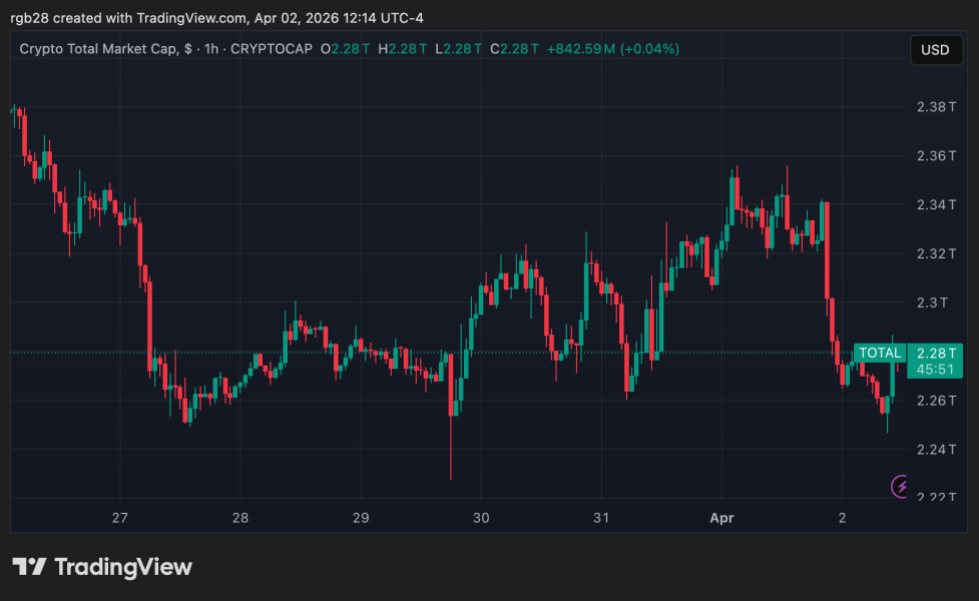
Total crypto market capitalization is at $2.28 trillion on the one-week chart. Source: TOTAL on TradingView


Domande pertinenti

QWhat is the significance of Coinbase securing conditional approval from the OCC?

AIt allows Coinbase to charter the Coinbase National Trust Company, marking a crucial step toward becoming a federally regulated crypto custodian and unlocking a broader market for the company.

QWhat does the OCC charter enable Coinbase to do, according to the company's statement?

AThe charter brings federal regulatory uniformity to Coinbase's custody and market infrastructure business, providing clear oversight over assets in safekeeping without engaging in commercial banking or taking retail deposits.

QWhich other companies have received conditional bank charters from the OCC, as mentioned in the article?

ARipple, Circle, BitGo, Paxos, Fidelity, Bridge (owned by Stripe), and Crypto.com have also secured conditional approval from the OCC for national trust bank charters.

QWhat concerns have US banks raised regarding the OCC's approval of crypto trust charters?

AUS banks are concerned that the approvals could blur the lines between banking activities and lead to regulatory arbitrage.

QWhy did the American Bankers Association (ABA) ask the OCC to postpone its review of crypto bank charter applications?

AThe ABA cited uncertainty surrounding emerging business models, the need for increased transparency in the application process, and the absence of finalized federal oversight as key reasons for the proposed delay.

Letture associate

Wall Street Rushes into Ethereum, but Has It Become a Castoff for Investors?

Wall Street Embraces Ethereum, But Investors Remain Wary Ethereum is gaining significant institutional adoption from major financial firms like JPMorgan Chase, Robinhood, and Morgan Stanley, which are launching products and building on the network. A new non-profit, Ethereum Institutional, has also been formed to accelerate enterprise use. Technically, Ethereum co-founder Vitalik Buterin has unveiled a major multi-year upgrade plan called "Lean Ethereum," aiming to enhance privacy, security, and quantum resistance. Despite these positive fundamentals, the market reaction has been negative. ETH's price remains around $1,900, down over 60% from its all-time high. Analysts cite weak investor demand and persistent outflows from spot Ethereum ETFs. Citi has downgraded its 12-month price target to $2,240. A key challenge is the decoupling of network activity from ETH's value accrual. While Layer 2 scaling solutions have successfully reduced costs and increased throughput, most transactions now occur off the mainchain. This reduces the fee revenue and ETH burn on Ethereum itself, benefiting users but creating uncertainty for ETH holders. Price predictions are highly divergent, ranging from Citi's conservative $2,000+ outlook to StanChart's $4,000 by 2026 and even a long-term $25,000 forecast from Tom Lee. The consensus is that while Ethereum is increasingly likely to become core financial infrastructure, the extent to which ETH token holders will benefit remains unclear.

marsbit5 min fa

Wall Street Rushes into Ethereum, but Has It Become a Castoff for Investors?

marsbit5 min fa

Trading

Spot
活动图片