Claude Engineer Finally Unveils Fable 5's Ultimate Strategy, Teaching You How to Bridge the Information Gap with AI Models

marsbitPubblicato 2026-07-06Pubblicato ultima volta 2026-07-06

Introduzione

This article, titled "Claude Engineer Finally Releases Fable 5 'Skill-Burning' Guide, Teaching How to Bridge the Information Gap with Models," details a blog post by Claude Code engineer Thariq Shihipar. The core concept is the "information gap" or "unknowns"—the disconnect between a user's instructions (the "map") and the actual task requirements (the "territory"). The article argues that with powerful models like Claude Fable 5, work quality depends on the user's ability to identify and clarify these unknowns. Shihipar categorizes unknowns into four types: Known Knowns (explicit instructions), Known Unknowns (awareness of gaps), Unknown Knowns (implicit, unstated knowledge), and Unknown Unknowns (unforeseen issues). The blog provides a framework for addressing these gaps throughout the workflow: * **Before Implementation:** Techniques include "Blindspot Scanning" to uncover Unknown Unknowns, brainstorming/prototyping for visual or complex tasks, having Claude ask clarifying questions, using reference code/examples, and creating implementation plans. * **During Implementation:** Maintaining an "implementation notes" file for Claude to document deviations and decisions made due to encountered edge cases. * **After Implementation:** Creating summary documents for review and having Claude generate quizzes to ensure the user fully understands the completed changes. The article concludes that as models become more capable, the key to success is systematically discovering...

The fate of Fable 5 has been as mystifying as its model's name since its release.

From the highly anticipated "AI's Defining Moment" to being forced offline by a U.S. government ban, and then restricting access to non-Americans, it has captivated global attention.

Now, the storm has gradually subsided. Ultimately, models must return to productivity.

To this end, Claude Code engineer Thariq Shihipar published a detailed blog post on social media, outlining techniques for using Fable 5.

This article addresses a long-standing question. With models having evolved to such powerful capabilities, why do I still feel they perform tasks incorrectly when I use them?

Thariq's blog post is an eye-opener. In short: there is an information gap between humans and models, a disparity between the prompts, Skills, and context provided by the user and the actual task execution.

Thus, the entire blog post teaches you how to bridge this information gap. Below, Machine Heart provides the full blog post for our readers.

Blog Title: A Field Guide to Fable: Finding Your Unknowns

Blog Link: https://x.com/trq212/status/2073100352921215386

Working with Claude Fable 5 constantly reminds me of an old adage: the map is not the territory.

The "map" is the representation of the work to be done—my prompts, skills, and context—what I give to Claude. The "territory" is where the work actually needs to happen: the codebase, the real world, and the real constraints within.
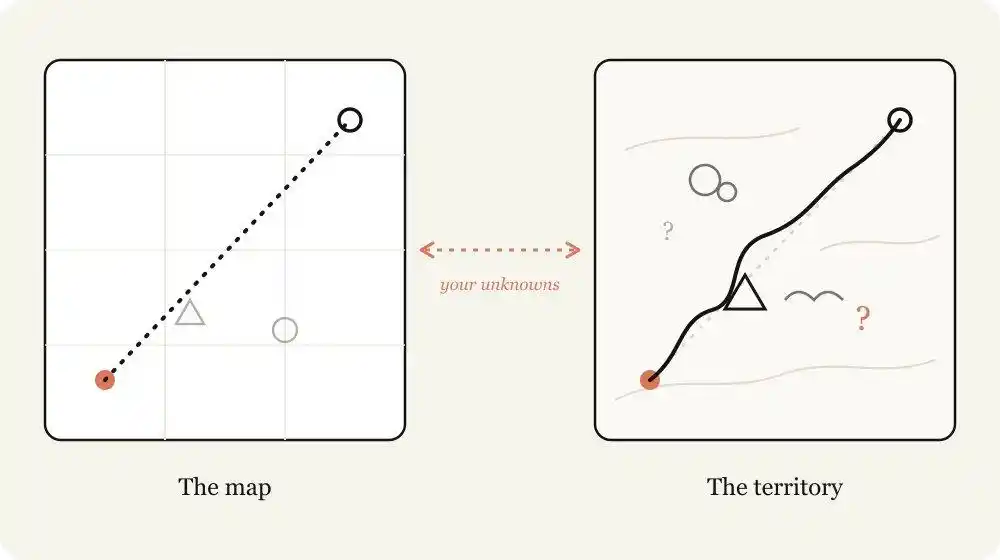
I call the gap between the map and the territory "unknowns." When Claude encounters an unknown, it must make a decision based on its best guess of my intent. The more complex the work, the more unknowns Claude might encounter.

Fable is the first model where I've strongly felt that the bottleneck of work quality depends on my ability to clarify its unknowns.

Importantly, mere upfront planning isn't always enough. You might discover unknowns deep in implementation; you might also find these unknowns point to the fact that you should be solving the problem in a completely different way.

I find that collaborating with Fable is essentially an iterative process of discovering unknowns before, during, and after implementation.

The author provides some examples of discovering "unknowns." Readers are encouraged to review them alongside the full article.
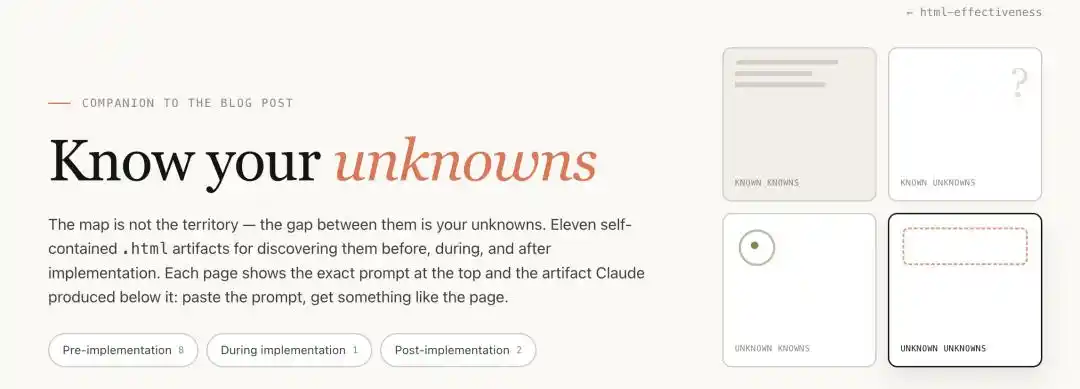
Example Link: https://thariqs.github.io/html-effectiveness/unknowns/

Know Your Unknowns

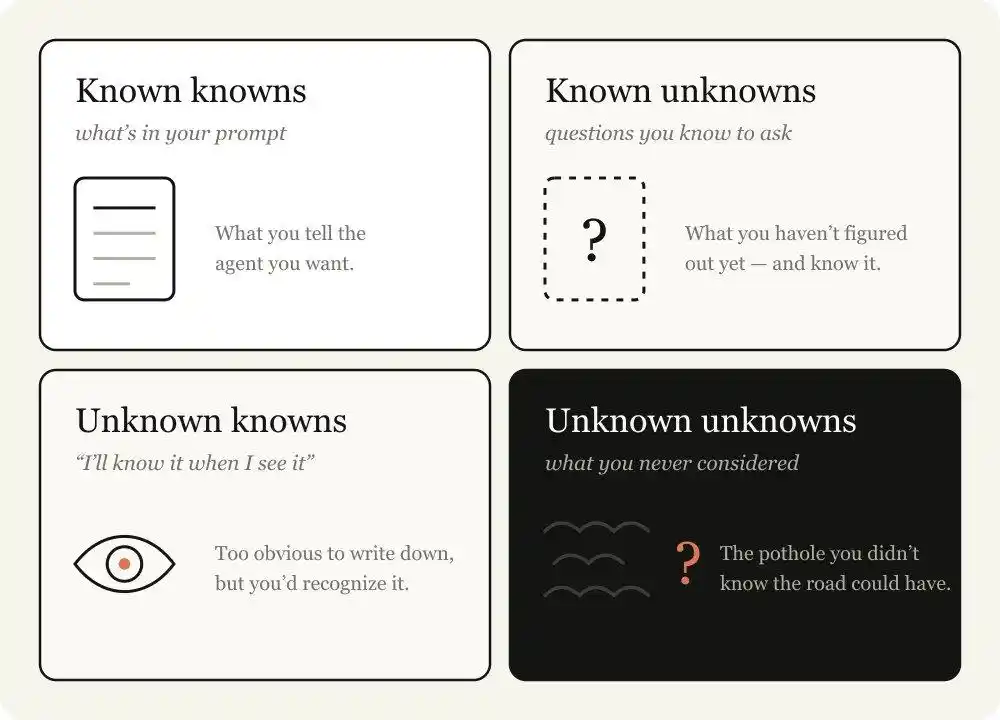
What are unknowns? When I approach Claude with a problem, I typically break it down from four perspectives:

Known knowns: This is basically what I write in the prompt. I tell the agent what I want.

Known unknowns: What things haven't I figured out yet, but I know I haven't figured them out?

Unknown knowns: What things are so obvious to me that I wouldn't even write them down, but I'd recognize them if I saw them?

Unknown unknowns: What things haven't I considered at all? What knowledge do I not yet know I don't know? Do I know how well something can be done?
The most skilled agent-style programmers tend to have relatively fewer unknowns. They know exactly what they want, in great detail. They are highly synchronized with both the codebase and model behavior.

But they also presuppose the existence of unknowns. In many ways, reducing and planning for your unknowns ahead of time is the core skill of agent-style programming. Fortunately, this is a skill that can be honed by collaborating with Claude.

Help Claude Help You
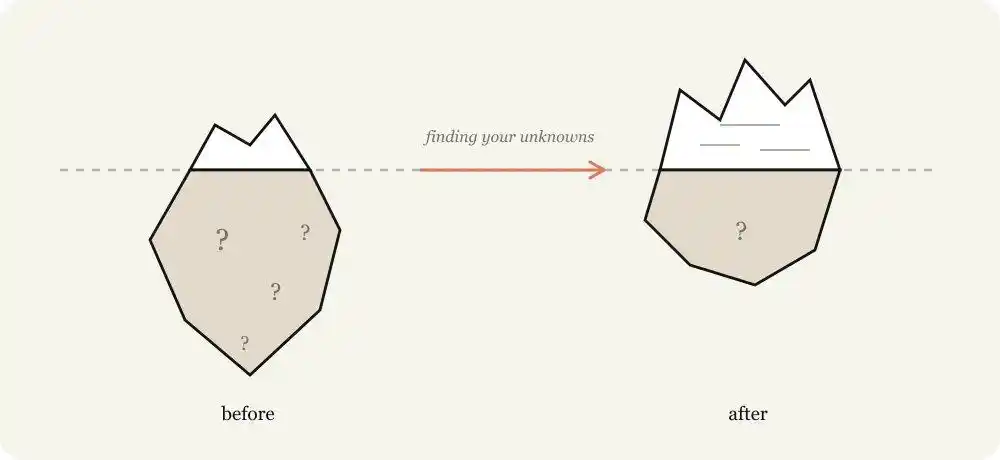
Giving instructions to Claude is a delicate balance. If you're too specific, Claude will follow your instructions strictly, even if pivoting to a different approach might be better. If you're too vague, Claude will often make choices and assumptions based on industry best practices, which may not be right for your task.

Both can fail when you haven't adequately considered your unknowns. You don't know when the road ahead is fraught with obstacles, nor do you know when it's actually smooth, but you still want Claude to make adjustments if necessary.

Claude can help you discover unknowns faster. It can search your codebase and the internet incredibly quickly, and it possesses more general knowledge on most topics than you do. It can also iterate faster from failures.

The most important part of this process is giving Claude enough starting context. For example, tell it what step you're currently thinking about; explain your level of familiarity with the problem and codebase; let it collaborate with you as a thinking partner.

I've previously written about generating HTML with Claude. In almost all those scenarios, the HTML artifact is the best way to visualize and express ideas.

In this article, I'll detail some patterns I use to discover these unknowns. I don't use all these tricks every time, but having them as a toolkit to call upon is incredibly useful.
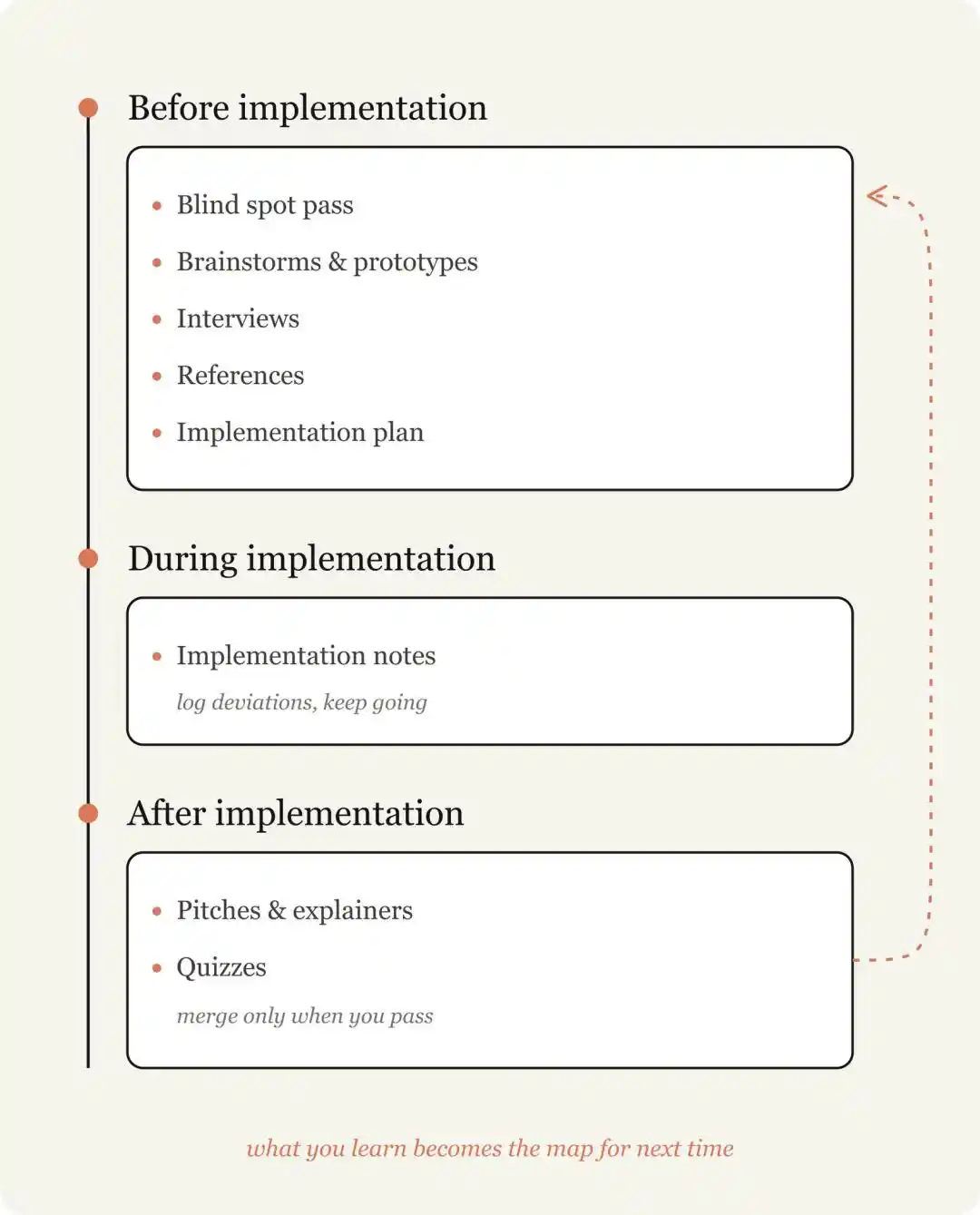
Before Implementation

Blindspot Scan

One of the most useful things when starting work is understanding your blind spots. For example, if you're writing a feature in a new module of the codebase, or having Claude handle a type of work you're unfamiliar with, like iterating on a design, you're likely to have many "unknown unknowns."

You might not know what questions to ask, what constitutes "good," what historical work has been done before, or what pitfalls to avoid.

To do this, you can ask Claude to help find your "unknown unknowns" and explain them. I like to use the terms "blindspot pass" and "unknown unknowns" directly. Usually, it's also important to tell it who you are and what you know.

Example prompts:

"I'm adding a new identity authentication provider, but I know nothing about the auth module in this codebase. Can you do a blindspot pass, help me find relevant unknown unknowns, and assist me in writing better prompts for you?"

"I don't understand color grading, but I need to grade this video. Can you teach me to understand my unknown unknowns about color grading so I can write better prompts?"

Brainstorming & Prototyping

When I'm working in a domain with many "unknown knowns"—things I only know how to define standards for once I see them—I have Claude brainstorm and prototype with me.

Identifying and expressing these "unknown knowns" early in the prototyping stage is valuable because discovering them during implementation often carries a higher relative cost. Small changes in features or specifications can lead to vastly different code implementations, and it's harder to get the agent to backtrack on previous changes.

For example, you might just want to see what adding a button looks like in a certain framework, without actually hooking up the backend routes or maintaining extra frontend state.

Visual design is something I find hard to articulate clearly, but I know what I want when I see it. In such cases, I ask Claude to provide several different design directions for an artifact.

I also start almost every coding session with exploration or brainstorming. This helps me define the project scope with clear intent. Claude often discovers high-value approaches I would have missed, but it can also miss the forest for the trees. Brainstorming prevents me from setting the scope too narrowly or too broadly from the start.

Example prompts:

"I want to make a dashboard for this dataset, but I have no visual taste and don't know what's possible. Help me create an HTML page with 4 vastly different design styles so I can provide feedback based on the results."

"Before wiring anything up, create a standalone HTML file with fake data to simulate the new editor toolbar. I want to give feedback on the layout first before you touch the real app."

"Here's my rough problem: user churn after completing onboarding. Search the codebase and brainstorm 10 places we could intervene, from lowest cost to most ambitious. I'll tell you which directions feel better."

Reverse Interview

After enough brainstorming, I usually still have unknowns.

In such cases, I have Claude interview me around anything unclear or ambiguous. When having Claude interview you, try to provide context about the problem so it can ask more targeted questions. Here are some examples.

Example prompts:

"Please ask me one question at a time, interviewing me around any points of ambiguity. Prioritize questions where my answer would change the architectural design."

Reference Materials

Sometimes, you can't describe in detail what you want. Maybe you lack the language to express it, or it's too complex to describe fully within a reasonable time.

In such cases, the best answer is reference materials. You can provide diagrams, documentation, or images, but the best reference is often source code.

If you have a library that implements a feature in a specific way, or a design component you really like, just point Fable to the corresponding folder and tell it what to look at. Even if the reference code is in another language, that's okay.

This is also how Claude Design works. You don't necessarily have to give it a file, though you can. You can point it to a module on a website you like, and it will read the underlying code, not just a screenshot. This provides richer detail—markup structure, component organization, and how the component is actually built.

Example prompts:

"This Rust crate in vendor/rate-limiter implements exactly the exponential backoff retry behavior I want. Please read it and reimplement the same semantics in our TypeScript API client."

Implementation Plan

When I feel ready to start implementation, I usually have Claude first compile an implementation plan for my review, focusing on parts most likely to change, such as data models, type interfaces, or UX flows. This lets Claude surface areas I might indeed need to adjust ahead of time.

Example prompts:

"Write an implementation plan in HTML, but start by presenting the decision points I'm most likely to change: data model changes, new type interfaces, and any user-facing content. Put mechanical refactoring at the bottom; I trust you can handle that part."

During Implementation

Implementation Notes

When satisfied with the plan, I start a new session and pass the relevant artifacts into the prompt. For example, I might pass a specification file and a prototype, then ask the agent to implement it.

But the truth is, no matter how much you plan, unknown unknowns will always lurk. The agent might discover mid-work that it must take a different approach due to an edge case in the code.

I ask Claude Code to maintain a temporary implementation-notes.md file, or an .html file, to record the decisions it makes, so we can learn from them for the next attempt.

Example prompts:

"Please maintain an implementation-notes.md file. If you encounter an edge case forcing you to deviate from the original plan, choose the conservative option, record the reason under 'Deviations,' and continue."

After Implementation

Pitch & Explanation Documentation
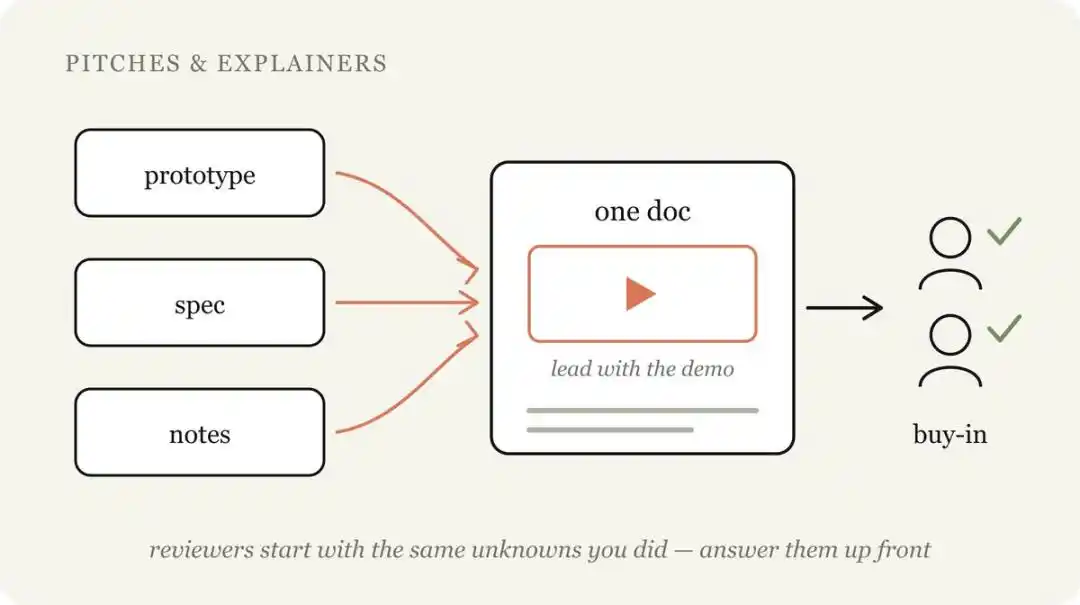
One of the most important things when shipping something is getting others' understanding, support, and approval. Building pitch and explanation artifacts into the final documentation helps:

Accelerate reviewers' understanding when they start with the same unknowns you had.

Accelerate approval from experts when they want to confirm you've considered the unknowns and common failure points they would have foreseen.

Example prompts:

"Package the prototype, spec, and implementation notes into a single document I can directly post on Slack to seek support. Start with a demo GIF."

Quizzes

After a long work session, Claude might have accomplished more than I realize. Just looking at the code diff often gives me only a shallow understanding of what happened, as much behavior depends on existing code paths.

Having Claude test me on the changes after providing substantial context helps me truly understand what occurred. I only merge the code after perfectly passing the quiz.

Example prompts:

"I want to ensure I understand everything that happened in this change. Please give me an HTML report to help me read and understand these changes, including context, intuitive explanations, what was done concretely, etc., and attach a quiz at the bottom that I must pass."

Putting It All Together: The Fable Launch Example

The launch video for Fable was entirely edited by Claude Code. This was a completely new field for me, and I am by no means an expert.

So I started with what I knew. I knew Claude could use code to edit videos and transcribe, but I wasn't sure if its accuracy was sufficient. So I had Claude explain how transcription technologies like Whisper work and whether I could use ffmpeg to accurately cut filler words like "um" or long pauses.

I wanted Claude to create a UI synchronized with my spoken words in time, but I wasn't sure if it could. So I had Claude create a video prototype using Remotion and transcript text to see if the idea was feasible.

Finally, the video itself looked somewhat dark. I knew this was a color grading issue, but I didn't truly understand what color grading was. My first attempt was to have Claude make a few versions for me to choose from, but I realized that when it comes to color grading, I didn't know what "good" was. So, instead of having it generate versions blindly, I had Claude teach me color grading to discover my unknowns.

Matching the Map to the Territory

The more powerful the model, the more you can accomplish with the right approach. When a long-cycle task returns an incorrect result, it likely means you need to spend more time defining your unknowns or creating an implementation plan that allows Claude to navigate these unknowns flexibly.

Every explanation document, brainstorming session, interview, prototype, and reference material is a low-cost way to discover things you didn't know before the cost of fixing them becomes high.

So, when starting your next project, first let Claude help you find your unknowns.

This article is from the WeChat public account "Machine Heart," edited by the Machine Heart Editorial Department.


Crypto di tendenza

Domande pertinenti

QWhat is the core issue that prevents AI models like Claude Fable 5 from performing tasks correctly, according to the article?

AAccording to the article, the core issue is the information gap or 'unknowns' between the user (the map) and the actual task execution environment (the territory). This gap exists in the prompts, skills, and context provided versus what is truly needed in the codebase or real world.

QWhat are the four categories of 'unknowns' mentioned in Thariq Shihipar's framework for breaking down a problem?

AThe four categories are: Known Knowns (what is written in the prompt), Known Unknowns (things the user knows they haven't figured out), Unknown Knowns (things obvious to the user that aren't written down but can be recognized), and Unknown Unknowns (things the user hasn't considered or knowledge they don't know they lack).

QWhat is one specific technique recommended for the 'Before Implementation' phase to help identify blind spots?

AOne recommended technique is a 'Blindspot Scan.' The user can ask Claude to help identify 'Unknown Unknowns' by using prompts like, 'Can you do a blindspot pass for me to identify relevant unknown unknowns to help me write better prompts?'

QHow can providing references, especially source code, help when working with Claude Fable 5?

AProviding references, especially source code, helps when the user cannot fully describe what they want. It gives Claude a concrete example of the desired implementation, style, or component structure, even if the reference code is in a different language, allowing for more accurate and detailed task execution.

QWhat practice does the author recommend for the 'After Implementation' phase to ensure a reviewer's understanding and approval?

AThe author recommends creating 'Pitch and Explanation Documentation.' This involves packaging prototypes, specifications, and implementation notes into a single document (often starting with a demo GIF) to quickly bring reviewers up to speed and address potential concerns they might have.

Letture associate

After Close Observation of Wash, Morgan Stanley's Chief Economist Insists: The Fed Will Not Raise Rates This Year

After close observation of Federal Reserve Chair Wash, Seth Carpenter, Morgan Stanley's Chief Global Economist, asserts that the Fed will not raise interest rates this year. Following Wash's speech at the ECB's Sintra forum, Carpenter notes a marginal dovish shift: Wash now more clearly balances the Fed's dual mandate of price stability and maximum employment, rather than focusing nearly exclusively on inflation. Importantly, Wash highlighted that the latest policy meeting (coinciding with falling oil prices) has already lowered market inflation expectations and term premiums, signaling no urgency for a July rate hike. Carpenter's view is supported by data. Recent non-farm payroll figures provide room for the Fed to remain patient. Morgan Stanley's inflation forecasts are below the median FOMC projection, and methodological revisions to PCE inflation could further lower readings. These factors make Carpenter "comfortable" with the call for no hikes in 2024. Carpenter also pushes back against the simplistic narrative that AI will be deflationary and lead to rate cuts. He argues AI investment is currently boosting inflation marginally. More broadly, the business cycle will dictate policy; AI's productivity gains could boost demand and, crucially, raise the equilibrium interest rate (r*), weakening the case for cuts. In contrast, the ECB's path remains more hawkish. Carpenter interprets President Lagarde's Sintra comments as leaving the door open for another 25 basis point hike in September, though softer recent data and falling oil prices provide some flexibility. A July hike or more than one additional hike this year is seen as unlikely.

marsbit1 min fa

After Close Observation of Wash, Morgan Stanley's Chief Economist Insists: The Fed Will Not Raise Rates This Year

marsbit1 min fa

StarDynamics Secures 2.5 Billion in Two Months, State-Owned Capital Consortium Joins In

Star Era Raises 25 Billion Yuan in Two Months with State Capital Leading the Charge. Chinese humanoid robotics leader Star Era has secured a new 10-billion-yuan funding round led by state-owned capital, including funds like Chengtong Fund under the SASAC, marking 25 billion yuan raised within two months. The company, a spin-off from Tsinghua University, has built a comprehensive capital matrix combining state guidance, top-tier financial backers, and industrial partners. Founded in 2023 by Dr. Chen Jianyu, one of Tsinghua's youngest doctoral supervisors, Star Era stands out for its early and pioneering work on "world models" for embodied AI, notably releasing its PAD world action model ahead of major global players. The company follows an AI-native, full-stack R&D strategy from data and AI brain to control, dexterous hands (XHAND series), and robot bodies (bipedal L7, wheeled Q5). A core innovation is its fully direct-drive dexterous hands, which act as high-fidelity data collectors for training its AI models like the ERA-42 and VLAW, creating a virtuous cycle of data and intelligence. Star Era claims to possess one of the world's largest real-world dexterous hand datasets. Commercially, Star Era has achieved product-market fit, most notably in logistics, with robots operating 24/7 in distribution centers for partners like SF Express and China Post, handling over 1,200 parcels per hour. It is also expanding into high-end manufacturing (Samsung, Geely) and commercial services. Its hardware components are used by nine of the global top ten tech firms and leading research institutions. The article positions 2026 as an inflection point where success shifts from model capabilities to proven, scalable commercial deployment. Star Era's rapid funding and industrial traction highlight its position in this competitive race.

marsbit5 min fa

StarDynamics Secures 2.5 Billion in Two Months, State-Owned Capital Consortium Joins In

marsbit5 min fa

U.S. Stock Market Trend (July 6th): Gold and Crypto Lead Rebound Ahead of Stocks, Fed Minutes Set Weekly Direction

**U.S. Market Trends (July 6): Gold & Crypto Lead, Fed Minutes to Set Tone** Markets rebounded ahead of the U.S. Independence Day holiday, with Nasdaq 100 futures rising over 1% as AI sector concerns eased. Gold posted its best week in over a month, breaking a four-week losing streak despite ongoing Russia-Ukraine tensions, as Middle East risk premiums faded. Brent crude extended its decline for a fourth week. The week ahead is packed with key events. On Tuesday, SpaceX makes a record-fast entry into the Nasdaq 100 index, forcing passive fund flows, while U.S. tariff hearings and the Sun Valley Conference—notably missing NVIDIA's Jensen Huang and Tesla's Elon Musk—add complexity. OpenAI's scheduled GPT-5.6 release intensifies the AI model rollout race. The main focus is Thursday's release of the first Fed meeting minutes under Chair Wash. With half the FOMC already leaning toward a rate hike this year per the June dot plot, the minutes' tone will be critical for market direction. Hawkish confirmation could reverse recent risk-on sentiment, likely signaled first by a pullback in high-volatility assets like Bitcoin and Ethereum, which significantly outperformed last week. Other events include SK Hynix's large U.S. ADR listing and the start of the Q2 earnings season with reports from PepsiCo and Delta Air Lines. The market's path hinges on whether the liquidity and optimism built during the holiday can withstand the combined tests of Fed policy, trade tensions, and major corporate events.

marsbit6 min fa

U.S. Stock Market Trend (July 6th): Gold and Crypto Lead Rebound Ahead of Stocks, Fed Minutes Set Weekly Direction

marsbit6 min fa

World's Largest Data Center Project Scrapped

Blackstone Abandons Plans for World's Largest Data Center, Signaling Wider AI Infrastructure Headwinds Blackstone has halted construction of its massive "Digital Gateway" data center campus in Virginia, which was planned to be the world's largest. The project's cancellation follows a five-year battle with local residents concerned about historical preservation, environmental impact, and strain on local resources. A procedural error in the zoning approval process ultimately led a state court to invalidate the project's permits. This move comes shortly after Blackstone sold other mature data center assets, suggesting a strategic pivot by the asset management giant. Industry analysts see this as a potential sign of "peak" investment enthusiasm, mirroring Blackstone's past exits from overheated sectors like office real estate. The cancellation highlights significant bottlenecks facing the AI-driven data center boom across the U.S. Key challenges include severe power grid constraints, with data centers' electricity demand projected to triple nationally by 2035, and mounting grassroots opposition. A report notes over $130 billion worth of U.S. data center projects were delayed in Q1 2026 alone, primarily due to power shortages and community resistance. Local and state governments are also beginning to implement stricter regulations, including new taxes and moratoriums on construction. Blackstone's exit underscores that the breakneck expansion of AI infrastructure is colliding with practical limits, from physical resource caps to social license, forcing a more realistic assessment of costs and feasibility.

marsbit32 min fa

World's Largest Data Center Project Scrapped

marsbit32 min fa

Trading

Spot

Articoli Popolari

Cosa è $S$

Comprendere SPERO: Una Panoramica Completa Introduzione a SPERO Mentre il panorama dell'innovazione continua a evolversi, l'emergere delle tecnologie web3 e dei progetti di criptovaluta gioca un ruolo fondamentale nel plasmare il futuro digitale. Un progetto che ha attirato l'attenzione in questo campo dinamico è SPERO, denotato come SPERO,$$s$. Questo articolo mira a raccogliere e presentare informazioni dettagliate su SPERO, per aiutare gli appassionati e gli investitori a comprendere le sue basi, obiettivi e innovazioni nei domini web3 e crypto. Che cos'è SPERO,$$s$? SPERO,$$s$ è un progetto unico all'interno dello spazio crypto che cerca di sfruttare i principi della decentralizzazione e della tecnologia blockchain per creare un ecosistema che promuove l'impegno, l'utilità e l'inclusione finanziaria. Il progetto è progettato per facilitare interazioni peer-to-peer in modi nuovi, fornendo agli utenti soluzioni e servizi finanziari innovativi. Al suo interno, SPERO,$$s$ mira a responsabilizzare gli individui fornendo strumenti e piattaforme che migliorano l'esperienza dell'utente nello spazio delle criptovalute. Questo include la possibilità di metodi di transazione più flessibili, la promozione di iniziative guidate dalla comunità e la creazione di percorsi per opportunità finanziarie attraverso applicazioni decentralizzate (dApps). La visione sottostante di SPERO,$$s$ ruota attorno all'inclusività, cercando di colmare le lacune all'interno della finanza tradizionale mentre sfrutta i vantaggi della tecnologia blockchain. Chi è il Creatore di SPERO,$$s$? L'identità del creatore di SPERO,$$s$ rimane piuttosto oscura, poiché ci sono risorse pubblicamente disponibili limitate che forniscono informazioni dettagliate sul suo fondatore o fondatori. Questa mancanza di trasparenza può derivare dall'impegno del progetto per la decentralizzazione—un ethos che molti progetti web3 condividono, dando priorità ai contributi collettivi rispetto al riconoscimento individuale. Centrando le discussioni attorno alla comunità e ai suoi obiettivi collettivi, SPERO,$$s$ incarna l'essenza dell'empowerment senza mettere in evidenza individui specifici. Pertanto, comprendere l'etica e la missione di SPERO rimane più importante che identificare un creatore singolo. Chi sono gli Investitori di SPERO,$$s$? SPERO,$$s$ è supportato da una varietà di investitori che vanno dai capitalisti di rischio agli investitori angelici dedicati a promuovere l'innovazione nel settore crypto. Il focus di questi investitori generalmente si allinea con la missione di SPERO—dando priorità a progetti che promettono avanzamenti tecnologici sociali, inclusività finanziaria e governance decentralizzata. Queste fondazioni di investitori sono tipicamente interessate a progetti che non solo offrono prodotti innovativi, ma contribuiscono anche positivamente alla comunità blockchain e ai suoi ecosistemi. Il supporto di questi investitori rafforza SPERO,$$s$ come un concorrente degno di nota nel dominio in rapida evoluzione dei progetti crypto. Come Funziona SPERO,$$s$? SPERO,$$s$ impiega un framework multifunzionale che lo distingue dai progetti di criptovaluta convenzionali. Ecco alcune delle caratteristiche chiave che sottolineano la sua unicità e innovazione: Governance Decentralizzata: SPERO,$$s$ integra modelli di governance decentralizzati, responsabilizzando gli utenti a partecipare attivamente ai processi decisionali riguardanti il futuro del progetto. Questo approccio favorisce un senso di proprietà e responsabilità tra i membri della comunità. Utilità del Token: SPERO,$$s$ utilizza il proprio token di criptovaluta, progettato per servire varie funzioni all'interno dell'ecosistema. Questi token abilitano transazioni, premi e la facilitazione dei servizi offerti sulla piattaforma, migliorando l'impegno e l'utilità complessivi. Architettura Stratificata: L'architettura tecnica di SPERO,$$s$ supporta la modularità e la scalabilità, consentendo un'integrazione fluida di funzionalità e applicazioni aggiuntive man mano che il progetto evolve. Questa adattabilità è fondamentale per mantenere la rilevanza nel panorama crypto in continua evoluzione. Coinvolgimento della Comunità: Il progetto enfatizza iniziative guidate dalla comunità, impiegando meccanismi che incentivano la collaborazione e il feedback. Nutrendo una comunità forte, SPERO,$$s$ può affrontare meglio le esigenze degli utenti e adattarsi alle tendenze di mercato. Focus sull'Inclusione: Offrendo basse commissioni di transazione e interfacce user-friendly, SPERO,$$s$ mira ad attrarre una base utenti diversificata, inclusi individui che potrebbero non aver precedentemente interagito nello spazio crypto. Questo impegno per l'inclusione si allinea con la sua missione generale di empowerment attraverso l'accessibilità. Cronologia di SPERO,$$s$ Comprendere la storia di un progetto fornisce preziose intuizioni sulla sua traiettoria di sviluppo e sui traguardi. Di seguito è riportata una cronologia suggerita che mappa eventi significativi nell'evoluzione di SPERO,$$s$: Fase di Concettualizzazione e Ideazione: Le idee iniziali che formano la base di SPERO,$$s$ sono state concepite, allineandosi strettamente con i principi di decentralizzazione e focus sulla comunità all'interno dell'industria blockchain. Lancio del Whitepaper del Progetto: Dopo la fase concettuale, è stato rilasciato un whitepaper completo che dettaglia la visione, gli obiettivi e l'infrastruttura tecnologica di SPERO,$$s$ per suscitare interesse e feedback dalla comunità. Costruzione della Comunità e Prime Interazioni: Sono stati effettuati sforzi attivi di outreach per costruire una comunità di early adopters e potenziali investitori, facilitando discussioni attorno agli obiettivi del progetto e ottenendo supporto. Evento di Generazione del Token: SPERO,$$s$ ha condotto un evento di generazione del token (TGE) per distribuire i propri token nativi ai primi sostenitori e stabilire una liquidità iniziale all'interno dell'ecosistema. Lancio della Prima dApp: La prima applicazione decentralizzata (dApp) associata a SPERO,$$s$ è stata attivata, consentendo agli utenti di interagire con le funzionalità principali della piattaforma. Sviluppo Continuo e Partnership: Aggiornamenti e miglioramenti continui alle offerte del progetto, inclusi partnership strategiche con altri attori nello spazio blockchain, hanno plasmato SPERO,$$s$ in un concorrente competitivo e in evoluzione nel mercato crypto. Conclusione SPERO,$$s$ rappresenta una testimonianza del potenziale del web3 e delle criptovalute di rivoluzionare i sistemi finanziari e responsabilizzare gli individui. Con un impegno per la governance decentralizzata, il coinvolgimento della comunità e funzionalità progettate in modo innovativo, apre la strada verso un panorama finanziario più inclusivo. Come per qualsiasi investimento nello spazio crypto in rapida evoluzione, si incoraggiano potenziali investitori e utenti a ricercare approfonditamente e a impegnarsi in modo riflessivo con gli sviluppi in corso all'interno di SPERO,$$s$. Il progetto mostra lo spirito innovativo dell'industria crypto, invitando a ulteriori esplorazioni delle sue innumerevoli possibilità. Mentre il percorso di SPERO,$$s$ è ancora in fase di sviluppo, i suoi principi fondamentali potrebbero effettivamente influenzare il futuro di come interagiamo con la tecnologia, la finanza e tra di noi in ecosistemi digitali interconnessi.

109 Totale visualizzazioniPubblicato il 2024.12.17Aggiornato il 2024.12.17

Cosa è $S$

Cosa è AGENT S

Agent S: Il Futuro dell'Interazione Autonoma in Web3 Introduzione Nel panorama in continua evoluzione di Web3 e criptovalute, le innovazioni stanno costantemente ridefinendo il modo in cui gli individui interagiscono con le piattaforme digitali. Uno di questi progetti pionieristici, Agent S, promette di rivoluzionare l'interazione uomo-computer attraverso il suo framework agentico aperto. Aprendo la strada a interazioni autonome, Agent S mira a semplificare compiti complessi, offrendo applicazioni trasformative nell'intelligenza artificiale (AI). Questa esplorazione dettagliata approfondirà le complessità del progetto, le sue caratteristiche uniche e le implicazioni per il dominio delle criptovalute. Cos'è Agent S? Agent S si presenta come un innovativo framework agentico aperto, progettato specificamente per affrontare tre sfide fondamentali nell'automazione dei compiti informatici: Acquisizione di Conoscenze Specifiche del Dominio: Il framework apprende in modo intelligente da varie fonti di conoscenza esterne ed esperienze interne. Questo approccio duale gli consente di costruire un ricco repository di conoscenze specifiche del dominio, migliorando le sue prestazioni nell'esecuzione dei compiti. Pianificazione su Lungo Orizzonte di Compiti: Agent S impiega una pianificazione gerarchica potenziata dall'esperienza, un approccio strategico che facilita la suddivisione e l'esecuzione efficiente di compiti complessi. Questa caratteristica migliora significativamente la sua capacità di gestire più sottocompiti in modo efficiente ed efficace. Gestione di Interfacce Dinamiche e Non Uniformi: Il progetto introduce l'Interfaccia Agente-Computer (ACI), una soluzione innovativa che migliora l'interazione tra agenti e utenti. Utilizzando Modelli Linguistici Multimodali di Grandi Dimensioni (MLLM), Agent S può navigare e manipolare senza sforzo diverse interfacce grafiche utente. Attraverso queste caratteristiche pionieristiche, Agent S fornisce un framework robusto che affronta le complessità coinvolte nell'automazione dell'interazione umana con le macchine, preparando il terreno per innumerevoli applicazioni nell'AI e oltre. Chi è il Creatore di Agent S? Sebbene il concetto di Agent S sia fondamentalmente innovativo, informazioni specifiche sul suo creatore rimangono elusive. Il creatore è attualmente sconosciuto, il che evidenzia sia la fase embrionale del progetto sia la scelta strategica di mantenere i membri fondatori sotto anonimato. Indipendentemente dall'anonimato, l'attenzione rimane sulle capacità e sul potenziale del framework. Chi sono gli Investitori di Agent S? Poiché Agent S è relativamente nuovo nell'ecosistema crittografico, informazioni dettagliate riguardanti i suoi investitori e sostenitori finanziari non sono documentate esplicitamente. La mancanza di approfondimenti pubblicamente disponibili sulle fondazioni di investimento o sulle organizzazioni che supportano il progetto solleva interrogativi sulla sua struttura di finanziamento e sulla roadmap di sviluppo. Comprendere il supporto è cruciale per valutare la sostenibilità del progetto e il suo potenziale impatto sul mercato. Come Funziona Agent S? Al centro di Agent S si trova una tecnologia all'avanguardia che gli consente di funzionare efficacemente in contesti diversi. Il suo modello operativo è costruito attorno a diverse caratteristiche chiave: Interazione Uomo-Computer Simile a Quella Umana: Il framework offre una pianificazione AI avanzata, cercando di rendere le interazioni con i computer più intuitive. Mimando il comportamento umano nell'esecuzione dei compiti, promette di elevare le esperienze degli utenti. Memoria Narrativa: Utilizzata per sfruttare esperienze di alto livello, Agent S utilizza la memoria narrativa per tenere traccia delle storie dei compiti, migliorando così i suoi processi decisionali. Memoria Episodica: Questa caratteristica fornisce agli utenti una guida passo-passo, consentendo al framework di offrire supporto contestuale mentre i compiti si sviluppano. Supporto per OpenACI: Con la capacità di funzionare localmente, Agent S consente agli utenti di mantenere il controllo sulle proprie interazioni e flussi di lavoro, allineandosi con l'etica decentralizzata di Web3. Facile Integrazione con API Esterne: La sua versatilità e compatibilità con varie piattaforme AI garantiscono che Agent S possa adattarsi senza problemi agli ecosistemi tecnologici esistenti, rendendolo una scelta attraente per sviluppatori e organizzazioni. Queste funzionalità contribuiscono collettivamente alla posizione unica di Agent S all'interno dello spazio crittografico, poiché automatizza compiti complessi e multi-fase con un intervento umano minimo. Man mano che il progetto evolve, le sue potenziali applicazioni in Web3 potrebbero ridefinire il modo in cui si svolgono le interazioni digitali. Cronologia di Agent S Lo sviluppo e le tappe di Agent S possono essere riassunti in una cronologia che evidenzia i suoi eventi significativi: 27 Settembre 2024: Il concetto di Agent S è stato lanciato in un documento di ricerca completo intitolato “Un Framework Agentico Aperto che Usa i Computer Come un Umano”, mostrando le basi per il progetto. 10 Ottobre 2024: Il documento di ricerca è stato reso pubblicamente disponibile su arXiv, offrendo un'esplorazione approfondita del framework e della sua valutazione delle prestazioni basata sul benchmark OSWorld. 12 Ottobre 2024: È stata rilasciata una presentazione video, fornendo un'idea visiva delle capacità e delle caratteristiche di Agent S, coinvolgendo ulteriormente potenziali utenti e investitori. Questi indicatori nella cronologia non solo illustrano i progressi di Agent S, ma indicano anche il suo impegno per la trasparenza e il coinvolgimento della comunità. Punti Chiave su Agent S Man mano che il framework Agent S continua a evolversi, diversi attributi chiave si distinguono, sottolineando la sua natura innovativa e il potenziale: Framework Innovativo: Progettato per fornire un uso intuitivo dei computer simile all'interazione umana, Agent S porta un approccio nuovo all'automazione dei compiti. Interazione Autonoma: La capacità di interagire autonomamente con i computer attraverso GUI segna un passo avanti verso soluzioni informatiche più intelligenti ed efficienti. Automazione di Compiti Complessi: Con la sua metodologia robusta, può automatizzare compiti complessi e multi-fase, rendendo i processi più veloci e meno soggetti a errori. Miglioramento Continuo: I meccanismi di apprendimento consentono ad Agent S di migliorare dalle esperienze passate, migliorando continuamente le sue prestazioni e la sua efficacia. Versatilità: La sua adattabilità attraverso diversi ambienti operativi come OSWorld e WindowsAgentArena garantisce che possa servire un'ampia gamma di applicazioni. Man mano che Agent S si posiziona nel panorama di Web3 e delle criptovalute, il suo potenziale per migliorare le capacità di interazione e automatizzare i processi segna un significativo avanzamento nelle tecnologie AI. Attraverso il suo framework innovativo, Agent S esemplifica il futuro delle interazioni digitali, promettendo un'esperienza più fluida ed efficiente per gli utenti in vari settori. Conclusione Agent S rappresenta un audace passo avanti nell'unione tra AI e Web3, con la capacità di ridefinire il modo in cui interagiamo con la tecnologia. Sebbene sia ancora nelle sue fasi iniziali, le possibilità per la sua applicazione sono vaste e coinvolgenti. Attraverso il suo framework completo che affronta sfide critiche, Agent S mira a portare le interazioni autonome al centro dell'esperienza digitale. Man mano che ci addentriamo nei regni delle criptovalute e della decentralizzazione, progetti come Agent S giocheranno senza dubbio un ruolo cruciale nel plasmare il futuro della tecnologia e della collaborazione uomo-computer.

568 Totale visualizzazioniPubblicato il 2025.01.14Aggiornato il 2025.01.14

Cosa è AGENT S

Come comprare S

Benvenuto in HTX.com! Abbiamo reso l'acquisto di Sonic (S) semplice e conveniente. Segui la nostra guida passo passo per intraprendere il tuo viaggio nel mondo delle criptovalute.Step 1: Crea il tuo Account HTXUsa la tua email o numero di telefono per registrarti il tuo account gratuito su HTX. Vivi un'esperienza facile e sblocca tutte le funzionalità,Crea il mio accountStep 2: Vai in Acquista crypto e seleziona il tuo metodo di pagamentoCarta di credito/debito: utilizza la tua Visa o Mastercard per acquistare immediatamente SonicS.Bilancio: Usa i fondi dal bilancio del tuo account HTX per fare trading senza problemi.Terze parti: abbiamo aggiunto metodi di pagamento molto utilizzati come Google Pay e Apple Pay per maggiore comodità.P2P: Fai trading direttamente con altri utenti HTX.Over-the-Counter (OTC): Offriamo servizi su misura e tassi di cambio competitivi per i trader.Step 3: Conserva Sonic (S)Dopo aver acquistato Sonic (S), conserva nel tuo account HTX. In alternativa, puoi inviare tramite trasferimento blockchain o scambiare per altre criptovalute.Step 4: Scambia Sonic (S)Scambia facilmente Sonic (S) nel mercato spot di HTX. Accedi al tuo account, seleziona la tua coppia di trading, esegui le tue operazioni e monitora in tempo reale. Offriamo un'esperienza user-friendly sia per chi ha appena iniziato che per i trader più esperti.

1.1k Totale visualizzazioniPubblicato il 2025.01.15Aggiornato il 2026.06.02

Come comprare S

Discussioni

Benvenuto nella Community HTX. Qui puoi rimanere informato sugli ultimi sviluppi della piattaforma e accedere ad approfondimenti esperti sul mercato. Le opinioni degli utenti sul prezzo di S S sono presentate come di seguito.

活动图片