China Turns To Interest Rates To Kick-Start Digital Yuan Adoption

bitcoinistPubblicato 2025-12-30Pubblicato ultima volta 2025-12-30

Introduzione

China will allow commercial banks to pay interest on digital yuan (e-CNY) wallet balances starting January 1, 2026, shifting the digital currency from a cash-like instrument to a deposit-like asset. The People’s Bank of China (PBOC) introduced the new framework, which brings e-CNY under deposit insurance protection and requires non-bank payment providers to hold full reserves. By November 2025, e-CNY recorded 3.48 billion transactions totaling ¥16.7 trillion ($2.37 trillion). The move may influence where consumers and businesses store funds, as interest-bearing e-CNY becomes more attractive. Banks may face higher operational costs but could benefit from reduced nonbank platform deposits. The policy also strengthens cross-border testing and regulatory oversight.

According to reports, China will let commercial banks pay interest on balances held in digital yuan wallets starting January first, 2026.

The People’s Bank of China has laid out a new framework that moves the e-CNY from a cash-like tool to something closer to a bank deposit. Lu Lei of the PBOC is named in official notices about the change.

Banks To Pay Interest On e-CNY

Based on reports, holders of merchant or personal digital wallets will earn interest calculated by the banks that run those wallets.

The move requires banks to treat digital yuan holdings more like deposits, and it brings those balances under China’s deposit insurance protections. Reports say non-bank payment firms that operate wallets must keep 100% reserves for the e-CNY they manage.

Adoption Numbers And Rules

According to official figures cited in media coverage, by November 2025 there were about 3.48 billion e-CNY transactions with a combined value near ¥16.7 trillion — roughly $2.37 trillion.

The new policy links interest payments to existing deposit rate arrangements, which means interest rates on e-CNY will be set in line with how banks price other deposit accounts.

Observers have pointed out that the change could shift where consumers keep money, since insured, interest-bearing e-CNY becomes more attractive for storing funds.
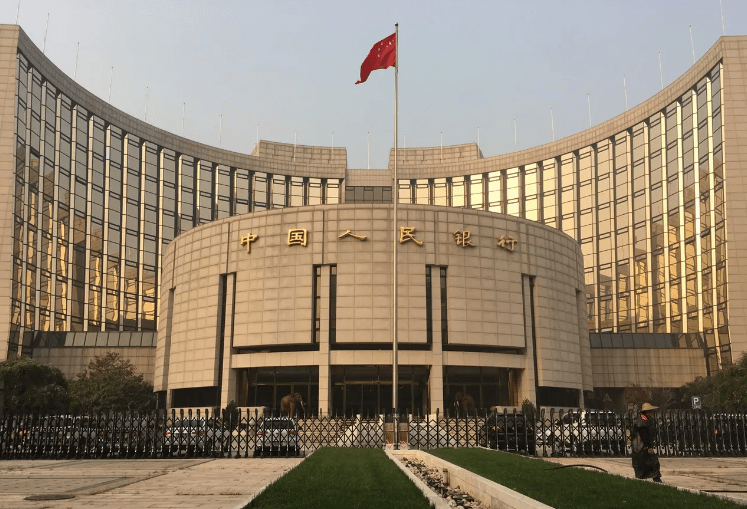
The People's Bank of China. Image: Fintech Futures

Reports have disclosed that digital yuan wallets will be subject to rules similar to those for regular bank accounts. Deposit insurance will apply, and reserve and reporting requirements will be tightened for third-party payment providers.

The PBOC framework also sets clearer rules for cross-border testing that was already under way with partners such as Singapore, Thailand, Hong Kong, the UAE and Saudi Arabia.

Banking And Policy Impact

Banks will need to adapt systems for interest calculation and for clearing e-CNY transactions at scale, which could increase operational costs in the short term. That said, some costs may be offset if more money flows into e-CNY wallets and fewer funds stay in nonbank payment platforms.

Total crypto market cap currently at $2.95 trillion. Chart: TradingView

Monetary authorities will watch how these flows interact with the broader money supply and lending operations, because shifts in where deposits sit can affect credit channels.

For everyday users, the most direct change is that holding e-CNY could earn interest and enjoy the same insurance protection as deposits. For businesses, payment settlement may become cheaper or faster depending on how banks price services.

Reports suggest regulators aim to keep the system safe by demanding full reserves from third-party operators and clearer oversight by banks.

Based on reports and official statements, the change takes effect on January 1, 2026, and it marks a major step in China’s long running e-CNY program. Regulators, banks and users will all be watching how interest rules are applied and whether the shift leads to wider use of the digital currency.

Featured image from Unsplash, chart from TradingView

Domande pertinenti

QWhen will commercial banks start paying interest on digital yuan wallet balances in China?

AJanuary 1, 2026.

QWhat is the People's Bank of China (PBOC) transforming the e-CNY into with this new framework?

AIt is moving the e-CNY from a cash-like tool to something closer to a bank deposit.

QHow will the interest on e-CNY wallets be calculated and set?

AInterest will be calculated by the banks that run the wallets and will be set in line with how banks price other deposit accounts.

QWhat protection will digital yuan wallet balances receive under the new policy?

AThey will be brought under China’s deposit insurance protections.

QWhat are the operational implications for banks due to this new policy?

ABanks will need to adapt systems for interest calculation and clearing e-CNY transactions at scale, which could increase operational costs in the short term.

Letture associate

In Jinjiang, Fujian, a Storage Super Unicorn Lies Quiet

In Fujian's Jinjiang, a city known for sportswear, lies a quiet semiconductor giant: Fujian Jinhua Integrated Circuit Co. (JHICC). Once a promising domestic DRAM manufacturer alongside Yangtze Memory and ChangXin Memory Technologies (CXMT), its journey was derailed in 2018 when the U.S. placed it on an Entity List and filed criminal charges for alleged trade secret theft. This halted production for years. A turning point came in February 2024 when a U.S. federal court found JHICC not guilty. However, it had lost crucial time. While CXMT soared to become a top-valued A-share company in 2024, JHICC, with an estimated valuation of 80 billion RMB, was just restarting. Its current output is primarily customized DDR4 chips, not the advanced DDR5/HBM demanded for AI, but it still benefits from the broader memory chip upcycle. JHICC's story is tied to Chen Zhengkun, a veteran engineer who left Micron to lead the venture. Founded in 2016 with state-backed funding, JHICC partnered with Taiwan's UMC to develop DRAM technology. Rapid progress was cut short by the U.S. actions, which Micron initiated, partly due to its heavy reliance on the Chinese market. Post-sanctions, Chen's team worked to rebuild the production line with reduced reliance on U.S. technology. According to its records, JHICC achieved small-scale production and revenue growth under immense pressure. It now focuses on the stable "niche" DRAM market (e.g., TVs, routers) with a monthly capacity of ~40,000 wafers, aiming for 60,000 by 2026. It holds over 1,000 patents but remains on the Entity List. For Jinjiang, investing in JHICC was a bold industrial leap. The local government provided unwavering financial and logistical support during the crisis, helping the company survive. JHICC has become the anchor for a growing local semiconductor cluster. Though its scale lags behind domestic peers, JHICC's persistence symbolizes a hard-won foothold in a global market long dominated by Samsung, SK Hynix, and Micron. Having missed one boom, it seeks a place in the new AI-driven memory supercycle.

marsbit1 h fa

In Jinjiang, Fujian, a Storage Super Unicorn Lies Quiet

marsbit1 h fa

Trading

Spot
活动图片





