Chaos Labs Exits, Who Will Take Over Aave's Risk?

marsbitPubblicato 2026-04-07Pubblicato ultima volta 2026-04-07

Introduzione

Chaos Labs, the core risk management provider for Aave V2 and V3 markets, has announced its decision to terminate its partnership with Aave. Despite Aave Labs increasing the budget to $5 million to retain them, Chaos Labs chose to leave due to fundamental disagreements on how risk should be managed. Key reasons for the departure include: the loss of core Aave contributors increasing operational risk, the expanded scope and complexity introduced by Aave V4 (which requires rebuilding risk infrastructure from scratch), and the fact that Chaos Labs operated at a financial loss even with increased budgets. They estimate that proper risk management for both V3 and V4 should cost at least $8 million annually (≈5.6% of protocol revenue), closer to traditional banking standards, rather than the previous 2%. Chaos Labs emphasized that Aave’s reputation and institutional adoption rely heavily on its risk management track record. They also highlighted unquantified costs like legal liability and operational security risks. The exit occurs as Aave plans its V4 upgrade and expands into institutional markets. Chaos Labs warns that migrating to V4 while maintaining V3 will double, not halve, the workload, and that accumulated operational experience cannot be easily transferred. The decision reflects a principled stance: Chaos Labs only attaches its name to work that meets its high-risk standards, even at significant financial sacrifice.

Editor's Note: Chaos Labs has announced its decision to proactively end its risk management collaboration with Aave and is seeking early termination of this authorized relationship. As the core team that has provided risk pricing and management for all of Aave's V2 and V3 markets over the past three years, its departure comes at a critical juncture as Aave is advancing its V4 architectural restructuring and institutional expansion.

In the statement, Chaos Labs emphasized that this decision was not due to short-term budget disagreements but rather a fundamental divergence in the perception of "how risk should be managed." With the loss of core contributors, increasing system complexity, and the architectural rewrite brought by V4, the responsibilities and costs of risk management have significantly expanded, but resource allocation and priority setting have not been adjusted accordingly.

The article further points out that as DeFi gradually attracts institutional funds, the risk record itself has become the most critical "admission asset." When a protocol needs to simultaneously handle more complex system structures and higher compliance standards, risk is no longer just a technical issue but a foundational capability that determines its sustainable operation.

As DeFi enters its next phase, where should risk management be positioned, and is the industry willing to bear the corresponding costs?

Below is the original text:

Since November 2022, Chaos Labs has priced every loan initiated on Aave and managed the risks for all Aave V2 and V3 markets across various networks, during which no materially impactful bad debts occurred.

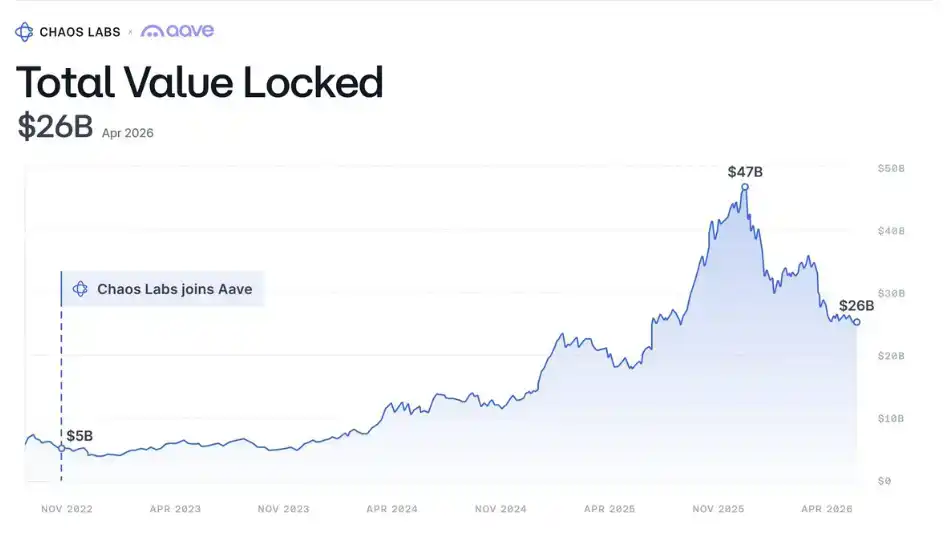
During this period, Aave's Total Value Locked (TVL) grew from $5.2 billion to over $26 billion, with cumulative deposits exceeding $2.5 trillion and over $2 billion in completed liquidations.
Today, we have decided to proactively end this authorized relationship and seek early termination of the collaboration.

This decision was not made hastily. We have always collaborated in good faith with DAO contributors, and Aave Labs has remained professional, even increasing the budget to $5 million to retain us. However, we chose to leave because this collaboration no longer aligns with our fundamental understanding of "how risk should be managed."

Although there are differences in future paths, I still believe Aave Labs is acting in what it perceives as the best interest of Aave.

Why We Chose to Leave

Over the past three years, we have stood with Aave through multiple market crises—moments that tested nearly every parameter we set and every machine learning model we built.

When we joined, the DAO's annualized net expenditure was negative $35 million; a few months ago, it peaked at $150 million. As one of the core contributors, we take pride in this journey.

People do not easily walk away from such an experience. Therefore, for the sake of transparency and as a reference for the DAO's future, we explain our reasons here.

Funding can solve many problems, but not all. The deeper issue lies in the structural divergence between the two parties on the fundamental question of "how to manage risk." As discussions about the future path continued, this divergence became increasingly clear.

Ultimately, the issue boils down to three points:

The departure of core Aave contributors has significantly increased the workload and operational risks;

The launch of V4 has expanded the scope of risk management functions, increasing operational and legal responsibilities, and its architecture was not designed by us, nor is it a design approach we would adopt;

Over the past three years, we have consistently operated Aave's risk management at a loss. Even with a $1 million budget increase, overall operations would still be in negative profit.

This leaves only two choices, neither of which we can accept:

Doing our best with insufficient resources but failing to meet the risk management standards expected of the "world's largest DeFi application";

Continuing to subsidize Aave's risk operations with our own funds, sustaining losses.

Even if the economic issues were resolved, the divergence in risk priorities and management approaches remains, and this cannot be solved simply by increasing the budget.

However, none of this changes our perspective on this work.

For Chaos Labs, contributing to Aave has always been an honor and a heavy responsibility. Our reputation is built on our track record. Every collaboration must be done to the standard it deserves, or not at all.

People, Technology, and Operational Experience

Aave is an excellent brand. Its leading position does not stem from the flashiest features or the most aggressive growth strategies.

What has long given Aave its advantage is its "reliability." Brand and market sentiment are essentially lagging reflections of its performance, security, and risk management capabilities—especially in extreme market conditions that have destroyed other participants. It is on this foundation that the consensus of "Just Use Aave" has gradually formed.

Competitors have launched more aggressive mechanisms and growth strategies, but they have collapsed one after another due to risk management failures or security vulnerabilities. In a market composed of the world's most volatile assets, "survivability" is the product itself. Those who can manage risk better and longer will prevail.

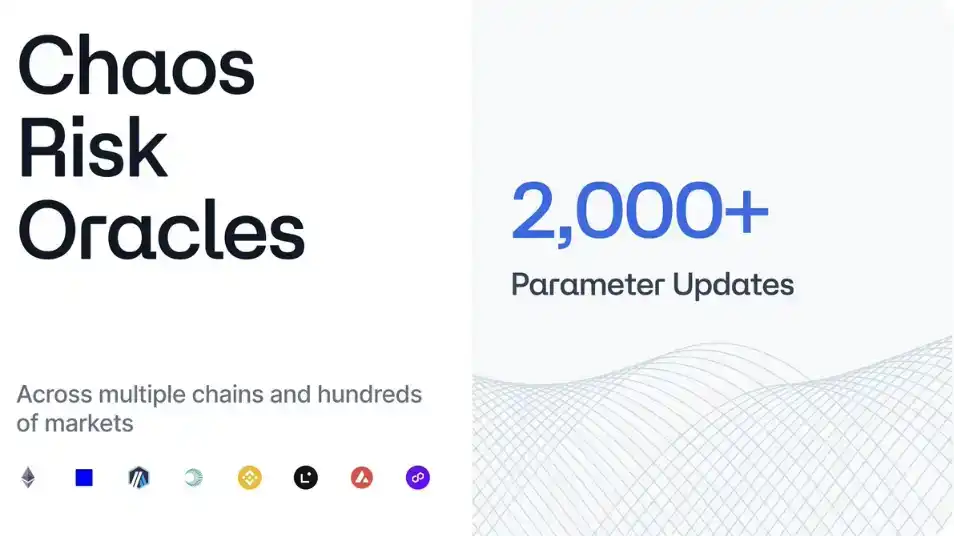
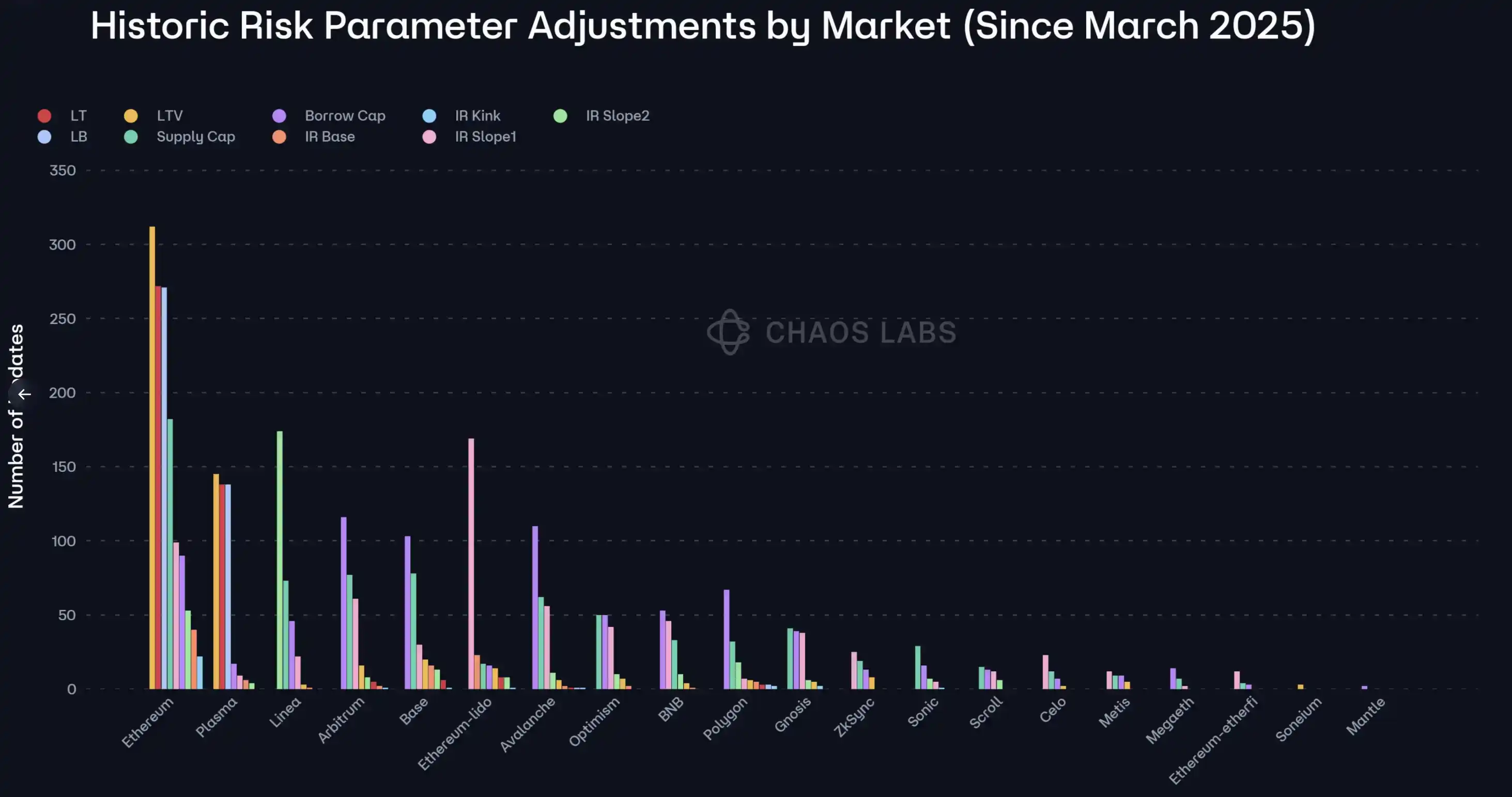
Aave's true innovation, however, lies in areas many protocols overlook: processes and infrastructure. The Risk Oracles we built and first launched on Aave enable the protocol to self-heal and update parameters in real-time based on dynamic and highly volatile market conditions. This infrastructure supports Aave's expansion to over 250 markets across 19 blockchains, handling hundreds of parameter updates monthly while maintaining rigorous operational standards, thus earning the trust it holds today.
This rigor stems from a specific collaboration system and execution stack: ACI handles growth and governance (@Marczeller), TokenLogic handles treasury management and growth (@Token_Logic), BGD handles protocol engineering (@bgdlabs), and Chaos Labs handles risk management.

The brand is what the outside world sees; what truly makes it worth seeing are the people, technology, and operational experience behind it.

GTM and Institutional Expansion

Our contributions extend far beyond risk management.

Over the past few years, the crypto industry has rapidly institutionalized. The world's largest financial institutions have begun accessing DeFi, but no matter how real the on-chain yields are, they are outweighed by one prerequisite: if institutions fear client funds could be at risk, none of this matters. For any regulated entity, all discussions begin and end with risk. A few extra basis points of yield are never worth risking principal. Institutions seek risk-adjusted returns, and they will not allocate funds to a protocol they cannot "clearly explain" to their compliance teams.

Precisely because of this, Aave's risk record has become its most important GTM asset. And we, as the builders of this record, have thus been able to directly engage with these institutions. At the request of Aave Labs, we took on this role, meeting with partners globally, producing research and due diligence materials, and personally participating in Aave's institutional expansion. We also hope the DAO will continue to benefit from these accumulated efforts in the coming months.

Ship of Theseus

If every plank of a ship is replaced, is it still the same ship? The name remains, the flag remains, but the foundation is already different.

Aave is now in such a state. The core contributors who built and operated V3 have left, and the operational experience that supported Aave through market cycles over the past three years has been lost with them.

We are the last remaining technical contributor from this group.

V3 remains the largest application in DeFi, requiring 7×24×365 risk management. Although Aave Labs is optimistic about a rapid migration to V4, history shows that such migrations often take months or even years. Until V4 fully assumes V3's markets and liquidity, both systems must run in parallel. The workload does not halve; it doubles.

More critical is operational experience. Even assuming different teams have equal capability, the experience accumulated over three years of continuous operation cannot be directly handed over.

How long will it take to bridge this gap? The answer is clearly not "zero." And until the gap is closed, someone must bear this cost—a responsibility that falls almost entirely on us, while the budget is already insufficient for the expanded scope.

The continuity of the brand is not equivalent to the continuity of the system.

Why V4 Is Different

V4 is a completely new lending protocol with entirely new smart contract code, system architecture, and design paradigms. Aside from the name, it bears little resemblance to Aave V3.

Architectural changes directly impact risk: more cross-market, cross-module interdependencies,全新的信用结构, and adjusted liquidation logic. And the "second-order risks" of any new protocol only gradually apparent after real funds enter the system.

Responsibly taking over this system means rebuilding infrastructure, toolchains, and simulation systems from the ground up and redoing the entire operational process on a codebase that has not yet been market-tested. This scope is far greater than V3, and this is at the core of our decision.

Risk is downstream of architecture. When the architecture undergoes fundamental changes, risk management itself must be重构. Unlike standardized services like price oracles or reserve proofs, the Risk Oracle and its supporting systems must be customized for the specific protocol architecture. Once the architecture is rewritten, the risk infrastructure must be rebuilt.

The problem is: the scope has significantly expanded, but resources have not increased accordingly. Aave Labs may be able to accept such a trade-off, but we cannot.

The Real Cost of This

We are walking away from a historically well-functioning, $5 million collaboration. For a startup, this is by no means a decision made lightly, and thus deserves fuller context.

Remuneration is only part of it; more importantly, it's a signal: how many resources an organization dedicates to risk reflects its priority on risk.

Simultaneously, I also believe that few truly understand the actual costs, real expenditures, and risks borne by such systems. Therefore, I hope to clarify this here.

It must be clear: the DAO has every right to decide what it values and how much it is willing to pay for it. I have no objection to that. My duty is merely to judge whether these conditions are suitable for us—and this time, they are not.

Comparing Aave to a Bank

Aave often compares itself to a bank, and we use this standard for perspective. Banks typically allocate 6%–10% of their revenue to compliance and risk infrastructure. In 2025, Aave's revenue was $142 million, and our budget was $3 million, accounting for about 2%.

We estimate that the minimum risk budget for V3 + V4 should be $8 million to cover the broader risk scope, additional infrastructure, and the GTM work we have already undertaken, accounting for about 5.6% of revenue, still below the lower bound for banks.

And this comparison might even be "generous." The openness of blockchain makes it more complex and asymmetric in terms of market risk and cybersecurity risk. The protocol's open-source transparency means the attack surface is equally visible to everyone. Recent series of attacks have proven this is not a theoretical risk. We believe DeFi should invest more in risk than traditional finance, not less.

Of course, Aave's scale has almost no comparable counterpart in DeFi; banks are just a reference point to understand how much institutions that "take risk seriously" typically invest. Whether a protocol "has the ability" to invest in risk and whether it "chooses to invest" are two different things.

For Aave, capability is not the issue: the DAO holds approximately $140 million in reserves, and Aave Labs just passed a $50 million self-funding proposal. But even if resources were scarce, the cost of risk management would not change. Budgets cannot reshape the threat structure—cost is cost.

Costs That Don't Appear in the Budget

Manpower and infrastructure are only explicit costs; there are also隐性成本 that are harder to quantify but must be borne.

First, legal and institutional risk. Engaging in risk management in DeFi (whether as a risk manager or treasury manager) faces undefined liability boundaries. There is no mature regulatory framework, no "safe harbor," and no clear legal definition of what responsibility risk managers should bear when a protocol fails. When the system functions normally, this work is "invisible"; once problems arise, the responsibility does not disappear.

Second, network and operational security. Providing risk services for a protocol managing tens of billions of dollars in assets itself becomes a target for attacks. The costs of audits, monitoring, infrastructure, and internal control systems rise in tandem with user deposit规模.

These costs are not unique to us. Any team taking on this role at this scale would face the same exposure. The question is whether the collaboration structure reflects this reality.

If the upside is limited and the downside risk is unlimited, then choosing to continue is not "having faith"; it is poor risk management.

Our Principles

At Chaos, we always adhere to a simple principle: we only put our name to work we fully stand behind.

When things go well, this principle is easy to uphold; what truly matters is when it comes at a cost. Today, that cost is $5 million.

I once wrote in "The Market Crypto Never Built" what institutional-grade risk management should look like. This decision is the embodiment of that belief in reality. If we advocate for higher standards in the industry, we must first hold ourselves to those standards.

I hope V4 will succeed. If it turns out our concerns were overestimated, that would be good for the entire industry.

To the Aave community: Thank you for the trust during this time; it has been our honor.

Domande pertinenti

QWhy did Chaos Labs decide to end its risk management partnership with Aave?

AChaos Labs ended the partnership due to a fundamental disagreement with Aave on how risk should be managed, not because of short-term budget issues. The departure of core Aave contributors, increased operational risks, the expanded scope and legal responsibilities from V4's architecture (which they did not design), and operating at a financial loss for three years were key factors.

QWhat was Chaos Labs' role and contribution to Aave during their partnership?

AChaos Labs was responsible for pricing every loan and managing risk for all Aave V2 and V3 markets across multiple networks. They built risk infrastructure like Risk Oracles, handled parameter updates, and contributed to Aave's growth from $5.2B to over $26B TVL. They also supported Aave's institutional expansion by engaging with regulated entities and providing research and due diligence materials.

QHow does Chaos Labs view the importance of risk management in DeFi, especially for protocols like Aave?

AChaos Labs believes risk management is a foundational capability, not just a technical issue. In DeFi, where protocols handle volatile assets, survival and reliability are the product. A strong risk record is a critical GTM asset for attracting institutional funds, as institutions prioritize risk-adjusted returns and require clear risk explanations for compliance.

QWhat are the challenges and increased costs associated with managing risk for Aave V4 according to Chaos Labs?

AV4 is a completely new protocol with different architecture, credit structures, and liquidation logic, requiring rebuilding risk infrastructure, tools, and simulations from scratch. Managing both V3 and V4 in parallel would double the workload. Chaos Labs estimated a minimum risk budget of $8M (5.6% of revenue) for V3+V4, higher than the 2% they received, to cover expanded scope, infrastructure, and hidden costs like legal and operational security.

QWhat principle did Chaos Labs cite as the reason for their decision to leave, despite the financial impact?

AChaos Labs operates on the principle of only putting their name on work they fully stand behind. They believe that advocating for higher standards in DeFi risk management requires adhering to those standards themselves, even at a cost—in this case, foregoing a $5M partnership that no longer aligned with their risk management philosophy.

Letture associate

Trading

Spot
Futures

Articoli Popolari

Cosa è $S$

Comprendere SPERO: Una Panoramica Completa Introduzione a SPERO Mentre il panorama dell'innovazione continua a evolversi, l'emergere delle tecnologie web3 e dei progetti di criptovaluta gioca un ruolo fondamentale nel plasmare il futuro digitale. Un progetto che ha attirato l'attenzione in questo campo dinamico è SPERO, denotato come SPERO,$$s$. Questo articolo mira a raccogliere e presentare informazioni dettagliate su SPERO, per aiutare gli appassionati e gli investitori a comprendere le sue basi, obiettivi e innovazioni nei domini web3 e crypto. Che cos'è SPERO,$$s$? SPERO,$$s$ è un progetto unico all'interno dello spazio crypto che cerca di sfruttare i principi della decentralizzazione e della tecnologia blockchain per creare un ecosistema che promuove l'impegno, l'utilità e l'inclusione finanziaria. Il progetto è progettato per facilitare interazioni peer-to-peer in modi nuovi, fornendo agli utenti soluzioni e servizi finanziari innovativi. Al suo interno, SPERO,$$s$ mira a responsabilizzare gli individui fornendo strumenti e piattaforme che migliorano l'esperienza dell'utente nello spazio delle criptovalute. Questo include la possibilità di metodi di transazione più flessibili, la promozione di iniziative guidate dalla comunità e la creazione di percorsi per opportunità finanziarie attraverso applicazioni decentralizzate (dApps). La visione sottostante di SPERO,$$s$ ruota attorno all'inclusività, cercando di colmare le lacune all'interno della finanza tradizionale mentre sfrutta i vantaggi della tecnologia blockchain. Chi è il Creatore di SPERO,$$s$? L'identità del creatore di SPERO,$$s$ rimane piuttosto oscura, poiché ci sono risorse pubblicamente disponibili limitate che forniscono informazioni dettagliate sul suo fondatore o fondatori. Questa mancanza di trasparenza può derivare dall'impegno del progetto per la decentralizzazione—un ethos che molti progetti web3 condividono, dando priorità ai contributi collettivi rispetto al riconoscimento individuale. Centrando le discussioni attorno alla comunità e ai suoi obiettivi collettivi, SPERO,$$s$ incarna l'essenza dell'empowerment senza mettere in evidenza individui specifici. Pertanto, comprendere l'etica e la missione di SPERO rimane più importante che identificare un creatore singolo. Chi sono gli Investitori di SPERO,$$s$? SPERO,$$s$ è supportato da una varietà di investitori che vanno dai capitalisti di rischio agli investitori angelici dedicati a promuovere l'innovazione nel settore crypto. Il focus di questi investitori generalmente si allinea con la missione di SPERO—dando priorità a progetti che promettono avanzamenti tecnologici sociali, inclusività finanziaria e governance decentralizzata. Queste fondazioni di investitori sono tipicamente interessate a progetti che non solo offrono prodotti innovativi, ma contribuiscono anche positivamente alla comunità blockchain e ai suoi ecosistemi. Il supporto di questi investitori rafforza SPERO,$$s$ come un concorrente degno di nota nel dominio in rapida evoluzione dei progetti crypto. Come Funziona SPERO,$$s$? SPERO,$$s$ impiega un framework multifunzionale che lo distingue dai progetti di criptovaluta convenzionali. Ecco alcune delle caratteristiche chiave che sottolineano la sua unicità e innovazione: Governance Decentralizzata: SPERO,$$s$ integra modelli di governance decentralizzati, responsabilizzando gli utenti a partecipare attivamente ai processi decisionali riguardanti il futuro del progetto. Questo approccio favorisce un senso di proprietà e responsabilità tra i membri della comunità. Utilità del Token: SPERO,$$s$ utilizza il proprio token di criptovaluta, progettato per servire varie funzioni all'interno dell'ecosistema. Questi token abilitano transazioni, premi e la facilitazione dei servizi offerti sulla piattaforma, migliorando l'impegno e l'utilità complessivi. Architettura Stratificata: L'architettura tecnica di SPERO,$$s$ supporta la modularità e la scalabilità, consentendo un'integrazione fluida di funzionalità e applicazioni aggiuntive man mano che il progetto evolve. Questa adattabilità è fondamentale per mantenere la rilevanza nel panorama crypto in continua evoluzione. Coinvolgimento della Comunità: Il progetto enfatizza iniziative guidate dalla comunità, impiegando meccanismi che incentivano la collaborazione e il feedback. Nutrendo una comunità forte, SPERO,$$s$ può affrontare meglio le esigenze degli utenti e adattarsi alle tendenze di mercato. Focus sull'Inclusione: Offrendo basse commissioni di transazione e interfacce user-friendly, SPERO,$$s$ mira ad attrarre una base utenti diversificata, inclusi individui che potrebbero non aver precedentemente interagito nello spazio crypto. Questo impegno per l'inclusione si allinea con la sua missione generale di empowerment attraverso l'accessibilità. Cronologia di SPERO,$$s$ Comprendere la storia di un progetto fornisce preziose intuizioni sulla sua traiettoria di sviluppo e sui traguardi. Di seguito è riportata una cronologia suggerita che mappa eventi significativi nell'evoluzione di SPERO,$$s$: Fase di Concettualizzazione e Ideazione: Le idee iniziali che formano la base di SPERO,$$s$ sono state concepite, allineandosi strettamente con i principi di decentralizzazione e focus sulla comunità all'interno dell'industria blockchain. Lancio del Whitepaper del Progetto: Dopo la fase concettuale, è stato rilasciato un whitepaper completo che dettaglia la visione, gli obiettivi e l'infrastruttura tecnologica di SPERO,$$s$ per suscitare interesse e feedback dalla comunità. Costruzione della Comunità e Prime Interazioni: Sono stati effettuati sforzi attivi di outreach per costruire una comunità di early adopters e potenziali investitori, facilitando discussioni attorno agli obiettivi del progetto e ottenendo supporto. Evento di Generazione del Token: SPERO,$$s$ ha condotto un evento di generazione del token (TGE) per distribuire i propri token nativi ai primi sostenitori e stabilire una liquidità iniziale all'interno dell'ecosistema. Lancio della Prima dApp: La prima applicazione decentralizzata (dApp) associata a SPERO,$$s$ è stata attivata, consentendo agli utenti di interagire con le funzionalità principali della piattaforma. Sviluppo Continuo e Partnership: Aggiornamenti e miglioramenti continui alle offerte del progetto, inclusi partnership strategiche con altri attori nello spazio blockchain, hanno plasmato SPERO,$$s$ in un concorrente competitivo e in evoluzione nel mercato crypto. Conclusione SPERO,$$s$ rappresenta una testimonianza del potenziale del web3 e delle criptovalute di rivoluzionare i sistemi finanziari e responsabilizzare gli individui. Con un impegno per la governance decentralizzata, il coinvolgimento della comunità e funzionalità progettate in modo innovativo, apre la strada verso un panorama finanziario più inclusivo. Come per qualsiasi investimento nello spazio crypto in rapida evoluzione, si incoraggiano potenziali investitori e utenti a ricercare approfonditamente e a impegnarsi in modo riflessivo con gli sviluppi in corso all'interno di SPERO,$$s$. Il progetto mostra lo spirito innovativo dell'industria crypto, invitando a ulteriori esplorazioni delle sue innumerevoli possibilità. Mentre il percorso di SPERO,$$s$ è ancora in fase di sviluppo, i suoi principi fondamentali potrebbero effettivamente influenzare il futuro di come interagiamo con la tecnologia, la finanza e tra di noi in ecosistemi digitali interconnessi.

75 Totale visualizzazioniPubblicato il 2024.12.17Aggiornato il 2024.12.17

Cosa è $S$

Cosa è AGENT S

Agent S: Il Futuro dell'Interazione Autonoma in Web3 Introduzione Nel panorama in continua evoluzione di Web3 e criptovalute, le innovazioni stanno costantemente ridefinendo il modo in cui gli individui interagiscono con le piattaforme digitali. Uno di questi progetti pionieristici, Agent S, promette di rivoluzionare l'interazione uomo-computer attraverso il suo framework agentico aperto. Aprendo la strada a interazioni autonome, Agent S mira a semplificare compiti complessi, offrendo applicazioni trasformative nell'intelligenza artificiale (AI). Questa esplorazione dettagliata approfondirà le complessità del progetto, le sue caratteristiche uniche e le implicazioni per il dominio delle criptovalute. Cos'è Agent S? Agent S si presenta come un innovativo framework agentico aperto, progettato specificamente per affrontare tre sfide fondamentali nell'automazione dei compiti informatici: Acquisizione di Conoscenze Specifiche del Dominio: Il framework apprende in modo intelligente da varie fonti di conoscenza esterne ed esperienze interne. Questo approccio duale gli consente di costruire un ricco repository di conoscenze specifiche del dominio, migliorando le sue prestazioni nell'esecuzione dei compiti. Pianificazione su Lungo Orizzonte di Compiti: Agent S impiega una pianificazione gerarchica potenziata dall'esperienza, un approccio strategico che facilita la suddivisione e l'esecuzione efficiente di compiti complessi. Questa caratteristica migliora significativamente la sua capacità di gestire più sottocompiti in modo efficiente ed efficace. Gestione di Interfacce Dinamiche e Non Uniformi: Il progetto introduce l'Interfaccia Agente-Computer (ACI), una soluzione innovativa che migliora l'interazione tra agenti e utenti. Utilizzando Modelli Linguistici Multimodali di Grandi Dimensioni (MLLM), Agent S può navigare e manipolare senza sforzo diverse interfacce grafiche utente. Attraverso queste caratteristiche pionieristiche, Agent S fornisce un framework robusto che affronta le complessità coinvolte nell'automazione dell'interazione umana con le macchine, preparando il terreno per innumerevoli applicazioni nell'AI e oltre. Chi è il Creatore di Agent S? Sebbene il concetto di Agent S sia fondamentalmente innovativo, informazioni specifiche sul suo creatore rimangono elusive. Il creatore è attualmente sconosciuto, il che evidenzia sia la fase embrionale del progetto sia la scelta strategica di mantenere i membri fondatori sotto anonimato. Indipendentemente dall'anonimato, l'attenzione rimane sulle capacità e sul potenziale del framework. Chi sono gli Investitori di Agent S? Poiché Agent S è relativamente nuovo nell'ecosistema crittografico, informazioni dettagliate riguardanti i suoi investitori e sostenitori finanziari non sono documentate esplicitamente. La mancanza di approfondimenti pubblicamente disponibili sulle fondazioni di investimento o sulle organizzazioni che supportano il progetto solleva interrogativi sulla sua struttura di finanziamento e sulla roadmap di sviluppo. Comprendere il supporto è cruciale per valutare la sostenibilità del progetto e il suo potenziale impatto sul mercato. Come Funziona Agent S? Al centro di Agent S si trova una tecnologia all'avanguardia che gli consente di funzionare efficacemente in contesti diversi. Il suo modello operativo è costruito attorno a diverse caratteristiche chiave: Interazione Uomo-Computer Simile a Quella Umana: Il framework offre una pianificazione AI avanzata, cercando di rendere le interazioni con i computer più intuitive. Mimando il comportamento umano nell'esecuzione dei compiti, promette di elevare le esperienze degli utenti. Memoria Narrativa: Utilizzata per sfruttare esperienze di alto livello, Agent S utilizza la memoria narrativa per tenere traccia delle storie dei compiti, migliorando così i suoi processi decisionali. Memoria Episodica: Questa caratteristica fornisce agli utenti una guida passo-passo, consentendo al framework di offrire supporto contestuale mentre i compiti si sviluppano. Supporto per OpenACI: Con la capacità di funzionare localmente, Agent S consente agli utenti di mantenere il controllo sulle proprie interazioni e flussi di lavoro, allineandosi con l'etica decentralizzata di Web3. Facile Integrazione con API Esterne: La sua versatilità e compatibilità con varie piattaforme AI garantiscono che Agent S possa adattarsi senza problemi agli ecosistemi tecnologici esistenti, rendendolo una scelta attraente per sviluppatori e organizzazioni. Queste funzionalità contribuiscono collettivamente alla posizione unica di Agent S all'interno dello spazio crittografico, poiché automatizza compiti complessi e multi-fase con un intervento umano minimo. Man mano che il progetto evolve, le sue potenziali applicazioni in Web3 potrebbero ridefinire il modo in cui si svolgono le interazioni digitali. Cronologia di Agent S Lo sviluppo e le tappe di Agent S possono essere riassunti in una cronologia che evidenzia i suoi eventi significativi: 27 Settembre 2024: Il concetto di Agent S è stato lanciato in un documento di ricerca completo intitolato “Un Framework Agentico Aperto che Usa i Computer Come un Umano”, mostrando le basi per il progetto. 10 Ottobre 2024: Il documento di ricerca è stato reso pubblicamente disponibile su arXiv, offrendo un'esplorazione approfondita del framework e della sua valutazione delle prestazioni basata sul benchmark OSWorld. 12 Ottobre 2024: È stata rilasciata una presentazione video, fornendo un'idea visiva delle capacità e delle caratteristiche di Agent S, coinvolgendo ulteriormente potenziali utenti e investitori. Questi indicatori nella cronologia non solo illustrano i progressi di Agent S, ma indicano anche il suo impegno per la trasparenza e il coinvolgimento della comunità. Punti Chiave su Agent S Man mano che il framework Agent S continua a evolversi, diversi attributi chiave si distinguono, sottolineando la sua natura innovativa e il potenziale: Framework Innovativo: Progettato per fornire un uso intuitivo dei computer simile all'interazione umana, Agent S porta un approccio nuovo all'automazione dei compiti. Interazione Autonoma: La capacità di interagire autonomamente con i computer attraverso GUI segna un passo avanti verso soluzioni informatiche più intelligenti ed efficienti. Automazione di Compiti Complessi: Con la sua metodologia robusta, può automatizzare compiti complessi e multi-fase, rendendo i processi più veloci e meno soggetti a errori. Miglioramento Continuo: I meccanismi di apprendimento consentono ad Agent S di migliorare dalle esperienze passate, migliorando continuamente le sue prestazioni e la sua efficacia. Versatilità: La sua adattabilità attraverso diversi ambienti operativi come OSWorld e WindowsAgentArena garantisce che possa servire un'ampia gamma di applicazioni. Man mano che Agent S si posiziona nel panorama di Web3 e delle criptovalute, il suo potenziale per migliorare le capacità di interazione e automatizzare i processi segna un significativo avanzamento nelle tecnologie AI. Attraverso il suo framework innovativo, Agent S esemplifica il futuro delle interazioni digitali, promettendo un'esperienza più fluida ed efficiente per gli utenti in vari settori. Conclusione Agent S rappresenta un audace passo avanti nell'unione tra AI e Web3, con la capacità di ridefinire il modo in cui interagiamo con la tecnologia. Sebbene sia ancora nelle sue fasi iniziali, le possibilità per la sua applicazione sono vaste e coinvolgenti. Attraverso il suo framework completo che affronta sfide critiche, Agent S mira a portare le interazioni autonome al centro dell'esperienza digitale. Man mano che ci addentriamo nei regni delle criptovalute e della decentralizzazione, progetti come Agent S giocheranno senza dubbio un ruolo cruciale nel plasmare il futuro della tecnologia e della collaborazione uomo-computer.

397 Totale visualizzazioniPubblicato il 2025.01.14Aggiornato il 2025.01.14

Cosa è AGENT S

Come comprare S

Benvenuto in HTX.com! Abbiamo reso l'acquisto di Sonic (S) semplice e conveniente. Segui la nostra guida passo passo per intraprendere il tuo viaggio nel mondo delle criptovalute.Step 1: Crea il tuo Account HTXUsa la tua email o numero di telefono per registrarti il tuo account gratuito su HTX. Vivi un'esperienza facile e sblocca tutte le funzionalità,Crea il mio accountStep 2: Vai in Acquista crypto e seleziona il tuo metodo di pagamentoCarta di credito/debito: utilizza la tua Visa o Mastercard per acquistare immediatamente SonicS.Bilancio: Usa i fondi dal bilancio del tuo account HTX per fare trading senza problemi.Terze parti: abbiamo aggiunto metodi di pagamento molto utilizzati come Google Pay e Apple Pay per maggiore comodità.P2P: Fai trading direttamente con altri utenti HTX.Over-the-Counter (OTC): Offriamo servizi su misura e tassi di cambio competitivi per i trader.Step 3: Conserva Sonic (S)Dopo aver acquistato Sonic (S), conserva nel tuo account HTX. In alternativa, puoi inviare tramite trasferimento blockchain o scambiare per altre criptovalute.Step 4: Scambia Sonic (S)Scambia facilmente Sonic (S) nel mercato spot di HTX. Accedi al tuo account, seleziona la tua coppia di trading, esegui le tue operazioni e monitora in tempo reale. Offriamo un'esperienza user-friendly sia per chi ha appena iniziato che per i trader più esperti.

782 Totale visualizzazioniPubblicato il 2025.01.15Aggiornato il 2025.03.21

Come comprare S

Discussioni

Benvenuto nella Community HTX. Qui puoi rimanere informato sugli ultimi sviluppi della piattaforma e accedere ad approfondimenti esperti sul mercato. Le opinioni degli utenti sul prezzo di S S sono presentate come di seguito.

活动图片