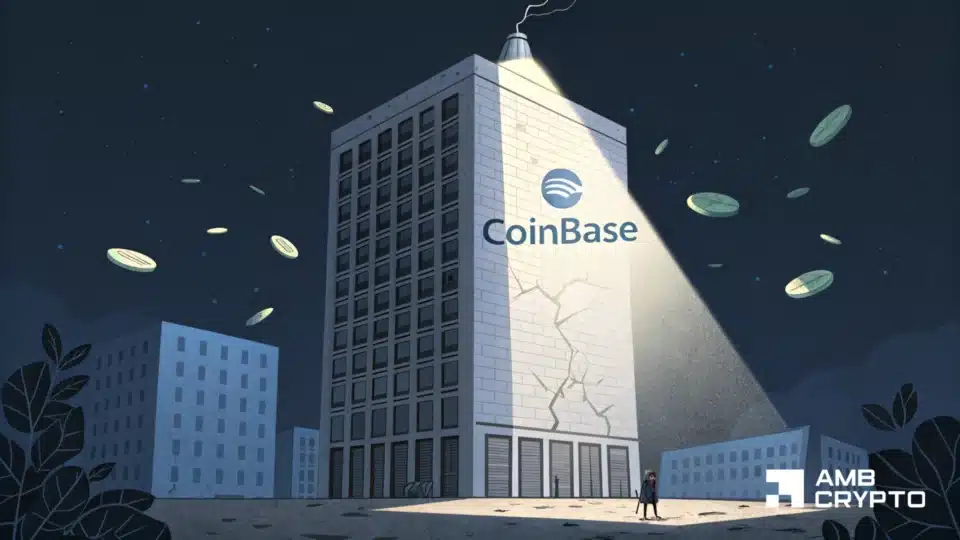
Channel Dividends Are Dwindling, What Can DeFi Protocols Rely on to Resist Giants' Harvesting?

Foresight NewsPubblicato 2026-06-22Pubblicato ultima volta 2026-06-22

Introduzione

As the era of channel-driven growth ends, major tech giants like Coinbase, Stripe, and Kraken are vertically integrating by acquiring or building core infrastructure, capturing profits from underlying protocols. For instance, Coinbase leverages its Base blockchain to earn sequencing fees from protocols like Morpho, while Stripe acquired Bridge to internalize stablecoin yields, and Kraken bought NinjaTrader for derivatives licenses. This trend creates a power imbalance: entities controlling distribution channels can extract value from open-source DeFi protocols. However, protocols are developing a defense through multi-chain expansion. Examples like Morpho (with significant TVL on Ethereum and Base) and Uniswap (dominant across many chains) show that by deploying across multiple blockchains, protocols reduce dependency on any single chain operator, making them costly and risky to replace. The article argues that the future landscape will be shaped by the race between institutional vertical integration and protocol horizontal, multi-chain scaling. Protocols that embed themselves deeply across ecosystems and become indispensable due to high switching costs are most likely to survive and thrive amidst this consolidation.


Author: Thejaswini M A

Compiled by: Saoirse, Foresight News


In Goodfellas, Ray Liotta has a line: 'Fuck you, pay me.' This line shreds the romanticized filter of mafia honor found in works like The Godfather, starkly revealing the cold, parasitic, and purely profit-driven essence of organized crime. Following a similar logic, let's talk about big tech companies.


You control value by controlling profits. To achieve this, you don't even need to build a public blockchain protocol or a project. It's a profit grab with no rules. But we can't blame Coinbase, Stripe, or Kraken for making such choices.


From the most fundamental business logic, their maneuvers are akin to a shrewd real estate play: be the first to secure the traffic distribution channels. Now holding the power of these channels, they look down and ask: 'Who exactly holds the bargaining power?'


Coinbase built its own blockchain; Stripe spent $1.1 billion acquiring infrastructure it could have rented; Kraken spent $1.5 billion acquiring a derivatives trading platform; Apple built the App Store. The logic of this playbook is: let others develop the market and bear the early risks, then acquire the underlying infrastructure when the profit potential in the sector becomes sufficiently attractive. The core question this article explores: Where will the industry head when traffic distribution channels are no longer the core value?


Coinbase has 110 million verified users. For years, its lending products for users were built on top of the open-source protocol Morpho, with all protocol fees going to Morpho. Later, Coinbase launched its own L2 blockchain, Base. Morpho chose to deploy on Base because Coinbase's massive user base could bring transaction volume. Now, the sequencer fee generated by every transaction on Base flows entirely into Coinbase's pockets, not Morpho's.


Base generated $76 million in net sequencer fee revenue in 2024 and $74 million in 2025. Until February 2026, per the licensing agreement, Coinbase had to share a portion of the revenue with Optimism. But eventually, Coinbase severed the partnership, switched to a self-developed underlying architecture, and now keeps the entire $64 million revenue. Meanwhile, Morpho remains rooted on Base, developing robustly with a Total Value Locked (TVL) of $2.5 billion. However, every transaction processed by Morpho now has to share profits with Coinbase.
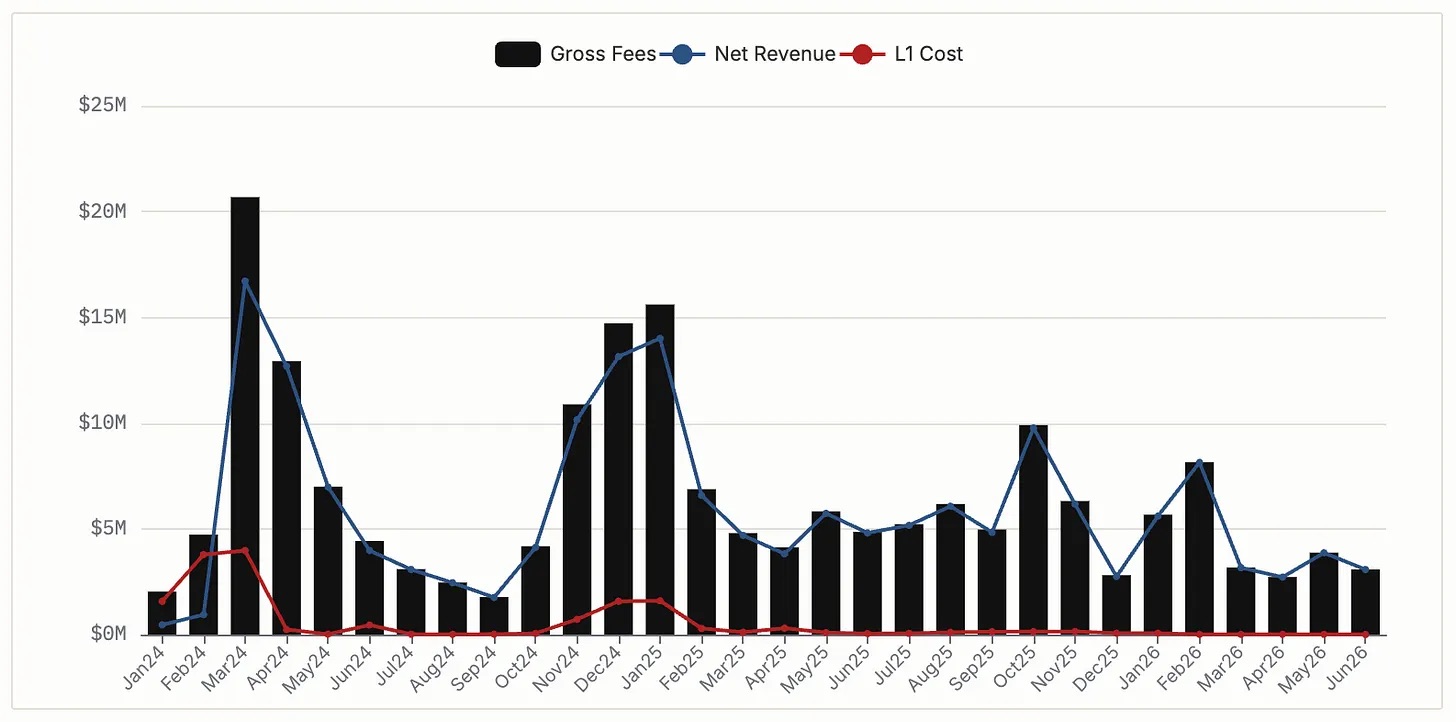

Base Monthly Sequencer Fee Revenue, source: DeFiLlama


Coinbase launched a $300 million Bitcoin-collateralized lending product, relying on Morpho's underlying architecture. Its wrapped Bitcoin, cbBTC, is the largest collateral asset within Morpho, accounting for 38% of the protocol's total TVL. This creates a mutually restraining dynamic: Morpho holds the core underlying capability for Coinbase's credit product, while Coinbase can extract a revenue share from all of Morpho's business, making it difficult for either to easily sever the partnership.


Look at Stripe's case: In early 2025, it spent $1.1 billion to acquire Bridge. Before this, Stripe's stablecoin business relied on Circle's infrastructure. Circle held the stablecoin issuance rights and earned the floating interest generated by the reserve collateral assets. At that time, all revenue from Stripe's trillion-level stablecoin transactions flowed to Circle. Acquiring Bridge completely reversed this situation. Bridge issues its own stablecoin, USDB, collateralized by a BlackRock money market fund. After switching to USDB, the massive interest income from these reserves stays entirely within the Stripe ecosystem. With annual payment processing volume of $1.4 trillion, Stripe was losing hundreds of millions in profit annually by long-term renting its competitor's profit-generating infrastructure.


Patrick Collison once called stablecoins 'the room-temperature superconductors of finance.' Spending $1.1 billion to own this underlying tool outright is far more economical than continuously paying tolls to a competitor.


A pure spot exchange has a natural growth ceiling, with users trading only hundreds of tokens. But Kraken wanted to attract institutional investors and professional retail traders, groups that primarily engage in trading via futures and clearing derivatives. Operating a derivatives business requires registration with the CFTC, NFA membership, and broker-dealer licenses—a compliance system that takes years to build. Even if built from scratch, regulators could reject the application for various uncontrollable reasons.


This is why Kraken set its sights on NinjaTrader. The $1.5 billion acquisition in January 2025 brought not just 1.7 million funded trading accounts, but more crucially, the full suite of broker-dealer licenses that Kraken would have found difficult to quickly develop and obtain on its own.


By acquiring ready-made compliant qualifications, Kraken completely shed its dependence on external partners. It now wholly owns the entire technology stack and licenses, needing neither to rely on others nor spend years waiting for regulatory approval.


Some might say: Large enterprises swallowing small protocols, isn't that just business as usual? What's new here?


Morpho's total TVL is $6.4 billion, with $3.308 billion deployed on Ethereum and $2.488 billion on Base. If Coinbase decided to delist Morpho and switch to a self-developed lending protocol, Morpho would immediately lose 39% of its TVL. However, it would still retain 52% on Ethereum, while continuously expanding to multiple chains like Hyperliquid L1, Monad, and Arbitrum, allowing its overall business to continue operating stably.
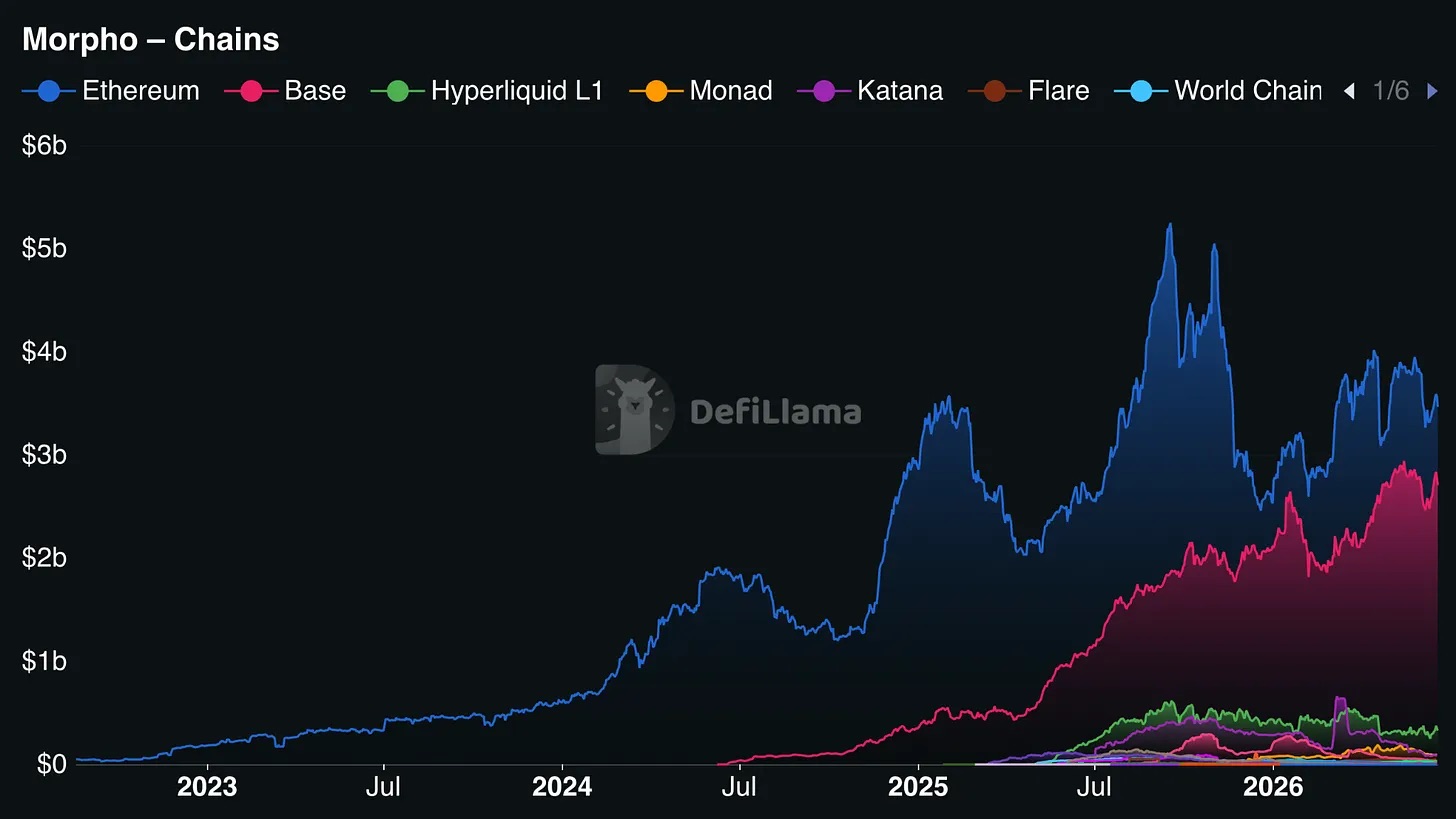

Morpho TVL Distribution Across Chains, source: DeFiLlama


The case of Aerodrome on the Base blockchain vividly demonstrates the impact when a chain operator promotes its own competitor. Aerodrome is Base's native decentralized exchange, optimized for Base's architecture. Coinbase Ventures holds approximately $20 million worth of AERO tokens, its largest liquidity token investment. Meanwhile, the project guides liquidity towards Coinbase's products, including the cbBTC pool, through AERO token lock-up voting. Aerodrome handles about 51% of Base's DEX volume, peaking at 77% in September 2024. Uniswap, deployed across 44 chains, is Base's second-largest DEX, holding 30% volume. Even after losing its leading position on a single chain, Uniswap hasn't perished: in 2025 it processed $212 billion in volume on Base, with estimated cross-chain monthly volume around $73 billion.
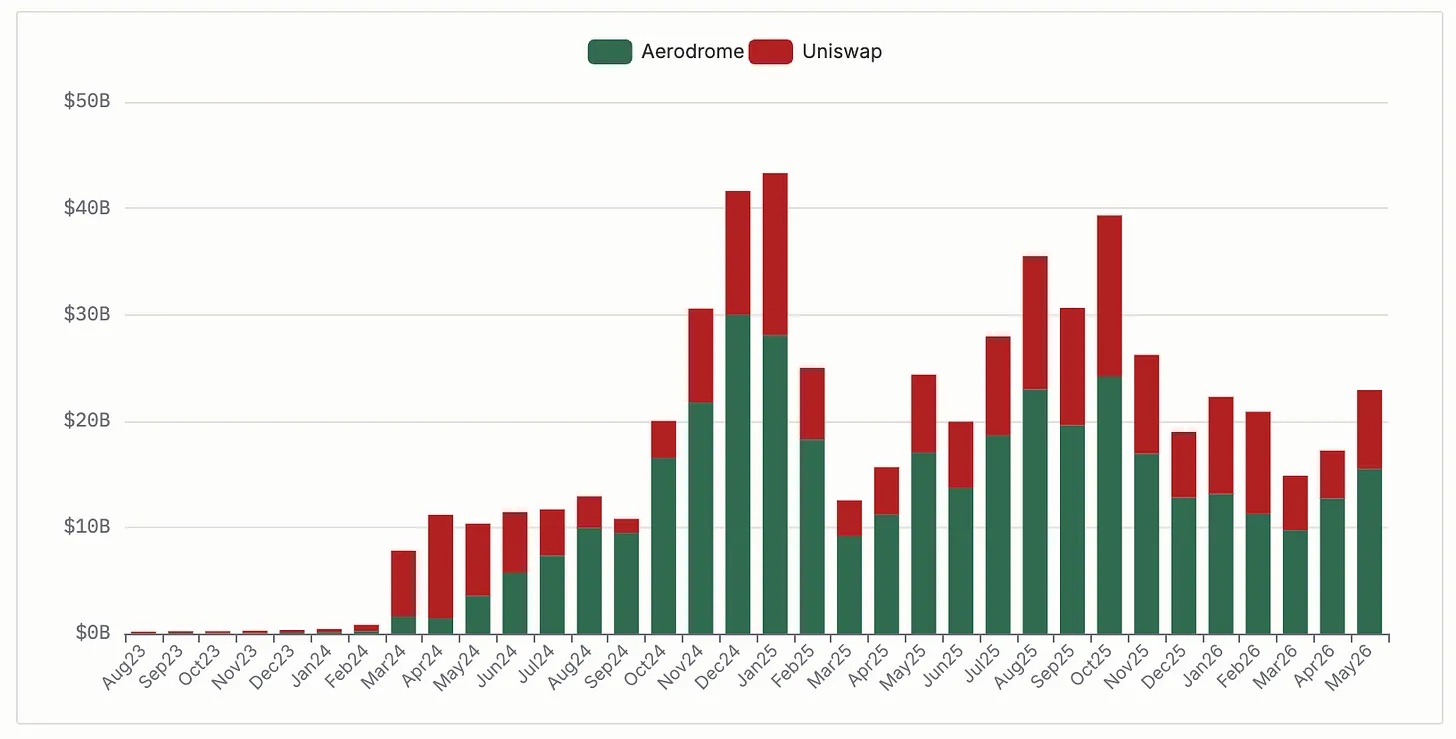

Base DEX Volume Share, source: DeFiLlama


This case confirms: Multi-chain deployment is a protocol's natural moat. A project deployed on a single chain is entirely at the mercy of the chain operator—they can always promote a competitor to squeeze your survival space. Conversely, a multi-chain protocol can continue normal operations in other sectors even after losing a particular chain's market. After witnessing Uniswap's traffic being diverted by Aerodrome on Base, Morpho rapidly expanded its multi-chain deployment. Large traffic platforms can vertically integrate into the underlying layer, while open-source protocols can horizontally expand across multiple chains to diversify risk.


If you rely on underlying infrastructure you don't own, you don't truly control your business. The party controlling the underlying layer holds overwhelming bargaining power over you, can define your product experience, and ultimately influence your operational stability. For enterprises of this scale, this dependency relationship translates into tangible profit losses every single day. This business logic isn't unique to crypto: Amazon built its moat relying on AWS; Apple, constrained by Intel's chip roadmap for years, spent many years developing custom chips to break free.


Everyone can check in real-time how much revenue Coinbase earns from Base sequencer fees, and clearly see Morpho's TVL across various chains. This value extraction process is fully transparent—something internal infrastructure profits at companies like Amazon, in the traditional internet space, cannot achieve.


There is a potential direction for the industry: the future market could be entirely controlled by giants like Coinbase, Stripe, Kraken, and a few banks. They control the entire industry chain from underlying protocols to payment cards, with open-source protocols only used to fill niche gaps the giants haven't yet covered. This is a fully plausible development path for fintech. Open-source technology would no longer be a free and vast fertile ground for innovation, but merely become patches of adhesive tape for the tiny crevices giant corporations haven't yet figured out how to monetize. Like a quip: 'Look at this high-quality little open-source protocol. Let's just build a commercial system on top of it to harvest the traffic.'


However, I lean towards an optimistic assessment: Considering the current wave of acquisitions, the probability of such a complete monopoly isn't as high as it seems. Underlying protocols are difficult to be monopolized by giants in the same way traffic channels can be. Morpho can deploy on a new chain in just weeks; replacing a battle-tested lending protocol deeply embedded in institutional operations carries an extremely high cost, not easily perceivable by outsiders. Coinbase's $300 million Bitcoin lending product still relies on Morpho because replicating Morpho's security system from scratch would take years and introduce security risks Coinbase is unwilling to bear.


Protocols that can survive this wave of giant consolidation all meet one core condition: they completed full multi-chain deployment before the traffic giants built their own ecosystems, deeply embedding themselves into the backend systems of major enterprises, making the economic cost of replacing them prohibitively high. Even Robinhood, a traffic giant with a massive user base, chose to integrate Lighter, a third-party zk-proof perpetuals exchange, as its trading backend. Robinhood Ventures participated in Lighter's $68 million funding round, and founder Vlad Tenev maintains close communication with the project.


If only traffic channels could build moats, Robinhood could have built its own underlying tech like Coinbase did. But it didn't: achieving a system that combines CEX-like trading speed with verifiable zk-proof matching logic is an extremely difficult, niche technical problem; the Lighter team spent over a year cracking it. After calculation, Robinhood concluded that purchasing the right to use mature technology is far more economical than building from scratch.


Currently, Morpho occupies this advantageous position of mutual restraint, while Uniswap was the pioneer of this path. The speed of institutional expansion and the speed of open-source protocol horizontal multi-chain expansion are in a game of chess; the final outcome will determine the direction of the industry landscape.


The underlying businesses of giants like Stripe and Coinbase still rely on open-source technology at this stage. In the short term, open-source protocols can still stand firm. We'll re-examine the industry landscape in two years.

Crypto di tendenza

Domande pertinenti

QWhat is the main business strategy employed by large tech companies like Coinbase and Stripe in the crypto industry according to the article?

AThe article describes a strategy where large tech companies like Coinbase, Stripe, and Kraken act as distribution channels, capturing and controlling user traffic. They let smaller protocols bear the early risk and development costs, and then acquire or build competing infrastructure once the market becomes profitable. This allows them to capture the value and profits generated by the underlying protocols, exemplified by Coinbase capturing sequencer fees from protocols like Morpho on Base.

QHow does the acquisition of Bridge by Stripe change its business model in the stablecoin sector?

APrior to acquiring Bridge for $1.1 billion, Stripe's stablecoin business relied on Circle's infrastructure, meaning all interest from the reserve assets backing the stablecoins flowed to Circle. By acquiring Bridge, which issues its own stablecoin USDB backed by BlackRock money market funds, Stripe now keeps the substantial interest revenue generated by the massive reserves within its own ecosystem, rather than paying it to a competitor.

QWhy does the article argue that multi-chain deployment is a crucial defense for DeFi protocols against large platforms?

AMulti-chain deployment acts as a natural moat for protocols. If a protocol is only deployed on a single chain, its fate is tied to that chain's operator, who could favor or build a competing protocol. A multi-chain protocol, like Uniswap or Morpho, can survive the loss of dominance on one chain because its business on other chains continues to operate. This diversification reduces dependency and risk from any single entity.

QWhat example does the article use to show that even large platforms sometimes choose to rely on third-party protocols instead of building everything in-house?

AThe article cites Robinhood as an example. Instead of building its own perpetual futures exchange from scratch like Coinbase did with Base, Robinhood integrated with Lighter, a third-party zero-knowledge proof perpetual exchange. Robinhood determined that licensing this specialized, proven technology was more economical and efficient than developing it internally, despite having a massive user base.

QWhat is the "two-way checkmate" position that Morpho currently holds in its relationship with Coinbase, according to the article?

AMorpho is in a "two-way checkmate" with Coinbase. On one hand, Coinbase's $300 million Bitcoin-backed lending product is built on Morpho's infrastructure, making Morpho's security and technology core to that offering. Replacing it would be risky and costly for Coinbase. On the other hand, Morpho's significant deployment on Coinbase's Base chain means a large portion of its activity generates sequencer fees for Coinbase. This mutual dependency makes it difficult for either party to easily sever the relationship.

Letture associate

Conversation with Co-founder of Hyperdash: Why is Hyperliquid Still Severely Undervalued?

Interview Summary with Hanson Birringer, Co-founder of Hyperdash: Why Hyperliquid Remains Undervalued In an interview on *The Rollup*, Hanson Birringer, Co-founder and Chief Revenue Officer of Hyperdash—a trading data analytics platform for Hyperliquid—shared his investment thesis on the Hyperliquid ecosystem. He described Hyperliquid as a pure play on three key crypto super-trends: perpetual contracts, real-world assets (RWAs), and stablecoins. The platform is an open-source, decentralized, and high-performance financial system uniquely positioned to bridge traditional institutional capital with decentralized finance. Birringer highlighted Hyperliquid's leadership in perpetual DEX trading and its recent innovation of RWA perpetual contracts. He emphasized the significance of USDC becoming a core quoting asset, which, by allocating 90% of its backend yield from assets like US treasuries to a protocol buyback fund, creates substantial, programmatic buy pressure for the Hype token. He addressed regulatory challenges, noting that Hyperliquid's policy team is actively engaging with US regulators like the CFTC to establish clear rules for decentralized venues. Once achieved, regulated brokers could route orders directly to Hyperliquid's backend, tapping into its low-cost liquidity layer. Regarding revenue, Birringer was optimistic, citing the immense size of traditional financial markets. Even capturing a small fraction of global trading volume in products like RWA perpetuals could lead to exponential growth for the protocol. The recently launched Grayscale Hyperliquid ETF, seeded by their SPV (Hyper Holdings Global), provides a compliant on-ramp for institutional investors drawn to the clear "cash flow + token buyback" model. Finally, he discussed Hyperdash's acquisition of Imperator, enhancing its data and node infrastructure to serve both retail traders and traditional asset managers. His bullish case rests on Hyperliquid's potential to provide unprecedented global access to dollar-based capital markets. He struggled to articulate a bear case, seeing the long-term trends of internet adoption and financial inclusion as powerful tailwinds.

marsbit48 min fa

Conversation with Co-founder of Hyperdash: Why is Hyperliquid Still Severely Undervalued?

marsbit48 min fa

DeepSeek V4 'Full-Blooded Edition' Leaked, Could Be Released As Early As Tomorrow

The highly anticipated full release of DeepSeek V4 is imminent, expected to launch as early as tomorrow after nearly three months of waiting. A select group has already received access to the GA (General Availability) beta, which includes two versions: DeepSeek V4 Flash and DeepSeek V4 Pro. Early testers report that V4's overall performance is close to the level of Opus 4.8, with coding capabilities rivaling GPT-5.6 Sol. Its agent abilities are significantly enhanced, and 3D/SVG generation has improved notably. While it may not surpass the recently released Kimi K3 in performance, its expected price point is significantly lower. The official release will introduce a new "peak/off-peak" pricing model for its API. For example, deepseek-v4-pro will cost $0.87 per million output tokens during standard times and $1.74 during peak hours. The flash version is even more aggressive at $0.28/$0.56 per million tokens, with cached input tokens priced extremely low at $0.0028. This makes V4 a strong contender in terms of cost-effectiveness, potentially offering Opus-level capabilities at a fraction of the cost, continuing DeepSeek's reputation as a "price disruptor" in the AI market. Initial demos showcasing V4's capabilities have begun circulating, including generated 3D simulation games, HTML games blending elements of Minecraft and No Man's Sky, and classic games like a "Cut the Rope" clone. The final GA version is set to replace the older deepseek-chat and deepseek-reasoner models, which will be retired on July 24th.

marsbit56 min fa

DeepSeek V4 'Full-Blooded Edition' Leaked, Could Be Released As Early As Tomorrow

marsbit56 min fa

WEEX Labs Weekly Observation: The 'Power Restructuring' of AI Infrastructure and the 'Deep Dive Movement' into the Real Economy

WEEX Labs Weekly Review: AI Infrastructure's "Power Restructuring" and the "Deep Dive" into the Real Economy Mid-July 2026 marks a pivotal shift in the global AI industry. The allocation of computing power is transferring from cloud giants to compute resource owners, while the core value of AI is solidifying around its penetration into physical industry, moving beyond the race for model parameters. The era of fragmented model development is over, replaced by a capital-intensive, integrated chain driven by hard tech. Key developments this week include Meta's planned entry into the cloud computing market with "MetaCompute." This move by social media giants with massive GPU clusters challenges traditional cloud providers like AWS, integrating compute, models, and data into one-stop services, which will squeeze smaller rental providers and shift enterprise focus towards underlying model ecosystems. Chinese foundational models like DeepSeek-V4 and Tencent's Hy-3 are pushing towards "utility" status through open-source releases and extreme cost reductions via MoE architectures. This lowers entry barriers for enterprises, allowing them to focus resources on private deployment and deep business integration. Embodied intelligence, particularly humanoid robots, is transitioning from lab demos to real-world factory applications, driven by policies promoting large-scale, practical deployment in logistics and manufacturing. The value focus is shifting from spectacle to stable industrial data and real operational efficiency. Global governance, through forums like WAIC, is evolving from theoretical ethics to practical operational frameworks for "Sovereign AI," raising geopolitical compliance barriers and making auditability and data sovereignty core design requirements from the outset. WEEX Labs Insights: The current transformation shows AI's prosperity is deeply embedding into the fabric of global manufacturing. Strategic recommendations include: 1) leveraging open-source models for private, proprietary knowledge bases; 2) maintaining cloud provider diversity to avoid vendor lock-in from integrated model ecosystems; and 3) seeking opportunities in the "embodied infrastructure" supporting robots, such as data collection, industrial simulation, and factory AI adaptation services.

marsbit1 h fa

WEEX Labs Weekly Observation: The 'Power Restructuring' of AI Infrastructure and the 'Deep Dive Movement' into the Real Economy

marsbit1 h fa

Is WEEX TradFi Reliable? What You Should Know Before Your First Trade of U.S. Stock Tokens

In recent years, cryptocurrency users have expanded their focus beyond Bitcoin and Ethereum to include popular traditional financial (TradFi) assets like Nvidia, Apple, and Tesla stocks. This shift raises key questions: What do these TradFi assets represent on crypto trading platforms? How do they differ from traditional stock ownership? And how can users assess the reliability of platforms offering such products? TradFi products, such as those offered by WEEX TradFi (including NVDA, MSFT, AAPL, TSLA, and QQQ tokens), are blurring the lines between crypto and traditional markets. They allow users to trade based on the price movements of traditional assets within a familiar digital asset trading environment. However, it's crucial to understand that trading a "stock token" is not equivalent to owning the actual stock. Users are participating in price speculation, not gaining shareholder rights like dividends or voting. A key feature of these products is 7x24 trading, offering flexibility beyond traditional market hours. While convenient, this also introduces unique risks, such as potential liquidity gaps and volatility when underlying markets are closed. For users evaluating TradFi products, reliability hinges on transparency and risk management. Critical factors include understanding the product mechanism, how prices track the underlying assets, and the associated risks—especially when using leverage. Popular stocks and indices are still subject to company performance, macroeconomic shifts, and sector trends. Ultimately, TradFi represents a new gateway connecting crypto users to global markets. The future points toward integrated trading environments where the distinction between "crypto investor" and "traditional investor" fades. For newcomers, a platform's reliability stems not from promises, but from a clear understanding of the product, a comprehensive view of risks, and informed judgment of the platform's capabilities.

marsbit1 h fa

Is WEEX TradFi Reliable? What You Should Know Before Your First Trade of U.S. Stock Tokens

marsbit1 h fa

Trading

Spot

Articoli Popolari

Cosa è DOGE M

Doge Matrix ($doge m): La Nuova Razza di Criptovaluta Guidata dalla Comunità Introduzione Nel panorama in continua evoluzione delle criptovalute, nuovi progetti emergono costantemente, ciascuno con l'obiettivo di catturare l'interesse di investitori ed appassionati. Uno degli ultimi ingressi in questo dominio è Doge Matrix, rappresentato dal simbolo ticker $doge m. Questo progetto ha attirato attenzione grazie alle sue radici nella popolare cultura dei meme che circonda Dogecoin, stabilendo il suo posto all'interno dello spazio web3. Questo articolo mira a fornire un'analisi completa di Doge Matrix, coprendo la sua panoramica, il creatore, gli investitori, la funzionalità, la cronologia e gli aspetti notevoli. Cos'è Doge Matrix ($doge m)? Doge Matrix è un progetto di criptovaluta guidato dalla comunità che apparentemente si basa sull'ampio appeal di Dogecoin, una valuta digitale nota per il suo mascotte Shiba Inu e le sue origini nei meme. Sebbene gli obiettivi generali di Doge Matrix non siano ampiamente definiti, è caratterizzato da un impegno a sfruttare il coinvolgimento e il supporto della comunità. A differenza delle criptovalute tradizionali che spesso enfatizzano l'utilità o il valore intrinseco attraverso tecnologie sottostanti, Doge Matrix si posiziona all'interno di uno spazio che abbraccia il fenomeno culturale delle criptovalute, particolarmente attraente per coloro che risuonano con l'etica degli asset basati sui meme. Attraendo i punti di forza della comunità di Dogecoin, Doge Matrix opera come parte di un ecosistema più ampio, invitando alla partecipazione e all'impegno degli utenti che condividono un interesse per le criptovalute e il panorama digitale. Chi è il Creatore di Doge Matrix ($doge m)? L'identità del creatore di Doge Matrix rimane sconosciuta. Questa mancanza di trasparenza non è un evento raro nello spazio delle criptovalute, dove alcuni progetti vengono lanciati senza rivelare le identità dei loro fondatori. L'assenza di informazioni riguardanti il team fondatore può sollevare domande tra i potenziali investitori sulla responsabilità e la direzione del progetto. Chi sono gli Investitori di Doge Matrix ($doge m)? Al momento, non ci sono informazioni pubblicamente disponibili che dettagliano gli investitori o le fondazioni di investimento che supportano Doge Matrix. Il progetto sembra fare affidamento principalmente sul supporto della comunità piuttosto che su investimenti istituzionali. Questo modello si allinea con la natura guidata dalla comunità dell'iniziativa, favorendo un ambiente in cui la direzione del progetto è plasmata dai suoi partecipanti piuttosto che essere dettata da un selezionato gruppo di finanziatori. Come Funziona Doge Matrix ($doge m)? I dettagli riguardanti i meccanismi operativi di Doge Matrix sono piuttosto vaghi, riflettendo una tendenza più ampia di progetti nello spazio delle meme coin in cui le funzionalità innovative non sono sempre chiaramente articolate. Tuttavia, Doge Matrix sembra essere progettato per sfruttare l'ecosistema esistente delle criptovalute incoraggiando la partecipazione degli utenti mentre attinge ai riferimenti culturali familiari associati a Dogecoin. Le sue potenzialmente uniche caratteristiche derivano dalle interazioni della comunità piuttosto che dai progressi tecnologici, enfatizzando esperienze condivise e collaborazione tra i detentori di token. Sebbene le esatte innovazioni non siano state esplicitamente delineate, il progetto sembra creare uno spazio in cui i membri della comunità possono impegnarsi, condividere idee e promuovere il potenziale del progetto. Cronologia di Doge Matrix ($doge m) Riflettendo sulla cronologia del progetto, emergono eventi notevoli che hanno definito il suo percorso fino ad ora: 25 Novembre 2024: Doge Matrix ha raggiunto il suo valore massimo storico, segnando un traguardo significativo nella sua storia iniziale. 1 Gennaio 2025: Al contrario, Doge Matrix ha toccato il suo valore minimo storico, illustrando la volatilità spesso associata alle criptovalute, specialmente nelle prime fasi del ciclo di vita di un progetto. In Corso: Il progetto continua ad essere attivamente scambiato e supportato dalla sua comunità, sebbene specifici traguardi o obiettivi futuri debbano ancora essere divulgati. Punti Chiave su Doge Matrix ($doge m) Focus sulla Comunità Al centro di Doge Matrix c'è un impegno per il coinvolgimento della comunità. Il progetto prospera sulla premessa della collaborazione e degli obiettivi condivisi tra i suoi membri, enfatizzando l'importanza dello sforzo collettivo. A differenza dei progetti centralizzati che spesso hanno una struttura di leadership definita, Doge Matrix attualmente mostra un approccio più fluido alla governance, dove la voce di ogni membro della comunità conta. Volatilità Il mercato delle criptovalute è noto per la sua volatilità, e Doge Matrix non fa eccezione. La sua storia dei prezzi riflette fluttuazioni significative tra valori alti e bassi, il che è tipico di molte nuove criptovalute ma sottolinea i rischi associati all'investimento in token emergenti. Mancanza di Informazioni Dettagliate Una delle caratteristiche più sorprendenti di Doge Matrix è la scarsità di informazioni dettagliate riguardanti le sue fondamenta tecnologiche e i meccanismi operativi. Questa ambiguità richiede che i potenziali investitori conducano un'accurata due diligence prima di impegnarsi con il progetto. Conclusione In sintesi, Doge Matrix ($doge m) illustra una nuova ondata di progetti di criptovaluta che si basano fortemente sul coinvolgimento della comunità e sulla rilevanza culturale. Sebbene manchi di alcuni dettagli—come una leadership chiara, obiettivi definiti e funzionalità dettagliate—il progetto è riuscito a generare interesse all'interno della comunità crypto, sfruttando l'appello consolidato della cultura dei meme. Come per qualsiasi investimento nello spazio delle criptovalute, comprendere i rischi intrinseci e condurre una ricerca approfondita è essenziale per i potenziali partecipanti. Doge Matrix si erge come un promemoria della natura dinamica, a volte imprevedibile, dell'industria crypto, caratterizzata da un'evoluzione costante e dall'entusiasmo per le iniziative guidate dalla comunità.

410 Totale visualizzazioniPubblicato il 2025.02.03Aggiornato il 2025.02.03

Cosa è DOGE M

Cosa è $M

Comprendere Mantis ($M): Una Nuova Era nell'Interoperabilità Cross-Chain Nel panorama in continua evoluzione del Web3 e delle criptovalute, nuovi progetti si sforzano di offrire soluzioni innovative mirate a migliorare l'esperienza dell'utente e ad ampliare le possibilità funzionali all'interno dell'ecosistema finanziario decentralizzato. Uno di questi progetti che sta attirando attenzione è Mantis ($M), un protocollo pionieristico fondato sui principi dell'interoperabilità cross-chain e dei pagamenti basati sull'intento. Questo articolo esplora gli aspetti essenziali di Mantis, inclusa la sua funzionalità principale, i creatori, il supporto agli investimenti, le caratteristiche innovative e le tappe fondamentali. Che cos'è Mantis ($M)? Mantis è descritto come un protocollo di regolamento dell'intento multi-dominio che semplifica le interazioni cross-chain, consentendo agli utenti di eseguire transazioni finanziarie complesse su varie piattaforme blockchain senza soluzione di continuità. Il protocollo opera attraverso tre livelli principali: Espressione dell'Intento: Gli utenti possono articolare i loro obiettivi di transazione utilizzando un linguaggio naturale facilitato dal DISE LLM, un avanzato modello di linguaggio AI. Ad esempio, un utente potrebbe esprimere il desiderio di scambiare Ethereum (ETH) con Solana (SOL) con una tolleranza di slippage specifica dell'1%. Esecuzione: Questo livello impiega una rete di risolutori che competono per soddisfare gli intenti degli utenti. Le transazioni vengono eseguite utilizzando meccanismi come la Coincidenza dei Desideri (CoWs) e le Aste sul Flusso degli Ordini (OFAs), che garantiscono che le richieste degli utenti siano soddisfatte in modo ottimale. Regolamento: Sfruttando il protocollo di Comunicazione Inter-Blockchain (IBC), Mantis consente transazioni atomic cross-chain, permettendo agli utenti di operare su varie catene supportate, tra cui Ethereum, Solana e Cosmos. Mantis è progettato per introdurre generazione di rendimento nativa per asset inattivi, impiegando prove crittografiche per mantenere l'integrità delle transazioni durante l'intero processo. Creatori e Team di Sviluppo Mantis è stato concepito dalla Composable Foundation, un'organizzazione orientata alla ricerca nota per il suo focus sulle soluzioni di interoperabilità blockchain. Questa fondazione collabora con istituzioni accademiche di prestigio, tra cui l'Università di Harvard e l'Università di Lisbona, contribuendo a sforzi di ricerca e sviluppo estesi che informano l'architettura e la funzionalità di Mantis. L'impegno della Composable Foundation a promuovere l'innovazione nello spazio blockchain posiziona Mantis come una soluzione robusta per la crescente domanda di interoperabilità tra più reti blockchain. Investitori e Supporto Sebbene i dettagli specifici sugli investitori individuali non siano stati resi pubblici, Mantis gode di un sostegno sostanziale da parte di vari enti, tra cui: Sovvenzioni ecosistemiche da catene abilitate IBC, che supportano la crescita e l'integrazione del protocollo all'interno degli ecosistemi finanziari decentralizzati. Partnership strategiche con fornitori di infrastrutture che migliorano le capacità di rete e le strategie di distribuzione di Mantis. Finanziamenti attraverso il tesoro della Composable Foundation, garantendo un supporto finanziario sostenuto per lo sviluppo continuo e i costi operativi. Questi sforzi collaborativi riflettono un consenso tra le parti interessate sull'importanza di migliorare la funzionalità cross-chain e il potenziale utilizzo delle innovazioni infrastrutturali di Mantis. Innovazioni Chiave Mantis si distingue attraverso diverse innovazioni pionieristiche che migliorano la sua funzionalità e utilità: Intenti Agnostici alla Catena: Gli utenti possono avviare transazioni da qualsiasi catena supportata mentre si regolano su un'altra. Questa flessibilità potenzia gli utenti, aumentando l'interazione tra diverse piattaforme. Interfaccia Potenziata dall'AI: L'integrazione del DISE LLM consente agli utenti di condurre operazioni DeFi complesse utilizzando un linguaggio naturale, semplificando così le interazioni e rendendo la tecnologia blockchain accessibile a un pubblico più ampio. Cattura MEV Cross-Domain: Mantis crea un mercato interno per il valore massimamente estraibile (MEV) attraverso competizioni tra risolutori. Questo approccio innovativo consente una maggiore efficienza e estrazione di valore in transazioni complesse. Strato di Regolamento Modulare: Il protocollo supporta vari metodi di verifica, comprese le prove a conoscenza zero e i rollup ottimistici, fornendo un framework versatile che può adattarsi alle tecnologie blockchain emergenti. Cronologia Storica Lo sviluppo di Mantis è contrassegnato da diverse tappe fondamentali che tracciano la sua traiettoria e crescita: | Anno | Tappa | |————|————————————————————————| | 2022 | Sviluppo del concetto iniziale all'interno della divisione di ricerca della Composable Foundation. | | Q3 2024 | Lancio del testnet con capacità di bridging tra Solana ed Ethereum. | | Q1 2025 | Evento di Generazione di Token (TGE) previsto insieme al lancio della mainnet. | | Q2 2025 | Integrazione attesa del DISE LLM e espansione delle capacità cross-chain. | | 2025 H2 | Supporto pianificato per oltre 15 catene attraverso ulteriori aggiornamenti IBC. | Questa cronologia delinea l'evoluzione di Mantis, dalle discussioni concettuali all'implementazione attiva e alle fasi di crescita future. Strategia di Crescita dell'Ecosistema La strategia di Mantis per la crescita dell'ecosistema include diverse iniziative progettate per incoraggiare la partecipazione degli utenti e il coinvolgimento degli sviluppatori: Sistema di Crediti: Gli utenti possono guadagnare crediti del protocollo fornendo liquidità e partecipando a programmi di referral. Questi crediti sono riscattabili per incentivi futuri, promuovendo una comunità utente robusta. Kit di Sviluppo Software Modulare (SDK): Questo toolkit consente agli sviluppatori di creare applicazioni basate su modelli guidati dall'intento utilizzando l'infrastruttura di Mantis, promuovendo così l'innovazione all'interno del suo ecosistema. Modello di Governance: Man mano che il protocollo matura, i detentori di token $M avranno voce in capitolo nella governance del protocollo, consentendo loro di votare su aggiornamenti e modifiche proposti, migliorando così il coinvolgimento della comunità e la decentralizzazione. Mantis rappresenta un significativo avanzamento nel campo dell'architettura cross-chain. Integrando senza soluzione di continuità algoritmi AI avanzati con un robusto framework di regolamento, Mantis cerca di affrontare i problemi di frammentazione all'interno degli ecosistemi multi-chain. Il suo approccio innovativo prioritizza il miglioramento delle esperienze degli utenti, mantenendo i principi fondamentali di decentralizzazione e sicurezza, stabilendo un nuovo standard per l'interoperabilità futura delle tecnologie blockchain. Man mano che Mantis continua il suo percorso di crescita e implementazione, promette di essere un progetto da seguire da vicino nel competitivo panorama del Web3 e della finanza decentralizzata. Con il suo focus sul superamento dei confini e sull'elevazione del coinvolgimento degli utenti, Mantis è destinato a diventare una parte integrante dei futuri sviluppi nel campo delle criptovalute.

76 Totale visualizzazioniPubblicato il 2025.03.18Aggiornato il 2025.03.18

Cosa è $M

Come comprare M

Benvenuto in HTX.com! Abbiamo reso l'acquisto di MemeCore (M) semplice e conveniente. Segui la nostra guida passo passo per intraprendere il tuo viaggio nel mondo delle criptovalute.Step 1: Crea il tuo Account HTXUsa la tua email o numero di telefono per registrarti il tuo account gratuito su HTX. Vivi un'esperienza facile e sblocca tutte le funzionalità,Crea il mio accountStep 2: Vai in Acquista crypto e seleziona il tuo metodo di pagamentoCarta di credito/debito: utilizza la tua Visa o Mastercard per acquistare immediatamente MemeCoreM.Bilancio: Usa i fondi dal bilancio del tuo account HTX per fare trading senza problemi.Terze parti: abbiamo aggiunto metodi di pagamento molto utilizzati come Google Pay e Apple Pay per maggiore comodità.P2P: Fai trading direttamente con altri utenti HTX.Over-the-Counter (OTC): Offriamo servizi su misura e tassi di cambio competitivi per i trader.Step 3: Conserva MemeCore (M)Dopo aver acquistato MemeCore (M), conserva nel tuo account HTX. In alternativa, puoi inviare tramite trasferimento blockchain o scambiare per altre criptovalute.Step 4: Scambia MemeCore (M)Scambia facilmente MemeCore (M) nel mercato spot di HTX. Accedi al tuo account, seleziona la tua coppia di trading, esegui le tue operazioni e monitora in tempo reale. Offriamo un'esperienza user-friendly sia per chi ha appena iniziato che per i trader più esperti.

514 Totale visualizzazioniPubblicato il 2025.07.02Aggiornato il 2026.06.02

Come comprare M

Discussioni

Benvenuto nella Community HTX. Qui puoi rimanere informato sugli ultimi sviluppi della piattaforma e accedere ad approfondimenti esperti sul mercato. Le opinioni degli utenti sul prezzo di M M sono presentate come di seguito.

活动图片