Article | Zhi Xie Dao, Author | Shen Huaizheng
On July 27, 2026, ChangXin Technology topped the A-share market with a market capitalization of 3.28 trillion yuan. On its first day of trading, its stock price surged 465%, with trading volume reaching 141.1 billion yuan, setting a new A-share historical record.
A company that reported a loss of 16.3 billion yuan in 2023 achieved a stunning reversal in just over two years, with projected net profit for the first half of 2026 estimated between 50 billion and 57 billion yuan.
Retail investors swarmed to subscribe, institutions competed to grab shares, Hefei State-Owned Assets saw floating profits exceeding one trillion yuan, and thousands of employees joined the ranks of millionaires. Driven by the dual narratives of domestic substitution and AI dividends, market sentiment was pushed to extremes.
Whether ChangXin Technology is worth three trillion yuan depends on how one views its identity.
If it is a growth stock, AI-driven demand growth and the vast space for domestic substitution are sufficient to support a high valuation. If it is a cyclical stock, then the current peak profit levels corresponding to peak-cycle pricing paint a different picture.
The greatest common denominator between these two perspectives points to an unavoidable question: Is ChangXin Technology's explosive performance due to a qualitative change in the company's fundamentals, or is it a gift from the industry cycle?
ChangXin Technology's performance curve is a perfect mirror of the DRAM cycle.
I. DRAM DNA: An Industry Unable to Escape the Cycle
Understanding ChangXin Technology requires first understanding the endogenous laws of the DRAM industry.
DRAM, or Dynamic Random-Access Memory, is a fundamental component indispensable to all electronic devices like mobile phones, computers, and servers. It sounds like a stable business, but in fact, it is known for its severe cyclical fluctuations, completing a cycle from prosperity to recession approximately every three to four years.
This cyclicality is rooted in two structural characteristics of the industry.
First, DRAM products are highly standardized. Chips of the same specifications produced by different manufacturers have almost no functional difference; customers only care about price and supply stability. This means the essence of competition is a contest of scale and cost. Whoever has greater capacity, higher yield, and lower unit cost can survive price wars.
Second, adjustments on the supply side suffer from significant time lags. Building a wafer fab takes two to three years, and another one to two years from production start to yield ramp-up. When prices rise, all manufacturers simultaneously initiate capacity expansion, but these new capacities only translate into actual supply two to three years later. By the time capacities are concentratedly released, demand may have already cooled, leading to oversupply and price crashes.
The combination of these two factors causes the DRAM industry to perpetually swing like a pendulum between shortage and surplus. This is unrelated to management level or strategic choices; it is an inevitable law determined by the industry's underlying structure.
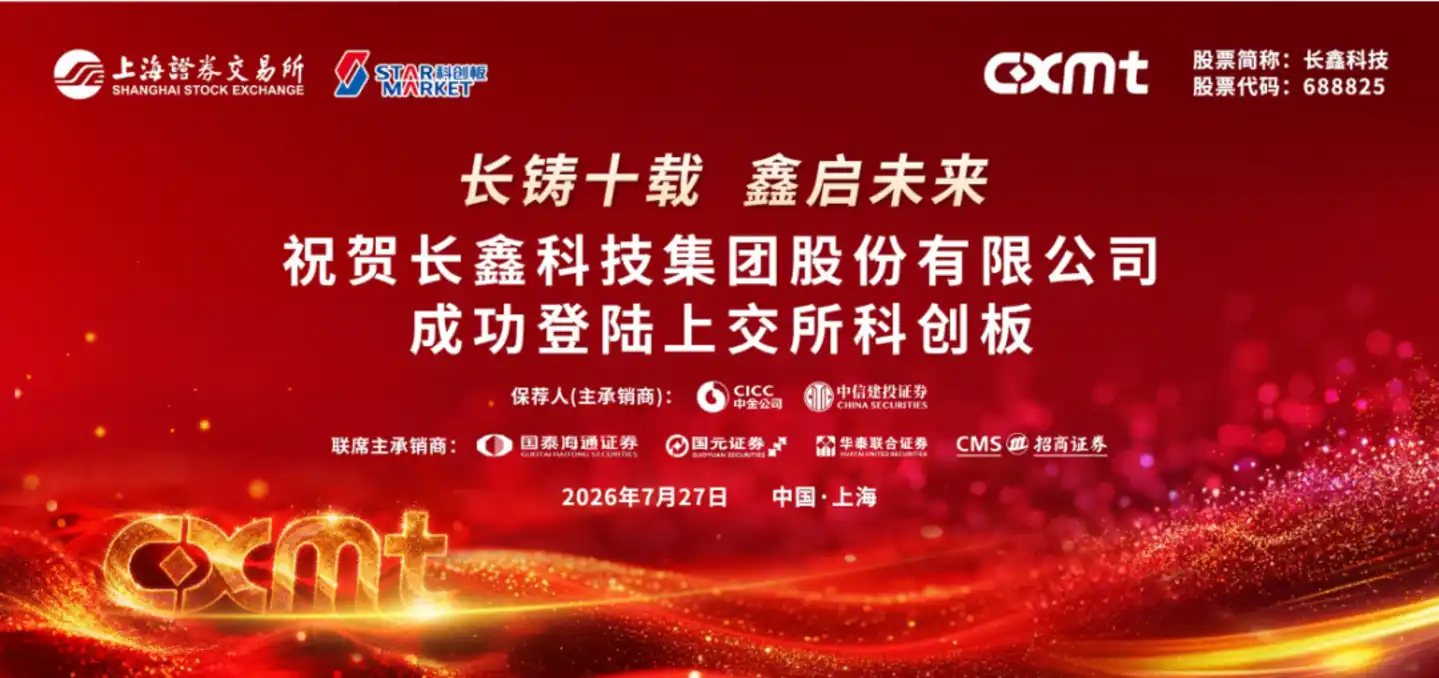
Image Source: ChangXin Technology
ChangXin Technology's growth trajectory has precisely and completely experienced such a cycle. In 2023, when the industry bottomed out, the company's revenue was only 9.087 billion yuan, with a net loss attributable to shareholders as high as 16.34 billion yuan. In 2024, the market began to recover, narrowing the loss to 7.145 billion yuan. In 2025, the explosion of AI demand triggered storage price hikes, with revenue jumping to 61.799 billion yuan and achieving its first annual profit of 1.875 billion yuan.
By the first quarter of 2026, its single-quarter net profit attributable to shareholders soared to 24.762 billion yuan—thirteen times the profit of the entire year 2025.
Going from a loss of tens of billions to earning 300 million per day took only two years. Such a speed of reversal is the most typical performance characteristic of a cyclical stock. Placing the DRAM price trend chart alongside ChangXin's profit curve shows almost perfectly aligned movements.
The steep profit climb did not stem from a sudden market share shift due to technological generational leaps; it was a systemic红利 release granted by the industry to all incumbents.
II. The Cycle Pendulum: How Long Can the Price Rise Last?
The core driver of this surge in performance boils down to one word: price.
In the first quarter of 2026, DRAM contract prices rose by 93% to 98% quarter-on-quarter. In the second quarter, general-purpose DRAM contract prices continued to rise by 58% to 63%. The company's gross profit margin consequently leapt from -2.19% in 2023 to 41.02% in 2025, approaching 65% in Q1 2026. The vast majority of the profit explosion came from the price surge.
The root cause of the price increase lies in the reallocation of capacity triggered by AI.
The three giants—Samsung, SK Hynix, and Micron—allocated 70% to 80% of their new capacity to HBM, the High Bandwidth Memory most critical for AI servers, which yields far higher profits than general-purpose products. This directly led to a significant contraction in the supply of general-purpose DRAM. Simultaneously, the DRAM demand for AI servers is eight to ten times that of traditional servers.
With supply being siphoned away and demand multiplying, a supply-demand gap was torn open. The money ChangXin earned in this round essentially came from the market space released when giants shifted production to HBM—it's the territory yielded by industry leaders pursuing higher profits.
However, the reverse movement of the cycle is already gathering force.
A wave of capacity expansion is sweeping the globe. The combined capital expenditure of the three giants is approaching $70 billion: Samsung's total investment in 2026 exceeds 110 trillion won, breaking the 100 trillion won mark for the first time; SK Hynix's capital expenditure is projected at $20.5 billion; Micron's capital expenditure for fiscal year 2026 is expected to exceed $25 billion, a year-on-year increase of over 80%.
ChangXin itself is also expanding, planning to grow from its current three 12-inch wafer fabs to seven, with a new Shanghai factory expected to commence operations in 2027.
Massive capital expenditure signifies a cliché yet harsh reality: today's high prices are breeding tomorrow's oversupply.
It takes two to three years for a wafer fab to be built and reach mass production. Every dollar invested today will translate into specific capacity figures in the next two to three years. When these new capacities are concentratedly released, whether demand remains robust is a question all storage manufacturers must face squarely.
The pace of price increases is also changing. TrendForce predicts that DRAM contract price increases will narrow to 13% to 18% in the third quarter of 2026. Downstream customers' wallets are stretched thin; some manufacturers are beginning to cut configurations or lower shipment forecasts.
Although prices are still rising, the slope has noticeably flattened. Multiple institutions judge that from the second half of 2026 to 2027, DRAM contract prices will maintain a high level with fluctuating increases, but the rate of increase will gradually narrow. Around 2028, as overseas new factory capacities complete their ramp-up, the supply-demand relationship may reverse and enter a downward channel.
The most critical variable in this process is HBM itself. HBM is currently the most profitable and rapidly growing segment of the memory market, and also ChangXin's most obvious shortcoming. ChangXin's HBM3 samples have been delivered to leading customers for verification, with mass production expected in 2026. However, Samsung and SK Hynix are already mass-shipping the more advanced HBM3E and moving towards HBM4.
The gap objectively exists; catching up takes time, and the cycle's pendulum won't stop and wait. Whether ChangXin can successfully tackle the HBM challenge before the next price decline determines whether it merely enjoyed this round's price increase红利 or truly gained the ability to穿越 cycles.
III. Conclusion
ChangXin Technology is a good company; this is beyond doubt.
It broke the monopoly of overseas giants in the DRAM market over a decade, giving China genuine话语权 in the global storage industry; its business is about the infrastructure of the digital economy; its growth is related to the security and autonomy of the national supply chain.
From an industrial perspective, ChangXin's rise is one of the most significant breakthroughs worthy of documentation in China's semiconductor field.
However, between a good company and a good investment often lies a清醒 recognition of the cycle.
In today's market, ChangXin Technology simultaneously carries two different narratives.
One narrative views it as a growth stock: vast space for domestic substitution, continuously climbing global market share, AI红利 just beginning to be released—these stories are real, forming the solid foundation for ChangXin's long-term value.
The other narrative views it as a cyclical stock: calculated based on projected 2026 profits, the dynamic price-to-earnings ratio is about 5 to 6 times,恰好 falling within the typical valuation range for cyclical stocks at peak prosperity; a market capitalization of 3.28 trillion yuan has already提前 digested growth expectations for many years to come.
These two judgments are not contradictory. ChangXin is an excellent company while also being a typical cyclical stock.
The cycle of the DRAM industry will not disappear because of the rise of a Chinese company. AI has indeed extended the duration of this cycle, but it has only changed the slope; it has not eliminated the cycle itself.
For investors, facing a cyclical stock at the peak of the cycle, what truly requires deep thought is: When the tide recedes, will there be sufficient preparation to handle the pullback?