CFTC Chair Signals Shift Toward Clear Rules for Prediction Markets

TheNewsCryptoPubblicato 2026-01-30Pubblicato ultima volta 2026-01-30

Introduzione

CFTC Chair Michael S. Selig is leading efforts to establish a clearer regulatory framework for prediction markets, which allow trading on the outcomes of events like elections and sports. The agency is withdrawing previous proposals, including a 2024 plan to ban certain event contracts, to reduce regulatory uncertainty. This shift is part of a broader "Future-Proof" initiative to modernize regulation, moving from enforcement-driven approaches to tailored rules. The CFTC is also collaborating with the SEC to harmonize regulations for digital assets and define distinctions between commodities and securities. The goal is to provide a more stable environment for prediction market platforms and related digital finance sectors.

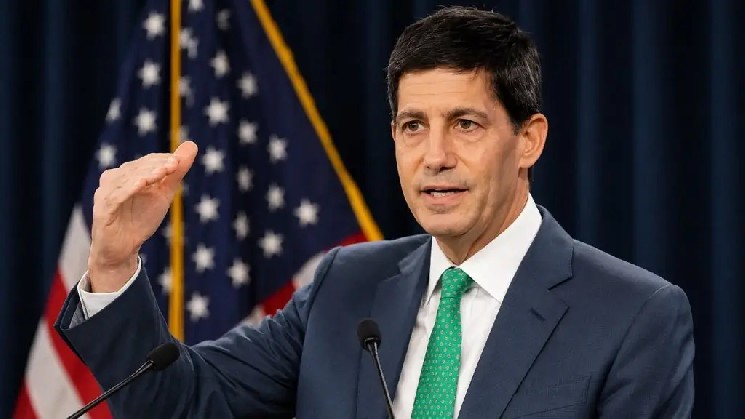
The CFTC, under the leadership of Chair Michael S. Selig, is working to establish a new, clearer framework for prediction markets. As part of a larger effort to update the regulatory framework for new markets such as digital assets and event contracts.

Prediction markets are platforms where individuals engage in the trading of contracts with respect to the outcome of events such as elections, sports, and economic data. They are becoming increasingly popular on both crypto and traditional financial platforms, leading to regulatory uncertainty.

Speaking for the first time as the CFTC Chair, Selig announced that the CFTC would withdraw previous rulemaking proposals and advisories. This includes a 2024 proposal to prohibit certain political and sports-related event contracts. This had contributed to a lack of clarity, according to the regulators. He asked his staff to develop new and clearer guidelines on event contracts.

Regulatory Uncertainty Addressed

The CFTC is hinting at a larger change in its approach to regulation of prediction markets and digital asset-linked products. This has given rise to prediction market platforms such as Kalshi, Polymarket, and cryptocurrency exchanges. The legal disputes over whether prediction markets are gambling or financial derivatives have increased the need for a regulatory framework.

Selig’s guidance is part of the “Future-Proof” initiative to update the agency’s approach to new technologies. The initiative focuses on a shift from enforcement-driven regulation to tailored regulation and aligning regulation across financial markets.

Coordination with the SEC is also part of the plan, as both organizations are working towards harmonizing the regulation of digital assets. Collaboration will hopefully help to define the lines between commodity derivatives and securities. As well as avoiding fragmentation in the regulation of traditional and new markets.

Implications for Market Participants

CFTC Chairman Michael S. Selig indicates a change in regulatory policy to better define rules for prediction markets in the U.S. by pulling out outdated proposals and encouraging staff to write clearer guidelines. Collaboration with the SEC and updating regulations for Future-Proof and Project Crypto indicate a coordinated effort among agencies to provide greater clarity on digital assets and related markets. The efforts are intended to provide a cleaner, more stable environment for companies operating in prediction markets and related digital finance markets.

Highlighted Crypto News:

U.S. Finalizes Forfeiture of $400 Million Linked to Helix Darknet Mixer

TagsCFTCKalshiSEC

Domande pertinenti

QWhat is the CFTC's new initiative regarding prediction markets under Chair Michael S. Selig?

AThe CFTC, under Chair Michael S. Selig, is working to establish a new, clearer regulatory framework for prediction markets. This includes withdrawing previous rulemaking proposals and advisories, and directing staff to develop new and clearer guidelines on event contracts as part of its 'Future-Proof' initiative.

QWhy is there regulatory uncertainty surrounding prediction markets according to the article?

ARegulatory uncertainty exists because prediction markets are becoming increasingly popular on both crypto and traditional financial platforms, and there are legal disputes over whether they constitute gambling or financial derivatives. Previous CFTC actions, such as a 2024 proposal to ban certain event contracts, also contributed to this lack of clarity.

QWhich specific prediction market platforms are mentioned as being affected by the CFTC's regulatory approach?

AThe article mentions that the CFTC's approach affects prediction market platforms such as Kalshi and Polymarket, as well as cryptocurrency exchanges.

QHow does the CFTC's 'Future-Proof' initiative aim to change its regulatory approach?

AThe 'Future-Proof' initiative aims to shift the CFTC's approach from enforcement-driven regulation to tailored regulation. It focuses on updating the agency's approach to new technologies and aligning regulation across financial markets to provide greater clarity and stability.

QWhat role does coordination with the SEC play in the CFTC's new plan for prediction and digital asset markets?

ACoordination with the SEC is part of the plan to harmonize the regulation of digital assets. The collaboration aims to help define the lines between commodity derivatives and securities, and to avoid regulatory fragmentation between traditional and new markets.

Letture associate

Critical Moments in Bitcoin: Cost Zones That Demand Attention Have Been Identified!

Analytics firm Glassnode reported that reduced expectations for U.S. interest rate cuts, along with pricing in possible rate hikes, have suppressed risk appetite in the cryptocurrency market. The Fed's interest rate decisions are crucial for market direction. U.S. Treasury yields have surpassed returns from crypto carry trades, leading investors to favor cash and low-risk interest-bearing instruments over crypto assets. A strong U.S. dollar further weakens marginal demand for crypto. Bitcoin is currently trading below its most intensive cost basis level, with approximately $69,000 identified as the breakeven zone and significant resistance for short-term investors. For a stronger recovery, Bitcoin needs to reclaim the $69,000 threshold with increased trading volume. Renewed active demand for spot Bitcoin ETFs is also deemed critical. According to Glassnode, the current Bitcoin decline represents the shallowest bear market in terms of price drawdown depth to date. However, based on previous cycle durations, this downturn may not be over yet. Spot trading volumes have fallen to multi-year lows, and sell-side order books have thinned, though many buy orders are placed significantly below current prices. Glassnode's risk indicator, Vector, signaled "risk off," suggesting a capital preservation mindset. The current market structure is being driven more by macroeconomic factors like monetary policy, bond yields, and dollar strength than by crypto-sector developments. Losing Bitcoin's support range of $62,000-$68,000, coupled with renewed exchange inflows, could negate the recovery scenario. Conversely, more favorable monetary policy, increased trading volume, a Bitcoin recovery above $69,000, and a resumption of spot ETF buying could signal a market turnaround.

cryptonews.ru26 min fa

Critical Moments in Bitcoin: Cost Zones That Demand Attention Have Been Identified!

cryptonews.ru26 min fa

Breaking News: Full Detailed Rationale and Explanation of the Fed's Interest Rate Decision Released!

As expected, the Federal Reserve kept its key interest rate unchanged at 3.50-3.75 percent, marking the fifth consecutive meeting without a rate change. The Federal Open Market Committee's (FOMC) decision passed with a 9-3 majority vote. Cleveland Fed President Loretta Mester, Minneapolis Fed President Neel Kashkari, and Dallas Fed President Lorie Logan dissented, voting in favor of a 25 basis point rate hike. This was the first meeting since 2016 where three regional Fed presidents voted against holding rates steady, signaling growing influence among members advocating for tighter monetary policy to combat inflation. The Fed's statement noted that economic activity has been expanding at a solid pace despite high uncertainty, partly due to Middle East conflicts. It highlighted that growth in productivity and investment remained strong, employment gains have aligned with labor force growth, and the unemployment rate has remained relatively stable. The Fed also committed to maintaining ample reserves in the banking system. The statement emphasized that inflation remains above the Fed's 2% target. It noted that supply shocks, including in the energy sector, are adding to inflationary pressures. The Committee stated it will continue to closely monitor incoming data and risks in pursuit of its price stability goal. The dissenting members argued that the target range for the federal funds rate should have been increased by 25 basis points.

cryptonews.ru46 min fa

Breaking News: Full Detailed Rationale and Explanation of the Fed's Interest Rate Decision Released!

cryptonews.ru46 min fa

The Fed's Interest Rate Decision is Inevitable! Former Senior Fed Advisor Reveals His Forecast for Today!

Former Federal Reserve senior advisor John Faust stated he does not expect the Fed to raise interest rates at the FOMC meeting concluding today. He argued the Fed will not try to win credibility by deliberately surprising markets. In his assessment, Faust noted that Fed Chairman Kevin Warsh has used strong rhetoric on restoring price stability but largely failed to share details on how he plans to achieve it. This information gap has led to various market scenarios. However, Faust believes the reality is simpler: Warsh positions himself as a pragmatic, tough-minded policymaker, placing high importance on monetary policy communication while showing flexibility regarding balance sheet reduction. Faust compared Warsh's approach to the "refined intuitive approach" used by former Chairman Alan Greenspan. Faust stated that, unlike strict policy rules, this approach does not yield clear-cut answers on rate decisions. In current conditions, both a 25-basis-point hike and waiting for the next meeting could be reasonably justified. Aligning with market expectations, Faust predicts the Fed will choose to wait today. He believes the benefit of waiting outweighs the negatives, partly because he agrees that deliberately surprising markets to boost credibility is not a valid factor. Faust also argued there is no substantial macroeconomic difference between hiking today and holding steady, as a 25-basis-point move over eight weeks alone is not economically decisive. He emphasized that the important aspect will not be the decision itself, but how it is explained to markets. Warsh has so far advocated forward-looking policy without clear guidance on economic forecasts or the likely rate path. Faust warned that if the Fed does not explicitly state grounds for a hike and opts to wait for more data, markets may misinterpret the decision's meaning. Regardless of today's outcome, how Warsh explains the policy decisions at the meeting and press conference may be the most critical information for investors.

cryptonews.ru1 h fa

The Fed's Interest Rate Decision is Inevitable! Former Senior Fed Advisor Reveals His Forecast for Today!

cryptonews.ru1 h fa

Trading

Spot
活动图片