CARF Global Implementation Timeline Overview: What Are the Commitments of Mainland China and Hong Kong?

marsbitPubblicato 2026-01-28Pubblicato ultima volta 2026-01-28

Introduzione

CARF (Crypto-Asset Reporting Framework) is a global framework for the automatic exchange of tax-related data on crypto-assets, targeting crypto-asset service providers as reporting entities. As of the end of 2025, 76 jurisdictions have committed to implementing CARF, with a phased rollout plan. The first group, including the UK and EU member states, will begin automatic information exchange in 2027. The second group, which includes Singapore, the United Arab Emirates, and Hong Kong, is scheduled to fully implement the framework in 2028. Data collection for reportable transactions will begin one year prior, starting in 2026. Hong Kong has explicitly committed to implementing CARF. It plans to start collecting crypto-asset transaction data in 2027 and commence automatic tax information exchange with partner jurisdictions in 2028. Service providers operating in Hong Kong must establish compliance and reporting mechanisms. In contrast, Mainland China has not yet committed to CARF and is not included in any of the implementation batches. It is also not listed by the OECD as a jurisdiction with relevance that has yet to commit. Under its current regulatory framework, which imposes strict limitations on crypto-asset activities, there are no legal crypto-asset service providers that could be integrated into the CARF system. Therefore, in the short term, Mainland China does not meet the conditions for participating in CARF's routine information exchange. It is noted that Mainland C...

Author: Fintax

Basic Positioning of CARF

CARF is a framework for the automatic exchange of tax-related information on crypto-assets, with crypto-asset service providers as the reporting entities, used to support tax authorities in various jurisdictions in obtaining information related to transactions involving their taxpayers.

Global Implementation Progress and Timeline

According to information released by the OECD Global Forum, as of the end of 2025, 76 countries and regions have committed to implementing CARF and will advance its implementation in batches.

The first group of jurisdictions plans to commence the first automatic information exchange in 2027, primarily including the UK and EU member states, etc.; the second group of jurisdictions plans to fully implement in 2028, including Singapore, the United Arab Emirates, and China Hong Kong, etc.

According to the institutional arrangement, the collection of relevant transaction data will commence one year in advance, starting from 2026, crypto-asset service providers will need to systematically organize reportable transaction information.
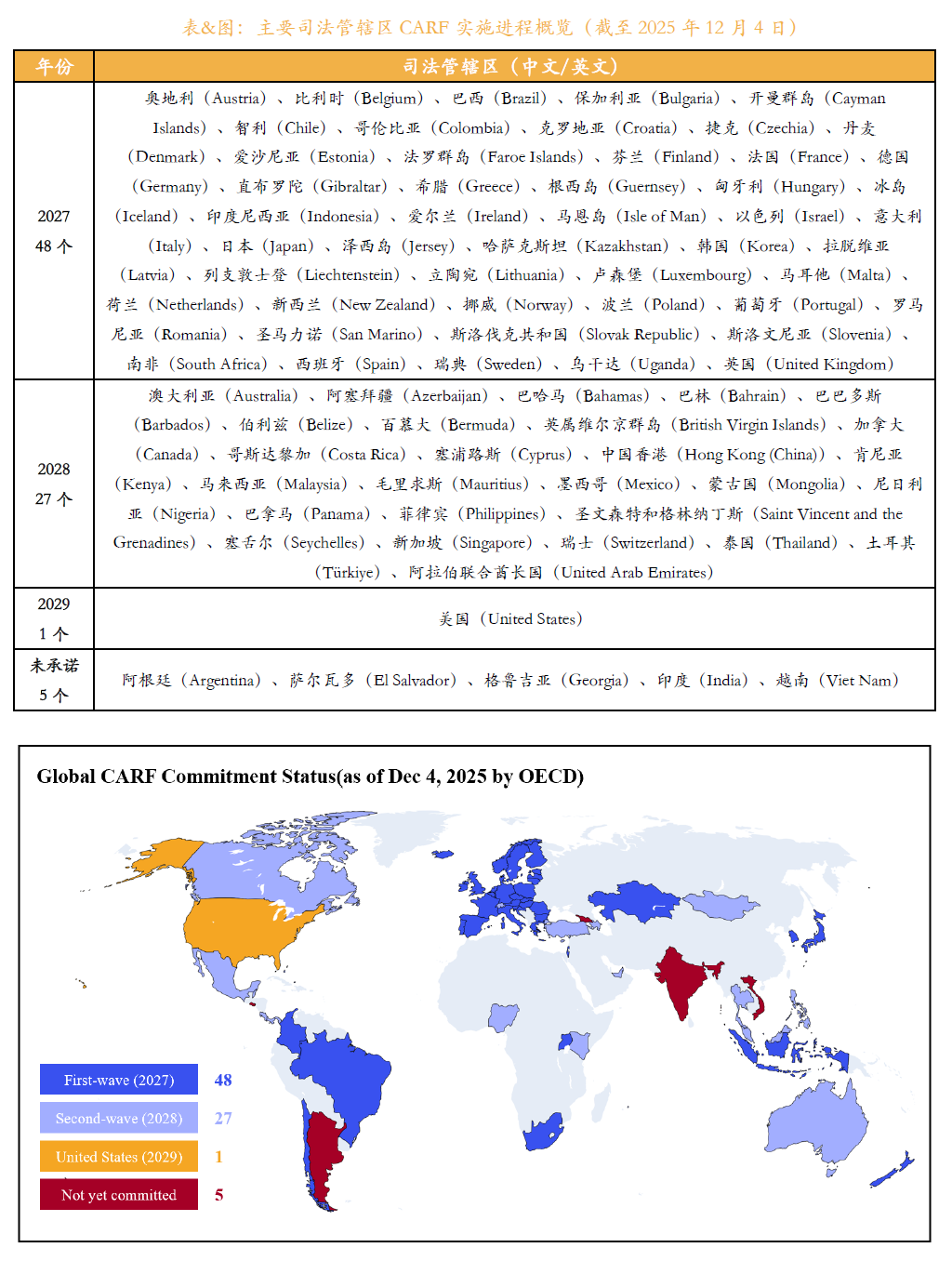
Figure 1: Overview of CARF Implementation Progress in Major Jurisdictions

China Hong Kong: Clear Participation and Timetable Advancement

In the aforementioned arrangement, China Hong Kong has clearly committed to implementing CARF and will advance related work according to the international timetable.

Hong Kong plans to start collecting crypto-asset transaction data from 2027 and commence automatic tax information exchange with other cooperating jurisdictions in 2028.

Crypto-asset service providers operating under Hong Kong's regulatory framework need to establish corresponding data compliance and reporting mechanisms, and relevant reportable transactions will be included in the cross-border information exchange process.

Mainland China: Not Yet Committed and Outside the Implementation Scope

In comparison, Mainland China has not yet made an implementation commitment to CARF.

As of the current stage, Mainland China is not included in any implementation batch of CARF, nor has it been listed by the OECD as a jurisdiction that is relevant but has not yet committed to participation.

Under the current regulatory framework, the mainland adopts a strict restrictive attitude towards cryptocurrency trading activities, and there are no legal crypto-asset service providers within the country that can be纳入 the CARF reporting system; therefore, it does not currently meet the institutional conditions for participating in CARF's regularized information exchange.

Future Possibilities and Realistic Judgment

It should be pointed out that Mainland China has fully implemented CRS since 2018 and has mature experience in financial account information exchange.

If future crypto-asset regulatory policies are adjusted, the mainland has the institutional and technical conditions to对接 CARF.

However, given the current policy environment, the possibility of Mainland China joining this framework around the 2027 launch of CARF and in the following years remains relatively low.

Domande pertinenti

QWhat is the CARF and what is its primary purpose?

AThe CARF (Crypto-Asset Reporting Framework) is an international framework for the automatic exchange of tax-related information on crypto-assets. It targets crypto-asset service providers as the reporting entities, aiming to support tax authorities in various jurisdictions in obtaining information related to transactions involving their taxpayers.

QHow many jurisdictions have committed to implementing the CARF as of the end of 2025, and what is the implementation timeline?

AAs of the end of 2025, 76 countries and regions have committed to implementing the CARF. The first group of jurisdictions, including the UK and EU member states, plan to commence the first automatic information exchange in 2027. The second group, which includes Singapore, the United Arab Emirates, and Hong Kong, China, is scheduled to fully implement the framework in 2028.

QWhat is the commitment and implementation plan of Hong Kong, China regarding the CARF?

AHong Kong, China has explicitly committed to implementing the CARF. It plans to start collecting crypto-asset transaction data from 2027 and begin automatic exchange of tax information with other cooperating jurisdictions in 2028. Crypto-asset service providers operating under Hong Kong's regulatory framework will need to establish corresponding data compliance and reporting mechanisms.

QWhat is the current status of Mainland China's commitment to the CARF?

AMainland China has not yet made a commitment to implement the CARF. It is not included in any of the implementation batches listed by the OECD and is not currently classified as a relevant jurisdiction that has yet to commit. Under its current regulatory framework, which imposes strict restrictions on crypto-asset activities, there are no legitimate crypto-asset service providers that could be incorporated into the CARF reporting system, making short-term participation unlikely.

QDoes Mainland China have the foundational experience to potentially join the CARF in the future?

AYes, Mainland China has comprehensive experience in financial account information exchange, having fully implemented the CRS (Common Reporting Standard) since 2018. This provides it with the technical and institutional foundation to potentially adapt to the CARF requirements if its crypto-asset regulatory policy were to change in the future. However, given the current policy environment, the possibility of joining the CARF around its 2027 launch or in the subsequent few years remains relatively low.


Letture associate

U.S.-Iran Ceasefire: How Much of a Bitcoin Rally Can a Truce Agreement Support?

Headline: "U.S.-Iran Truce: How Much Can a Ceasefire Agreement Propel Bitcoin's Rebound?" On June 15th, Bitcoin rebounded to around $67,255, marking its first return to the $67,000 level since falling below $60,000 earlier in June. Ethereum and Solana also saw significant gains. The immediate driver for this market-wide recovery in crypto and global risk assets was the signing of a U.S.-Iran ceasefire memorandum, with a formal ceremony scheduled for June 19th. The agreement, which includes reopening the Strait of Hormuz, caused oil prices to plunge roughly 5%, easing inflation expectations and boosting prospects for Federal Reserve rate cuts. This macroeconomic shift fueled a rally in U.S. equities, with the Dow Jones hitting a record high. SpaceX's spectacular post-IPO performance further energized market sentiment. However, on-chain and derivatives data from Glassnode suggest this move is more indicative of a technical rebound from deeply oversold conditions rather than a confirmed trend reversal. The crypto market is undergoing noticeable capital rotation. While Bitcoin ETFs recently saw their worst outflows on record, the bleeding has slowed significantly. Meanwhile, new altcoin ETFs for assets like XRP and Solana are attracting substantial inflows, causing Bitcoin's market dominance to drop to 58%. Despite the rebound, the Crypto Fear & Greed Index remains in "Extreme Fear" territory at 22. The price quickly retreated after touching the $67,000 resistance level, indicating selling pressure persists. Analysis shows short-term speculative supply has been heavily washed out, with holder structure shifting toward a more long-term profile. While panic is subsiding and some on-chain metrics point to accumulation at lower prices, the market currently lacks the strong, sustained institutional buying needed to establish a new bullish trend.

Foresight News10 min fa

U.S.-Iran Ceasefire: How Much of a Bitcoin Rally Can a Truce Agreement Support?

Foresight News10 min fa

Copper, the Gold of 2026

Copper: The New Gold for 2026? Market focus has shifted from AI chips to underlying infrastructure, with copper emerging as a key narrative. Its role is evolving beyond "Dr. Copper"—a traditional indicator of economic cycles—due to structural demand growth from AI data centers (requiring massive electrical infrastructure), grid expansion, EVs, and re-industrialization. Estimates suggest data centers alone could require 300,000 tons of copper by 2050. The core bullish thesis is not just demand but a severe supply constraint. New copper mines take ~17 years to develop, while ore grades are declining and new discoveries are scarce, potentially leading to a 30% supply deficit by 2035. This supply rigidity, coupled with strategic importance, is giving copper a "gold-like" scarcity narrative. Major macro investors, including Stanley Druckenmiller, are allocating to copper as a hedge against dollar weakness and for its exposure to energy transition and geopolitics. Traders like Pierre Andurand have projected prices could reach $40,000/ton. Capital inflows are visible in surging futures trading volumes. Copper mining stocks act as leveraged plays on copper prices. Companies like Freeport-McMoRan (FCX) and Southern Copper (SCCO), as well as Chinese miners like CMOC, have seen significant volatility, offering high upside but also steep drawdowns, reflecting operational and geopolitical risks. While copper remains cyclical and won't fully replicate gold's monetary role, its long-term fundamentals have shifted. Its new scarcity premium, driven by a tightening supply structure and expanding electrical demand, suggests its "goldification" is just beginning.

marsbit17 min fa

Copper, the Gold of 2026

marsbit17 min fa

pump.fun's New Feature Brings 'Black Mirror' Into Reality

The article begins by recounting a dark fictional story from *Black Mirror* (Season 7, Episode 1 "Common People"), where a man is forced to perform humiliating tasks online to pay for his wife's life-sustaining medical subscription. It then draws a parallel to a new real-world feature on the crypto platform pump.fun called "Pump.fun Go," which allows users to post and complete paid bounty tasks. This feature gained mainstream attention, often negatively, through extreme examples. A prominent case involved a bounty of 40 SOL (~$2,600) offered to permanently tattoo "$bountywork" on one's forehead. An Indian man completed the task, stating the money "changed his life," and later earned significantly more from a related meme coin. Another bounty paid 200 SOL (~$14,000) for a "bounty.fun" forehead tattoo, with the participant simply stating, "We need the money." The article highlights how this system can amplify darkness, citing the dev behind $Bountywork who spent thousands on bounties for attention-grabbing stunts like eating bugs or drinking hot sauce for small sums. It compares this to past tragic live-streaming incidents where people harmed themselves for money, noting regulation cannot stop those in desperate need. However, it also points to positive, altruistic bounties that have emerged, such as organizing anti-work rallies in New York, performing random acts of kindness for strangers, organizing community food drives, or even helping an elderly person cross the street. The piece concludes by acknowledging the platform reflects both the dark and light sides of human nature when actions are given a price, hoping for more of the latter.

marsbit22 min fa

pump.fun's New Feature Brings 'Black Mirror' Into Reality

marsbit22 min fa

Trading

Spot
Futures
活动图片



