Capital One to Acquire Brex in $5.15B Deal, Expanding Fintech Push

TheNewsCryptoPubblicato 2026-01-23Pubblicato ultima volta 2026-01-23

Introduzione

Capital One Financial Corporation is acquiring fintech company Brex in a deal valued at $5.15 billion, structured with 50% cash and 50% stock. The acquisition aims to strengthen Capital One’s commercial banking presence by integrating Brex’s corporate finance and expense management platform, which serves startups and scaling businesses with tools for cards, spend controls, and accounting. The move reflects a strategic shift as banks seek to acquire scaled fintech assets rather than build in-house. Brex, which had considered a SPAC-led IPO in 2021, now gains banking infrastructure support. Users may benefit from enhanced credit options and cost efficiencies, though innovation speed may be affected by banking compliance. The deal signals accelerating fintech consolidation, with banks targeting integrated tech platforms over partnerships.

Capital One Financial Corporation, an American bank holding company, is preparing to acquire a fintech business named Brex through a business deal expected to affect the corporate finance and expenditure management sector. The deal values Brex at around $5.15 billion. The bank reportedly is prepared to finance the deal through 50% cash and 50% stock.

The acquisition will enable Capital One to go deeper in the business stack, particularly as traditional banking institutions are increasingly competing vigorously with fintech services that provide more efficient onboarding processes, more intelligent expense automation, and live accounting workflows. Brex built its reputation by offering tools that help companies manage corporate cards, spend controls, reimbursements, and accounting integrations in a single dashboard, features that gained traction among startups and scaling enterprises.

Why Capital One wants Brex now

Capital One continues to push beyond its consumer banking identity and strengthen its commercial footprint. This deal gives the firm direct ownership of a fintech platform that already operates at scale with modern product design and strong brand recognition among high-growth businesses.

Meanwhile, the timing matters. Fintech valuations cooled after the interest-rate surge of the previous cycle, but 2026 has started to reopen the M&A window as banks look for strategic assets rather than building everything internally. Capital One’s move signals it wants to lead that consolidation rather than chase it later.

A second attempt at a public-market future through acquisition

Previously, Brex was eyeing a public listing by following the SPAC route, something that had been planned as far back as 2021. However, the plan has since stalled as stock markets have become risk-off and rate-rising conditions have become challenging. The acquisition would provide an alternative approach by which Brex can grow, as the fintech firm would have the resources of a regulated financial institution at its back.

For Capital One, it also includes access to the advantages of premium business software capabilities at a quicker pace, as opposed to waiting several years for their own product developments.

What changes for users and the fintech market

For the Brex consumer base, the deal may translate to increased support of banking infrastructure, bigger credit opportunities, and perhaps cheaper costs down the road with better balance sheet support. Yet, one thing to keep an eye on with the deal is the risk of product speed. Financial technology customers generally expect continuous innovation, and financial institutions might be slower to innovate due to compliance levels and governance structures.

Even so, provided that Capital One maintains the product culture of Brex upon scaling with commercial bank rails, the transaction has the potential to serve as a future playbook for modernizing the bank industry.

The bigger message: fintech consolidation accelerates

It also demonstrates the broader financial markets reality that banks are no longer looking for tech partnerships but the tech layer itself. This is because, in the current rising financial markets competition in the area of corporate finance, fintech platforms with high product adoption rates are increasingly being acquisition targets rather than IPO players.

Highlighted Crypto News:

F/m Investments Seeks SEC Approval to Tokenize Treasury ETF Shares

TagsBankingCapital One BankfinanceFinTechIPO

Crypto di tendenza

Domande pertinenti

QWhat is the total value of the acquisition deal between Capital One and Brex, and how is it being financed?

AThe acquisition deal values Brex at $5.15 billion and is being financed through a mix of 50% cash and 50% stock.

QWhat are the key features of Brex's platform that made it an attractive acquisition target for Capital One?

ABrex's platform offers tools for managing corporate cards, spend controls, reimbursements, and accounting integrations in a single dashboard, which are highly valued by startups and scaling enterprises for their efficiency and automation.

QWhy did Brex's plans for a public listing via SPAC stall, and how does the acquisition provide an alternative?

ABrex's SPAC plans for a public listing stalled due to risk-off stock markets and challenging rising interest rate conditions. The acquisition provides an alternative growth path by giving Brex the resources and backing of a regulated financial institution.

QWhat potential benefits and risks does the acquisition present for Brex's existing customers?

APotential benefits for customers include increased banking infrastructure support, larger credit opportunities, and potentially lower costs. A key risk is that product innovation speed could slow down due to the compliance and governance structures of a large financial institution.

QWhat broader trend in the financial market does this acquisition signal, according to the article?

AThe acquisition signals a trend where banks are increasingly seeking to acquire the technology layer itself (like fintech platforms with high product adoption) rather than just pursuing tech partnerships, accelerating fintech consolidation.

Letture associate

Once-Popular Web3 Enters Wave of Layoffs

The once-hot Web3 industry is experiencing a severe wave of layoffs. While many companies attribute job cuts to AI-driven restructuring, the primary reason is often financial pressure. The Web3 sector, at the intersection of tech and finance, has been hit particularly hard. Employees at major cryptocurrency exchanges report sudden, impersonal layoffs—often with system access revoked overnight—and minimal or no severance. Common tactics include setting impossible performance targets or terminating employees for minor policy violations. The working atmosphere has become toxic, marked by intense monitoring, excessive meetings, and management obsessed with control and internal politics rather than product innovation. The industry's core business model is collapsing. Exchange revenue from trading fees and listing charges has plummeted due to a decline in quality projects and retail investor exodus. Events like the massive forced liquidation on October 10th further shattered confidence. Competition from on-chain derivatives platforms and prediction markets is intensifying the downturn. As layoffs continue, displaced workers struggle to find new opportunities. Many transition to the AI sector, but face significant bias from traditional finance and even some AI firms, which view crypto industry experience with suspicion. The current downturn appears more structural than cyclical, driven by unsustainable practices, internal strife, and a failure to innovate, raising questions about the industry's future trajectory.

marsbit49 min fa

Once-Popular Web3 Enters Wave of Layoffs

marsbit49 min fa

Sales Drop 26% But Prices Rise? Xiaomi's Dilemma

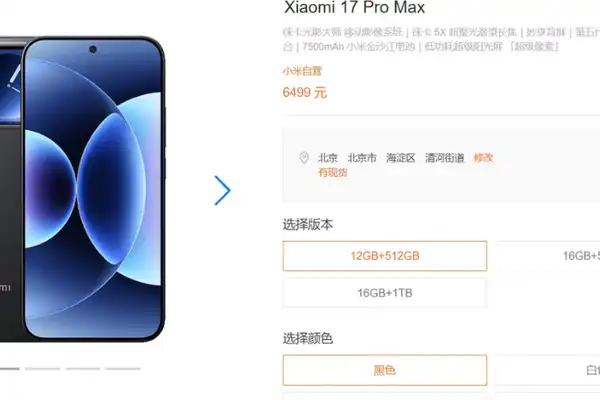
Xiaomi, facing a significant 26.3% year-on-year decline in global smartphone shipments in Q2 2026, has implemented its third price hike of the year. On August 2nd, prices were raised for nine models, including the flagship Mi 17 series (up 400-500 yuan) and Redmi K90/Turbo 5 series (up 300 yuan). This move completes a pattern where cost pressure, originating from surging memory chip prices, has climbed from entry-level to mid-range and now flagship products. The primary driver is a severe supply squeeze on consumer-grade DRAM and NAND flash memory, as major manufacturers like Samsung shift advanced capacity to more profitable HBM for AI applications. According to Xiaomi President Lu Weibing, memory prices for the same configuration have skyrocketed nearly fourfold since Q1 2025, adding roughly 1500 yuan to the cost of a mainstream 12GB+512GB phone. IDC estimates consumer memory costs have risen nearly 300% year-on-year. While the price increases hurt demand and contributed to the sales slump, Xiaomi's strategy of reducing entry-level models and upgrading its product mix also played a role. Domestically, its market share in China fell to 12% (5th place), while leaders Huawei and Apple saw shipments grow over 24%. To mitigate future risks, Xiaomi is accelerating its in-house "Surge" chip development and optimizing memory configurations across its lineup. Xiaomi is not alone; major brands like OPPO, vivo, and Apple have already raised prices in 2026, with industry insiders predicting another round of increases (200-800 yuan) in the second half. A full-scale industry-wide涨价 cycle is underway, forcing both manufacturers and consumers to recalibrate their strategies and purchasing decisions amid sustained cost pressures.

marsbit1 h fa

Sales Drop 26% But Prices Rise? Xiaomi's Dilemma

marsbit1 h fa

Trading

Spot

Articoli Popolari

Come comprare PUSH

Benvenuto in HTX.com! Abbiamo reso l'acquisto di Push Protocol (PUSH) semplice e conveniente. Segui la nostra guida passo passo per intraprendere il tuo viaggio nel mondo delle criptovalute.Step 1: Crea il tuo Account HTXUsa la tua email o numero di telefono per registrarti il tuo account gratuito su HTX. Vivi un'esperienza facile e sblocca tutte le funzionalità,Crea il mio accountStep 2: Vai in Acquista crypto e seleziona il tuo metodo di pagamentoCarta di credito/debito: utilizza la tua Visa o Mastercard per acquistare immediatamente Push ProtocolPUSH.Bilancio: Usa i fondi dal bilancio del tuo account HTX per fare trading senza problemi.Terze parti: abbiamo aggiunto metodi di pagamento molto utilizzati come Google Pay e Apple Pay per maggiore comodità.P2P: Fai trading direttamente con altri utenti HTX.Over-the-Counter (OTC): Offriamo servizi su misura e tassi di cambio competitivi per i trader.Step 3: Conserva Push Protocol (PUSH)Dopo aver acquistato Push Protocol (PUSH), conserva nel tuo account HTX. In alternativa, puoi inviare tramite trasferimento blockchain o scambiare per altre criptovalute.Step 4: Scambia Push Protocol (PUSH)Scambia facilmente Push Protocol (PUSH) nel mercato spot di HTX. Accedi al tuo account, seleziona la tua coppia di trading, esegui le tue operazioni e monitora in tempo reale. Offriamo un'esperienza user-friendly sia per chi ha appena iniziato che per i trader più esperti.

579 Totale visualizzazioniPubblicato il 2024.12.13Aggiornato il 2026.06.02

Come comprare PUSH

Discussioni

Benvenuto nella Community HTX. Qui puoi rimanere informato sugli ultimi sviluppi della piattaforma e accedere ad approfondimenti esperti sul mercato. Le opinioni degli utenti sul prezzo di PUSH PUSH sono presentate come di seguito.

活动图片