Canopy Introduces ‘Progressive Autonomy’: A New Framework That Makes Launching a Blockchain Easy

TheNewsCryptoPubblicato 2025-12-15Pubblicato ultima volta 2025-12-15

Introduzione

Canopy has introduced "Progressive Autonomy," a new framework designed to simplify blockchain deployment while preserving long-term sovereignty and value capture. This model allows developers to launch a sub-chain secured by Canopy’s validator network, customize it as it grows, and eventually graduate to a fully independent Layer 1 (L1) without rewriting core infrastructure or assembling a costly security budget. The framework addresses the limitations of both L2 rollups, which often sacrifice decentralization and value retention, and traditional L1s, which require significant time, capital, and engineering effort. With shared restaked security from a network of professional validators, projects can launch quickly without relying on token inflation or external security markets. Canopy’s VM-less architecture also supports development in any language and allows execution environment customization. When ready, projects can transition to a sovereign L1, retaining their history, state, and economics while gaining full control over governance and performance. The Betanet is already live with support from leading validators, and mainnet launch is planned for 2026.

Florida, USA, [15 December 2025] Canopy, the company building a next-gen Layer 1 (L1) framework with the simplicity of a Layer 2 (L2), introduces Progressive Autonomy, a new deployment model built to make launching a blockchain dramatically easier while preserving full long-term sovereignty and value capture. The framework provides developers with a complete lifecycle: teams can launch as a sub-chain secured by Canopy’s validator network, customize their chain as it matures, and graduate to an independent L1 without rewriting core infrastructure or assembling a costly security budget.

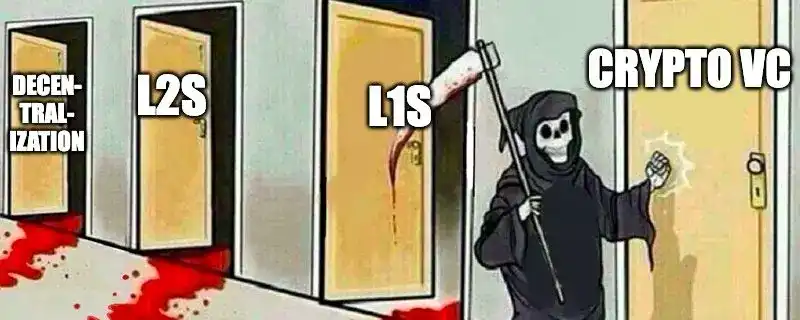
Progressive Autonomy debuts at a time when the limitations of both L2 rollups and traditional L1 development increasingly constrain teams. Rollups have made deployment simple, but at the cost of centralized sequencers, governance-only tokens, fragmentation, and ecosystems that struggle to retain value.

Sovereign L1s remain the only architecture that consistently captures long-term economics, but building one typically requires over a year of engineering, substantial upfront capital, and custom consensus development. Overall, this clunky and expensive process forces builders to make early trade-offs: either prioritize ease and sacrifice ownership, or pursue sovereignty at prohibitive cost.

Adam Liposky, CEO of Canopy, said:

“Teams were forced into a false choice between simplicity and sovereignty, so we built Canopy to remove that trade off. Sovereignty should mean developers control their network economics and capture value on their own rails. Progressive Autonomy lets teams launch fast, retain long term ownership of their chain, and build toward a future of hundreds of specialized sovereign sub chains owned by the communities behind them.”

The Progressive Autonomy model eliminates the compromises, ensuring that all chains launched on Canopy inherit shared restaked security from a growing network of professional validators, including more than 20 top-tier operators who already joined the platform’s Betanet. This gives new chains protection from day one, without relying on token inflation or external security markets.

Validator sharing removes the need for early-stage projects to assemble and incentivize their own validator sets. This reduces both the time it takes to launch and the operational complexity that’s associated with the process. Canopy’s VM-less architecture enables developers to build in any language and tailor their execution environment as their application scales, without touching consensus or modifying the underlying network.
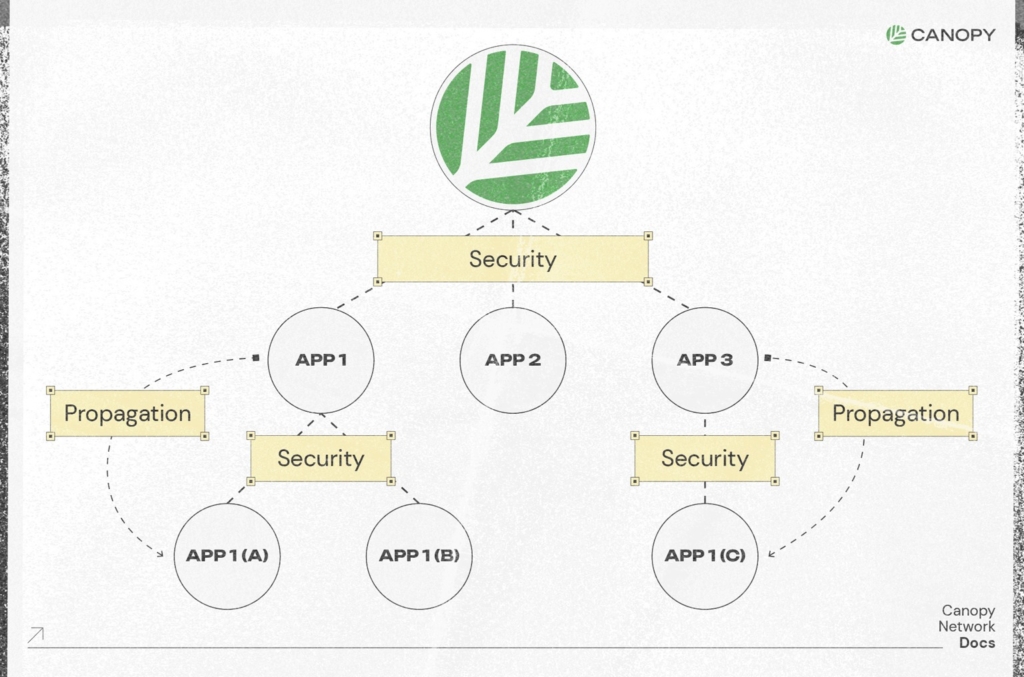
When a project is ready, it can detach from Canopy’s shared security and transition into a full sovereign L1, carrying its history, state, community, and economics with it. The upgrade path preserves continuity for users and developers while granting teams complete control over governance, performance, and value capture. Canopy positions this as a structural shift for the industry. Rather than choosing between an L1 or an L2 at the start, teams can now naturally evolve from incubation to independence as their needs grow.

Andrew Nguyen, Co-Founder and CTO of Canopy, said:

“Progressive Autonomy allows developers to focus entirely on building useful, high-performing applications instead of wrestling with infrastructure. Our goal was to take the security and operational burdens away from the traditional L1 creation and make them completely invisible. When sovereignty becomes accessible, the entire ecosystem will expand and benefit mutually.”

Canopy’s Betanet is already live and supported by leading validators including PierTwo, Stakely, Rhino, Lavender Five, Nodes.Guru, Kingnode, Easy2Stake, and others, signalling early momentum for the shared security approach. The full mainnet launch is planned for 2026, following more than 18 months of development across the core protocol and supporting infrastructure.

About Canopy Network

Canopy makes launching a sovereign blockchain as simple as spinning up an app. Teams can deploy in days, own their network economics, and connect across chains without bridges or wrapped assets. Powered by NestBFT and layerless mesh security, Canopy provides shared protection and built in atomic swaps for every chain on the network. Developers get predictable costs, fast deployment templates, and interoperability from day one.
Website | Twitter/X | Discord | Github
Letture associate

An Open-Source AI Tool That No One Saw Predicted Kelp DAO's $292 Million Vulnerability 12 Days Ago

An open-source AI security tool flagged critical risks in Kelp DAO’s cross-chain architecture 12 days before a $292 million exploit on April 18, 2026—the largest DeFi incident of the year. The vulnerability was not in the smart contracts but in the configuration of LayerZero’s cross-chain bridge: a 1-of-1 Decentralized Verifier Network (DVN) setup allowed an attacker to forge cross-chain messages with a single compromised node. The tool, which performs AI-assisted architectural risk assessments using public data, identified several unremediated risks, including opaque DVN configuration, single-point-of-failure across 16 chains, unverified cross-chain governance controls, and similarities to historical bridge attacks like Ronin and Harmony. It also noted the absence of an insurance pool, which amplified losses as Aave and other protocols absorbed nearly $300M in bad debt. The attack unfolded over 46 minutes: the attacker minted 116,500 rsETH on Ethereum via a fraudulent message, used it as collateral to borrow WETH on lending platforms, and laundered funds through Tornado Cash. While an emergency pause prevented two subsequent attacks worth ~$200M, the damage was severe. The tool’s report, committed to GitHub on April 6, scored Kelp DAO a medium-risk 72/100—later acknowledged as too lenient. It failed to query on-chain DVN configurations or initiate private disclosure, highlighting gaps in current DeFi security approaches that focus on code audits but miss config-level and governance risks. The incident underscores the need for independent, AI-powered risk assessment tools that evaluate protocol architecture, not just code.

marsbit1 h fa

An Open-Source AI Tool That No One Saw Predicted Kelp DAO's $292 Million Vulnerability 12 Days Ago

marsbit1 h fa

Trading

Spot
Futures

Articoli Popolari

Come comprare FRAX

Benvenuto in HTX.com! Abbiamo reso l'acquisto di FRAX (FRAX) semplice e conveniente. Segui la nostra guida passo passo per intraprendere il tuo viaggio nel mondo delle criptovalute.Step 1: Crea il tuo Account HTXUsa la tua email o numero di telefono per registrarti il tuo account gratuito su HTX. Vivi un'esperienza facile e sblocca tutte le funzionalità,Crea il mio accountStep 2: Vai in Acquista crypto e seleziona il tuo metodo di pagamentoCarta di credito/debito: utilizza la tua Visa o Mastercard per acquistare immediatamente FRAXFRAX.Bilancio: Usa i fondi dal bilancio del tuo account HTX per fare trading senza problemi.Terze parti: abbiamo aggiunto metodi di pagamento molto utilizzati come Google Pay e Apple Pay per maggiore comodità.P2P: Fai trading direttamente con altri utenti HTX.Over-the-Counter (OTC): Offriamo servizi su misura e tassi di cambio competitivi per i trader.Step 3: Conserva FRAX (FRAX)Dopo aver acquistato FRAX (FRAX), conserva nel tuo account HTX. In alternativa, puoi inviare tramite trasferimento blockchain o scambiare per altre criptovalute.Step 4: Scambia FRAX (FRAX)Scambia facilmente FRAX (FRAX) nel mercato spot di HTX. Accedi al tuo account, seleziona la tua coppia di trading, esegui le tue operazioni e monitora in tempo reale. Offriamo un'esperienza user-friendly sia per chi ha appena iniziato che per i trader più esperti.

577 Totale visualizzazioniPubblicato il 2026.03.03Aggiornato il 2026.03.03

Come comprare FRAX

Cosa è MANTRA

I. Introduzione al ProgettoMANTRA è una Blockchain Layer 1 con priorità sulla Sicurezza, capace di aderire e far rispettare i requisiti normativi del mondo reale. Costruita per Istituzioni e Sviluppatori, MANTRA offre una Blockchain senza permessi per applicazioni con permessi.Caratteristiche principali: * Costruita utilizzando Cosmos SDK, compatibile con IBC, con supporto per CosmWasm * Sicura tramite un set di validatori PoS sovrano * Scalabile fino a 10k TPS * Moduli, SDK e API integrati per creare, scambiare e gestire RWAs conformi alle normative * Esperienza utente migliorata per integrare utenti e istituzioni non native in Web3.1) Informazioni di baseNome: MANTRA (OM)III. Link correlatiWhitepaper:https://docs.mantrachain.io/Sito ufficiale:https://www.mantrachain.io/Esploratori:https://mintscan.io/mantraSocial Media:https://x.com/MANTRA_ChainNota: L'introduzione al progetto proviene dai materiali pubblicati o forniti dal team ufficiale del progetto, che è solo a scopo di riferimento e non costituisce consulenza per gli investimenti. HTX non si assume responsabilità per eventuali perdite dirette o indirette risultanti.

478 Totale visualizzazioniPubblicato il 2026.03.04Aggiornato il 2026.03.04

Cosa è MANTRA

Come comprare MANTRA

Benvenuto in HTX.com! Abbiamo reso l'acquisto di Mantra (MANTRA) semplice e conveniente. Segui la nostra guida passo passo per intraprendere il tuo viaggio nel mondo delle criptovalute.Step 1: Crea il tuo Account HTXUsa la tua email o numero di telefono per registrarti il tuo account gratuito su HTX. Vivi un'esperienza facile e sblocca tutte le funzionalità,Crea il mio accountStep 2: Vai in Acquista crypto e seleziona il tuo metodo di pagamentoCarta di credito/debito: utilizza la tua Visa o Mastercard per acquistare immediatamente MantraMANTRA.Bilancio: Usa i fondi dal bilancio del tuo account HTX per fare trading senza problemi.Terze parti: abbiamo aggiunto metodi di pagamento molto utilizzati come Google Pay e Apple Pay per maggiore comodità.P2P: Fai trading direttamente con altri utenti HTX.Over-the-Counter (OTC): Offriamo servizi su misura e tassi di cambio competitivi per i trader.Step 3: Conserva Mantra (MANTRA)Dopo aver acquistato Mantra (MANTRA), conserva nel tuo account HTX. In alternativa, puoi inviare tramite trasferimento blockchain o scambiare per altre criptovalute.Step 4: Scambia Mantra (MANTRA)Scambia facilmente Mantra (MANTRA) nel mercato spot di HTX. Accedi al tuo account, seleziona la tua coppia di trading, esegui le tue operazioni e monitora in tempo reale. Offriamo un'esperienza user-friendly sia per chi ha appena iniziato che per i trader più esperti.

194 Totale visualizzazioniPubblicato il 2026.03.04Aggiornato il 2026.03.04

Come comprare MANTRA

Discussioni

Benvenuto nella Community HTX. Qui puoi rimanere informato sugli ultimi sviluppi della piattaforma e accedere ad approfondimenti esperti sul mercato. Le opinioni degli utenti sul prezzo di A A sono presentate come di seguito.

活动图片