Bybit Hosts Forum on the Future of Crypto-Powered Payments in Georgia

TheNewsCryptoPubblicato 2026-03-13Pubblicato ultima volta 2026-03-13

Introduzione

Bybit, the world's second-largest crypto exchange, hosted a high-level forum in Tbilisi, Georgia, bringing together regulators, financial institutions, and digital asset innovators to discuss the future of crypto-powered payments. The event also marked the launch of the Bybit Card in Georgia, enabling users to make contactless payments via Apple Pay and spend digital assets in daily transactions. This initiative follows Bybit’s acquisition of a Payment Service Provider license in late 2025, allowing it to strengthen local payment infrastructure. Government representatives endorsed the move, highlighting Georgia’s commitment to financial innovation. Bybit executives reiterated their long-term dedication to supporting Georgia’s digital economy and positioning the country as a regional hub for crypto payment innovation.

At a high-level forum in Tbilisi, regulators, global payment networks, banking executives, and digital asset innovators were brought together by Bybit, the world’s second-largest cryptocurrency exchange by trading volume. The session was designed to explore the future of crypto-powered payments.

During the event, participants from all parts of the financial ecosystem came together to explore the ways in which digital assets may be integrated with conventional payment infrastructure, how they might increase their usefulness in the real world, and how they can help the ongoing growth of Georgia’s digital economy.

At the same time, the forum marked the launch of the Bybit Card in Georgia, which is a step toward making cryptocurrency payments more accessible to the general public. The card is compatible with Apple Pay in Georgia, which enables users to make secure contactless payments straight from their digital wallets. Additionally, the card enables users to spend digital assets for day-to-day transactions.

Following the acquisition of a Payment Service Provider (PSP) license in Georgia during the fourth quarter of 2025, Bybit was able to expand its operations into the payments sector. With this license, Bybit is able to issue Bybit cards in Georgia, which helps to improve the local fiat payment rails and enables a tighter interaction between digital asset services and the financial infrastructure of the nation.
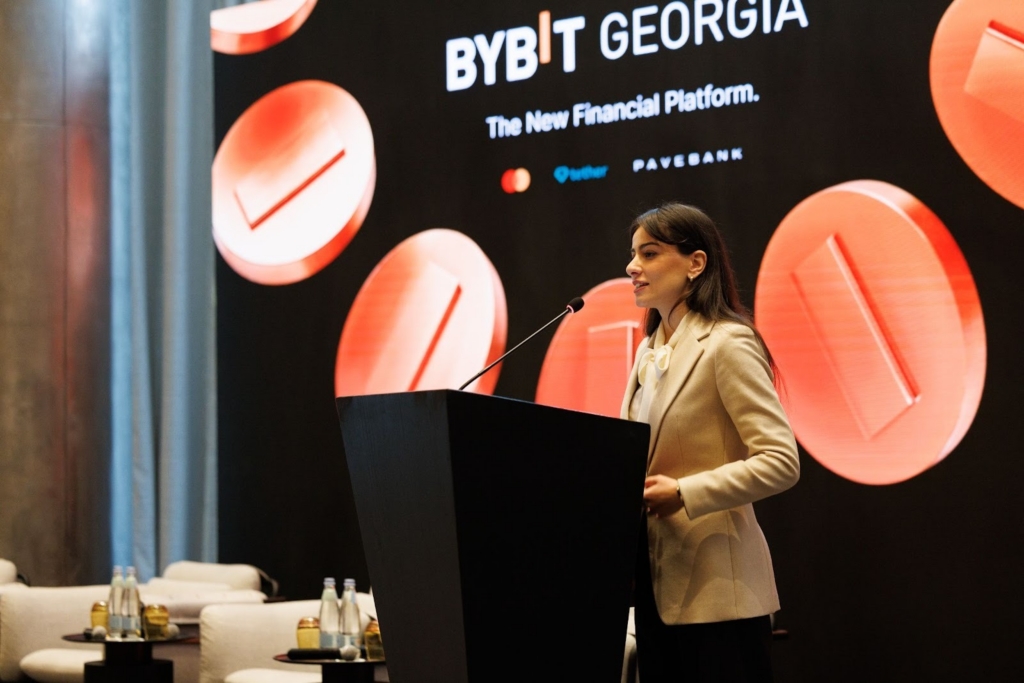
Representatives of the government have expressed their gratitude for the introduction of the Bybit Card in Georgia, acknowledging it as a significant step toward increasing the use of digital assets for legitimate transactions in the real world. There has already been a rising acceptance of the Bybit Card in the local community, thanks to the strong backing it has received from the government and authorities. Bybit intends to further extend card issuance in Georgia and throughout surrounding markets, with the goal of Georgia being a regional center for the development of crypto-powered payment innovations.

For the purpose of highlighting Georgia’s commitment to responsible financial innovation and modern payment infrastructure, the event featured keynote remarks from representatives of the Ministry of Economy and Sustainable Development of Georgia as well as the National Bank of Georgia.

An important feature of the event was a panel discussion that was titled “The Future of Payments.” The purpose of the discussion was to investigate how government authorities, global payment networks, financial institutions, and blockchain businesses might work together to hasten the adoption of cryptocurrency payments in the real world.

The following individuals were present on the panel: Ben Zhou, the Co-Founder and CEO of Bybit; Shota Lomtadze, the Director of Bybit Georgia; Natia Turnava, the Governor of the National Bank of Georgia; David Zgudadze, the Vice President for Georgia and Armenia at Mastercard; Salim Dhanani, the Co-Founder and CEO of Pave Bank; Marco Dal Lago, the Vice President of Global Expansion and Strategic Partnerships at Tether; and Tekla Iashagashvili, the Regional Manager of Bybit Georgia

Bybit executives emphasized the company’s long-term commitment to the development of payment infrastructure and the provision of support for the ecosystem of digital assets in the local jurisdiction.

“Georgia has emerged as one of the most promising environments for digital financial innovation,” said Shota Lomtadze, Director of Bybit Georgia. “With the launch of the Bybit Card and the foundation provided by our PSP license, we are strengthening the infrastructure that allows digital assets to move seamlessly between trading platforms and everyday payments. Together with regulators, global partners, and local financial institutions, we aim to support Georgia’s ambition to become a regional leader in next-generation financial services.”

“Bybit is here to stay,” said Ben Zhou, Co-Founder and CEO of Bybit. “We are committed to being the most reliable partner for the National Bank of Georgia and the most valuable ally for Georgia’s business community. We will continue to invest, hire, and bring our global capabilities to this local market. Together, let’s show the world what happens when a brave nation and a global platform build the future of finance together.”

At the moment, Bybit provides customers in Georgia with access to a full digital asset platform. This platform has over 600 spot trading pairs, one-click buy capability, over-the-counter services, and an institutional-grade security infrastructure.

At the end of the event, there were networking sessions that brought together policymakers, financial institutions, leaders in the fintech industry, and innovators in the blockchain space. These discussions served to reinforce Georgia’s rising position as a center for digital asset innovation and the future of global payments.

TagsBybitexchange

Domande pertinenti

QWhat was the main purpose of the high-level forum hosted by Bybit in Tbilisi, Georgia?

AThe forum was designed to explore the future of crypto-powered payments, bringing together regulators, global payment networks, banking executives, and digital asset innovators to discuss integrating digital assets with conventional payment infrastructure and supporting Georgia's digital economy growth.

QWhat significant product did Bybit launch in Georgia, and how does it function?

ABybit launched the Bybit Card in Georgia, which allows users to make secure contactless payments directly from their digital wallets via Apple Pay and spend digital assets for day-to-day transactions.

QWhat license did Bybit acquire in Georgia in Q4 2025, and why is it important?

ABybit acquired a Payment Service Provider (PSP) license in Georgia, enabling the company to issue Bybit cards, improve local fiat payment rails, and facilitate tighter integration between digital asset services and the nation's financial infrastructure.

QWho were some of the key participants in the panel discussion titled 'The Future of Payments'?

AKey participants included Ben Zhou (Co-Founder and CEO of Bybit), Shota Lomtadze (Director of Bybit Georgia), Natia Turnava (Governor of the National Bank of Georgia), David Zgudadze (Vice President for Georgia and Armenia at Mastercard), Salim Dhanani (Co-Founder and CEO of Pave Bank), Marco Dal Lago (Vice President of Global Expansion and Strategic Partnerships at Tether), and Tekla Iashagashvili (Regional Manager of Bybit Georgia).

QHow does Bybit plan to support Georgia's financial ecosystem according to its executives?

ABybit executives emphasized long-term commitment to developing payment infrastructure and supporting the digital asset ecosystem in Georgia, aiming to make the country a regional leader in next-generation financial services through investment, hiring, and collaboration with regulators and local institutions.

Letture associate

Can Generative Models Finally Be Trained End-to-End? The Core Is a For Loop

This article introduces a novel training paradigm for generative models called Explorative Modeling (XM), which enables true end-to-end training. Traditionally, powerful generative models like autoregressive and diffusion models are not trained end-to-end. They are trained to predict a single small step but require iterative multi-step sampling for inference. This "exposure bias" leads to error accumulation and limits performance. The core challenge XM addresses is "mode blurring." In generative tasks, a single input (e.g., "generate a dog") corresponds to many valid outputs (multiple modes). Standard training objectives like reconstruction loss force the model to average these modes, producing unrealistic, blurry outputs. To avoid this, existing models break generation into many small, almost deterministic steps, sacrificing end-to-end training. XM tackles this by restructuring the training loop itself. Its key insight is to amplify "generative expressivity." For each training input, instead of generating one sample, the model generates K candidate outputs. Only the candidate closest to the real data is used for computing the loss and updating the model via backpropagation. This simple "best-of-K" mechanism is implemented as a short for-loop. By exploring multiple possibilities, the model learns to distribute its guesses across different modes rather than collapsing to their uninformative average. The paper demonstrates that "exploration" acts as a new, powerful scaling axis. Gains from XM increase with model size, data scale, and compute. Experiments show improvements in FID scores for image generation and significant efficiency gains, sometimes outperforming larger models without exploration. When pushed to the limit, XM enables fully single-step, end-to-end generative models. In robotics tasks, an "Explorative Policy" matched the performance of a 100-step Diffusion Policy with a single forward pass, drastically improving inference speed. While the best-of-K concept is not entirely new, the authors' contribution lies in formally understanding it as a direct method to boost generative expressivity without fragmenting the generation process. This work suggests that as models scale, enhancing exploration during training may become crucial for overcoming fundamental performance bottlenecks.

marsbit49 min fa

Can Generative Models Finally Be Trained End-to-End? The Core Is a For Loop

marsbit49 min fa

Annual Salary of Millions Competing for Electricians, Meta Rushes to Open Its Own Technical School

The AI boom is facing an unexpected bottleneck: a severe shortage of skilled construction workers and electricians. As tech giants like Meta, OpenAI, and Alphabet race to build massive data centers—such as OpenAI's $16 billion "Stargate" project—they are hitting a critical labor wall. The U.S. needs an estimated 130,000 more electricians, 240,000 construction workers, and 150,000 supervisors by 2030 for AI infrastructure alone, but tens of thousands of electrician jobs go unfilled each year. While AI companies offer high premiums, with electricians earning up to $280,000 annually, worker scarcity still causes massive losses—delays on a single project can cost $14.2 million per month. The complexity of building AI data centers, which require immense power (equivalent to powering hundreds of thousands of homes), sophisticated electrical systems, and advanced liquid cooling solutions, demands highly skilled technicians who are in short supply. To combat this, companies are investing heavily in training. Meta has committed $115 million to a free training school offering tuition, housing, and stipends, targeting 5,000 new workers. OpenAI is partnering with unions to secure skilled labor. These efforts are paying off, with a significant rise in Gen Z interest in trade schools over college. However, the power demands are staggering. AI data centers are driving a rapid surge in electricity consumption, projected to account for up to 12% of U.S. power use by 2028 and raising costs for consumers. Furthermore, the construction boom is project-based, leading to a potential future glut of trained workers once building peaks, which could depress wages industry-wide. The race for AI supremacy now depends as much on skilled hands as on advanced chips.

marsbit2 h fa

Annual Salary of Millions Competing for Electricians, Meta Rushes to Open Its Own Technical School

marsbit2 h fa

Trading

Spot
活动图片