Brevis Token Launch Imminent: Community Incentives Account for 32.2%, Airdrop Registration to Go Live Soon

Odaily星球日报Pubblicato 2025-12-25Pubblicato ultima volta 2025-12-25

Introduzione

Brevis is set to launch its token BREV with a total supply of 1 billion. The token distribution includes 37% for ecosystem development, 32.2% for community incentives (including airdrops), 20% for the team, and 10.8% for investors. Ecosystem and community tokens will unlock linearly over 24 months post-TGE, with 14.5% and 10.5% circulating at TGE, respectively. Team and investor tokens are locked for the first year. Brevis, a zk-based off-chain computation engine backed by Vitalik Buterin and a $7.5 million seed round, aims to enhance smart contract efficiency. It has been added to Coinbase's listing roadmap. The project is currently in Phase 1 of its community program, allowing users to earn points through invites and daily check-ins. An airdrop registration portal is即将上线.

Original | Odaily Planet Daily (@OdailyChina)

Author | Asher (@Asher_ 0210)
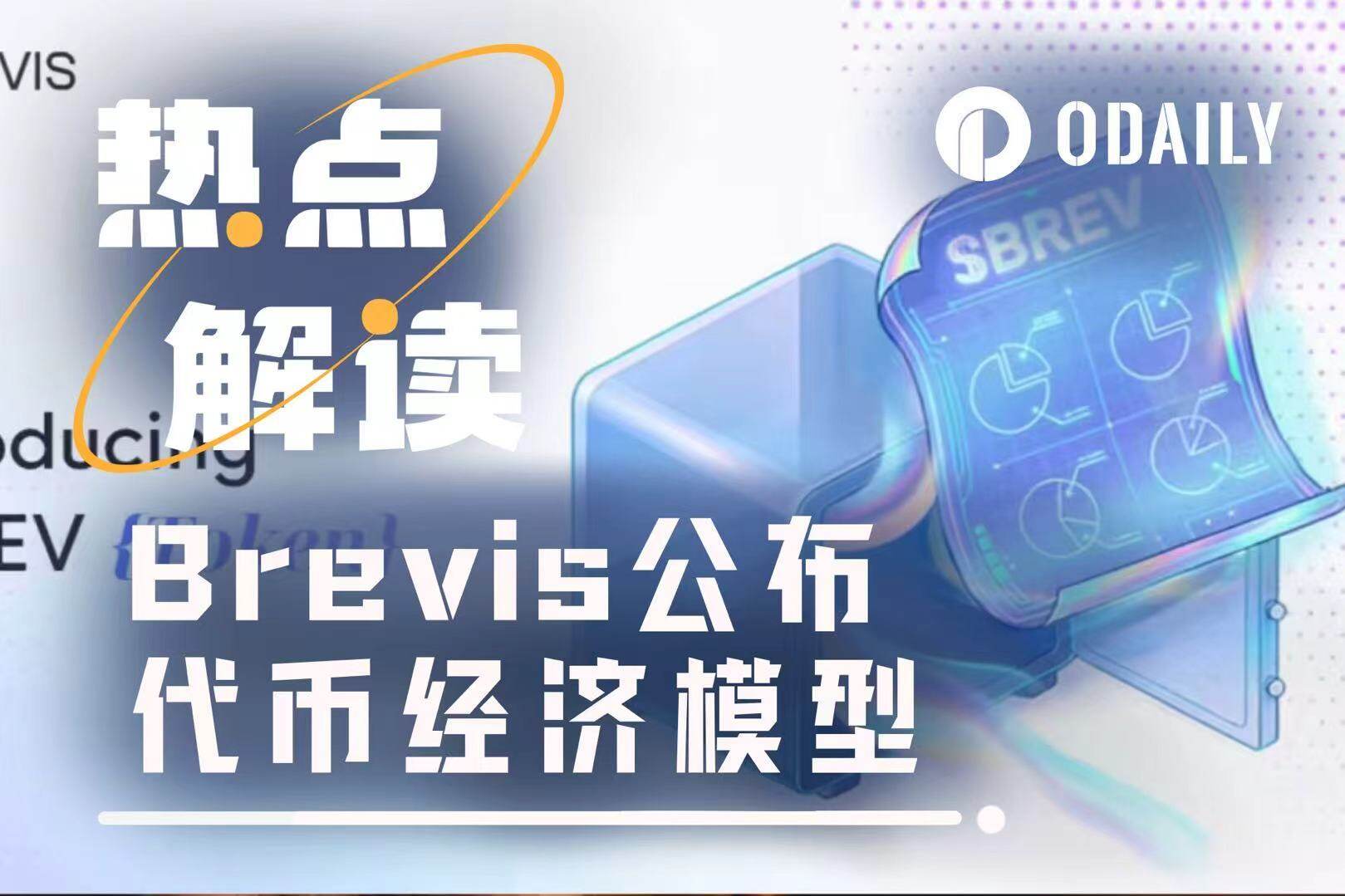
Yesterday, Brevis, which has garnered favor from Vitalik, posted on platform X to announce its token economic model. The total supply of the BREV token is 1 billion, with the specific allocation as follows:

  • Ecosystem Development: 37% of the total token supply, i.e., 370 million tokens, allocated for ecosystem development, R&D, strategic partnerships, initial market building, and long-term protocol expansion;
  • Community Incentives: 32.2% of the total token supply, i.e., 322 million tokens, allocated for rewards to validators, stakers, and community contributors, including initial airdrops to eligible contributors and community members across different categories;
  • Team: 20% of the total token supply, i.e., 200 million tokens, allocated to Brevis's current and future core developers and contributors;
  • Investors: 10.8% of the total token supply, i.e., 108 million tokens, allocated to Brevis's seed round investors.

Among these, the allocations for Ecosystem Development and Community Incentives will be unlocked linearly over 24 months post-TGE, with 14.50% and 10.50% of the tokens circulating at TGE, respectively. The allocations for the Team and Investors will be fully locked for the first year post-TGE, with no initial unlock, followed by a linear unlock over 24 months.

Furthermore, the Brevis team indicated that the airdrop registration portal will be launched soon. Combined with the announcement by Coinbase Markets on platform X on December 20th, which stated that Brevis (BREV) has been added to the listing roadmap, it suggests that Brevis is approaching its TGE.
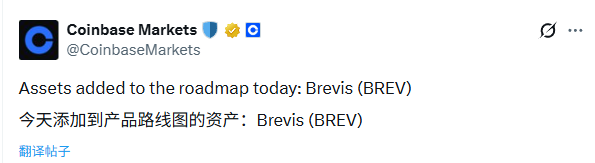
Coinbase adds Brevis (BREV) to its listing roadmap

Brevis: The "Smart Engine" Championing the Concept of an "Infinite Compute Layer"

Brevis is an off-chain compute engine built on zero-knowledge proofs, positioning itself as the "infinite compute layer for Web3 and everything." Simply put, Brevis enables smart contracts to become "smarter," shifting from passive execution to active computation, thereby saving computational costs and improving efficiency. This facilitates user interaction with protocols, asset deposition, and enhances protocol adoption rates. Brevis has garnered significant community discussion largely due to receiving Vitalik's "endorsement."
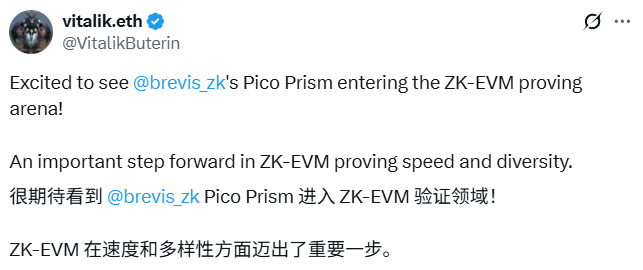
Brevis receives Vitalik's "endorsement"

Brevis completed a $7.5 million seed funding round last November, led by Polychain and Yzi Labs (For more related content, please read: Unveiling Brevis: Favored by Vitalik, $7.5M Funding, How Does This Off-Chain Compute Engine Unlock a New Ethereum Paradigm?).

Phase 1 Tasks Are Still Ongoing

Currently, all 11 tasks of Brevis's Phase 2 have ended, but the Phase 1 tasks are still ongoing, and the snapshot time has not been announced yet. It's worth "farming for free" to seize the last opportunity to earn points.

STEP 1. Go to the interaction website (Link: https://proving-grounds.brevis.network/) and connect your wallet.
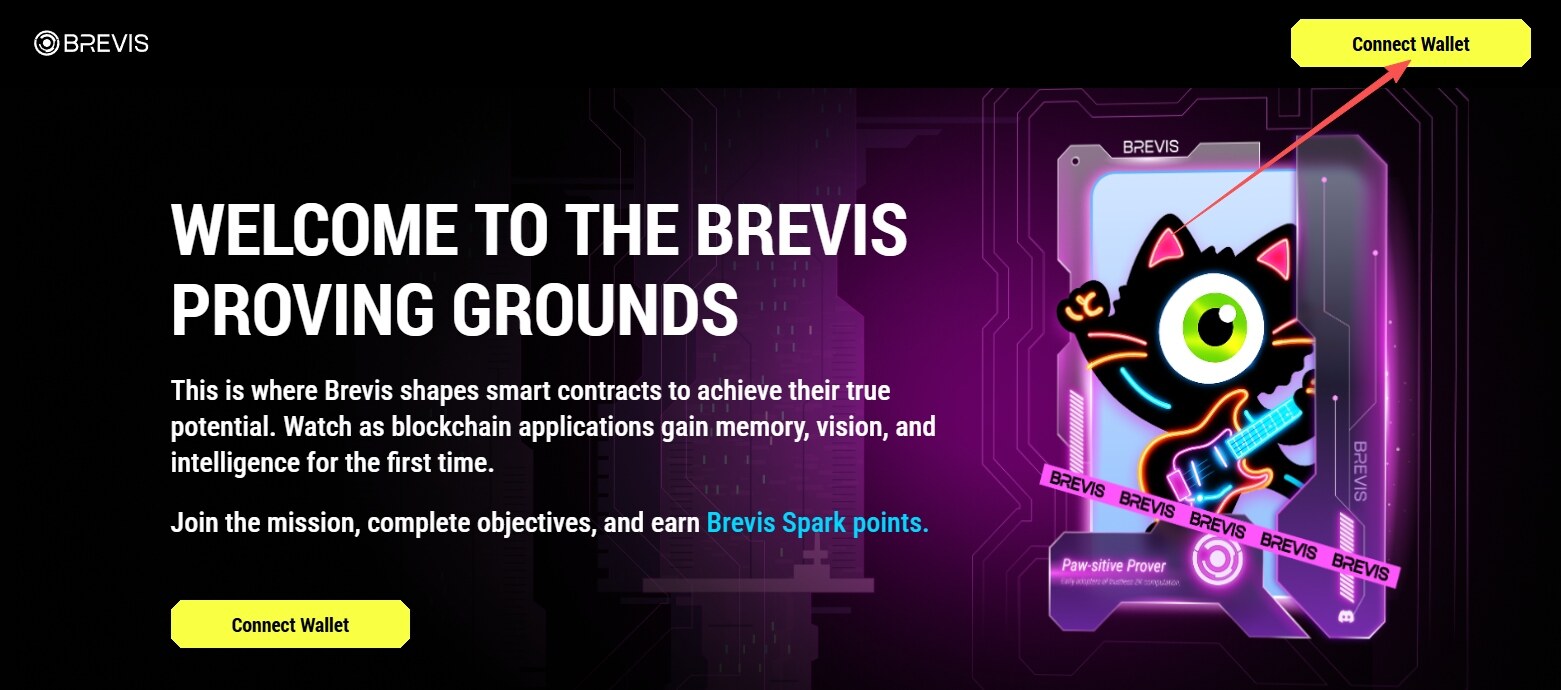
STEP 2. First, bind your personal account, then follow the official X account and join the official Discord. Entering an invitation code will grant you 50 points (Invitation code can be: IABsdu).

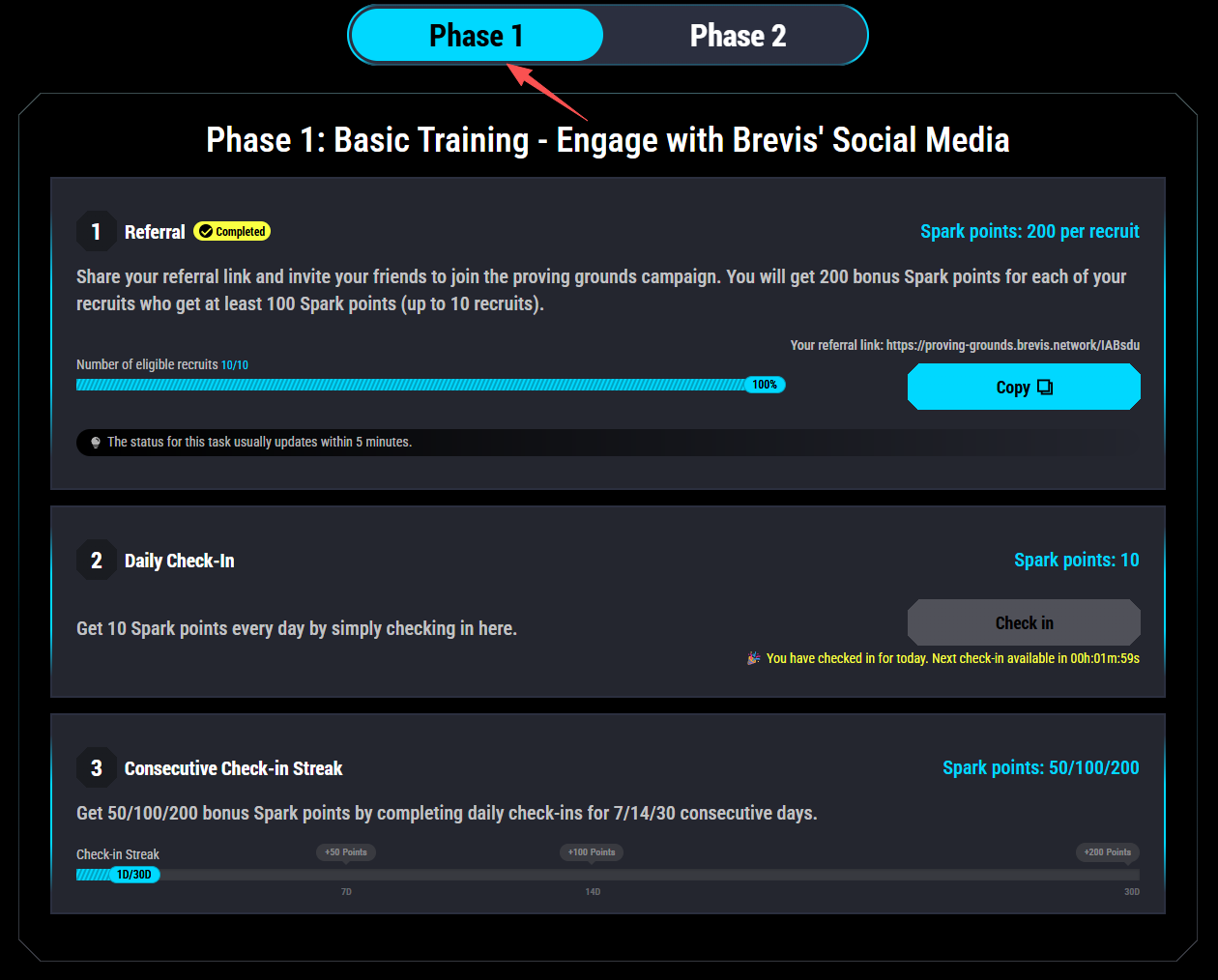
STEP 3. Click on "Phase 1". Tasks that still allow you to earn points include referral tasks and daily check-in tasks.
Domande pertinenti

QWhat is the total supply of BREV tokens and what percentage is allocated to community incentives?

AThe total supply of BREV tokens is 1 billion. Community incentives account for 32.2% of the total supply, which is 322 million tokens.

QHow are the tokens allocated for ecosystem development and community incentives unlocked after TGE?

ATokens for ecosystem development and community incentives are linearly unlocked over 24 months after TGE. At TGE, 14.50% of the ecosystem development tokens and 10.50% of the community incentive tokens are immediately unlocked.

QWhat is Brevis and why has it gained significant attention in the community?

ABrevis is an off-chain computation engine built on zero-knowledge proofs, positioning itself as the 'infinite computation layer for Web3 and everything.' It has gained significant community attention because it received endorsement from Vitalik Buterin.

QWhat recent exchange listing development was announced for Brevis (BREV)?

ACoinbase Markets announced that Brevis (BREV) has been added to its listing roadmap, indicating an upcoming Token Generation Event (TGE).

QAre there any ongoing tasks for users to earn points from Brevis, and what is one way to get bonus points?

AYes, Phase 1 tasks are still ongoing. Users can earn points through invitation and daily check-in tasks. One way to get a bonus of 50 points is by using an invitation code (e.g., IABsdu) when signing up.

Letture associate

How Difficult is Chip Making? A Division Error Costs 475 Million Dollars

How Hard Is It to Make a Chip? A Division Error Cost $475 Million Chip expert Shi Kan, a researcher at the Chinese Academy of Sciences and a popular tech creator, explains the immense challenges of chip development. Chips are foundational to modern technology, but their creation is extraordinarily difficult. The journey from sand to a functional chip involves complex design and manufacturing, but a critical bottleneck is verification—ensuring the design works flawlessly before costly production. A single, undetected bug can have catastrophic consequences, as illustrated by the infamous 1994 Intel Pentium FDIV bug. A flaw in the floating-point division unit forced a recall costing $475 million. Unlike software, chips cannot be easily patched after manufacture, making "first-time success" paramount. However, industry surveys show only 24% of chip projects achieve this; over three-quarters require at least one costly re-spin due to design flaws. Verification has thus become the dominant phase, consuming up to 70% of the design cycle. The core challenge is a "verification impossible triangle" between high performance, good debuggability, and low cost. Exhaustively verifying a modern CPU core could take 15,000 years with software simulation, or 30 years with advanced hardware emulation—timeframes utterly impractical for development. Despite being essential, verification is often seen as unglamorous "dirty work," receiving less academic attention than fields like AI. Shi and his team are tackling this by developing an agile verification research framework called ENCORE, based on FPGA technology, to improve verification efficiency and debug capability. Beyond research, Shi engages in public science communication through long-form video content, aiming to demystify chip technology, AI, and computer science. He argues for the value of pursuing "hard and long-term" endeavors, whether in the meticulous world of chip verification or in creating substantive educational content, believing such sustained effort is likely the right path forward.

marsbit9 min fa

How Difficult is Chip Making? A Division Error Costs 475 Million Dollars

marsbit9 min fa

Blockchain Has Finally Started to Sail into the Mainstream After 18 Years

Blockchain Finds Its True Path After 18 Years: Becoming the Financial Backbone for AI Agents and Autonomy This analysis explores a pivotal shift in the blockchain and crypto investment landscape, driven by the dominance of AI. Major venture capital firms, including Variant, Paradigm, Haun Ventures, and YZi Labs, are moving beyond pure "crypto" investment theses. They are expanding their focus to AI, robotics, and frontier tech, signaling that blockchain is no longer seen as a standalone sector but as an underlying infrastructure layer. The core argument is that blockchain's killer application may not be user-facing apps, but rather providing the economic rails for the coming wave of AI agents, autonomous robots, and automated systems. Key capabilities like self-custody wallets, programmable stablecoins for micropayments, on-chain identity, and verifiable smart contracts are positioned as essential for a future where machines conduct economic activity. The recent $1.4 billion investment by Tether (via its venture arm) in German robotics company NEURA Robotics exemplifies this, aiming to embed Tether's wallet tools directly into robots for autonomous transactions. While many "AI + Crypto" projects remain superficial, the article concludes that true value lies where crypto is a necessary component—enabling machine-to-machine payments, agent autonomy, verifiable data provenance, and open financial settlement for the AI era. For crypto venture capital, this convergence with AI represents both an adaptation to shifting capital flows and a potential path to unlocking the large-scale, non-speculative utility the industry has long sought.

marsbit30 min fa

Blockchain Has Finally Started to Sail into the Mainstream After 18 Years

marsbit30 min fa

Blockchain has finally begun sailing toward the main channel after 18 years

After 18 years of development, blockchain technology is beginning to move from a specialized niche into mainstream adoption, according to a recent industry analysis. The shift is reflected in the changing strategies of major crypto venture capital firms, which are expanding their focus beyond pure "digital ownership" towards broader themes like "autonomy." The report highlights that leading VC firms like Variant, Paradigm, Haun Ventures, and YZi Labs are broadening their investment mandates to include not only crypto but also artificial intelligence (AI), robotics, biotech, and other frontier technologies. This reflects a recognition that the isolated "crypto investment" narrative is losing appeal to limited partners (LPs) as capital and attention increasingly flow toward AI and other high-growth tech sectors. A key emerging thesis is that blockchain's most significant future application may not be as a consumer-facing product, but as the underlying economic and settlement infrastructure for the AI era. As AI agents and autonomous systems become more prevalent, they will require programmable, global, and low-cost payment networks (like stablecoins), verifiable digital identities, and secure wallets to manage transactions and assets on behalf of users. The investment by stablecoin issuer Tether into robotics company NEURA, with plans to integrate its wallet technology, is cited as a prime example of this convergence. However, the article cautions that simply labeling projects as "AI + Crypto" is insufficient. True value lies in integrations where blockchain technology is essential—such as enabling machine-to-machine micropayments, verifiable data provenance for AI, or transparent governance for autonomous organizations—rather than being a superficial marketing add-on. In conclusion, while AI currently dominates the tech narrative and capital flows, it may ultimately create the real-world, high-frequency demand that the crypto industry has long sought. For crypto VCs and projects, the path forward is to position blockchain not as a competing sector, but as a critical foundational layer powering autonomy and economic activity in an AI-driven future.

链捕手36 min fa

Blockchain has finally begun sailing toward the main channel after 18 years

链捕手36 min fa

Y Combinator Co-founder: How to Make a Billion Dollars?

The Y Combinator co-founder argues that becoming a billionaire by founding a successful startup is not only possible but demonstrably achievable without unfair or unethical practices. He disputes a politician's claim to the contrary, using the example of a founder whose company grew at 93% monthly solely through creating a product users loved and recommended. The core mechanism is exponential growth. A conservative 15% monthly growth rate compounds to a 4384x increase over five years, which can easily lead to billion-dollar valuations and founder wealth. The process depends on two key variables: the growth rate and the duration it can be sustained. A high growth rate stems from a great product that users naturally promote, while a long duration requires a large enough market. For aspiring founders, especially young ones, the simplest path is to build something they and their friends genuinely need. Young people's current needs often predict future mass-market trends. He advises against actively "searching" for ideas, as this tends to filter out unconventional but promising ones. Instead, inspiration should come from working on interesting projects with friends, as many iconic companies (e.g., Apple, Facebook) started this way. Ultimately, building a massively valuable startup is not about exploitation but empathy: deeply understanding a user group and building a product that significantly improves their lives. This, powered by exponential growth in a large market, is the legitimate path to immense wealth creation.

Foresight News39 min fa

Y Combinator Co-founder: How to Make a Billion Dollars?

Foresight News39 min fa

Trading

Spot
Futures

Articoli Popolari

Come comprare SOON

Benvenuto in HTX.com! Abbiamo reso l'acquisto di SOON (SOON) semplice e conveniente. Segui la nostra guida passo passo per intraprendere il tuo viaggio nel mondo delle criptovalute.Step 1: Crea il tuo Account HTXUsa la tua email o numero di telefono per registrarti il tuo account gratuito su HTX. Vivi un'esperienza facile e sblocca tutte le funzionalità,Crea il mio accountStep 2: Vai in Acquista crypto e seleziona il tuo metodo di pagamentoCarta di credito/debito: utilizza la tua Visa o Mastercard per acquistare immediatamente SOONSOON.Bilancio: Usa i fondi dal bilancio del tuo account HTX per fare trading senza problemi.Terze parti: abbiamo aggiunto metodi di pagamento molto utilizzati come Google Pay e Apple Pay per maggiore comodità.P2P: Fai trading direttamente con altri utenti HTX.Over-the-Counter (OTC): Offriamo servizi su misura e tassi di cambio competitivi per i trader.Step 3: Conserva SOON (SOON)Dopo aver acquistato SOON (SOON), conserva nel tuo account HTX. In alternativa, puoi inviare tramite trasferimento blockchain o scambiare per altre criptovalute.Step 4: Scambia SOON (SOON)Scambia facilmente SOON (SOON) nel mercato spot di HTX. Accedi al tuo account, seleziona la tua coppia di trading, esegui le tue operazioni e monitora in tempo reale. Offriamo un'esperienza user-friendly sia per chi ha appena iniziato che per i trader più esperti.

219 Totale visualizzazioniPubblicato il 2025.05.23Aggiornato il 2026.06.02

Come comprare SOON

Discussioni

Benvenuto nella Community HTX. Qui puoi rimanere informato sugli ultimi sviluppi della piattaforma e accedere ad approfondimenti esperti sul mercato. Le opinioni degli utenti sul prezzo di SOON SOON sono presentate come di seguito.

活动图片