Breaking: OpenAI Chip Veteran Joins Anthropic

marsbitPubblicato 2026-06-07Pubblicato ultima volta 2026-06-07

Introduzione

Breaking News: OpenAI Chip Veteran Joins Anthropic Clive Chan, a key early member of OpenAI's in-house chip development team, has announced his departure from OpenAI to join rival AI company Anthropic. In his statement, Chan highlighted his experience as the second hire on OpenAI's hardware team, praising its exceptional talent density but expressing a desire to "climb a new mountain from the base." He cited Anthropic's talent, values, and ambitious pace as key reasons for his move. Chan also referenced OpenAI's disclosed partnership with Broadcom, aimed at deploying a 10GW AI accelerator system starting in the second half of 2026. His career includes roles at Tesla, Google, and SpaceX, focusing on AI infrastructure and hardware. This move continues a notable trend of talent flow from OpenAI to Anthropic, following other high-profile departures like researcher Andrej Karpathy. With Anthropic's recent $65 billion funding round valuing it near $1 trillion, the competition for top AI talent between these leading firms remains intense.

Zhidongxi, June 7, Report – Today, Clive Chan, the 'employee No. 002' of OpenAI's in-house chip project, announced on platform X that he has left OpenAI and officially joined Anthropic this week.
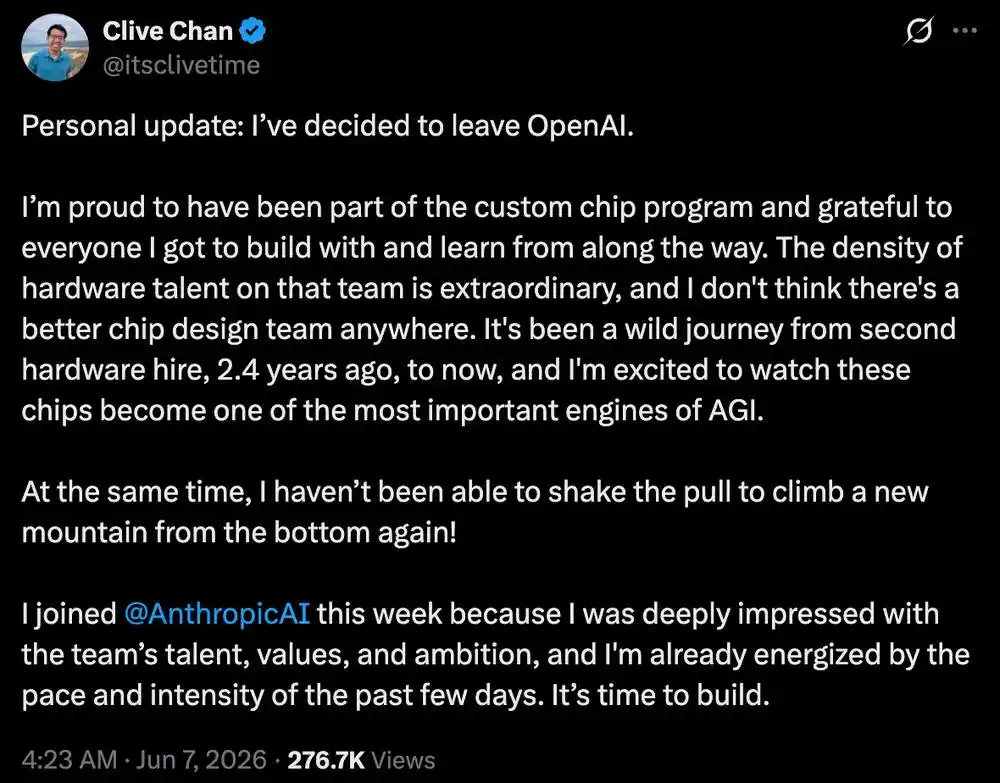
In his departure statement, Clive Chan reflected on his experience at OpenAI over the past two-plus years. He mentioned that he was the second hire for OpenAI's hardware team and witnessed the in-house chip project progress from its early formation to its current advancement. He commented that OpenAI's chip team has an incredible density of talent and that he does not believe there is a better chip design team in the world.

Regarding the future, he looks forward to seeing these chips grow into one of the most important engines for AGI.

However, Clive Chan also wrote that he could never shake the impulse to 'climb a new mountain from its base again'. This is precisely why he ultimately chose to join Anthropic.

He mentioned that the talent, values, and ambition of the Anthropic team deeply impressed him. In the short few days since joining, he has already felt the extremely high-intensity work pace, stating: "It’s time to build."

After announcing his departure, Clive Chan was questioned by netizens about the latest progress of OpenAI's in-house chip project. He responded that, apart from the information OpenAI has publicly disclosed, he cannot reveal more details at this time.
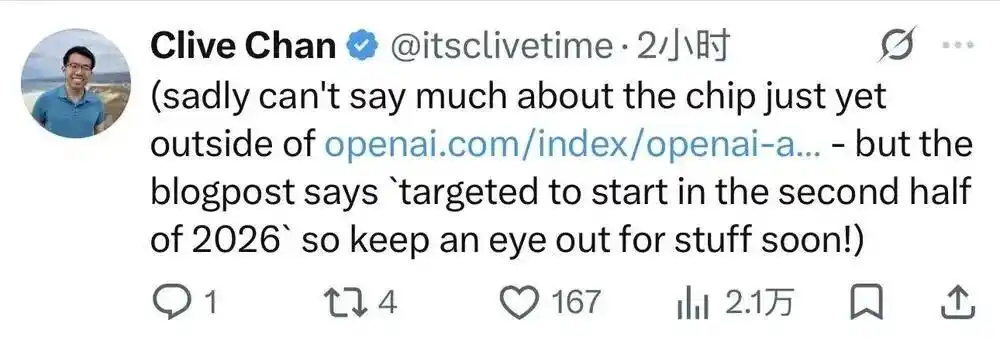
He specifically mentioned, however, the collaboration blog post previously released by OpenAI and Broadcom. According to the information disclosed in the blog, related deployment plans are targeted to commence in the second half of 2026. Clive Chan also mentioned that the outside world will soon see more related progress.
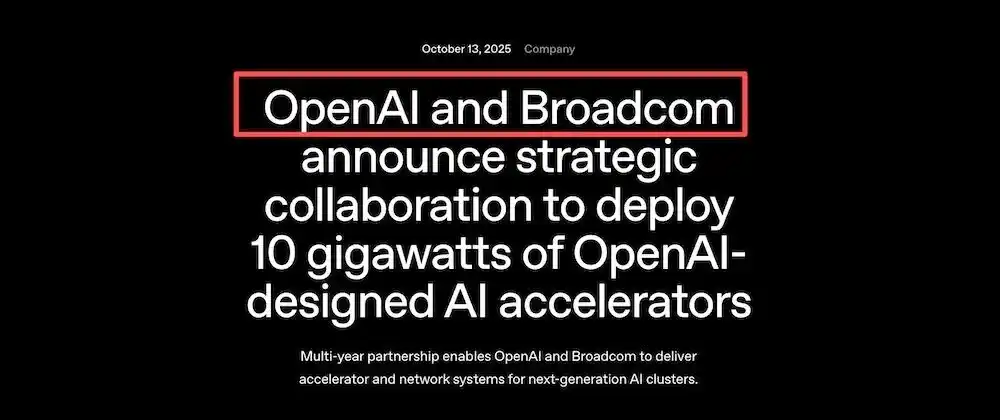
This blog post was published in October 2025. At that time, OpenAI and Broadcom announced a strategic collaboration to jointly build a total scale of 10GW for OpenAI's self-developed AI accelerator systems. OpenAI is responsible for chip and system design, while Broadcom is responsible for accelerator and network system development and deployment. The first racks are planned to begin delivery in the second half of 2026, with the entire project expected to last until the end of 2029. This marked the first time OpenAI officially disclosed a clear timeline for its self-developed AI chip project.

Looking closely at Clive Chan's career, he has worked or interned at several prominent companies including OpenAI, Tesla, Google, and SpaceX, with long-term involvement in AI infrastructure-related work.

Clive Chan graduated from the University of Waterloo in Canada in 2021. During his time there, he was also involved in the establishment of a Canadian Hyperloop-related student organization and served as co-founder and advisor for the Canadian Hyperloop Conference.
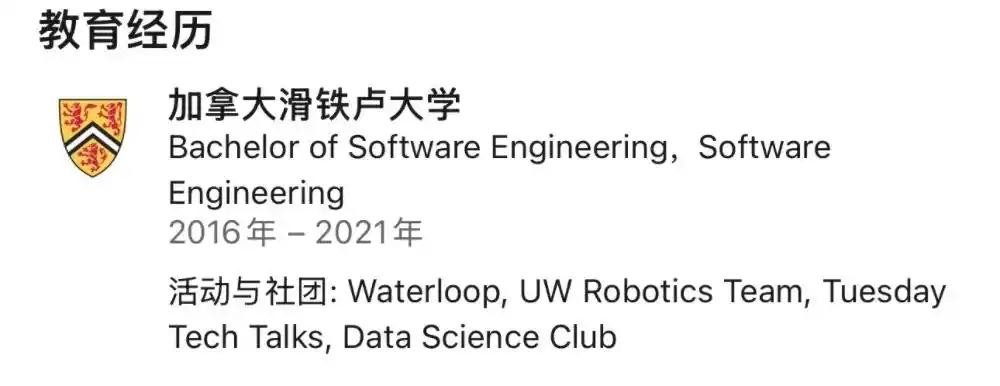
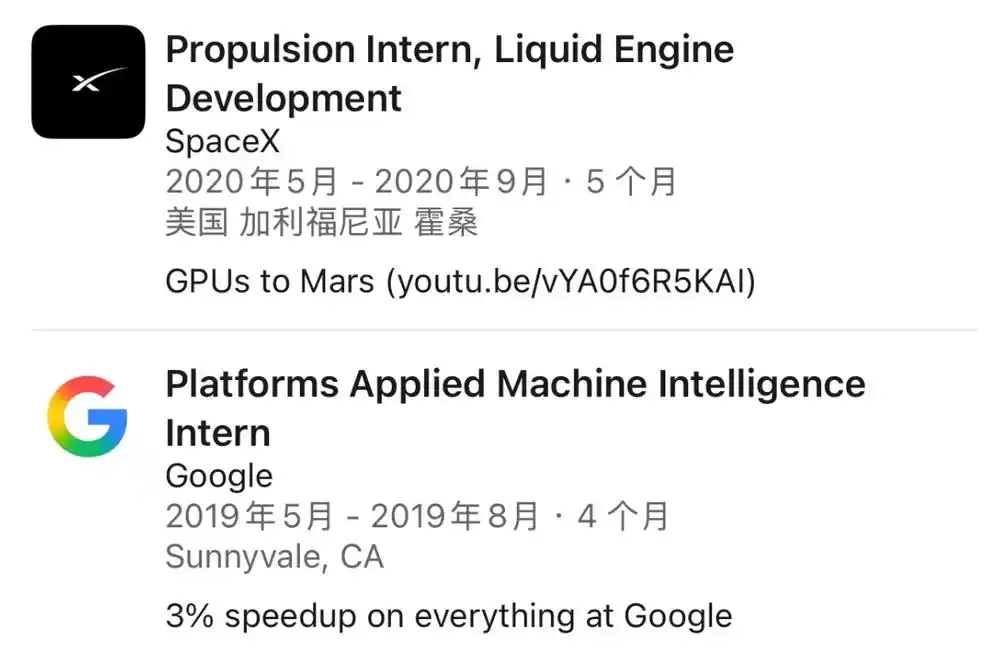
Before and after graduation, he interned or worked at Google, SpaceX, and the quantum computing company QuEra. During his time at Google, he worked on machine learning infrastructure, and at SpaceX, he participated in liquid rocket engine related projects.
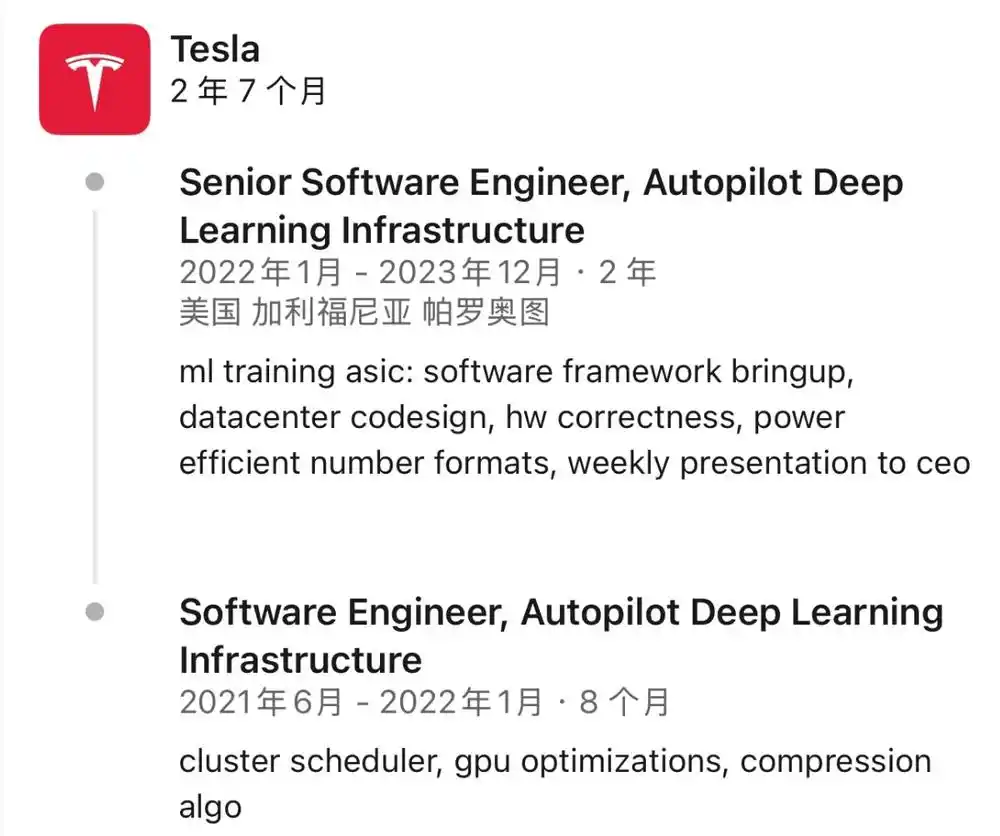
After graduation, he joined Tesla's Autopilot deep learning infrastructure team. Over nearly three years, he successively held the positions of Software Engineer and Senior Software Engineer, responsible for GPU optimization, cluster scheduling, data center software, and training infrastructure.
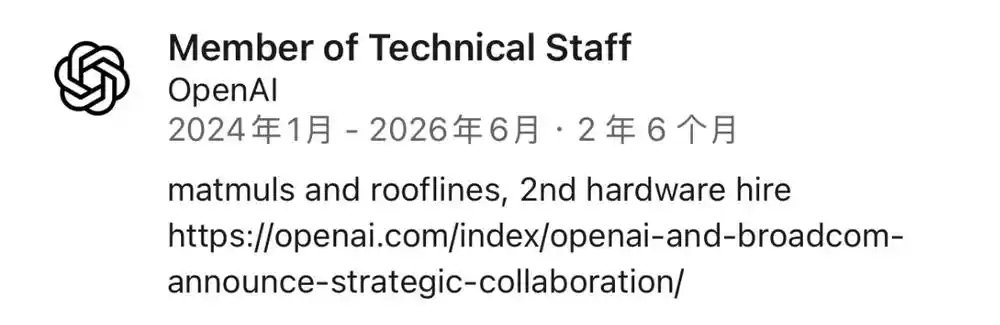
In January 2024, Clive Chan officially joined OpenAI as a member of the technical staff, responsible for matrix multiplication (Matmul), performance analysis (Roofline Analysis), and hardware-related work, and participated in the construction of OpenAI's self-developed AI chip project.
After Clive Chan announced joining Anthropic, Tony CW Liu, an Anthropic employee responsible for GPU performance optimization work, quickly appeared in the comments section with a message: "Congrats and welcome!"

Meanwhile, this job change also sparked some banter from netizens. One netizen said: "Now, every time I see 'I've decided to leave OpenAI', I know the next sentence will definitely mention Anthropic."

Another netizen made a soccer transfer analogy: "It's like leaving Real Madrid to join Barcelona."

Another netizen questioned Clive Chan's statement about "starting from the base of the mountain" in his departure announcement. Anthropic's valuation is almost a trillion dollars, how can that still be considered starting from the base?

Just on June 1, Anthropic announced the completion of a massive $65 billion Series H funding round (approximately RMB 4,397.7 billion), with a post-money valuation reaching $965 billion (approximately RMB 6.53 trillion), just one step away from the trillion-dollar club.

Conclusion: Talent Flow Between OpenAI and Anthropic Continues

It seems now that Anthropic has become one of the most important destinations for talent from OpenAI. From researchers and product leads to chip engineers, the flow of talent between the two companies has consistently attracted attention.

In May of this year, OpenAI co-founder and renowned AI researcher Andrej Karpathy announced joining Anthropic, sparking widespread discussion in the industry. One month later, Clive Chan, who participated in OpenAI's in-house chip project, also chose to join this former "competitor".

For frontier AI companies, talent remains one of the most core assets. For Anthropic, which is continuously expanding its team, this list may well grow longer.

This article is from the WeChat public account "Zhidongxi" (ID: zhidxcom), author: Jiang Yu.

Crypto di tendenza

Domande pertinenti

QWho is Clive Chan and what significant career move did he announce?

AClive Chan is the second hire on OpenAI's in-house chip development team, often referred to as employee '002'. He announced that he has left OpenAI and officially joined Anthropic.

QWhat reasons did Clive Chan give for leaving OpenAI and joining Anthropic?

AHe stated he was driven by an impulse to 'climb a new mountain from the bottom again.' He was also impressed by Anthropic's talent, values, ambition, and the intense work pace he experienced after joining.

QWhat did Clive Chan reveal about the progress of OpenAI's in-house AI chip project?

AHe said he could not reveal details beyond what OpenAI has publicly disclosed. He specifically pointed to the October 2025 collaboration blog with Broadcom, which targets the first racks for the 10GW AI accelerator system to start delivery in the second half of 2026.

QWhat significant milestone did Anthropic recently achieve regarding its valuation?

AOn June 1, Anthropic announced it completed a $65 billion H-round of financing, reaching a post-investment valuation of $965 billion, putting it on the verge of joining the trillion-dollar club.

QHow have online commenters humorously reacted to this career move?

ASome compared the move to a football transfer from Real Madrid to Barcelona. Others joked that every time they see 'I've decided to leave OpenAI,' they know the next sentence will mention Anthropic. A user also questioned how joining the highly valued Anthropic could be considered 'starting from the mountain bottom.'

Letture associate

Can Japan Buy Growth with AI? Will the Bond Market Believe It?

Japan's cabinet has introduced the 2026 Basic Policy on Economic and Fiscal Management and Reform, shifting its primary fiscal target. The new framework moves away from the traditional annual primary balance goal and instead prioritizes a stable reduction of the debt-to-GDP ratio. This change is tied to a strategy of increased "responsible proactive fiscal" spending, aiming to boost long-term growth through investments in strategic sectors like AI, semiconductors, energy, and robotics. The government estimates total public and private investment in 62 key technologies could exceed 370 trillion yen by 2040. The market reaction has been mixed and cautious. While equity markets may respond to policy signals, bond markets are focused on fiscal credibility. Concerns center on whether the weakening of the clear primary balance anchor could lead to looser fiscal discipline. If investors doubt that these strategic investments will generate sufficient productivity gains, tax revenue, and nominal growth to outpace rising interest costs, they may demand higher yields on Japanese Government Bonds (JGBs). Recent volatility in the yen and JGB yields, with the 10-year yield briefly reaching 2.9%, reflects this skepticism. The success of this new framework hinges on two factors: whether Japan can achieve a nominal growth rate consistently higher than its long-term interest rates, and whether future budgets demonstrate disciplined control over bond issuance. The government's narrative is that strategic investment is essential to break Japan's cycle of low growth, aging, and labor shortages. However, the bond market will continuously assess the credibility of this plan, pricing the risk that it may represent fiscal expansion rather than a viable growth strategy.

marsbit35 min fa

Can Japan Buy Growth with AI? Will the Bond Market Believe It?

marsbit35 min fa

Misjudged A-Shares: Resilience, Expectations, and Confidence

China's A-share market recently faced selling pressure, especially in tech sectors, initially triggered by a global tech sell-off that began in South Korea. However, the article argues this is a case of "mistaken injury" and highlights the market's underlying resilience. This resilience stems from three main pillars: **1) Tech Sector Fundamentals:** Unlike Korea's market dominated by a few memory chip stocks, China's tech sector is diversified across computing, communications, electronics, and semiconductors, supported by dual narratives of global AI supply chains and domestic substitution. Core areas like optical modules and fiber optics continue to show strong earnings growth. **2) "National Team" Support:** State-backed institutions and large corporations have made significant market purchases and announced buybacks, providing liquidity and signaling confidence. This is seen as a stabilizing policy signal, often associated with market bottoms. **3) Broader Market Pillars:** Other major sectors are showing endogenous recovery momentum. Consumer stocks benefit from stabilizing CPI and signs of sector recovery (e.g., liquor price hikes). Cyclical sectors like aluminum have high earnings, potential price increases due to tight supply, and low valuations. The financial sector offers stable dividends and low valuations. The conclusion is that the sell-off was driven by external contagion, not a collapse in fundamentals. With strong policy support and recovering momentum across key sectors, the A-share market possesses the toughness to regain stability.

marsbit1 h fa

Misjudged A-Shares: Resilience, Expectations, and Confidence

marsbit1 h fa

Trading

Spot

Articoli Popolari

Come comprare CHIP

Benvenuto in HTX.com! Abbiamo reso l'acquisto di USD.AI (CHIP) semplice e conveniente. Segui la nostra guida passo passo per intraprendere il tuo viaggio nel mondo delle criptovalute.Step 1: Crea il tuo Account HTXUsa la tua email o numero di telefono per registrarti il tuo account gratuito su HTX. Vivi un'esperienza facile e sblocca tutte le funzionalità,Crea il mio accountStep 2: Vai in Acquista crypto e seleziona il tuo metodo di pagamentoCarta di credito/debito: utilizza la tua Visa o Mastercard per acquistare immediatamente USD.AICHIP.Bilancio: Usa i fondi dal bilancio del tuo account HTX per fare trading senza problemi.Terze parti: abbiamo aggiunto metodi di pagamento molto utilizzati come Google Pay e Apple Pay per maggiore comodità.P2P: Fai trading direttamente con altri utenti HTX.Over-the-Counter (OTC): Offriamo servizi su misura e tassi di cambio competitivi per i trader.Step 3: Conserva USD.AI (CHIP)Dopo aver acquistato USD.AI (CHIP), conserva nel tuo account HTX. In alternativa, puoi inviare tramite trasferimento blockchain o scambiare per altre criptovalute.Step 4: Scambia USD.AI (CHIP)Scambia facilmente USD.AI (CHIP) nel mercato spot di HTX. Accedi al tuo account, seleziona la tua coppia di trading, esegui le tue operazioni e monitora in tempo reale. Offriamo un'esperienza user-friendly sia per chi ha appena iniziato che per i trader più esperti.

328 Totale visualizzazioniPubblicato il 2026.04.21Aggiornato il 2026.06.02

Come comprare CHIP

Discussioni

Benvenuto nella Community HTX. Qui puoi rimanere informato sugli ultimi sviluppi della piattaforma e accedere ad approfondimenti esperti sul mercato. Le opinioni degli utenti sul prezzo di CHIP CHIP sono presentate come di seguito.

活动图片













