BONK jumps 11% after channel breakout: Reversal or short squeeze setup?

ambcryptoPubblicato 2026-02-15Pubblicato ultima volta 2026-02-15

Introduzione

BONK surged 11.5% to $0.0000057189 with a 157% volume spike, breaking out of a prolonged downtrend. Market cap reached $632.66M, and Open Interest rose 13.4% to $7.63M, indicating growing derivatives activity. The price cleared a key descending channel, shifting bias from bearish to potential reversal, with RSI recovering from oversold levels to 45.44. Exchange outflows of -$870K suggest accumulation and reduced selling pressure. However, negative funding rates point to crowded short positions, which could fuel volatility—either accelerating gains via a short cover or triggering sharp declines if momentum fails. The breakout suggests upside potential, but leverage and positioning risks remain high.

BONK jumped 11.5% in 24 hours to $0.0000057189 as trading volume exploded 157%, disrupting its prolonged downtrend structure. The market cap was $632.66M at press time, reflecting renewed speculative appetite.

Additionally, the Open Interest climbed 13.4% to $7.63M, signaling expanding derivatives participation. This move does not unfold quietly.

Price now breaks above a key technical structure while exchange flows and funding data reveal deeper positioning shifts. Momentum begins to rebuild, yet leverage increases simultaneously.

The market now faces a pivotal inflection point. Does this breakout signal genuine structural recovery, or will rising speculative pressure trigger sharp volatility?

BONK price action

BONK has pushed decisively above the upper boundary of its descending channel on the daily chart. That breakout changes short-term structure immediately.

Price traded around $0.00000696 after reclaiming the 0.00000557 support zone. However, the 0.00000743 level now acts as the first immediate pivot.

If bulls defend this area, momentum could expand toward 0.00001221, where prior supply previously capped rallies. Above that, 0.00001361 stands as the next structural ceiling.

Unlike previous relief bounces, this move clears channel resistance rather than stalling beneath it. As a result, the technical bias shifts from pure continuation to potential reversal territory.

The RSI read 45.44 after rebounding from deeper oversold territory near the low 30s. This shift signaled early momentum repair rather than full bullish expansion.

A move above 50 would confirm stronger upside control. Nevertheless, this rebound already reflects a clear change in internal pressure.

Instead of persistent downside compression, BONK now shows gradual strength rebuilding beneath the surface.

Exchange outflows hint at quiet accumulation

Spot netflows remain negative across multiple sessions, and the latest reading shows roughly -$870K leaving exchanges. The pattern signals continued token withdrawals rather than deposit-driven selling.

Throughout recent weeks, red bars have dominated the inflow/outflow chart. Even during price weakness, traders removed BONK from centralized platforms.

This behavior reduces immediate sell-side liquidity. While outflows alone do not guarantee upside, they often precede supply tightening phases.

In contrast to panic inflows that precede breakdowns, BONK’s flow profile suggests holders prefer custody over liquidation. Therefore, structural pressure does not align with aggressive distribution.

Crowded shorts face growing pressure

The OI-Weighted Funding printed -0.0143% at the time of writing, reflecting persistent negative bias in derivatives markets. Shorts now pay longs to maintain positions.

At the same time, Open Interest rose 13.4% to $7.63M, showing expanding participation. This combination revealed crowded short positioning building during the breakout.

When funding stays negative while price climbs, imbalance intensifies. If upside continues, forced short covering could accelerate volatility.

The failure to sustain momentum would validate those bearish bets. For now, derivatives traders lean heavily short, even as price structure improves.

To sum up, BONK has broken its descending channel while RSI strengthens, exchange outflows persist, and funding remains negative.

Structure now favors upside continuation. However, rising Open Interest and crowded shorts inject volatility risk.

If price defends the reclaimed support zone, momentum could extend higher. If not, leverage unwinds quickly.

At present, the technical shift carries weight, but derivatives positioning will determine whether this breakout evolves into sustained recovery.


Final Summary

  • Structural breakout shifts short-term bias, but follow-through must confirm conviction.
  • Crowded shorts could accelerate upside, yet failure may trigger sharp unwinds.

Domande pertinenti

QWhat was the percentage increase and new price of BONK after its 24-hour surge?

ABONK jumped 11.5% in 24 hours to a new price of $0.0000057189.

QWhat key technical level did BONK's price break above, signaling a potential shift in trend?

ABONK pushed decisively above the upper boundary of its descending channel on the daily chart.

QWhat does the negative Open Interest-Weighted Funding rate of -0.0143% indicate about market positioning?

AThe negative funding rate indicates persistent negative bias and shows that shorts are paying longs to maintain their positions, revealing crowded short positioning.

QWhat is the significance of the continued negative exchange netflows for BONK?

AThe negative netflows, with tokens leaving exchanges, signal continued token withdrawals rather than deposit-driven selling. This reduces immediate sell-side liquidity and can precede a supply tightening phase.

QAccording to the analysis, what are the two potential outcomes for the price following this breakout?

AThe breakout could either evolve into a sustained recovery if price defends the reclaimed support zone, or it could trigger sharp volatility and quick leverage unwinds if momentum fails, validating the crowded bearish bets.

Letture associate

Fu Peng's First Public Speech in 2026: What Exactly Are Crypto Assets? Why Did I Join the Crypto Asset Industry?

Fu Peng, a renowned macroeconomist and now Chief Economist at New火 Group, delivered his first public speech of 2026 at the Hong Kong Web3 Festival. He explained his perspective on crypto assets and why he joined the industry, framing it within the context of macroeconomic trends and financial evolution. Fu emphasized that crypto assets are transitioning from an early, belief-driven phase to a mature, institutionally integrated asset class. He drew parallels to the 1970s-80s, when technological advances (like computing) revolutionized traditional finance, leading to the rise of FICC (Fixed Income, Currencies, and Commodities). Similarly, current advancements in AI, data, and blockchain are reshaping finance, with crypto assets becoming part of a new "FICC + C" (C for Crypto) framework. He noted that institutional capital, including traditional hedge funds, avoided early crypto due to its speculative nature but are now engaging as regulatory clarity emerges (e.g., stablecoin laws, CFTC classifying crypto as a commodity). Fu predicted that 2025-2026 marks a turning point where crypto becomes a standardized, financially viable asset for diversified portfolios, akin to commodities or derivatives in traditional finance. Fu defined Bitcoin not as "digital gold" in a simplistic sense but as a value-preserving, financially tradable asset. He highlighted that crypto's future lies in regulated, institutional adoption, moving away from retail-dominated trading. His entry into crypto signals this maturation, where traditional finance integrates crypto into mainstream asset management.

marsbit8 min fa

Fu Peng's First Public Speech in 2026: What Exactly Are Crypto Assets? Why Did I Join the Crypto Asset Industry?

marsbit8 min fa

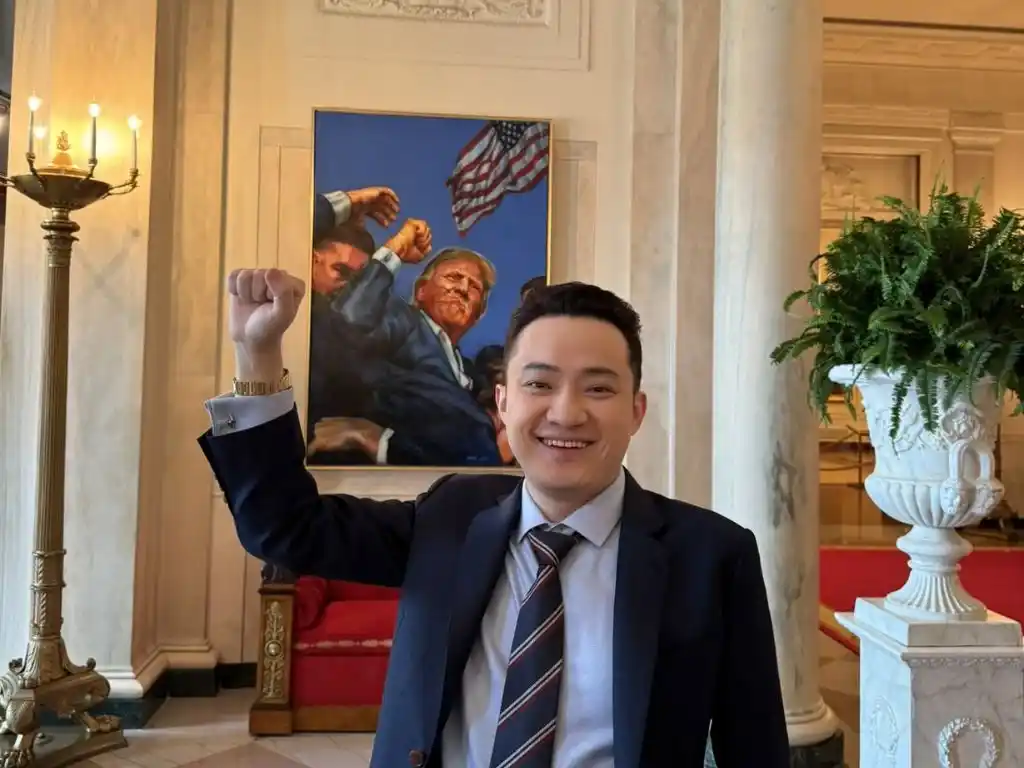
Justin Sun Sues Trump Family: What $75 Million Bought Was Only a Blacklist

Justin Sun, founder of Tron, has filed a lawsuit in federal court against World Liberty Financial (WLF), alleging he was made the "primary target of a fraudulent scheme" after investing $75 million. Sun claims the investment secured him an advisor title and WLFI tokens, which were later frozen by WLF, causing "hundreds of millions in losses." The dispute began in late 2024 when Sun's investment helped revive WLF's struggling token sale, which ultimately raised $550 million. Shortly after, the SEC dropped its lawsuit against Sun following Donald Trump's inauguration. However, relations soured when Sun refused WLF's demands for additional funding. In August 2025, WLF added a "blacklist" function to its smart contract, allowing it to unilaterally freeze tokens. Sun's holdings, worth approximately $107 million, were frozen, and he was threatened with token destruction. The lawsuit highlights WLF's structure, which directs 75% of token sale profits to the Trump family, who had earned $1 billion by December 2025. WLF's CEO is Zach Witkoff, son of U.S. Middle East envoy Steve Witkoff. The project faces scrutiny for opaque operations, including a controversial loan arrangement on the Dolomite platform, co-founded by a WLF advisor. Despite Sun's history with the SEC, the case underscores centralization risks within DeFi, as WLF controls governance and holds powers to freeze assets arbitrarily. Sun's tokens remain frozen as legal proceedings begin.

marsbit15 min fa

Justin Sun Sues Trump Family: What $75 Million Bought Was Only a Blacklist

marsbit15 min fa

$500 to Buy OpenAI Stock: Silicon Valley's Most Respectable Liquidity Invitation

Silicon Valley's largest venture capital platform, AngelList, has launched a new fund called USVC, allowing U.S. retail investors to buy into high-profile AI companies like OpenAI, Anthropic, and xAI with a minimum investment of $500—no accredited investor status required. Promoted by AngelList co-founder Naval Ravikant, the fund is framed as an opportunity for ordinary people to access high-growth private tech investments traditionally reserved for VCs. However, critics argue it functions more like an exit vehicle for early insiders. USVC acquires shares not through primary rounds but largely via secondary transactions—purchasing stakes from early investors, VC funds, and employees looking to cash out at peak valuations. With companies like xAI heavily weighted in the portfolio, the fund effectively channels retail money into providing liquidity for insiders who entered at much lower valuations. The fund’s structure raises concerns: shares are illiquid, with no secondary market, and buybacks are limited and discretionary. The actual annual fee reaches 3.61%, far above the advertised 1% management fee. This model parallels the "low float, high fully diluted valuation" strategy seen in crypto, where early investors profit by selling to latecomers at inflated prices. The timing—alongside similar moves by platforms like Robinhood—suggests that Silicon Valley’s sudden interest in retail inclusion may be less about democratizing access and more about securing exits for insiders.

marsbit46 min fa

$500 to Buy OpenAI Stock: Silicon Valley's Most Respectable Liquidity Invitation

marsbit46 min fa

Trading

Spot
Futures

Articoli Popolari

Come comprare BONK

Benvenuto in HTX.com! Abbiamo reso l'acquisto di Bonk (BONK) semplice e conveniente. Segui la nostra guida passo passo per intraprendere il tuo viaggio nel mondo delle criptovalute.Step 1: Crea il tuo Account HTXUsa la tua email o numero di telefono per registrarti il tuo account gratuito su HTX. Vivi un'esperienza facile e sblocca tutte le funzionalità,Crea il mio accountStep 2: Vai in Acquista crypto e seleziona il tuo metodo di pagamentoCarta di credito/debito: utilizza la tua Visa o Mastercard per acquistare immediatamente BonkBONK.Bilancio: Usa i fondi dal bilancio del tuo account HTX per fare trading senza problemi.Terze parti: abbiamo aggiunto metodi di pagamento molto utilizzati come Google Pay e Apple Pay per maggiore comodità.P2P: Fai trading direttamente con altri utenti HTX.Over-the-Counter (OTC): Offriamo servizi su misura e tassi di cambio competitivi per i trader.Step 3: Conserva Bonk (BONK)Dopo aver acquistato Bonk (BONK), conserva nel tuo account HTX. In alternativa, puoi inviare tramite trasferimento blockchain o scambiare per altre criptovalute.Step 4: Scambia Bonk (BONK)Scambia facilmente Bonk (BONK) nel mercato spot di HTX. Accedi al tuo account, seleziona la tua coppia di trading, esegui le tue operazioni e monitora in tempo reale. Offriamo un'esperienza user-friendly sia per chi ha appena iniziato che per i trader più esperti.

308 Totale visualizzazioniPubblicato il 2024.12.11Aggiornato il 2025.03.21

Come comprare BONK

Discussioni

Benvenuto nella Community HTX. Qui puoi rimanere informato sugli ultimi sviluppi della piattaforma e accedere ad approfondimenti esperti sul mercato. Le opinioni degli utenti sul prezzo di BONK BONK sono presentate come di seguito.

活动图片