Bloomberg's Review: 11 Key Trades to Understand the Global Financial Markets in 2025

marsbitPubblicato 2025-12-29Pubblicato ultima volta 2025-12-29

Introduzione

Bloomberg's 2025 financial market review highlights 11 key trades that defined a year of high-stakes bets and sharp reversals. Cryptocurrency saw a fleeting boom in Trump-affiliated meme coins and assets, which ultimately crashed, demonstrating that political hype couldn't override crypto's volatile cycles. Michael Burry’s bearish bets on AI giants Nvidia and Palantir exposed underlying skepticism in tech valuations. European defense stocks surged due to geopolitical shifts and increased military spending, while the "debasement trade" drove gold to record highs, though its effectiveness was mixed. South Korea’s equity market rallied over 70%, fueled by pro-market policies and foreign investment, yet domestic retail investors remained skeptical. A notable showdown between short-seller Jim Chanos and bitcoin bull Michael Saylor ended with Strategy's premium collapsing. Japan’s government bonds, long a "widow maker" trade, finally paid off for shorts as yields soared. Credit markets saw intense inter-creditor conflicts, with firms like Pimco profiting from tactical moves. Mortgage giants Fannie Mae and Freddie Meme surged on privatization plans. A popular Turkish carry trade imploded overnight due to political turmoil, and recurring credit crises hinted at deeper systemic risks, prompting warnings of more "cockroaches" in the market.

Editor's Note: After reviewing the ups and downs of the crypto industry in 2025, let's broaden our perspective: the pulse of the global financial markets often mirrors and is inextricably linked to the logic of the crypto space. This article focuses on 11 major trades of the year, from cross-market trends to policy-driven asset fluctuations. The market rules and risk revelations hidden within are also worth referencing for crypto practitioners, helping to see the full picture of the annual financial landscape together.

This was another year filled with "high-conviction bets" and "rapid reversals".

From bond trading desks in Tokyo and credit committees in New York to forex traders in Istanbul, the markets delivered both windfalls and wild volatility. Gold prices hit record highs, the stock of a steady mortgage giant swung wildly like a 'Meme stock' (stocks driven by social media hype), and a textbook arbitrage trade collapsed in an instant.

Investors placed big bets around political changes, bloated balance sheets, and fragile market narratives, driving significant stock market rallies and crowded yield trades, while crypto strategies often relied on leverage and expectations, lacking other solid support. After Donald Trump returned to the White House, global financial markets first slumped heavily, then recovered; European defense stocks were ignited; speculators stirred up wave after wave of market mania. Some positions yielded astonishing returns, but when market momentum reversed, funding dried up, or leverage backfired, others suffered heavy losses.

As the year-end approaches, Bloomberg focuses on the most notable bets of 2025—including successes, failures, and the positions that defined the era. These trades leave investors grappling with a series of 'old problems' as they prepare for 2026: unstable companies, excessive valuations, and those 'once-effective, eventually-failed' trend-following trades.

Cryptocurrency: The Short-Lived Rally of Trump-Linked Assets

For the cryptocurrency sector, "buying up all assets linked to the Trump brand" seemed like a highly attractive momentum bet. During the presidential campaign and after taking office, Trump went "all-in" on digital assets (as reported by Bloomberg Terminal), pushing for comprehensive reforms and placing industry allies in key agencies. His family also joined in, endorsing various tokens and crypto companies, which traders saw as "political booster fuel."

This "Trump crypto asset matrix" quickly took shape: hours before the inauguration, Trump launched a Meme coin promoted on social media; First Lady Melania Trump subsequently launched her own personal token; later in the year, Trump-family-linked World Liberty Financial made its WLFI token available for trading, allowing retail investors to buy. A series of "Trump-related" trades emerged—Eric Trump co-founded American Bitcoin, a publicly traded cryptocurrency miner that went public via a merger in September.
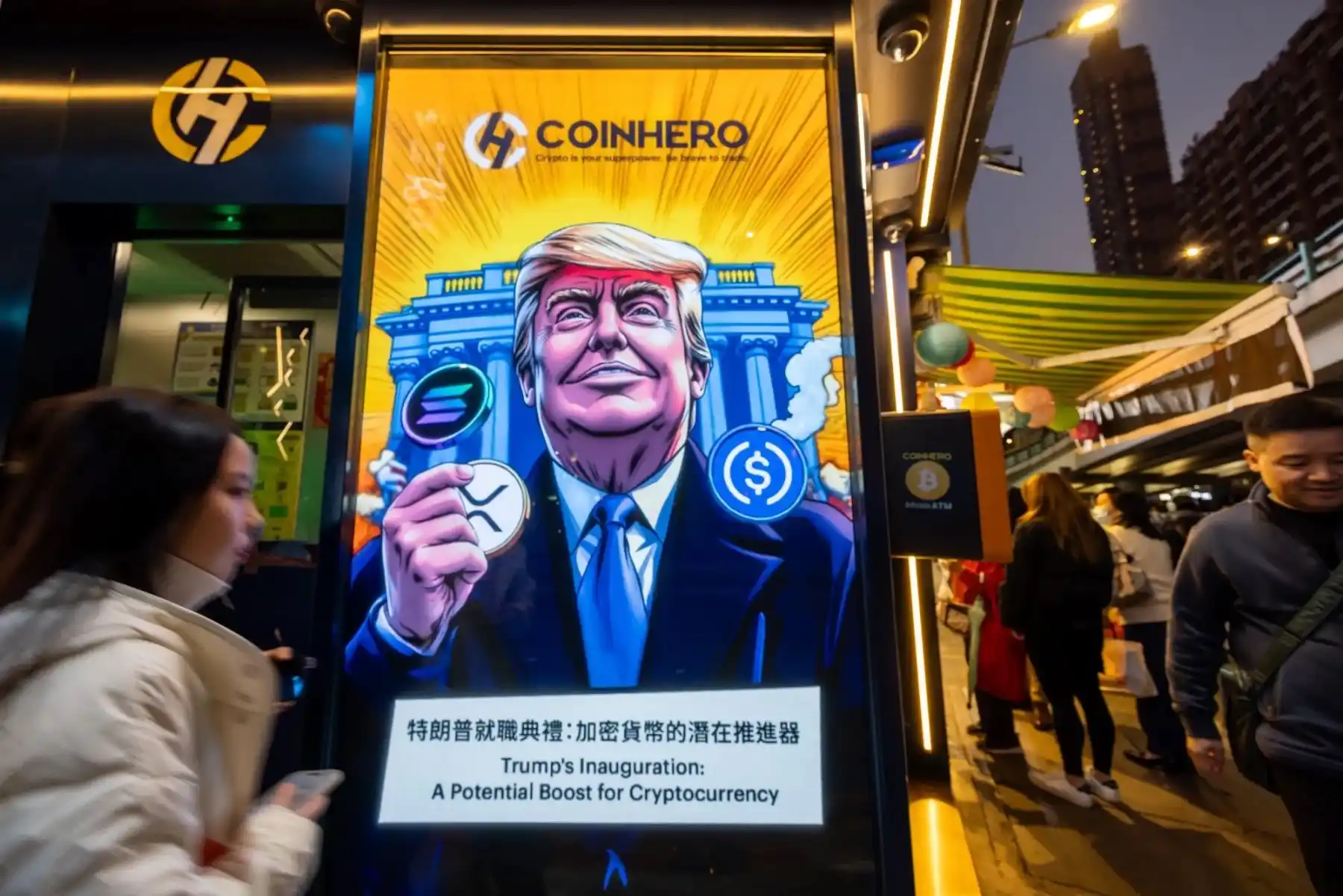
Each asset launch triggered a wave of buying, but each rally was short-lived. As of December 23, Trump's Meme coin performed dismally, down over 80% from its January high; according to crypto data platform CoinGecko, Melania's Meme coin fell nearly 99%; American Bitcoin's stock price fell about 80% from its September peak.

Politics provided the thrust for these trades, but the laws of speculation ultimately pulled them back to earth. Even with "supporters" in the White House, these assets couldn't escape the core cycle of cryptocurrency: price rise → leverage influx → liquidity drain. Bitcoin, a bellwether for the industry, is likely to post an annual loss after falling from its October peak. For Trump-linked assets, politics can bring short-term heat but cannot provide long-term protection.

—Olga Kharif (Reporter)

AI Trade: The Next 'Big Short'?

This trade was exposed in a routine disclosure filing, but its impact was anything but routine. On November 3, Scion Asset Management disclosed holdings of protective put options on Nvidia and Palantir Technologies—two companies at the core of the market-driving 'AI stocks' rally of the past three years. Although Scion is not a large hedge fund, its manager, Michael Burry, drew intense scrutiny to the filing: Burry gained fame for 'foreseeing the 2008 subprime crisis' in the book and film "The Big Short," becoming a recognized market 'prophet.'

The strike prices of the options were staggering: Nvidia's strike price was 47% below the closing price at the time of disclosure, and Palantir's was 76% lower. But the mystery remains: limited disclosure requirements make it impossible to know if these put options (contracts giving the holder the right to sell a stock at a set price before a certain date) were part of a more complex trade; and the filing only reflects Scion's holdings as of September 30, leaving open the possibility Burry reduced or closed the positions later.

However, market skepticism about the 'high valuations and high spending of AI giants' had been piling up like 'dry kindling.' Burry's disclosure was like a match thrown onto that kindling.

Burry's Bearish Bets on Nvidia and Palantir

The investor famous for "The Big Short" disclosed put option holdings in a 13F filing:
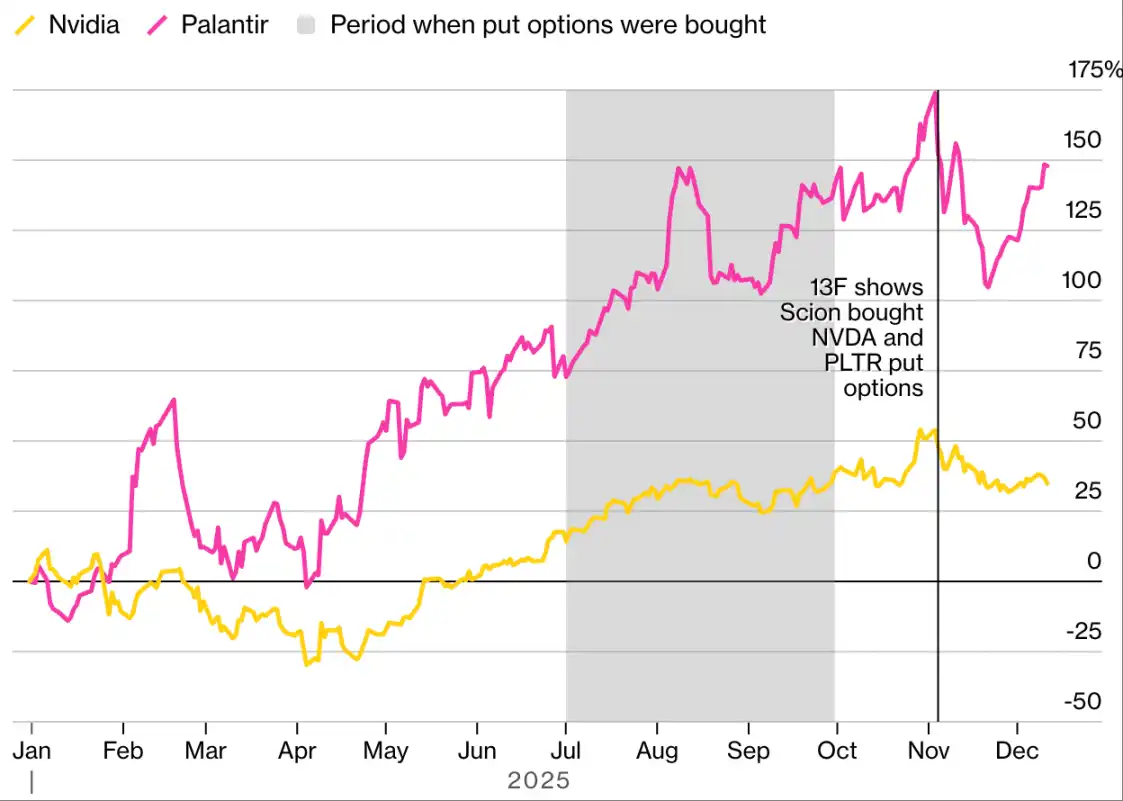
Following the news, Nvidia, the world's most valuable stock, plummeted, Palantir also fell, and the Nasdaq index saw a slight pullback, though these assets subsequently recovered their losses.

It's impossible to know exactly how much Burry profited, but he left a clue on social platform X: stating he bought Palantir puts for $1.84, and those options surged 101% in less than three weeks. This disclosure exposed the underlying doubts in a market dominated by 'a few AI stocks, massive passive inflows, and low volatility.' Whether this trade ultimately proves 'prescient' or 'premature,' it confirms a pattern: once market conviction wavers, even the strongest market narrative can reverse quickly.

—Michael P. Regan (Reporter)

Defense Stocks: An Outbreak in the New World Order

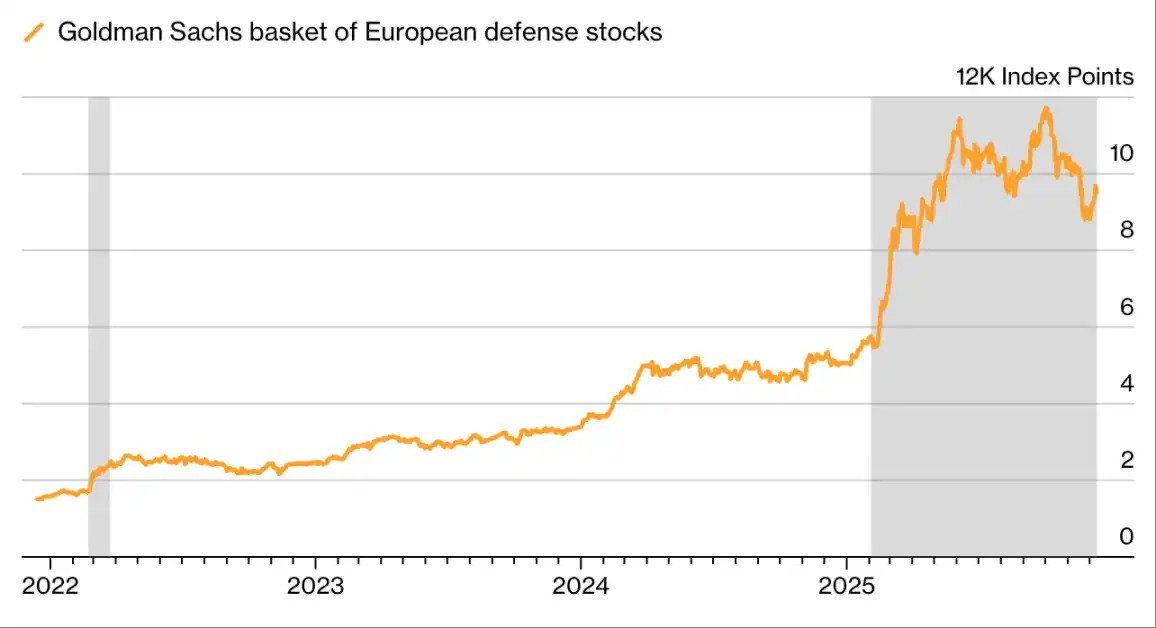
Shifts in the geopolitical landscape triggered an explosion in 'European defense stocks,' a sector once considered 'toxic' by asset managers. Trump's plans to reduce funding support for Ukraine's military prompted European governments to embark on a 'defense spending spree,' sending shares of regional defense companies soaring: as of December 23, Germany's Rheinmetall AG was up about 150% year-to-date, and Italy's Leonardo SpA gained over 90% in the same period.

Previously, many fund managers avoided the defense industry due to its 'controversial' nature under 'Environmental, Social, and Governance' (ESG) investing principles; now, they are changing their stance, with some funds even redefining their investment scope.

European Defense Stocks Surged in 2025

The region's military stocks rose more than during the initial phase of the Russia-Ukraine conflict:
"It wasn't until early this year that we reintroduced defense assets into our ESG funds," said Pierre Alexis Dumont, Chief Investment Officer at Sycomore Asset Management. "The market paradigm has shifted, and when paradigms shift, we have both a responsibility and values to defend—so we now focus on assets related to 'defensive weapons.'"

Stocks with any connection to defense were frantically bought up, from goggle manufacturers and chemical producers to a printing company. As of December 23, the Bloomberg European Defense Index was up over 70% for the year. The frenzy spread to credit markets: even companies 'indirectly related' to defense attracted a crowd of potential lenders; banks even launched 'European defense bonds'—modeled on green bonds but dedicated to entities like weapons manufacturers. This change marks a repositioning of 'defense' from a 'reputational liability' to a 'public good,' and confirms a truth: when geopolitics shift, capital moves faster than ideology.

—Isolde MacDonogh (Reporter)

Devaluation Trade: Fact or Fiction?

The heavy debt burdens of major economies like the US, France, and Japan, coupled with a 'lack of political will to address the debt,' led some investors in 2025 to flock to 'anti-devaluation assets' like gold and cryptocurrencies, while cooling on government bonds and the US dollar. This strategy was labeled the bearish 'devaluation trade,' inspired by history: rulers like Emperor Nero of ancient Rome dealt with fiscal pressure by 'debasing their currency.'

In October, this narrative peaked: worries about the US fiscal outlook, combined with the 'longest government shutdown in history,' led investors to seek havens beyond the dollar. That month, gold and bitcoin simultaneously hit record highs—a rare synchronized moment for these two assets often seen as competitors.

Gold Record

The 'devaluation trade' helped the precious metal hit new highs:
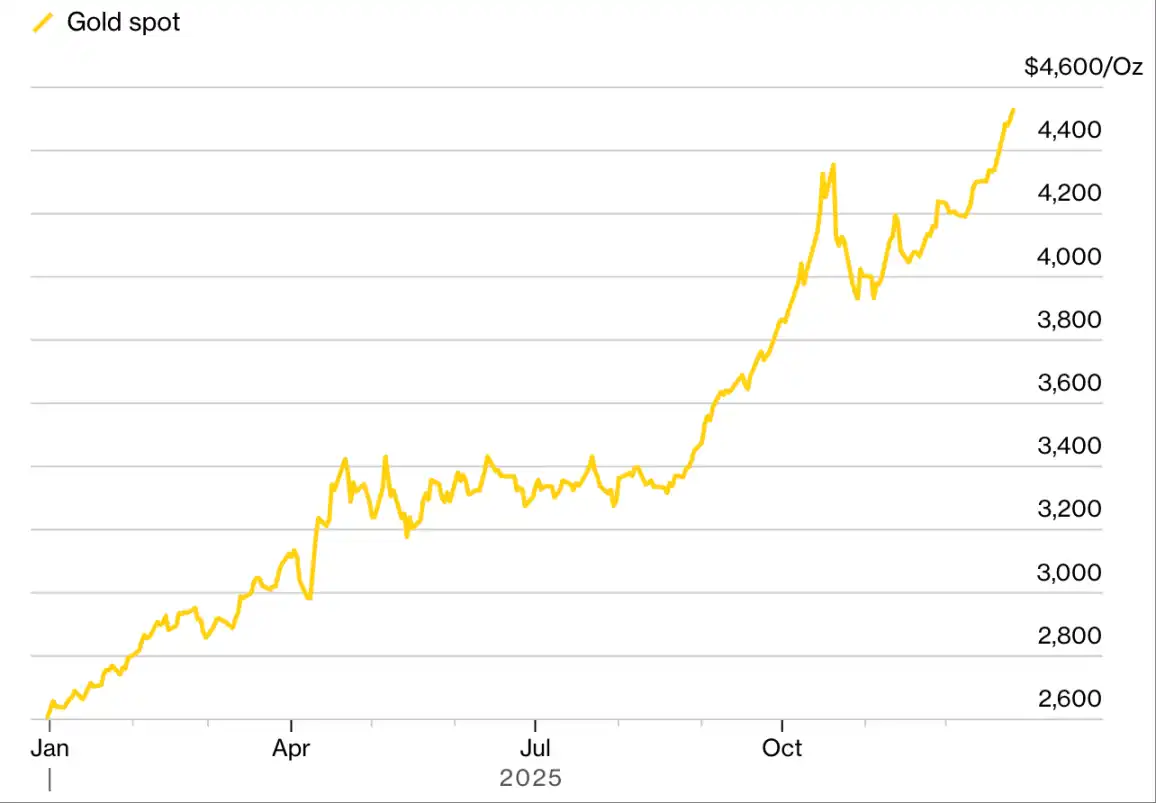
As a 'story,' 'devaluation' offered a clear explanation for a chaotic macro environment; but as a 'trading strategy,' its actual effectiveness was far more complex. Subsequently, cryptocurrencies broadly pulled back, with bitcoin falling sharply; the dollar stabilized; US Treasuries, far from collapsing, were on track for their best year since 2020—a reminder that fears of 'fiscal deterioration' can coexist with demand for safe assets, especially during periods of slowing growth and peak policy rates.

Other asset price movements were mixed: the volatility in metals like copper, aluminum, and even silver was half driven by 'fears of currency devaluation' and half by Trump's tariff policies and macro forces, blurring the line between 'inflation hedge' and 'traditional supply shock.' Meanwhile, gold continued its strong run, repeatedly刷新ing历史新高. In this arena, the 'devaluation trade' still worked—but it was no longer a 'wholesale rejection of fiat currency,' more a precise bet on 'rates, policy, and safe-haven demand.'

—Richard Henderson (Reporter)

Korean Stocks: A 'K-Pop' Style Surge

When it comes to plot twists and excitement, the performance of the South Korean stock market this year was enough to make K-dramas 'step aside.' Driven by President Lee Jae-myung's policies to 'boost the capital markets,' the benchmark Kospi index had gained over 70% in 2025 as of December 22, moving towards Lee's stated '5000 point target' and easily ranking among the top performers of major global indices.

It's not common for political leaders to publicly set a 'stock index level' as a target, and Lee Jae-myung's initial 'Kospi 5000' plan didn't get much attention. Now, more Wall Street banks, including JPMorgan Chase and Citigroup, believe this target could be achieved in 2026—partly thanks to the global AI boom, with Korean stocks seeing increased demand as 'core Asian AI trading targets.'

Korean Stock Market Rebounds

The benchmark index soared:
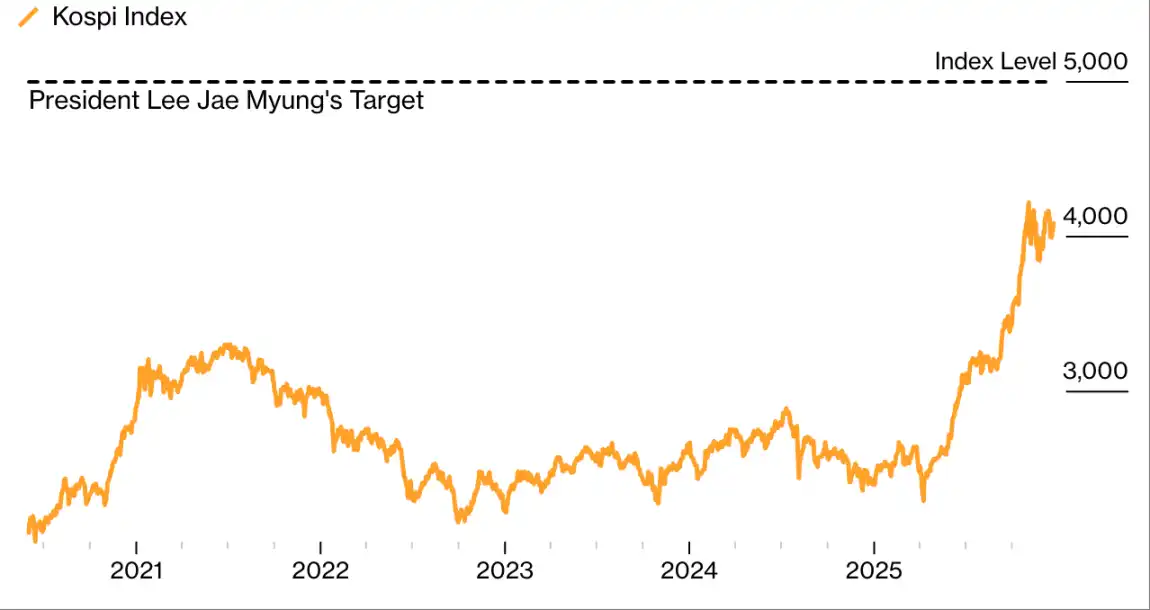
In this 'world-leading' rally, there was a notable 'absentee': South Korean retail investors. Although Lee often emphasizes to voters that 'he was a retail investor before entering politics,' his reform agenda hasn't yet convinced domestic investors that 'stocks are worth holding long-term.' Even as foreign funds poured into Korean stocks, local retail investors were 'net sellers': they invested a record $33 billion into US stocks and chased riskier investments like cryptocurrencies and overseas leveraged ETFs.

This phenomenon had a side effect: pressure on the Korean Won. Capital outflows weakened the won, a reminder that even a 'blockbuster stock rally' can掩盖lingering domestic investor doubts.

—Youkyung Lee (Reporter)

Bitcoin Duel: Chanos vs. Saylor

Every story has two sides, and the arbitrage battle between short-seller Jim Chanos and 'bitcoin hoarder' Michael Saylor's MicroStrategy was not just about two highly charismatic figures, but also evolved into a 'referendum on capitalism in the crypto age.'

Early in 2025, as bitcoin prices soared, MicroStrategy's stock surged in tandem, and Chanos saw an opportunity: MicroStrategy's stock price was trading at an excessive premium relative to its 'bitcoin holdings,' which the legendary investor deemed 'unsustainable.' Therefore, he decided to 'short MicroStrategy and go long bitcoin,' publicly announcing this strategy in May (when the premium was still high).

Chanos and Saylor then engaged in a public war of words. In June, Saylor said in a Bloomberg Television interview: "I don't think Chanos understands our business model at all"; Chanos fired back on platform X, calling Saylor's explanation 'complete and utter financial nonsense.'

In July, MicroStrategy's stock hit a record, up 57% year-to-date; but as the number of 'digital asset treasury companies' proliferated and crypto token prices retreated from highs, MicroStrategy and its 'imitators' saw their shares fall, and MicroStrategy's premium to bitcoin shrunk—Chanos's bet began to pay off.

MicroStrategy Underperforms Bitcoin This Year

As MicroStrategy's premium vanished, Chanos's short trade paid off:
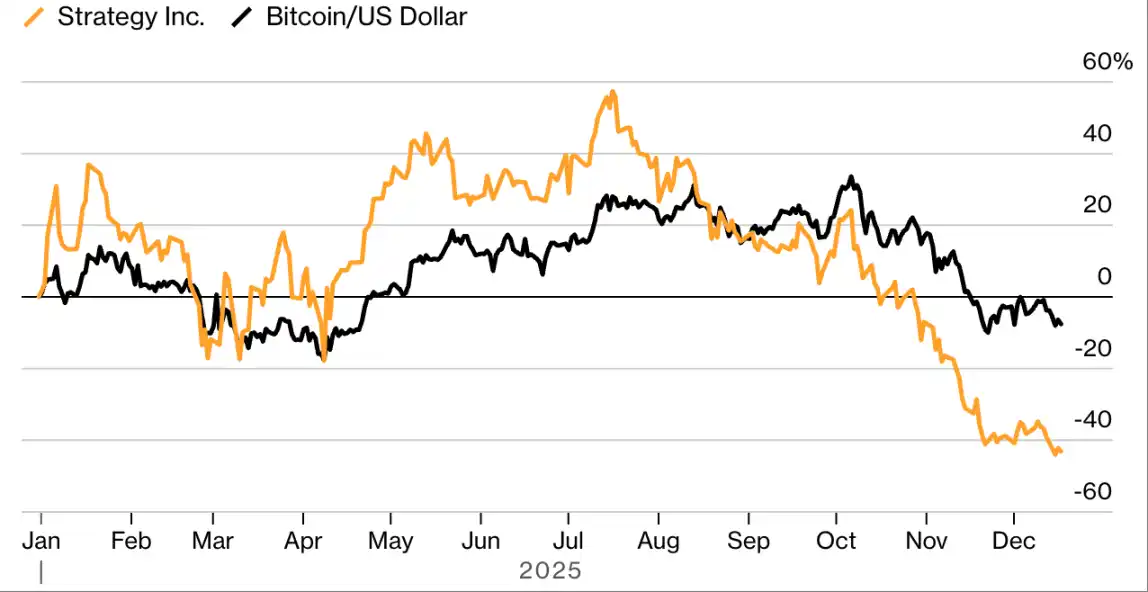
From the time Chanos publicly announced his 'short on MicroStrategy' until he declared he 'closed the position' on November 7, MicroStrategy's stock fell 42%. Beyond the profit and loss itself, this case revealed the 'recurring cycle of boom and bust' in cryptocurrency: balance sheets膨胀on 'confidence,' and confidence relies on 'rising prices' and 'financial engineering.' This model works until 'belief wavers'—at which point the 'premium' is no longer an advantage but a problem.

—Monique Mulima (Reporter)

Japanese Government Bonds: From 'Widowmaker' to 'Rainmaker'

For decades, one bet has repeatedly tripped up macro investors—the 'widowmaker' trade of shorting Japanese Government Bonds (JGBs). The logic seemed simple: Japan carries a massive public debt, so interest rates 'must rise eventually' to attract enough buyers; investors accordingly 'borrowed and sold bonds,' hoping to profit when 'rates rose and bond prices fell.' However, for years, the Bank of Japan's easy monetary policy kept borrowing costs low, costing short-sellers dearly—until 2025, when the situation finally reversed.

This year, the 'widowmaker' turned into a 'rainmaker': yields on benchmark Japanese government bonds surged across the board, making the $7.4 trillion JGB market a 'short-seller's paradise.' The triggers were varied: BOJ interest rate hikes, and Prime Minister Takaichi Sanae's 'largest post-pandemic spending plan.' The benchmark 10-year JGB yield broke above 2%, a multi-decade high; the 30-year bond yield rose over 1 percentage point, setting a new record. As of December 23, the Bloomberg Japan Treasury Return Index was down over 6% for the year, becoming the worst-performing major bond market globally.

Japanese Bond Market Plunges This Year

The Bloomberg Japan Treasury Index was the worst-performing major bond index globally:
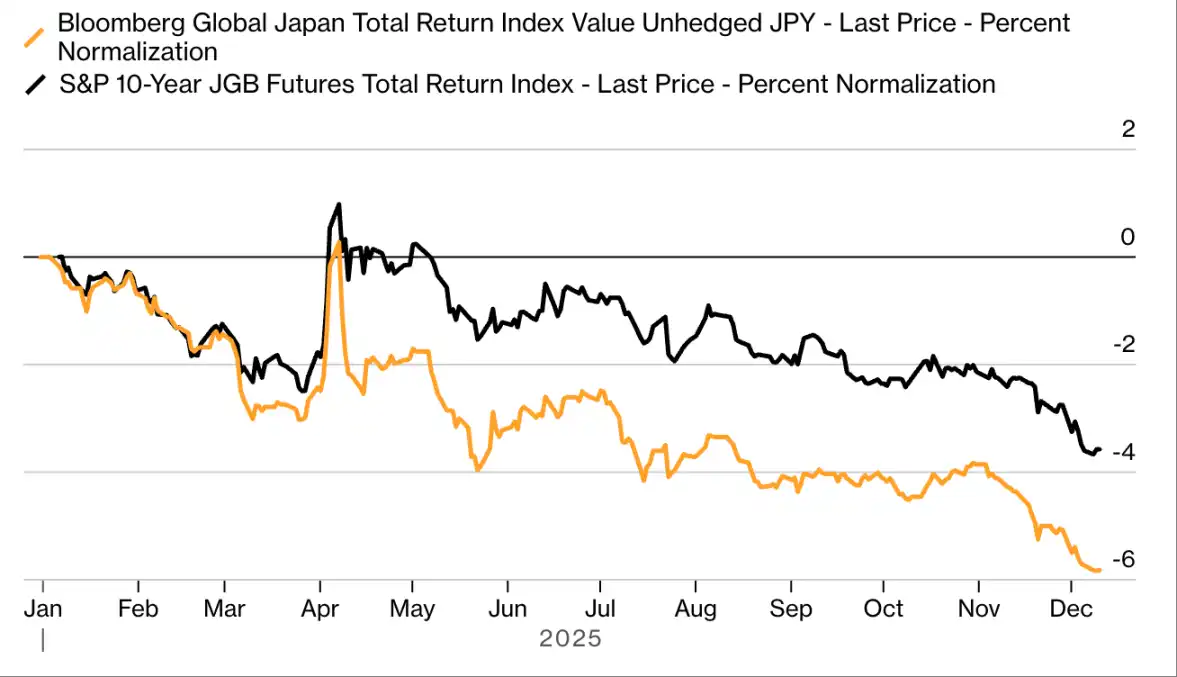
Fund managers at Schroders, Jupiter Asset Management, RBC BlueBay Asset Management, among others, publicly discussed 'shorting JGBs in some form' this year; investors and strategists believe there is still room for this trade as benchmark policy rates rise. Additionally, the BOJ is reducing its bond purchases, further pushing yields higher; and with the Japanese government's debt-to-GDP ratio 'leading by a wide margin' among developed nations, bearish sentiment towards JGBs 'could persist.'

—Cormac Mullen (Reporter)

Credit 'In-Fighting': The Rewards of 'Hardball Tactics'

The richest credit returns in 2025 didn't come from 'betting on corporate recovery,' but from 'pushing back against fellow investors.' This model, called 'creditor-on-creditor violence,' paid off handsomely for firms like Pimco and King Street Capital Management—which orchestrated a precise 'play' around Envision Healthcare, a healthcare company owned by KKR.

Post-pandemic, hospital staffing provider Envision was struggling and desperately needed loans from new investors. But issuing new debt required 'pledging already-pledged assets': a majority of creditors联合opposed this plan, but Pimco, King Street, and Partners Group 'defected' in support—their support allowed a proposal to pass that released collateral (equity in Envision's valuable outpatient surgery business, Amsurg) from old creditors to secure the new debt.

These institutions then became 'holders of bonds secured by Amsurg' and ultimately converted the bonds into Amsurg equity. This year, Amsurg was sold to healthcare group Ascension Health for $4 billion. It's estimated these institutions that 'betrayed their peers' achieved returns of around 90%—confirming the profit potential of 'credit in-fighting.'

This case reveals the rules of today's credit market: loose documentation terms, dispersed creditors, 'cooperation' is not necessary; 'being right' is often not enough, 'avoiding being outmaneuvered by peers' is the bigger risk.

—Eliza Ronalds-Hannon (Reporter)

Fannie Mae and Freddie Mac: Revenge of the 'Toxic Twins'

Since the financial crisis, mortgage giants Fannie Mae and Freddie Mac have been under US government conservatorship, and 'when and how they might be released' has long been a focus of market speculation. Hedge fund manager Bill Ackman and other 'proponents' held long-term positions, hoping a 'privatization plan' would bring huge profits, but as the situation remained unchanged, the companies' stocks languished for years in the pink sheets (over-the-counter market).

Trump's re-election changed this: optimistic market expectations that the 'new administration would push for their release' instantly surrounded Fannie and Freddie stocks with 'Meme-stock-like enthusiasm.' In 2025, the heat intensified further: from the start of the year to their September peak, the companies' shares skyrocketed 367% (with an intraday gain of 388%), becoming one of the year's brightest winners.

Fannie and Freddie Shares Soar on Privatization Hopes

Growing belief that the companies will be released from government control.
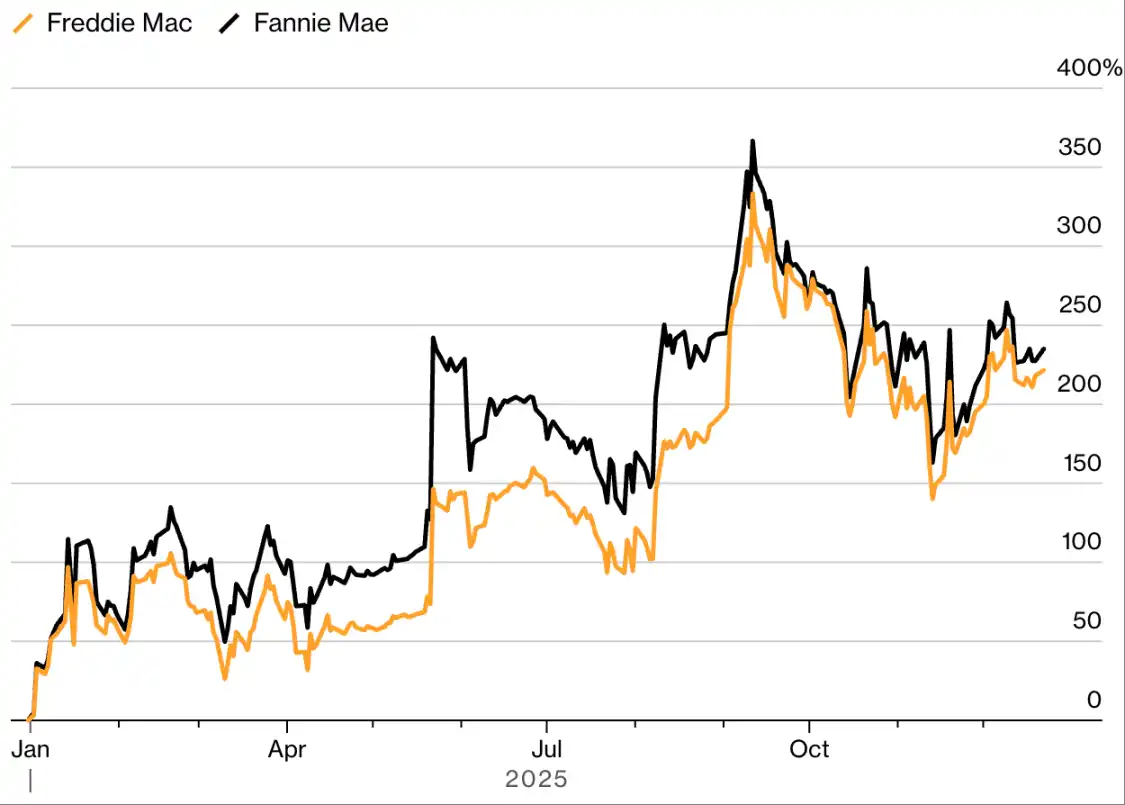
In August, news that the 'government was considering an IPO for the companies' pushed the frenzy to its peak—the market anticipated an IPO valuation potentially exceeding $500 billion, planning to raise about $30 billion by selling a 5%-15% stake. Although skepticism about the specific timing and whether the IPO would actually happen caused stock price volatility from the September peak, most investors remained confident in this prospect.

In November, Ackman published a proposal submitted to the White House, suggesting pushing for Fannie and Freddie to be relisted on the New York Stock Exchange, while writing down the US Treasury's preferred equity stakes in both enterprises and exercising government options to acquire nearly 80% of the common stock. Even Michael Burry joined this camp: he announced a bullish stance on both companies in early December, stating in a 6000-word blog post that these two enterprises, which once needed a government rescue to avoid bankruptcy, might no longer be the 'toxic twins.'

—Felice Maranz (Reporter)

Turkish Carry Trade: A Complete Collapse

After a stellar performance in 2024, the Turkish carry trade became a 'consensus pick' for emerging market investors. With local bond yields above 40% and the central bank承诺maintaining a stable dollar-pegged exchange rate, traders piled in—borrowing cheaply overseas to buy high-yielding Turkish assets. This trade attracted billions from firms like Deutsche Bank, Millennium Partners, and Gramercy Capital, some of whose personnel were actually in Turkey on March 19th, the day the trade collapsed completely within minutes.

The trigger happened that morning: Turkish police raided the home of a popular opposition mayor in Istanbul and detained him. This event sparked protests and疯狂selling of the Turkish lira, which the central bank was powerless to stop. Kit Juckes, FX strategist at Société Générale in Paris, said at the time: "Everyone was caught off guard, no one will dare return to this market anytime soon."
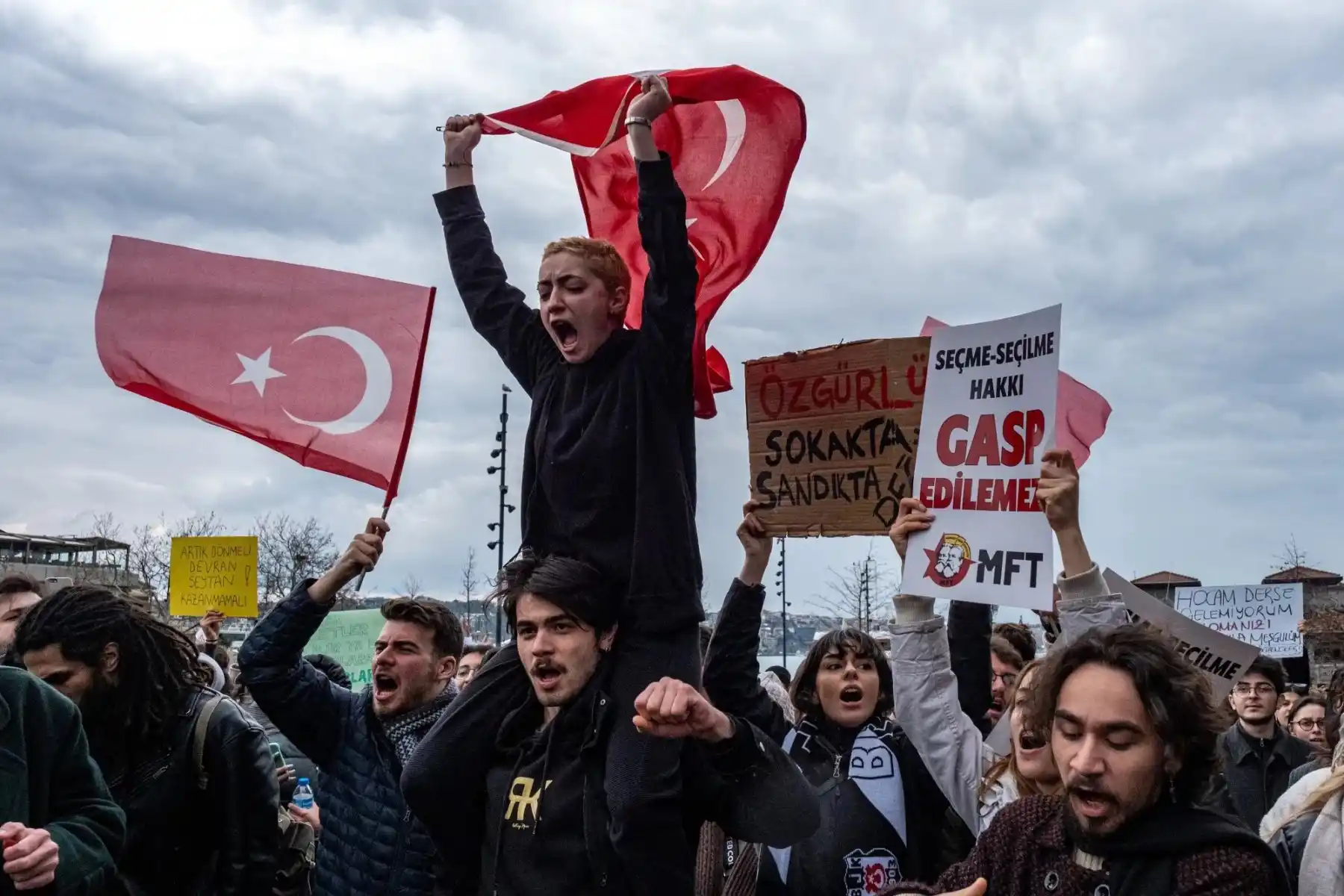
By the close that day, estimated capital outflows from lira-denominated assets were around $10 billion, and the market never truly recovered afterwards. As of December 23, the lira had depreciated about 17% against the dollar for the year, becoming one of the world's worst-performing currencies. This event also served as a warning to investors: high interest rates might offer returns to risk-takers, but they cannot withstand sudden political shocks.

—Kerim Karakaya (Reporter)

Bond Market: The 'Cockroach Alert' Sounds

The credit markets in 2025 weren't thrown into turmoil by one 'earth-shattering collapse,' but were unsettled by a series of 'small-scale crises'—exposing some disturbing hidden vulnerabilities. Companies once seen as 'routine borrowers'相继ran into trouble, and lending institutions suffered heavy losses as a result.

Saks Global paid interest only once before restructuring $2.2 billion in bonds, and the restructured bonds now trade below 60 cents on the dollar; New Fortress Energy's newly issued exchange bonds lost over 50% of their value within a year; Tricolor and First Brands filed for bankruptcy within weeks, wiping out billions in creditor value. In some cases, complex fraud was the root cause of the collapse; in others, the companies' initially optimistic performance expectations simply failed to materialize. But in all cases, investors were left with a question: why were massive credit bets placed on these companies with little evidence of their ability to repay debt?
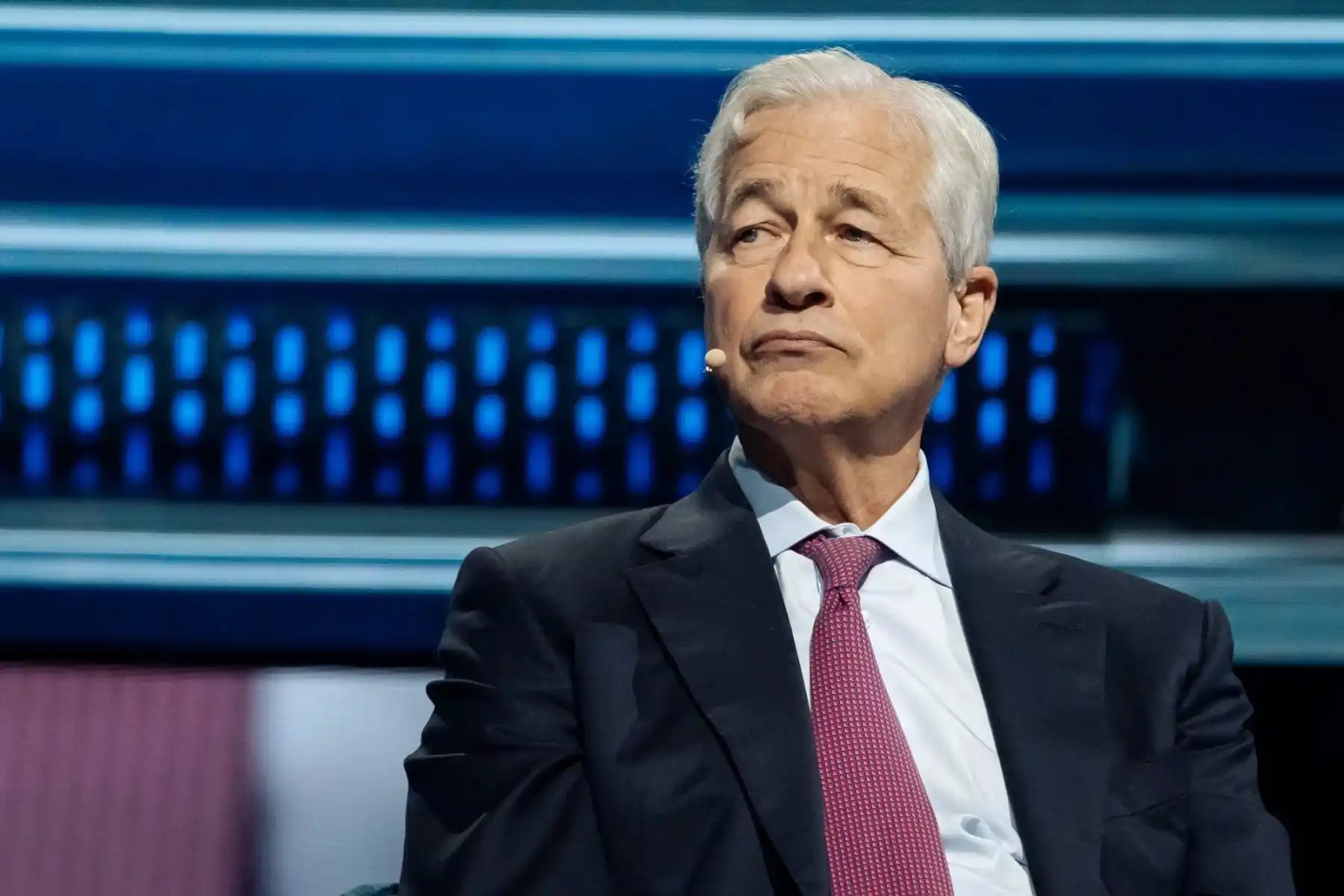
Years of low default rates and easy monetary policy had eroded standards across the credit market—from lender protection covenants to basic underwriting processes. Lenders to First Brands and Tricolor didn't even discover违规行为like 'double-pledging assets' and 'commingling collateral for multiple loans.'

JPMorgan Chase was among these lenders. The bank's CEO, Jamie Dimon, warned the market in October with a vivid analogy to be wary of further risks: "When you see one cockroach, there are likely many more hiding in the dark." And this 'cockroach risk' might become one of the core themes for the 2026 market.

—Eliza Ronalds-Hannon (Reporter)

Domande pertinenti

QWhat was the overall performance and key characteristics of the global financial markets in 2025, as described in the Bloomberg article?

AThe year 2025 was characterized by 'high-conviction bets' and 'rapid reversals.' Markets experienced both windfall gains and severe volatility. Key trends included a surge in European defense stocks, a historic rally in gold, meme-stock-like swings in mortgage giants, and the sudden collapse of a textbook arbitrage trade. Investors made large bets on political shifts, expanding balance sheets, and fragile market narratives, driving significant gains in some areas but also leading to dramatic failures when momentum reversed, leverage backfired, or funding dried up.

QAccording to the article, what was the fate of cryptocurrency assets linked to Donald Trump and his family in 2025?

ACryptocurrency assets linked to Donald Trump and his family, including a meme coin he promoted, a token from Melania Trump, and the WLFI token from World Liberty Financial, experienced short-lived surges followed by dramatic collapses. By December 23rd, Trump's meme coin was down over 80% from its January peak, Melania's meme coin had fallen nearly 99%, and American Bitcoin (a miner associated with Eric Trump) saw its stock price drop about 80% from its September peak. The article concludes that while politics provided a short-term boost, it could not offer long-term protection against the core crypto cycle of price increases, leverage influx, and liquidity drying up.

QWhat significant trade did Michael Burry of 'The Big Short' fame make in 2025, and what was its market impact?

AMichael Burry's Scion Asset Management disclosed protective put options on AI darlings Nvidia and Palantir Technologies. The strike prices were significantly lower than the current market prices at the time of disclosure (47% lower for Nvidia and 76% lower for Palantir). This disclosure, which acted like a 'match to dry tinder' for existing concerns over high AI stock valuations, caused an immediate sell-off in these stocks and a slight pullback in the Nasdaq, though the assets later recovered. The trade exposed the underlying doubts in a market dominated by a few AI stocks and passive fund inflows.

QWhy did European defense stocks perform exceptionally well in 2025, and what was a notable shift in investor attitude towards them?

AEuropean defense stocks, once considered 'toxic' by many asset managers due to ESG (Environmental, Social, and Governance) principles, surged due to a shift in the geopolitical landscape. The primary catalyst was Donald Trump's plan to reduce funding for Ukraine's military, which prompted European governments to embark on a 'spending spree' on their own defense. This led to massive gains, with the Bloomberg Europe Defense Index rising over 70% for the year. A notable shift was the reclassification of defense from a 'reputational liability' to a 'public good,' with some funds even redefining their ESG mandates to include defense assets, specifically 'defensive weapons.'

QWhat was the outcome and significance of the arbitrage trade involving Jim Chanos shorting Michael Saylor's MicroStrategy while going long Bitcoin?

AJim Chanos executed a pairs trade, shorting MicroStrategy (MSTR) stock while going long Bitcoin, betting that the large premium of MSTR's stock price over the value of its Bitcoin holdings was unsustainable. After a public feud with Michael Saylor, Chanos's bet paid off as the premium evaporated. From when he publicized the trade in May to when he closed it in November, MicroStrategy's stock price fell 42%. This case highlighted the cyclical boom-and-bust nature of crypto, where balance sheets inflated on confidence reliant on rising prices and financial engineering, until that belief is shaken and the premium becomes a liability rather than an advantage.

Letture associate

Trading

Spot
Futures

Articoli Popolari

Cosa è $S$

Comprendere SPERO: Una Panoramica Completa Introduzione a SPERO Mentre il panorama dell'innovazione continua a evolversi, l'emergere delle tecnologie web3 e dei progetti di criptovaluta gioca un ruolo fondamentale nel plasmare il futuro digitale. Un progetto che ha attirato l'attenzione in questo campo dinamico è SPERO, denotato come SPERO,$$s$. Questo articolo mira a raccogliere e presentare informazioni dettagliate su SPERO, per aiutare gli appassionati e gli investitori a comprendere le sue basi, obiettivi e innovazioni nei domini web3 e crypto. Che cos'è SPERO,$$s$? SPERO,$$s$ è un progetto unico all'interno dello spazio crypto che cerca di sfruttare i principi della decentralizzazione e della tecnologia blockchain per creare un ecosistema che promuove l'impegno, l'utilità e l'inclusione finanziaria. Il progetto è progettato per facilitare interazioni peer-to-peer in modi nuovi, fornendo agli utenti soluzioni e servizi finanziari innovativi. Al suo interno, SPERO,$$s$ mira a responsabilizzare gli individui fornendo strumenti e piattaforme che migliorano l'esperienza dell'utente nello spazio delle criptovalute. Questo include la possibilità di metodi di transazione più flessibili, la promozione di iniziative guidate dalla comunità e la creazione di percorsi per opportunità finanziarie attraverso applicazioni decentralizzate (dApps). La visione sottostante di SPERO,$$s$ ruota attorno all'inclusività, cercando di colmare le lacune all'interno della finanza tradizionale mentre sfrutta i vantaggi della tecnologia blockchain. Chi è il Creatore di SPERO,$$s$? L'identità del creatore di SPERO,$$s$ rimane piuttosto oscura, poiché ci sono risorse pubblicamente disponibili limitate che forniscono informazioni dettagliate sul suo fondatore o fondatori. Questa mancanza di trasparenza può derivare dall'impegno del progetto per la decentralizzazione—un ethos che molti progetti web3 condividono, dando priorità ai contributi collettivi rispetto al riconoscimento individuale. Centrando le discussioni attorno alla comunità e ai suoi obiettivi collettivi, SPERO,$$s$ incarna l'essenza dell'empowerment senza mettere in evidenza individui specifici. Pertanto, comprendere l'etica e la missione di SPERO rimane più importante che identificare un creatore singolo. Chi sono gli Investitori di SPERO,$$s$? SPERO,$$s$ è supportato da una varietà di investitori che vanno dai capitalisti di rischio agli investitori angelici dedicati a promuovere l'innovazione nel settore crypto. Il focus di questi investitori generalmente si allinea con la missione di SPERO—dando priorità a progetti che promettono avanzamenti tecnologici sociali, inclusività finanziaria e governance decentralizzata. Queste fondazioni di investitori sono tipicamente interessate a progetti che non solo offrono prodotti innovativi, ma contribuiscono anche positivamente alla comunità blockchain e ai suoi ecosistemi. Il supporto di questi investitori rafforza SPERO,$$s$ come un concorrente degno di nota nel dominio in rapida evoluzione dei progetti crypto. Come Funziona SPERO,$$s$? SPERO,$$s$ impiega un framework multifunzionale che lo distingue dai progetti di criptovaluta convenzionali. Ecco alcune delle caratteristiche chiave che sottolineano la sua unicità e innovazione: Governance Decentralizzata: SPERO,$$s$ integra modelli di governance decentralizzati, responsabilizzando gli utenti a partecipare attivamente ai processi decisionali riguardanti il futuro del progetto. Questo approccio favorisce un senso di proprietà e responsabilità tra i membri della comunità. Utilità del Token: SPERO,$$s$ utilizza il proprio token di criptovaluta, progettato per servire varie funzioni all'interno dell'ecosistema. Questi token abilitano transazioni, premi e la facilitazione dei servizi offerti sulla piattaforma, migliorando l'impegno e l'utilità complessivi. Architettura Stratificata: L'architettura tecnica di SPERO,$$s$ supporta la modularità e la scalabilità, consentendo un'integrazione fluida di funzionalità e applicazioni aggiuntive man mano che il progetto evolve. Questa adattabilità è fondamentale per mantenere la rilevanza nel panorama crypto in continua evoluzione. Coinvolgimento della Comunità: Il progetto enfatizza iniziative guidate dalla comunità, impiegando meccanismi che incentivano la collaborazione e il feedback. Nutrendo una comunità forte, SPERO,$$s$ può affrontare meglio le esigenze degli utenti e adattarsi alle tendenze di mercato. Focus sull'Inclusione: Offrendo basse commissioni di transazione e interfacce user-friendly, SPERO,$$s$ mira ad attrarre una base utenti diversificata, inclusi individui che potrebbero non aver precedentemente interagito nello spazio crypto. Questo impegno per l'inclusione si allinea con la sua missione generale di empowerment attraverso l'accessibilità. Cronologia di SPERO,$$s$ Comprendere la storia di un progetto fornisce preziose intuizioni sulla sua traiettoria di sviluppo e sui traguardi. Di seguito è riportata una cronologia suggerita che mappa eventi significativi nell'evoluzione di SPERO,$$s$: Fase di Concettualizzazione e Ideazione: Le idee iniziali che formano la base di SPERO,$$s$ sono state concepite, allineandosi strettamente con i principi di decentralizzazione e focus sulla comunità all'interno dell'industria blockchain. Lancio del Whitepaper del Progetto: Dopo la fase concettuale, è stato rilasciato un whitepaper completo che dettaglia la visione, gli obiettivi e l'infrastruttura tecnologica di SPERO,$$s$ per suscitare interesse e feedback dalla comunità. Costruzione della Comunità e Prime Interazioni: Sono stati effettuati sforzi attivi di outreach per costruire una comunità di early adopters e potenziali investitori, facilitando discussioni attorno agli obiettivi del progetto e ottenendo supporto. Evento di Generazione del Token: SPERO,$$s$ ha condotto un evento di generazione del token (TGE) per distribuire i propri token nativi ai primi sostenitori e stabilire una liquidità iniziale all'interno dell'ecosistema. Lancio della Prima dApp: La prima applicazione decentralizzata (dApp) associata a SPERO,$$s$ è stata attivata, consentendo agli utenti di interagire con le funzionalità principali della piattaforma. Sviluppo Continuo e Partnership: Aggiornamenti e miglioramenti continui alle offerte del progetto, inclusi partnership strategiche con altri attori nello spazio blockchain, hanno plasmato SPERO,$$s$ in un concorrente competitivo e in evoluzione nel mercato crypto. Conclusione SPERO,$$s$ rappresenta una testimonianza del potenziale del web3 e delle criptovalute di rivoluzionare i sistemi finanziari e responsabilizzare gli individui. Con un impegno per la governance decentralizzata, il coinvolgimento della comunità e funzionalità progettate in modo innovativo, apre la strada verso un panorama finanziario più inclusivo. Come per qualsiasi investimento nello spazio crypto in rapida evoluzione, si incoraggiano potenziali investitori e utenti a ricercare approfonditamente e a impegnarsi in modo riflessivo con gli sviluppi in corso all'interno di SPERO,$$s$. Il progetto mostra lo spirito innovativo dell'industria crypto, invitando a ulteriori esplorazioni delle sue innumerevoli possibilità. Mentre il percorso di SPERO,$$s$ è ancora in fase di sviluppo, i suoi principi fondamentali potrebbero effettivamente influenzare il futuro di come interagiamo con la tecnologia, la finanza e tra di noi in ecosistemi digitali interconnessi.

75 Totale visualizzazioniPubblicato il 2024.12.17Aggiornato il 2024.12.17

Cosa è $S$

Cosa è AGENT S

Agent S: Il Futuro dell'Interazione Autonoma in Web3 Introduzione Nel panorama in continua evoluzione di Web3 e criptovalute, le innovazioni stanno costantemente ridefinendo il modo in cui gli individui interagiscono con le piattaforme digitali. Uno di questi progetti pionieristici, Agent S, promette di rivoluzionare l'interazione uomo-computer attraverso il suo framework agentico aperto. Aprendo la strada a interazioni autonome, Agent S mira a semplificare compiti complessi, offrendo applicazioni trasformative nell'intelligenza artificiale (AI). Questa esplorazione dettagliata approfondirà le complessità del progetto, le sue caratteristiche uniche e le implicazioni per il dominio delle criptovalute. Cos'è Agent S? Agent S si presenta come un innovativo framework agentico aperto, progettato specificamente per affrontare tre sfide fondamentali nell'automazione dei compiti informatici: Acquisizione di Conoscenze Specifiche del Dominio: Il framework apprende in modo intelligente da varie fonti di conoscenza esterne ed esperienze interne. Questo approccio duale gli consente di costruire un ricco repository di conoscenze specifiche del dominio, migliorando le sue prestazioni nell'esecuzione dei compiti. Pianificazione su Lungo Orizzonte di Compiti: Agent S impiega una pianificazione gerarchica potenziata dall'esperienza, un approccio strategico che facilita la suddivisione e l'esecuzione efficiente di compiti complessi. Questa caratteristica migliora significativamente la sua capacità di gestire più sottocompiti in modo efficiente ed efficace. Gestione di Interfacce Dinamiche e Non Uniformi: Il progetto introduce l'Interfaccia Agente-Computer (ACI), una soluzione innovativa che migliora l'interazione tra agenti e utenti. Utilizzando Modelli Linguistici Multimodali di Grandi Dimensioni (MLLM), Agent S può navigare e manipolare senza sforzo diverse interfacce grafiche utente. Attraverso queste caratteristiche pionieristiche, Agent S fornisce un framework robusto che affronta le complessità coinvolte nell'automazione dell'interazione umana con le macchine, preparando il terreno per innumerevoli applicazioni nell'AI e oltre. Chi è il Creatore di Agent S? Sebbene il concetto di Agent S sia fondamentalmente innovativo, informazioni specifiche sul suo creatore rimangono elusive. Il creatore è attualmente sconosciuto, il che evidenzia sia la fase embrionale del progetto sia la scelta strategica di mantenere i membri fondatori sotto anonimato. Indipendentemente dall'anonimato, l'attenzione rimane sulle capacità e sul potenziale del framework. Chi sono gli Investitori di Agent S? Poiché Agent S è relativamente nuovo nell'ecosistema crittografico, informazioni dettagliate riguardanti i suoi investitori e sostenitori finanziari non sono documentate esplicitamente. La mancanza di approfondimenti pubblicamente disponibili sulle fondazioni di investimento o sulle organizzazioni che supportano il progetto solleva interrogativi sulla sua struttura di finanziamento e sulla roadmap di sviluppo. Comprendere il supporto è cruciale per valutare la sostenibilità del progetto e il suo potenziale impatto sul mercato. Come Funziona Agent S? Al centro di Agent S si trova una tecnologia all'avanguardia che gli consente di funzionare efficacemente in contesti diversi. Il suo modello operativo è costruito attorno a diverse caratteristiche chiave: Interazione Uomo-Computer Simile a Quella Umana: Il framework offre una pianificazione AI avanzata, cercando di rendere le interazioni con i computer più intuitive. Mimando il comportamento umano nell'esecuzione dei compiti, promette di elevare le esperienze degli utenti. Memoria Narrativa: Utilizzata per sfruttare esperienze di alto livello, Agent S utilizza la memoria narrativa per tenere traccia delle storie dei compiti, migliorando così i suoi processi decisionali. Memoria Episodica: Questa caratteristica fornisce agli utenti una guida passo-passo, consentendo al framework di offrire supporto contestuale mentre i compiti si sviluppano. Supporto per OpenACI: Con la capacità di funzionare localmente, Agent S consente agli utenti di mantenere il controllo sulle proprie interazioni e flussi di lavoro, allineandosi con l'etica decentralizzata di Web3. Facile Integrazione con API Esterne: La sua versatilità e compatibilità con varie piattaforme AI garantiscono che Agent S possa adattarsi senza problemi agli ecosistemi tecnologici esistenti, rendendolo una scelta attraente per sviluppatori e organizzazioni. Queste funzionalità contribuiscono collettivamente alla posizione unica di Agent S all'interno dello spazio crittografico, poiché automatizza compiti complessi e multi-fase con un intervento umano minimo. Man mano che il progetto evolve, le sue potenziali applicazioni in Web3 potrebbero ridefinire il modo in cui si svolgono le interazioni digitali. Cronologia di Agent S Lo sviluppo e le tappe di Agent S possono essere riassunti in una cronologia che evidenzia i suoi eventi significativi: 27 Settembre 2024: Il concetto di Agent S è stato lanciato in un documento di ricerca completo intitolato “Un Framework Agentico Aperto che Usa i Computer Come un Umano”, mostrando le basi per il progetto. 10 Ottobre 2024: Il documento di ricerca è stato reso pubblicamente disponibile su arXiv, offrendo un'esplorazione approfondita del framework e della sua valutazione delle prestazioni basata sul benchmark OSWorld. 12 Ottobre 2024: È stata rilasciata una presentazione video, fornendo un'idea visiva delle capacità e delle caratteristiche di Agent S, coinvolgendo ulteriormente potenziali utenti e investitori. Questi indicatori nella cronologia non solo illustrano i progressi di Agent S, ma indicano anche il suo impegno per la trasparenza e il coinvolgimento della comunità. Punti Chiave su Agent S Man mano che il framework Agent S continua a evolversi, diversi attributi chiave si distinguono, sottolineando la sua natura innovativa e il potenziale: Framework Innovativo: Progettato per fornire un uso intuitivo dei computer simile all'interazione umana, Agent S porta un approccio nuovo all'automazione dei compiti. Interazione Autonoma: La capacità di interagire autonomamente con i computer attraverso GUI segna un passo avanti verso soluzioni informatiche più intelligenti ed efficienti. Automazione di Compiti Complessi: Con la sua metodologia robusta, può automatizzare compiti complessi e multi-fase, rendendo i processi più veloci e meno soggetti a errori. Miglioramento Continuo: I meccanismi di apprendimento consentono ad Agent S di migliorare dalle esperienze passate, migliorando continuamente le sue prestazioni e la sua efficacia. Versatilità: La sua adattabilità attraverso diversi ambienti operativi come OSWorld e WindowsAgentArena garantisce che possa servire un'ampia gamma di applicazioni. Man mano che Agent S si posiziona nel panorama di Web3 e delle criptovalute, il suo potenziale per migliorare le capacità di interazione e automatizzare i processi segna un significativo avanzamento nelle tecnologie AI. Attraverso il suo framework innovativo, Agent S esemplifica il futuro delle interazioni digitali, promettendo un'esperienza più fluida ed efficiente per gli utenti in vari settori. Conclusione Agent S rappresenta un audace passo avanti nell'unione tra AI e Web3, con la capacità di ridefinire il modo in cui interagiamo con la tecnologia. Sebbene sia ancora nelle sue fasi iniziali, le possibilità per la sua applicazione sono vaste e coinvolgenti. Attraverso il suo framework completo che affronta sfide critiche, Agent S mira a portare le interazioni autonome al centro dell'esperienza digitale. Man mano che ci addentriamo nei regni delle criptovalute e della decentralizzazione, progetti come Agent S giocheranno senza dubbio un ruolo cruciale nel plasmare il futuro della tecnologia e della collaborazione uomo-computer.

432 Totale visualizzazioniPubblicato il 2025.01.14Aggiornato il 2025.01.14

Cosa è AGENT S

Come comprare S

Benvenuto in HTX.com! Abbiamo reso l'acquisto di Sonic (S) semplice e conveniente. Segui la nostra guida passo passo per intraprendere il tuo viaggio nel mondo delle criptovalute.Step 1: Crea il tuo Account HTXUsa la tua email o numero di telefono per registrarti il tuo account gratuito su HTX. Vivi un'esperienza facile e sblocca tutte le funzionalità,Crea il mio accountStep 2: Vai in Acquista crypto e seleziona il tuo metodo di pagamentoCarta di credito/debito: utilizza la tua Visa o Mastercard per acquistare immediatamente SonicS.Bilancio: Usa i fondi dal bilancio del tuo account HTX per fare trading senza problemi.Terze parti: abbiamo aggiunto metodi di pagamento molto utilizzati come Google Pay e Apple Pay per maggiore comodità.P2P: Fai trading direttamente con altri utenti HTX.Over-the-Counter (OTC): Offriamo servizi su misura e tassi di cambio competitivi per i trader.Step 3: Conserva Sonic (S)Dopo aver acquistato Sonic (S), conserva nel tuo account HTX. In alternativa, puoi inviare tramite trasferimento blockchain o scambiare per altre criptovalute.Step 4: Scambia Sonic (S)Scambia facilmente Sonic (S) nel mercato spot di HTX. Accedi al tuo account, seleziona la tua coppia di trading, esegui le tue operazioni e monitora in tempo reale. Offriamo un'esperienza user-friendly sia per chi ha appena iniziato che per i trader più esperti.

849 Totale visualizzazioniPubblicato il 2025.01.15Aggiornato il 2025.03.21

Come comprare S

Discussioni

Benvenuto nella Community HTX. Qui puoi rimanere informato sugli ultimi sviluppi della piattaforma e accedere ad approfondimenti esperti sul mercato. Le opinioni degli utenti sul prezzo di S S sono presentate come di seguito.

活动图片