Bloomberg: Assisting Turkey in Freezing $1 Billion in Assets, Tether Is Reshaping Compliance Boundaries

marsbitPubblicato 2026-02-15Pubblicato ultima volta 2026-02-15

Introduzione

On January 30, Turkish authorities froze over $500 million in assets linked to Veysel Sahin, who is accused of operating an illegal gambling platform and money laundering. The operation was executed by an unnamed cryptocurrency company, later revealed to be Tether Holdings SA, the issuer of the $185 billion stablecoin USDT. Tether has been cooperating with global law enforcement agencies to combat crypto-related crimes, including money laundering and sanctions evasion. Tether CEO Paolo Ardoino stated that the company follows legal procedures when assisting authorities, including the U.S. Department of Justice and FBI. The freeze is part of a broader Turkish operation that has seized over $1 billion in assets. A second individual under investigation for similar charges had an additional $500 million in crypto assets frozen, though it is unclear if Tether tokens were involved. According to Elliptic, Tether and its competitor Circle have blacklisted approximately 5,700 wallets holding around $2.5 billion in assets, with three-quarters of them containing USDT. Tether claims to have assisted law enforcement in 62 countries, freezing $3.4 billion in USDT tied to illicit activities. This marks a significant shift from Tether’s earlier conflicts with U.S. regulators, including a 2021 settlement over misrepresenting reserves. The company has recently re-entered the U.S. market with a compliant stablecoin, USAT, and has gained recognition for its cooperation with authorities. Despit...

On January 30, Turkish authorities announced the freezing of assets worth over $500 million in the name of Veysel Sahin, who is accused of operating an illegal gambling platform and suspected of money laundering. The Istanbul Chief Prosecutor revealed that an unnamed cryptocurrency company carried out the freezing operation at the request of the Turkish government.

This company is Tether Holdings SA, the issuer of the stablecoin USDT with a market capitalization of $185 billion. Recently, the company has actively assisted governments worldwide in combating various cryptocurrency-related criminal activities, including money laundering, drug trafficking, and sanctions evasion.

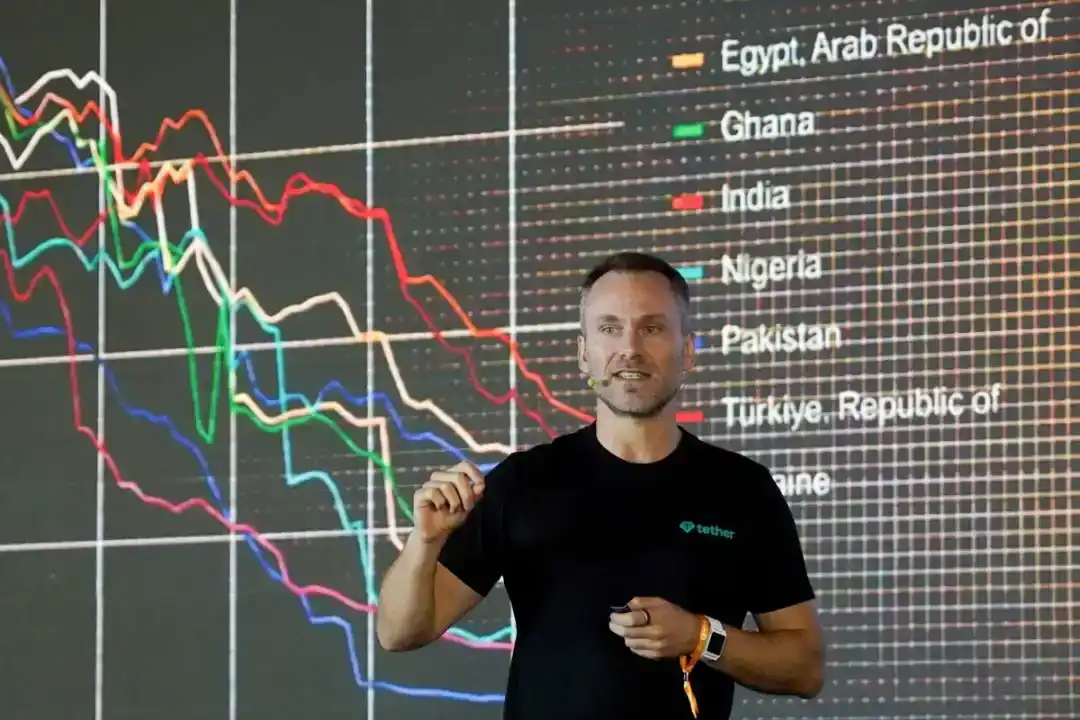
Tether CEO Paolo Ardoino stated in a recent interview with Bloomberg News: "Law enforcement agencies approach us, provide relevant information, we verify the information, and then take action in accordance with the laws of the country. We follow this process when cooperating with agencies such as the U.S. Department of Justice and the FBI."
Tether declined to comment further on the case. Bloomberg was unable to reach Sahin. A Turkish official also refused to disclose the name of the company mentioned in the prosecutor's statement.

The frozen assets of 460 million euros (approximately $544 million) are part of a large-scale law enforcement operation in Turkey, with the total value of frozen assets in the case now exceeding $1 billion. According to Turkish television NTV, a few days after the announcement of Sahin's asset freeze, another individual was investigated for suspected money laundering and illegal gambling, and crypto assets worth $500 million in their name were also frozen. However, it is currently unclear whether this asset freeze involved tokens issued by Tether.

A Turkish official, who spoke anonymously on sensitive legal matters to Bloomberg, revealed that authorities discovered the "financial traces" of these suspected illegal proceeds by tracking fund flows and analyzing crypto assets. The official also stated that similar asset freezes would be implemented in the future against individuals involved in illegal gambling and payment systems.

For Tether, this freezing operation is just one of its increasingly frequent asset freezes, highlighting the growing efforts of this cryptocurrency giant to cooperate with global law enforcement agencies.

A report released by analytics firm Elliptic in January showed that by the end of 2025, Tether and its competitor Circle Internet Group Inc. had blacklisted approximately 5,700 wallets, involving assets of about $2.5 billion, a figure that was negligible two years ago. At the time of freezing, three-quarters of these wallets held USDT.

Arda Akartuna, Head of Crypto Threat Intelligence for Asia-Pacific at Elliptic, said: "As the legitimate application of cryptocurrencies and the integration into global payments accelerate, illegal usage has also increased, prompting stablecoin issuers to intervene more actively."

Tether often publicizes its efforts to combat criminal activities, including in communications aimed at attracting potential investors. The company is seeking funding at a valuation of up to $500 billion. According to its website, Tether has assisted law enforcement agencies in 62 countries in handling over 1,800 cases, freezing $3.4 billion worth of USDT related to suspected illegal activities.

Nathan McCauley, Co-founder and CEO of Tether's partner Anchorage Digital Bank, stated in an interview: "They (Tether) are extremely proactive in their cooperation. Among stablecoin issuers, the company has the 'recognized best reputation' with law enforcement agencies."

Anchorage is the issuer of Tether's compliant dollar stablecoin USAT, which was launched in late January, marking Tether's return to the U.S. market.

This represents a significant shift from the tense relationship between Tether and U.S. regulators a few years ago. After clashing with regulators in 2018, Tether largely exited the U.S. market and paid a $41 million settlement in 2021 to resolve allegations of misrepresenting its reserves.

However, the second Trump administration has shown a welcoming attitude towards the cryptocurrency industry. Last year, Ardoino attended, along with several other executives, the ceremony where President Trump signed the stablecoin regulatory bill.

Even so, Tether's USDT continues to face scrutiny from authorities due to its widespread use by criminals.

On January 9, the U.S. Attorney's Office for the Eastern District of Virginia announced charges against a Venezuelan citizen for laundering $1 billion using USDT. A recent report from Elliptic showed that the Central Bank of Iran purchased over $500 million worth of USDT to alleviate its currency crisis and evade U.S. sanctions.

Fugitive Sahin is accused of leading an organization that laundered money for illegal online gambling platforms. According to local media, Sahin was sentenced to 10 years in prison in 2017, released in 2023, and sentenced to another 21 years in prison one month later. His current whereabouts are unknown, but the state-run Anadolu Agency reported on January 30 that "the relevant authorities are advancing the legal process for his extradition back to Turkey."


Domande pertinenti

QWhat was the unmentioned cryptocurrency company that assisted Turkish authorities in freezing assets, and what is its significance in the market?

AThe unmentioned cryptocurrency company was Tether Holdings SA, the issuer of the USDT stablecoin with a market capitalization of $185 billion. It is a major player in the cryptocurrency market, providing a widely used stablecoin.

QAccording to the article, what specific actions has Tether taken to assist global law enforcement agencies?

ATether has been actively assisting global law enforcement by freezing assets linked to crimes such as money laundering, drug trafficking, and sanctions evasion. They verify information provided by authorities and take action in accordance with the laws of the relevant countries.

QHow does the article describe the shift in Tether's relationship with U.S. regulators over the years?

AThe article describes a significant shift. After a 2018 conflict with regulators and a 2021 settlement over misrepresenting reserves, Tether largely exited the U.S. market. However, the current U.S. administration is more welcoming, and Tether CEO recently attended a ceremony for a stablecoin regulatory bill, marking a return to the market.

QWhat statistics does the article cite from Elliptic regarding the scale of frozen assets by stablecoin issuers?

AAn Elliptic report stated that by the end of 2025, Tether and its competitor Circle had blacklisted approximately 5,700 wallets, involving around $2.5 billion in assets. Three-quarters of these wallets held USDT at the time of freezing.

QBeyond the Turkish case, what other examples of alleged criminal use of USDT are mentioned in the article?

AThe article mentions a U.S. case where a Venezuelan citizen was charged with laundering $1 billion using USDT. It also cites an Elliptic report that Iran's central bank purchased over $500 million in USDT to mitigate a currency crisis and circumvent U.S. sanctions.

Letture associate

Gensyn AI: Don't Let AI Repeat the Mistakes of the Internet

In recent months, the rapid growth of the AI industry has attracted significant talent from the crypto sector. A persistent question among researchers intersecting both fields is whether blockchain can become a foundational part of AI infrastructure. While many previous AI and Crypto projects focused on application layers (like AI Agents, on-chain reasoning, data markets, and compute rentals), few achieved viable commercial models. Gensyn differentiates itself by targeting the most critical and expensive layer of AI: model training. Gensyn aims to organize globally distributed GPU resources into an open AI training network. Developers can submit training tasks, nodes provide computational power, and the network verifies results while distributing incentives. The core issue addressed is not decentralization for its own sake, but the increasing centralization of compute power among tech giants. In the era of large models, access to GPUs (like the H100) has become a decisive bottleneck, dictating the pace of AI development. Major AI companies are heavily dependent on large cloud providers for compute resources. Gensyn's approach is significant for several reasons: 1) It operates at the core infrastructure layer (model training), the most resource-intensive and technically demanding part of the AI value chain. 2) It proposes a more open, collaborative model for compute, potentially increasing resource utilization by dynamically pooling idle GPUs, similar to early cloud computing logic. 3) Its technical moat lies in solving complex challenges like verifying training results, ensuring node honesty, and maintaining reliability in a distributed environment—making it more of a deep-tech infrastructure company. 4) It targets a validated, high-growth market with genuine demand, rather than pursuing blockchain integration without purpose. Ultimately, the boundaries between Crypto and AI are blurring. AI requires global resource coordination, incentive mechanisms, and collaborative systems—areas where crypto-native solutions excel. Gensyn represents a step toward making advanced training capabilities more accessible and collaborative, moving beyond a niche controlled by a few giants. If successful, it could evolve into a fundamental piece of AI infrastructure, where the most enduring value in the AI era is often created.

marsbit10 h fa

Gensyn AI: Don't Let AI Repeat the Mistakes of the Internet

marsbit10 h fa

Why is China's AI Developing So Fast? The Answer Lies Inside the Labs

A US researcher's visit to China's top AI labs reveals distinct cultural and organizational factors driving China's rapid AI development. While talent, data, and compute are similar to the West, Chinese labs excel through a pragmatic, execution-focused culture: less emphasis on individual stardom and conceptual debate, and more on teamwork, engineering optimization, and mastering the full tech stack. A key advantage is the integration of young students and researchers who approach model-building with fresh perspectives and low ego, prioritizing collective progress over personal credit. This contrasts with the US culture of self-promotion and "star scientist" narratives. Chinese labs also exhibit a strong "build, don't buy" mentality, preferring to develop core capabilities—like data pipelines and environments—in-house rather than relying on external services. The ecosystem feels more collaborative than tribal, with mutual respect among labs. While government support exists, its scale is unclear, and technical decisions appear driven by labs, not state mandates. Chinese companies across sectors, from platforms to consumer tech, are building their own foundational models to control their tech destiny, reflecting a broader cultural drive for technological sovereignty. Demand for AI is emerging, with spending patterns potentially mirroring cloud infrastructure more than traditional SaaS. Despite challenges like a less mature data industry and GPU shortages, Chinese labs are propelled by vast talent, rapid iteration, and deep integration with the open-source community. The competition is evolving beyond a pure model race into a contest of organizational execution, developer ecosystems, and industrial pragmatism.

marsbit12 h fa

Why is China's AI Developing So Fast? The Answer Lies Inside the Labs

marsbit12 h fa

3 Years, 5 Times: The Rebirth of a Century-Old Glass Factory

Corning, a 175-year-old glass company, is experiencing a dramatic revival as a key player in AI infrastructure, driven by surging demand for high-performance optical fiber in data centers. AI data centers require vastly more fiber than traditional ones—5 to 10 times as much per rack—to handle high-speed data transmission between GPUs. This structural demand shift, coupled with supply constraints from the lengthy expansion cycle for fiber preforms, has created a significant supply-demand gap. Nvidia has invested in Corning, along with Lumentum and Coherent, in a $4.5 billion total commitment to secure the optical supply chain for AI. Corning's competitive edge lies in its expertise in producing ultra-low-loss, high-density, and bend-resistant specialty fiber, which is critical for 800G+ and future 1.6T data rates. Its deep involvement in co-packaged optics (CPO) with partners like Nvidia further solidifies its position. While not the largest fiber manufacturer globally, Corning's revenue from enterprise/data center clients now exceeds 40% of its optical communications sales, and it has secured multi-year supply agreements with major hyperscalers including Meta and Nvidia. Financially, Corning's optical communications revenue has surged, doubling from $1.3 billion in 2023 to over $3 billion in 2025. Its stock price has risen nearly 6-fold since late 2023. Key future catalysts include the rollout of Nvidia's CPO products and the scale of undisclosed customer agreements. However, risks include high current valuations and potential disruption from next-generation technologies like hollow-core fiber. The company's long-term bet on light over electricity, maintained even through the telecom bubble crash, is now being validated by the AI boom.

marsbit12 h fa

3 Years, 5 Times: The Rebirth of a Century-Old Glass Factory

marsbit12 h fa

Trading

Spot
Futures
活动图片