Bitcoin's 'Strict Headmaster' Arrives? If He Takes the Helm at the Fed, the Crypto Party Could End Abruptly

Odaily星球日报Pubblicato 2025-12-22Pubblicato ultima volta 2025-12-22

Introduzione

The article discusses the potential implications of Kevin Warsh, a former Federal Reserve governor and Wall Street insider, becoming the next Fed Chair. Unlike other candidates like Kevin Hassett, who is seen as favoring lower interest rates and easier monetary policy, Warsh represents a more disciplined approach. Having worked at Morgan Stanley and experienced the 2008 financial crisis firsthand, Warsh is highly sensitive to systemic risks and liquidity issues. Warsh’s policy stance combines aggressive quantitative tightening (QT) with moderate interest rate cuts. He aims to control inflation by reducing the money supply and restoring the dollar’s credibility, while also easing corporate financing costs. This approach could challenge risk assets like cryptocurrencies, which have thrived in an era of abundant liquidity. If appointed, Warsh could bring stricter regulation to crypto, particularly stablecoins, potentially requiring full cash or short-term debt reserves. He opposes a retail central bank digital currency (CBDC) on privacy grounds but supports a wholesale CBDC for interbank settlements. While his policies may pressure crypto in the short term, they could also foster more institutional adoption and real-world asset (RWA) integration in the long run. However, the article notes that political pressures—especially from a Trump administration seeking lower rates and economic growth—could ultimately influence Warsh’s decisions, regardless of his personal beliefs.

Original | Odaily Planet Daily (@OdailyChina)

Author | Ethan(@ethanzhang_web3)
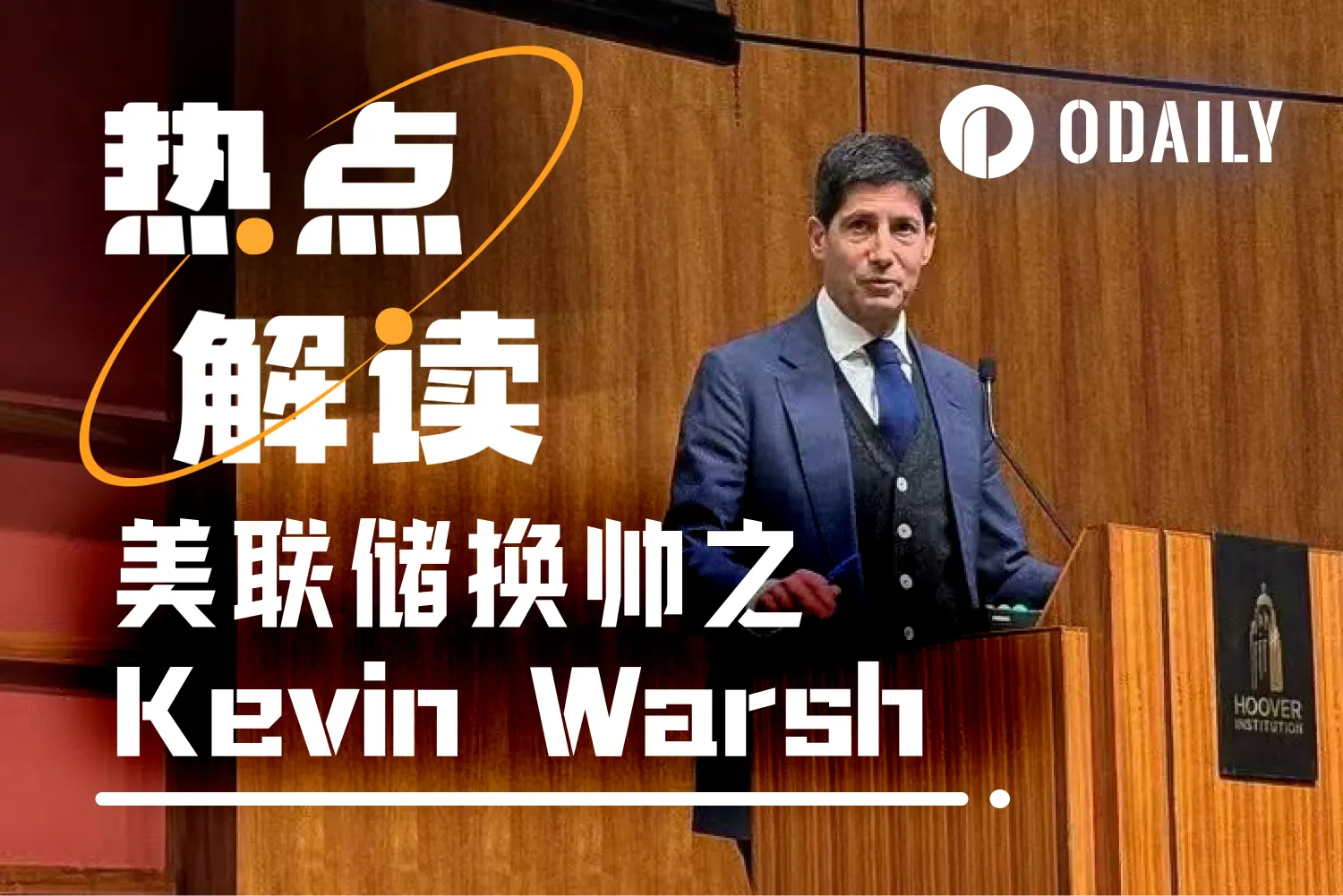
As the year draws to a close, the question of who will wield the scepter of the Federal Reserve Chair—the "master valve" of global liquidity—has become the most watched year-end suspense.

Months ago, when the benchmark rate ended its long pause and saw its first cut, the market was once convinced that Christopher Waller was the chosen one (Recommended reading: ‘The Academic Outsider: Small-Town Professor Waller Becomes Hottest Candidate for Fed Chair’). The winds shifted in October, with Kevin Hassett surging ahead, his odds once approaching 85%. He is seen as a "mouthpiece for the White House"; if he takes office, policy might completely follow Trump's will, even jokingly called a "human printing press."

However, today, we will not discuss the frontrunner with the highest probability, but focus on the wildcard "second in line"—Kevin Warsh.

If Hassett represents the market's "greed expectation" (lower rates, more liquidity), then Warsh represents the market's "fear and awe" (harder money, stricter rules). Why is the market re-examining this outsider once hailed as the "Wall Street Golden Boy"? If he truly takes the helm of the Fed, what fundamental changes could occur in the underlying logic of the crypto market? (Odaily Note: The core views of this article are extrapolated based on Warsh's recent speeches and interviews.)

Warsh's Evolution: From Wall Street Golden Boy to Fed Outsider

Kevin Warsh does not hold a Ph.D. in macroeconomics, and his career did not start in an ivory tower but in Morgan Stanley's M&A department. This experience gave him a mindset completely different from that of Bernanke or Yellen: in the eyes of academics, a crisis is just a data anomaly in a model; but in Warsh's eyes, a crisis is the second a counterparty defaults, the life-or-death moment when liquidity instantly vanishes from "available" to "unavailable."

In 2006, when the 35-year-old Warsh was appointed as a Federal Reserve Governor, many questioned his lack of seniority. But history is humorous; it was precisely this "Wall Street insider" practical experience that made him an indispensable player in the subsequent financial storm. During the darkest moments of 2008, Warsh's role had already surpassed that of a regulator; he became the sole "translator" between the Fed and Wall Street.
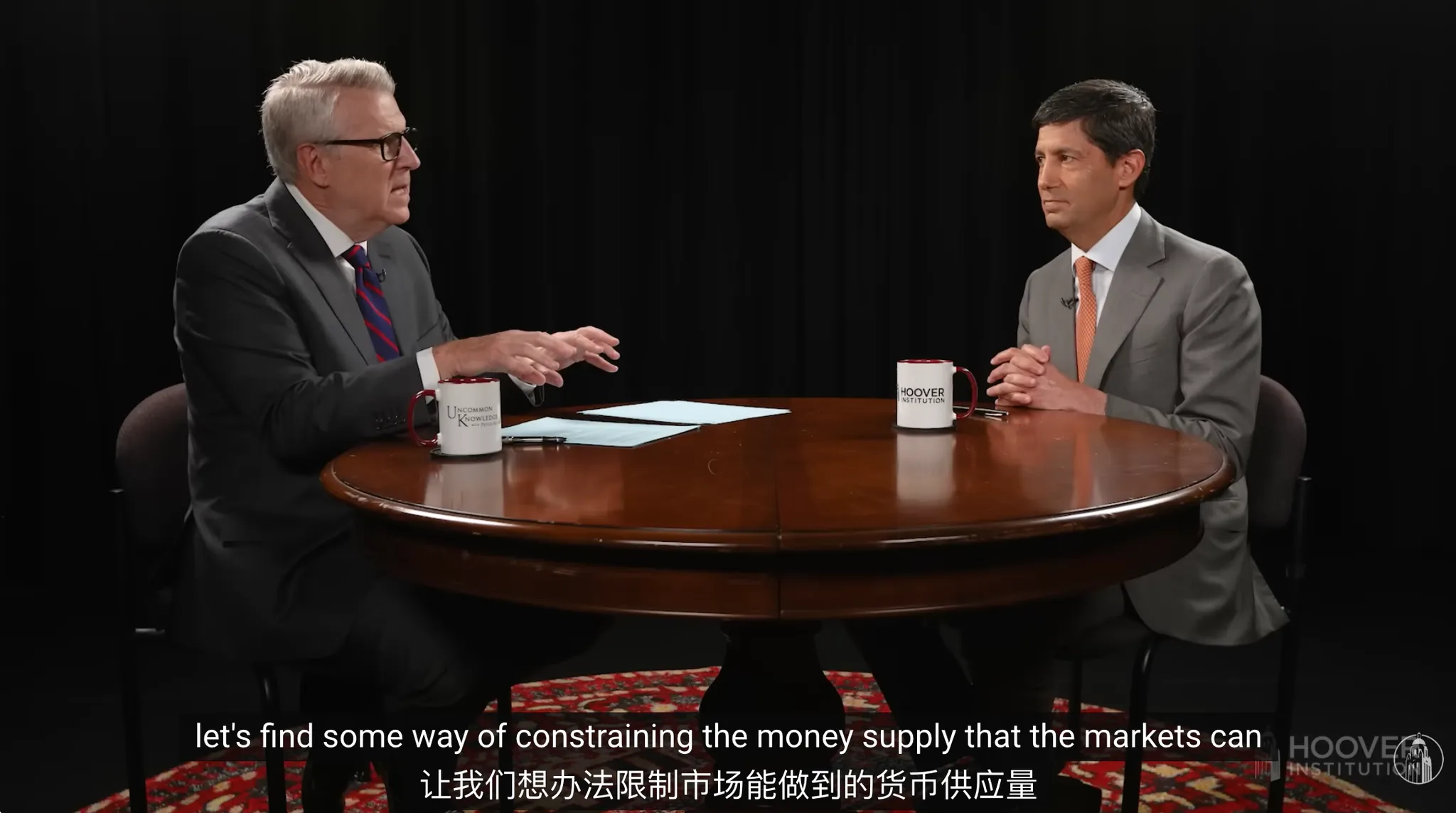
Excerpt from Warsh's interview at Stanford's Hoover Institution

On one hand, he had to translate Bear Stearns' toxic assets, which went to zero overnight, into language that academic officials could understand; on the other hand, he had to translate the Fed's obscure rescue intentions to the panicked market. He was involved in the frantic weekend negotiations before Lehman's collapse. This close-quarters combat gave him a physiological sensitivity to "liquidity." He saw through the essence of quantitative easing (QE): the central bank must indeed act as the "lender of last resort" during a crisis, but this is essentially a transaction that mortgages future credit to buy survival time in the present. He even pointedly noted that the long-term输血 (blood transfusion) after the crisis was actually "reverse Robin Hood," artificially inflating asset prices to rob the poor to feed the rich, which not only distorted market signals but also planted the seeds for a bigger crisis.

It was this keen sense of the system's fragility that became his core bargaining chip when Trump was selecting candidates for the new Fed Chair. On Trump's list, Warsh and another frontrunner, Kevin Hassett, formed a stark contrast, a contest dubbed the "Battle of the Kevins" by the media.
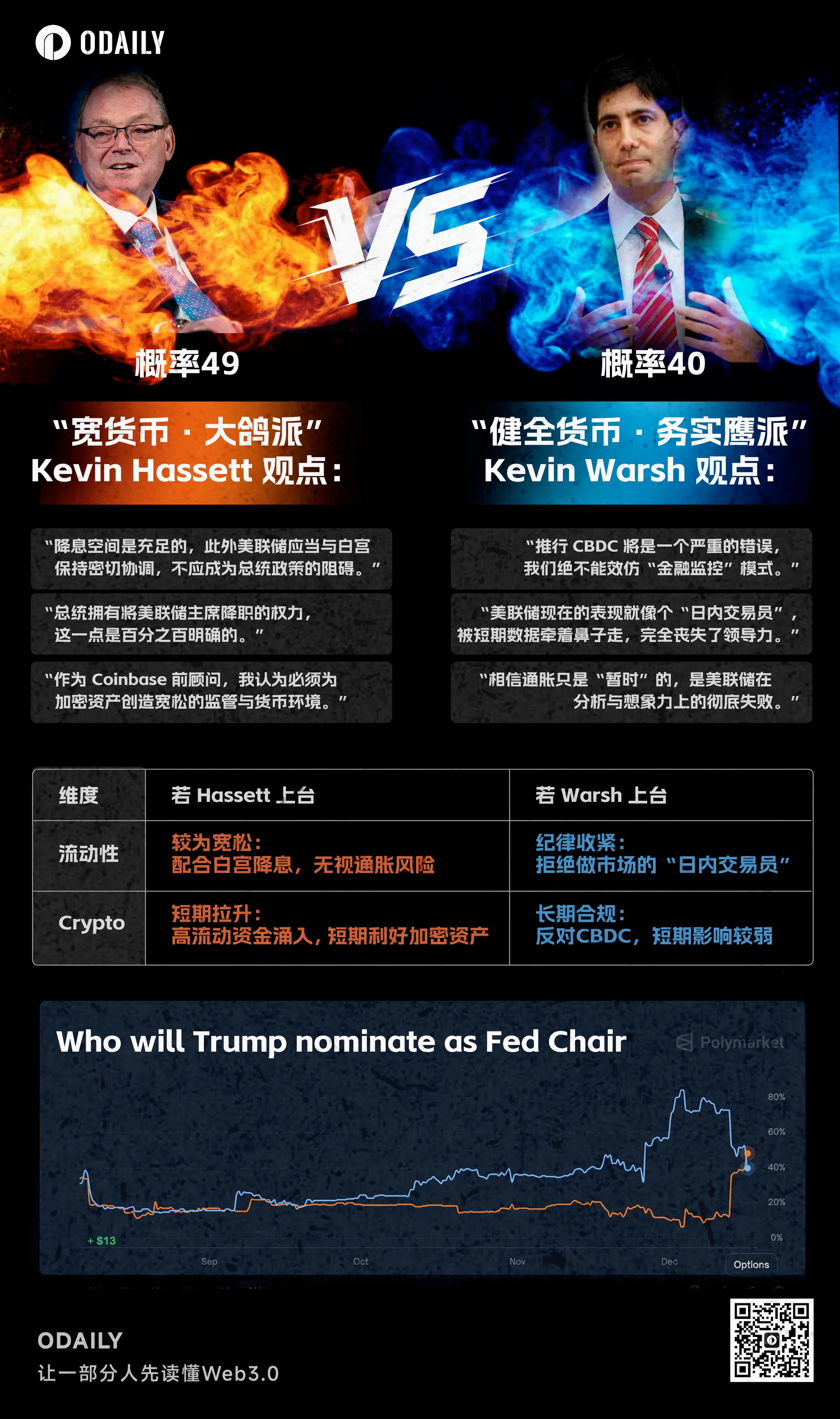
Fed Chair Candidates: Hassett VS Warsh, Source: Odaily Original

Hassett is a typical "growth-first" advocate. His logic is simple and direct: as long as the economy is growing, low rates are justified. The market generally believes that if Hassett takes office, he would likely cater to Trump's desire for low rates, even initiating rate cuts before inflation is fully under control. This also explains why long-term bond yields surged whenever Hassett's odds increased—the market feared runaway inflation.

In contrast, Warsh's logic is far more complex; it's difficult to simply label him as "hawkish" or "dovish." Although he also advocates for rate cuts, his reasoning is completely different. Warsh believes the current inflationary pressure isn't because people are buying too much, but due to supply constraints and the massive monetary oversupply of the past decade. The Fed's bloated balance sheet is actually "crowding out" private credit and distorting capital allocation.

Therefore, the prescription Warsh offers is an extremely experimental combination: aggressive quantitative tightening (QT) coupled with moderate rate cuts. His intention is clear: control inflation expectations by reducing the money supply, restoring the credibility of the dollar's purchasing power—essentially, draining some water out of the pool; while simultaneously loosening corporate financing costs by lowering nominal rates. This is a hardcore attempt to get the economy moving again without turning on the liquidity taps.

The Butterfly Effect on the Crypto Market: Liquidity, Regulation, and Hawkish Core

If Powell is like a "gentle stepfather" to the crypto market, treading carefully so as not to wake the children, then Warsh is more like a "strict headmaster of a boarding school" holding a ruler. The storm stirred by this butterfly's wings might be more violent than we anticipate.

This "strictness" is first reflected in his obsession with liquidity cleanliness. The crypto market, especially Bitcoin, has been, to some extent, a derivative of global dollar abundance over the past decade. Warsh's policy core is a "strategic reset," a return to the sound money principles of the Volcker era. His aforementioned "aggressive balance sheet reduction" is both short-term bad news and a long-term litmus test for Bitcoin.

Warsh has clearly stated: "If you want to lower interest rates, you must first stop the printing press." For risk assets accustomed to the "Fed put," this means the disappearance of the safety net. If he takes office and firmly implements his "strategic reset," guiding monetary policy back to more robust principles, a global liquidity tightening will be the first domino to fall. As a "frontier risk asset" highly sensitive to liquidity, the cryptocurrency market will undoubtedly face valuation reassessment pressure in the short term.
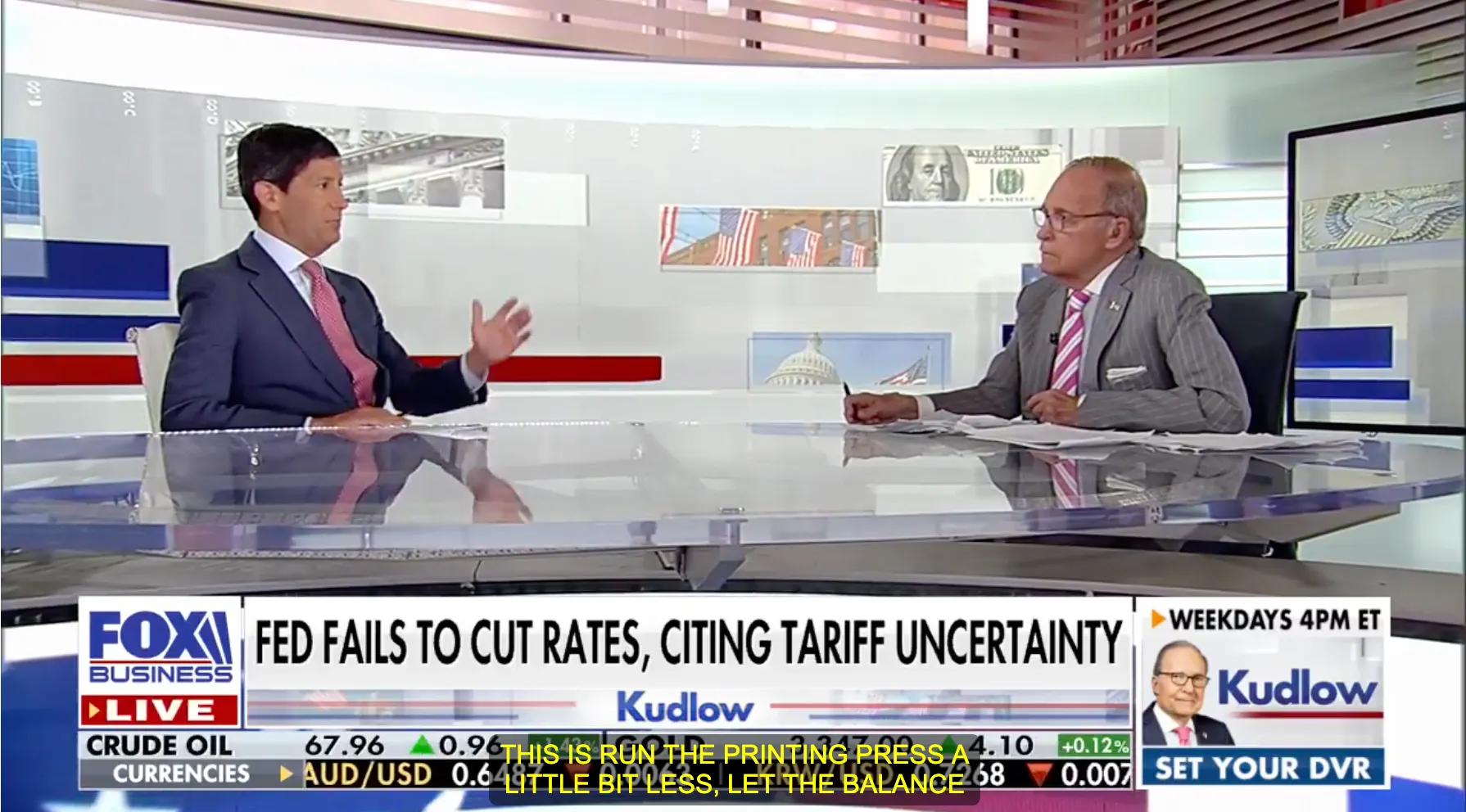
Kevin Warsh discusses Fed Chair Jerome Powell's利率 strategy on "Kudlow," source Fox Business

More importantly, if he actually achieves "inflation-free growth" through supply-side reforms, keeping real yields positive for the long term, then holding fiat currency and government bonds will become profitable. This is starkly different from the negative interest rate era of 2020, where "everything rallied, only cash was trash." Bitcoin's appeal as a "zero-yield asset" could be severely tested.

But there are two sides to every coin. Warsh is someone who is extremely superstitious about "market discipline"; he would never rush to rescue the market after a mere 10% stock market drop like Powell did. This "no bottom" market environment might反而 give Bitcoin a chance to prove its worth: when the traditional financial system develops credit cracks due to deleveraging (like the Silicon Valley Bank crisis), can Bitcoin break free from the gravitational pull of US stocks and truly become a Noah's Ark for safe-haven funds? This is the ultimate test Warsh poses to the crypto market.

Hidden behind this test is Warsh's unique definition of cryptocurrency. He left a famous quote in The Wall Street Journal: "Cryptocurrency is a misnomer. It is not mysterious. It is not money. It is software."
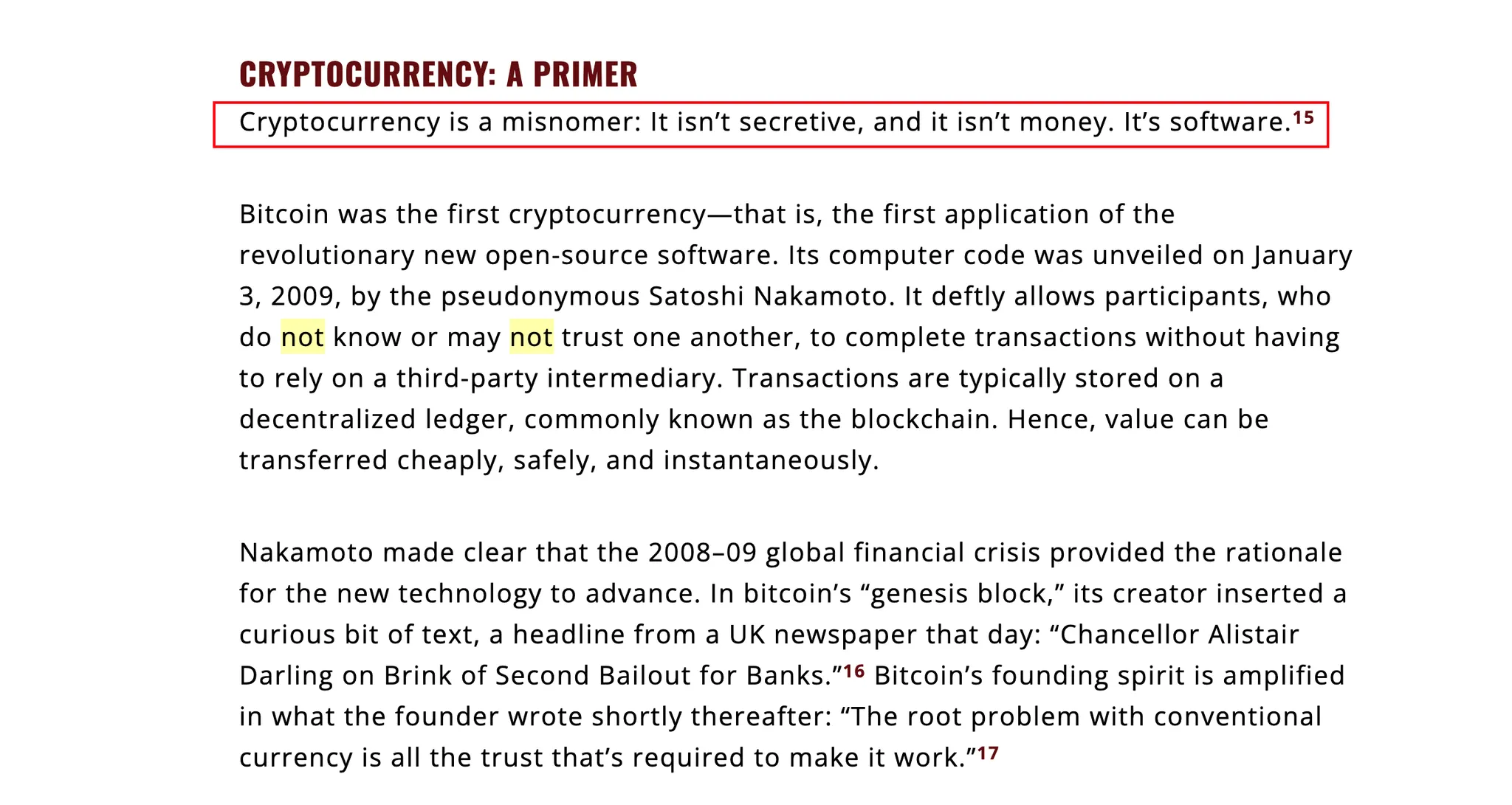
Excerpt from Kevin Warsh's column ‘Money Matters: The Dollar, Cryptocurrency, and the National Interest’

This sounds harsh, but if you look at his resume, you'll find he is not a blind opponent but an insider who understands the technical mechanisms deeply. He is not only an advisor to the crypto index fund Bitwise but also an early angel investor in the algorithmic stablecoin project Basis. Basis attempted to mimic central bank open market operations with algorithms. Although the project ultimately died due to regulation, this experience made Warsh understand better than any bureaucrat how code generates "money."

Precisely because he understands, he is more severe. Warsh is a typical "institutionalist." He recognizes crypto assets as investment vehicles like commodities or tech stocks, but he has very low tolerance for "private coinage" that challenges dollar sovereignty.

This binary attitude will directly determine the fate of stablecoins. Warsh is highly likely to push for bringing stablecoin issuers under a "narrow bank" regulatory framework: requiring 100% cash or short-term debt reserves, prohibiting fractional reserve lending like banks. This is a double-edged sword for Tether or Circle. They would gain a legitimate status similar to banks, with extremely deep moats; but they would also lose the flexibility of "shadow banking," and their profit model would be彻底 locked into government bond interest. As for those small and medium-sized stablecoins trying to engage in "credit creation," they would likely be eliminated under such high pressure. (Recommended reading: ‘Farewell to the ‘Correspondent Bank’ Era? Five Crypto Institutions Get the Key to the Fed's Payment System’)

The same logic extends to CBDCs. Unlike many Republicans who oppose them outright, Warsh offers a more refined "American solution." He firmly opposes a "retail CBDC" issued directly by the Fed to individuals, seeing it as an invasion of privacy and an overreach of power—a view surprisingly aligned with the crypto community's values. But he is a proponent of "wholesale CBDCs," advocating for the use of blockchain technology to reform the interbank clearing system to address geopolitical challenges.

Under this architecture, the future might see a奇妙 fusion: the underlying settlement layer controlled by the Fed's wholesale chain, while the upper application layer is left to regulated public chains and Web3 institutions. For DeFi, that would be the end of the "Wild West" era, but perhaps also the true beginning of spring for RWA. After all, in Warsh's logic, as long as you don't try to replace the dollar, technological efficiency gains will always be welcome.

Conclusion

Kevin Warsh is not just an alternative on Trump's list; he is the embodiment of the old Wall Street order trying to redeem itself in the digital age. Perhaps under his leadership, RWA and DeFi, built on real utility and institutional compliance, might just be entering their true golden age.

However, just as the market overinterprets Warsh's resume, BitMEX founder Arthur Hayes poured a bucket of very sobering cold water. In Hayes' view, we might all be making a directional error. The key is not what that person "believes in" before becoming Chair, but whether he understands, after taking that seat, who he actually "works for."

Looking back at the Fed's century-long history, the博弈 (game) between the President and the Chair has never stopped. Back then, President Lyndon B. Johnson reportedly even physically intimidated then-Chair William McChesney Martin on a Texas ranch to force a rate cut. Compared to that, Trump's Twitter attacks are child's play. Hayes' logic is cruel but真实 (real): The US President will ultimately always get the monetary policy he wants. And what Trump wants is always lower rates, a hotter market, and more abundant money supply. No matter who sits in that chair, they will eventually have to use the tools to get the job done.

This is the ultimate suspense facing the crypto market:

Warsh is indeed someone who wants to put his hand on the printing press's switch and try to turn it off. But when political gravity strikes, when the growth demand of "Make America Great Again" collides with his "hard money" ideals, will he tame inflation, or will the power game tame him?

In this博弈 (game), Warsh might be a respectable "hawkish" opponent. But in the eyes of seasoned traders like Hayes, who becomes Chair doesn't really matter, because no matter how曲折 (tortuous) the process, as long as the political machine is still running, the liquidity valve will ultimately be turned back on.

Recommended Reading:

‘Inflation Is a Choice: Kevin Warsh on Fixing the Fed | Extraordinary Insights’

‘Farewell to the ‘Correspondent Bank’ Era? Five Crypto Institutions Get the Key to the Fed's Payment System’)

‘Money Matters: The Dollar, Cryptocurrency, and the National Interest’

Domande pertinenti

QWho is Kevin Warsh and why is he considered a potential 'strict headmaster' for the cryptocurrency market if he becomes Fed Chair?

AKevin Warsh is a former Federal Reserve Governor and Wall Street insider known for his hardline monetary views. He is seen as a 'strict headmaster' because his proposed policy mix of aggressive quantitative tightening (QT) and moderate rate cuts aims to restore monetary discipline, which could sharply reduce the liquidity that has fueled crypto market rallies.

QHow does Kevin Warsh's proposed monetary policy differ from that of another top candidate, Kevin Hassett?

AKevin Hassett represents a 'growth-first' approach, likely favoring lower rates to stimulate the economy, even if inflation isn't fully controlled. In contrast, Kevin Warsh advocates for aggressive balance sheet reduction (QT) combined with moderate rate cuts to control inflation by tightening money supply while easing corporate borrowing costs, prioritizing monetary stability over stimulus.

QWhat impact could Kevin Warsh's potential leadership have on stablecoins and their regulatory framework?

AWarsh would likely push to regulate stablecoin issuers as 'narrow banks,' requiring 100% cash or short-term debt reserves and banning fractional reserve lending. This would grant them legitimacy but eliminate flexibility, locking their profitability to treasury yields and potentially forcing out stablecoins attempting 'credit creation.'

QHow does Kevin Warsh view central bank digital currencies (CBDCs), and what distinction does he make in their implementation?

AWarsh opposes a retail CBDC issued directly by the Fed to individuals, seeing it as a privacy violation and overreach of power. However, he supports a wholesale CBDC for interbank settlement systems, aiming to use blockchain technology to improve efficiency in financial infrastructure without challenging dollar sovereignty.

QAccording to the article, why might the choice of Fed Chair ultimately matter less than political pressures, as highlighted by BitMEX founder Arthur Hayes?

AHayes argues that historical precedent shows U.S. Presidents ultimately get the monetary policy they demand, regardless of the Fed Chair's personal beliefs. If Trump prioritizes lower rates, economic growth, and ample liquidity, political pressure would likely force any Chair, including a hardliner like Warsh, to accommodate those demands, thus sustaining liquidity flows.

Letture associate

Trading

Spot
Futures

Articoli Popolari

Cosa è $S$

Comprendere SPERO: Una Panoramica Completa Introduzione a SPERO Mentre il panorama dell'innovazione continua a evolversi, l'emergere delle tecnologie web3 e dei progetti di criptovaluta gioca un ruolo fondamentale nel plasmare il futuro digitale. Un progetto che ha attirato l'attenzione in questo campo dinamico è SPERO, denotato come SPERO,$$s$. Questo articolo mira a raccogliere e presentare informazioni dettagliate su SPERO, per aiutare gli appassionati e gli investitori a comprendere le sue basi, obiettivi e innovazioni nei domini web3 e crypto. Che cos'è SPERO,$$s$? SPERO,$$s$ è un progetto unico all'interno dello spazio crypto che cerca di sfruttare i principi della decentralizzazione e della tecnologia blockchain per creare un ecosistema che promuove l'impegno, l'utilità e l'inclusione finanziaria. Il progetto è progettato per facilitare interazioni peer-to-peer in modi nuovi, fornendo agli utenti soluzioni e servizi finanziari innovativi. Al suo interno, SPERO,$$s$ mira a responsabilizzare gli individui fornendo strumenti e piattaforme che migliorano l'esperienza dell'utente nello spazio delle criptovalute. Questo include la possibilità di metodi di transazione più flessibili, la promozione di iniziative guidate dalla comunità e la creazione di percorsi per opportunità finanziarie attraverso applicazioni decentralizzate (dApps). La visione sottostante di SPERO,$$s$ ruota attorno all'inclusività, cercando di colmare le lacune all'interno della finanza tradizionale mentre sfrutta i vantaggi della tecnologia blockchain. Chi è il Creatore di SPERO,$$s$? L'identità del creatore di SPERO,$$s$ rimane piuttosto oscura, poiché ci sono risorse pubblicamente disponibili limitate che forniscono informazioni dettagliate sul suo fondatore o fondatori. Questa mancanza di trasparenza può derivare dall'impegno del progetto per la decentralizzazione—un ethos che molti progetti web3 condividono, dando priorità ai contributi collettivi rispetto al riconoscimento individuale. Centrando le discussioni attorno alla comunità e ai suoi obiettivi collettivi, SPERO,$$s$ incarna l'essenza dell'empowerment senza mettere in evidenza individui specifici. Pertanto, comprendere l'etica e la missione di SPERO rimane più importante che identificare un creatore singolo. Chi sono gli Investitori di SPERO,$$s$? SPERO,$$s$ è supportato da una varietà di investitori che vanno dai capitalisti di rischio agli investitori angelici dedicati a promuovere l'innovazione nel settore crypto. Il focus di questi investitori generalmente si allinea con la missione di SPERO—dando priorità a progetti che promettono avanzamenti tecnologici sociali, inclusività finanziaria e governance decentralizzata. Queste fondazioni di investitori sono tipicamente interessate a progetti che non solo offrono prodotti innovativi, ma contribuiscono anche positivamente alla comunità blockchain e ai suoi ecosistemi. Il supporto di questi investitori rafforza SPERO,$$s$ come un concorrente degno di nota nel dominio in rapida evoluzione dei progetti crypto. Come Funziona SPERO,$$s$? SPERO,$$s$ impiega un framework multifunzionale che lo distingue dai progetti di criptovaluta convenzionali. Ecco alcune delle caratteristiche chiave che sottolineano la sua unicità e innovazione: Governance Decentralizzata: SPERO,$$s$ integra modelli di governance decentralizzati, responsabilizzando gli utenti a partecipare attivamente ai processi decisionali riguardanti il futuro del progetto. Questo approccio favorisce un senso di proprietà e responsabilità tra i membri della comunità. Utilità del Token: SPERO,$$s$ utilizza il proprio token di criptovaluta, progettato per servire varie funzioni all'interno dell'ecosistema. Questi token abilitano transazioni, premi e la facilitazione dei servizi offerti sulla piattaforma, migliorando l'impegno e l'utilità complessivi. Architettura Stratificata: L'architettura tecnica di SPERO,$$s$ supporta la modularità e la scalabilità, consentendo un'integrazione fluida di funzionalità e applicazioni aggiuntive man mano che il progetto evolve. Questa adattabilità è fondamentale per mantenere la rilevanza nel panorama crypto in continua evoluzione. Coinvolgimento della Comunità: Il progetto enfatizza iniziative guidate dalla comunità, impiegando meccanismi che incentivano la collaborazione e il feedback. Nutrendo una comunità forte, SPERO,$$s$ può affrontare meglio le esigenze degli utenti e adattarsi alle tendenze di mercato. Focus sull'Inclusione: Offrendo basse commissioni di transazione e interfacce user-friendly, SPERO,$$s$ mira ad attrarre una base utenti diversificata, inclusi individui che potrebbero non aver precedentemente interagito nello spazio crypto. Questo impegno per l'inclusione si allinea con la sua missione generale di empowerment attraverso l'accessibilità. Cronologia di SPERO,$$s$ Comprendere la storia di un progetto fornisce preziose intuizioni sulla sua traiettoria di sviluppo e sui traguardi. Di seguito è riportata una cronologia suggerita che mappa eventi significativi nell'evoluzione di SPERO,$$s$: Fase di Concettualizzazione e Ideazione: Le idee iniziali che formano la base di SPERO,$$s$ sono state concepite, allineandosi strettamente con i principi di decentralizzazione e focus sulla comunità all'interno dell'industria blockchain. Lancio del Whitepaper del Progetto: Dopo la fase concettuale, è stato rilasciato un whitepaper completo che dettaglia la visione, gli obiettivi e l'infrastruttura tecnologica di SPERO,$$s$ per suscitare interesse e feedback dalla comunità. Costruzione della Comunità e Prime Interazioni: Sono stati effettuati sforzi attivi di outreach per costruire una comunità di early adopters e potenziali investitori, facilitando discussioni attorno agli obiettivi del progetto e ottenendo supporto. Evento di Generazione del Token: SPERO,$$s$ ha condotto un evento di generazione del token (TGE) per distribuire i propri token nativi ai primi sostenitori e stabilire una liquidità iniziale all'interno dell'ecosistema. Lancio della Prima dApp: La prima applicazione decentralizzata (dApp) associata a SPERO,$$s$ è stata attivata, consentendo agli utenti di interagire con le funzionalità principali della piattaforma. Sviluppo Continuo e Partnership: Aggiornamenti e miglioramenti continui alle offerte del progetto, inclusi partnership strategiche con altri attori nello spazio blockchain, hanno plasmato SPERO,$$s$ in un concorrente competitivo e in evoluzione nel mercato crypto. Conclusione SPERO,$$s$ rappresenta una testimonianza del potenziale del web3 e delle criptovalute di rivoluzionare i sistemi finanziari e responsabilizzare gli individui. Con un impegno per la governance decentralizzata, il coinvolgimento della comunità e funzionalità progettate in modo innovativo, apre la strada verso un panorama finanziario più inclusivo. Come per qualsiasi investimento nello spazio crypto in rapida evoluzione, si incoraggiano potenziali investitori e utenti a ricercare approfonditamente e a impegnarsi in modo riflessivo con gli sviluppi in corso all'interno di SPERO,$$s$. Il progetto mostra lo spirito innovativo dell'industria crypto, invitando a ulteriori esplorazioni delle sue innumerevoli possibilità. Mentre il percorso di SPERO,$$s$ è ancora in fase di sviluppo, i suoi principi fondamentali potrebbero effettivamente influenzare il futuro di come interagiamo con la tecnologia, la finanza e tra di noi in ecosistemi digitali interconnessi.

75 Totale visualizzazioniPubblicato il 2024.12.17Aggiornato il 2024.12.17

Cosa è $S$

Cosa è AGENT S

Agent S: Il Futuro dell'Interazione Autonoma in Web3 Introduzione Nel panorama in continua evoluzione di Web3 e criptovalute, le innovazioni stanno costantemente ridefinendo il modo in cui gli individui interagiscono con le piattaforme digitali. Uno di questi progetti pionieristici, Agent S, promette di rivoluzionare l'interazione uomo-computer attraverso il suo framework agentico aperto. Aprendo la strada a interazioni autonome, Agent S mira a semplificare compiti complessi, offrendo applicazioni trasformative nell'intelligenza artificiale (AI). Questa esplorazione dettagliata approfondirà le complessità del progetto, le sue caratteristiche uniche e le implicazioni per il dominio delle criptovalute. Cos'è Agent S? Agent S si presenta come un innovativo framework agentico aperto, progettato specificamente per affrontare tre sfide fondamentali nell'automazione dei compiti informatici: Acquisizione di Conoscenze Specifiche del Dominio: Il framework apprende in modo intelligente da varie fonti di conoscenza esterne ed esperienze interne. Questo approccio duale gli consente di costruire un ricco repository di conoscenze specifiche del dominio, migliorando le sue prestazioni nell'esecuzione dei compiti. Pianificazione su Lungo Orizzonte di Compiti: Agent S impiega una pianificazione gerarchica potenziata dall'esperienza, un approccio strategico che facilita la suddivisione e l'esecuzione efficiente di compiti complessi. Questa caratteristica migliora significativamente la sua capacità di gestire più sottocompiti in modo efficiente ed efficace. Gestione di Interfacce Dinamiche e Non Uniformi: Il progetto introduce l'Interfaccia Agente-Computer (ACI), una soluzione innovativa che migliora l'interazione tra agenti e utenti. Utilizzando Modelli Linguistici Multimodali di Grandi Dimensioni (MLLM), Agent S può navigare e manipolare senza sforzo diverse interfacce grafiche utente. Attraverso queste caratteristiche pionieristiche, Agent S fornisce un framework robusto che affronta le complessità coinvolte nell'automazione dell'interazione umana con le macchine, preparando il terreno per innumerevoli applicazioni nell'AI e oltre. Chi è il Creatore di Agent S? Sebbene il concetto di Agent S sia fondamentalmente innovativo, informazioni specifiche sul suo creatore rimangono elusive. Il creatore è attualmente sconosciuto, il che evidenzia sia la fase embrionale del progetto sia la scelta strategica di mantenere i membri fondatori sotto anonimato. Indipendentemente dall'anonimato, l'attenzione rimane sulle capacità e sul potenziale del framework. Chi sono gli Investitori di Agent S? Poiché Agent S è relativamente nuovo nell'ecosistema crittografico, informazioni dettagliate riguardanti i suoi investitori e sostenitori finanziari non sono documentate esplicitamente. La mancanza di approfondimenti pubblicamente disponibili sulle fondazioni di investimento o sulle organizzazioni che supportano il progetto solleva interrogativi sulla sua struttura di finanziamento e sulla roadmap di sviluppo. Comprendere il supporto è cruciale per valutare la sostenibilità del progetto e il suo potenziale impatto sul mercato. Come Funziona Agent S? Al centro di Agent S si trova una tecnologia all'avanguardia che gli consente di funzionare efficacemente in contesti diversi. Il suo modello operativo è costruito attorno a diverse caratteristiche chiave: Interazione Uomo-Computer Simile a Quella Umana: Il framework offre una pianificazione AI avanzata, cercando di rendere le interazioni con i computer più intuitive. Mimando il comportamento umano nell'esecuzione dei compiti, promette di elevare le esperienze degli utenti. Memoria Narrativa: Utilizzata per sfruttare esperienze di alto livello, Agent S utilizza la memoria narrativa per tenere traccia delle storie dei compiti, migliorando così i suoi processi decisionali. Memoria Episodica: Questa caratteristica fornisce agli utenti una guida passo-passo, consentendo al framework di offrire supporto contestuale mentre i compiti si sviluppano. Supporto per OpenACI: Con la capacità di funzionare localmente, Agent S consente agli utenti di mantenere il controllo sulle proprie interazioni e flussi di lavoro, allineandosi con l'etica decentralizzata di Web3. Facile Integrazione con API Esterne: La sua versatilità e compatibilità con varie piattaforme AI garantiscono che Agent S possa adattarsi senza problemi agli ecosistemi tecnologici esistenti, rendendolo una scelta attraente per sviluppatori e organizzazioni. Queste funzionalità contribuiscono collettivamente alla posizione unica di Agent S all'interno dello spazio crittografico, poiché automatizza compiti complessi e multi-fase con un intervento umano minimo. Man mano che il progetto evolve, le sue potenziali applicazioni in Web3 potrebbero ridefinire il modo in cui si svolgono le interazioni digitali. Cronologia di Agent S Lo sviluppo e le tappe di Agent S possono essere riassunti in una cronologia che evidenzia i suoi eventi significativi: 27 Settembre 2024: Il concetto di Agent S è stato lanciato in un documento di ricerca completo intitolato “Un Framework Agentico Aperto che Usa i Computer Come un Umano”, mostrando le basi per il progetto. 10 Ottobre 2024: Il documento di ricerca è stato reso pubblicamente disponibile su arXiv, offrendo un'esplorazione approfondita del framework e della sua valutazione delle prestazioni basata sul benchmark OSWorld. 12 Ottobre 2024: È stata rilasciata una presentazione video, fornendo un'idea visiva delle capacità e delle caratteristiche di Agent S, coinvolgendo ulteriormente potenziali utenti e investitori. Questi indicatori nella cronologia non solo illustrano i progressi di Agent S, ma indicano anche il suo impegno per la trasparenza e il coinvolgimento della comunità. Punti Chiave su Agent S Man mano che il framework Agent S continua a evolversi, diversi attributi chiave si distinguono, sottolineando la sua natura innovativa e il potenziale: Framework Innovativo: Progettato per fornire un uso intuitivo dei computer simile all'interazione umana, Agent S porta un approccio nuovo all'automazione dei compiti. Interazione Autonoma: La capacità di interagire autonomamente con i computer attraverso GUI segna un passo avanti verso soluzioni informatiche più intelligenti ed efficienti. Automazione di Compiti Complessi: Con la sua metodologia robusta, può automatizzare compiti complessi e multi-fase, rendendo i processi più veloci e meno soggetti a errori. Miglioramento Continuo: I meccanismi di apprendimento consentono ad Agent S di migliorare dalle esperienze passate, migliorando continuamente le sue prestazioni e la sua efficacia. Versatilità: La sua adattabilità attraverso diversi ambienti operativi come OSWorld e WindowsAgentArena garantisce che possa servire un'ampia gamma di applicazioni. Man mano che Agent S si posiziona nel panorama di Web3 e delle criptovalute, il suo potenziale per migliorare le capacità di interazione e automatizzare i processi segna un significativo avanzamento nelle tecnologie AI. Attraverso il suo framework innovativo, Agent S esemplifica il futuro delle interazioni digitali, promettendo un'esperienza più fluida ed efficiente per gli utenti in vari settori. Conclusione Agent S rappresenta un audace passo avanti nell'unione tra AI e Web3, con la capacità di ridefinire il modo in cui interagiamo con la tecnologia. Sebbene sia ancora nelle sue fasi iniziali, le possibilità per la sua applicazione sono vaste e coinvolgenti. Attraverso il suo framework completo che affronta sfide critiche, Agent S mira a portare le interazioni autonome al centro dell'esperienza digitale. Man mano che ci addentriamo nei regni delle criptovalute e della decentralizzazione, progetti come Agent S giocheranno senza dubbio un ruolo cruciale nel plasmare il futuro della tecnologia e della collaborazione uomo-computer.

425 Totale visualizzazioniPubblicato il 2025.01.14Aggiornato il 2025.01.14

Cosa è AGENT S

Come comprare S

Benvenuto in HTX.com! Abbiamo reso l'acquisto di Sonic (S) semplice e conveniente. Segui la nostra guida passo passo per intraprendere il tuo viaggio nel mondo delle criptovalute.Step 1: Crea il tuo Account HTXUsa la tua email o numero di telefono per registrarti il tuo account gratuito su HTX. Vivi un'esperienza facile e sblocca tutte le funzionalità,Crea il mio accountStep 2: Vai in Acquista crypto e seleziona il tuo metodo di pagamentoCarta di credito/debito: utilizza la tua Visa o Mastercard per acquistare immediatamente SonicS.Bilancio: Usa i fondi dal bilancio del tuo account HTX per fare trading senza problemi.Terze parti: abbiamo aggiunto metodi di pagamento molto utilizzati come Google Pay e Apple Pay per maggiore comodità.P2P: Fai trading direttamente con altri utenti HTX.Over-the-Counter (OTC): Offriamo servizi su misura e tassi di cambio competitivi per i trader.Step 3: Conserva Sonic (S)Dopo aver acquistato Sonic (S), conserva nel tuo account HTX. In alternativa, puoi inviare tramite trasferimento blockchain o scambiare per altre criptovalute.Step 4: Scambia Sonic (S)Scambia facilmente Sonic (S) nel mercato spot di HTX. Accedi al tuo account, seleziona la tua coppia di trading, esegui le tue operazioni e monitora in tempo reale. Offriamo un'esperienza user-friendly sia per chi ha appena iniziato che per i trader più esperti.

842 Totale visualizzazioniPubblicato il 2025.01.15Aggiornato il 2025.03.21

Come comprare S

Discussioni

Benvenuto nella Community HTX. Qui puoi rimanere informato sugli ultimi sviluppi della piattaforma e accedere ad approfondimenti esperti sul mercato. Le opinioni degli utenti sul prezzo di S S sono presentate come di seguito.

活动图片