Bitcoin's 'Never-Setting Sun' and Altcoins' 'Twilight of the Gods': Has the Four-Year Cycle Really Ended?

marsbitPubblicato 2025-12-25Pubblicato ultima volta 2025-12-25

Introduzione

The crypto market in 2025 is experiencing an unprecedented divergence: Bitcoin (BTC) reached new highs of $125,000 driven by institutional inflows via ETFs, while Ethereum (ETH) struggled around $2,800, and most altcoins fell 80-95% from their 2021 peaks. The traditional four-year cycle—where BTC leads, ETH follows, and altcoins surge—has broken down. This "great divergence" is fueled by institutionalization. BTC has become a "digital tech stock," correlated with Nasdaq, as traditional asset managers like BlackRock channel hundreds of billions solely into Bitcoin, creating a "one-way siphon" that leaves altcoins behind. ETH faces a "midlife crisis" due to Layer 2 solutions diverting value away from the mainnet and a lack of compelling new narratives. Altcoins are in a "liquidity black hole," plagued by high FDV/low float VC tokens, meme coin fatigue, and collapsing exchange liquidity. Major 2026 forecasts from Grayscale and CoinShares predict this structural shift is permanent. They expect BTC dominance to rise further, with BTC potentially reaching $150,000, while ETH undergoes a painful transformation. Most altcoins will be wiped out in a "Darwinian cleansing," with only projects offering real utility, sustainable revenue, and a clear regulatory path surviving. The four-year cycle isn't dead but has transformed. Future cycles may be "lame bull markets" where BTC rallies alone or with minimal spillover, signaling a permanent shift from a speculative, retail-driven market ...

As 2025 draws to a close, the crypto market is exhibiting an unprecedented "split" landscape: Bitcoin (BTC) is repeatedly hitting new all-time highs, driven by institutional capital, having once touched $125,000; Ethereum (ETH) is struggling around $2,800, still significantly below its historical peak; and the once "rising tide that lifted all boats" altcoins have plunged into an abyss, with most projects down 80-95% from their 2021 highs, failing to recover even as BTC reaches new heights.

This completely deviates from the classic narrative of the crypto market over the past decade. The traditional "four-year cycle" script—"BTC rises first → ETH catches up → altcoins surge in rotation—seems to have completely failed in 2025. The familiar "carving the mark on the moving boat" strategy of veteran players has now become a joke of "carving the mark to find fish".

Meanwhile, outlook reports for 2026 from institutions like Grayscale and CoinShares further reinforce a harsh reality: the "class solidification" of the crypto market is accelerating—BTC is becoming the "digital gold" for institutional asset allocation, while altcoins are relegated to a "twilight of the gods" with dried-up liquidity.

Is this a temporary failure of the cycle, or a permanent change in market structure? This article will deconstruct this ongoing "crypto paradigm shift" from four dimensions: phenomenon observation, underlying mechanisms, institutional behavior, and liquidity structure.

I. Phenomenon Observation: The "Great Divergence" Between BTC and Altcoins

1.1 Data Doesn't Lie: Unprecedented Performance Divergence

The crypto market in 2025 can be aptly described as "a tale of two extremes".
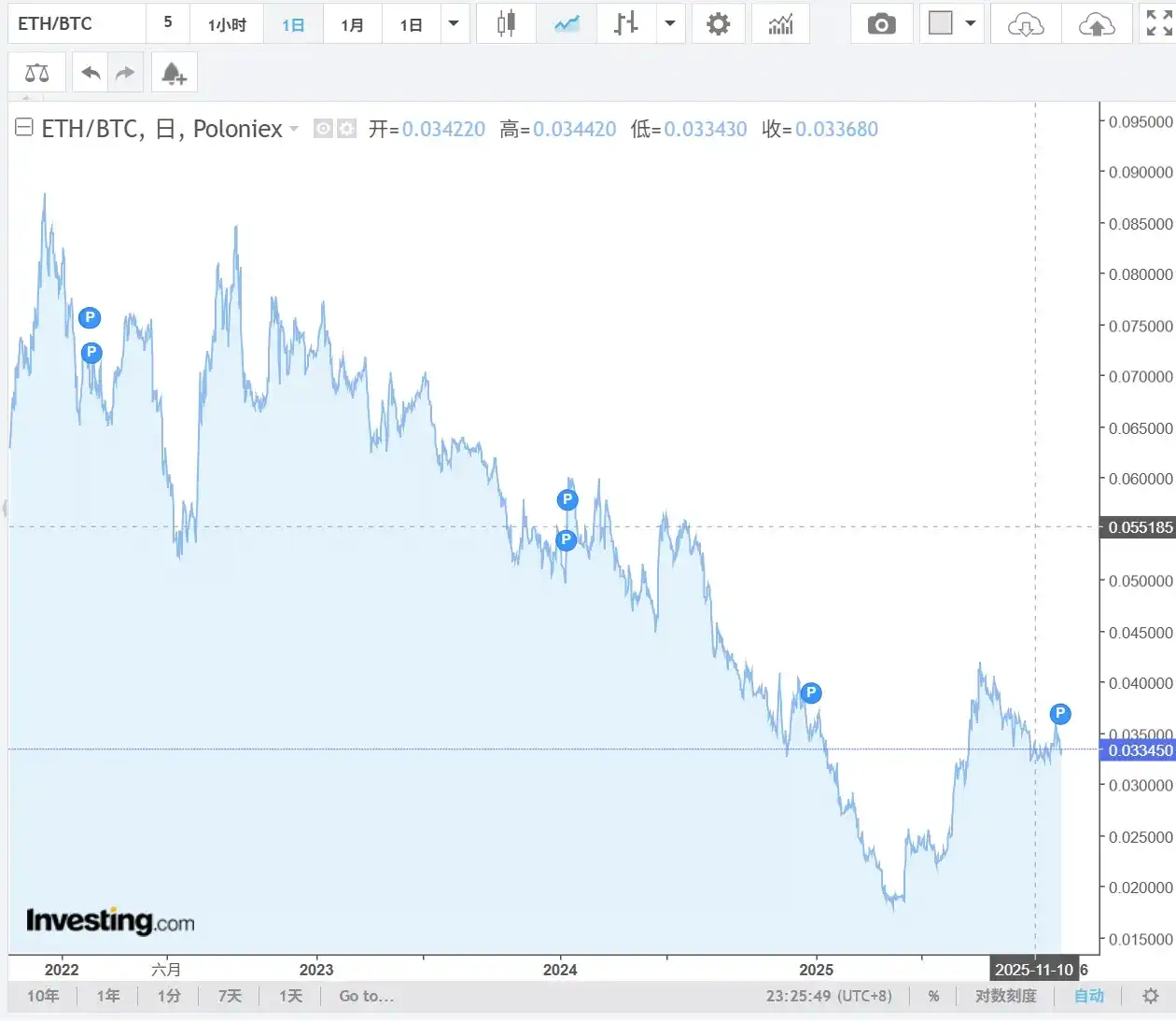
Chart: ETH/BTC Exchange Rate

1. Bitcoin's "Never-Setting Sun":

  • Robust Price Performance: Rose from around $70,000 at the start of the year to a high of $125,000 (+78%), still maintaining between $86,000-$88,000 even after pullbacks.
  • Institutional Capital Inflow: Spot ETFs saw net inflows of tens of billions of dollars, with products like BlackRock's IBIT dominating the market.
  • Highly Concentrated Holdings: ETFs hold over a million BTC; MicroStrategy holds about 670,000 BTC (3.2% of circulating supply).
  • Increased Market Dominance: BTC's dominance surged from 50% in early 2024 to 59-60% currently, a multi-year high.

2. Ethereum's "Midlife Crisis":

  • Severely Lagging Gains: Limited gains this year, current price around $2,800, far inferior to BTC's performance.
  • Collapse in Relative Value: ETH/BTC rate fell to multi-year lows, down over 60% from its historical high.
  • Lackluster Institutional Interest: Total AUM of spot ETFs is far lower than BTC ETFs, with periodic outflows.
  • Sluggish On-Chain Activity: Significantly reduced Gas fees, reflecting weak user activity and network demand.

3. Altcoins' "Twilight of the Gods":

  • Seasonal Indicator Collapse: Altcoin Season Index remained below 20 all year (above 50 indicates altcoin season), the longest period of depression on record.
  • Widespread Underperformance: Most projects in the top 100 by market cap underperformed BTC this year; many are down over 80% from 2021 highs.
  • New Listings Immediately Break Issue Price: New coins listed on major CEXs in 5 routinely broke their issue price upon listing; VC coins became "poison".
  • Liquidity Drying Up: Average daily trading volume for altcoins plummeted over 70% compared to 2021; insufficient CEX depth means any selling pressure can trigger a crash.
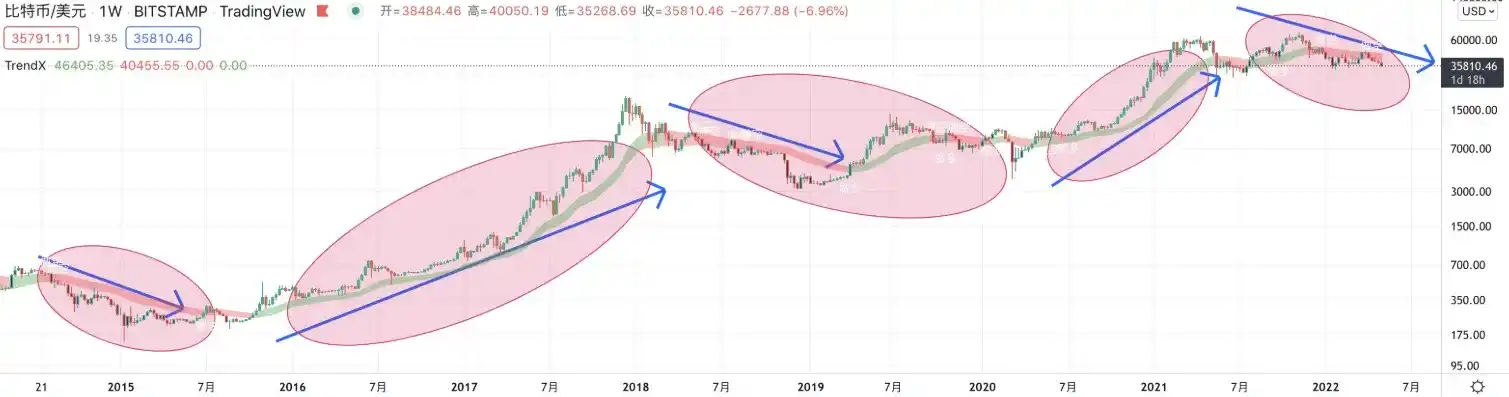
1.2 Historical Comparison: This Time "It's Really Different"

Looking back at the past three bull markets, the rotation logic of "BTC → ETH → altcoins" was almost an iron law of the market:

2017 Bull Market: The Classic Three-Stage Rocket

  • BTC rose from $1,000 to $20,000 (+1,900%)
  • ETH skyrocketed from $8 to $1,400 (+17,400%)
  • ICO泡沫引爆,山寨币普遍50-500倍涨幅 (ICO bubble ignited, altcoins普遍 gained 50-500x)

2020-2021 Bull Market: The DeFi and NFT Carnival

  • BTC rose from $10,000 to $69,000 (+590%)
  • ETH rose from $200 to $4,800 (+2,300%)
  • DeFi Summer and NFT frenzy pushed altcoins to gains of 10-100x普遍.

2024-2025 Bull Market: Transmission Mechanism Failure

  • BTC rose significantly from its low to $125,000 (+78%+)
  • ETH gains limited, hovering around $2,800
  • Altcoins collectively flatlined, even falling further as BTC hit new highs

The core difference is clear: In 2025, BTC's gains no longer "spill over" to ETH and altcoins. Capital seems trapped behind an invisible wall within the BTC ecosystem. The name of that wall is "institutionalization".

II. Underlying Mechanisms: How Institutional ETFs "Rewrite the Rules of the Game"

2.1 BTC Becomes a "Shadow of US Tech Stocks"
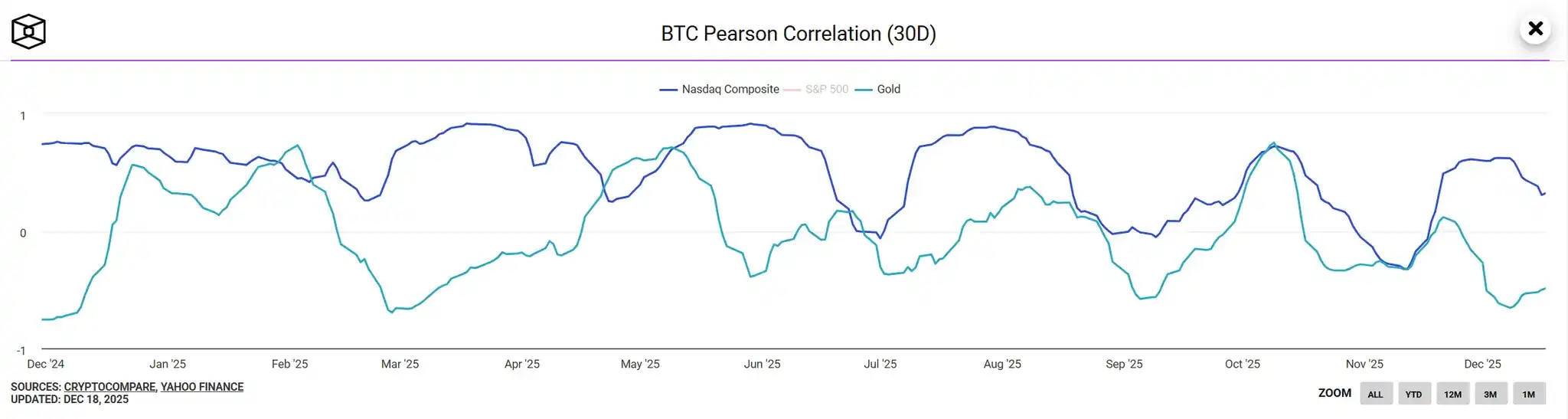
Chart: 30-day correlation coefficient between BTC and Nasdaq/Gold

In January 2024, the US SEC approved spot BTC ETFs, marking the crypto market's entry into the "institutional era." However, a side effect of this milestone is BTC gradually detaching from crypto-native narratives and becoming a "satellite asset" of traditional finance.

High Correlation with Nasdaq

In 2025, the 30-day correlation coefficient between BTC and the Nasdaq 100 index remained stable in the 0.75-0.85 range, hitting a record high; its correlation with gold dropped below 0.2. When US tech stocks (like Nvidia, Tesla) surged, BTC ETF inflows accelerated; when US stocks corrected, BTC fell in sync.

Essential Shift: BTC is no longer "digital gold" (safe-haven asset), but "digital tech stock" (risk asset). Its pricing power has shifted from crypto natives to Wall Street fund managers.

"One-Way Siphoning" Effect of Institutional Buying

Clients of traditional asset management giants like BlackRock and Fidelity (pensions, family offices, high-net-worth individuals) only recognize BTC, not altcoins. The reason isn't a deep understanding of crypto technology, but a trifecta of "regulatory compliance + sufficient liquidity + brand recognition":

  • BTC has SEC-approved spot ETFs.
  • BTC has CME futures and a well-developed derivatives market.
  • BTC has 15 years of brand accumulation.

In contrast, altcoins are still "unidentified assets" in the eyes of institutions,叠加 regulatory risk, liquidity risk, and project risk,根本无法 passing traditional financial due diligence.

Structural Solidification of Capital Flows: In 2025, of the hundreds of billions flowing into BTC ETFs, over 95% was locked within the BTC ecosystem, with less than 5% flowing into ETH/altcoins via OTC trades or DeFi bridges. This starkly contrasts with the past "capital spillover effect".

MicroStrategy's "Infinite Ammo" Model

Michael Saylor's MicroStrategy has become another dominant force in the BTC market. By issuing convertible bonds, secondary offerings, etc., the company continuously buys BTC, currently holding about 670,000 BTC (cost ~$30 billion).

More crucially, MSTR's stock price has long traded at a 2-3x premium to the value of its held BTC, making it a proxy tool for retail investors to "leveraged long BTC". A positive feedback loop is thus formed:

MSTR stock price rises → Market cap膨胀 → Ability to issue debt increases → Buys more BTC → Pushes BTC price higher → MSTR stock price rises again

This "corporate hoarding" model further siphons capital that could have flowed into altcoins, strengthening BTC's dominance.

2.2 Why Did ETH "Fall Behind"? Layer 2's "Vampire Attack"

Ethereum's weak performance is not only due to lack of institutional interest but also internal contradictions within its own ecosystem.

Layer 2's Liquidity Fragmentation Dilemma

The TVL (Total Value Locked) of Layer 2 networks like Arbitrum, Optimism, Base, zkSync has exceeded tens of billions,接近 60% of the mainnet's. But the problem is, the tokens of these L2s (ARB, OP, etc.) do not adequately capture value for ETH, instead diverting users and capital.

Core Contradiction: When users transact on L2s, the Gas fees paid are in L2 tokens or stablecoins, not ETH. The economic model of L2s is structurally decoupled from the ETH mainnet—the more successful L2s are, the lower the demand for ETH. This is a classic "vampire attack".

Staking Yield's "Prisoner's Dilemma"

After transitioning to PoS, ETH staking offers an annual yield of ~3-4%. Although liquid staking derivatives (like Lido's stETH) account for a significant portion of the total stake, this has not pushed the ETH price higher.

Paradox: Staked ETH is locked, reducing circulating supply (theoretically bullish for price), but it also reduces speculative demand (actually suppressing price). ETH has been downgraded from "programmable money" to "interest-bearing bond", but its 3-4% yield cannot compete with US Treasuries at 4.5%, let alone attract crypto investors seeking high returns.

Narrative Vacuum Lacking Killer Apps

The DeFi Summer and NFT frenzy of 2021 made ETH synonymous with the "world computer". But in 2025:

  • DeFi TVL halved from its peak.
  • NFT trading volume crashed 90%.
  • Emerging applications like AI Agent, on-chain games have not yet achieved scale.

The narrative contrast is stark: BTC has a clear positioning as "digital gold + institutional allocation", Solana has market consensus as "high-performance公链 + Meme culture", while ETH's positioning is模糊—not "hard currency" enough, nor "sexy" enough.

2.3 Altcoins' "Liquidity Black Hole"

If BTC is the "empire on which the sun never sets", and ETH is having a "midlife crisis", then altcoins are experiencing a true "twilight of the gods"—former star projects are falling, new projects are stillborn.

VC Coins' "High FDV Low Float" Death Trap

In 2024-2025, many VC-backed projects launched with extremely high valuations (FDV often $1-5 billion), but with only 5-10% circulating supply. This model is doomed:

  • Retail investors buy at high prices.
  • VC and team unlock selling pressure持续 for 1-3 years.
  • Prices grind lower long-term, even valuable projects can't escape.

Typical case: A知名 Layer 1 project launched with FDV $3 billion, circulating market cap only $300 million. 6 months later, price down 80%, FDV still $1 billion—valuation still inflated, but retail investors are wiped out.

Meme Coins' "Ponzi Game" and Market Fatigue

In 2025, Meme coins on Solana (like BONK, WIF, POPCAT) briefly attracted capital, but are "zero-sum games"—early players harvest later players. Lacking real value支撑, 90% of Meme coins go to zero within 3 months.

More serious is the market fatigue effect: After being "harvested" repeatedly (2022 Terra collapse, FTX bankruptcy, 2024-2025 VC coin暴雷), retail investors gradually远离 the altcoin market,形成 a psychological trauma of "once bitten, twice shy".

CEX's "Liquidity Drought" and Death Spiral

Altcoin trading volume on top exchanges like Binance, Coinbase暴跌 over 70% compared to 2021; smaller exchanges are closing down浪潮. Reasons include:

  • Regulatory Pressure: SEC's ongoing lawsuits against Binance, Coinbase.
  • User Loss: Shift to compliant products like BTC ETFs.
  • Declining Project Quality: Bad money drives out good.

Low liquidity leads to increased price volatility (order book depth for a 10% move might be less than $100k), further scaring away investors, forming a death spiral: "liquidity dries up → price crashes → investors leave → liquidity dries up further".

Narrative Exhaustion and Homogeneous Competition Dilemma

2017 had ICOs, 2020 had DeFi, 2021 had NFTs and Metaverse, 2024 had AI and RWA... but 2025 has no new narrative真正 igniting the market.

Existing sectors (Layer 1, Layer 2, DeFi, NFT) are highly saturated, projects are heavily homogenized, users cannot distinguish good from bad. Final result: Capital doesn't know where to invest, so it just "parks" in BTC.

III. Institutional Perspective: Grayscale and CoinShares' 2026 Predictions

3.1 Grayscale Report: Dawn of the Institutional Era and a Tiered Landscape

Grayscale, in its 《2026 Digital Asset Outlook: Dawn of the Institutional Era》, clearly states the crypto market is entering a new phase dominated by traditional finance.
BTC: Irreversible Institutionalization Process

Grayscale expects 2026 to accelerate the shift in digital asset investment structure, driven by two main themes:

  • Macro Demand for Alternative Store-of-Value Assets: Ongoing fiscal imbalances, inflation risks, and global money supply growth drive demand for BTC and ETH as scarce digital commodities.
  • Increasing Regulatory Clarity: Expect more countries to approve crypto ETP products; US might pass bipartisan market structure legislation, further integrating blockchain finance.

Key catalysts include:

  • The 20 Millionth Bitcoin即将 Mined: The 20 millionth BTC (out of 21 million) will be mined in March 2026, a milestone reinforcing BTC's fixed supply transparency and scarcity narrative.
  • Rising Institutional Allocation: US state pensions, sovereign wealth funds (like Harvard Endowment and UAE's Mubadala have already started) will gradually increase BTC allocation from current <0.5% to higher levels.
  • Hedge Against USD Devaluation: Amid soaring US debt and global de-dollarization trend, BTC's hedging属性 as "digital gold" becomes more prominent.

Grayscale predicts BTC could hit a new all-time high in H1 2026,突破 $150,000 as a base case.
ETH: "Sideways Accumulation" Amid Painful Transformation

Grayscale直言 ETH is undergoing a "painful transformation", needing time to adapt to institutional adoption and regulatory standards. Three转型 directions include:

  • Deep Binding of Layer 2 and Mainnet: Through economic model improvements (like further evolution of EIP-4844), making L2 success truly benefit ETH value.
  • Institutional-Grade DeFi/RWA Apps: Scaling compliant use cases like tokenized bonds, on-chain asset management.
  • Mass Consumer Adoption: On-chain social, gaming apps breaking out of "small circles".

But these transformations need 1-2 years to verify. Grayscale predicts 2026 is more likely a "sideways accumulation" phase for ETH, with relatively limited price gains, far from replicating the explosive growth of 2017 or 2021.

Altcoins: Tiered Fate and Survival of the Fittest

The report emphasizes "Not all tokens will successfully transition out of the old era", altcoins will show clear stratification:

Tier 1: Quasi-Institutional Grade Assets

  • Representatives: Solana, Avalanche, Polygon
  • Characteristics: Real users, institutional backing, regulatory path.
  • Expectation: May attract some institutional capital, but gains far inferior to BTC.

Tier 2: Ecosystem & Utility Tokens

  • Representatives: DeFi protocols (Aave, Morpho, Uniswap), AI chains (Bittensor, Near)
  • Characteristics: Benefit from real use case growth, have cash flow支撑.
  • Expectation: Limited upside, but can survive in the "utility era".

Tier 3: Speculative Tokens

  • Representatives: Meme coins, purely narrative projects, high FDV low float VC coins.
  • Characteristics: Lack practical utility, rely on retail FOMO.
  • Expectation: High probability of归零 or marginalization.

Grayscale clearly states the "普涨时代 universal rising tide era" for altcoins is彻底 over, the traditional four-year halving cycle is瓦解, replaced by more stable institutional capital inflows. Only projects with sustainable revenue, real users, and a regulatory path will survive; the rest will disappear in the "survival of the fittest".

3.2 CoinShares: From Speculation to Utility, "Hybrid Finance" Defines the Future

CoinShares' 《Outlook 2026: Toward Convergence and Beyond》 report proposes a more radical view: 2025 is the last year of speculation-driven markets, 2026 will shift towards utility, cash flow, and integration.
The Rise of "Hybrid Finance"

CoinShares introduces the "Hybrid Finance" concept: deep integration of public blockchains with traditional financial systems, creating new infrastructure neither can build alone. The core story for 2026 is "convergence":

1. Traditional Institutions Building on Public Chains:

  • BlackRock issuing on-chain money market funds (BUIDL)
  • Franklin Templeton launching tokenized treasuries
  • Banks like Citi, HSBC conducting bond issuance on private chains

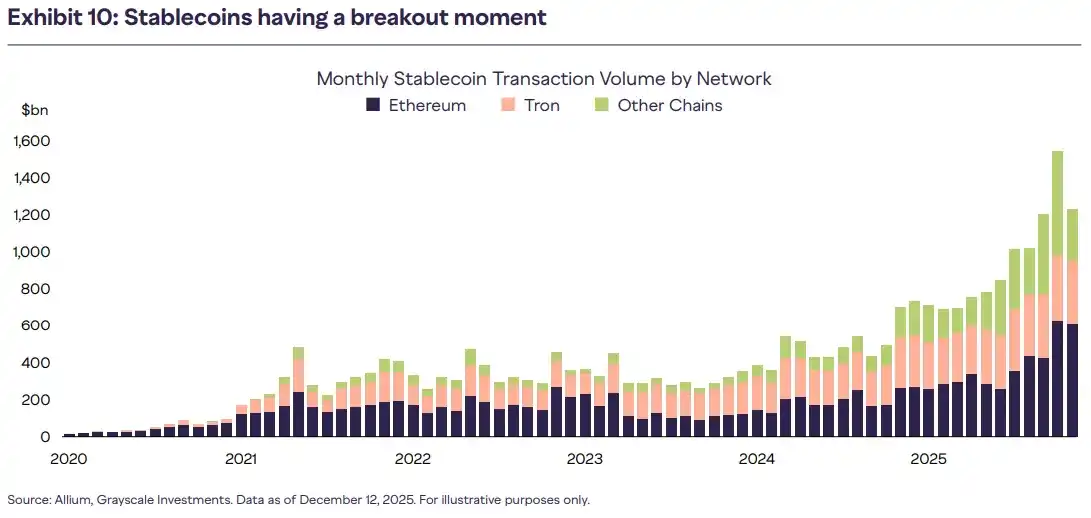
2. Stablecoins Shift from Crypto Tool to Global Payment Rail:

  • Regulatory frameworks like US GENIUS Act, EU MiCA provide green lights.
  • After Stripe acquires Bridge, businesses can integrate stablecoin payments directly via API.
  • Stablecoin market cap moves from $200B towards $500B.

3. Tokenization Explosion:

  • Private credit, tokenized treasuries dominate the market.
  • On-chain products offer faster settlement, lower cost, global distribution.
  • RWA (Real World Asset) market cap expected to突破 $50 billion in 2026.

4. Value Capture Era:

  • Apps like Hyperliquid use revenue to buy back/burn tokens.
  • Tokens upgrade from "governance tools" to "equity-like assets".
  • Cash flow and fundamentals become core valuation metrics.

Institutional Dominance and Disappearing Retail FOMO

CoinShares points out that 2025 BTC ETF inflows exceeded $90 billion, showing institutional mainstreaming is irreversible. Meanwhile, retail FOMO sentiment has significantly weakened due to past trauma, narrative fatigue, and regulatory uncertainty. Retail capital chooses to观望 or is limited to mainstream assets like BTC.

2026 Price Scenario Predictions

CoinShares provides three scenarios based on macro environment:

  • Soft Landing (Base Case): BTC突破 $150,000, ETH follows limitedly, quasi-institutional altcoins rise moderately.
  • Stable Growth: BTC maintains in $110,000-$140,000 range, market volatility decreases.
  • Stagflation/Recession: Short-term pressure but medium-term recovery, BTC's "digital gold" attributes highlighted.

Core Predictions:

  • BTC's dominance rises further to over 65% (currently 59-60%).
  • Institutions dominate pricing power, retail influence marginalized.
  • Liquidity concentrates towards utility projects; only projects with "real users + real revenue + compliance path" win.
  • 90% of existing altcoins will be eliminated, market completes "natural selection".

Ultimate Judgment: CoinShares believes 2026 is not about digital assets "challenging" traditional finance, but becoming part of mainstream finance. Utility wins, hybrid finance defines the future, the crypto market will transform from "disruptor" to "integrator".

IV. Core Question: Has the Four-Year Cycle Really Ended?

4.1 The Nature of the Cycle: From "Supply-Driven" to "Demand-Driven"

The past four-year cycle was essentially a supply-driven model:

Classic Transmission of Halving Effect: BTC halving → Miner selling pressure reduces → Supply contracts → Price rises → Triggers FOMO → Retail floods in → Capital spills over to ETH → Spills over further to altcoins.

Cyclical Entry of New Capital: Each bull market had new capital sources (2017 ICO retail, 2021 DeFi/NFT players & pandemic money printing潮), this capital followed the natural flow path "BTC→ETH→altcoins".

2025 Structural Change: Demand-Side Restructuring

However, in 2025, the demand side changed fundamentally:

  • Institutional Capital's "Directed Demand": Only buys BTC, not altcoins, preventing capital "spillover".
  • Retail FOMO's "Permanent Absence": After the 2022 crash, retail lost confidence in altcoins, dare not chase even as BTC hits new highs.
  • Solidification of Liquidity Tiers: The liquidity pools of BTC, ETH, and altcoins are彻底割裂 split, capital cannot flow freely as before.

Conclusion: The "halving → BTC rise → altcoin rotation" logic of the four-year cycle hasn't ended, but its transmission mechanism has been interrupted by institutionalization. Future cycles might be "lame bull markets" of "BTC rises alone → ETH barely follows → altcoins continue to languish".

4.2 Do Altcoins Have a Future?

The answer is: Most altcoins have no future, but a few sectors still have room to survive.

Altcoin Types With No Future

  • High FDV Low Float VC Coins: Inherently flawed economic model, retail is always the bag holder.
  • Meme Coins with No Practical Use: Except for a few "cultural symbols" (like DOGE, SHIB), most will go to zero.
  • Homogeneous Layer 1/Layer 2: The market only needs 3-5 major公链 (ETH, Solana, BNB Chain, etc.), the rest are "zombie chains".

The crypto market in 2025 is undergoing a painful but necessary "rite of passage"—transitioning from a retail-dominated casino to an institution-dominated asset allocation market.

Bitcoin's "never-setting sun" is not a victory for crypto, but the "taming" of crypto by traditional finance. When BTC becomes a "shadow of US tech stocks", it gains liquidity and compliance, but loses its original intention of "decentralized money". This is progress, but also compromise.

The altcoins' "twilight of the gods" is not an end, but the eve of rebirth. When the bubble bursts and bad coins are purged, truly valuable projects will rise from the ashes. History always rhymes—every bubble破裂孕育 the seeds of the next era.

The four-year cycle has not ended; it has merely changed its face. Future bull markets may no longer be a狂欢 of "all coins rising together", but a残酷竞赛 of "the strong get stronger, the weak get eliminated". In this race, those who understand the new rules, embrace institutionalization, and adhere to value investing will have the last laugh.

Data for this report was compiled and edited by WolfDAO. Please contact us if you have any questions for updates;

Author: Nikka / WolfDAO( X : @10xWolfdao )

Domande pertinenti

QWhat is the main reason for the unprecedented divergence between Bitcoin and altcoins in 2025 according to the article?

AThe main reason is the structural shift driven by institutionalization, particularly the approval of spot Bitcoin ETFs. This created a 'one-way siphon effect' where institutional capital from traditional asset managers like BlackRock and Fidelity flowed almost exclusively into Bitcoin, with less than 5% spilling over into ETH or altcoins. This broke the traditional cycle where Bitcoin's gains would overflow into the broader crypto market.

QHow did the article describe the change in Bitcoin's correlation and its new perceived role in the market?

AThe article states that Bitcoin's 30-day correlation with the Nasdaq 100 index reached a historically high range of 0.75-0.85, while its correlation with gold fell below 0.2. This signifies a fundamental转变: Bitcoin is no longer perceived as 'digital gold' (a safe-haven asset) but has instead become a 'digital tech stock' (a risk-on asset), with its pricing power shifting from crypto natives to Wall Street fund managers.

QWhat two major themes did Grayscale's 2026 outlook report identify as drivers for the structural shift in digital asset investing?

AGrayscale's report identified two major themes: 1) Macro demand for alternative store-of-value assets, driven by ongoing fiscal imbalances, inflation risks, and global money supply growth, boosting demand for scarce digital commodities like BTC and ETH. 2) Increasing regulatory clarity, with expectations for more countries approving crypto ETPs and potential bipartisan market structure legislation in the U.S., further integrating blockchain finance.

QAccording to the article, what is the 'vampire attack' problem facing Ethereum (ETH)?

AThe 'vampire attack' refers to the problem where the success of Layer 2 networks (like Arbitrum, Optimism) does not fully benefit ETH's value. Users on L2s pay transaction fees in the L2's native token or stablecoins, not ETH. This creates a structural decoupling: the more successful the L2 ecosystems become, the lower the direct demand for ETH itself, as economic activity is siphoned away from the mainnet.

QWhat concept did CoinShares introduce in its 2026 outlook, and what does it represent?

ACoinShares introduced the concept of 'Hybrid Finance' (HyFi). It represents the deep integration of public blockchains with traditional financial systems, creating new infrastructure that neither could build alone. This convergence involves traditional institutions building on public chains (e.g., BlackRock's on-chain money market fund), stablecoins becoming global payment rail, the explosion of tokenization (e.g., real-world assets), and a new era of value capture where tokens are valued based on cash flows and fundamentals.

Letture associate

Trading

Spot
Futures

Articoli Popolari

Cosa è $S$

Comprendere SPERO: Una Panoramica Completa Introduzione a SPERO Mentre il panorama dell'innovazione continua a evolversi, l'emergere delle tecnologie web3 e dei progetti di criptovaluta gioca un ruolo fondamentale nel plasmare il futuro digitale. Un progetto che ha attirato l'attenzione in questo campo dinamico è SPERO, denotato come SPERO,$$s$. Questo articolo mira a raccogliere e presentare informazioni dettagliate su SPERO, per aiutare gli appassionati e gli investitori a comprendere le sue basi, obiettivi e innovazioni nei domini web3 e crypto. Che cos'è SPERO,$$s$? SPERO,$$s$ è un progetto unico all'interno dello spazio crypto che cerca di sfruttare i principi della decentralizzazione e della tecnologia blockchain per creare un ecosistema che promuove l'impegno, l'utilità e l'inclusione finanziaria. Il progetto è progettato per facilitare interazioni peer-to-peer in modi nuovi, fornendo agli utenti soluzioni e servizi finanziari innovativi. Al suo interno, SPERO,$$s$ mira a responsabilizzare gli individui fornendo strumenti e piattaforme che migliorano l'esperienza dell'utente nello spazio delle criptovalute. Questo include la possibilità di metodi di transazione più flessibili, la promozione di iniziative guidate dalla comunità e la creazione di percorsi per opportunità finanziarie attraverso applicazioni decentralizzate (dApps). La visione sottostante di SPERO,$$s$ ruota attorno all'inclusività, cercando di colmare le lacune all'interno della finanza tradizionale mentre sfrutta i vantaggi della tecnologia blockchain. Chi è il Creatore di SPERO,$$s$? L'identità del creatore di SPERO,$$s$ rimane piuttosto oscura, poiché ci sono risorse pubblicamente disponibili limitate che forniscono informazioni dettagliate sul suo fondatore o fondatori. Questa mancanza di trasparenza può derivare dall'impegno del progetto per la decentralizzazione—un ethos che molti progetti web3 condividono, dando priorità ai contributi collettivi rispetto al riconoscimento individuale. Centrando le discussioni attorno alla comunità e ai suoi obiettivi collettivi, SPERO,$$s$ incarna l'essenza dell'empowerment senza mettere in evidenza individui specifici. Pertanto, comprendere l'etica e la missione di SPERO rimane più importante che identificare un creatore singolo. Chi sono gli Investitori di SPERO,$$s$? SPERO,$$s$ è supportato da una varietà di investitori che vanno dai capitalisti di rischio agli investitori angelici dedicati a promuovere l'innovazione nel settore crypto. Il focus di questi investitori generalmente si allinea con la missione di SPERO—dando priorità a progetti che promettono avanzamenti tecnologici sociali, inclusività finanziaria e governance decentralizzata. Queste fondazioni di investitori sono tipicamente interessate a progetti che non solo offrono prodotti innovativi, ma contribuiscono anche positivamente alla comunità blockchain e ai suoi ecosistemi. Il supporto di questi investitori rafforza SPERO,$$s$ come un concorrente degno di nota nel dominio in rapida evoluzione dei progetti crypto. Come Funziona SPERO,$$s$? SPERO,$$s$ impiega un framework multifunzionale che lo distingue dai progetti di criptovaluta convenzionali. Ecco alcune delle caratteristiche chiave che sottolineano la sua unicità e innovazione: Governance Decentralizzata: SPERO,$$s$ integra modelli di governance decentralizzati, responsabilizzando gli utenti a partecipare attivamente ai processi decisionali riguardanti il futuro del progetto. Questo approccio favorisce un senso di proprietà e responsabilità tra i membri della comunità. Utilità del Token: SPERO,$$s$ utilizza il proprio token di criptovaluta, progettato per servire varie funzioni all'interno dell'ecosistema. Questi token abilitano transazioni, premi e la facilitazione dei servizi offerti sulla piattaforma, migliorando l'impegno e l'utilità complessivi. Architettura Stratificata: L'architettura tecnica di SPERO,$$s$ supporta la modularità e la scalabilità, consentendo un'integrazione fluida di funzionalità e applicazioni aggiuntive man mano che il progetto evolve. Questa adattabilità è fondamentale per mantenere la rilevanza nel panorama crypto in continua evoluzione. Coinvolgimento della Comunità: Il progetto enfatizza iniziative guidate dalla comunità, impiegando meccanismi che incentivano la collaborazione e il feedback. Nutrendo una comunità forte, SPERO,$$s$ può affrontare meglio le esigenze degli utenti e adattarsi alle tendenze di mercato. Focus sull'Inclusione: Offrendo basse commissioni di transazione e interfacce user-friendly, SPERO,$$s$ mira ad attrarre una base utenti diversificata, inclusi individui che potrebbero non aver precedentemente interagito nello spazio crypto. Questo impegno per l'inclusione si allinea con la sua missione generale di empowerment attraverso l'accessibilità. Cronologia di SPERO,$$s$ Comprendere la storia di un progetto fornisce preziose intuizioni sulla sua traiettoria di sviluppo e sui traguardi. Di seguito è riportata una cronologia suggerita che mappa eventi significativi nell'evoluzione di SPERO,$$s$: Fase di Concettualizzazione e Ideazione: Le idee iniziali che formano la base di SPERO,$$s$ sono state concepite, allineandosi strettamente con i principi di decentralizzazione e focus sulla comunità all'interno dell'industria blockchain. Lancio del Whitepaper del Progetto: Dopo la fase concettuale, è stato rilasciato un whitepaper completo che dettaglia la visione, gli obiettivi e l'infrastruttura tecnologica di SPERO,$$s$ per suscitare interesse e feedback dalla comunità. Costruzione della Comunità e Prime Interazioni: Sono stati effettuati sforzi attivi di outreach per costruire una comunità di early adopters e potenziali investitori, facilitando discussioni attorno agli obiettivi del progetto e ottenendo supporto. Evento di Generazione del Token: SPERO,$$s$ ha condotto un evento di generazione del token (TGE) per distribuire i propri token nativi ai primi sostenitori e stabilire una liquidità iniziale all'interno dell'ecosistema. Lancio della Prima dApp: La prima applicazione decentralizzata (dApp) associata a SPERO,$$s$ è stata attivata, consentendo agli utenti di interagire con le funzionalità principali della piattaforma. Sviluppo Continuo e Partnership: Aggiornamenti e miglioramenti continui alle offerte del progetto, inclusi partnership strategiche con altri attori nello spazio blockchain, hanno plasmato SPERO,$$s$ in un concorrente competitivo e in evoluzione nel mercato crypto. Conclusione SPERO,$$s$ rappresenta una testimonianza del potenziale del web3 e delle criptovalute di rivoluzionare i sistemi finanziari e responsabilizzare gli individui. Con un impegno per la governance decentralizzata, il coinvolgimento della comunità e funzionalità progettate in modo innovativo, apre la strada verso un panorama finanziario più inclusivo. Come per qualsiasi investimento nello spazio crypto in rapida evoluzione, si incoraggiano potenziali investitori e utenti a ricercare approfonditamente e a impegnarsi in modo riflessivo con gli sviluppi in corso all'interno di SPERO,$$s$. Il progetto mostra lo spirito innovativo dell'industria crypto, invitando a ulteriori esplorazioni delle sue innumerevoli possibilità. Mentre il percorso di SPERO,$$s$ è ancora in fase di sviluppo, i suoi principi fondamentali potrebbero effettivamente influenzare il futuro di come interagiamo con la tecnologia, la finanza e tra di noi in ecosistemi digitali interconnessi.

75 Totale visualizzazioniPubblicato il 2024.12.17Aggiornato il 2024.12.17

Cosa è $S$

Cosa è AGENT S

Agent S: Il Futuro dell'Interazione Autonoma in Web3 Introduzione Nel panorama in continua evoluzione di Web3 e criptovalute, le innovazioni stanno costantemente ridefinendo il modo in cui gli individui interagiscono con le piattaforme digitali. Uno di questi progetti pionieristici, Agent S, promette di rivoluzionare l'interazione uomo-computer attraverso il suo framework agentico aperto. Aprendo la strada a interazioni autonome, Agent S mira a semplificare compiti complessi, offrendo applicazioni trasformative nell'intelligenza artificiale (AI). Questa esplorazione dettagliata approfondirà le complessità del progetto, le sue caratteristiche uniche e le implicazioni per il dominio delle criptovalute. Cos'è Agent S? Agent S si presenta come un innovativo framework agentico aperto, progettato specificamente per affrontare tre sfide fondamentali nell'automazione dei compiti informatici: Acquisizione di Conoscenze Specifiche del Dominio: Il framework apprende in modo intelligente da varie fonti di conoscenza esterne ed esperienze interne. Questo approccio duale gli consente di costruire un ricco repository di conoscenze specifiche del dominio, migliorando le sue prestazioni nell'esecuzione dei compiti. Pianificazione su Lungo Orizzonte di Compiti: Agent S impiega una pianificazione gerarchica potenziata dall'esperienza, un approccio strategico che facilita la suddivisione e l'esecuzione efficiente di compiti complessi. Questa caratteristica migliora significativamente la sua capacità di gestire più sottocompiti in modo efficiente ed efficace. Gestione di Interfacce Dinamiche e Non Uniformi: Il progetto introduce l'Interfaccia Agente-Computer (ACI), una soluzione innovativa che migliora l'interazione tra agenti e utenti. Utilizzando Modelli Linguistici Multimodali di Grandi Dimensioni (MLLM), Agent S può navigare e manipolare senza sforzo diverse interfacce grafiche utente. Attraverso queste caratteristiche pionieristiche, Agent S fornisce un framework robusto che affronta le complessità coinvolte nell'automazione dell'interazione umana con le macchine, preparando il terreno per innumerevoli applicazioni nell'AI e oltre. Chi è il Creatore di Agent S? Sebbene il concetto di Agent S sia fondamentalmente innovativo, informazioni specifiche sul suo creatore rimangono elusive. Il creatore è attualmente sconosciuto, il che evidenzia sia la fase embrionale del progetto sia la scelta strategica di mantenere i membri fondatori sotto anonimato. Indipendentemente dall'anonimato, l'attenzione rimane sulle capacità e sul potenziale del framework. Chi sono gli Investitori di Agent S? Poiché Agent S è relativamente nuovo nell'ecosistema crittografico, informazioni dettagliate riguardanti i suoi investitori e sostenitori finanziari non sono documentate esplicitamente. La mancanza di approfondimenti pubblicamente disponibili sulle fondazioni di investimento o sulle organizzazioni che supportano il progetto solleva interrogativi sulla sua struttura di finanziamento e sulla roadmap di sviluppo. Comprendere il supporto è cruciale per valutare la sostenibilità del progetto e il suo potenziale impatto sul mercato. Come Funziona Agent S? Al centro di Agent S si trova una tecnologia all'avanguardia che gli consente di funzionare efficacemente in contesti diversi. Il suo modello operativo è costruito attorno a diverse caratteristiche chiave: Interazione Uomo-Computer Simile a Quella Umana: Il framework offre una pianificazione AI avanzata, cercando di rendere le interazioni con i computer più intuitive. Mimando il comportamento umano nell'esecuzione dei compiti, promette di elevare le esperienze degli utenti. Memoria Narrativa: Utilizzata per sfruttare esperienze di alto livello, Agent S utilizza la memoria narrativa per tenere traccia delle storie dei compiti, migliorando così i suoi processi decisionali. Memoria Episodica: Questa caratteristica fornisce agli utenti una guida passo-passo, consentendo al framework di offrire supporto contestuale mentre i compiti si sviluppano. Supporto per OpenACI: Con la capacità di funzionare localmente, Agent S consente agli utenti di mantenere il controllo sulle proprie interazioni e flussi di lavoro, allineandosi con l'etica decentralizzata di Web3. Facile Integrazione con API Esterne: La sua versatilità e compatibilità con varie piattaforme AI garantiscono che Agent S possa adattarsi senza problemi agli ecosistemi tecnologici esistenti, rendendolo una scelta attraente per sviluppatori e organizzazioni. Queste funzionalità contribuiscono collettivamente alla posizione unica di Agent S all'interno dello spazio crittografico, poiché automatizza compiti complessi e multi-fase con un intervento umano minimo. Man mano che il progetto evolve, le sue potenziali applicazioni in Web3 potrebbero ridefinire il modo in cui si svolgono le interazioni digitali. Cronologia di Agent S Lo sviluppo e le tappe di Agent S possono essere riassunti in una cronologia che evidenzia i suoi eventi significativi: 27 Settembre 2024: Il concetto di Agent S è stato lanciato in un documento di ricerca completo intitolato “Un Framework Agentico Aperto che Usa i Computer Come un Umano”, mostrando le basi per il progetto. 10 Ottobre 2024: Il documento di ricerca è stato reso pubblicamente disponibile su arXiv, offrendo un'esplorazione approfondita del framework e della sua valutazione delle prestazioni basata sul benchmark OSWorld. 12 Ottobre 2024: È stata rilasciata una presentazione video, fornendo un'idea visiva delle capacità e delle caratteristiche di Agent S, coinvolgendo ulteriormente potenziali utenti e investitori. Questi indicatori nella cronologia non solo illustrano i progressi di Agent S, ma indicano anche il suo impegno per la trasparenza e il coinvolgimento della comunità. Punti Chiave su Agent S Man mano che il framework Agent S continua a evolversi, diversi attributi chiave si distinguono, sottolineando la sua natura innovativa e il potenziale: Framework Innovativo: Progettato per fornire un uso intuitivo dei computer simile all'interazione umana, Agent S porta un approccio nuovo all'automazione dei compiti. Interazione Autonoma: La capacità di interagire autonomamente con i computer attraverso GUI segna un passo avanti verso soluzioni informatiche più intelligenti ed efficienti. Automazione di Compiti Complessi: Con la sua metodologia robusta, può automatizzare compiti complessi e multi-fase, rendendo i processi più veloci e meno soggetti a errori. Miglioramento Continuo: I meccanismi di apprendimento consentono ad Agent S di migliorare dalle esperienze passate, migliorando continuamente le sue prestazioni e la sua efficacia. Versatilità: La sua adattabilità attraverso diversi ambienti operativi come OSWorld e WindowsAgentArena garantisce che possa servire un'ampia gamma di applicazioni. Man mano che Agent S si posiziona nel panorama di Web3 e delle criptovalute, il suo potenziale per migliorare le capacità di interazione e automatizzare i processi segna un significativo avanzamento nelle tecnologie AI. Attraverso il suo framework innovativo, Agent S esemplifica il futuro delle interazioni digitali, promettendo un'esperienza più fluida ed efficiente per gli utenti in vari settori. Conclusione Agent S rappresenta un audace passo avanti nell'unione tra AI e Web3, con la capacità di ridefinire il modo in cui interagiamo con la tecnologia. Sebbene sia ancora nelle sue fasi iniziali, le possibilità per la sua applicazione sono vaste e coinvolgenti. Attraverso il suo framework completo che affronta sfide critiche, Agent S mira a portare le interazioni autonome al centro dell'esperienza digitale. Man mano che ci addentriamo nei regni delle criptovalute e della decentralizzazione, progetti come Agent S giocheranno senza dubbio un ruolo cruciale nel plasmare il futuro della tecnologia e della collaborazione uomo-computer.

422 Totale visualizzazioniPubblicato il 2025.01.14Aggiornato il 2025.01.14

Cosa è AGENT S

Come comprare S

Benvenuto in HTX.com! Abbiamo reso l'acquisto di Sonic (S) semplice e conveniente. Segui la nostra guida passo passo per intraprendere il tuo viaggio nel mondo delle criptovalute.Step 1: Crea il tuo Account HTXUsa la tua email o numero di telefono per registrarti il tuo account gratuito su HTX. Vivi un'esperienza facile e sblocca tutte le funzionalità,Crea il mio accountStep 2: Vai in Acquista crypto e seleziona il tuo metodo di pagamentoCarta di credito/debito: utilizza la tua Visa o Mastercard per acquistare immediatamente SonicS.Bilancio: Usa i fondi dal bilancio del tuo account HTX per fare trading senza problemi.Terze parti: abbiamo aggiunto metodi di pagamento molto utilizzati come Google Pay e Apple Pay per maggiore comodità.P2P: Fai trading direttamente con altri utenti HTX.Over-the-Counter (OTC): Offriamo servizi su misura e tassi di cambio competitivi per i trader.Step 3: Conserva Sonic (S)Dopo aver acquistato Sonic (S), conserva nel tuo account HTX. In alternativa, puoi inviare tramite trasferimento blockchain o scambiare per altre criptovalute.Step 4: Scambia Sonic (S)Scambia facilmente Sonic (S) nel mercato spot di HTX. Accedi al tuo account, seleziona la tua coppia di trading, esegui le tue operazioni e monitora in tempo reale. Offriamo un'esperienza user-friendly sia per chi ha appena iniziato che per i trader più esperti.

838 Totale visualizzazioniPubblicato il 2025.01.15Aggiornato il 2025.03.21

Come comprare S

Discussioni

Benvenuto nella Community HTX. Qui puoi rimanere informato sugli ultimi sviluppi della piattaforma e accedere ad approfondimenti esperti sul mercato. Le opinioni degli utenti sul prezzo di S S sono presentate come di seguito.

活动图片














