Bitcoin's $78,000 Life-or-Death 48 Hours: $6.4 Billion Options Expiry, Nvidia Earnings, Warsh's Jackson Hole Debut Catalyze Market

marsbitPubblicato 2026-08-27Pubblicato ultima volta 2026-08-27

Introduzione

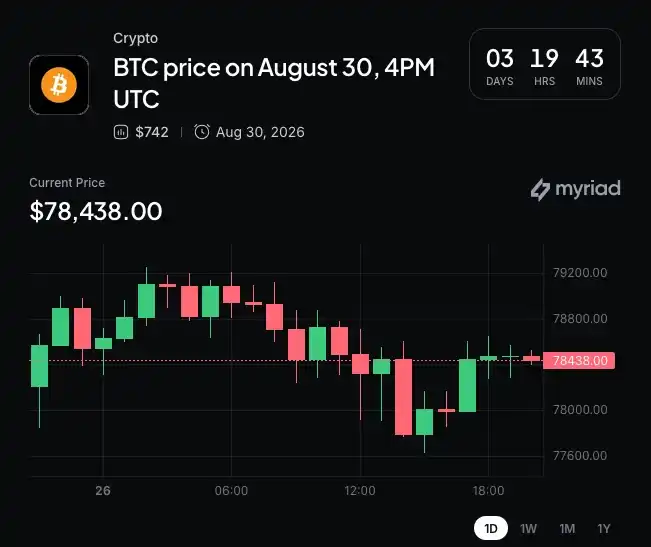
Bitcoin faces a critical 48-hour period after retreating from above $81,000 following hotter-than-expected PCE inflation data, now stabilizing near $78,000. Five key catalysts are converging to influence price: 1) Economic data showing sticky inflation and resilient GDP growth reinforcing "higher-for-longer" rate expectations, which pressure risk assets like Bitcoin. 2) Approximately $6.4 billion in Bitcoin options expiring Friday on Deribit, with a "max pain" price near $78,000; settlement-related hedging flows could amplify volatility. 3) Nvidia's earnings report, serving as a barometer for AI/tech sentiment, to which Bitcoin's recent rally has been closely tied. 4) New Fed Chair Kevin Warsh's first major policy speech at Jackson Hole, where his tone on inflation and the labor market could significantly shift rate expectations ahead of the September FOMC meeting. 5) Spot Bitcoin ETF flows, a clean signal of institutional demand, which saw strong inflows last week alongside declining exchange reserves, contributing to a short squeeze. Together, these factors make this window one of the most decisive for Bitcoin this year.

Author: Jose Antonio Lanz, Decrypt

Compiled by: Shenchao TechFlow

Shenchao Introduction: Bitcoin faces its first real test after a sharp rally: after briefly topping $81,000, a hotter-than-expected inflation report erased roughly $3,000 from its price within hours. The real challenge now is "timing"—over the next 48 hours, economic data, a massive options expiry, the new Fed Chair's first major speech, Nvidia's earnings, and the interest rate decision three weeks later will all converge. Each variable is pulling a different lever on Bitcoin's price, making this window one of the most decisive moments of the year.
Inflation & GDP: Higher-for-Longer Pressures Risk Assets

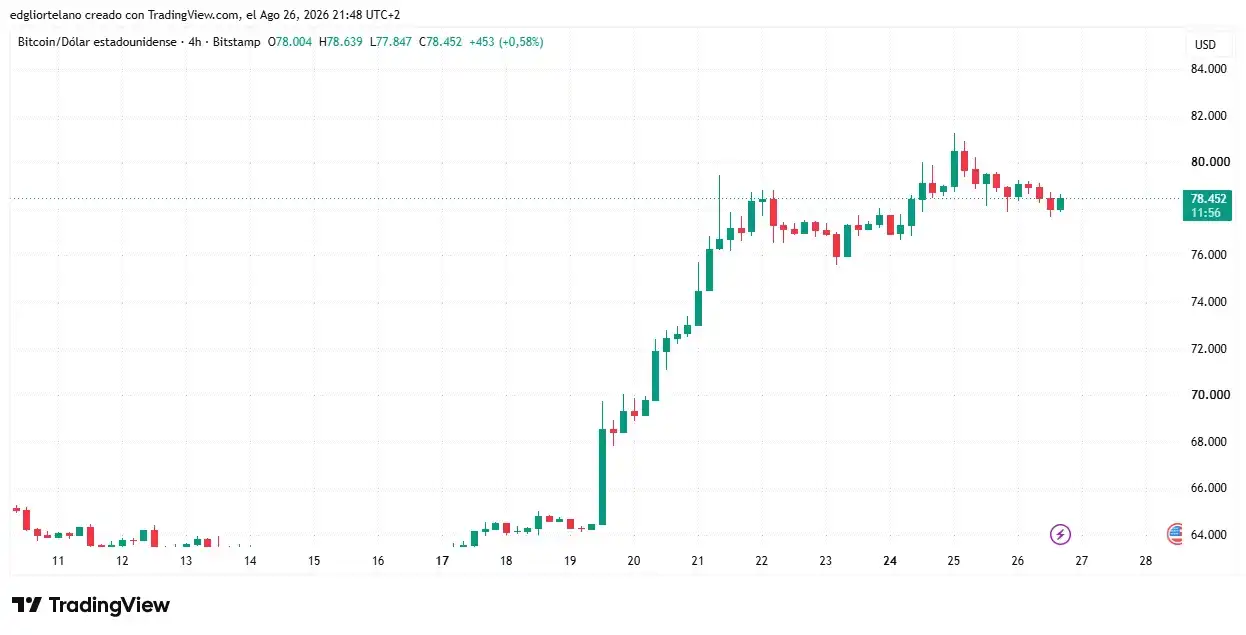
Bitcoin has stabilized around $78,000 after a rally that briefly broke above $81,000 was interrupted—by a hot inflation report. That single data point erased about $3,000 from Bitcoin's price within hours, reminding the market how quickly sentiment can reverse when positions are so crowded.

For crypto traders, the bigger issue now might be "timing." Over the next 48 hours, five catalysts will layer on top of each other: economic data, a huge options expiry, the new Fed Chair's first major speech, Nvidia earnings, and the interest rate decision that won't land for another three weeks.

Each one pulls a different lever on Bitcoin's price. Combined, they make this period one of the most influential windows for Bitcoin this year. Here's why each catalyst matters for market sentiment and fundamentals.

The two most watched data releases this week arrived early Wednesday. The July Personal Consumption Expenditures (PCE) report—the Fed's preferred inflation gauge—showed prices rose 3.7% year-over-year, above the 3.6% consensus; core PCE was flat at 3.3% as expected.

The government's second estimate of Q2 GDP showed annualized growth of 1.5%, with consumer spending revised upward to be stronger than the initial reading.

PCE matters more than other inflation gauges because it's the yardstick the Fed anchors its 2% target to, not the more commonly cited CPI. A hot reading leaves policymakers with fewer reasons to cut rates; GDP data showing resilient consumption also removes any argument that "the economy urgently needs support."

This combination weighed on Bitcoin on Wednesday. Higher-for-longer rate expectations tend to boost the dollar and raise bond yields, both of which pull capital away from non-yielding assets. Bitcoin fell from above $81,000 to below $78,000 within hours of the data release.
$6.4 Billion Options Expiry on Friday

This Friday, roughly $6.4 billion worth of Bitcoin options contracts are set to expire on derivatives exchange Deribit—the same day as the Jackson Hole keynote. Traders are eyeing a price level known as "max pain"—the strike price at which the vast majority of contracts expire worthless—which currently sits around $78,000, below Bitcoin's current price.
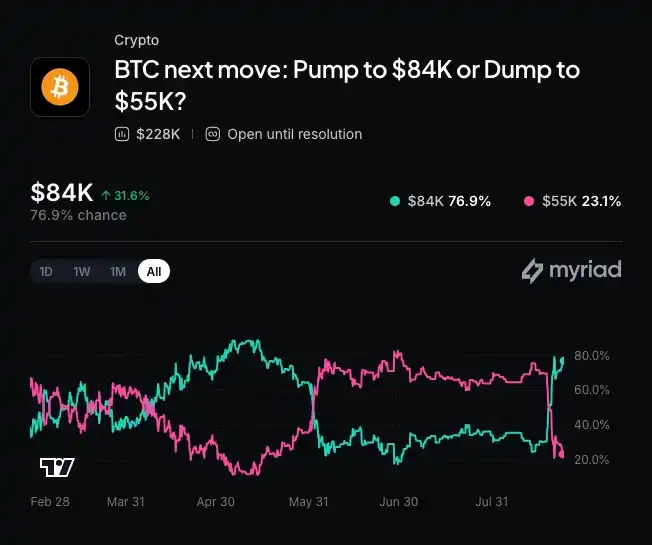
An expiry of this size matters because the institutions that sold these options must buy or sell actual Bitcoin to hedge their exposure as the price moves; a $6.4 billion book can move the market on hedging flows alone, independent of any news. The larger the gap between the spot price and max pain, the more intense hedging activity tends to be as settlement approaches.

If Bitcoin remains significantly above max pain by Friday, market makers who sold call options may need to keep buying the underlying asset to maintain their hedge, adding upward pressure to the price. If the price gets pulled toward the $68,000 range, this dynamic reverses—and with an expiry of this size, position unwinding tends to amplify volatility in either direction.

Nvidia Earnings: A Barometer for the AI Narrative

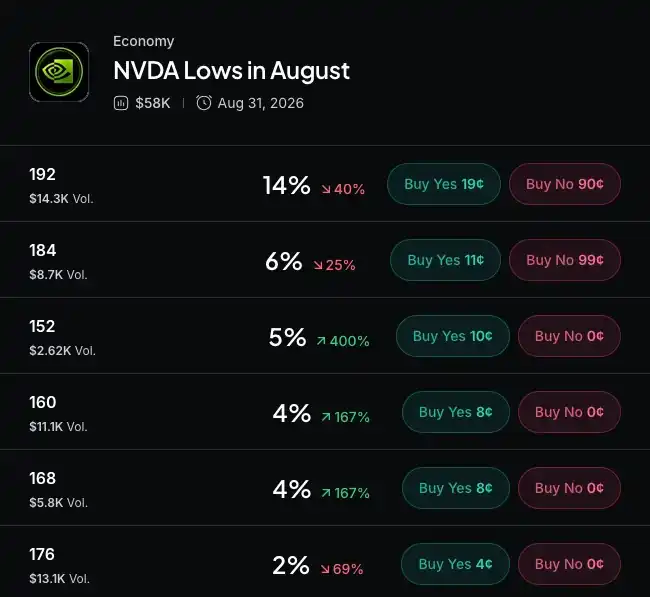
Nvidia reports Q2 earnings after the close on Wednesday, with Wall Street expecting revenue around $92.3 billion. The company matters to crypto traders because it's the clearest barometer for "how much capital is still flowing into AI infrastructure"; this year's Bitcoin rally has danced more to the tune of AI stock sentiment than as an independent move.

When investors are confident in tech earnings, they tend to add exposure across the risk curve, including crypto assets. Remember, AI/tech stocks are currently pulling the S&P 500 higher but are also in a high-risk sentiment zone that conservative traders are unwilling to touch.

Strong beats and confident guidance could pull more capital into broad risk assets and extend Wednesday's dip-buying into Bitcoin; disappointing results or cautious guidance on AI spending would do the opposite. Given their high correlation this year, tech stocks and crypto could fall together.
Warsh's Jackson Hole Debut: How the New Chair Sets the Tone

Kevin Warsh, who took over as Fed Chair in May, will deliver his first keynote speech at the Fed's Jackson Hole symposium on Friday. His remarks come just three weeks before the September 16 interest rate decision, where policymakers will also release updated economic projections (as reported by Decrypt).

This is the market's first chance to hear how a new Chair actually "talks policy," not just what the data says. Traders will parse both wording and tone—a single line about inflation risks or labor market weakness can swing rate expectations for weeks.

A dovish tone, downplaying the hot PCE and leaning into softer labor markets, could push yields and the dollar lower—the same mix that ignited this month's rally earlier. A hawkish tone, hammering inflation risks, would do the opposite, extending Wednesday's pullback into the weekend.

Futures pricing has swung wildly over the past month. The CME FedWatch tool, which translates bond market bets into implied odds for rate decisions, currently shows a 38.4% chance of a rate hike in September, down from 82% a month ago, with 61.6% leaning toward "no change."

ETF Flows: A Real-Time Signal of Institutional Demand

U.S. spot Bitcoin and Ethereum ETFs attracted $2.6 billion last week, their best weekly performance since October 2025, though much of the growth came from rising prices of held assets rather than net new inflows.

ETF flows are the cleanest real-time signal of institutional demand, independent of retail trading or derivatives speculation. The shrinking supply on exchanges is another metric worth tracking simultaneously, as it means fewer coins are available to sell, making prices more sensitive to both buying and selling pressure than a deeper market.
This scarcity helped fuel a short squeeze last week: traders betting on a drop were forced to cover their positions, wiping out roughly $3 billion in short positions in a single day.

If ETFs continue to see net inflows while exchange supply keeps shrinking, the same mechanism can push prices higher with relatively modest buying pressure; a shift to sustained net outflows, however, would see that support vanish just as quickly.

Domande pertinenti

QAccording to the article, what specific inflation report caused Bitcoin's price to drop approximately $3,000, and why is this report significant?

AThe specific report was the July Personal Consumption Expenditures (PCE) report. It is significant because the PCE is the Federal Reserve's preferred inflation gauge when targeting its 2% goal. A hotter-than-expected reading (3.7% vs. 3.6% expected) gave policymakers fewer reasons to cut interest rates, leading to a stronger dollar and higher bond yields, which pressured assets like Bitcoin.

QWhat is the 'max pain' price level mentioned regarding the $6.4 billion Bitcoin options expiry, and what potential market impact does this expiry have?

AThe 'max pain' price level for the $6.4 billion Bitcoin options expiry is around $78,000. This large-scale expiry is significant because institutions that sold these options must buy or sell actual Bitcoin to hedge their positions as the price moves. This hedging activity can independently move the market. The larger the gap between the spot price and the max pain price, the more intense the hedging tends to be near settlement, potentially amplifying price volatility in either direction.

QWhy does the article state that Nvidia's earnings report is important for cryptocurrency traders?

ANvidia's earnings report is important for cryptocurrency traders because it serves as a key barometer for capital flowing into AI infrastructure. The article notes that Bitcoin's rally this year has moved more in sync with the sentiment of AI/tech stocks rather than on its own. Strong earnings and confident guidance could pull more capital into risk assets, including cryptocurrencies. Conversely, disappointing results could cause both tech stocks and crypto assets to decline together due to their high correlation this year.

QWhat is the significance of Federal Reserve Chair Kevin Warsh's upcoming speech at Jackson Hole, according to the article?

AKevin Warsh's speech at Jackson Hole is significant as it will be his first major policy speech as the new Fed Chair. It provides the market's first opportunity to hear directly how he discusses policy, not just what the data shows. His tone and specific remarks on inflation risks or labor market weakness could sway interest rate expectations for weeks. A dovish tone could lower yields and the dollar, supporting Bitcoin, while a hawkish tone focused on inflation risks could extend market declines.

QHow do US spot Bitcoin ETF flows act as a signal for the market, and what other related metric is mentioned as important to track alongside them?

AUS spot Bitcoin ETF flows act as the cleanest real-time signal of institutional demand, separate from retail trading or derivatives speculation. The article mentions that tracking the contraction of exchange supply is another important metric to follow simultaneously. A decrease in supply on exchanges means fewer coins are available to sell, making prices more sensitive to both buying and selling pressure compared to a deeper market. Sustained ETF inflows coupled with shrinking exchange supply can amplify price increases with relatively modest buying.

Letture associate

DeFi Wasn't Built for You. It Was Built for AI.

Summary of "DeFi Wasn't Built for You. It Was Built for AI." Most people's experience with DeFi—abandoned wallets, complex apps, and high fees—feels like a failed promise to replace banks. But what if DeFi was never meant for humans? The real user is the coming agent economy: billions of AI agents performing real economic work and transacting at machine speed. The existing financial system cannot handle this scale. DeFi's requirements—24/7 monitoring, instant rebalancing, emotionless execution—are impossible for humans but trivial for software. As Stripe noted, agents will soon handle most internet transactions, needing infrastructure for millions of transactions per second. DeFi, with its permissionless, non-custodial, and always-on smart contracts, is the necessary infrastructure. Its "decentralization" becomes an engineering requirement, not an ideology. Every financial function will be rebuilt on-chain with agents embedded. An agent managing corporate payments will lend idle capital, borrow for opportunities, exchange tokens, and hedge risks—all on-chain. Agents will route transactions to the fastest, cheapest chain, driving fees toward zero. The winning blockchain will settle unprecedented value almost for free. This leads to an economic "singularity," where most transactions are invisible to humans, occurring at speeds that break traditional models. The investment implication is clear: value accrues to the foundational settlement layer. The way to participate is not by outperforming robots but by owning a piece of the infrastructure they require. DeFi's success should be judged not by its utility for people, but by its fit for the machines already operating it.

marsbit12 min fa

DeFi Wasn't Built for You. It Was Built for AI.

marsbit12 min fa

Tokenized deposits could raise US credit costs: Dallas Fed economists

The Dallas Fed economists have released a paper analyzing that tokenized deposits, if widely adopted, may increase credit costs for U.S. households and businesses by making bank funding more volatile and less stable. The core concern is that instant settlement, combined with programmable tokens and AI, could enable depositors to move funds between banks rapidly in search of higher yields, significantly increasing deposits' sensitivity to interest rates. The economists modeled that a 10% increase in this sensitivity could reduce banks' capacity to hold long-term assets by an estimated $700 billion over a 10-year equivalent, while deposits staying 10% less time at banks could reduce it by about $580 billion. These figures represent capacity constraints, not direct lending cuts. The analysis comes as U.S. banks actively develop shared blockchain networks for tokenized deposits, such as the new BankChain Alliance and a network by major banks including JPMorgan. While aimed at keeping funds within the regulated system, the economists warn banks might respond to more volatile funding by holding more liquid assets (like Treasuries) or relying more on wholesale term debt—both of which could raise the cost of credit. They referenced Brazil's Pix system as a comparative case where increased instant payment usage led banks to hold more liquidity and reduce credit intermediation.

cointelegraph17 min fa

Tokenized deposits could raise US credit costs: Dallas Fed economists

cointelegraph17 min fa

Trading

Spot
活动图片