Bitcoin has pushed back above the $92,000 level after several days of steady buying pressure, offering investors a sense of short-term relief following weeks of choppy and directionless price action. The rebound suggests that demand has not fully disappeared, yet the broader technical picture remains unresolved.
Despite the recent strength, BTC is still trading below key structural levels that would normally confirm a sustained continuation of the broader uptrend, keeping market participants cautious about calling a definitive trend shift.
Adding complexity to the outlook, a recent CryptoQuant report by CryptoOnchain highlights a notable divergence in Binance flow data that deserves attention. The analysis compares the average size of Bitcoin deposits and withdrawals on the exchange since October and points to a growing imbalance beneath the surface. On one side, the average inflow size has increased sharply, implying that larger holders are moving more BTC onto exchanges. On the other, average outflows remain subdued, signaling weaker accumulation behavior and limited movement into long-term storage.
This divergence introduces a potential headwind for price, as it suggests that selling capacity is building faster than conviction to hold. While price action has improved in the short term, on-chain flows indicate that the market may still be vulnerable if demand fails to strengthen further.
Bitcoin Whale Flows Signal Rising Supply Risk
The report points to a meaningful shift in how large Bitcoin holders are interacting with exchanges, and the change is not neutral. Data tracking the average size of deposits into Binance shows a sharp jump over recent months. Transactions flowing into the exchange are no longer clustered around smaller sizes; instead, they increasingly reflect much larger transfers.
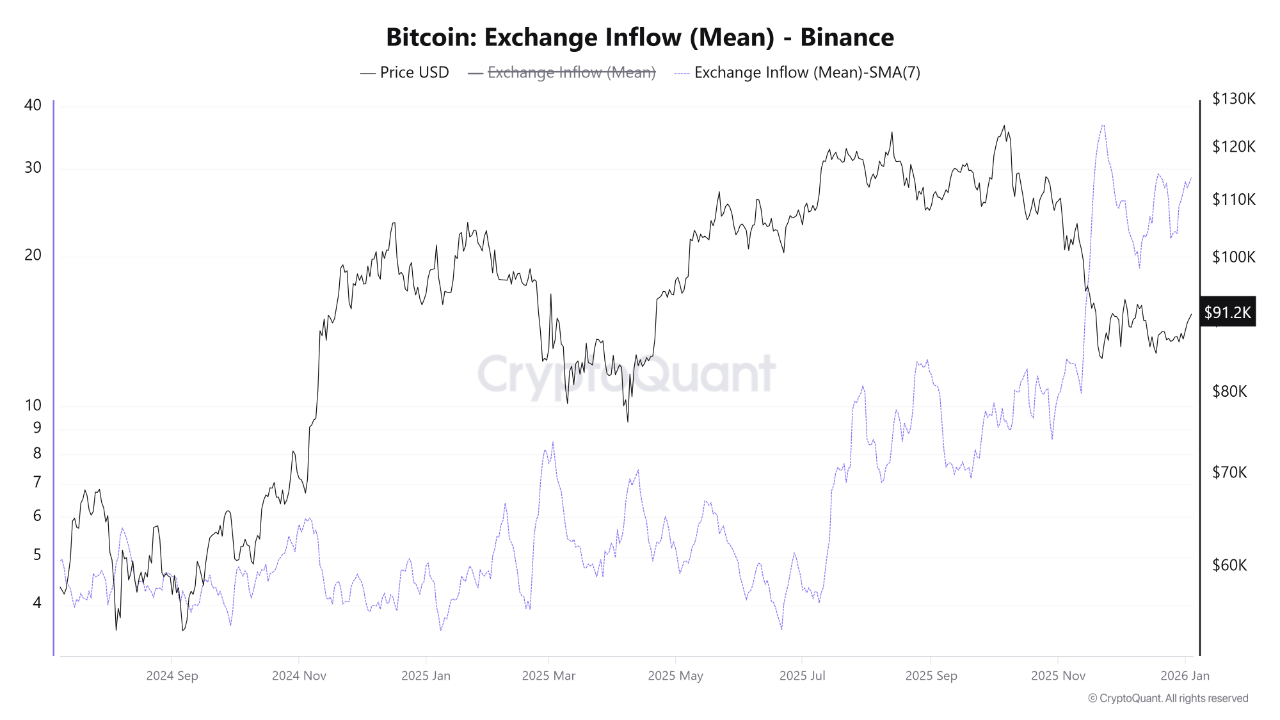
This pattern is typically associated with whales positioning liquidity, a behavior that often precedes distribution rather than long-term holding. When large amounts of BTC are moved onto exchanges, it raises the probability that supply will soon be available to the market.
At the same time, the opposite side of the equation looks notably weak. Average withdrawal sizes have failed to recover meaningfully since their decline in October. While there has been a modest rebound, outflows remain far below previous levels, suggesting that large investors are not aggressively moving coins into cold storage. This lack of follow-through on withdrawals implies muted conviction in longer-term accumulation.
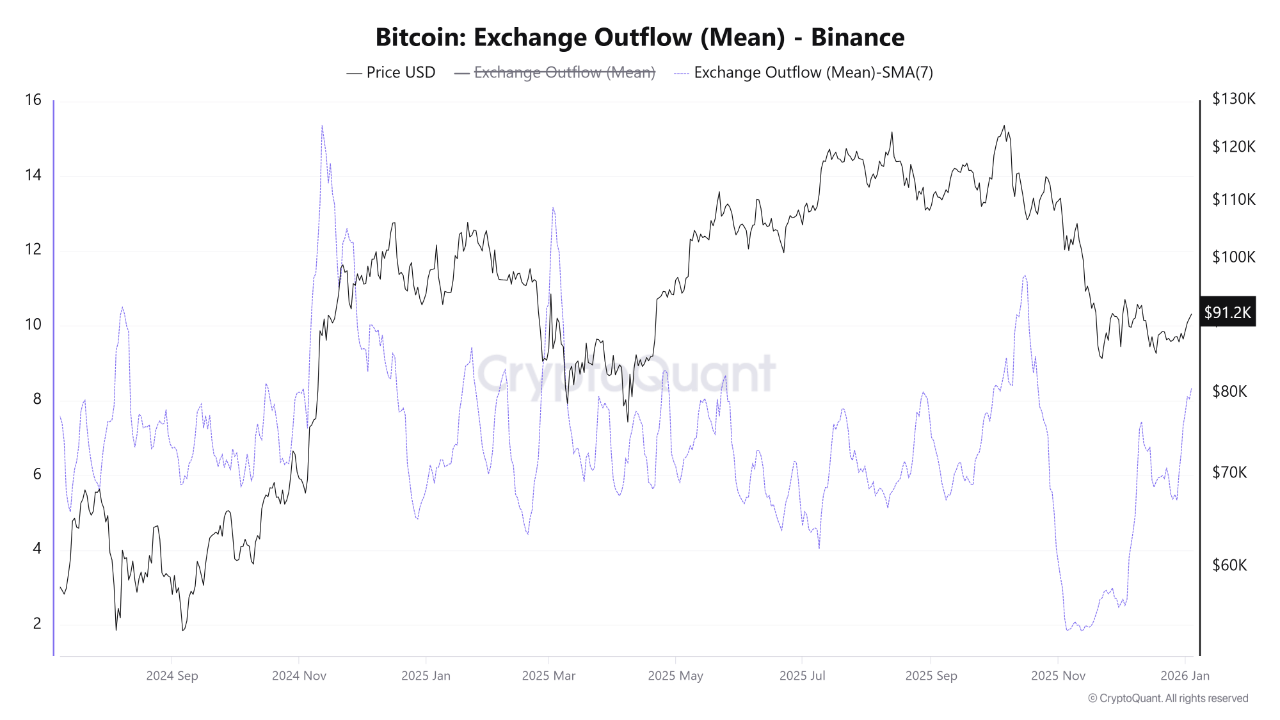
Taken together, these two trends form an uncomfortable divergence. Selling capacity appears to be growing, while evidence of strategic accumulation remains limited. This does not guarantee immediate downside, but it does tilt the risk profile against sustained upside momentum. As long as large inflows dominate and outflows stay suppressed, Bitcoin may struggle to build a durable rally without a clear improvement in underlying demand.