Bitcoin Prediction: VanEck Warns 2026 Won’t Be A Melt-Up Or A Crash

bitcoinistPubblicato 2025-12-23Pubblicato ultima volta 2025-12-23

Introduzione

VanEck's outlook for 2026 suggests Bitcoin will enter a period of consolidation rather than experience a dramatic melt-up or crash. In a recent note, Matthew Sigel, Head of Digital Assets Research, described the signals as "mixed but constructive." Key factors include reduced volatility, decreased leverage, and stable on-chain activity. VanEck expects the market to oscillate, advising a disciplined 1-3% Bitcoin allocation using dollar-cost averaging, while trimming during speculative excess. The firm highlights significant opportunities in Bitcoin mining, particularly operators transitioning into energy-backed compute platforms, and in stablecoin adoption for B2B payments. Quantum security is noted as an emerging topic for the ecosystem. Bitcoin was trading at $87,423 at the time of publication.

VanEck is setting expectations for Bitcoin in 2026 with a tone that’s closer to the risk committee than crypto Twitter: the next year looks more like consolidation than a dramatic regime shift.

In its Dec. 18 note, “Plan for 2026: Predictions from Our Portfolio Managers,” Matthew Sigel, VanEck’s head of digital assets research, argues that the signal set heading into 2026 is “mixed but constructive.” The framework is deliberately restrained: volatility has come down, leverage has been washed out in stages, and on-chain activity is still soft but not deteriorating the way it tends to during deeper cyclical breaks.

“Realized volatility has... dropped by roughly half. That implies a proportional drawdown of about 40%. The market has already absorbed roughly 35%.”

Sigel anchors part of the call in cycle structure. He writes that Bitcoin’s historical four-year rhythm, which has tended to peak in the immediate post-election window, “remains intact following the early October 2025 high.” If that template is still operative, 2026 is less likely to be a clean continuation year.

Bitcoin Prediction For 2026: What To Expect

“That pattern suggests 2026 is more likely a consolidation year. Not a melt-up. Not a collapse.” The more interesting part is the “why,” because VanEck isn’t leaning on a single factor. Sigel describes three lenses shaping the outlook, and they are not uniformly supportive. “Global liquidity is mixed. Likely rate cuts provide support. US liquidity is tightening somewhat.”

He ties that tightening to a specific macro dynamic: “AI-driven capex fears” colliding with a more fragile funding market and pushing credit spreads wider. Put differently, even if policy rates drift lower, the broader cost-of-capital environment can still work against risk-taking at the margin — especially where refinancing needs are persistent and investor selectivity is rising.

Against that backdrop, the portfolio guidance is measured. VanEck favors a “disciplined 1 to 3% Bitcoin allocation,” built through dollar-cost averaging, with adds during leverage-driven dislocations and trims into speculative excess. It’s positioning for a market that oscillates, not one that trends cleanly.

Sigel also flags a topic that has shifted from niche to mainstream inside the Bitcoin community: quantum security. VanEck doesn’t present it as an imminent risk to the chain, but it does treat it as an organizing question that could draw serious attention.

“Quantum security has become an active topic. It’s not an immediate threat. A coordinated response could resemble the first blocksize debates.”

That last line matters more than it sounds. The blocksize era wasn’t only a technical dispute; it was a public process that pulled in new stakeholders, forced trade-offs into the open, and hardened long-term norms. VanEck’s suggestion is that, if quantum planning becomes a sustained coordination exercise, it could have a similar “transparent and technically rich” dynamic, messy, visible, and ultimately strengthening engagement.

Where VanEck is most constructive for 2026 is not necessarily spot BTC, but the capital cycle around Bitcoin mining. Sigel argues the strongest opportunity sits in what he calls the “capital-intensive pivot” as operators try to finance both hash-rate expansion and AI/HPC infrastructure simultaneously.

That combination is stretching balance sheets and widening dispersion across the sector: miners with hyperscaler partnerships can raise straight debt on comparatively favorable terms, while weaker names are pushed toward dilutive converts or selling BTC into weakness.

“This creates the cleanest consolidation setup since 2020 to 2021. The best risk-reward is in miners transitioning into energy-backed compute platforms. Credible HPC economics, advantaged power, and financing paths that avoid serial dilution.”

A second opportunity set is digital payments and stablecoin settlement, but VanEck is selective. Sigel sees stablecoins moving into real B2B payment flows, improving working capital management and lowering cross-border settlement costs.

“The more investable angle may sit in fintech and e-commerce platforms that can unlock margin leverage by shifting supplier payments, payouts, and cross-border settlement onto stablecoins. High-throughput chains will support much of this activity, and a few tokens tied to genuine usage may benefit, but we believe the most durable opportunity may lie in the operating companies enabling adoption rather than in broad token exposure,” Sigel writes.

The overall message is not bearish, and it is not euphoric. It is, in a very deliberate way, a call for discipline: expect range-bound conditions, look for dislocations, and focus on parts of the ecosystem where balance-sheet stress and real-world adoption can create asymmetry.

At press time, Bitcoin traded at $87,423.

Domande pertinenti

QWhat is VanEck's overall outlook for Bitcoin in 2026, according to the article?

AVanEck's outlook for Bitcoin in 2026 is one of consolidation, expecting neither a dramatic melt-up nor a crash. They describe the signal set as 'mixed but constructive' and believe the year will be characterized by range-bound conditions and volatility that has significantly decreased from previous cycles.

QWhat specific allocation strategy does VanEck recommend for Bitcoin investment?

AVanEck recommends a 'disciplined 1 to 3% Bitcoin allocation.' They advise building this position through dollar-cost averaging, adding to it during leverage-driven market dislocations, and trimming the position during periods of speculative excess.

QBesides the price of Bitcoin itself, where does VanEck see the strongest investment opportunity in the ecosystem for 2026?

AVanEck sees the strongest investment opportunity in the capital cycle around Bitcoin mining, specifically in miners that are transitioning into energy-backed high-performance compute (HPC) platforms for AI, citing it as 'the cleanest consolidation setup since 2020 to 2021.'

QWhat emerging technical topic does VanEck highlight as a potential major discussion point for the Bitcoin community?

AVanEck highlights quantum security as an emerging topic that has shifted from niche to mainstream. They do not see it as an immediate threat but suggest a coordinated response to it could become a significant, transparent, and technically rich debate for the community, similar to the historical blocksize debates.

QHow does VanEck view the opportunity in stablecoins and digital payments?

AVanEck is selective but sees an opportunity in stablecoins moving into real B2B payment flows to improve working capital and lower cross-border costs. They believe the most durable opportunity may lie in the fintech and e-commerce operating companies that enable this adoption, rather than in holding the broad stablecoin tokens themselves.

Letture associate

Breaking: OpenAI Undergoes Major Reorganization, President Brockman Assumes Command

OpenAI has announced a major internal reorganization just months before its anticipated IPO. The company is merging its three flagship product lines—ChatGPT, Codex, and the API platform—into a single, unified product organization. The most significant leadership change involves co-founder and President Greg Brockman moving from a background technical role to take full, permanent control over all product strategy. This follows the indefinite medical leave of AGI Deployment CEO Fidji Simo. Additionally, ChatGPT's longtime lead, Nick Turley, has been reassigned to enterprise products, with former Instagram executive Ashley Alexander taking over consumer offerings. The consolidation, internally framed as a strategic move towards an "Agentic Future," aims to break down internal silos and create a cohesive "Super App." This planned desktop application would integrate ChatGPT's conversational abilities, Codex's coding power, and a rumored internal web browser named "Atlas" to autonomously perform complex user tasks. The reorganization occurs amid significant internal and external pressures. OpenAI has recently seen a wave of high-profile departures, including Sora co-lead Bill Peebles and other senior technical leaders, leading to concerns about a thinning executive bench. Externally, rival Anthropic recently secured funding at a staggering $900 billion valuation, surpassing OpenAI's own. Google's upcoming I/O developer conference also poses a competitive threat. Analysts suggest the dramatic restructure is a pre-IPO move to present a clearer, more focused narrative to Wall Street—streamlining operations and demonstrating decisive leadership under Brockman to counter internal turbulence and intense market competition.

marsbit2 h fa

Breaking: OpenAI Undergoes Major Reorganization, President Brockman Assumes Command

marsbit2 h fa

Two Survival Structures of Market Makers and Arbitrageurs

Market makers and arbitrageurs represent two distinct survival structures in high-frequency trading. Market makers primarily use limit orders (makers) to profit from the bid-ask spread, enjoying high capital efficiency (nominally 100%) but bearing inventory risk. This "inventory risk" arises from passive, fragmented, and discontinuous order fills in the limit order book (LOB). This risk, while a potential cost, can also contribute to excess profit if managed within control boundaries, allowing for mean reversion. Market makers essentially sell "time" (uncertainty over execution timing) to the market for price control and low fees. In contrast, cross-exchange arbitrageurs typically use market orders (takers) to exploit price differences or funding rates, resulting in lower nominal capital efficiency (requiring capital on both exchanges) and higher transaction costs. Their risk exposure stems from asymmetries in exchange rules (e.g., minimum order sizes), execution latency, and infrastructure risks (e.g., ADL, oracle drift). These exposures are active, exogenous gaps that primarily erode profits rather than contribute to them. Arbitrageurs essentially sell "space" (capital sunk across venues) for localized, immediate certainty. Both strategies engage in a trade-off between execution friction and residual risk. Optimal systems allow for temporary, controlled risk exposure rather than enforcing zero exposure at all costs. Their evolution converges towards hybrid models: arbitrageurs may use maker orders to reduce costs, while market makers may use taker orders or hedges for risk management. Ultimately, both use different forms of risk exposure—market makers exposing inventory, arbitrageurs immobilizing capital—to extract marginal, hard-won certainty from the market.

链捕手2 h fa

Two Survival Structures of Market Makers and Arbitrageurs

链捕手2 h fa

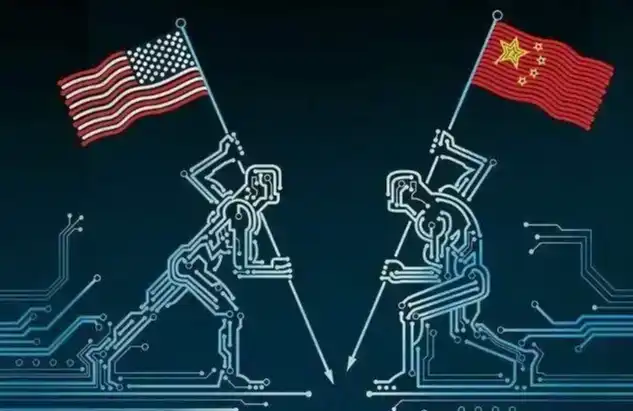
Who Will Define the Rules of the AI Era? Anthropic Discusses the 2028 US-China AI Landscape

This article, based on Anthropic's analysis, outlines the intensifying systemic competition between the U.S./allies and China for AI leadership by 2028. It argues that access to advanced computing power ("compute") is the critical bottleneck, where the U.S. currently holds a significant advantage through chip export controls and allied innovation. However, China's AI labs remain competitive by exploiting policy loopholes—via chip smuggling, overseas data center access, and "model distillation" attacks to copy U.S. model capabilities—keeping them close to the frontier. The piece presents two contrasting scenarios for 2028. In the first, decisive U.S. action to tighten compute controls and curb distillation locks in a 12-24 month AI capability lead, cementing democratic influence over global AI norms, security, and economic infrastructure. In the second, policy inaction allows China to achieve near-parity through continued access to U.S. technology, enabling Beijing to promote its AI stack globally and integrate advanced AI into its military and governance systems, altering the strategic balance. Anthropic contends that maintaining a decisive U.S. lead is essential for shaping safe AI development and governance. The core recommendation is for U.S. policymakers to urgently close compute and model access loopholes while promoting global adoption of the U.S. AI technology stack to secure a lasting strategic advantage.

marsbit4 h fa

Who Will Define the Rules of the AI Era? Anthropic Discusses the 2028 US-China AI Landscape

marsbit4 h fa

Trading

Spot
Futures

Articoli Popolari

Come comprare CC

Benvenuto in HTX.com! Abbiamo reso l'acquisto di CC(Canton) (CC) semplice e conveniente. Segui la nostra guida passo passo per intraprendere il tuo viaggio nel mondo delle criptovalute.Step 1: Crea il tuo Account HTXUsa la tua email o numero di telefono per registrarti il tuo account gratuito su HTX. Vivi un'esperienza facile e sblocca tutte le funzionalità,Crea il mio accountStep 2: Vai in Acquista crypto e seleziona il tuo metodo di pagamentoCarta di credito/debito: utilizza la tua Visa o Mastercard per acquistare immediatamente CC(Canton)CC.Bilancio: Usa i fondi dal bilancio del tuo account HTX per fare trading senza problemi.Terze parti: abbiamo aggiunto metodi di pagamento molto utilizzati come Google Pay e Apple Pay per maggiore comodità.P2P: Fai trading direttamente con altri utenti HTX.Over-the-Counter (OTC): Offriamo servizi su misura e tassi di cambio competitivi per i trader.Step 3: Conserva CC(Canton) (CC)Dopo aver acquistato CC(Canton) (CC), conserva nel tuo account HTX. In alternativa, puoi inviare tramite trasferimento blockchain o scambiare per altre criptovalute.Step 4: Scambia CC(Canton) (CC)Scambia facilmente CC(Canton) (CC) nel mercato spot di HTX. Accedi al tuo account, seleziona la tua coppia di trading, esegui le tue operazioni e monitora in tempo reale. Offriamo un'esperienza user-friendly sia per chi ha appena iniziato che per i trader più esperti.

307 Totale visualizzazioniPubblicato il 2026.04.21Aggiornato il 2026.04.21

Come comprare CC

Come comprare BLEND

Benvenuto in HTX.com! Abbiamo reso l'acquisto di Fluent (BLEND) semplice e conveniente. Segui la nostra guida passo passo per intraprendere il tuo viaggio nel mondo delle criptovalute.Step 1: Crea il tuo Account HTXUsa la tua email o numero di telefono per registrarti il tuo account gratuito su HTX. Vivi un'esperienza facile e sblocca tutte le funzionalità,Crea il mio accountStep 2: Vai in Acquista crypto e seleziona il tuo metodo di pagamentoCarta di credito/debito: utilizza la tua Visa o Mastercard per acquistare immediatamente FluentBLEND.Bilancio: Usa i fondi dal bilancio del tuo account HTX per fare trading senza problemi.Terze parti: abbiamo aggiunto metodi di pagamento molto utilizzati come Google Pay e Apple Pay per maggiore comodità.P2P: Fai trading direttamente con altri utenti HTX.Over-the-Counter (OTC): Offriamo servizi su misura e tassi di cambio competitivi per i trader.Step 3: Conserva Fluent (BLEND)Dopo aver acquistato Fluent (BLEND), conserva nel tuo account HTX. In alternativa, puoi inviare tramite trasferimento blockchain o scambiare per altre criptovalute.Step 4: Scambia Fluent (BLEND)Scambia facilmente Fluent (BLEND) nel mercato spot di HTX. Accedi al tuo account, seleziona la tua coppia di trading, esegui le tue operazioni e monitora in tempo reale. Offriamo un'esperienza user-friendly sia per chi ha appena iniziato che per i trader più esperti.

198 Totale visualizzazioniPubblicato il 2026.04.24Aggiornato il 2026.04.24

Come comprare BLEND

Come comprare ACN

Benvenuto in HTX.com! Abbiamo reso l'acquisto di AITECH CLOUD NETWORK (ACN) semplice e conveniente. Segui la nostra guida passo passo per intraprendere il tuo viaggio nel mondo delle criptovalute.Step 1: Crea il tuo Account HTXUsa la tua email o numero di telefono per registrarti il tuo account gratuito su HTX. Vivi un'esperienza facile e sblocca tutte le funzionalità,Crea il mio accountStep 2: Vai in Acquista crypto e seleziona il tuo metodo di pagamentoCarta di credito/debito: utilizza la tua Visa o Mastercard per acquistare immediatamente AITECH CLOUD NETWORKACN.Bilancio: Usa i fondi dal bilancio del tuo account HTX per fare trading senza problemi.Terze parti: abbiamo aggiunto metodi di pagamento molto utilizzati come Google Pay e Apple Pay per maggiore comodità.P2P: Fai trading direttamente con altri utenti HTX.Over-the-Counter (OTC): Offriamo servizi su misura e tassi di cambio competitivi per i trader.Step 3: Conserva AITECH CLOUD NETWORK (ACN)Dopo aver acquistato AITECH CLOUD NETWORK (ACN), conserva nel tuo account HTX. In alternativa, puoi inviare tramite trasferimento blockchain o scambiare per altre criptovalute.Step 4: Scambia AITECH CLOUD NETWORK (ACN)Scambia facilmente AITECH CLOUD NETWORK (ACN) nel mercato spot di HTX. Accedi al tuo account, seleziona la tua coppia di trading, esegui le tue operazioni e monitora in tempo reale. Offriamo un'esperienza user-friendly sia per chi ha appena iniziato che per i trader più esperti.

174 Totale visualizzazioniPubblicato il 2026.04.28Aggiornato il 2026.04.28

Come comprare ACN

Discussioni

Benvenuto nella Community HTX. Qui puoi rimanere informato sugli ultimi sviluppi della piattaforma e accedere ad approfondimenti esperti sul mercato. Le opinioni degli utenti sul prezzo di A A sono presentate come di seguito.

活动图片