Bitcoin eyes $150K – Is 2026 the start of an ‘Institutional Supercycle’?

ambcryptoPubblicato 2026-01-08Pubblicato ultima volta 2026-01-08

Introduzione

The 2025 bear market significantly impacted crypto stocks and risk assets, with major stocks like MSTR falling 45% and triggering a Bitcoin crash that liquidated $20 billion. However, key sectors like RWA tokenization and stablecoins saw massive capital inflows, growing 210% and over 50% in supply respectively. This divergence is driving strong fundamentals for 2026. On-chain data shows institutions are buying 76% more BTC than miners produce, creating a supply deficit. Analysts expect this institutional demand to fuel an "institutional supercycle," with a potential year-end Bitcoin target of $150,000. The 2025 downturn served as a pause that separated speculation from fundamentals, setting the stage for a breakout year in 2026.

The 2025 FUD didn’t just rattle risk assets.

Instead, it hit crypto stocks hard too. The expanding DAT ecosystem is acting like a double-edged sword – Market volatility is forcing investors to offload stocks, which in turn amplifies stress across risk assets.

Strategy [MSTR] shows this clearly. The stock finished 2025 down 45%, its worst year since the 2022 bear market. The knock-on effect? Bitcoin’s [BTC] October crash, which triggered $20 billion in liquidations.

Naturally, the question arises – Will 2026 be any different?

Notably, even with 2025’s bear market, key sectors (RWA, stablecoins, DeFi etc.) saw massive capital inflows. That momentum is driving adoption and as a result, analysts expect it to generate yield in this cycle.

The main driver? Institutional demand. With sector-wide inflows rising, analysts are calling 2026 an “institutional cycle,” eyeing a $150k year-end Bitcoin target. The big question – Will on-chain data back it up?

Fundamentals driving Bitcoin’s 2026 cycle

The main takeaway from 2025? A clear divergence across crypto sectors.

Take the RWA tokenization market, for example. According to RWAxyz, it ended the year at $18 billion – A 210% jump highlighting strong momentum in tokenized assets. Stablecoins followed suit, with the supply rising over 50%.

Put together, these fundamentals are shaping Bitcoin’s 2026 outlook. The impact is already visible on-chain. In fact, according to the attached chart, institutions are buying 76% more BTC than miners are producing, creating a supply deficit.

Given these factors, calling 2026 an “institutional cycle” wouldn’t be far off.

In this context, the 2025 bear market actually served as a much-needed pause. During this time, capital flowed into long-term sectors, helping draw a clearer line between speculation and fundamentals.

Consequently, with this momentum, 2026 could be a breakout year for Bitcoin’s DATs. MSTR’s 4% rally underscores the shift, while growing institutional demand could push the crypto towards a $150k year-end target.


Final Thoughts

  • Capital inflows into RWA, stablecoins etc. are creating strong fundamentals, while institutions are buying more Bitcoin than what miners produce.
  • After the 2025 bear market pause, the current momentum supports a potential “institutional cycle,” with a $150k year-end BTC target.


Crypto di tendenza

Domande pertinenti

QWhat is the main driver behind the predicted 'institutional cycle' for Bitcoin in 2026?

AThe main driver is rising institutional demand, with sector-wide capital inflows and institutions buying 76% more BTC than miners are producing, creating a supply deficit.

QWhat was the performance of the RWA tokenization market in 2025, according to the article?

AThe RWA tokenization market ended 2025 at $18 billion, which is a 210% jump, highlighting strong momentum in tokenized assets.

QWhat key event in October 2025 had a significant negative impact on the crypto market?

ABitcoin's October crash triggered $20 billion in liquidations.

QDespite the 2025 bear market, which sectors still saw massive capital inflows?

AKey sectors like RWA (Real World Assets), stablecoins, and DeFi saw massive capital inflows.

QWhat is the year-end price target for Bitcoin that analysts are eyeing for 2026?

AAnalysts are eyeing a $150,000 year-end price target for Bitcoin in 2026.

Letture associate

Research Report Analysis: Is Intel Making a Comeback with Apple? Bernstein's Calculations Show the Right Direction, but the Price Is Already Overvalued

Bernstein analyst Stacy A. Rasgon published a report on June 18 regarding Intel, assessing the potential impact of recent political support for a US-based PC chip design and manufacturing collaboration between Apple and Intel. The report views this as a significant signal for the foundry landscape shift but concludes the initial financial contribution would be minimal. Key conclusions: 1) An Apple deal is seen as a small-scale "proof of concept." Even if Intel wins 40% of Apple's premium notebook chip orders (~5 million units/year), Bernstein estimates it would generate only about $500M in annual revenue and ~$0.03 EPS, negligible against Intel's ~$55B revenue. 2) Political encouragement is not equivalent to enforceable mandates. Winning orders ultimately depends on Intel demonstrating competitive technology (like its 18A node), cost, and reliable supply. 3) The path from validation to large-scale production involves significant challenges, capital investment, and time. Due to these uncertainties, Bernstein maintains a Market-Perform (Hold) rating with a $100 price target, implying potential downside from the ~$121.10 price at the report date. The analysis highlights the tension between near-term validation value—serving as a crucial trust signal for Intel's foundry ambitions and US supply chain resilience—and the long-term opportunity to attract larger cloud and AI chip customers. The investment thesis hinges on successful 18A execution and sustained policy support, not on immediate financial gains from Apple.

marsbit20 min fa

Research Report Analysis: Is Intel Making a Comeback with Apple? Bernstein's Calculations Show the Right Direction, but the Price Is Already Overvalued

marsbit20 min fa

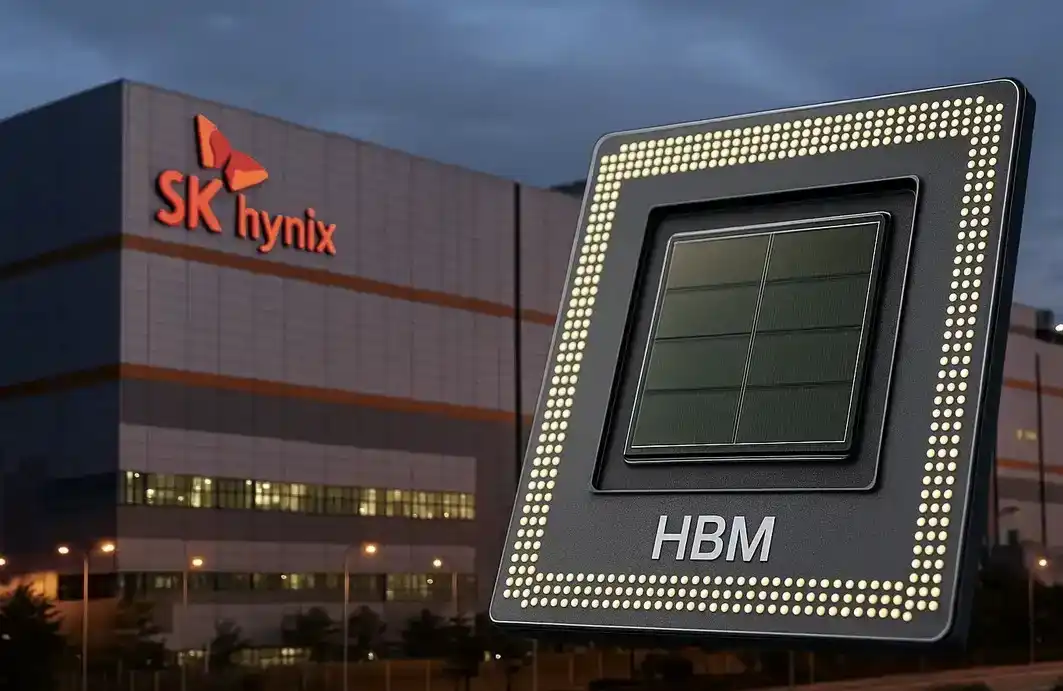
27-Year Reign Ends: SK Hynix Market Cap Surpasses Samsung for First Time, an AI-Driven Reshuffle of Korean Chip Power

On June 22, 2026, SK Hynix made history by surpassing Samsung Electronics in market capitalization, ending Samsung's 27-year reign as South Korea's most valuable company. This dramatic reversal is powered by the AI boom and SK Hynix's dominant position in High Bandwidth Memory (HBM), a critical component for AI model training. Once a heavily indebted firm on the brink of bankruptcy, SK Hynix bet early on HBM, which has evolved from a niche product to essential AI infrastructure. It now commands a 59% share of the global HBM market. Its financial performance is staggering, with Q1 2026 net profit soaring nearly fourfold year-over-year to KRW 40.35 trillion, translating to over 2 billion RMB in daily net profit. HBM now drives roughly 40% of its revenue with exceptionally high margins. In contrast, Samsung, with its broad portfolio spanning memory chips, smartphones, and foundry services, has lagged in the HBM race while facing headwinds in other divisions. This shift signifies a deeper restructuring of South Korea's economy, moving from consumer electronics to AI-driven growth. However, the future remains competitive. With major capacity expansions planned industry-wide by 2028 and Samsung aiming to catch up in HBM technology, the new market leader cannot afford complacency. This event marks a pivotal moment in the global semiconductor industry's ongoing power realignment.

marsbit31 min fa

27-Year Reign Ends: SK Hynix Market Cap Surpasses Samsung for First Time, an AI-Driven Reshuffle of Korean Chip Power

marsbit31 min fa

Why Does 'AGI Godfather' Ben Goertzel Believe the Future of AI Relies on Blockchain?

Ben Goertzel, known as the "AGI Godfather," argues that the future of Artificial General Intelligence (AGI) must be built on blockchain to prevent its control by a few corporations or venture capital firms. He believes the core AGI code should be free and open-source, but that this alone is insufficient without a decentralized infrastructure to run it affordably. His blockchain project, SingularityNET, and the broader Artificial Superintelligence Alliance aim to create a user-owned, decentralized network for hosting and deploying AGI, contrasting with the closed models of companies like OpenAI and Anthropic. Goertzel criticizes the shift of other labs from open to closed development. He argues that while a closed path is simpler, an open, decentralized model—akin to Linux and the internet—is both possible and ultimately better for humanity. He envisions an "Agent economy" where individuals orchestrate teams of AI agents to perform tasks, including transactions, on an open network rather than corporate clouds. While his current model relies on cryptocurrency, plans include offering paid AI services to businesses with the decentralized blockchain as the backend. Goertzel predicts human-level AGI could arrive by 2029 and warns that a gap in understanding and access to AGI could drastically worsen inequality. The first test of his decentralized approach will be the upcoming release of the Agent Omega Claw.

Foresight News1 h fa

Why Does 'AGI Godfather' Ben Goertzel Believe the Future of AI Relies on Blockchain?

Foresight News1 h fa

Trading

Spot
Futures

Articoli Popolari

Come comprare T

Benvenuto in HTX.com! Abbiamo reso l'acquisto di Threshold Network Token (T) semplice e conveniente. Segui la nostra guida passo passo per intraprendere il tuo viaggio nel mondo delle criptovalute.Step 1: Crea il tuo Account HTXUsa la tua email o numero di telefono per registrarti il tuo account gratuito su HTX. Vivi un'esperienza facile e sblocca tutte le funzionalità,Crea il mio accountStep 2: Vai in Acquista crypto e seleziona il tuo metodo di pagamentoCarta di credito/debito: utilizza la tua Visa o Mastercard per acquistare immediatamente Threshold Network TokenT.Bilancio: Usa i fondi dal bilancio del tuo account HTX per fare trading senza problemi.Terze parti: abbiamo aggiunto metodi di pagamento molto utilizzati come Google Pay e Apple Pay per maggiore comodità.P2P: Fai trading direttamente con altri utenti HTX.Over-the-Counter (OTC): Offriamo servizi su misura e tassi di cambio competitivi per i trader.Step 3: Conserva Threshold Network Token (T)Dopo aver acquistato Threshold Network Token (T), conserva nel tuo account HTX. In alternativa, puoi inviare tramite trasferimento blockchain o scambiare per altre criptovalute.Step 4: Scambia Threshold Network Token (T)Scambia facilmente Threshold Network Token (T) nel mercato spot di HTX. Accedi al tuo account, seleziona la tua coppia di trading, esegui le tue operazioni e monitora in tempo reale. Offriamo un'esperienza user-friendly sia per chi ha appena iniziato che per i trader più esperti.

417 Totale visualizzazioniPubblicato il 2024.12.10Aggiornato il 2026.06.02

Come comprare T

Discussioni

Benvenuto nella Community HTX. Qui puoi rimanere informato sugli ultimi sviluppi della piattaforma e accedere ad approfondimenti esperti sul mercato. Le opinioni degli utenti sul prezzo di T T sono presentate come di seguito.

活动图片