BIP-110 Controversy Intensifies: Bitcoin May Face Its Most Divisive Hard Fork Battle in Years

Foresight NewsPubblicato 2026-06-12Pubblicato ultima volta 2026-06-12

Introduzione

Bitcoin is approaching a critical block height of 961,632, which could activate the controversial BIP-110 proposal. This proposal aims to restrict the amount of non-financial data, such as inscriptions and other large data payloads, within Bitcoin transactions. Supporters, including some node operators and Bitcoin purists, argue that BIP-110 is necessary to preserve Bitcoin's core function as a monetary settlement layer by reducing network congestion and node operational burdens caused by non-essential data. They frame it as a correction to keep the network true to its original purpose. However, critics, including prominent figures like Blockstream's Adam Back and developer Jameson Lopp, warn that the proposal's implementation mechanism is dangerously flawed. They highlight that its low 55% miner signaling threshold, coupled with a contentious enforcement mechanism allowing nodes to unilaterally reject non-compliant blocks, significantly increases the risk of a chain split. Opponents argue this sets a dangerous precedent for transaction censorship, undermines Bitcoin's protocol neutrality, and creates excessive uncertainty for developers and businesses, especially since the rule is proposed as a temporary one-year measure. Market analysts, such as those from Bitfinex, suggest a full-scale network split is unlikely due to a lack of broad economic consensus. Major mining pools remain neutral, and adoption of the new rules is minimal. They view the situation more as a governa...


Written by: Oluwapelumi Adejumo

Compiled by: Saoirse, Foresight News


Core Summary


  • Bitcoin's block height is approaching 961632, at which point the BIP-110 proposal may restrict non-financial data within transactions.
  • Proponents claim this adjustment will allow Bitcoin to refocus on its core function of settlement, alleviating network strain caused by inscriptions and other applications consuming significant on-chain data.
  • Critics warn that the proposal's miner voting threshold is too low and lacks an accompanying enforcement mechanism, potentially leading to a mainnet split and forcing major exchanges and node operators into defensive measures.


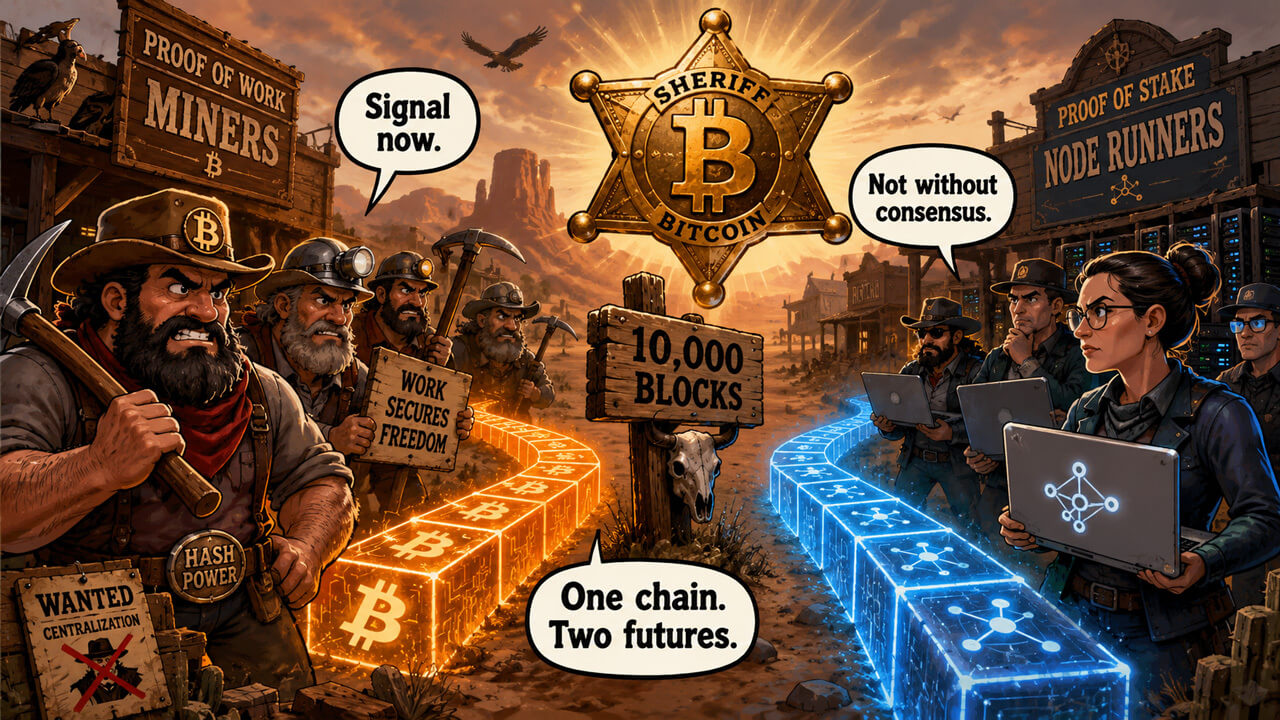
Bitcoin is approaching a critical juncture where a long-standing ideological divide may escalate into the network's most severe governance conflict in years. At the heart of this dispute is Bitcoin Improvement Proposal (BIP) 110, which aims to limit the total amount of non-financial data that can be embedded in Bitcoin transactions. With the network just under 10,000 blocks away from the mandatory activation window at block height 961632, what began as a technical disagreement over network "spam transactions" has transformed into a high-stakes confrontation.


Supporters of BIP-110 view this restriction as crucial for preserving Bitcoin's core value as a monetary settlement layer. Opponents warn that such an aggressive implementation risks fracturing the entire ecosystem, potentially freezing user assets in transit and eroding market trust in the neutrality of the Bitcoin protocol.


Although the proposal currently lacks the widespread miner and institutional backing typically required for major protocol changes, this imminent flashpoint will serve as a significant stress test for Bitcoin's decentralized power structure. The proposal pits network developers and node operators against miners and market makers—the core groups that ultimately determine the economic value trajectory of the entire blockchain.


A Battle Over What Bitcoin Should Carry


BIP-110 plans to temporarily restrict arbitrary data storage on the Bitcoin blockchain by adding a new consensus rule to the transaction structure. In simple terms, nodes running the proposal's code would treat transactions carrying large amounts of data as invalid. The proposal targets applications such as ordinal inscriptions, runes, and other activities that directly inscribe text, images, or token data onto Bitcoin's base layer.


While these applications have attracted new users and increased miner fee revenue, they have also drawn criticism from Bitcoin purists who argue that the blockchain should not be used as a permanent storage medium.


Proponents frame the change as an effort to safeguard Bitcoin's core functionality. They argue that non-financial data excessively consumes block space, burdens node operations, and deviates from Bitcoin's fundamental purpose as sound money. In their view, filtering high-capacity data payloads is not censorship of payments but a restoration of rule-based boundaries to refocus the network on its original purpose.


This perspective has gained support among some node operators and Bitcoin users who have long resisted the inscription craze. To them, the upcoming activation window proves that when users perceive Bitcoin's rules drifting from their original intent, the node operators responsible for validating the chain still have the power to check miners and commercial entities.


Bitcoin analyst Luis Marcano, a supporter of the proposal, suggests that the actual scenario post-BIP-110 activation might not be as dire as critics predict. His view is that nodes running the new rules will reject blocks filled with irrelevant data, and mining power will gradually shift to the blockchain with stronger economic value that adheres to the new rules.


Some supporters take an even harder line, portraying opponents as a small group of social media influencers, token investors, and businesses profiting from on-chain data ventures. They claim that thousands of node operators are already prepared to enforce the new rules, and miners will not tolerate the negative impacts of prolonged network uncertainty.


However, the market does not share this optimistic assessment.


Critics Warn: Implementation Mechanism Significantly Increases Conflict Risk


The sharpest conflict over BIP-110 centers on its implementation design. Previous large-scale protocol upgrades required near-unanimous consensus among the miners securing the network to activate. BIP-110 completely changes this model: it sets a miner signaling threshold of only 55% and pairs it with a highly controversial enforcement fallback mechanism.


Even if miners fail to meet the minimum voting threshold, proponents of the proposal code still plan for nodes to unilaterally reject all blocks that do not comply with the new rules. This aggressive architecture transforms what was a technical disagreement over block space allocation into a fundamental governance crisis.


Blockstream CEO Adam Back has outright rejected the proposal, citing serious technical flaws. He warns that forcing code changes without achieving economic consensus will almost certainly result in a forked chain with very little adoption.


Adam Back also explicitly opposes proponents comparing this proposal to the 2017 Segregated Witness (SegWit) upgrade. He notes that while SegWit was contentious before implementation, it ultimately achieved broad consensus among developers, miners, and various infrastructure providers—a foundation BIP-110 currently completely lacks.


Veteran Bitcoin developer and security lead Jameson Lopp calls the proposal a dangerous overreach disguised as governance over spam transactions.


Beyond the immediate risk of a chain split, Jameson Lopp warns that the code could break some niche wallet functionalities, indirectly rendering user assets inoperable. Furthermore, he argues the restriction is a band-aid solution: determined users will simply find other transaction fields to hide irrelevant data. Ultimately, Bitcoin would bear all the systemic risks of a contentious hard fork without eradicating the behavior the proposal aims to curb.


Yet the most fundamental divide tearing at the industry's fabric remains ideological. Bitcoin's core value proposition rests on absolute neutrality: as long as a sender pays the market rate for fees, the network processes any compliant transaction.


Critics warn that modifying consensus rules to actively punish "unwanted" on-chain behavior sets an extremely dangerous precedent. If the protocol can be changed today to filter inscription data, future factions or national regulators could use the same logic to demand the network block privacy-enhancing coin mixing transactions, gambling payments, or transfers containing politically sensitive information.


Proponents dismiss this "slippery slope" concern, arguing the network has historically distinguished between purely monetary use and abuse of on-chain storage. They emphasize that BIP-110 is a precise tweak, with the code explicitly setting an automatic expiration date of approximately one year.


However, this "temporary adjustment" explanation has done little to placate the opposition.


Bitcoin Core developers like Jameson Lopp argue that a rule change lasting only one year could cause more disruption than a permanent one. Various enterprise wallets, cryptographic libraries, and smart contract protocols would need to build and maintain two sets of infrastructure adapted to different rules.


More critically, Bitcoin as a settlement network relies heavily on stable, predictable rules. A one-year temporary change introduces significant long-term uncertainty. Developers cannot predict whether the restriction will simply expire, be extended, or replaced with stricter control rules.


Market May Downplay BIP-110 Impact Unless Exchanges Forced into Contingency Measures


Despite escalating rhetoric between core developers and node operators, market analysts generally believe the activation point in early August will not trigger a catastrophic network split.


In commentary provided to CryptoSlate, Bitfinex analysts stated that the entire BIP-110 situation looks more like a "governance stress test" than a genuine crisis likely to cause a chain split.


This pragmatic judgment stems from the clear lack of economic consensus: nodes actively running the restrictive rules currently number in the single-digit percentages, all major mining pools are taking a wait-and-see approach, and there are no signs of the broader crypto industry urgently adjusting supporting systems to differentiate between two potential chains.


All indicators suggest the proposal will most likely fail to activate; at worst, it would only spawn a niche forked chain with minimal liquidity and recognition.


The crypto market has established patterns for resolving such disputes. Following the contentious 2017 fork that gave rise to Bitcoin Cash, liquidity, exchange support, and user activity quickly consolidated on the main chain that retained the original economic scale and the BTC ticker.


Furthermore, the maturation of Bitcoin's market structure in recent years provides a buffer against panic from protocol disputes. Unlike past cycles dominated by retail investors, the core forces influencing price action today are sustained spot ETF inflows, professional derivatives positioning, and institutional allocation. In this mature market environment, a route dispute among a subset of developers is unlikely to trigger a long-term fundamental revaluation of the asset.


The real tail risk lies with market infrastructure. If a contingent of nodes adhering to the new rules persistently supports a niche forked chain during the activation window, centralized exchanges and custodians would be forced to initiate defensive contingency plans.


To guard against replay attacks, ensure sufficient fund liquidity, and assess the overall stability of both chains, major trading platforms would likely temporarily suspend Bitcoin on-chain deposits and withdrawals.


While such operations are familiar to crypto industry veterans, many new investors from traditional finance are unaccustomed to operational disruptions caused by decentralized consensus conflicts, which could easily trigger market sentiment swings.


In summary, BIP-110 currently lacks sufficient industry-wide economic backing to shake the position of the existing main chain. However, in the lead-up to block height 961632, the market is destined to experience short-term volatility driven by related news, see a surge in hedging orders in derivatives markets, and witness the entire industry's custodial infrastructure undergo a critical stress test.


Domande pertinenti

QWhat is the core objective of the BIP-110 proposal?

AThe core objective of the BIP-110 proposal is to limit the amount of non-financial data that can be embedded in Bitcoin transactions. It aims to curb applications like Ordinals inscriptions and Runes that store large amounts of arbitrary data (e.g., text, images) on-chain, in order to reduce network congestion and refocus Bitcoin on its primary role as a monetary settlement layer.

QWhat are the main criticisms against the activation mechanism of BIP-110?

AThe main criticisms against BIP-110's activation mechanism are its low miner signaling threshold (55%) and its controversial enforcement fallback. Critics warn that even if miners don't meet the threshold, node operators supporting the proposal plan to unilaterally reject non-compliant blocks. This design is seen as a radical shift from requiring broad consensus, significantly increasing the risk of a chain split and a governance crisis.

QWhy do critics argue that BIP-110 could set a dangerous precedent for Bitcoin?

ACritics argue that BIP-110 sets a dangerous precedent because it would establish that the Bitcoin network's consensus rules can be changed to actively filter out 'unwanted' on-chain activities. They warn that this could later be used as a basis to censor other types of transactions, such as privacy-enhancing coin mixes, gambling payments, or politically sensitive transfers, undermining Bitcoin's core principle of neutrality.

QAccording to market analysts like those at Bitfinex, why is BIP-110 unlikely to cause a major chain split?

AMarket analysts believe BIP-110 is unlikely to cause a major chain split because it lacks broad economic consensus. Key indicators include only single-digit percentages of nodes running the new rules, major mining pools remaining neutral, and no widespread industry preparation to support a forked chain. The most likely outcome is activation failure or the creation of a minor, low-liquidity fork, similar to past governance disputes.

QWhat potential operational disruption is highlighted as a key risk if the BIP-110 conflict escalates?

AA key operational risk if the conflict escalates is that centralized exchanges and custody providers may be forced to temporarily suspend Bitcoin deposits and withdrawals as a defensive measure. This would be necessary to protect user funds from replay attacks, ensure sufficient liquidity, and assess the stability of potentially competing chains. Such disruptions could cause market volatility, especially among new institutional investors unfamiliar with consensus conflicts.

Letture associate

MoneyGram: Why Did We Launch Our Own Stablecoin?

MoneyGram, a global leader in cross-border remittances for over 80 years, has launched its own stablecoin, MGUSD. The initiative aims to evolve from single-transaction services to becoming a more integral part of users' financial lives. By allowing customers to hold a stable US dollar balance within the MoneyGram app, MGUSD enables not only remittances but also everyday spending, currency exchange, cash access, and future financial services. Targeting the billions globally who face challenges like currency volatility or lack of bank accounts, MGUSD leverages Stellar blockchain technology with a self-custody wallet architecture. This gives users control over their assets while providing a secure, compliant experience through a trusted brand. The approach focuses on solving existing customer pain points within MoneyGram's established network, rather than competing for broad crypto market liquidity. A key advantage is MoneyGram's hybrid model, combining digital services with the world's largest physical network for crypto-to-cash conversions. The stablecoin also modernizes the company's internal infrastructure, streamlining treasury management and partner settlements, with annual forex volume via stablecoins already reaching $2 billion. The project was delivered in about a year, driven by a reorganization into agile, cross-functional teams that operate with startup-like speed while leveraging decades of institutional expertise. Partners include Stablecoin (issuance), Crossmint (wallet APIs), Fireblocks (enterprise treasury), m0 (smart contracts), and the Stellar network. MoneyGram emphasizes that enhancing direct consumer offerings strengthens its partner ecosystem. The future direction is clear: to provide users worldwide with stable value storage, better financial tools, and greater control over their funds through a trusted, existing network.

Foresight News33 min fa

MoneyGram: Why Did We Launch Our Own Stablecoin?

Foresight News33 min fa

Crypto Market Makers Are Collectively Seeking Change as Money Becomes Harder to Earn

**Summary: Crypto Market Makers Adapt as Margins Shrink** Leading crypto market maker GSR exemplifies a broader industry shift, moving beyond traditional market-making to become a full-service "Web3 investment bank." Its recent strategic acquisitions—including an SEC-registered broker-dealer, rebranded as GSR Securities—and purchases of token advisory firms aim to create an integrated platform covering token design, fundraising, listing, liquidity provision, and asset management. This includes launching an ETF and investing in tokenization platforms like Libeara, backed by a strategic investment from Standard Chartered's SC Ventures. This transformation is not unique to GSR. Other major players like Keyrock, B2C2, Wintermute, and DWF Labs are also expanding geographically, pursuing regulatory licenses (especially under frameworks like MiCA in the EU), and diversifying into over-the-counter (OTC) trading, asset management, and real-world asset tokenization. The driving force behind this collective pivot is a rapidly changing market. Profits from traditional altcoin market-making are declining due to fewer viable projects, reduced client budgets, increased competition, and smarter, more demanding clients. Simultaneously, regulatory pressures are mounting, making compliance a baseline cost. Extreme market events further expose teams lacking robust risk controls. Consequently, the crypto market-making business model is evolving from one reliant on information asymmetry and volatility to a more institutionalized, regulated, and service-diverse industry. Survival now depends on building systemic capabilities beyond mere liquidity provision.

marsbit2 h fa

Crypto Market Makers Are Collectively Seeking Change as Money Becomes Harder to Earn

marsbit2 h fa

Trading

Spot
Futures

Articoli Popolari

Cosa è BITCOIN

Comprendere HarryPotterObamaSonic10Inu (ERC-20) e la sua posizione nel mondo delle criptovalute Negli ultimi anni, il mercato delle criptovalute ha assistito a un aumento della popolarità delle meme coin, catturando l'interesse non solo dei trader, ma anche di coloro che cercano coinvolgimento comunitario e valore di intrattenimento. Tra questi token unici c'è HarryPotterObamaSonic10Inu (ERC-20), un progetto intrigante che mescola riferimenti culturali nel tessuto delle criptovalute. Questo articolo esplora gli aspetti chiave di HarryPotterObamaSonic10Inu, analizzando i suoi meccanismi, l'etica guidata dalla comunità e il suo coinvolgimento con il panorama crittografico più ampio. Che cos'è HarryPotterObamaSonic10Inu (ERC-20)? Come suggerisce il suo nome, HarryPotterObamaSonic10Inu è una meme coin costruita sulla blockchain di Ethereum, classificata secondo lo standard ERC-20. A differenza delle criptovalute tradizionali che possono enfatizzare l'utilità pratica o il potenziale investimento, questo token prospera grazie al valore di intrattenimento e alla forza della sua comunità. Il progetto mira a creare un ambiente in cui gli utenti coinvolti possono riunirsi, condividere idee e partecipare ad attività ispirate a diversi fenomeni culturali. Una caratteristica notevole di HarryPotterObamaSonic10Inu è la zero tassa sulle transazioni. Questo elemento allettante tende a incoraggiare il trading e il coinvolgimento della comunità, privo di costi aggiuntivi che possono scoraggiare i trader di piccole dimensioni. L'offerta totale della moneta è fissata a un miliardo di token, un numero che segna la sua intenzione di mantenere una circolazione sostanziale all'interno della comunità. Creatore di HarryPotterObamaSonic10Inu (ERC-20) Le origini di HarryPotterObamaSonic10Inu sono avvolte in un certo mistero; i dettagli sul creatore rimangono sconosciuti. Lo sviluppo di questo token non presenta un team identificabile o un piano esplicito, cosa non rara nel settore delle meme coin. Invece, il progetto è emerso organicamente, con il suo progresso fortemente dipendente dall'entusiasmo e dalla partecipazione della sua comunità. Investitori di HarryPotterObamaSonic10Inu (ERC-20) Per quanto riguarda investimenti esterni e finanziamenti, HarryPotterObamaSonic10Inu rimane ambiguo. Il token non elenca alcuna fondazione di investimento conosciuta o un sostegno organizzativo significativo. Invece, la linfa vitale del progetto è la sua comunità di base, che informa la sua crescita e sostenibilità attraverso azioni collettive e coinvolgimento nello spazio crittografico. Come funziona HarryPotterObamaSonic10Inu (ERC-20)? In quanto meme coin, HarryPotterObamaSonic10Inu opera principalmente al di fuori delle strutture tradizionali che governano spesso il valore degli asset. Ci sono diversi aspetti distintivi che definiscono il funzionamento del progetto: Transazioni senza tasse: Senza costi fiscali sulle transazioni, gli utenti possono comprare e vendere liberamente il token senza preoccuparsi di costi nascosti. Coinvolgimento della comunità: Il progetto prospera sull'interazione della comunità, sfruttando le piattaforme social per creare entusiasmo e facilitare il coinvolgimento. Discussioni, condivisione di contenuti e coinvolgimento sono elementi cruciali che aiutano ad espandere la sua portata e a favorire la lealtà tra i sostenitori. Nessuna utilità pratica: Va notato che HarryPotterObamaSonic10Inu non offre un'utilità concreta all'interno dell'ecosistema finanziario. Piuttosto, è classificato come un token principalmente per attività di intrattenimento e comunitarie. Riferimento culturale: Il token incorpora astutamente elementi della cultura pop per attirare interesse, collegandosi a appassionati di meme e seguaci delle criptovalute. HarryPotterObamaSonic10Inu esemplifica come le meme coin operino in modo diverso rispetto ai progetti di criptovalute più tradizionali, entrando nel mercato come costrutti sociali innovativi piuttosto che come asset utilitari. Cronologia di HarryPotterObamaSonic10Inu (ERC-20) La storia di HarryPotterObamaSonic10Inu è segnata da diversi traguardi notevoli: Creazione: Il token è emerso da un meme virale, catturando l'immaginazione di molti appassionati di criptovalute. Le date di creazione specifiche non sono disponibili, sottolineando la sua crescita organica. Inserimento negli scambi: HarryPotterObamaSonic10Inu ha fatto il suo ingresso in vari scambi, consentendo un accesso e un trading più facili da parte della comunità. Iniziative di coinvolgimento della comunità: Attività in corso volte a migliorare l'interazione della comunità, comprese gare, campagne sui social media e generazione di contenuti da parte di fan e sostenitori. Piani di espansione futura: La tabella di marcia del progetto include il lancio di una collezione NFT, merchandising e un sito di eCommerce relativo ai suoi temi culturali, coinvolgendo ulteriormente la comunità e cercando di aggiungere più dimensioni al suo ecosistema. Punti chiave su HarryPotterObamaSonic10Inu (ERC-20) Natura guidata dalla comunità: Il progetto dà priorità al contributo collettivo e alla creatività, garantendo che il coinvolgimento degli utenti sia al centro del suo sviluppo. Classificazione come meme coin: Rappresenta l'epitome delle criptovalute basate sull'intrattenimento, distinguendosi dai veicoli d'investimento tradizionali. Nessuna affiliazione diretta con Bitcoin: Nonostante la somiglianza nel nome del ticker, HarryPotterObamaSonic10Inu è distintivo e non ha alcuna relazione con Bitcoin o altre criptovalute consolidate. Focus sulla collaborazione: HarryPotterObamaSonic10Inu è progettato per creare uno spazio per la collaborazione e la condivisione di storie tra i suoi detentori, fornendo un canale per la creatività e il legame comunitario. Prospettive future: L'ambizione di espandersi oltre il suo presupposto iniziale verso NFT e merchandising delinea un percorso per il progetto per potenzialmente entrare in strade più mainstream all'interno della cultura digitale. Poiché le meme coin continuano a catturare l'immaginazione della comunità crittografica, HarryPotterObamaSonic10Inu (ERC-20) si distingue per i suoi legami culturali e il suo approccio centrato sulla comunità. Anche se potrebbe non adattarsi al modello tipico di un token orientato all'utilità, la sua essenza risiede nella gioia e nella camaraderia coltivate tra i suoi sostenitori, evidenziando la natura in evoluzione delle criptovalute in un'epoca sempre più digitale. Con la continuazione dello sviluppo del progetto, sarà importante osservare come le dinamiche della comunità influenzano la sua traiettoria nel panorama in continuo cambiamento della tecnologia blockchain.

1.7k Totale visualizzazioniPubblicato il 2024.04.01Aggiornato il 2024.12.03

Cosa è BITCOIN

Come comprare BTC

Benvenuto in HTX.com! Abbiamo reso l'acquisto di Bitcoin (BTC) semplice e conveniente. Segui la nostra guida passo passo per intraprendere il tuo viaggio nel mondo delle criptovalute.Step 1: Crea il tuo Account HTXUsa la tua email o numero di telefono per registrarti il tuo account gratuito su HTX. Vivi un'esperienza facile e sblocca tutte le funzionalità,Crea il mio accountStep 2: Vai in Acquista crypto e seleziona il tuo metodo di pagamentoCarta di credito/debito: utilizza la tua Visa o Mastercard per acquistare immediatamente BitcoinBTC.Bilancio: Usa i fondi dal bilancio del tuo account HTX per fare trading senza problemi.Terze parti: abbiamo aggiunto metodi di pagamento molto utilizzati come Google Pay e Apple Pay per maggiore comodità.P2P: Fai trading direttamente con altri utenti HTX.Over-the-Counter (OTC): Offriamo servizi su misura e tassi di cambio competitivi per i trader.Step 3: Conserva Bitcoin (BTC)Dopo aver acquistato Bitcoin (BTC), conserva nel tuo account HTX. In alternativa, puoi inviare tramite trasferimento blockchain o scambiare per altre criptovalute.Step 4: Scambia Bitcoin (BTC)Scambia facilmente Bitcoin (BTC) nel mercato spot di HTX. Accedi al tuo account, seleziona la tua coppia di trading, esegui le tue operazioni e monitora in tempo reale. Offriamo un'esperienza user-friendly sia per chi ha appena iniziato che per i trader più esperti.

4.0k Totale visualizzazioniPubblicato il 2024.12.12Aggiornato il 2026.06.02

Come comprare BTC

Cosa è $BITCOIN

ORO DIGITALE ($BITCOIN): Un'Analisi Completa Introduzione all'ORO DIGITALE ($BITCOIN) L'ORO DIGITALE ($BITCOIN) è un progetto basato su blockchain che opera sulla rete Solana, con l'obiettivo di combinare le caratteristiche dei metalli preziosi tradizionali con l'innovazione delle tecnologie decentralizzate. Sebbene condivida un nome con Bitcoin, spesso definito “oro digitale” a causa della sua percezione come riserva di valore, l'ORO DIGITALE è un token separato progettato per creare un ecosistema unico all'interno del panorama Web3. Il suo obiettivo è posizionarsi come un asset digitale alternativo valido, anche se i dettagli riguardanti le sue applicazioni e funzionalità sono ancora in fase di sviluppo. Cos'è l'ORO DIGITALE ($BITCOIN)? L'ORO DIGITALE ($BITCOIN) è un token di criptovaluta esplicitamente progettato per l'uso sulla blockchain di Solana. A differenza di Bitcoin, che fornisce un ruolo di stoccaggio di valore ampiamente riconosciuto, questo token sembra concentrarsi su applicazioni e caratteristiche più ampie. Aspetti notevoli includono: Infrastruttura Blockchain: Il token è costruito sulla blockchain di Solana, nota per la sua capacità di gestire transazioni ad alta velocità e a basso costo. Dinamiche di Offerta: L'ORO DIGITALE ha un'offerta massima fissata a 100 quadrilioni di token (100P $BITCOIN), sebbene i dettagli riguardanti la sua offerta circolante siano attualmente non divulgati. Utilità: Sebbene le funzionalità precise non siano esplicitamente delineate, ci sono indicazioni che il token potrebbe essere utilizzato per varie applicazioni, potenzialmente coinvolgendo applicazioni decentralizzate (dApp) o strategie di tokenizzazione degli asset. Chi è il Creatore dell'ORO DIGITALE ($BITCOIN)? Attualmente, l'identità dei creatori e del team di sviluppo dietro l'ORO DIGITALE ($BITCOIN) rimane sconosciuta. Questa situazione è tipica tra molti progetti innovativi nel settore blockchain, in particolare quelli allineati con la finanza decentralizzata e i fenomeni delle meme coin. Sebbene tale anonimato possa favorire una cultura guidata dalla comunità, intensifica le preoccupazioni riguardo alla governance e alla responsabilità. Chi sono gli Investitori dell'ORO DIGITALE ($BITCOIN)? Le informazioni disponibili indicano che l'ORO DIGITALE ($BITCOIN) non ha alcun sostenitore istituzionale noto o investimenti di venture capital prominenti. Il progetto sembra operare su un modello peer-to-peer incentrato sul supporto e sull'adozione della comunità piuttosto che su percorsi di finanziamento tradizionali. La sua attività e liquidità si trovano principalmente su exchange decentralizzati (DEX), come PumpSwap, piuttosto che su piattaforme di trading centralizzate consolidate, evidenziando ulteriormente il suo approccio di base. Come Funziona l'ORO DIGITALE ($BITCOIN) Le meccaniche operative dell'ORO DIGITALE ($BITCOIN) possono essere elaborate in base al suo design blockchain e alle caratteristiche della rete: Meccanismo di Consenso: Sfruttando il proof-of-history (PoH) unico di Solana combinato con un modello di proof-of-stake (PoS), il progetto garantisce una validazione efficiente delle transazioni contribuendo all'alta performance della rete. Tokenomics: Sebbene meccanismi deflazionistici specifici non siano stati dettagliati ampiamente, l'ampia offerta massima di token implica che potrebbe soddisfare microtransazioni o casi d'uso di nicchia che devono ancora essere definiti. Interoperabilità: Esiste il potenziale per l'integrazione con l'ecosistema più ampio di Solana, inclusi vari piattaforme di finanza decentralizzata (DeFi). Tuttavia, i dettagli riguardanti integrazioni specifiche rimangono non specificati. Cronologia degli Eventi Chiave Ecco una cronologia che evidenzia traguardi significativi riguardanti l'ORO DIGITALE ($BITCOIN): 2023: Il dispiegamento iniziale del token avviene sulla blockchain di Solana, contrassegnato dal suo indirizzo di contratto. 2024: L'ORO DIGITALE guadagna visibilità poiché diventa disponibile per il trading su exchange decentralizzati come PumpSwap, consentendo agli utenti di scambiarlo contro SOL. 2025: Il progetto assiste a un'attività di trading sporadica e a un potenziale interesse per impegni guidati dalla comunità, sebbene non siano state documentate partnership significative o avanzamenti tecnici fino ad ora. Analisi Critica Punti di Forza Scalabilità: L'infrastruttura sottostante di Solana supporta alti volumi di transazioni, il che potrebbe migliorare l'utilità di $BITCOIN in vari scenari di transazione. Accessibilità: Il potenziale basso prezzo di trading per token potrebbe attrarre investitori al dettaglio, facilitando una partecipazione più ampia grazie a opportunità di proprietà frazionata. Rischi Mancanza di Trasparenza: L'assenza di sostenitori, sviluppatori o di un processo di audit pubblicamente noti potrebbe generare scetticismo riguardo alla sostenibilità e all'affidabilità del progetto. Volatilità del Mercato: L'attività di trading è fortemente dipendente dal comportamento speculativo, il che può comportare una significativa volatilità dei prezzi e incertezze per gli investitori. Conclusione L'ORO DIGITALE ($BITCOIN) emerge come un progetto intrigante ma ambiguo all'interno dell'evolvente ecosistema di Solana. Sebbene tenti di sfruttare la narrativa dell'“oro digitale”, la sua partenza dal ruolo consolidato di Bitcoin come riserva di valore sottolinea la necessità di una chiara differenziazione della sua utilità e struttura di governance. L'accettazione e l'adozione future dipenderanno probabilmente dall'affrontare l'attuale opacità e dalla definizione più esplicita delle sue strategie operative ed economiche. Nota: Questo rapporto comprende informazioni sintetizzate disponibili a ottobre 2023, e potrebbero essersi verificati sviluppi oltre il periodo di ricerca.

99 Totale visualizzazioniPubblicato il 2025.05.13Aggiornato il 2025.05.13

Cosa è $BITCOIN

Discussioni

Benvenuto nella Community HTX. Qui puoi rimanere informato sugli ultimi sviluppi della piattaforma e accedere ad approfondimenti esperti sul mercato. Le opinioni degli utenti sul prezzo di BTC BTC sono presentate come di seguito.

活动图片