Binance Leads Push To Offer Tokenized US Stocks Outside Traditional Markets

bitcoinistPubblicato 2026-01-24Pubblicato ultima volta 2026-01-24

Introduzione

Major cryptocurrency exchanges, led by Binance, are exploring the reintroduction of tokenized US stocks, aiming to merge traditional financial markets with digital assets. Binance and OKX are reportedly evaluating offering crypto tokens that track publicly listed companies, reflecting a broader industry shift. This move is part of Binance's strategy to connect traditional finance with crypto, expanding user choice while adhering to regulatory standards. Other firms like Robinhood, Gemini, and Kraken have already launched similar offerings in Europe, while Robinhood and Coinbase are seeking regulatory approval in the US. Proponents argue that properly structured tokenization can enhance investor protections and market efficiency.

Major cryptocurrency exchanges are reportedly positioning to bring tokenized stock trading onto the blockchain, signaling a renewed push to merge traditional financial markets with digital assets.

According to a report published Friday by The Information, platforms such as Binance are exploring ways to offer crypto tokens that track publicly listed US companies, effectively creating new channels for equity exposure through tokenized instruments.

Binance And OKX Explore Tokenized Stocks

The report says Binance is considering reintroducing stock tokens to its platform, several years after pulling similar products in 2021 amid regulatory uncertainty.

The plan, cited by a person familiar with the matter, reflects a broader shift within the industry as exchanges revisit tokenized equities under evolving market and compliance frameworks.

OKX is also said to be evaluating the possibility of offering tokenized stocks, according to Haider Rafique, the company’s global managing partner and chief marketing officer.

Binance has framed the move as part of its long-term strategy to connect traditional finance with the crypto ecosystem. In a statement to CoinDesk, a Binance spokesperson said the exchange is focused on expanding user choice while maintaining strict regulatory standards.

The company noted that it began supporting tokenized real-world assets (RWAs) last year and recently launched what it described as the first regulated traditional finance perpetual contracts settled in stablecoins.

Exploring tokenized equities, the spokesperson said, is a natural progression as Binance continues to build infrastructure, collaborate with established financial institutions, and develop new products for users and the wider industry.

Binance and OKX are not alone in this effort. Several major crypto firms, including Robinhood (HOOD), Gemini (GEMI), and Kraken, have already rolled out tokenized stock offerings in Europe. Meanwhile, Robinhood and blockchain startup Dinari are seeking regulatory approval to introduce similar products in the United States.

Tokenized Shares Gain Increased Interest

Robinhood took a significant step in June of last year when it launched trading in tokens linked to publicly listed companies and announced plans to expand into tokenized shares of private firms.

As part of the rollout, the company distributed tokens pegged to OpenAI. According to Robinhood’s terms and conditions, those tokens function as derivative contracts backed by the firm’s ownership of fund units in a special-purpose vehicle that holds OpenAI convertible notes.

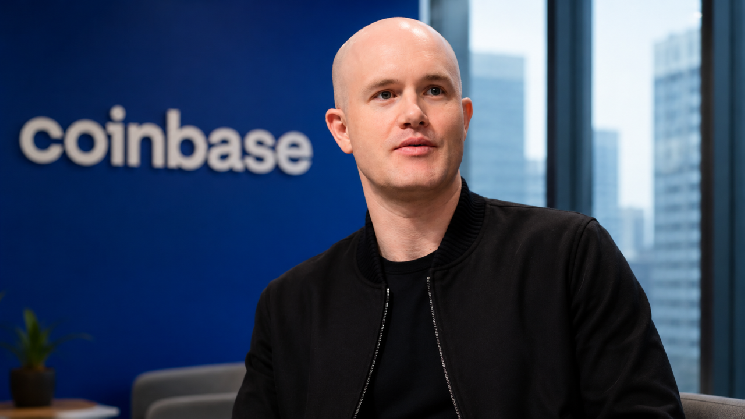
Coinbase (COIN), on the other hand, is reportedly in discussions with the US Securities and Exchange Commission (SEC) about launching tokenized securities that would grant investors the same legal rights and benefits as conventional shares.

Several issuers involved in the space say they are closely adhering to established rules around securities law, anti-money laundering requirements, bankruptcy protections, and investor safeguards.

Industry leaders argue that, when structured properly, tokenization can strengthen rather than weaken investor protections. Ian De Bode, chief strategy officer at Ondo Finance, said that a careful approach to tokenized securities can enhance safeguards while unlocking efficiencies that traditional markets struggle to achieve.

The daily chart shows BNB’s price consolidating below the key $900 level. Source: BNBUSDT on TradingView.com

Featured image from OpenArt, chart from TradingView.com

Crypto di tendenza

Domande pertinenti

QWhat is Binance's reported plan regarding tokenized stock trading, and why is it significant?

ABinance is reportedly considering reintroducing stock tokens to its platform, which are crypto tokens that track publicly listed US companies. This is significant as it represents a renewed push to merge traditional financial markets with digital assets, creating new channels for equity exposure outside of traditional markets.

QWhich other major cryptocurrency exchanges, besides Binance, are exploring the offering of tokenized stocks?

ABesides Binance, OKX is also evaluating the possibility of offering tokenized stocks. Other major firms like Robinhood, Gemini, and Kraken have already rolled out such offerings in Europe.

QHow does Binance justify its exploration of tokenized equities as part of its long-term strategy?

ABinance frames this move as a natural progression in its strategy to connect traditional finance with the crypto ecosystem. The exchange stated it is focused on expanding user choice while maintaining strict regulatory standards, building infrastructure, collaborating with financial institutions, and developing new products.

QWhat specific example of a tokenized offering did Robinhood launch, and how does it function?

ARobinhood launched tokens pegged to OpenAI. According to its terms, these tokens function as derivative contracts backed by the firm's ownership of fund units in a special-purpose vehicle that holds OpenAI convertible notes.

QHow are issuers of tokenized securities ensuring they comply with existing regulations?

AIssuers say they are closely adhering to established rules around securities law, anti-money laundering requirements, bankruptcy protections, and investor safeguards. Industry leaders argue that a careful approach to tokenization can enhance investor protections while unlocking market efficiencies.

Letture associate

Base Claims Its Distribution Advantage Can Outlast Robinhood Chain's Initial Surge

Base, a layer-2 blockchain, argues that its established distribution network will outlast Robinhood Chain's initial popularity surge. While Robinhood Chain quickly attracted 230,000 daily active users and over $9 billion in DEX volume (primarily from meme coins) shortly after launch, its core feature of tokenized stocks saw minimal use. Base acknowledged shortcomings in focusing on social blockchain products and lagging in areas like perpetual contracts, predictions markets, and on-chain tokenized stocks—a move Robinhood got right. In response, Base highlights its nearly three-year head start in building infrastructure. It emphasizes its x402 payment protocol, which has processed 187.8 million agent payments, its $3.9 billion in stablecoin deposits (mostly USDC), and its integration with partners like Visa, Shopify, and JPMorgan for institutional and merchant settlements. Base contends these capabilities for corporate payments and stablecoin liquidity represent a more durable and defensible ecosystem than Robinhood's retail trading metrics. Coinbase plans to launch its own on-chain, share-backed tokenized stocks on Base, which would directly challenge Robinhood's key differentiating feature. Base's strategy bets that its deep-rooted distribution and institutional partnerships will prove harder to overcome than Robinhood's early, meme-driven volume, which may fade after the initial launch hype.

cryptonews.ru2 min fa

Base Claims Its Distribution Advantage Can Outlast Robinhood Chain's Initial Surge

cryptonews.ru2 min fa

The Turning Point of the AI Bull Market: Leverage Blow-ups, Overcapacity in Compute, Why This Macro Analyst is Fully Bearish

AI Bull Market Reaches Inflection Point: Analyst Turns Bearish Due to Leverage, Chinese Competition, and Overcapacity Fidenza Macro analyst Geo Chen explains his decision to sell all AI semiconductor and infrastructure holdings in June, offering a comprehensive bearish thesis. He argues the AI-driven bull market has peaked, citing several key factors. First, unsustainable buying pressure: a massive influx of "low-quality" capital from Korean retail investors using highly leveraged ETFs on stocks like SK Hynix created a parabolic, fragile rally. Recent liquidations have wiped out billions and impacted over a million accounts, removing a key market driver. Second, a competitive threat: the rapid rise of powerful, cost-effective open-source AI models from China, such as MoonShot AI's Kimi K3 and Alibaba's Qwen 3.8, is commoditizing intelligence. This undermines the pricing power and high-valuation financing prospects of closed-source leaders like OpenAI and Anthropic, potentially creating a "single point of failure" for the ecosystem. Third, an impending capacity glut: while AI compute and components are currently in shortage, Chen warns this is typical of a cycle top. Massive, committed capex from cloud providers will likely lead to a supply overhang within 1-2 years. Data shows token spending has already peaked and declined since June, while bond spreads for data center companies are widening, signaling rising credit risk. Chen also highlights broader macro headwinds: the protracted Iran conflict acts as a persistent stagflationary force, and the Federal Reserve under Chair Kevin Warsh is losing credibility in its inflation fight. Long-term Treasury yields breaking above 5.2% present a new challenge for equities. In summary, Chen believes the convergence of speculative excesses, competitive disruption, looming overcapacity, and adverse macroeconomic conditions marks a significant turning point for the AI investment theme.

marsbit17 min fa

The Turning Point of the AI Bull Market: Leverage Blow-ups, Overcapacity in Compute, Why This Macro Analyst is Fully Bearish

marsbit17 min fa

Trading

Spot

Articoli Popolari

Come comprare PUSH

Benvenuto in HTX.com! Abbiamo reso l'acquisto di Push Protocol (PUSH) semplice e conveniente. Segui la nostra guida passo passo per intraprendere il tuo viaggio nel mondo delle criptovalute.Step 1: Crea il tuo Account HTXUsa la tua email o numero di telefono per registrarti il tuo account gratuito su HTX. Vivi un'esperienza facile e sblocca tutte le funzionalità,Crea il mio accountStep 2: Vai in Acquista crypto e seleziona il tuo metodo di pagamentoCarta di credito/debito: utilizza la tua Visa o Mastercard per acquistare immediatamente Push ProtocolPUSH.Bilancio: Usa i fondi dal bilancio del tuo account HTX per fare trading senza problemi.Terze parti: abbiamo aggiunto metodi di pagamento molto utilizzati come Google Pay e Apple Pay per maggiore comodità.P2P: Fai trading direttamente con altri utenti HTX.Over-the-Counter (OTC): Offriamo servizi su misura e tassi di cambio competitivi per i trader.Step 3: Conserva Push Protocol (PUSH)Dopo aver acquistato Push Protocol (PUSH), conserva nel tuo account HTX. In alternativa, puoi inviare tramite trasferimento blockchain o scambiare per altre criptovalute.Step 4: Scambia Push Protocol (PUSH)Scambia facilmente Push Protocol (PUSH) nel mercato spot di HTX. Accedi al tuo account, seleziona la tua coppia di trading, esegui le tue operazioni e monitora in tempo reale. Offriamo un'esperienza user-friendly sia per chi ha appena iniziato che per i trader più esperti.

571 Totale visualizzazioniPubblicato il 2024.12.13Aggiornato il 2026.06.02

Come comprare PUSH

Discussioni

Benvenuto nella Community HTX. Qui puoi rimanere informato sugli ultimi sviluppi della piattaforma e accedere ad approfondimenti esperti sul mercato. Le opinioni degli utenti sul prezzo di PUSH PUSH sono presentate come di seguito.

活动图片