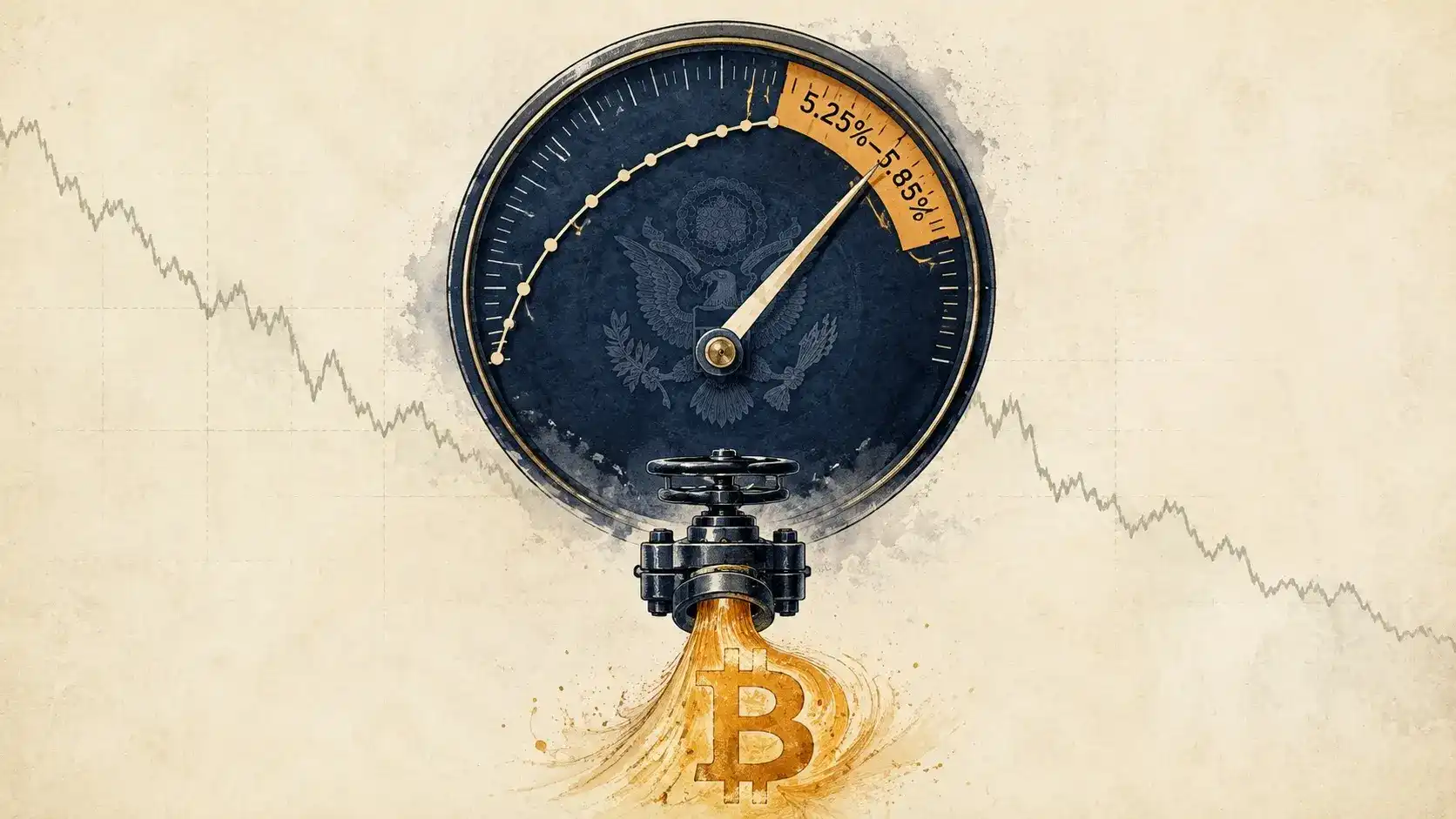
Bessent's True Agenda

marsbitPubblicato 2026-08-26Pubblicato ultima volta 2026-08-26

Introduzione

U.S. Treasury Secretary Besant's recent interventions in the bond market are seen by some as an attempt to artificially trigger a massive short squeeze before the midterm elections. The alleged goal is to push the 10-year yield toward 5% initially, then use covering by short sellers to drive it down to around 4.3%, providing political breathing room for the Trump administration. Analysts point to near-record short positions held by CTA trend-following funds. According to Goldman Sachs data, a price rally of two standard deviations could trigger historically large short-covering. Besant's tactics reportedly include bond buybacks, shifting issuance toward shorter-term debt, and potentially canceling ultra-long bond auctions to pressure these market positions. So far, interventions like modest buybacks have had limited effect on yields, with the Treasury later hinting at using its General Account (TGA) cash for support. Critics argue these measures cannot address structural pressures like large deficits and high inflation. Instead, the strategy appears tactical—aimed at buying time and exploiting technical market vulnerabilities rather than reversing the underlying yield trend. The political timeline is clear: achieve lower yields ahead of the midterms to help lower mortgage rates and craft a favorable narrative. However, analysts warn that once the election passes, structural upward pressure on yields and equity valuations could reassert themselves more forcefully. Market si...

Author: Wall Street News

A series of interventions by U.S. Treasury Secretary Bessent in the bond market are accused of aiming to suppress Treasury yields while—or perhaps intending to—artificially trigger a massive short squeeze by leveraging near-record extreme CTA short positions, pushing the 10-year yield towards around 4.3% before the midterm elections to secure political breathing room for the Trump administration.

On August 25, Fox Business reporter Charlie Gasparino posted on social media platform X, citing informed Wall Street executives, that Bessent's goal is to "make bond shorts respectful," with tactics including bond buybacks, increased issuance of short-term debt, and even canceling ultra-long-term issues like the 20-year bond, in order to drive the 10-year yield from current levels toward 5% and then use short covering to push it back down.

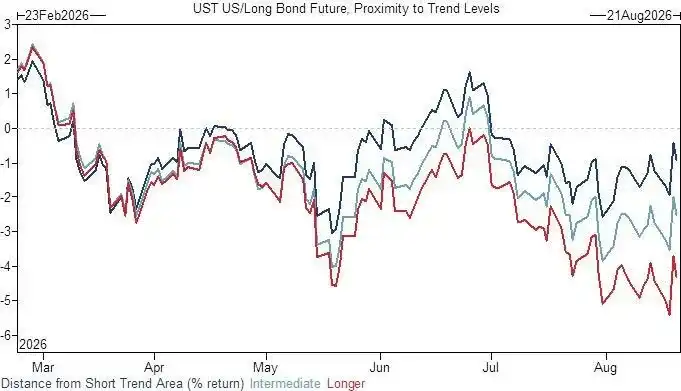
Analysis suggests the market implications of this logic are significant: The latest data from Goldman Sachs' futures trading desk shows that CTA trend-following funds currently hold near multi-year highs in bond short positions. A price increase of 2 standard deviations would trigger the largest short-covering volume on record.

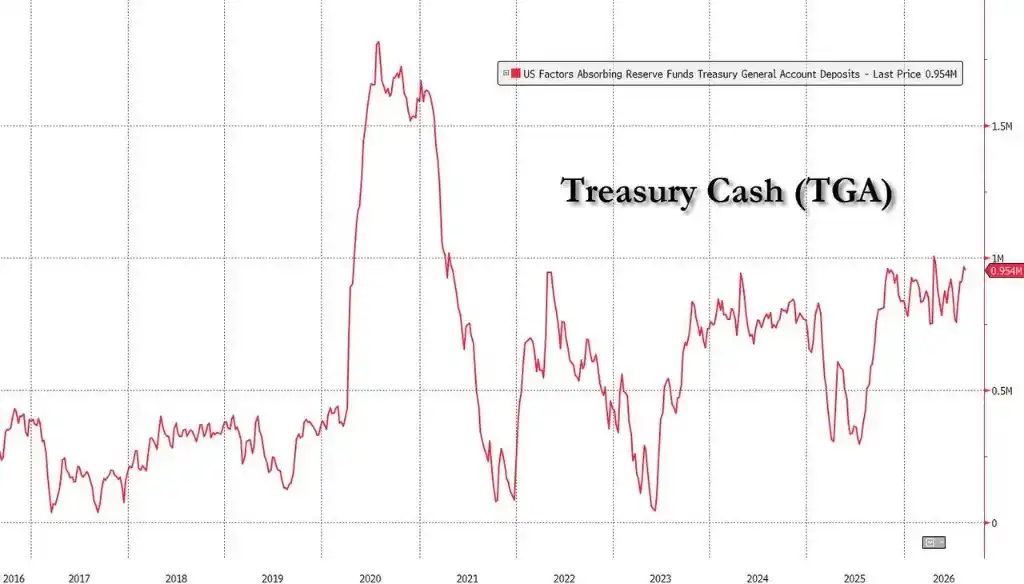
Bessent's interventions have so far had limited effect. Treasury yields continued to rise early Monday until the Treasury Department hinted to CNBC that it would use up to $954 billion in funds from the Treasury General Account (TGA) as support, which barely managed to push yields slightly lower.
Bond Buyback "Bravado," Yields Fail to Succumb

Discussions surrounding Bessent's "bond buyback card" have been rampant.

Critics point out that the scale of this buyback is trivial compared to the massive deficit, total debt, and persistently high inflation, making it fundamentally incapable of reversing the yield trend.

Facts confirm this assessment. Entering this week, yields continued to climb alongside rising oil prices. The Treasury Department then signaled to the media, indicating support using TGA account funds, which caused yields to dip slightly, but the effect remained limited.

Bessent's intervention has also caused internal friction. Reports indicate that the Treasury's actions have deeply displeased Fed Chair Wash, significantly dampening his willingness to reduce the Fed's balance sheet—market observers believe this has effectively tied the Treasury and Fed balance sheets together to some extent.

Bessent's Core Logic: Buying Time, Not Reversing Trend

However, if Bessent's actions are reframed from "suppressing yields" to "buying time," the internal logic of his strategy becomes clear.

Bessent, a former trader himself, is well-versed in tactical and strategic trading. Given the bleak prospects for Congress to significantly cut the deficit, any attempt to fundamentally reverse the yield trend is futile. But if the goal is merely to maintain surface-level market stability before the midterms, the strategic choices differ greatly.

Fox Business reporter Charlie Gasparino, citing Wall Street executives directly familiar with Bessent's thinking, stated that Bessent is willing to use "any means necessary" to pressure bond shorts, including buybacks, adjusting debt issuance structures, and canceling certain long-term maturities.
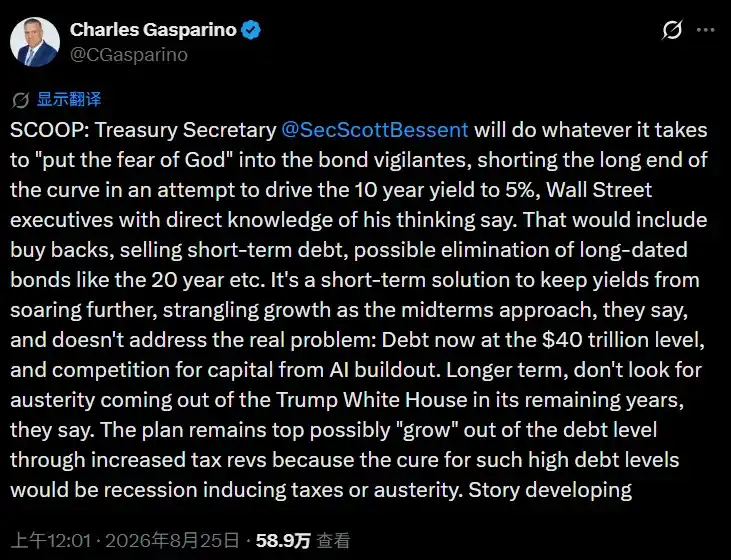
Analysis suggests this statement implies, Bessent's current focus is not on solving the structural issues behind rising yields, but rather applying precise pressure on the market's technical weaknesses.

CTA Short Positions Hit Record, Squeeze Conditions Ripe

The key to Bessent's short-squeeze logic lies in the current bond market positioning structure.

Goldman Sachs' futures trading desk noted in its latest weekly report that CTA and trend-following strategy funds currently hold substantial short positions in global bond markets, measuring approximately $155 million in DV01 (profit/loss per 1 basis point rate move), near multi-year lows (i.e., short positions near multi-year highs), with trend signals across major markets having remained negative for some time.

Goldman further calculates that under the current baseline scenario, CTA's room for additional shorting is limited if bond prices continue to fall; however, once prices rebound, sizable short covering could be triggered—if prices rise by 2 standard deviations within a month, estimated covering and re-buying combined could reach $150 million DV01. More critically, a 2-standard-deviation rise in the current scenario would trigger the largest short-covering volume in history.
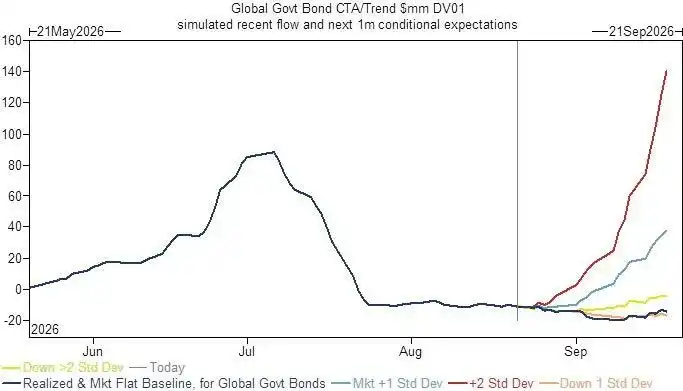
Since the beginning of the year, CTA bond short positions have accumulated to near historical extremes, meaning that once price triggers a signal reversal, short covering will exhibit self-reinforcing, cascading characteristics.
Pre-Election Window: 4.3% is the Target, Midterms are the Finish Line

Overall, Bessent's tactical intent appears relatively clear: to trigger a bond price rise through a series of interventions, thereby igniting passive covering by CTA shorts, creating a positive feedback loop between price increases and short covering, and ultimately pushing the 10-year yield from current levels towards around 4.3%.

The political timetable for this goal is equally clear. With about two months remaining until the midterm elections, if yields can fall to the key range before then, it could drive mortgage rates lower on one hand, and provide the Trump administration with a performance narrative on the other—a successful lowering of interest rates even against a backdrop of rising oil prices and geopolitical tensions.

Of course, as the pattern shown by oil prices and the Iran ceasefire agreement suggests, once the midterm elections conclude, market realities will ultimately reassert themselves. At that point, structural upward pressure on yields and the gravitational pull on stock valuations may return with greater force.

But until then, investors need to maintain high vigilance against the intensifying U.S. Treasury bond short squeeze operation—signals from the market last week suggest this process may unfold intensively within the next few days.


Domande pertinenti

QAccording to the article, what is U.S. Treasury Secretary Bysent's alleged primary goal in intervening in the bond market?

AHis alleged primary goal is to artificially trigger a large-scale short squeeze, using record-high CTA short positions, to push the 10-year Treasury yield down to around 4.3% ahead of the midterm elections, thereby gaining political breathing space for the Trump administration.

QWhat specific market condition makes a massive short squeeze in the bond market possible, as cited in the article?

AThe condition is that CTA trend-following funds are holding near-record short positions in bonds. Analysis suggests that a price rise of 2 standard deviations could trigger the largest short-covering and buying spree in history.

QWhat alternative objective does the article suggest for Bysent's strategy if the goal is not fundamentally lowering yields?

AThe alternative objective is 'buying time.' The article suggests his strategy is tactical, aimed at maintaining surface-level market stability until the midterm elections rather than trying to reverse the underlying structural trend of rising yields.

QWhat internal conflict has Bysent's intervention reportedly caused?

AHis intervention has reportedly caused friction with Federal Reserve Chairman Walsh. Walsh is said to be deeply dissatisfied as the Treasury's operations have cooled his willingness to shrink the Fed's balance sheet, effectively bundling the two balance sheets to some degree.

QWhat does the article predict will happen to market pressures after the midterm elections?

AThe article predicts that after the midterm elections, structural pressures for higher yields and the 'gravity effect' on stock valuations will return, potentially in a more violent manner.

Letture associate

Didier Zheng Answers: Will MicroStrategy Enter a Death Spiral? How Will the Macro Trend Unfold in the Second Half of the Year?

In the latest WuShuo Uncensored podcast, investor Didier Zheng analyzes recent market trends. He argues that Bitcoin's recent decline is primarily driven by market anticipation of MicroStrategy potentially selling small amounts of Bitcoin regularly to cover cash flow for its growing priority shares and debt, rather than macro factors or ETF outflows alone. This creates a new dynamic of expected continuous selling pressure. Didier views Token as the new form of labor in the AI era, replacing human roles in execution and driving the ongoing rally in U.S. stocks within the AI supply chain (semiconductors, data centers). This shift is seen as a long-term structural change, boosting corporate profitability. He notes that crypto exchanges are naturally expanding into U.S. stocks and real-world assets due to the scarcity of valuable native crypto assets beyond Bitcoin and major protocols. For traders, the transition may not require a drastic change in strategy, as similar speculative and fundamental assets exist in both markets. The analyst believes the native crypto altcoin rally is likely over, severely damaged by the liquidity destruction from the "1011" crash event. Liquidity has migrated to deeper markets like U.S. equities. For the macro outlook, Didier expresses increased caution for H2 2024 due to potential market pressure from mega-IPOs (e.g., SpaceX) and the U.S. midterm elections. A Democratic sweep could bring stricter regulation for Web3 and AI. Long-term, he remains optimistic about the convergence of AI and blockchain, enabling a more automated, machine-driven economy, but expects a shift towards a more mature, institutional phase for the crypto industry.

marsbit5 min fa

Didier Zheng Answers: Will MicroStrategy Enter a Death Spiral? How Will the Macro Trend Unfold in the Second Half of the Year?

marsbit5 min fa

Bitcoin's Historically Rare Pattern: When August Rises, September Always Pulls Back, Followed by an Average 44% Surge in October

Historical Seasonal Pattern for Bitcoin Resurfaces: Strong August (Up 25% YTD) Points to Potential September Dip, Followed by October Rally Bitcoin is on track for its strongest August performance since 2017, with gains of approximately 25% for the month as of late August, trading between $78K-$79K. This has revived discussion of a historical seasonal pattern observed since 2013. Data shows that in the four previous years where Bitcoin posted a positive return in August (2013, 2017, 2020, 2021), the following September consistently closed in negative territory, with an average decline of about -5.9%. Notably, a positive September has never followed a positive August in Bitcoin's history. However, the pattern shows a potential silver lining. Following each instance of a "Green August" followed by a "Red September," the subsequent month of October has historically seen significant rallies. The average gain for October after such a sequence is approximately +44%. While this pattern highlights a recurring seasonal trend, analysts caution that it is based on a limited sample size of only four occurrences. Each period had distinct macroeconomic and market conditions. Therefore, past performance is not a reliable indicator of future results, and whether 2026 will follow this sequence remains to be seen as September trading begins.

marsbit5 min fa

Bitcoin's Historically Rare Pattern: When August Rises, September Always Pulls Back, Followed by an Average 44% Surge in October

marsbit5 min fa

Strive CEO: US Bond Market Approaching a Critical Point, Bitcoin's "Home Run Moment" Taking Shape

The CEO of Strive argues that the U.S. Treasury market is approaching a critical juncture, setting the stage for a major opportunity in Bitcoin. He highlights that unsustainable U.S. fiscal deficits and expanding entitlement programs are creating fundamental pressure for higher long-term bond yields. However, the political system is unwilling to enact necessary fiscal discipline. Consequently, as the 10-year Treasury yield enters a key resistance zone of 5.25%–5.85%, the narrative will shift to a potential bond market crisis. This will force policymakers (the Treasury or Federal Reserve) to intervene aggressively to suppress yields through tools like large-scale bond buybacks or balance sheet expansion. Since the underlying fiscal imbalance remains unresolved, the adjustment pressure will be transferred to the U.S. dollar, making it the "pressure release valve" of the system. A trend decline in the dollar, potentially to multi-decade lows, would create a historically unique macro environment for Bitcoin. Bitcoin stands to benefit as a scarce, non-sovereign monetary asset, especially as AI erodes the scarcity of traditional corporate moats. The author concludes that if bond market stress causes a Bitcoin dip, it would be a major buying opportunity; if not, having exposure is still crucial. The overall expectation is that the market is still underestimating Bitcoin's long-term upside potential in this unfolding macro shift.

marsbit14 min fa

Strive CEO: US Bond Market Approaching a Critical Point, Bitcoin's "Home Run Moment" Taking Shape

marsbit14 min fa

Trading

Spot
活动图片