Belarus Opens Door To Crypto Banks With New Presidential Decree

bitcoinistPubblicato 2026-01-17Pubblicato ultima volta 2026-01-17

Introduzione

Belarus has taken a significant step toward integrating cryptocurrency with traditional finance by issuing Presidential Decree No. 19, which establishes a legal framework for "cryptobanks." These entities, defined as joint-stock companies, will be permitted to conduct token operations alongside conventional banking and payment services. To operate, cryptobanks must be residents of the Belarus High-Tech Park (HTP) and will be registered in a special National Bank list. They will be subject to dual oversight from both the National Bank and HTP authorities, adhering to standards on capital, risk management, and anti-money laundering. Officials anticipate the first cryptobank could launch within six months, offering services such as crypto-backed loans, crypto-linked payment cards, and token salary payments for self-employed individuals. The move reinforces Belarus's strategy to formalize and attract digital asset businesses.

Belarus took a major step on January 16, 2026, when President Aleksandr Lukashenko signed Decree No. 19 to set rules for so-called “cryptobanks.” The move creates a clear legal spot for companies that want to mix token services with classic banking and payment work.

Decree Defines Cryptobanks And Rules

According to the decree, a cryptobank is a joint-stock company that may carry out token operations alongside banking, payment and other financial services.

Reports have disclosed that these firms must be residents of the Belarus High-Tech Park (HTP) and will be listed in a special register kept by the National Bank.

The new document ties cryptobank status to HTP residency, which aims to concentrate activity inside a known tech zone. That requirement also means the HTP’s rules will play a role in daily oversight.

Requirements For Market Entry

Based on reports from regulators, cryptobanks will face dual supervision: oversight from both the National Bank of the Republic of Belarus and the HTP’s governing bodies. This twin structure is meant to let token services grow while keeping closer control of financial risks.

BTCUSD trading at $95,519 on the 24-hour chart: TradingView

Officials say cryptobanks will follow many of the rules that apply to non-bank credit and financial organizations, including standards for capital, risk controls and anti-money-laundering checks.

That suggests applicants will need to show robust compliance systems before being accepted into the register.
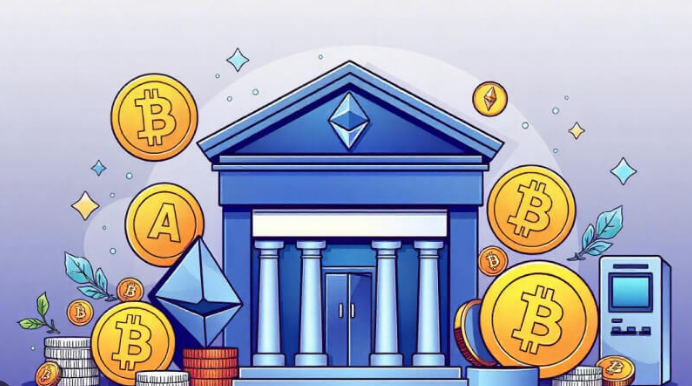
Image: Altorise

Belarus: Short-Term Business Plans

National Bank officials said that the decree could be followed by real market steps fast. Aliaksandr Yahorau, the First Deputy Chairman of the National Bank, said Belarus could see its first operating cryptobank within six months after laws and rules are aligned.

He added that cryptobanks may be able to issue loans secured by cryptocurrency, provide payment cards linked to crypto accounts, and allow self-employed people to receive salaries in tokens.

What Comes Next For Belarus

The decree builds on earlier efforts to attract tech and crypto business to Belarus, and it clearly signals a state interest in bringing token activity under formal control.

The next steps will include drafting implementing rules, creating the special registry at the National Bank, and deciding capital and licensing thresholds for applicants.

Featured image from Unsplash, chart from TradingView

Domande pertinenti

QWhat is the main purpose of Decree No. 19 signed by President Aleksandr Lukashenko on January 16, 2026?

AThe main purpose of Decree No. 19 is to create a clear legal framework for 'cryptobanks,' which are companies that combine token operations with traditional banking and payment services.

QWhat are the two supervisory bodies that will oversee cryptobanks in Belarus?

ACryptobanks will be under the dual supervision of the National Bank of the Republic of Belarus and the governing bodies of the High-Tech Park (HTP).

QWhat is a key requirement for a company to be recognized as a cryptobank in Belarus?

AA key requirement is that the company must be a resident of the Belarus High-Tech Park (HTP) and will be listed in a special register maintained by the National Bank.

QAccording to the First Deputy Chairman of the National Bank, what are some of the services that cryptobanks may be able to provide?

ACryptobanks may be able to issue loans secured by cryptocurrency, provide payment cards linked to crypto accounts, and allow self-employed people to receive salaries in tokens.

QWhat are the next steps following the signing of the presidential decree on cryptobanks?

AThe next steps include drafting implementing rules, creating the special registry at the National Bank, and deciding on the capital and licensing thresholds for applicants.

Letture associate

a16z: AI's 'Amnesia', Can Continuous Learning Cure It?

The article "a16z: AI's 'Amnesia' – Can Continual Learning Cure It?" explores the limitations of current large language models (LLMs), which, like the protagonist in the film *Memento*, are trapped in a perpetual present—unable to form new memories after training. While methods like in-context learning (ICL), retrieval-augmented generation (RAG), and external scaffolding (e.g., chat history, prompts) provide temporary solutions, they fail to enable true internalization of new knowledge. The authors argue that compression—the core of learning during training—is halted at deployment, preventing models from generalizing, discovering novel solutions (e.g., mathematical proofs), or handling adversarial scenarios. The piece introduces *continual learning* as a critical research direction to address this, categorizing approaches into three paths: 1. **Context**: Scaling external memory via longer context windows, multi-agent systems, and smarter retrieval. 2. **Modules**: Using pluggable adapters or external memory layers for specialization without full retraining. 3. **Weights**: Enabling parameter updates through sparse training, test-time training, meta-learning, distillation, and reinforcement learning from feedback. Challenges include catastrophic forgetting, safety risks, and auditability, but overcoming these could unlock models that learn iteratively from experience. The conclusion emphasizes that while context-based methods are effective, true breakthroughs require models to compress new information into weights post-deployment, moving from mere retrieval to genuine learning.

marsbit2 h fa

a16z: AI's 'Amnesia', Can Continuous Learning Cure It?

marsbit2 h fa

Can a Hair Dryer Earn $34,000? Deciphering the Reflexivity Paradox in Prediction Markets

An individual manipulated a weather sensor at Paris Charles de Gaulle Airport with a portable heat source, causing a Polymarket weather market to settle at 22°C and earning $34,000. This incident highlights a fundamental issue in prediction markets: when a market aims to reflect reality, it also incentivizes participants to influence that reality. Prediction markets operate on two layers: platform rules (what outcome counts as a win) and data sources (what actually happened). While most focus on rules, the real vulnerability lies in the data source. If reality is recorded through a specific source, influencing that source directly affects market settlement. The article categorizes markets by their vulnerability: 1. **Single-point physical data sources** (e.g., weather stations): Easily manipulated through physical interference. 2. **Insider information markets** (e.g., MrBeast video details): Insiders like team members use non-public information to trade. Kalshi fined a剪辑师 $20,000 for insider trading. 3. **Actor-manipulated markets** (e.g., Andrew Tate’s tweet counts): The subject of the market can control the outcome. Evidence suggests Tate’sociated accounts coordinated to profit. 4. **Individual-action markets** (e.g., WNBA disruptions): A single person can execute an event to profit from their pre-placed bets. Kalshi and Polymarket handle these issues differently. Kalshi enforces strict KYC, publicly penalizes insider trading, and reports to regulators. Polymarket, with its anonymous wallet-based system, has historically been more permissive, arguing that insider information improves market accuracy. However, it cooperated with authorities in the "Van Dyke case," where a user traded on classified government information. The core paradox is reflexivity: prediction markets are designed to discover truth, but their financial incentives can distort reality. The more valuable a prediction becomes, the more likely participants are to influence the event itself. The market ceases to be a mirror of reality and instead shapes it.

marsbit3 h fa

Can a Hair Dryer Earn $34,000? Deciphering the Reflexivity Paradox in Prediction Markets

marsbit3 h fa

Trading

Spot
Futures
活动图片





